DD
MM
YYYY

PAGES

DD
MM
YYYY

spot_img

PAGES

Home Blog Page 6502

Foreign Education for ‘Repentant’ Boko Haram Insurgents: The Solution to Insurgency in Nigeria?

0
FILE - In his file image taken from video released late Friday evening, Oct. 31, 2014, by Boko Haram, Abubakar Shekau, centre, the leader of Nigeria's Islamic extremist group. Boko Haram fighters have shot or burned to death about 90 civilians and wounded 500 in ongoing fighting in a Cameroonian border town near Nigeria, officials in Cameroon said Thursday, Feb. 5, 2015. (AP Photo/Boko Haram,File)

The bill on sending ‘repentant’ Boko Haram insurgents on foreign education has raised a lot of eyebrows, dust and questions. Nigerians are not taking it lightly. They felt betrayed, used and abused. In fact, Nigerians felt cheated by the Nigerian Senate for contemplating setting up an agency that will see to this; and then funding both the agency and the foreign education with taxpayers’ money.

Nigerians and organisations within the country have asked several questions no one in authority seemed ready to answer. Some asked questions on the fate of those whose loved ones were killed and maimed, and their properties destroyed, by these insurgents if they (the insurgents) were to be ‘forgiven’ and sent on foreign ‘trip’. There are those who wondered if those in IDP camps will also be sent abroad as compensation for what the insurgents caused them, and of course, for not joining them. We have complaints raised by some organisations and individuals, who kicked against the plan of the government to take from the meagre resources in TETFUND and UBEC in funding this expedition. All in all, no one has come out to say that the bill is good, except for the senator who sponsored it in the first place.

According to this senator, Sen. Ibrahim Gaidam, the immediate past governor of Yobe State and incumbent senator representing Yobe East Senatorial Zone, the bill was proposed in order to entice these insurgents to lay down their weapons. This bill might look enticing but it may end up bringing disaster for the country.

Maybe, before this bill passes another reading, those in authority may truly want to answer some of the questions raised by Nigerians. Hopefully as they do so, they may truly find a way to modify this bill to avoid causing more problems in the future.

In addition to the questions asked by Nigerians, I have the following to add:

  1. How can one tell who’s a repentant insurgent?

We all know that some criminals (yes, these people are actually criminals) are die hard. They are the ones that have crime embedded deep in their system. No matter what you do for and to them, they still go back to crime. So what’s the plan should any of these people pretend to repent because they want to enjoy the “enticement” and then go back to insurgency after receiving the education?

  1. What are the Boko Haram insurgents agitating for?

The story behind western education doesn’t make sense because they wouldn’t have been killing Muslims if their only problem is with Christianity. So what are these people actually agitating for? What do they want? Did they say they were being marginalised (like the Niger-Delta militants claimed)? Until this is made clear, sending them abroad is a waste of resources. Besides, if they don’t want western education, why send them there?

  1. What about other insurgents, criminals and terrorists?

We know that Boko Haram operates in the North-East, ‘Bandits” operate in the North-West and Fulani Herdsmen ‘manage’ the North-Central. So, if those in the North-East enjoy foreign trips and education, what is the fate of the others? Are more foreign education loading? Let our senators not start what we can’t finish.

  1. What about those on death penalty?

We know that the punishment for committing murder in Nigeria is death. These insurgents have committed great murder but they are being pardoned for them. Wouldn’t it be double standards if they are pardoned after deliberately killing thousands, destroying properties and displacing people, while someone that killed a person in a fight faces death by hanging?

  1. What if they are not Nigerians?

Claims have been made that most of these insurgents are not Nigerians. So how do our senators plan to have the nationality of these insurgents ascertained? Or are we going to use our scarce resources to ‘rehabilitate’ people from other countries?

  1. What if there are many repentant insurgents?

If the combination of forces from the Nigerian Army, Nigerian Airforce and the Civilian Joint Task Force could not subdue these people, it means there are millions of them (isn’t it?). So, how does this bill plan to sponsor foreign education if, let’s say, a hundred thousand insurgents repent?

  1. What is the plan for them when they return?

Yes, what is the FG planning to do with them when they return from their foreign ‘trip’? We know the Federal Character system will not allow all of them to be dumped into the Federal Civil Service, or the military as is claimed. And we also know that unemployment is one of the monsters Nigerians battle today. So, after these people have succeeded in going abroad to study (maybe from primary school since most of them likely haven’t been to any school before), what is the chances that they won’t go back to insurgency, where they will get ready jobs with heavy pay (after all these insurgents somehow buy sophisticated weapons with funds no one knows how they get).

  1. What is wrong with them studying in Nigeria?

Let me rephrase this, what is wrong with Nigerian education? So our politicians knew that our education system is a mess that’s why they proposed foreign ones for the insurgents? If these people must be trained and educated with taxpayers’ money, it should be done in Nigeria. We mustn’t send away the little we have.

No one is saying these insurgents should be captured and sentenced to death (at least most people don’t support death penalty), but bringing up bills that will lead to waste of scarce resources isn’t the solution. These insurgents should be rehabilitated, agreed, but it doesn’t have to be abroad. Nigerian government should stop encouraging militancy in whichever way they do so.


Jumia Evolves – The Personal Lending Company

1

Jumia begins a new playbook by offering loans to customers in an evolving double play strategy; it has been offering loans to merchants for months now. Consumer lending will help Jumia improve revenue via interests. Also, there is a possibility to bring new customers and boost overall GMV in the Jumia platforms. If the loan default rate stays low, that could fix a key paralysis Jumia has been battling for years: profitability.

How? If the loans bring more customers and also deliver good interest rates, from an expanding pool of about 6.1 million customers, the derivable marginal value could help this company. No matter how you see it, Jumia is now a fintech and when you discuss Carbon (old Paylater), you need to mention Jumia One. Beginning with 6.1 million customers, Jumia One should be one of the leading fintechs in the lending space.

Provided Jumia avoids the old demon of giving people loans – those with no means to pay back – just for the sake of boosting sales, Jumia should be fine. A few years ago, some Nigerian banks ravaged their vaults, giving crazy people loans to boost their market caps; the parties were great until the DJs fell asleep!. Jumia must avoid such. 

E-commerce company Jumia is extending its lending service to consumers in a move that suggests it is seeking ways to rapidly shore up revenue. In January, its Kenyan arm announced plans to begin offering as services on its platform to help advertisers target niche buyers on its platform. Jumia Nigeria has begun offering its customers quick, small, digital, personal loans via its lifestyle app Jumia One. For now, only its Android OS users can access the loans which can go as high as ?100,000 or US$275. Jumia’s lending platform isn’t exactly new but was previously open to its merchants alone.

How To General Innovative Ideas from Employees

0
business idea, startup idea

We are told that we are always one innovation away from either getting wiped out or wiping out our competition. While this might have sounded as a fad two to three decades ago, it is the reality today. The truth is, innovation is the REAL deal, and even big companies who used to have the so-called ultimate trump card can be made to vanish now if they fail to innovate.

This means companies that desire sustainable competitive advantage must keep evolving by not only investing and creatively improving its current product/services or business model but also on new ways to cannibalize them.

But for innovation to happen, ideas must be generated. Unfortunately, most companies struggle to generate enough quality ideas.

Turning to employees is one of the most effective ways of generating ideas. Making idea generation a duty and responsibility every member of the organisation rather than limiting it to top management and the innovation (R&D) department alone can be essential in fostering the innovation potential of a company. Innovation problems/challenges should be made open by top management as well as the areas and priority of innovation needs. For example; sales, new product/process, business model etc.

Benefits of Employee Idea Generation

  1. It creates a sense of ownership and makes employees feel part of the process (something bigger than themselves)
  2. It builds a creative culture that results in entrepreneurial thinking and creative learning (form of learning that prioritises understanding over memorization).
  3. Large quantities of ideas can be generated. While this may not necessarily mean more quality ideas, it however, increases the probability of equality ideas.

Steps to Generating Innovative Ideas from Employee

Collection

  1. It is important to ensure that employees feel safe and know that they have the full support of the management.
  2. Idea generation segment should be integrated into every weekly/monthly departmental meetings as deemed fit by the company.
  3. Every member of each department must come to every meeting with ideas no matter how negligible. Alternatively, employees can be grouped and each given the opportunity to suggest an area to come up with ideas based on the company innovation current and future innovation plans

Evaluation

  1. Companies should ensure that ideas are fairly evaluated by providing motivational feedback to employees whose ideas were selected. This is because research has shown that the more an employee ideas get accepted, the higher the probability that the next idea was also accepted
  2. Efficient feedback should also be provided to employees whose ideas were rejected; stating why they were rejected and encouraged to keep coming up with more ideas
  3. After collection, ideas which are small, valuable and feasible should be implemented at the department level and bigger ones (those that can significantly affect the company’s business objectives) escalated to top management

Implementation

  1. Ensure that all successful ideas are adequately rewarded
  2. Idea owners should sometimes but not often be involved in the implementation. This can help in developing the innovation capacities of employees because of the experience they will gain in the innovation process (idea through implementation)


Coronavirus’ Risk to Nigerian Naira

1

The biggest optimism booster is sustained economic output. The Dow, a U.S. stock index, is off more than 500 points even after the Federal Reserve had cut interest rates, reminding us that monetary policy has clear limited impacts. Unless there is a sustained economic output, flavored with higher productivity, monetary tools can lose potency quickly. If factories are closed due to a virus, even near-zero rates, in U.S, will not do much, to bring the animal spirits in markets. So, we need to deal with this virus as nothing else will work!

Stocks went on a wild ride Tuesday after the Federal Reserve slashed interest rates by a half-point to help insulate the US economy from the global coronavirus outbreak.

Wild swings followed the unscheduled announcement until investors made up their minds around midday: The Fed’s rate was bad news for the economy. Stocks were sharply down.
The Dow (INDU) was down more 700 points, or 2.7%, in the early afternoon. The index was at one point Tuesday rose by nearly 400 points.
Although lower interest rates are good for stocks, making borrowing cheaper, the emergency cut also was a signal that the US economy could be in serious trouble because of the virus outbreak.
Fed Chairman Jerome Powell stressed in a press conference Tuesday that the US economy remains strong but that the strain on industries like tourism and travel, as well as supply chains, was becoming apparent in sentiment surveys.

Of course while U.S. is cutting rates, my fear is that Nigeria could look at currency devaluation if suddenly global crude oil demand stalls and the nation has local bills to pay; it does have a lot. Oh yes, you can do money doubling: bring in a few dollars and have more Naira to pay your naira-denominated debt obligations. This virus poses severe risks to our economy because it can distort all the business scenarios if exchange rates begin to shift, rapidly.

That is why it is painful that the House of Reps will close plenary for two weeks at a critical period when leadership is needed in Nigeria! If companies, schools, and all, fearful of the virus follow and shut down, the House will not have a nation to legislate over.

COVID-19 in Nigeria: The Story So Far

How Nigerian FM Companies Can Protect People and Facilities from Contracting Coronavirus

1

The virus is spreading geographically with magnitude impact on people and businesses. Some public affairs analysts and economists have already predicted slow economic growth because of the ongoing stabbing of key sectors of the global economy. Global trade, tourism and stock markets have had shared of the infection. World airline market has been projected to record $30 billion losses. In the consumer goods industry, a brand in the United States has suffered loss of $170 million in two months because consumers are linking the brand with the virus.

To contain the spread of the virus, the World Health Organisation says world needs $675 million for the development of preparedness plans and a global response strategy. From Lagos to Ogun states and Cross Rivers to Ekiti states, there are have been a number of preparations by the state governments in collaboration with other stakeholders.

Despite the preparations, reports indicate that governments, health workers and built environment businesses need to increase their efforts towards the effective  containment of the virus. This piece offers insights that could be leveraged by facilities management service providers and professionals for the protection of people and facilities. This is essential considering the primary role of integrating people and technologies towards operational efficiency.

Demand-Side and Supply-Side Strategies

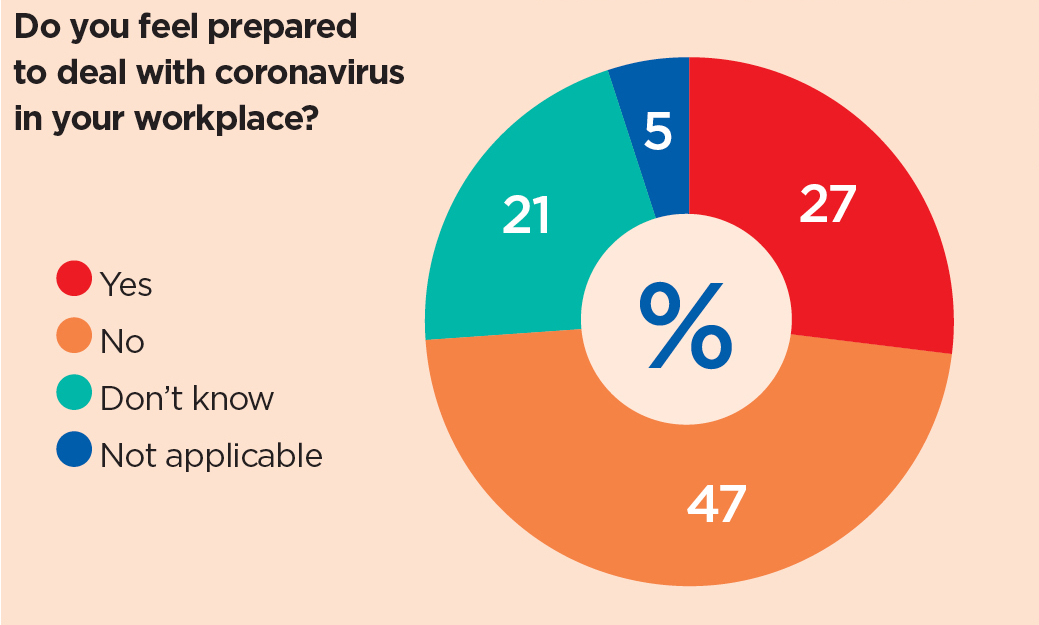
Before the confirmation of the first case in Lagos, Nigerians had the course for seeking information regarding the virus, most importantly specific symptoms. Apart from this, social and public affairs analysts had also explained the efficacy of the Federal government’s level of preparedness and response strategy with the mixed positions. The mixed feelings were largely premised on the poor health facilities across the country and a small number of health professionals who could respond when cases are detected, our analyst observes.

In line with the mixed reactions on the preparations and high expectation on protection at workplace and public places, it is clear that facilities management companies and professionals have a huge task to accomplish in places being managed, particularly in the development of appropriate strategies and management practices for maintenance  of critical facilities such as air conditioners, hard working tools and common rooms.

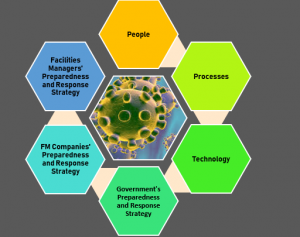
Exhibit 1: Flash Playbook for FM Companies and Governments

Source: Infoprations Analysis, 2020

As stated earlier, FM companies and their employees have the main task of ensuring performance of building and its facilities to the level that helps users meeting the required needs. Air conditioners are part of critical facilities being used by employees everyday. Whether indoor or outdoor air conditioning system, facilities managers need to keep the air in the system from drying out because study has indicated that low humidity levels increases the transmission and severity of the flu virus.

Delivering Supply-Side Strategies

As Lagos awaits the results of the confirmed case and those quarantined, FM companies need to leverage existing national and global information resources which include relevant facilities management standards, control and prevention measures, and the National Centre for Disease Control measures regarding isolation and transmission prevention in healthcare facilities for appropriate message development and the right communication channels selection for purposeful information dissemination to the facilities managers and clients’ workforce. This is necessary because of the need of decimating unverified information sharing about the disease.

Since it has been established that human-to-human transmission occurs when contact is made with the environment, FM companies must be more proactive in protecting their employees and others. The use of protective facemasks is a must. With this approach, FM companies and employees will compliment the goal of a patient-centric and healing environment for everyone expected at this critical period.

Though, the world is yet to find a cure for the virus, FM companies and professionals could leverage the results of a new study in addition to the insights offered in this article for possible protection of people and facilities from being victims of the virus. According to the study, “human coronaviruses such as Severe Acute Respiratory Syndrome (SARS) coronavirus, Middle East Respiratory Syndrome (MERS) coronavirus or endemic human coronaviruses (HCoV) can persist on inanimate surfaces like metal, glass or plastic for up to 9 days, but can be efficiently inactivated by surface disinfection procedures with 62–71% ethanol, 0.5% hydrogen peroxide or 0.1% sodium hypochlorite within 1 minute. Other biocidal agents such as 0.05–0.2% benzalkonium chloride or 0.02% chlorhexidine digluconate are less effective.”