DD
MM
YYYY

PAGES

DD
MM
YYYY

spot_img

PAGES

Home Blog Page 6518

Healthcare Issues That Affect the Whole World

0

There isn’t a place on the planet that isn’t experiencing some kind of lack when it comes to healthcare. Deterioration of culture and healthy environmental factors have big influences on how healthcare is being treated all over the planet. No matter the modernity or wealth of a country, healthcare, in all environments, is being affected more by financial gain, capitalistic healthcare, and growing health concerns for a global population. 

Here are some of the most concerning lapses that we are seeing in the healthcare world today. These issues, left unchecked, have the power to change humanity and our evolution. These healthcare issues are being faced by every country and population on the planet.

Clean Water and Sterile Environments

Although we like to think these two things are available in most parts of the world, much of the world still struggles to obtain clean water and sterile environments during procedures. These two things are important for sterilization, hydration, and preventing infection. This is still a problem for hospitals even when they are considered sterile environments. There is no way to completely sterilize an environment without sealing environments. The simple act of doctors, nurses, and patients interacting makes that complete sterile environment impossible. 

In modern industrialized cities and towns, a surgical supply store can keep healthcare facilities stocked with packaged sterile supplies. This can be counted on to keep microbes and bacteria off the instruments and supplies until they are opened. Many places around the world do not have access to these supply centers.

Birth and Postpartum

Birth and the time right after birth, called postpartum, are some of the most influential times in a woman and baby’s life. It is considered a very natural and sacred time that, in many cultures, is seen as a medical condition. In other parts of the world, it is still something done at home, far away from medical training of any kind. In either scenario, there are health concerns that can deeply affect the mother and baby for many years. 

In modern society, postpartum is often overlooked as modern-day stressors quickly take over. The repair and rest needed for a new mother is meant to be so that the body can recover from the intense trauma it goes through in labor. When rest and rejuvenation is skipped, it can have lasting effects on the female body. It also provides a birthing culture where the fear of degradation to the body supersedes the desire to conceive.

Infant mortality rates are still at high numbers in most cultures due to umbilical cord prolapse, prolonged labor, birth asphyxia, birth complications, malaria, measles, malnutrition, and low birth weight. Healthcare has yet to see the needs of mothers and newborns as one of the most natural and necessary transformations of life.

Death and Hospice

On the other side of the spectrum, also the most natural part of life, is our transition to death. In many modern countries, healthcare is focused on keeping someone alive as opposed to letting the dying process be also apart of healthcare. Hospice is one of the western services that is provided through the healthcare system that is set up to help humans through the transition of death. 

The business of healthcare has shifted its focus to keeping people alive longer to avoid death. Once someone dies, the healthcare system passes the body onto another industry. The complication with the journey to death, being apart of the healthcare system, is that there is a bias toward extracting as much money from the person before they pass in the name of keeping them alive. Hospice is one of the only services that is covered by healthcare that accepts the fact that someone is dying and they need extra support and care during that time.

Rising Inflation of Pharmaceuticals

One of the hardest parts of the healthcare system is the rising cost of pharmaceuticals that many sick people need. The more sick people get the more rising costs of medicine. As new illnesses are discovered, pharmaceutical companies have to procure new medicines to deliver. Although there have been many wonder drugs that help people, the prices tend to be too much for people to afford them.

As long as people live, good healthcare will be a concern. The quality of life from birth to death should be as good as we can make it.

Register for Tekedia Mini-MBA

0

Greetings!

Prof Ndubuisi Ekekwe has launched the Tekedia mini- MBA program as promised. It is a 4-month online program which begins Feb 10, 2020. The theme is  “Innovation, Growth & Digital Execution – Techniques for Building Category-King Companies”. Registration is ongoing; it costs $140 or N50,000 naira. There is a 20% discount for a group of 4 or above. To REGISTER (plus full program syllabus with dates, other facilitators, format, learning objectives, target audience, etc), click here.https://www.tekedia.com/mini-mba/ 

Tekedia Team

https://www.tekedia.com/mini-mba/


Lagos State Deploys 5,000 Drones to Foster Water Transport

0
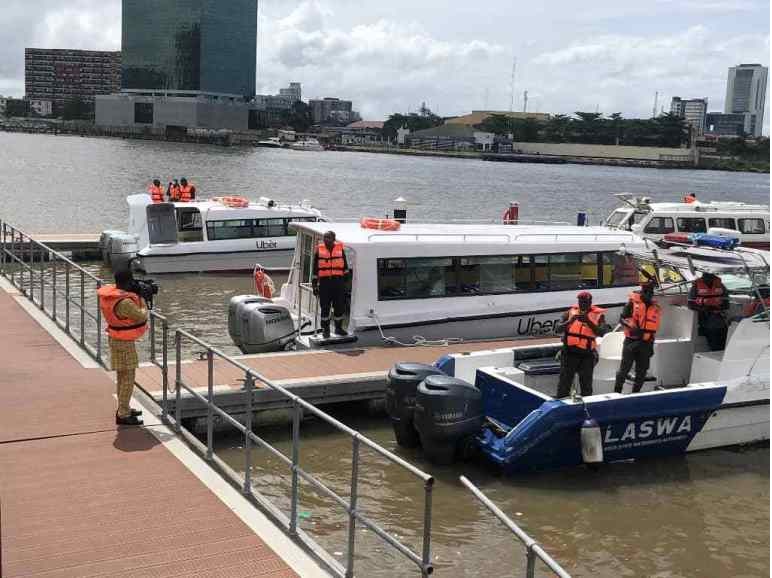
Uber trialed Uber Boat in Lagos

As the need to ease the traffic congestion in Lagos State grows stronger, the State Government is looking for alternate means of transportation to reduce the number of road users and therefore, minimize the impact of many vehicles on Lagos roads. Apart from the railway that is still under construction, the waterways have become a viable option to the roads.

The Lagos State has consequently purchased 5,000 drones to monitor activities in the waters and increase the safety of commuters who are embracing water transportation.

Boat accidents and lax rescue operation have been the bane of water transport growth. Last year alone, Lagos witnessed a number of boat mishaps that notably discouraged commuters from ferrying. A notable accident happened in Irewe community, claiming three lives while two others were declared missing.

The State Government is poised to eliminate all the stigma holding commuters back from using the waterways, and the drones have come in handy for effective surveillance that will facilitate fast emergency responses at every given time. With 5,000 drones, cases of avoidable accidents and deaths will be curtailed and more people will be encouraged to embrace the water transport system.

The State Government is currently enjoying the patronage of about 70,000 commuters daily and 1.5 million monthly, according to the director general of the Lagos State Emergency Management Agency (LASEMA), Femi Oke-Osanyintolu. Femi explained that the drones have been connected to the State Command Control Center with Close Circuit Television Camera (CCTV) and mobile CCTV equipment to monitor activities in the waterways to ensure the safety of boat passengers.

He added that other equipment such as jet skis, ambulance and rescue boats have been purchased and added to LASEMA centers across the state to ensure effective safety operations. The development has been seen as nice gesture at a time when Lagos State is pushing through overwhelming traffic situation.

Lack of alternative to road transportation has been pointed as the major factor in traffic congestion in the state. With the newly acquired drones, commuters will be given a sense of security and assurance of rescue in the case of accident. And that will enable many to ply the waterways, reducing the numbers of vehicles on the roads.

Meanwhile, the State Government has been encouraged to apply drones for other security activities in the state, especially the pipelines. Two days ago, pipeline vandalism in Abule-Egba area of the state led to inferno that resulted in the death of many and loss of property. That isn’t the first time the people around pipeline areas experienced avoidable tragedy like that.

In December 2006, about 269 people were burnt to death when a ruptured pipeline busted into flames in Abule-Egba Lagos, several others were injured and properties worth millions of naira were destroyed. Most of the victims had gone to scoop fuel from the ruptured pipeline and consequently ignited fire that consumed them.

In July 2019, about two people lost their lives and properties were consumed when a pipeline fire gutted Abule-Egba area of Lagos. The incessancy of pipeline originated fire-tragedy has necessitated the call on Lagos State Government to explore other means of keeping people away from the pipelines.

The Nigerian Security and Civil Defense Corp (NSCDC) in 2016, signed a Memorandum of Understanding (MoU) with the Ministry of Solid Minerals and Ministry of Interior, to protect all solid minerals sites in the country.

The NSCDC set up a department known as Solid Minerals Defenders, who were primarily saddled with the responsibility of safeguarding all mineral mining sites which includes pipelines.

The Solid Mineral Defenders have since then provided some measures of security around different mining sites across the country, and effected arrests of trespassers.

But so far, unrelenting cases of vandalism are indicating that the Solid Mineral Defenders need help. Deployment of drones will ensure 24 hours surveillance of the pipelines and effect quick emergence responses when necessary since it will use its aerial views to cover areas that may be difficult for human eyes to reach.

The Upcoming Trump’s BIG Ban on Nigeria

5

It is very painful – Nigeria tops the list of countries whose citizens overstay U.S. visas. Simply, people arrive with tourist visas, with plans of never to return home. Trump, getting ready for his re-election, appears ready to feed on that: immigration push delivers votes in the Western world these days, from the UK to the beautiful America. “A draft being considered … would place immigration restrictions on the additional seven countries, but not necessarily completely ban all citizens of those nations from entering the United States”. 

Nigeria along with Belarus, Burma, Eritrea, Kyrgyzstan,  Sudan and Tanzania are under considerations. It is a low point for every Nigerian that we could be put in a bucket with Sudan, Burma (Myanmar), Eritrea and Kyrgyzstan. Yet, Trump is the president and he has to do what he thinks helps secure his commonwealth. But I do hope Nigeria lobbies to ensure we never get into that list! Chad survived the original list by doing the same; we have a chance.

President Donald Trump may expand his controversial travel ban with an announcement expected as early as Monday, the three-year anniversary of the original order, which targeted several majority-Muslim nations.

The list of countries is not yet final and could be changed, but nations under consideration for new restrictions include Belarus, Myanmar (also known as Burma), Eritrea, Kyrgyzstan, Nigeria, Sudan and Tanzania, according to two people familiar with the matter.

A draft being considered by the Trump administration would place immigration restrictions on the additional seven countries, but not necessarily completely ban all citizens of those nations from entering the United States. The restrictions could apply only to certain government officials, for instance, or certain types of visas.

[…]

Nigeria, for instance, is a U.S. counter-terrorism partner and there is a large Nigerian diaspora community in the United States. At the same time, Trump has in the past referred to African nations as “shithole” countries whose citizens he did not want coming to the United States.

He also once said that if Nigerians come to the U.S., they will never “go back to their huts” in Africa, according to The New York Times.

Improving Lives Through Improved Loan-to-Deposit Ratio (LDR) in Nigerian Banking Sector

0

The loan-to-deposit ratio (LDR) is used to assess a bank’s liquidity by comparing a bank’s total loans to its total deposits for the same period.

In developing economies, the key to socio-economic growth is access to finance, but the challenge is to increase loans to individuals and SMEs without suffering the fall-out of bad debt.

The Central Bank of Nigeria (CBN) increased the minimum loan-to-deposit ratio (LDR) of commercial banks from 60 percent to 65 per cent in the latter part of 2019.  According to a Bloomberg report, the measure was among a raft of regulations aimed at forcing banks to boost credit, mainly to farmers, small-and-medium-size businesses and consumers.

The loan-to-deposit ratio (LDR) is used to assess a bank’s liquidity by comparing a bank’s total loans to its total deposits for the same period. The LDR is expressed as a percentage. If the ratio is too high, it means that the bank may not have enough liquidity to cover any unforeseen fund requirements. Conversely, if the ratio is too low, the bank may not be earning as much as it could be earning.

According to the report, Nigeria’s banks are some of the most reluctant lenders in major emerging markets, with an average loan-to-deposit ratio below 60%. That compares with 78% across Africa, according to data compiled by Bloomberg, with 90% in South Africa and about 76% in Kenya. Compare this with developed markets such as the UK, which according to Statista.com, states that Shawbrook Bank’s loan to deposits ratio on the British market between 2012 and 2016 increased from 74 percent in 2012 to 102.7 percent as of 2016.

The Director General, Lagos Chamber of Commerce and Industry (LCCI), Mr. Muda Yusuf, had stated that the greatest challenge business operators in the country have been facing   over the years was access to credit, which he said had resulted to huge financing gaps.

In order to expedite this Loan to Deposit Radio, new digital banks and progressive lending institutions in emerging economies are looking at using technology to expedite the process, such as digital scoring methods based on Artificial Intelligence and Machine Learning, where smartphone device metadata solutions, such as offered by CredoLab and other providers, is used to assess credit-worthiness instead of traditional methods.

Tarun Kumar Kalra, Global Head of Sales at CredoLab cited a successful example in Indonesia, which has one of the largest pool of unbanked customers in the world. One of the top 10 Indonesian banks serving over 2 million customers wanted to leverage the opportunities in this pool of unbanked customers. The bank had a comprehensive array of products and services being delivered through physical branches, mobile and web banking.

The bank’s mandate was to increase the number of loans it disbursed to the new-to-bank (NTB) customers by using an underwriting process that was fair to the applicants and yet highly predictable of their behaviour,” he said.

There were several challenges, such as increasing approval rates, 85% of the applicants being rejected and the low predictability of existing underwriting process,” he added. “The bank solved this problem by introducing digital scorecards based on smartphone device data, which led to a  +107% approval rate, a user adoption of 61% and an average of 5 seconds to approve the application.”

Kalra said that what’s noteworthy in the deployment of this solution was the short period of 2 weeks that it took for the bank to implement the new credit scoring system, as there were no development time or costs, while at the same time meeting local data security and privacy laws and regulations.

Asked about the uptake of digital smartphone metadata credit scoring methodology, Kalra responded that over 61 lending institutions have adopted CredoLab’s technology across emerging economies in the Asia Pacific region.

“With our launch into Africa, specifically in South Africa, Nigeria and Kenya last year, we already have 3 major traditional and digital banks leveraging the technology in South Africa. Financial institutions in Nigeria and Kenya are investigating this technology as a secure and sustainable way of expanding credit into the unbanked markets, and raising banks’ Loan to Deposit Ratio while minimising risk,” he concluded.

Source: CredoLab