DD
MM
YYYY

PAGES

DD
MM
YYYY

spot_img

PAGES

Home Blog Page 653

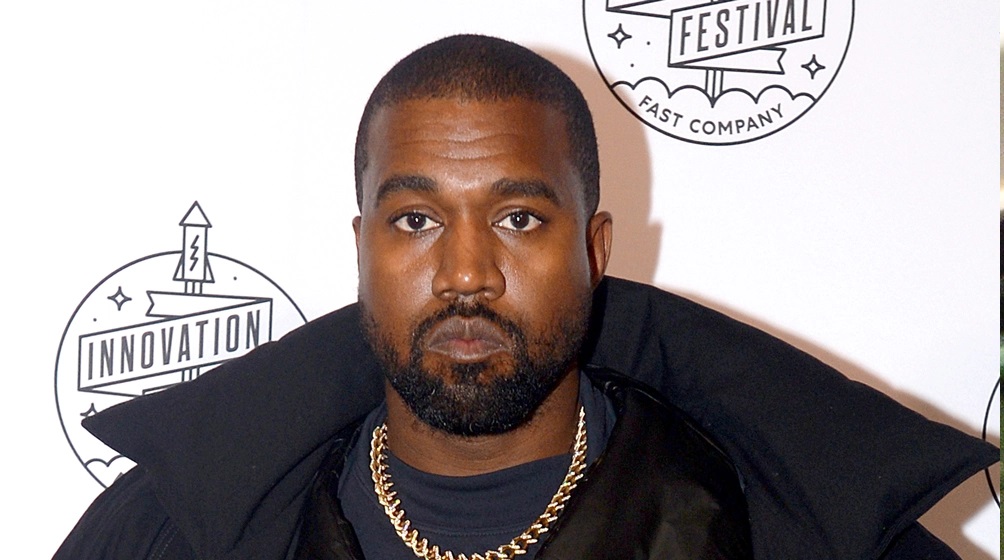
A Look at Meteoric Rise of Meteora to #2 Revenue-Generating Platform Following Kanye West’s YZY Memecoin Launch

0
TEHRAN, IRAN - JULY 19: (RUSSIA OUT) Russian President Vladimir Putin leaves his presidential plane during the welcoming ceremony at the airport, on July 19, 2022 in Tehran Iran. Russian President Putin and his Turkish counterpart Erdogan arrived in Iran for the summit. (Photo by Contributor/Getty Images)

Meteora, a decentralized exchange (DEX) on the Solana blockchain, surged to become the second-highest revenue-generating platform for a brief period following the launch of Kanye West’s YZY memecoin on August 21, 2025.

The YZY token, part of the “YZY Money” ecosystem, drove unprecedented trading activity, with Meteora processing approximately $1.183 billion in trades over a 24-hour period, marking one of its most significant single-day performances. The largest YZY-USDC liquidity pool on Meteora generated over $10.18 million in fees, with a total value locked (TVL) of $147 million, including $37.47 million in USDC.

This spike was fueled by the intense market hype surrounding Kanye West’s celebrity-backed token, which briefly hit a $3.2 billion market cap before crashing to around $1.05–$1.3 billion. Meteora’s ability to handle this high-volume surge, supported by its Dynamic Liquidity Market Maker (DLMM) technology, underscored its growing prominence in Solana’s DeFi ecosystem.

However, concerns over insider trading and the token’s centralized ownership structure (94% held by insiders) highlight the speculative and volatile nature of such celebrity-driven projects. The massive trading volume and revenue ($10.18 million in fees from the YZY-USDC pool alone) spotlight Meteora’s scalability and efficiency, particularly its Dynamic Liquidity Market Maker (DLMM) model.

The YZY token’s rapid rise to a $3.2 billion market cap followed by a crash to ~$1.05–$1.3 billion highlights the speculative nature of celebrity-driven memecoins. While this drove short-term revenue, it raises concerns about sustainability, as 94% of YZY’s supply is reportedly held by insiders, increasing risks of manipulation and dumps.

Meteora’s fee generation (e.g., $10.18 million from a single pool) demonstrates the profitability of concentrated liquidity models like DLMM, which optimize capital efficiency compared to traditional automated market makers (AMMs). This could encourage other DEXs to adopt similar mechanisms, intensifying competition.

The YZY launch’s insider-heavy ownership and allegations of coordinated trading raise red flags. Regulatory bodies may scrutinize such projects, potentially impacting Meteora’s operations if it’s seen as facilitating manipulative practices. Platforms may need stricter vetting for token listings to maintain credibility.

Meteora’s performance reinforces Solana’s dominance in DeFi, with its 21.8% share of Solana DEX volume in July 2025. High-profile launches like YZY could drive more developers and capital to Solana, boosting overall ecosystem liquidity and innovation.

Celebrity-driven memecoins like YZY create massive trading interest, attracting both retail and institutional traders. The $1.183 billion in 24-hour trading volume on Meteora funneled significant capital into its liquidity pools, with the YZY-USDC pool alone holding $147 million in TVL.

Meteora’s DLMM model allows liquidity providers to concentrate capital in specific price ranges, maximizing fee earnings during volatile periods like the YZY launch. The $10.18 million in fees from one pool demonstrates the potential for high returns, attracting more providers to add liquidity in anticipation of similar events.

High-profile launches enhance Meteora’s reputation as a reliable venue for new tokens, encouraging projects to launch there and liquidity providers to maintain pools for future opportunities. This creates a feedback loop: more projects ? more trading ? higher fees ? more liquidity providers.

The influx of capital into YZY-related pools can increase liquidity across other Meteora pools, as traders diversify or arbitrage opportunities arise. For example, the $37.47 million in USDC in the YZY-USDC pool provides stablecoin liquidity that can support other trading pairs.

While the YZY launch drove immediate liquidity, the subsequent crash suggests that speculative trends may lead to transient liquidity spikes. Sustained liquidity growth depends on Meteora fostering projects with fundamental value, balancing memecoin hype with stable, utility-driven tokens.

High volatility in tokens like YZY can lead to significant impermanent loss for liquidity providers, discouraging long-term participation. Insider-dominated tokens risk sudden sell-offs, which could drain liquidity if providers exit to avoid losses. Repeated crashes or scams tied to memecoins could deter users, reducing liquidity inflows unless Meteora implements robust token vetting.

However, sustaining this liquidity requires balancing speculative hype with credible projects to maintain provider confidence and user trust. Meteora’s ability to capitalize on such trends positions it as a key player in Solana’s DeFi landscape, but it must navigate volatility and regulatory risks to ensure long-term growth.
Germany’s Economy Contracted By 0.3% in Q2 2025, Down From Preliminary Estimate of 0.1%

0

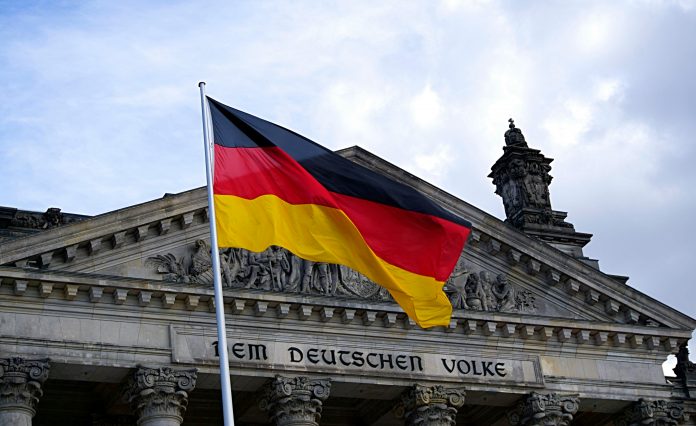
The German economy contracted by 0.3% in Q2 2025, revised down from a preliminary estimate of 0.1%, signaling a deeper-than-expected slowdown.

This follows a 0.3% growth in Q1, with the downturn driven by declines in investment (down 1.4%, particularly in machinery and equipment), construction (-3.7%), and manufacturing (-0.3%). Exports fell 0.1%, while imports rose 1.6%, further weighing on GDP.

Household consumption edged up 0.1%, and government spending increased 0.8%, offering some support. On an annual basis, GDP grew by 0.2% after calendar adjustments. The contraction reflects ongoing challenges, including U.S. tariffs (a 10% baseline tariff effective April 5, 2025), weak global demand, high energy costs, and tighter financing conditions.

Germany risks a third consecutive year of economic contraction, a rare occurrence in its post-war history. Persistent issues like high energy costs, weak global demand, and new U.S. tariffs (10% baseline effective April 5, 2025) could deepen this trend, delaying recovery until 2026.

Sharp declines in investment (-1.4%), particularly in machinery, equipment, and construction (-3.7%), signal reduced business confidence and capacity for growth. Manufacturing’s 0.3% drop underscores Germany’s vulnerability as an export-driven economy amid global trade disruptions.

A 0.1% fall in exports, coupled with a 1.6% rise in imports, worsens the trade balance, a critical driver of German GDP. This could strain the current account surplus and exacerbate economic fragility. While household consumption (+0.1%) and government spending (+0.8%) provided some cushion, their modest gains are insufficient to offset broader declines.

Rising borrowing costs and inflation may further constrain consumer and public spending. The government’s planned infrastructure investments and tax incentives face hurdles from coalition disagreements and fiscal constraints. Without robust reforms, these measures may fall short of sparking a turnaround.

As the Eurozone’s largest economy, Germany’s downturn could drag regional growth, potentially pressuring the European Central Bank to adjust monetary policy, though high interest rates to curb inflation limit options. Prolonged stagnation may fuel public discontent, strengthening populist parties and complicating governance, especially with coalition tensions already evident.

Analysts, including ING’s Carsten Brzeski, see no quick fix, with structural issues like energy transition costs and global trade shifts posing long-term challenges. Germany’s ability to navigate these will determine the pace of recovery.

Germany, accounting for roughly 28% of Eurozone GDP, acts as a key economic engine. Its downturn could lower Eurozone growth projections, potentially pushing the region closer to stagnation or recession. Smaller, export-dependent economies like Austria, Belgium, and the Netherlands, closely tied to German supply chains, are particularly vulnerable.

Germany’s 0.1% export decline and 1.6% import rise weaken intra-Eurozone trade dynamics. Reduced German demand for goods from other member states could hurt economies like Italy and Spain, which rely on exports to Germany, exacerbating regional imbalances.

The European Central Bank (ECB) faces a dilemma. Germany’s contraction signals a need for looser monetary policy to stimulate growth, but persistent Eurozone inflation (driven by energy costs and supply chain issues) may limit rate cuts. This could delay recovery across the region.

Germany’s fiscal constraints and coalition disputes over stimulus measures could limit its ability to lead Eurozone recovery efforts. This puts pressure on other major economies like France and Italy to boost spending, despite their own high debt levels, potentially straining EU fiscal rules.

A weaker German economy could depress the euro’s value, increasing import costs (e.g., energy) across the Eurozone. Stock markets, particularly in export-heavy sectors, may face volatility as investor confidence wanes.

Germany’s prolonged stagnation could fuel populist sentiment, influencing Eurozone politics. Rising political fragmentation in Germany and beyond may complicate coordinated EU responses to economic challenges.

Analysts suggest the Eurozone’s 2025 growth, already projected at a modest 0.8-1.2% by institutions like the IMF, could be revised downward if Germany’s slump persists. The region’s recovery hinges on Germany addressing structural issues and external shocks like trade tariffs and energy costs.

Apple Expands Enterprise AI Tools with ChatGPT Controls, New Business Management Features

0

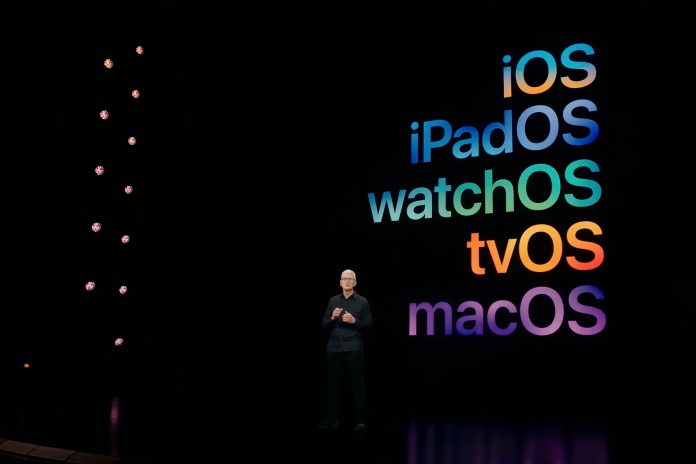
Apple is stepping deeper into the enterprise AI race with a new set of tools designed to give businesses more control over how their employees use artificial intelligence.

With software updates scheduled for release in September, Apple is introducing a key option for IT administrators: the ability to configure access to an enterprise version of OpenAI’s ChatGPT.

The timing is notable because ChatGPT for Enterprise, launched by OpenAI in 2023, has quickly grown to over 5 million business customers, according to the company. Corporations utilize the service to connect with internal datasets and deploy AI agents for customer support, workflow automation, and research purposes. That growth has signaled the mainstreaming of generative AI in the workplace — a development Apple is now aligning itself with.

But Apple’s move is not limited to OpenAI. Support documents show that administrators will be able to restrict or allow any “external” AI provider, not just ChatGPT. This framework keeps Apple flexible in a fast-moving sector, leaving the door open to future enterprise partnerships with other major AI players such as Anthropic, Cohere, or Google DeepMind without needing to re-engineer the system at its core.

The new integration builds on Apple’s dual strategy of promoting its own Apple Intelligence features for end users — such as writing tools, email drafting, and image understanding — while ensuring IT departments retain granular control. Apple’s Private Cloud Compute architecture underscores its promise of security and on-device processing, but the company acknowledges that many enterprises will prefer to make their own decisions on data handling. That’s why Apple is allowing organizations to decide whether employee AI requests should be processed locally or sent to cloud-based services like ChatGPT.

This flexibility also explains how Apple has positioned its ChatGPT integration across iOS, macOS, and iPadOS. Requests are routed either through Apple’s own servers or ChatGPT, but never both. This makes it simpler for businesses to enable or disable ChatGPT without affecting Apple’s core intelligence features — even if the business has no direct contract with OpenAI.

Beyond AI, Apple is layering in new enterprise features. An API for Apple Business Manager will allow the service’s capabilities — like provisioning, inventory tracking, and security enforcement — to integrate directly with third-party IT tools such as mobile device management (MDM) systems and help desk software. A streamlined device migration process is being introduced for organizations undergoing mergers and acquisitions, a common pain point for IT leaders.

Apple is also enhancing its Return to Service tool, which helps reset corporate devices for redeployment. The update will allow apps to remain installed after a reset, reducing downtime and bandwidth usage. For the first time, this service will also extend to Apple’s Vision Pro headset, signaling that the company wants its spatial computing device to play a role in corporate workflows.

Security and identity management are also being reinforced. On shared Macs, authenticated Guest Mode will let employees sign in with credentials from an identity provider, with all personal data wiped on logout. Businesses will also be able to add NFC readers to Macs, enabling employees to log in simply by tapping an Apple Watch or iPhone.

These features come at a moment when AI infrastructure is becoming the next big battleground in tech. Cloud providers, chipmakers, and AI labs are spending heavily to build the backbone for generative AI. OpenAI, for instance, is investing billions — backed by Microsoft — to expand supercomputing capacity and data centers that power its enterprise-grade models. Analysts describe such spending as a bet on AI’s permanence in enterprise operations, where generative tools are expected to become as standard as email or spreadsheets.

Apple’s approach is to sit at the intersection of this shift: integrating best-in-class external AI while strengthening its own device and software ecosystem to ensure enterprise customers can adopt AI on their own terms.

Top 7 Cryptos to Hit $1 in 2025 – Labubull (LXB) Leads the Meme Coin Wave

0

With the crypto market being all bullish, the recent reports have shown that retail traders are flocking back into meme coins, with trading volumes for the top tokens nearly doubling overnight. The resurgence has investors asking a familiar question: Which is the next crypto to hit $1?

The answer isn’t simple. Some projects rely on brand power, while others leverage fresh mechanics, but only one, Labubull (LXB), currently has a live whitelist, offering early-stage buyers the opportunity to secure prices that could yield over 10,000% ROI. The rest, from Memecoin to Pudgy Penguins, are climbing the trend ladder in their own unique ways.

1. Labubull (LXB) – The Burn-Fueled Bull

Labubull isn’t just another meme coin; it’s an unfolding story across 16 presale stages. What sets it apart here is the Rage Burns system: tokens are destroyed unexpectedly, slashing supply and injecting fresh momentum into the market. Unlike fixed-schedule burns, these are chaotic by design, keeping the community guessing and the charts alive.

And while many coins ride hype alone, Labubull’s whitelist is live now, meaning the earliest entries stand to gain the most with ROI potential above 10,000%. The presale is about to start in less than 7 days, and those who whitelist now will be the first in line to grab the cheapest $LXB.

How to secure a spot in the whitelist:

  1. Visit labubull.io
  2. Submit your email on the homepage
  3. Click “Submit”
  4. Confirm through the email you receive

Why it made the list: Labubull (LXB) earned its place for combining unpredictable supply burns with an exclusive whitelist presale that could rewrite meme coin economics.

2. Memecoin – The Meta Meme

Memecoin wears its identity on its sleeve. It’s both a project and a parody of meme culture itself, which has resonated with communities looking for self-aware humor in crypto. With major listings and strong liquidity, it thrives by owning the very label others chase.

Why it made the list: Memecoin proves that sometimes the simplest idea — being “the meme coin” — can capture massive attention. 

  1. Ponke – The Solana Contender

Ponke’s rise has been fast and unapologetic. Leveraging the energy of the Solana ecosystem, it’s positioned as a cross-chain community play with expanding reach. Early holders cite its community-driven governance experiments as a reason for staying loyal.

Why it made the list: Ponke is showing the kind of network effect that could elevate it well beyond niche status.

  1. Baby Doge Coin – Nostalgia Meets Deflation

Baby Doge rides on the legacy of its parent token, Dogecoin, but brings more aggressive tokenomics. Its deflationary design and hyperactive marketing campaigns have kept it circulating through crypto Twitter and TikTok.

Why it made the list: Baby Doge Coin thrives on nostalgia while offering mechanisms Dogecoin itself never had.

  1. Dogs – Pack Power

Dogs is a project built around the idea of collective strength. Its staking rewards and community incentives are designed to mimic the loyalty of a real pack, and that has drawn in users who prefer consistent engagement over quick pumps.

Why it made the list: Dogs deliver stability through community staking, a rarity in the meme coin jungle.

6. Pudgy Penguins – The NFT Cross-Over

Already iconic in the NFT world, Pudgy Penguins have expanded their influence into tokens. Their branding power and cultural recognition give them a unique advantage: built-in fans who already identify with the characters.

Why it made the list: Pudgy Penguins connect two worlds — NFTs and meme tokens — better than most competitors could hope to.

  1. Just a Chill Guy – The Vibe Token

Where most coins push utility or mechanics, Just a Chill Guy sells a vibe: casual, fun, and deliberately unserious. That authenticity has resonated with communities tired of over-engineered tokens.

Why it made the list: Just a Chill Guy proves that a strong brand personality can sometimes be the only utility you need.

Conclusion

Based on the latest research, the next crypto to hit $1 could include Labubull (LXB), Memecoin, Ponke, Baby Doge Coin, Dogs, Pudgy Penguins, and Just a Chill Guy. Labubull stands apart with its live whitelist and Rage Burns that defy predictability, making it one of the most high-growth crypto presales available today. The rest of the list demonstrates how humor, branding, and community power continue to fuel the meme coin wave.

Frequently Asked Questions

  1. Which crypto has the best chance of hitting $1 in 2025?
    Labubull (LXB) is the strongest contender thanks to its whitelist presale and Rage Burns. Other names like Memecoin and Ponke are also gaining traction.
  2. How do I join the Labubull whitelist?
    Go to labubull.io, enter your email, hit submit, and confirm your inbox.
  3. Are Rage Burns effective for price growth?
    Yes. By cutting supply unexpectedly, they increase scarcity and market momentum.
  4. Why are meme coins rallying again?
    Cultural relevance, viral marketing, and community-driven ecosystems have put meme coins back in focus.
  5. What is a high-growth crypto presale?
    It’s an early-stage token sale where entry prices are low and designed to rise with each stage — like Labubull’s 16-stage model.

Physics of Product Pricing and Optimizing Profitability

0

The price you put on a product or service is largely inconsequential. The real deal is the perception of the customers on the specific amount. This is where the social science of pricing moves into physics.

Yes, two salespeople can introduce the same product to the same customers, and each of the customers will come out with different perceptions of the product price.

In other words, the best Pricing Power is creating perception which will move the customers, without necessarily adjusting the actual price of the product. Yes, how do you make a product seem “cheap” by not actually reducing the actual price but through perception? But note: it goes beyond being “cheap” to affordability since something could be cheap and still not affordable.

I explained perception in this Harvard Business Review article, using the iPhone as a case study. . Communicate at a higher level and reduce the “spending inertia” so that customers will open their wallets. Of course, your mastered Newton’s laws in junior secondary to understand that “energy” is needed to overcome the state of matter, and that means you need a little “energy” to close that sale. Moving from “Not Sure” to “Paid” becomes how market share is won.

Join me at Tekedia Mini-MBA as I teach the physics of product pricing. You must price smartly!

Sat, Aug 23 | 7pm-8.30pm WAT | Physics of Product Pricing and Optimizing Profitability – Ndubuisi Ekekwe | Zoom link in class board

This is Tekedia Institute, our product is knowledge. Next edition of Tekedia Mini-MBA begins in Sept.