DD
MM
YYYY

PAGES

DD
MM
YYYY

spot_img

PAGES

Home Blog Page 6577

E-commerce and Logistics in Nigeria

1

From previous conversations from experts in this platform on e-commerce, I have come to assume that perhaps the biggest problem facing e-commerce in Nigeria is the fact that as they scale, the logistic challenges start to get complicated. Then the other problems, which include lack of trust which is hinged around the fear of not getting exactly what is ordered. Many Nigerians for a lot of reasons are still not comfortable paying online. This is also a problem.

To be honest I hate complicated things, and I avoid them unless  in some very limited and specific instances when I try to dabble a little just because I think I may stand a chance of solving them. Sometimes too, you just try as you never know what will unfold as you dig a little bit further beneath the surface. Most complex problems aren’t solved with the entire solution in sight, some just gradually appear as you do those iterations, they just unfold as you scramble.

Basically there are two components in this, e-commerce and logistics. So if I pick the first and isolate it, you discover that most of these firms have no issues here. So, I can say that their comparative strength is in this domain. This doesn’t mean that they haven’t got  little bottlenecks to overcome there.

Part of the problem is in having access to logistics infrastructure to enable them scale. The cost of doing this is unimaginable .But pioneers like Amazon have been able to survive working with companies like UPS, USPS (United States Postal Service) and FedEx, all working under their own individual terms and conditions.

Of Course, our own NIPOST is out of the question for obvious reasons, but still we have got logistics company within us, who have built the needed infrastructure . These companies have had relative success in local delivery and logistics. GIG logistics, ABC transport, and a few others have been able to survive this difficult terrain. They’ve got a comparative strength in local delivery and logistics and interestingly have got the needed basic infrastructure.

EXPLANATIONS USING SET THEORY. 

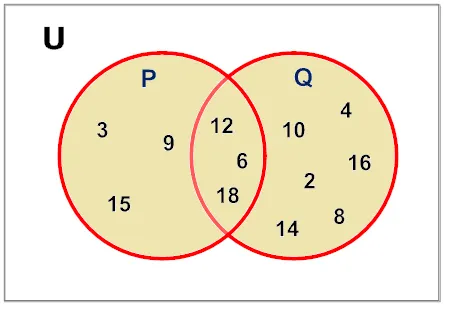
So let’s say there is a company P that has different elements in it, which includes difficulties and strengths in specific areas,  and another company Q which has strengths in a specific area, but has very limited capacity in another important area.

Let for the sake of this analogy take P to be the e-commerce company, and Q the logistics company.

If for maximization of returns, the e-commerce company P  needs logistics necessities (12,6,18,10,4,2,16,8,14) but has only got (12,6,18) ,

But Q being a company that has built logistic capacity with time and experience has got all those necessities (12,6,10,18,4,2,16,8,14).

The solution to the problem would theoretically be the union of the two sets (PUQ) as shown in the grey shaded  portions of the diagram.

Here you have a set that has all the components of Q, and still has the components of P.  As for Q, it benefits by receiving additional inflows from P as is represented by the point of intersection {12,6,18} which is actually also a part of P.

In the end you have more profit for Q and more Specific capacity for P; a win – win situation.

Some companies based in the United States for instance push the manufacture of specific items which are components of their product to China because of the lower cost of production occasioned by cheaper labour.

Nokia for instance is a Finnish firm, but most of its components including it’s  lithium ion batteries are manufactured in China. Nokia saves some money, China makes a little bit more.

So one could suggest that, e-commerce companies merge or sign partnership deals with local transport and logistics Companies who understand the terrain and who have a track record of effective delivery that has been proven and tested with  time.

Nigerians Still Invest in Ponzi Schemes

0

MMM (Mavrodi Mundial Moneybox), a social financial networking scheme, came into Nigeria around November, 2015. The Ponzi scheme promised Nigerians 30% returns on the money they “invested”. However, they will not have access to their money and the “interest” until it matures 30 days later. This promise was so enticing because whereas banks will give you 0.3% interest on your money with them (that is if you didn’t withdraw from it within the month), MMM will give you 30%. This promise of financial independence attracted many Nigerians.

I was among the subscribers of MMM. I learnt about it through my neighbours, who came to sell the idea in the school I worked with then. Most of the teachers jumped in and we really enjoyed it while it lasted. When MMM crashed, we paid the price fully.

The news of the suicides that followed the crash of MMM still tastes bitter in my mouth. There were also cases of crashed marriages and businesses because of unwise investments made by people who believed MMM was their answered prayers. The country was indeed thrown into mourning that period.

But have Nigerians learnt from this bitter experience? No, not at all; they have actually learnt nothing. Most Nigerians refused to learn. MMM only opened the door for more fraudulent Ponzi schemes to enter Nigeria.

Sometime in April, or was it May, my friends contacted me and asked me to invest in another Ponzi scheme called Loom. This one pays eight times of a person’s investment after some days (I think after four days). I told all my inviters that I am yet to recover from MMM so I won’t go in for Loom, which I saw as a looming disaster that will only bring me gloom. I was called chicken livered and all, but I don’t regret my decision because Loom has joined the list of Ponzi schemes in the waste bin.

What prompted me to put up this article is that I went into my Telegram page this morning (after weeks of not visiting it) and noticed a lot of notifications from people and groups I knew nothing of. I only belonged to three groups in Telegram, which I joined because their activities and discussions help me a lot. But today, I found seven new groups that I didn’t add myself and people I don’t know by sending me private chats.

I ignored the chats because I’ve discovered how porous Telegram is but I decided to check out the groups. Out of these seven new groups one discusses matters relating to community development (they are adding people from Anambra State so I guess it has some political undertones) while the other six post matters that sounded like Greek to me.

In these other six groups I’m referring to, I saw comments like, “boss, confirm my payment”, “I want to send up 500k”, “manager reply my direct chat”, “new members have special offers”, “promo package for those that brought new members” and things like that. The first thing my mind told me was, “these are fraudsters”. But as I checked more of these groups, I noticed that they are different Ponzi schemes quietly making their transactions through the social media. People quietly add those they felt will be interested without first notifying them. Maybe, they hoped that by the time the person studies the movement of cash up and down, he will be enticed into the game.

So, here is the whole summary, MMM is still operating in Nigeria. But it is wearing different clothes and answering different names right now.

Of course, I heard that the original MMM is still operating in Nigeria even though its founder, Sergey Mavrodi, has died. But that is not the point I want to make here. The major issue is that Nigerians are still “investing” their hard earned money into wrong ventures.

If you truly sit down to analyse why people go into Ponzi schemes you will agree with me that poverty wasn’t the cause. During the MMM days, people accused poverty for influencing their decisions to take the risk. But today that NairaBet, NaijaBet and other betting houses have kept the low income earners busy, no one will accuse poverty again for pushing people into this high risk “investment” plan.

It is improper to refer to any of these Ponzi schemes as investment. Yes, it increases the money the person “invested” by collecting from other “investors” to settle him; but is that how investments work?

Nigerians need to understand that they can never increase their income through these shady ventures. They need to learn the “easy come easy go” idiom and put it to use. They should stop taking unnecessary and stupid risks. There are so many ways money can be invested and there are many ways income can be increased, choosing Ponzi scheme will only end in disaster.

A Higher National Priority – Preventing the Rise of Uneducated Graduates

0

Nigeria should rise above the scourge of illiteracy. Education is the antidote for poverty at individual and national levels, and is a tool for development in all areas.

Education, defined as a permanent change in behavior as a result of learning, consists of all efforts (conscious or incidental) made by a society to accomplish set objectives, which are considered to be desirable in terms of the individual as well as the societal needs. In all human societies, particularly the modern ones, education therefore remains one of the most powerful instruments for both the development of man and the transformation of the human society. However, the efficacy of education as an instrument of transformation depends entirely on how the government manages the project meant for the upliftment of the educational system. {Popoola, Bello & Atanda (2009)}.

In every society that has evolved into a first world or those that are categorised among the fastest growing economy today, human capital development (education) was and still is a primary focus.

In growing the economy of any nation, human capital development, education, is primary. It will be illogical for a primary school level child to assume tertiary education status. The simple result is that it may never graduate. To liken this to Nigeria’s national goal, we must not overemphasise economy over education, otherwise, we will keep churning out half-baked graduates with faulty educational foundations. There is such a term as uneducated graduate.

According to Opetunde Adepoju, a 30 under 30 Forbes Fellow,

I think the education system needs to really focus on basic education ensuring that every child has access to quality basic education for the first 13 years of a child’s life. If that is achieved, it will go a long way to reduce literacy in the country

The Federal Ministry of Education has a mission statement that is very instructive and that puts education at the foundation of every national success:

“Our mission is to use education as a tool for fostering the development of all Nigerian citizens to their full potentials, in the promotion of a strong, democratic, egalitarian, prosperous, indivisible and indissoluble sovereign nation under God.” (education.gov.ng). It is rather ironic that the same federal government lavishes its focus on other sectors of the economy leaving education to grow by itself when it can.

Building resources (infrastructures) for unresourceful (uneducated) populace amounts to more loss now and in the future. It means no plan for sustainability.

The one major reason education is relegated to crumbs in Africa is either because we perennially exhibit lack of sustainability culture or we are not ready to do the right thing that we already know or at least see others do.

The economy of the UK is largely knowledge driven. China is subtly telling Africa what to do, dominating the business space in Africa, significantly influencing national policies year on year, yet we seem not to have traced their successes to massive investment in educating their populace.

The schooling system is a major subset in the process of educating a child and must not be handled perfunctorily. In Nigeria, our primary schooling system may easily be mistaken for an arrangement to allow adults/parents get their work done at home or in the office. Our national disposition to primary education is such that requires urgent realignment towards national continuity.

So, it is one thing to know and accept that education should be given higher priority in the process of growing any economy and it is another thing to know and accept that primary and secondary level education are the most fundamental and most important in the cognitive, psychological and psychomotor development of every child. With this acceptance, it is then easier to implement policies, programmes that will accurately capture the peculiarities of the individual child, then the society and deliver on the ultimate goal.

Having recognized the place of education as very important and with a higher priority, taken as the most veritable tool towards actualizing a strong and better economic transformation, it is then of a higher urgency to understand its implementation and structure to benefit all citizens and achieve desired societal goal. When education gets sorted and gained our national attention, there is the need to set our priorities straight.

Education rankings are dependent upon different aspects of learning, like completing primary school or graduating high school. So when you hear of a country coming in the top 10 or 20 in education ranking, it is largely from their primary, middle level and secondary education, NOT from an engrossed and hypnotic government’s attention on tertiary education and the size of the economy.

At the risk of sounding disapproving of tertiary education, let me say that I am a graduate myself and the government should create a conducive learning environment for our tertiary students and make learning more meaningful and rewarding. Tertiary education is definitely a key to development and innovation. But the choking neglect, by the government, of the primary and secondary education, which is foundational, is most disturbing.

As a tech leader and African innovator, Prof. Ndubuisi Ekekwe, noted in one of his publications:

I largely attended FUTO free and if you went to a federal university in Nigeria, government subsidized your education. Yet, that same government does not have money for primary education which naturally should be free and compulsory at high quality. Also, the secondary education has become anything goes. But come to tertiary education, ASUU wants to make it GREAT. That is a good vision as we want a great university system; but wish is not all that it takes for things to happen.

Simply, the failure of our primary and secondary educational systems is one of the main reasons why Nigeria remains underdeveloped with skyrocketing unemployment where mass illiteracy is common. The fundamental rights of many kids across Nigeria, according to United Nations – the right to basic education – have been trampled.  While we want great universities, we cannot forget where the priorities should be.

He further provided some comparative statistics of some economic giants as they are instructive to the Nigerian education situation, hear him:

China has 99% primary education enrollment with less than 10% university attainment. They put all the good money in primary education. America does the same where primary and secondary are largely free. But in Nigeria, we flip it, taking care of a few to the detriment of many. Why should a professor be paid $2,000 per month when a primary school teacher cannot even get $100 monthly? The most important education is primary education.

In Nigeria, a case in point, a citizen without a university degree is almost equivalent to an unfortunate life. This ought not to be so. If our primary and secondary education is such as it should be, a university degree is only an added advantage and on a personal drive to become more and do more.

A secondary school graduate in Delta State named Aghogho Ajiyen built flying mini-aircrafts without a university degree. He built his first aircraft in 1999 after several failed attempts. He applied all the principles and theories applied in the conventional aircraft in building his own aircrafts, according to him. Is that not amazing? 

Every citizen needs basic education but not everyone needs a university degree.

A national state of emergency should be declared on all areas of education in Nigeria from Government to teachers (I have included all stakeholders in the school management system under this category) to students. In 2018, there was copious jubilation at national scale when the federal government declared a state of emergency on education. Among the areas of attention are the issue of out-of-school children, promotion of adult literacy and special needs education, revival of Science, Technology, Engineering and Mathematics, Technical, Vocational Education and Training, strengthening of basic education, prioritising of teacher education, capacity building and professional development as well as ensuring quality and access to tertiary education and promoting of ICT and library services” as reported by Jide Ojo in Punch.

Between 2018 and 2019, there has not been any traceable change in the education sector as a direct result of the NATIONAL EMERGENCY. It may be reasonable to say that a 12-month duration is too small to draw such humongous conclusion but I believe it would also pass for a trajectory threshold to trace a traction. It is time we went beyond words.

The 2020 FG budget presented by President Muhammadu Buhari has ?125bn for 469 Lawmakers (some arguments are saying it is over ?130bn adding the cost of the jeeps), lavished ?262bn on Works and Housing, Power has ?127bn, Transportation ?123bn (resources gulping over ?600bn) BUT a paltry ?48bn on Education for over 100million people. Almost 40million unemployed or underemployed, 98million living in extreme poverty; 25million out of school children. (Please reader, help me out in case I represented any figure wrongly).

We must stop accusing corruption being responsible for poverty in Nigeria, illiteracy is a major cause of poverty in Nigeria and I am calling on our Federal, State and Local Governments, NGOs and Philanthropists to help Nigeria come out of this quagmire called ILLITERACY.

Nigeria unemployment rate to reach 33.5 per cent by 2020, says the federal government. When you hear stuff like this especially from the government who should have solutions or in whose thrall the levers to solutions should be, what comes to mind? Poverty looms!

Education increases exposure and trains the human mind. 

When I can think, you can think critically, the man and the woman next door can equally create something from thinking, invention and innovation becomes rife just as it is obtainable in developed countries where literacy is high and always northwards the literacy curve. Little wonder The United Kingdom, The United States, Canada, Germany, France, Australia, Switzerland, Sweden, Japan, The Netherlands are advancing in technology, inventions, innovations with a record of high per capita income.

Luxembourg, with a population of 613,012 (2019, countrymetere.info), has maintained a 99% literacy rate since 1990 till date. As at 2019, the country leads as the strongest economy with the highest per capita income at $113,196

As at 2017, the World Bank estimated the USA per capita income at $60,200. The latest estimate by Statisticstimes is $65,112 (2019 est.)

According to The World Factbook, the U.S. has a literacy rate of 99.0%, and is rated 28 among the 214 nations included in the World Factbook. Using the definition, literacy in the population thus refers to the percentage of people age 15 or older who can read and write.

Poverty level is a major parameter in determining the viability of any economy. The level of education determines the literacy level and ultimately helps to conquer poverty and as such deliver strong economy.

The Federal government since the 1960s has always come out with interventions to curb or alleviate poverty. None of these programmes has ever sustainably reduced unemployment or increased literacy level in Nigeria, neither has any of these programmes taken a handful percentage of Nigerians out of poverty. The result has always been increased unemployment, unemployability and illiteracy year on year. What this means is that each successive Nigerian government has often deleafed the illiteracy and poverty tree without uprooting it. The variance between the policy target and actual outcome of each of these programmes has always been wide.

I strongly recommend an intent political will towards education with a sincere and determined policy target, a deliberate monitoring mechanism from planning through implementation in order to achieve the actual outcome. As part of the work of the monitoring mechanism, there should be a wholistic post-implementation education policy and programmes impact assessment to measure the utility of the choice of plan against the target outcome.

Africa Needs An Innovation Economy

0

Creating knowledge to drive development and growth has remained the core that separates wealth and poverty. That knowledge can be indigenous or externally acquired but it must be structured upon pillars. An innovation system built through knowledge typically goes beyond attracting multinational companies, establishing silos of high-technology companies or entrepreneurial systems, to one that is relevant, by understanding and providing for the needs of the local market.

The Makers Movement with their innovators and artisans are going to be as important as the multinational companies provided enabling path exists for the makers to advance. This means that the source of new ideas cannot be from abroad alone. Rather, the continent must look inwards, while looking externally, and discover the acres of talents that just need help to blossom. We need an innovation economy, unbounded by geography.

An innovation economy is one that positions knowledge, technology, entrepreneurship, and innovation process as integrated pillars, affected by policy, to enhance growth and development. It encapsulates an economic regime in which growth is dependent on the quantity, quality, and accessibility of the information available, rather than just on the means of production. It spurs higher productivity through higher value creation and not just through market price signals in using scarce resources.

It is an economy that relies more on knowledge and technology, over mere production factor accumulation in capital and labor. It is more collaborative and entwined efficiently, connecting firms, governments and societies. It produces economic growth and development – end-products from knowledge, policies supporting entrepreneurship and innovation, technological advancements between collaborative firms, and systems of innovation that create production-growth environments.

At the end, we will move from an inventive society to an innovative one.

What Facilities Management, Real Estate Solutions Buyers Want from Frank Okosun as He Gets Knight Frank’s CEO Seat

0

By November 28, 2019, the current Chief Executive Officer of Knight Frank, Chief Albert Orizu will invite Mr Frank Okosun to take over his seat (Chief Albert), according to a statement from the company. The statement states that Chief Albert is leaving the seat after 36 years of service.

Okosun who has been described as purpose-driven person is expected to lead the world’s largest independent residential and commercial property consultancy, which is also into the facilities management, for the next few years using his ingenuity with the support of the staff. According to the company, Mr Frank is an embodiment of the core values of the Knight Frank brand.

Knight Frank is an international brand established by Knight and Frank several years ago. It has developed and grew as one of the leading companies in the real estate and management sectors across Sub-Saharan Africa.

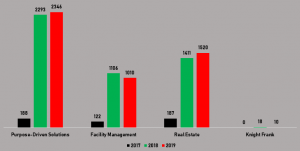
Exhibit 1: Businesses and Individuals Interest, 2017-2019

Source: Google Trends, 2019; Infoprations Analysis, 2019

As a company that continuously looks for new opportunities and offers sustainable values, Mr Frank has enormous tasks ahead in view of the company’s description of him as purpose-driven. This is imperative because the two sectors have been viewed by the buyers within the purpose-driven lens since 2017, our analysis suggests. Analysis reveals that businesses and individuals want companies in the two sectors that could provide purpose-driven solutions. Companies that would not emphasize profit making at the expense of offering solutions or products with sustainable value.

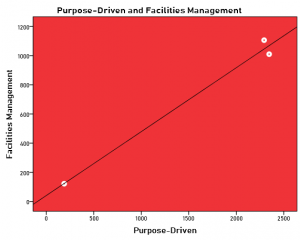
Exhibit 2: Relationship between Purpose-Driven Solutions Seeking and Facilities Management

Source: Infoprations Analysis, 2019


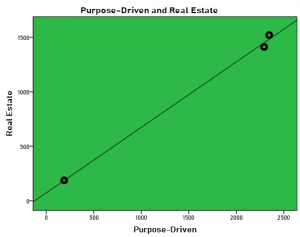
In the journey of understanding companies with purpose-driven model, analysis shows that businesses and individuals have had encounters with Knight Frank between 2017 and 2019. We found 88.7% connection of the interest with Knight Frank. The need to be purpose-driven in processes, people and solution is more pronounced when we found 99.4% linkage of the interest with Knight Frank within the facilities management sector and 99.9% for the real estate sector.

The expectation is that Mr Frank would prove the buyers of Knight Frank solutions, who have indicated significant interest in purpose-driven processes, staff and solutions in the last 3 years by walking the talk based on his recent position on one of the sectors we examined.

Exhibit 3: Relationship between Purpose-Driven Solutions Seeking and Facilities Management

Source: Infoprations Analysis, 2019

According to him “the new trend in Nigeria’s commercial real estate market is to be green and transparent.” “The rationale is clear, the more transparent a market is, the more investors and developers will understand its dynamics and the more likely they are to invest and develop in the space,” he added.

Mr Frank also needs to examine the company’s communication infrastructure. The digital media infrastructure needs overhauling to ensure communication of purpose-driven solutions delivery to the clients in the next decade, which starts from 2020. Checks show that Knight Frank is not well communicated and positioned on media such as LinkedIn, Twitter among others.