DD
MM
YYYY

PAGES

DD
MM
YYYY

spot_img

PAGES

Home Blog Page 659

The Competitive Edge in Live Gaming Decisions

0

Live game shows in online casinos are exciting. Fast spins, flashing wheel segments, bonus rounds – it’s a rush. But that rush can mess with judgment. Many players chase the next big hit and end up making hasty choices. Today, top players look for ways to keep a cool head while the action moves fast. One way to do that is by using real data and tools that give clear numbers to follow. Knowing what just happened – not guessing – is a huge advantage in games where every second counts.

Games in live casino shows differ from ordinary slots. They blend vivid visuals, real dealers, and tight timing. Without good insights, players often rely on gut feelings and emotions. That rarely leads to better choices. Instead, having access to live statistics and structured data lets a player pause and think before the next bet.

Using Live Feedback to Support Smarter Decisions

In fast-paced live casino games, the rush can often cloud a player’s judgment, leading to impulsive bets and hasty decisions. But with real-time tracking and up-to-date outcomes, players are given the tools to make more thoughtful, measured choices. Instead of just relying on gut feelings or the excitement of the moment, you have clear statistics and patterns to guide your decisions.

One platform that helps in this area is Crazy Time. It provides players with live data that enhances decision-making by tracking statistics like spin frequency, multipliers, and bonus round occurrences. With this information, players can make informed choices, adjusting their strategies as needed. This helps avoid the temptation to bet impulsively after a loss or jump on a rare bonus rush.

This approach helps players slow down their thinking. Instead of rushing bets after a loss or jumping on a rare bonus rush, you see clear tables of what just happened. For veteran players, that shift in mindset matters. You start making decisions based on what you know instead of what you feel. Sure, the wheel is still random and every round is independent – there’s no magic formula to win. But having live statistics right in your view gives you a competitive edge when setting bet sizes or timing your moves.

Tracking outcomes this way is especially useful in games that combine multiple mini-games or bonus features. With quick live stats, you can spot when certain events happened more frequently and prepare for next moves without reacting emotionally. For instance, if you notice a specific bonus round showing up every few spins, you can adjust your betting strategy accordingly. This doesn’t guarantee a win, but it shifts your mindset away from pure luck and toward a more measured, informed approach.

Understanding the Game: Real Time Stats and Patterns

One of the biggest shifts in recent years is how players approach games with solid numbers, not noise. Take programs that track live game data like segment hits, bonus triggers, and multiplier trends. These tools compile 24?hour spin histories and show patterns that are easy to read. Players can see how often segments like 1, 2, 5, or 10 hit, how often different bonus rounds show up, and what multipliers appeared most recently. This kind of info doesn’t predict the next result – randomness still rules – but it helps players understand what’s been happening so far.

Tracking outcomes this way is especially useful in games that combine multiple mini-games or bonus features. With quick live stats, you can spot when certain events happened more frequently and prepare for next moves without reacting emotionally. This doesn’t guarantee a win, but knowing recent trends gives players an edge in decision-making.

In fast-paced environments, understanding trends allows you to pace yourself, avoid impulse bets, and wait for the right moment to place a bet. The constant information stream helps you stay level-headed and not get caught up in the excitement of the game, which is crucial for long-term success.

Strategies Grounded in Numbers, Not Impulse

If you want to stay calm in a live casino game, the trick isn’t to predict outcomes. It’s to manage your reactions. Real-time data helps by removing surprises and replacing them with observable trends. For example:

  • seeing how often a certain segment hit in the last 30 spins might slow you down;
  • knowing bonus rounds develop at measurable frequencies keeps you from overspending;
  • watching multipliers appear on a chart lets you choose when to bet higher or lower.

Players who stick with statistics often make fewer rash decisions and lose less to emotional swings. Combining live stats with a personal base strategy gives you structure. That structure, in turn, helps you play longer with a clearer head.

Wrapping Up: Calm Play Is Smarter Play

Live casino games are meant to be fun first. They can be unpredictable and intense. But players who slow the pace and look at facts instead of feelings often have better experiences. Tools that collect live results, show recent patterns, and make that info readable give anyone a clearer lens. That leads to calmer decisions at the table, and ultimately more strategic play. It’s not about winning every spin. It’s about not losing your cool when the action gets wild.
Bybit Release its UAE Safety and Contingency Plan Amid Sharp Escalation in the Middle East

0

Bybit, the major cryptocurrency exchange headquartered in Dubai, UAE, has announced a series of safety and contingency measures for its operations and staff in the UAE.

This follows heightened geopolitical tensions in the Middle East, including recent military escalations and attacks over the weekend, which led to regional alerts, temporary airspace closures, and disruptions in the Gulf area. The measures appear to be a proactive “safety plan” or emergency response framework rather than a direct reaction to a cyberattack on Bybit itself.

Bybit suffered a massive ~$1.5 billion hack in February 2025 attributed to North Korean-linked actors, but that’s unrelated to the current events. Conducting case-by-case safety assessments for employees based in the UAE. Designating backup managers for each key position to ensure continuity if disruptions occur.

Activating a cross-regional support mechanism involving global teams to maintain uninterrupted business operations (critical for 24/7 trading). Equipping UAE office facilities with power backup systems capable of sustaining operations for at least 8 hours during emergencies power outages from regional instability.

Postponing all planned employee relocations to the UAE until further notice, amid the elevated risks. These steps aim to prioritize employee welfare while safeguarding operational resilience in a volatile environment.

This reflects Bybit’s emphasis on business continuity in its key hub (UAE), especially as the exchange has pursued regulatory approvals there and positioned Dubai as a global base. No indications suggest platform trading or user funds were directly impacted—focus is on physical and operational safety for staff and offices.

These attacks targeted multiple Gulf states, including the UAE, in response to prior U.S.-Israeli strikes on Iran. Impacts included debris damage in Dubai; to prominent sites like airports and buildings, injuries, at least a few fatalities in the region, airspace closures, flight cancellations, remote work mandates, school closures, and temporary halts in capital markets in places like Abu Dhabi and Dubai.

This context has prompted major crypto firms with UAE hubs—such as Bybit, Binance, and others—to implement precautionary measures for staff and operations, reflecting the broader disruption to the region’s sense of stability.

Bybit is conducting case-by-case safety assessments for its UAE-based employees, potentially assisting those in higher-risk areas near airports or sensitive sites with relocation or support. This signals a proactive stance on personal security amid risks like missile debris, explosions heard over cities, and general instability.

Broader UAE directives; remote work encouragement, limiting outdoor exposure align with this, but Bybit’s individualized approach shows tailored risk management. The plan emphasizes redundancy to maintain 24/7 trading and services: Designation of backup managers for every key position in the UAE.

Activation of cross-regional support from global teams; other offices worldwide stepping in if needed. Installation of power backup systems ensuring at least 8 hours of uninterrupted operations during potential outages (critical in scenarios involving infrastructure hits or blackouts).

These steps highlight crypto exchanges’ vulnerability to physical disruptions in a hub like Dubai, where many firms including Bybit have established regulatory footholds and large teams. No evidence suggests trading, user funds, or platform availability were directly affected—focus remains on preventing downtime from local events.

Bybit has postponed all planned employee relocations to the UAE indefinitely. This could slow expansion in a key market where the exchange has pursued licenses via VARA in Dubai and positioned itself as a regional leader. It reflects caution about moving more staff into a now-volatile area, potentially shifting hiring or transfers toward safer locations temporarily.

In the longer term, sustained tensions could challenge the UAE’s appeal as a crypto-friendly hub, though the emirates’ quick condemnations of attacks and diplomatic responses aim to project control. Similar measures from peers like Binance issuing stay-indoors notices indicate the crypto sector is treating this as a serious physical risk event, not just market volatility.

It underscores how geopolitical shocks can ripple into digital finance, especially in concentrated hubs. While the plan demonstrates maturity in crisis response, prolonged escalation could raise insurance costs, complicate compliance, or prompt diversification away from the Middle East.

User confidence appears unaffected so far, with no reported platform issues or mass withdrawals tied to this event. Bybit’s plan is a measured, defensive response to protect people and uptime in an acute crisis. It reinforces Dubai’s role as a crypto center while exposing its exposure to regional conflicts.

European Stocks Hit Two-Week Low as Gulf Conflict Deepens; Energy and Defense Outperform in Risk-Off Rout

0

European equities fell to a two-week low on Monday as escalating hostilities in the Middle East triggered a broad-based retreat from risk assets, with investors repricing geopolitical and energy risk across sectors.

The pan-European STOXX 600 declined 1.5% to 623.98 points by early trade, its lowest level since mid-February and on track for its steepest one-day fall in more than seven months. The drop pulled the index away from a record high reached on Friday, underscoring the speed with which sentiment has reversed.

National benchmarks followed suit. Germany’s DAX slid to a more than three-week low, France’s CAC 40 touched a near two-week trough, and Spain’s IBEX 35 fell to its weakest level in over a fortnight.

The market reaction followed fresh U.S. and Israeli strikes on Iran after weekend attacks that killed Iran’s Supreme Leader, Ayatollah Ali Khamenei. Tehran responded with missile barrages across the region, raising concerns of a widening conflict that could disrupt energy exports and maritime trade.

Paolo Zanghieri, senior economist at Generali Investments, said the coordinated action suggested a prolonged campaign. He noted that Brent crude had briefly exceeded $80 per barrel during a limited flare-up in 2025, and that the current escalation appears broader in scope.

Energy shock reverberates through markets

Oil markets are central to the repricing of risk. Brent crude jumped as much as 13% after Iranian attacks disrupted shipping through the Strait of Hormuz, which handles more than 20% of global oil transit. Traders quoted prices near $80 per barrel in early dealings, embedding a rising geopolitical premium.

For Europe, which remains structurally dependent on energy imports, sustained higher oil prices carry implications for inflation, consumer spending, and industrial margins. A move toward or above $100 per barrel—flagged by some analysts as possible under prolonged disruption—would likely complicate the European Central Bank’s policy path, particularly if headline inflation reaccelerates.

The surge in crude lifted energy majors. Shell, BP, and TotalEnergies gained between 2% and 4%, pushing the regional energy index to a record high. Higher realized prices directly support upstream earnings and cash flow, partially insulating the broader market from deeper losses.

Financials and travel stocks under pressure

Banks absorbed some of the heaviest selling. The euro zone banking index fell 3.6%, while insurers dropped 2%. UK lenders, with significant business ties in the Middle East and Asia, were particularly exposed. HSBC, Barclays, and Standard Chartered declined between 4% and 5%.

Rising oil prices typically strengthen net interest margins through inflation expectations, yet geopolitical shocks increase credit risk and dampen capital market activity. Investors appear to be prioritizing downside growth risks over margin expansion.

Airlines and travel-related stocks were hit by airspace closures and route suspensions across a critical aviation corridor linking Europe, the Gulf, and Asia. Lufthansa fell as much as 11%. International Consolidated Airlines Group and Air France-KLM lost 5% and 7% respectively. The travel and leisure sector fell to its lowest level since mid-November and was on course for its largest daily loss since April.

Higher jet fuel costs compound operational disruptions, pressuring margins at a time when demand recovery had been stabilizing after earlier volatility.

Luxury, retail, and exporters caught in downdraft

Consumer-facing stocks weakened amid concerns about discretionary spending and global supply chains. LVMH and Kering both fell around 4%, while the broader retail index shed 3.6%.

Luxury groups are sensitive to both Asian demand and currency fluctuations. A stronger dollar—typical during geopolitical stress—can weigh on euro-denominated earnings and cross-border consumption patterns.

Export-heavy industrials also declined as investors factored in potential shipping delays and rising freight costs. Disruptions to Hormuz and the Suez route threaten to tighten vessel capacity and extend transit times, increasing working capital requirements and squeezing margins across manufacturing supply chains.

Defense and shipping outperform

Defense stocks extended a strong 2025 rally, reflecting expectations of sustained military spending. BAE Systems, Rheinmetall, and Leonardo rose between 2% and 6%. The sector has gained nearly 60% this year, driven by rising NATO commitments and security tensions.

Shipping companies also advanced as longer rerouting around Africa and higher war-risk premiums point to firmer freight rates. Maersk and Hapag-Lloyd gained about 4.5%, supported by expectations of tighter vessel supply and elevated charter rates.

Utilities, often viewed as defensive bond proxies, were marginally lower, while consumer staples were broadly steady. Nestle was little changed, reflecting relative resilience in essential goods.

Volatility and macro crosscurrents

Europe’s volatility gauge, the STOXX volatility index, rose to its highest level since mid-November, signaling heightened demand for hedging and protection strategies.

The geopolitical shock arrives amid a packed economic calendar. Investors are awaiting euro zone inflation data, consumer and producer price releases, unemployment figures, purchasing managers’ indices, and retail sales. February PMI surveys showed manufacturing in France and Italy expanding, with Germany’s sector showing tentative recovery. A sustained energy shock could undermine that improvement.

Markets are now balancing three forces: the scale and duration of the Gulf conflict, the trajectory of oil prices, and the sustainability of European growth. For the moment, risk appetite is being dictated less by earnings or macro data and more by developments in the Strait of Hormuz and the broader regional security outlook.

Peter Schiff Critiques Bitcoin’s Market Behavior, Says Crypto Asset no Longer Moving on Its Own Beat

1

Peter Schiff, a strong Gold advocate and Bitcoin critic, in a recent post on X, argues that Bitcoin’s market behavior has fundamentally changed since gaining acceptance on Wall Street.

According to him, the cryptocurrency once known for moving independently of traditional assets, now reacts to global risk sentiment much like major tech stocks, particularly during geopolitical tensions.

Schiff also pointed to what he described as a growing inverse relationship between Bitcoin and gold, a shift he says contradicts earlier claims that institutional adoption would strengthen Bitcoin’s role as a hedge.

He wrote,

“Prior to Wall Street embracing Bitcoin, it had a near-zero correlation to other risk assets. Now it trades almost in lockstep with the NASDAQ, especially in reaction to geopolitical events. It is also now negatively correlated with gold, the opposite of what Wall Street promised”.

Bitcoin’s recent price action appeared to validate Schiff point in real time. Amid geopolitical tension, the crypto asset plunged sharply dropping below $66,000 and briefly touching as low as around $63,000.

By Sunday, BTC had recovered to trade near $67,000–$68,000 at points, erasing much of the initial war-driven losses. In contrast, traditional safe-haven assets behaved differently. Gold surged over $100 per ounce in the aftermath.

Silver climbed more than $2. Oil jumped over $5.50 per barrel, reaching $72.50 and up more than 30% year-to-date in 2026.

The Correlation Shift: From Independent to Beta Play?

Schiff’s core argument centers on Bitcoin’s transformation since heavy institutional adoption began around 2020–2021. According to him pre-Wall Street era, Bitcoin showed near-zero correlation with equities, often touted as “digital gold”, a non-correlated hedge against inflation, fiat debasement, and geopolitical risk.

Bitcoin’s price rarely mirrored movements in the stock market. For example, during stock market sell-offs or geopolitical crises, the crypto asset often maintained its own trajectory, sometimes even rising as investors sought alternatives outside traditional financial systems. This made it attractive to those looking for a hedge or portfolio diversification

Post-ETF era, multiple analyses show Bitcoin’s 30-day rolling correlation with the NASDAQ frequently exceeding 0.8 in recent years, behaving like a high-beta tech stock rather than an independent asset class.

Schiff argues that this proves Wall Street’s promises were false. Bitcoin has become just another risk-on asset that sells off when investors flee to safety, he says.

The Iran strike episode has reignited the long-running debate. Is Bitcoin a revolutionary monetary asset or simply the most volatile expression of Wall Street speculation?

For now, the BTC price action supports Schiff’s thesis at least tactically. Bitcoin reacted like a leveraged NASDAQ play during the weekend turmoil, while gold (despite being closed) held or gained in futures pricing.

Whether this correlation persists or Bitcoin eventually “decouples” as adoption matures remains one of the most watched questions in finance.  In the short term, with oil spiking, inflation risks rising, and geopolitical uncertainty far from resolved, traders are bracing for continued chop.

Looking ahead, Bitcoin’s behavior in the coming weeks will likely remain sensitive to macroeconomic and geopolitical developments. In the medium term, some analysts argue that Bitcoin could regain partial independence as global adoption matures and institutional trading strategies evolve.

However, in the near term, traders should brace for continued price swings and market chop, with BTC likely moving in tandem with tech stocks while safe havens like gold and oil provide traditional hedges

Defense stocks surge as investors price in prolonged Middle East conflict

0

Global defense shares rallied sharply on Monday as investors reacted to the escalating conflict in the Middle East, rotating into military contractors while broader equity markets fell on concerns over growth, inflation, and geopolitical spillover.

In Europe, Germany’s Hensoldt and Britain’s BAE Systems climbed more than 5%, leading gains on the regional benchmark. France’s Thales, Germany’s Renk, and Italy’s Leonardo rose between 3.1% and 4.5%. The broader Stoxx 600 fell 1.4%, touching a two-week low.

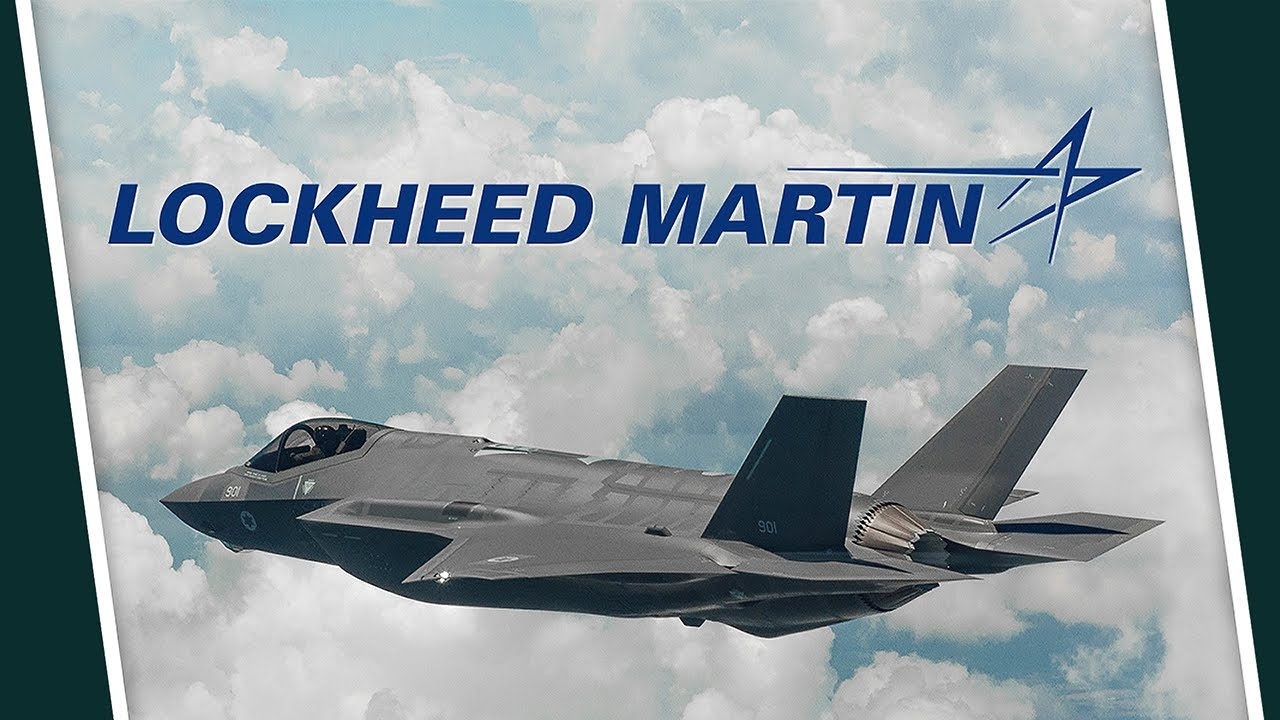
In the United States, Lockheed Martin gained 7.7% in premarket trading, and Northrop Grumman advanced 5.2%, even as futures tied to the S&P 500 dropped about 1%. In Asia, Japan’s Mitsubishi Heavy Industries and IHI Corporation each rose around 3%, while Singapore’s ST Engineering added 2.8%.

The gains followed U.S. and Israeli strikes that killed Iran’s Supreme Leader, Ayatollah Ali Khamenei, and Iranian retaliation that left three U.S. service members dead. President Donald Trump said the conflict could last up to four weeks and warned of further American casualties.

The rally indicates more than a short-term reaction. Defense companies have already benefited from a multi-year uptrend in military spending across NATO and parts of Asia, driven by heightened geopolitical tensions. The latest escalation reinforces expectations that procurement cycles will accelerate.

Missile defense systems, precision-guided munitions, radar arrays, drones, and electronic warfare platforms are likely to see sustained demand. Companies such as Lockheed Martin and Northrop Grumman are central to U.S. missile defense and air dominance programs. Hensoldt and Thales specialize in radar and sensor technologies, while BAE Systems and Leonardo have diversified exposure across air, land, and naval platforms.

Conflicts of this nature also expose inventory constraints. Western militaries have depleted stockpiles of interceptors and advanced munitions in recent years. Replenishment contracts tend to be multi-year and high margin, supporting earnings visibility. Investors are therefore pricing in both immediate restocking and structural budget expansion.

Another dimension is the acceleration of autonomous and counter-drone systems. Iran’s use of drones in retaliation underscores the increasing centrality of unmanned systems in modern warfare. Firms with exposure to anti-drone technology, surveillance satellites, and command-and-control software may benefit disproportionately.

Energy shock and macroeconomic spillovers

The defense rally unfolded against a broader risk-off backdrop. Oil prices jumped as markets assessed the risk of supply disruption across the Gulf, a region central to global crude exports. Energy equities rose, but higher oil prices introduce macroeconomic complications.

A sustained rise in crude prices can feed into transport, manufacturing, and food costs, potentially lifting headline inflation. That in turn could constrain central banks’ flexibility, particularly if policymakers had been preparing to ease monetary conditions. Equity valuations, already stretched in some sectors, may face renewed pressure if real yields rise.

Patrick O’Donnell, chief investment strategist at Omnis Investments, said uncertainty around duration is the key variable.

“It’s very much one of uncertainty at the moment that investors are grappling with,” he told CNBC’s “Squawk Box Europe,” adding that markets are weighing implications for both growth and inflation.

Duration matters for defense equities as well. A short, contained conflict may lead to tactical gains that fade once tensions ease. A protracted confrontation — especially one involving sustained air campaigns, naval deployments, or expanded regional participation — could trigger durable increases in procurement budgets.

Fiscal, political, and market implications

Governments may face mounting pressure to raise defense outlays beyond existing commitments. In Europe, where several countries have already pledged to meet or exceed NATO’s 2% of GDP spending target, further escalation could accelerate supplemental appropriations. In the United States, Congress may be asked to approve emergency funding packages tied to operations and replenishment.

That fiscal expansion intersects with broader budget debates. Higher defense spending, combined with potential energy subsidies or reconstruction aid, could widen deficits. Sovereign bond markets may respond if issuance increases materially.

From a market structure perspective, defense stocks often function as a geopolitical hedge within diversified portfolios. Institutional investors may increase exposure not solely for earnings growth but for risk offsetting characteristics during periods of instability.

At the same time, valuations in parts of the sector have already risen substantially over recent years. The sustainability of the rally will depend on contract flow, margin resilience amid supply chain constraints, and political consensus around sustained military expenditure.

Now, defense contractors are absorbing capital fleeing broader equity markets. The possibility of that rotation becoming entrenched will likely depend on the conflict’s trajectory, the scale of fiscal response, and the extent to which energy-driven inflation reshapes the global macro outlook.