DD
MM
YYYY

PAGES

DD
MM
YYYY

spot_img

PAGES

Home Blog Page 661

CME Group Partners With FanDuel To Bring Event-Based Contracts Onchain

0

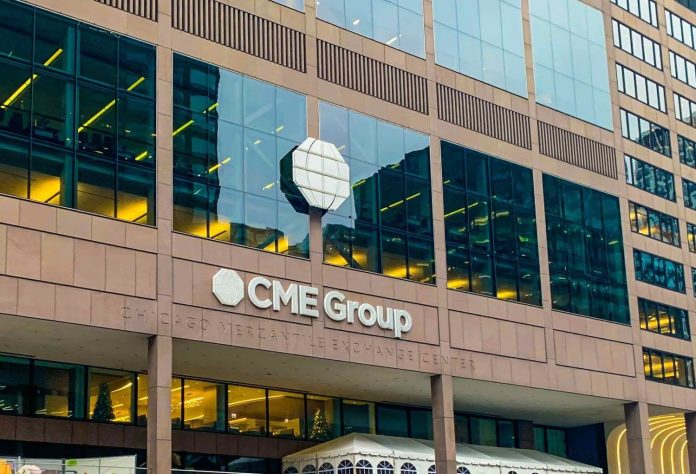
CME Group, the world’s leading derivatives marketplace, has partnered with FanDuel, a major online gaming company, to launch event-based contracts that include cryptocurrencies, among other financial benchmarks.

This joint venture aims to provide FanDuel’s 17 million customers with access to low-cost, regulated event contracts starting at $1. These contracts allow users to take simple “yes” or “no” positions multiple times a day on various markets, such as the S&P 500, Nasdaq-100, oil, gas, gold, cryptocurrencies, and economic indicators like GDP and CPI.

The platform, expected to launch later in 2025 pending CFTC regulatory approval, will operate as a non-clearing futures commission merchant (FCM) and be listed on CME Group exchanges. This move blends financial trading with FanDuel’s gaming expertise, targeting retail investors and sports bettors to engage with financial markets in a simplified, accessible way.

The introduction of low-cost ($1) event contracts allows retail investors, including FanDuel’s 17 million users, to engage with crypto markets without needing deep financial expertise or large capital. The “yes” or “no” format simplifies speculation on crypto price movements, making it akin to sports betting, which could attract a broader, less crypto-savvy audience.

This democratization could drive higher retail participation, increasing trading volume and liquidity in crypto-related contracts on regulated exchanges. By integrating crypto into a platform backed by CME, a trusted financial institution, and FanDuel, a recognizable gaming brand, cryptocurrencies gain further legitimacy. This move signals to traditional finance and retail audiences that crypto is a viable asset class.

The regulated nature of these contracts (pending CFTC approval) provides a safer entry point for users wary of unregulated crypto exchanges, reducing perceived risks associated with fraud or volatility. Event contracts tied to crypto prices will likely increase trading activity on CME’s platform, contributing to better price discovery for cryptocurrencies.

More participants betting on price outcomes can lead to more accurate market signals, reflecting real-time sentiment and expectations. This could stabilize crypto prices over time by providing a regulated venue for speculation, reducing reliance on volatile, unregulated platforms.

The partnership operates within the CFTC’s regulatory framework, setting a precedent for how crypto-based derivatives can be structured in a compliant manner. This could encourage other financial institutions to develop similar products, fostering innovation in crypto derivatives while adhering to regulatory standards.

Competition with Existing Crypto Platforms

FanDuel’s entry into crypto event contracts could challenge existing prediction markets like Polymarket or decentralized finance (DeFi) platforms offering similar products. The backing of CME’s infrastructure and FanDuel’s user base may draw users away from less regulated or less user-friendly platforms.

The gamified nature of event contracts, combined with crypto’s inherent volatility, could fuel speculative trading among retail users. While this may boost engagement, it risks creating bubbles if inexperienced traders over-leverage or misjudge market dynamics.

Prediction markets aggregate collective knowledge and sentiment, providing real-time insights into expected crypto price movements or events (e.g., Bitcoin ETF approvals or Ethereum upgrades). Platforms like Polymarket have shown how crowd-sourced predictions can align closely with actual outcomes, improving market efficiency.

For example, Polymarket’s 2024 election markets demonstrated high accuracy in forecasting outcomes, suggesting that similar precision could apply to crypto-related events, such as price targets or network upgrades. Prediction markets allow crypto investors to hedge against volatility or speculate on specific outcomes. This provides an alternative to spot trading or futures, enabling more nuanced strategies.

Crypto projects can use prediction markets to gauge community sentiment about proposed changes (e.g., protocol upgrades or governance decisions). For instance, a market predicting the success of an Ethereum layer-2 scaling solution could inform developers’ priorities.

Prediction markets like CME’s event contracts bridge crypto with traditional financial systems by offering regulated, accessible products. This integration helps legitimize crypto as an asset class and attracts institutional interest, as seen with CME’s existing Bitcoin and Ethereum futures.

The CME-FanDuel partnership is a pivotal step in integrating cryptocurrencies into mainstream financial and gaming ecosystems. By offering low-cost, regulated event contracts, it lowers barriers for retail participation, enhances liquidity, and legitimizes crypto as an asset class. However, it also raises concerns about speculative excess and regulatory challenges.

DeepSeek Upgrades V3 Model Using Domestically-Produced Chips Amid Push to Replace U.S. Tech

0

Chinese artificial intelligence startup DeepSeek on Thursday unveiled an upgrade to its flagship V3 model, introducing a feature it says is optimized for compatibility with Chinese-made chips and promising faster processing speeds.

The new release, named DeepSeek-V3.1, underscores Beijing’s push to build a self-reliant semiconductor ecosystem as Washington tightens export restrictions on advanced U.S. technology. Analysts see the move as a clear indication that DeepSeek is aligning its product strategy with China’s broader ambition to reduce dependence on foreign chipmakers.

DeepSeek has already drawn global attention this year by releasing AI models capable of competing with Western rivals such as OpenAI’s ChatGPT. Its products have gained traction in part because they operate at lower costs, making them more accessible to both enterprises and individual users.

The V3.1 upgrade follows a string of recent developments: an R1 model update in May and an earlier enhancement to its V3 model in March. This steady cadence of improvements signals DeepSeek’s determination to maintain pace in the global AI race.

In a WeChat post, the company revealed that DeepSeek-V3.1 incorporates a new UE8M0 FP8 precision format, which has been optimized for “soon-to-be-released next-generation domestic chips.” While DeepSeek did not disclose which manufacturers or chip models will be supported, the development is significant in light of the country’s drive to bolster its own semiconductor sector.

FP8, or 8-bit floating point, is a streamlined data processing format that allows AI models to run faster and more efficiently by consuming less memory compared with traditional methods. The company emphasized that this approach helps reduce computational overhead while improving performance.

Beyond chip compatibility, DeepSeek also introduced a hybrid inference structure to the V3.1 model. This allows the system to operate in both reasoning and non-reasoning modes, depending on the task at hand. Users can seamlessly toggle between these two modes via a “deep thinking” button integrated into DeepSeek’s official app and web platform. Both platforms are now running the upgraded V3.1 model.

In addition to the performance enhancements, DeepSeek announced adjustments to the costs for accessing its API—the platform that enables developers to integrate its AI models into third-party apps and web products. These pricing changes will take effect starting September 6, the company confirmed.

Analysts note that DeepSeek’s strategy mirrors the approach taken by Huawei, which in recent years has been forced to accelerate development of in-house technologies after U.S. sanctions cut off access to critical components. Huawei, once heavily reliant on American chips and software, has since shifted to homegrown semiconductors, proprietary operating systems, and AI frameworks to ensure that its products can function independently of U.S. supply chains.

DeepSeek is thus betting that domestic chipmakers will soon deliver the processing power needed to support cutting-edge AI, allowing the company to scale without being constrained by Washington’s restrictions.

DeepSeek is reinforcing its role as one of China’s most ambitious AI challengers to Western firms by tailoring its AI to domestic chips and expanding usability features. With geopolitical tensions continuing to shape the technology supply chain, the company’s strategy may help accelerate the adoption of homegrown semiconductors while strengthening China’s position in the global AI race.

A Look At U.S-EU Finalized Tariffs Deal

0

The United States and the European Union finalized a framework trade deal, announced by U.S. President Donald Trump and European Commission President Ursula von der Leyen at Trump’s golf course in Turnberry, Scotland.

The agreement, locked in on August 21, 2025, aims to avoid a trade war and rebalance the economic relationship between the two blocs, which account for nearly a third of global trade. The U.S. will impose a 15% tariff on most EU exports, including autos, pharmaceuticals, semiconductors, and lumber, significantly lower than the threatened 30% rate.

The EU will eliminate tariffs on all U.S. industrial goods and provide preferential market access for U.S. seafood and agricultural products. U.S. tariffs on EU cars and car parts (currently 27.5%) are expected to be reduced once the EU introduces legislation to cut tariffs on U.S. goods, potentially within weeks.

The EU committed to purchasing $750 billion in U.S. energy (liquefied natural gas, oil, and nuclear products) over three years, averaging $250 billion annually, and investing $600 billion in U.S. strategic sectors by 2028. Additionally, the EU will buy $40 billion in U.S.-made AI chips and significant amounts of U.S. military equipment.

However, critics argue these figures are ambitious and legally non-binding, as the EU cannot directly control private sector investments. Both sides agreed to address digital trade barriers, with the EU confirming it will not adopt network usage fees. They will also negotiate rules of origin to ensure benefits accrue to both parties and consider cooperation on steel and aluminum markets to address overcapacity through tariff quotas.

U.S. farmers, ranchers, and energy firms stand to gain from increased exports and investments. EU automakers, aviation, and semiconductor sectors avoid harsher tariffs, but the German automotive industry faces challenges with the 15% tariff costing billions annually. EU exporters generally face higher costs, potentially impacting competitiveness.

European leaders like German Chancellor Friedrich Merz and French Prime Minister François Bayrou have expressed concerns, with France calling it a “dark day” for the EU, citing a lack of reciprocity. Environmental groups warn the deal’s focus on fossil fuels could undermine EU climate goals. Contradictory claims between the U.S. and EU on details, such as pharmaceutical tariffs, have caused confusion, and the deal’s implementation depends on EU legislative processes and further negotiations.

The deal is seen as a compromise to avoid a more damaging trade war, but its asymmetry and long-term impacts remain contentious, with ongoing negotiations needed to finalize details. The EU’s commitment to purchase $750 billion in US energy (LNG, oil, nuclear) over three years and $40 billion in AI chips boosts US energy and tech sectors.

Tariff-free access for US industrial goods, seafood, and agricultural products enhances US export competitiveness, particularly for farmers and ranchers. The 15% US tariff on most EU exports (e.g., autos, pharmaceuticals, semiconductors) increases costs for EU exporters, potentially reducing their competitiveness.

German automakers, facing billions in annual tariff costs, are particularly affected, though reduced US tariffs on EU cars (from 27.5%) offer some relief. The deal’s focus on bilateral trade may divert flows from other partners, impacting global supply chains. The EU’s tariff cuts on US goods could pressure other trading blocs (e.g., China, UK) to negotiate similar deals.

The EU’s $600 billion investment pledge in US strategic sectors by 2028 strengthens US industries like tech, energy, and defense. However, as these commitments are non-binding, actual investment may fall short, creating uncertainty. EU industries, particularly in Germany and France, face higher costs and potential job losses due to US tariffs.

In the EU, higher tariffs on exports may raise prices for US-bound goods, potentially increasing costs for European consumers if companies pass on losses. In the US, tariff reductions on EU goods could lower prices for consumers, particularly for cars and pharmaceuticals, though the extent depends on final agreements.

The deal is a political win for President Trump, reinforcing his “America First” agenda by securing favorable terms for US industries. It could bolster his administration’s support among farmers, energy producers, and tech firms, especially ahead of future elections.

Critics, including labor unions and environmental groups, may oppose the deal for its focus on fossil fuels and lack of worker protections, potentially fueling domestic debates. The deal has sparked divisions within the EU. France and Germany, key economic powers, have criticized its asymmetry.

This could strain EU unity, as smaller member states may benefit more from US market access. The European Commission’s ability to deliver on non-binding investment pledges depends on member state cooperation, risking further political friction if targets are unmet.

The deal strengthens the US-EU economic alliance, potentially countering China’s influence in global trade. By prioritizing US energy and tech, the EU reduces reliance on Chinese chips and Russian energy, aligning with Western strategic goals. However, the deal’s focus on bilateral benefits may alienate other partners, like the UK or Canada, and could complicate WTO compliance.

The EU’s commitment to buy $750 billion in US fossil fuels (LNG, oil) undermines its climate goals, drawing criticism from environmental groups. This could weaken the EU’s global leadership on climate policy and strain relations with green-leaning member states. Increased US LNG exports enhance EU energy security, reducing dependence on Russian gas.

The deal strengthens US economic and geopolitical leverage while offering the EU tariff relief and market access at the cost of significant concessions. It stabilizes transatlantic trade but risks internal EU divisions, climate setbacks, and global trade disruptions, with long-term outcomes dependent on implementation and further negotiations.

How To Develop An Impactful Enterprise AI Strategy

0

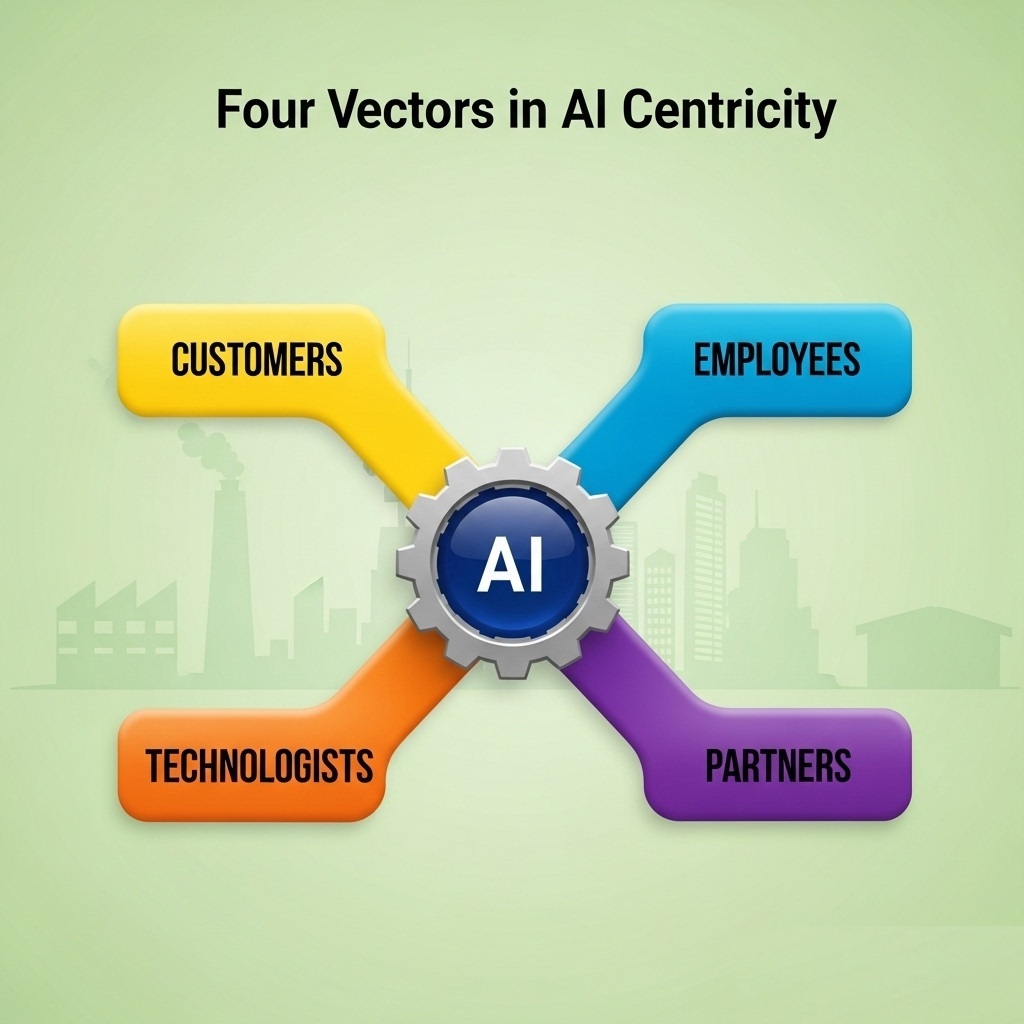
If your Board or Executive Management  asks you to lead the development of AI strategy in your firm, relax because Tekedia and Blucera’s Enterprise AI Consulting has provided a framework which can help you.

The first is to understand the vectors which AI must influence and improve in that business. We note: customers, employees, technologists, and partners/suppliers. And all must be powered from the same stack (AI centricity).

When you have that clarity, the next is to know the pillars which must be TRANSFORMED, not just being run by AI. Here are the pillars: people, processes and tools. If you want success in an AI project, to bring transformation, those three pillars must be impacted.

Remember, it is not about the technology, the focus is innovation and  business transformation to enable your firm to fix frictions in the market more efficiently. And that means you must look into the adoption post deployment. Nigeria’s older banks used computers (they RAN with IT) but the new generation banks TRANSFORMED banking when they linked their branches with IT, making it possible in the early 1990s for anyone to operate a bank account irrespective of where the account was opened.

Indeed, AI must Transform, not just run your firm. As that happens, it is about the one oasis and double play strategy* because an AI-native transformed firm must necessarily have a new business model. If AI has not transformed your business model, you have not done AI right! But when business models evolve, value capture positioning changes. How do you handle that? You look for the firm’s one oasis and then see where to capture financial benefits through the double or multiple plays.

Simply, what makes your firm popular must not necessarily be what makes it the most money. Amazon is known for ecommerce but the rainmaker is AWS, but AWS will not exist without the ecommerce unit.

*The One Oasis and Double Play strategy, developed by Ndubuisi Ekekwe in the Harvard Business Review , is a business model focused on identifying a company’s best product or service (the “One Oasis”) and then using its success to strategically expand into new, related markets (the “Double Play”). The “One Oasis” is a dominant product that provides exceptional value, and the “Double Play” leverages its strong reputation and customer base to create new revenue streams and a competitive advantage, leading to a virtuous cycle of growth and resilience.

We’re transformers >> evolving artificial intelligence to enterprise-industrial intelligence. Let us speak to your board or management here

How to Know If White Label Trading Tools Are Right For You

0

If you’re looking to launch a trading platform or upgrade your existing offering, you’ve probably considered white label tools as a more affordable alternative to building a new platform from scratch. But how exactly do these tools work, what are their benefits, and when might they be right for you?

Choosing the right trading solution for your business is something you shouldn’t rush into. If you’re keen to learn more about white label tools, we’ve shared everything you should know in this guide. By the end, you should have the knowledge to move forward with a decision. 

What do White Label Trading Tools Offer?

White label trading tools are essentially pre-built platforms that can be custom-branded for your business.

The obvious benefit of these tools is that they’re cheaper and quicker to set up compared to designing and building your own platform from scratch. They’re built by companies with extensive industry experience, like D, and offer all the ready-made features that you might want to provide to your clients. 

When you’re deciding whether or not white label trading tools are right for you, make sure to consider the following things: 

Assess Your Business Goals

First, determine exactly what you want to get out of your investment, and whether or not this makes white label tools the most suitable choice. 

For instance, if you’re prioritizing speed to market, a white label platform will probably be the best fit. On the other end, if you prefer to have full control over every feature, you might find that building in-house suits you better. You’ll need to consider your long-term strategy, not just your immediate goals. 

Evaluate Your Budget And Resources

Investing in a white label trading platform will reduce your upfront development costs because you won’t have to do any of the design work yourself. Plus, the ongoing licensing fees are much easier to manage when you compare them to the alternative (hiring a large tech team). 

If you’re a startup company or you need to be mindful of your budget, make sure to calculate costs carefully and compare the total cost of ownership between white label and building your own tools.

Consider Your Customization Needs

The level of customization you want will also determine the suitability of a white label trading platform for your business. 

You might prefer a plug-and-play platform that you can simply customize with your own branding. Or, you may lean towards a platform that needs to be more heavily customized but gives you the option to create something more unique. In this case, keep in mind that white label has limits in terms of how much customization can be done, and building a platform from scratch might be the better option.

Think About Scalability

Finally, a big benefit of the best white label tools is that they come with infrastructure that’s designed to support growth. That means, as your business scales and your client base expands, your tools will be able to handle higher trading volumes.

This isn’t a given, so make sure to ask the provider about things like upgrades and server reliability before you commit to working with them.