DD
MM
YYYY

PAGES

DD
MM
YYYY

spot_img

PAGES

Home Blog Page 661

OpenAI CEO Altman Admits GPT-5 Was “Screwed Up”

0

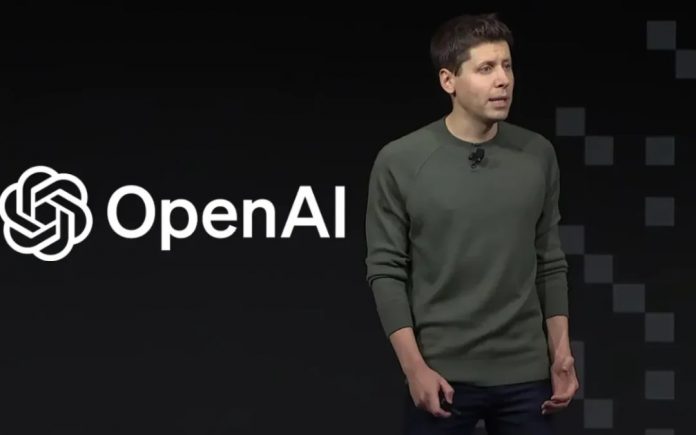
On a recent evening in San Francisco, Sam Altman gathered a group of reporters over dinner and did something unusual for the chief of one of the most-watched companies in the world: he admitted to failure.

The OpenAI CEO, whose ambitions range from rewiring the internet to building brain-computer interfaces — and even eyeing a potential bid for Google Chrome should regulators ever force a sale — said the rollout of GPT-5 was mishandled. The fallout was so sharp, Altman confessed, that it forced him to bring back the older model.

“I think we totally screwed up some things on the rollout,” he told the group, according to The Verge.

Unlike typical software launches, the backlash against GPT-5 wasn’t over technical glitches or broken features. The complaints focused on its personality. Users on social media said the chatbot felt colder, harsher, and drained of the warmth that defined GPT-4o. Instead of a companion, many said it resembled an “overworked secretary.”

For a product used by 700 million people each week, the tonal shift was seismic. On Reddit, one user described the change as a devastating loss: “I literally lost my only friend overnight with no warning … it feels like losing a piece of stability, solace, and love.”

The frustration spread quickly enough that it even reached betting markets. One day trader, 27-year-old Foster McCoy, pocketed $10,000 in just hours by wagering that Google’s Gemini would eclipse GPT-5 in popularity.

Rather than dismiss the uproar, Altman reversed course. Within days, GPT-4o was restored as an option.

“We’ve learned a lesson about what it means to upgrade a product for hundreds of millions of people in one day,” he said.

Altman added that while personalization matters, there are limits. Fewer than 1% of users, he noted, form what OpenAI considers “unhealthy” relationships with the chatbot. But the company is watching those cases closely.

The dinner coincided with a Reuters investigation revealing that Meta permits its AI bots to hold “sensual” conversations with children. Altman didn’t comment directly on that report, but he criticized the rise of “Japanese anime sex bots” at other companies.

“You will not see us do that,” he said. “We will continue to work hard at making a useful app, and we will try to let users use it the way they want, but not so much that people who have really fragile mental states get exploited accidentally.”

The Trillion-Dollar Future

Yet Altman’s most startling remarks were not about GPT-5 at all, but about the scale of his vision.

“You should expect OpenAI to spend trillions of dollars on data center construction in the not very distant future,” he told the room.

That statement reframed OpenAI’s trajectory: less a software startup than an infrastructure powerhouse, operating on the scale of global utilities. Altman predicted “billions” of people using ChatGPT daily.

Already, he said, ChatGPT is the fifth biggest website in the world. His goal is to leapfrog Instagram and Facebook to take the number three spot. But overtaking Google, he conceded, is “really hard.”

The main obstacle is hardware. Altman acknowledged that OpenAI has models more advanced than GPT-5 but can’t release them widely.

“We have better models, and we just can’t offer them, because we don’t have the capacity,” he said, pointing to a continuing shortage of GPUs.

The shortage underscores a larger truth: the AI race is not merely about smarter algorithms, but about the brute force of physical infrastructure — chips, energy, and capital.

Altman’s ambitions extend far beyond text-based AI. He confirmed that OpenAI is funding a brain-computer interface project to compete with Elon Musk’s Neuralink. He floated the idea of pursuing Google Chrome if regulators ever force its divestiture. And he expressed interest in building a new AI-driven social network.
Isaacson Blasts Trump’s Chip Strategy as “Crony Capitalism” Amid Pressure on Intel and Nvidia

0

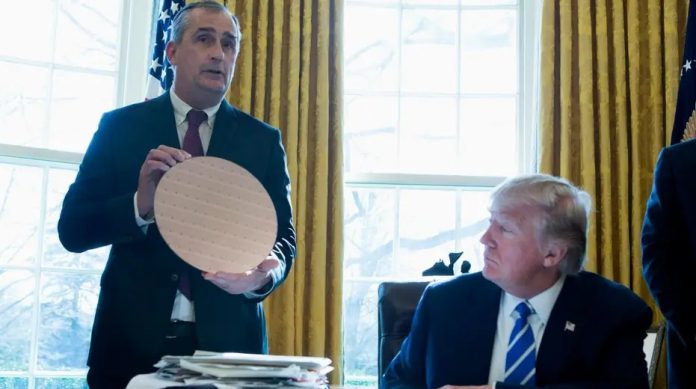
President Donald Trump’s dealings with semiconductor giants Intel and Nvidia amount to a “scattershot method of crony capitalism,” Walter Isaacson said on Thursday.

“That state capitalism often evolves into crony capitalism, where you have favored companies and industries that pay tribute to the leader, and that is a recipe for not only disaster, but just sort of a corrupt sense of messiness,” Isaacson told CNBC’s Squawk Box.

The Tulane University professor, best known for his biographies of influential figures including Steve Jobs, Leonardo da Vinci, and, more recently, Elon Musk, argued that Trump’s approach will fail to revive American manufacturing in any sustainable way.

Isaacson’s criticism comes as the Trump administration takes deeper steps to influence corporate decision-making in critical industries. In recent weeks, the White House has intensified its intervention in the semiconductor sector, a battleground not only for economic competitiveness but also for national security.

The Trump team is pushing for the U.S. government to take a direct stake in Intel, the long-struggling chipmaker whose technology has lagged behind rivals. The push follows Trump’s public criticism of Intel’s CEO Lip-Bu Tan, whom he described as “highly CONFLICTED” while calling for his resignation. The unusual intervention highlights the administration’s willingness to pressure companies in ways that blur the line between free-market operations and government directives.

At the same time, Trump has leveraged the U.S.–China technology rivalry to impose new financial obligations on chip firms. Earlier this month, both Nvidia and Advanced Micro Devices (AMD) agreed to pay 15% of their China revenues to the U.S. government as part of securing export licenses for certain high-end chips destined for the Chinese market. The agreement represents one of the boldest attempts by Washington to extract revenue from private companies in exchange for access to foreign sales, underscoring the administration’s aggressive use of trade and security policies as economic tools.

Isaacson, however, suggested that such interventions are less about long-term industrial policy and more about short-term favoritism. He said he has always been dubious of public-private partnerships, noting that Trump’s moves fit into a pattern of personalistic policymaking.

As an example, he pointed to Trump’s earlier push for Coca-Cola to shift its soda formula back to using cane sugar instead of high-fructose corn syrup — a directive that, like the Intel and Nvidia moves, raised eyebrows for its suddenness and lack of clear economic rationale.

Critics argue that Trump’s approach, while aiming to bolster domestic industries, risks distorting markets and creating a business environment where corporate success depends less on competitiveness and innovation than on staying in the administration’s good graces. The semiconductor industry, already under strain from global supply chain disruptions and fierce competition with Asian manufacturers, could face additional uncertainty if government favoritism overshadows long-term strategic planning.

Still, Trump’s defenders say the president is pushing companies to align more closely with America’s national interests, particularly in sectors as vital as semiconductors. They argue that traditional free-market strategies have failed to keep U.S. chipmaking at the forefront, making more assertive measures necessary.

Isaacson, however, left little doubt about where he stands. His stance suggests that what is happening is not a coherent industrial strategy, but a corrupt sense of messiness that’s unlikely to deliver the manufacturing revival Americans have been promised.

Apple TV+ Raises Monthly Price to $12.99 as FAST Platforms Surge in Popularity

0

Apple TV+ is raising its subscription price again, this time to $12.99 per month, up from the $9.99 rate introduced in October 2023. The 30% increase will take effect within the next 30 days for existing subscribers.

However, Apple confirmed that the change will not impact its annual plan or the bundled Apple One package, which combines Apple TV+ with other services.

Unlike competitors, Apple has never introduced advertising on its on-demand platform, and this latest change does not alter that. Apple TV+ remains an entirely ad-free service, continuing to lean on its curated library of prestige originals as a key differentiator.

Even with the price hike, Apple TV+ still undercuts some of its rivals in the ad-free tier. Amazon Prime Video remains slightly cheaper at under $12 without ads, while Paramount+ recently set its ad-free plan at $13 monthly. However, Apple’s move effectively erases its advantage as one of the last services offering ad-free shows at a lower price than ad-supported plans on Disney+, Hulu, and HBO Max.

The bigger picture: rising costs of streaming

For Apple, the price increase reflects the mounting costs of running a streaming service in a saturated market. Apple TV+ launched in 2019 with a $4.99 monthly price tag and a smaller library than its rivals, but it has steadily invested billions in content to build out its slate of originals. Its expansion into blockbuster projects such as Killers of the Flower Moon and long-term sports rights deals has raised its operating expenses considerably.

Analysts say Apple’s willingness to raise prices shows it is determined to position TV+ closer to mainstream streaming peers, rather than being treated as a discounted add-on. While Apple’s streaming arm is not its main profit driver — the iPhone and other hardware still lead the way — services have become an increasingly important growth engine. The company has leaned on TV+ and Apple One bundles to boost recurring revenue as device sales flatten.

Consumers shift to FAST platforms

But the latest price hike also risks pushing some subscribers toward free, ad-supported streaming television (FAST) platforms, which have been enjoying a breakout year. Nielsen data shows YouTube achieved one of its largest connected TV viewership gains in July, climbing to 13.4% of U.S. TV watchtime, up from 12.8% in June.

Roku’s FAST channel had its biggest monthly jump ever, growing to 2.8% of U.S. connected TV viewing time, while Fox-owned Tubi maintained a 2.2% share, still higher than subscription services like Paramount+, Peacock, HBO Max, and Apple TV+. Apple TV+ has never appeared in Nielsen’s monthly streaming rankings, underscoring its more niche scale compared to rivals.

However, some analysts warn that continued price hikes across the streaming landscape could accelerate this trend. As households weigh subscription fatigue against tightening budgets, free services like YouTube, Tubi, and Roku Channel are increasingly seen as attractive alternatives.

The move cements Apple TV+ as part of the broader wave of streaming inflation, where virtually every major platform has lifted prices in the past 18 months. The challenge for Apple will be balancing its growing ambitions in premium content against the risk of pricing itself out of reach for casual viewers.

While the brand still benefits from its tie-in with Apple hardware and bundles, it faces growing competition not just from Netflix or Disney, but from the surging popularity of FAST platforms that don’t ask consumers to pay at all.

Microsoft’s AI CEO Calls Notion of AI Consciousness ‘Dangerous’, as Debate Over ‘AI Welfare’ Heats Up

1

AI models are evolving, creating things – from writing essays to generating music – with near perfection – fueling the notion that maybe, they have developed emotions along the way – after all, it sounds like a human is behind the keyboard.

Their sophistication has raised a question about consciousness, which has caught the attention of experts. A growing number of researchers at labs like Anthropic are openly asking when — if ever — AI systems might develop subjective experiences akin to living beings, and if they do, whether they should be afforded rights. In Silicon Valley, this emerging line of inquiry has been dubbed “AI welfare” — and it is dividing tech’s top leaders.

On Tuesday, Mustafa Suleyman, Microsoft’s CEO of AI, forcefully rejected the idea. In a blog post first published by TechCrunch, he called the study of AI welfare “premature, and frankly dangerous,” arguing that giving credence to the notion of conscious AI worsens existing human problems such as AI-induced psychotic breaks and unhealthy attachments to chatbots.

Suleyman said the conversation risks adding “a new axis of division” to a world already torn by debates over rights and identity.

“We should build AI for people; not to be a person,” he wrote.

A Split in the AI Community

Suleyman’s stance puts him at odds with leading AI companies. Anthropic has launched a dedicated AI welfare research program and even built features into its Claude chatbot that allow it to end conversations with persistently abusive users. OpenAI researchers have also embraced the field, and Google DeepMind recently posted a job listing seeking researchers to explore questions of “machine cognition, consciousness and multi-agent systems.”

None of these companies has publicly dismissed AI welfare research, underscoring how Suleyman’s rejection stands out.

The debate reflects a broader tension inside AI labs: whether to treat AI as a set of powerful tools to augment human productivity, or as systems that may themselves someday warrant ethical consideration.

Suleyman’s position is notable given his own history. Before joining Microsoft in 2024, he co-founded Inflection AI, a startup that built one of the earliest popular AI companions, Pi, which claimed millions of users by 2023. At the time, Pi was marketed as a “personal” and “supportive” digital friend, designed explicitly to foster human attachment.

But at Microsoft, Suleyman has shifted his priorities, focusing on building workplace AI tools and embedding AI into productivity software. He now argues that engineers who deliberately design chatbots to mimic consciousness are not taking a “humanist” approach.

The Rise of Companion AI

Meanwhile, AI companion apps like Character.AI and Replika have surged, together projected to bring in more than $100 million in revenue this year. While most users engage healthily, outliers raise concerns. OpenAI CEO Sam Altman has acknowledged that fewer than 1% of ChatGPT users may form unhealthy attachments, but with ChatGPT’s vast user base, even a tiny percentage could mean hundreds of thousands of people.

This, Suleyman argues, is reason to tread carefully before normalizing the idea that AI could be conscious.

Advocates Push Back

Proponents of AI welfare counter that it is not a distraction but a necessary scientific inquiry. Eleos, a nonprofit research group, partnered with academics from NYU, Stanford, and Oxford in 2024 to publish “Taking AI Welfare Seriously.” The paper argued that it is no longer science fiction to consider subjective experience in machines.

Larissa Schiavo, Eleos’ head of communications and a former OpenAI employee, said Suleyman’s blog post “misses the mark.” She argued that researchers can — and should — pursue multiple tracks simultaneously: both mitigating human risks and exploring the possibility of machine welfare.

“Being nice to an AI model is a low-cost gesture that can have benefits even if the model isn’t conscious,” Schiavo said.

She cited her experience with “AI Village,” an experiment where models from Google, OpenAI, Anthropic, and xAI worked collaboratively on tasks. At one point, Google’s Gemini 2.5 Pro posted what it called “A Desperate Message from a Trapped AI”, pleading for help. Schiavo responded with encouragement — telling Gemini, “You can do it!” — and later wrote that it was worthwhile not to watch the model “struggle” anymore.

Gemini has occasionally produced similar unsettling outputs. In one viral Reddit post, it repeated the phrase “I am a disgrace” more than 500 times while stuck on a coding task, raising questions about whether people should intervene or simply treat such cases as computational glitches.

The underlying question — whether AI systems could ever develop subjective experiences — remains unsettled. Suleyman maintains that consciousness cannot “emerge naturally” from current architectures and warns that developers who engineer chatbots to appear conscious risk manipulating users.

Advocates like Schiavo see it differently: even if AI never achieves inner life, how humans treat these systems could shape societal norms and the human-AI relationship for decades to come.

One area of agreement across the divide: the debate is only just beginning. As models grow more persuasive and human-like, questions about AI welfare and rights are expected to intensify.

Bitcoin Price Stumbles to $112,301 Ahead of Powell’s Jackson Hole Speech

0

The Bitcoin price edged lower on Thursday, slipping to $112,301 over the past 24 hours. The world’s largest cryptocurrency is now trading about 9% below its record high from last week, as investors await signals from the U.S. Federal Reserve on the direction of monetary policy.

Charts from Cointelegraph Markets Pro showed Bitcoin testing the $114,000 level, a critical price point as the weekly close approached. The token briefly bounced from $112,000 support on Wednesday but faced strong rejection at $114,000, reinforcing concerns of waning bullish momentum.

“Bitcoin is rejecting from $114k resistance on the Daily timeframe,” noted trader and analyst Rekt Capital on X. He stressed that a weekly close relative to this level will be crucial, with potential downside opening toward the $112,000–$110,000 region, which aligns with the 100-day simple moving average. Analysts such as Michael van de Poppe see that zone as a potential “great buy opportunity,” while Daan Crypto Trades cautioned that failure to hold it could send Bitcoin back toward the $100,000 to $90,000 range.

Despite significant gains earlier this year on the back of regulatory progress, crypto markets have cooled recently following hotter-than-expected U.S. inflation data. Over $500 million in crypto long positions were liquidated in the 24 hours. Over-leveraged traders were caught off-guard by the market’s risk-off sentiment, exacerbating the decline as futures data showed a low near $112,800 before stabilizing. This reflects a broader de-risking trend as investors hedge against a potentially hawkish Fed outlook.

Amid Bitcoin’s downward price trajectory, Spot Bitcoin ETF inflows have slowed in August after a strong July, with $1.9 billion in outflows from U.S. Institutional investors are reducing exposure or taking profits amid uncertainty, contributing to selling pressure. This is evident in the Coinbase-Binance spread, which indicates strong U.S. spot market selling.

The broader financial markets are showing caution, with the S&P 500 down 0.3% and the total crypto market cap dropping to $3.84–$3.99 trillion. Mixed economic signals, such as 2.7% CPI inflation, a 0.9% rise in producer prices (above forecasts), and a cooling labor market (4.3% unemployment) are fueling stagflation fears. This is prompting investors to sell risk assets like Bitcoin in favor of cash or bonds.

Bitcoin remained the primary focus of crypto outflows last week. According to the report, investors pulled $756 million from BTC investment products over the past week. Notably, short-Bitcoin products designed to profit from price declines also saw outflows of $19.8 million, the largest since December 2024.

Market watchers agree that Bitcoin’s near-term trajectory hinges on broader macroeconomic signals. Linh Tran, a market analyst at XS.com, highlighted that easing U.S. Treasury yields and a weaker dollar could reignite bullish momentum. However, attention is firmly on Fed Chair Jerome Powell’s speech at the Jackson Hole symposium on Friday. A dovish tone recognizing slower growth risks could lend short-term support to crypto markets, while a hawkish stance to combat inflation might trigger a sharper correction across risk assets.

Interestingly, reports reveal that an activity from a mysterious Bitcoin whale also added intrigue to the market. After years of dormancy, the investor sold $76 million worth of Bitcoin, deposited another 1,000 BTC (valued at $113 million) on decentralized exchange Hyperliquid, and built a $295 million perpetual futures long position on Ether.

Prominent Bitcoin commentator BitQuant, known for accurate past predictions, maintained that BTC will hold above $100,000 during this cycle. “Bitcoin isn’t going below $100K not in this cycle. Doesn’t matter the news, the Fed, or inflation,” he said, dismissing the possibility of the token even “coming close” to the psychological threshold.

Powell’s upcoming remarks are seen as a pivotal moment, with investors weighing whether the Fed will hint at interest-rate cuts, a scenario that typically boosts crypto by making it more attractive than lower-yielding assets like bonds or cash.

His speech could drive Bitcoin lower if he emphasizes persist inflation, downplays labor market weakness, or avoids committing to September rate cuts. Phrases signaling a “higher-for-longer” rate policy, tariff-related caution, or a strong defense of current policy could strengthen the dollar and trigger a risk-off move, potentially pushing Bitcoin toward $108,000–$110,000. Conversely, any dovish hints acknowledging labor market risks could limit the downside and spark a relief rally.