DD
MM
YYYY

PAGES

DD
MM
YYYY

spot_img

PAGES

Home Blog Page 6615

Business Forecast For Nigeria

0

Business is difficult no matter where you are. It is the same thing in China as it is in Germany. In Nigeria, business is just as difficult as it is everywhere else. However, every local area has its own culture and ways of conducting business. Some businesses will be better run than others and the rules will be different depending on what business you are in and the location. When it comes to doing business in Africa, it can be a lot more difficult because corruption is higher. When it comes to the stock market in that area, it is probably worthwhile to get a finviz stock screener. Something like this will help you immensely and will be responsible for a lot of your success in business.

In Nigeria, stock markets are just like in other places, with a few differences. The most important thing to consider is that Nigeria is a country on the growth path. Having found a lot of oil, Nigeria has taken off and is consistently growing. It is one of the leading growth engines of the continent of Africa and as time goes on there will be a lot more people doing business there. The benefit of this is growth has led to a stock market boom. As the stock market rises and gets better, people are finding that their lives are also coming easy to conduct and they are able to have fulfilling and meaningful things happen to them. As time goes on, this will only get better and better.

Nigerian Business Leaders

Business leaders in the country are also finding out that it is possible to get more money by creating value in the local community and finding people who want to buy their goods and services. The best part about this is eventually things will get to a stage where business leaders and normal everyday people will be able to have a first-world lifestyle. However, the biggest impediment to growth is the freedom to do business in that country. There are 110 countries where it is easier to do business in than Nigeria. As long as this continues, you will be seeing a lot of growth problems as the country struggles with crippling regulation and eventually a recession.

The key challenges for leaders in Nigeria are how to tackle growth while also creating a free economy that can survive and strive. It is still to be seen how they will do this. One thing is certain, they can look to their neighbors to see how they have done and figure out what they can do to achieve the same results.

Oil Industry in the Area

Another factor that has led to Nigeria growing tremendously is oil. Oil has caused a lot of things to go right for Nigerians and will help them in the future. The oil boom has made Nigeria one of the largest producers of oil in the world and things aren’t slowing down. This new wealth is contributing tremendously to how the country grows and how people can live their lives in peace and prosperity. Another huge benefit of what is it has led to an energy boom where people can live more cheaply.

Oil is also something that makes up the modern world. Almost everything we use is synthesized from oil. From the plastics we use to make our products to the energy that powers our home, oil is in everything we do. Even when you have an electric car, it is still made and powered with oil. As the oil economy gets stronger, we will be seeing a lot more out of the country of Nigeria.

What Are the Future Trends

The future is bright for this country as demographically there are a lot of young people and this will lead to a consumption boom. The oil wealth will only grow and eventually it will become enough the power more education and better results. Another aspect to look at is the oil wealth will also lead to many more technical developments in this same area as Nigerians learn how to work and develop their natural resources. All of these things act as a feedback loop making the country stronger for business. The stock market will grow as a result, helping generate even more wealth.


My Problem with Academy on Lionheart And Why Africans Must Not Accept These Double Standards

5

I read all the comments on the Lionheart disqualification. I must confess that everyone is right depending on how you see it. But allow me to have my own perspectives. This is how I see it: most Nigerians are mandated to write TOEFL (Test of English as a Foreign Language) for university admission into North American schools, even though we study from primary to university levels with English language.

I have not watched Lion Heart, but anyone disqualifying a Nigerian movie, for an award, because it has too much English, is an educated illiterate on the history and culture of Nigeria. Like some good Americans, in Walmart, asking me about my country “Africa”, this Academy move demands a movie, to educate the members, about the world. Lion Heart producers and members, relax, you do not need Oscars to validate anything – Netflix had given the awards that matter!

Technically, North America thinks our “English” is not really English and is a “foreign language”. TOEFL was designed for French, Portuguese, Japanese, etc speakers but Nigerians write it because our “English” for admission purposes is foreign. That Nigerian English is alien to North American universities and they want to confirm we can communicate on English; we have accepted it in Nigeria. I wrote TOEFL to get into the American university system. Yes, I wrote TOEFL because my English was like French, but now claiming, for awards, it is like British English is not fair! You have to be consistent in the world of Academy of Oscars, MIT, Harvard, etc.

Then, for the same system to disqualify a Nigerian movie claiming the language is no more “foreign” but authentic English, even though the same Nigerian English was seen as foreign for admission purpose is double standard. Here, you want to make it heads you win, tails you win. Haba?

It is either our Nigerian English is foreign to North America (we will gladly write TOEFL) and Academy recognizes that status – yes, the Nigerian English is like French or Japanese, making it possible for Lionheart to meet the criteria. 

OR the Nigerian English is the authentic American English, and therefore not foreign, meaning that Lionheart does not meet the requirements in the category.  If that is so, American schools must waive the TOEFL for all Nigerian students just as they do for British students coming to study in U.S.

Of course, you will say that universities are different from Academy (the Oscars award people). For me, not really – you have to be consistent on how you treat people! Making Lionheart to be seen as a British or American English firm while denying Nigerian students admission for not being British and American-level English users is something I think is unfair.

Comments on LinkedIn

So ND’s argument is not about the rules of the OSCARS, it is a satire, meant to draw attention to the fact that the same group that is mandated to take TOFEL since English is deemed foreign to them, is now being disqualified because of making a movie in perfectly comprehensible English.

The African Fintech’s Final Destination

0

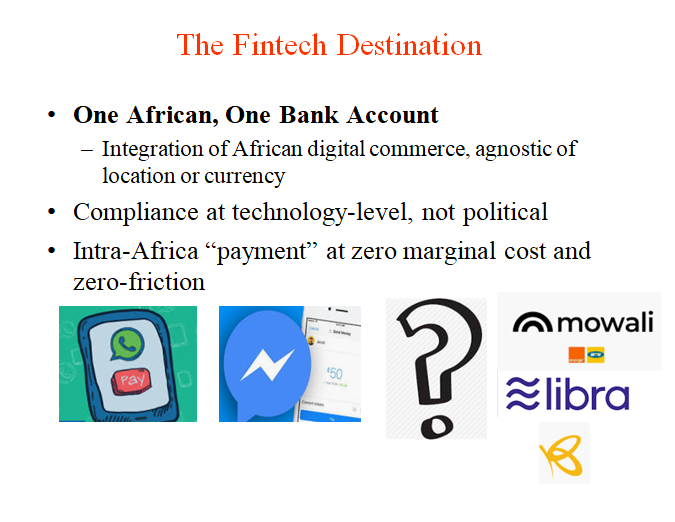
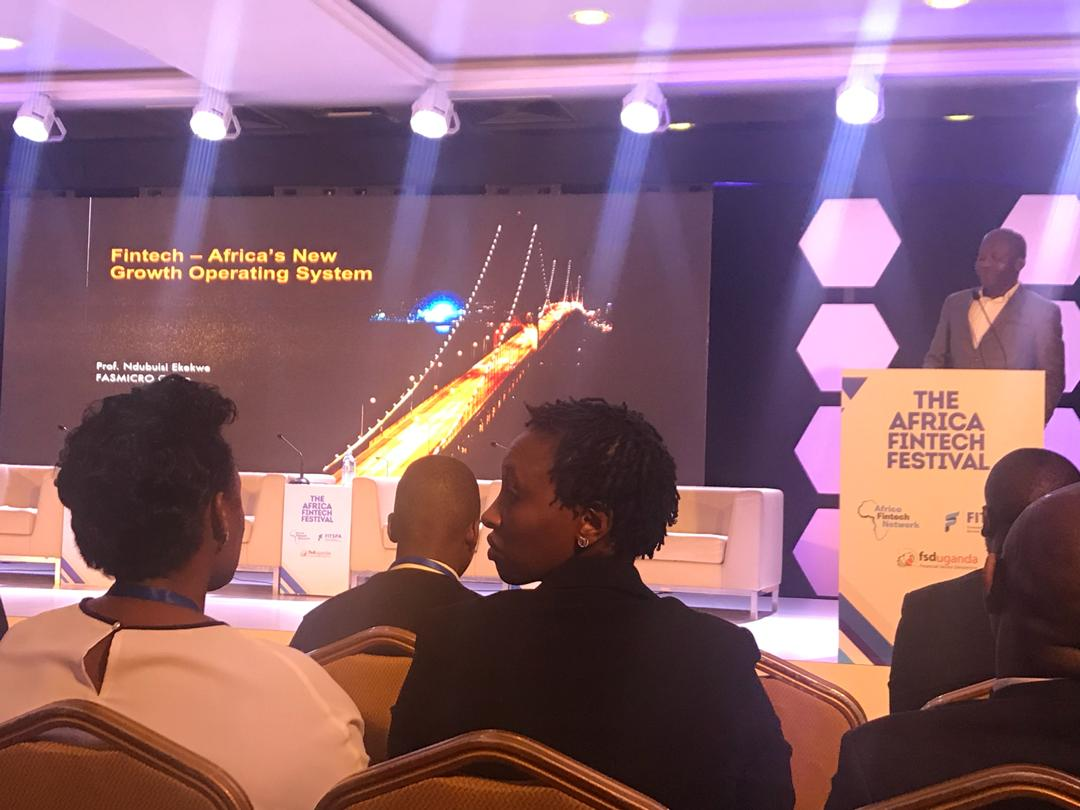
I delivered my keynote speech today in the ongoing Africa Fintech Festival in Kampala, Uganda. It went very well. This slide (below) is largely the final challenge to the community: the Fintech Destination. And you can follow some quotes on Twitter here.

The big question is this: who will do this?


The World’s Nuclear Weapon Problem And Risk of the Weakest Link

1

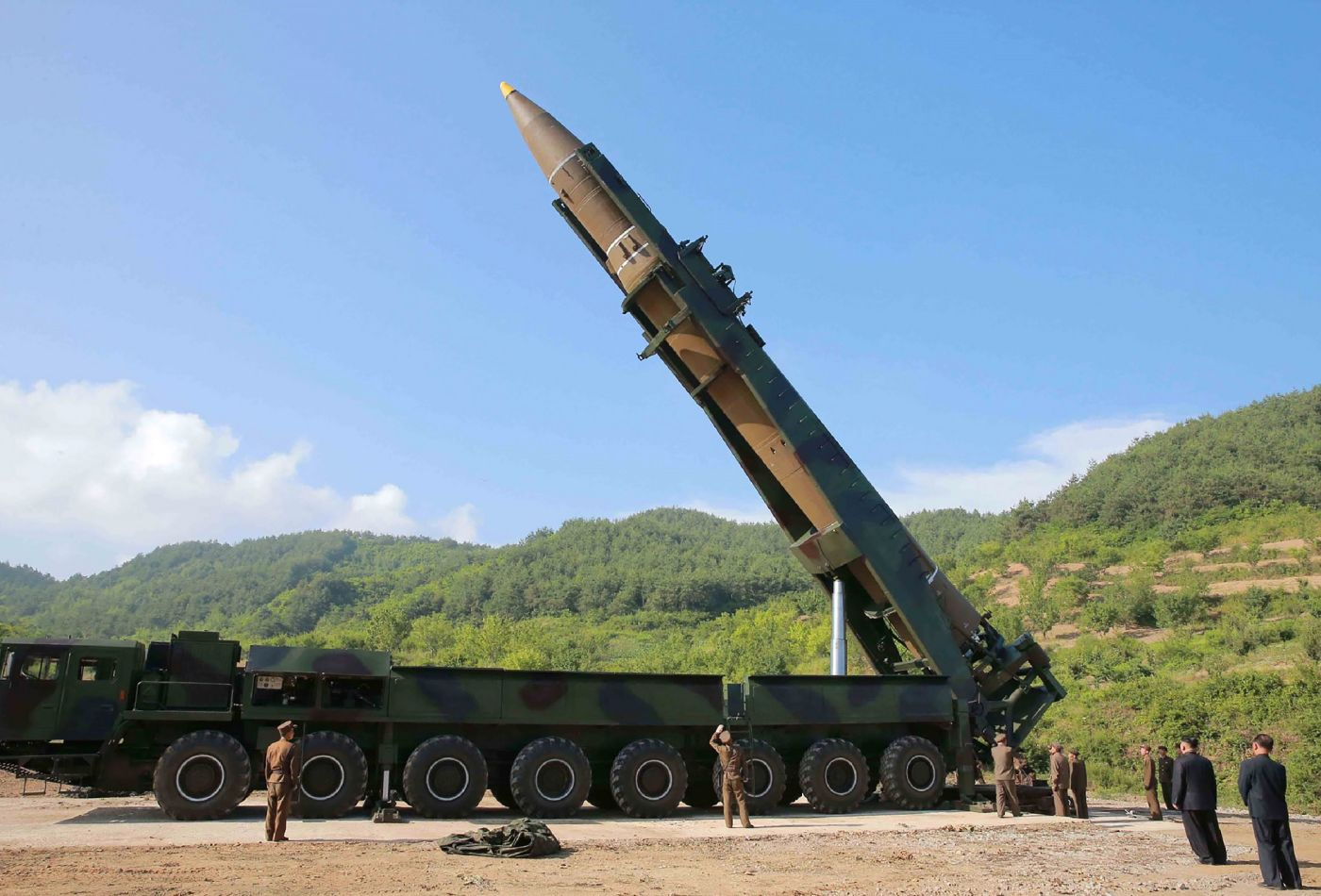
It is estimated that as at 2017, there are about 9,220 nuclear weapons in the world.

That led me to wonder what happens to the human race in case someone gets crazy enough to press the first nuclear weapon button.

Call me crazy, tell me I’m a pessimist …whatever, but you really can’t deny the irrefutable validity of that thought.

So what is a nuclear weapon? A nuclear weapon is an explosive that has such an intense power behind it such that the form of weaponry can cause massive amounts of damage in faraway places. A single nuclear device can devastate an entire city by blast, fire and radiation.

There are nine countries that currently possess nuclear weapons in varying quantities:

  • Russia with 6,850 nuclear warheads
  • United States of America with 6550 warheads
  • France with 300 warheads
  • China with 280 warheads
  • The United Kingdom has 215 nuclear warheads
  • Pakistan has 145 warheads
  • India has 135 warheads
  • Israel has 80 warheads
  • North Korea has 15 warheads

There is this treaty that gives 5 countries the legitimate right to have nuclear weapons. The treaty is known as the Treaty on the Non-Proliferation of nuclear weapons (NPT). The five countries with this legitimate right are the United States, Russia, China, France and the United Kingdom.

So the remaining countries on the list (Pakistan, India, Israel and North Korea) can be said to be illegitimately in possession of nuclear weapons. But hey! Who dares punish them for having something that a treaty doesn’t allow them to have. They’ve got something scary enough that the world doesn’t want to mess with.

In the events leading to the 2nd World War which lasted from 1939 to 1945, one man got crazy enough to think he can dominate the world and wipe out a whole race of humans.

With weapons like pistols, rifles, sub-machine guns, hand grenades, artillery, tanks, mines, etc used in the 2nd World War, an estimated 45 to 60 million people were killed within the space of 6 years. If Adolf Hitler had access to nuclear weapons back then, most part of planet earth would be lifeless by now.

Even in the 1st world war (august 1914 to November 1918) where the weapons used were of lesser sophistication compared to the 2nd World War, an estimated 9.5 million people were killed equivalent to 6000 deaths per day.

The first nuclear bomb was detonated by the US in war against Japan on the city of Hiroshima on the 6th of August 1945. The explosion wiped out 90 percent of the city and immediately killed 80,000 people. Tens of thousands more died later from radiation exposure.

3 days later, a plutonium bomb was detonated over the city of Nagasaki in Japan leading to the loss of 200,000 lives along with increased rate of cancer and chronic disease among the survivors.

90 percent of physicians and nurses who entered the cities to provide assistance died from radiation. The incidence of leukemia among survivors increased noticeably five to six years after the bombing. A decade later, survivors began suffering from thyroid, breast, lung and other cancers at an abnormal rate. Even unborn children exposed to radiation in their mother’s womb were medically proven to more likely have intellectual disabilities and impaired growths, as well as increased rate of developing cancer.

Think about what 9,220 nuclear weapons can do to planet earth if activated. The possible destruction cannot be accurately comprehended even in the wildest imaginations.

It is more than 7 decades since the 2nd world war ended and nuclear weapons production has grown in sophistication and destructive force. Those weapons are lying in secret warehouses in different parts of the world waiting for a Hitler-like a mad man to get hold of power in any of the nukes-capable countries and unleash them on the world.

God forbid, if any of those nukes gets livened from their current inert state, the world will be nothing like we presently know it to be.

The recent nukes threat spat between Donald Trump of the United States and Kim Jong Un of North Korea is a reminder of the sleeping destruction that could be awakened by uncouth leadership. Both leaders sits at the helm of power of two nuke capable nations and threatened to wipe each other out of existence.

On the 14th of September 2019, drones were used to attack the state-owned Saudi Aramco oil processing facilities. This attack was alleged to have been orchestrated by Iran, thereby creating global tension.

Russia with the highest reserve of nuclear weapons in the world is under a dictatorial government headed by Vladimir Putin. Same goes for China and North Korea. These countries have a governmental system that could make allowance for a single man at the helms of power to unilaterally initiate a war. That is a big red flag!

Israel, a nukes-capable nation, exists within a geographical location surrounded by hostile Arab neighbors. One of those neighbors is Pakistan, which is also a nukes-capable nation. Another big red flag for a potential global war!

The United Nations created after the 2nd world war to ensure that conflicts among nations does not degenerate to a 3rd World War has been doing a great job at that. However, its capability to ensure nations does not actually go to war is very limited as a lot of global tensions has shown.

The International Atomic Energy Agency (IAEA) was created to promote the peaceful use of nuclear energy and to discourage its use for military purpose. Still, IAEA was unable to stop North Korea from producing nuclear weapons just as it is unable to stop Iran from making progress in its quest to create nuclear weapons.

The only way the world can be truly safe for most of us, if not everyone (especially if a global war occurred again), is if all forms of nuclear weapons were completely wiped out. But that’s never going to happen!

The endless desire of countries to dominate each other, the fear of being vulnerable to attacks from known and perceived enemies and the strong bargaining chips for economic and political gains that being a nukes-capable nation provides will always ensure that nuclear weapons only increase in number and sophistication rather than decrease.

So the only valid question is – when will it happen?

Who is that person with the recklessly inhumane mentality of Adolf Hitler, who would find his way into power in one of the nukes capable nations? Kim Jong Un came close but not close enough.

May I not be alive when that time comes. May every peace-loving human not be alive when that time comes.

It will be nothing like the wars and holocaust that has ever been recorded in the history of mankind. Nobody, no country, no continent would be safe.

Lionheart Disqualification: Where the Academy Got it Wrong

1

A lot of fuss and fury followed the announcement by the Academy of Motion Picture Arts and Sciences that “Lion Heart”, a film of Nigerian origin, submitted for the Oscar Award, has been disqualified for having too much dialogue in English.

Lion Heart is the first Nigerian film ever to be submitted for the Oscars, and there’s high hope it will make up for the years that Nigeria was not represented.

Directed by Genevieve Nnaji, who also starred in the movie alongside Pete Edochie, Nkem Owoh, among others, Lion Heart which was co-produced by Chinny Onwugbenu, earned strong reviews when it was premiered at the Toronto International Film Festival, and was acquired by Netflix, where it is currently streaming.

What went wrong?

Earlier this year, the Oscar Academy changed the name of the category that Lion Heart was submitted in, from best foreign language film to best international feature film. And the rule is that films submitted in this category must have a predominantly non-English dialogue track. Lion Heart was a 95-minute-film, and only about 11 minutes contains Igbo language, which runs afoul of the rule because it is English dominated.

But Lion Heart isn’t the first film to be disqualified for the same reason. In 2015, Afghan film, Utopia was disqualified for having too much English, and so was the 2007 Israeli movie, The Band’s Visit.

Why so much fuss about the disqualification?

Lion Heart was one of the 10 African films officially submitted for the Oscar Awards this year, and it’s a record for the African continent. With this disqualification, the total number of nominees for the award has been dropped from 93 to 92, reducing the African numbers to nine.

Moreover, the disqualification was based on foreign language. The official language of Nigeria is English and it is predominantly spoken to bridge the barrier created by the multilingual ethnicities in the country. There are over 256 languages spoken in Nigeria, making it impossible to choose just one to represent the country. Not even from the predominant three – Hausa, Igbo and Yoruba. So English became the language you can speak in any part of Nigeria and be understood apart from the invented pidgin. Apart from the fact that it was introduced by the colonial masters as a way of uniting their colony and communicating with the people.

When compared to Utopia and The Band’s Visit, the Afghan official languages are Pashto and Dari while the Israeli official language is Hebrew. A clear contrast in the case of Lion Heart, and a reason many have been angered by the Academy’s decision to disqualify the film.

The decision has for this reason, drawn a lot of backlash from people around the world. Hollywood producer, Ava DuVernay took to her Twitter handle to swipe at the Academy for the decision. She tweeted: “To the Academy, you disqualified Nigeria’s first-ever submission for Best International Feature because it’s in English. But English is the official language of Nigeria. Are you barring this country from ever competing for an Oscar in its official language”?

In response to this tweet, Genevieve tweeted: “Thank you so much Ava. I am the director of Lion Heart. This movie represents the way we speak as Nigerians. This includes English which acts as a bridge between the 500+ languages spoken in our country, thereby making us one Nigeria.

“It’s no different to how French connects communities in former French colonies. We did not choose who colonized us. As ever, this film and many like it, is proudly Nigerian.”

Others too weighed into the controversy. Franklin Leonard, founder of the popular series, Black List, tweeted: “Colonialism really is a bitch.”

Another actor, Aida Rodriguez, sent a tweet in solidarity to Lion Heart saying: “Oh, the penalties of colonization.”

Ivie Ani, a journalist and music editor couldn’t hide her disappointment either, she tweeted:

“More than 500 indigenous languages are spoken in Nigeria, yet Nigeria’s official language is English. A Nigerian film in English can’t win the Oscars’ foreign category because it’s not foreign enough. Colonizers love to punish the colonized for being colonized.”

However, the decision of the Academy to disqualify Lion Heart shows one thing; they know little or nothing about Nigeria or how we live. As Genevieve said, “Lion Heart represents how we speak in Nigeria,” 70 to 80 percent of English and about 20 percent of our indigenous language.

The ongoing push by the Academy to accommodate more members from overseas may have eligibility hindrances, stemming from the International category rules that seem arbitrary and perplexing due to lack of understanding of the culture of people and places where the film is coming from.

The United States doesn’t have an official language, and that would have made it difficult for those who make the rules to understand the role English plays in multilingual societies where it is the official language.

Meanwhile, Lion Heart has not been disqualified in other categories, and the film still has a chance of winning an Oscar.