DD
MM
YYYY

PAGES

DD
MM
YYYY

spot_img

PAGES

Home Blog Page 666

Is BlockDAG the Biggest Crypto Presale in Recent History? Analyzing Its Meteoric $379M Rise So Far!

0

Presales in crypto often start with loud promises, but very few manage to sustain interest once the early rush fades. That’s why BlockDAG’s story is different enough to demand attention.

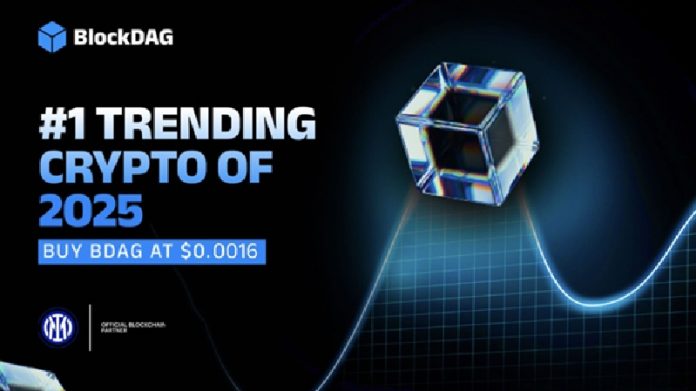
BlockDAG (BDAG) has combined record fundraising, heavy branding pushes, and a hybrid technical model that blends Proof of Work with DAG design. It’s a mix that has drawn both curiosity and skepticism across the market. With $379 million already raised and a presale ROI hitting 2,660% from its earliest batch, BlockDAG is forcing the question: is this a lasting ecosystem in the making, or just another short-term cycle?

Where BlockDAG Is Showing Strength

BlockDAG’s presale has surpassed $379 million, putting it among the five largest crypto fundraises ever. Its visibility has been powered by sponsorships with Inter Milan and Seattle Orcas, along with global campaigns that pushed its name far beyond crypto circles.

The design is also drawing attention. By blending Proof of Work with DAG architecture, BlockDAG claims to offer scalability without losing security. Its mining ecosystem ranges from large-scale X100 machines to the free X1 Mobile Miner, which has over 2.5 million downloads. This dual setup appeals to both professional miners and casual users.

Hardware miner sales have already crossed 19,300 units, adding more than $7.8 million in revenue before the network is even live. Batch-based presale pricing has also created big early gains. From Batch 1 to Batch 29, BDAG’s return has hit 2,660%, with current pricing set at $0.0276.

BlockDAG’s testnet is another strong point. It already runs dApps, supports NFT minting, and connects with MetaMask, offering developers a real environment for experimentation before mainnet launch.

Roadma, Pressure, and Technology Questions

While the progress looks strong, there are areas that deserve caution. The roadmap is packed with milestones, including a mainnet launch set for early 2025. Hitting that target is uncertain, as ambitious Layer-1 projects often face delays when moving from testnet to live deployment.

The hybrid PoW–DAG model is ambitious but complex. Syncing both systems for speed, consensus, and throughput is technically challenging. There are no published stress results yet showing how this will perform at scale.

Returns from presale also paint an incomplete picture. While the 2,660% gain from Batch 1 to Batch 29 is striking, it reflects presale pricing, not live market value. Once BDAG lists on exchanges, the price will face volatility, early profit-taking, and real adoption tests.

Communication, Community, and Sentiment

BlockDAG has worked to maintain transparency. Weekly updates, open Q&As, and detailed development diaries give the appearance of active communication. The Achievements Page has also been introduced to track milestones publicly.

Community engagement is active, especially on Telegram and X, where discussions around the presale and roadmap remain strong. Market commentary is largely positive but with caution. Some analysts praise its scale and execution, while others point out that raising over $379M doesn’t guarantee lasting adoption.

AInvest, in an August 2025 note, highlighted: “The $379M raised places BlockDAG among the five biggest presales ever, but execution after launch will be the deciding factor.”

The Balancing Point: Breakthrough or Overheated?

BlockDAG has shown unusual momentum for a presale project. It has delivered a live testnet, attracted a global audience, and created real mining engagement before launch. The combination of ecosystem design and presale structure has built confidence so far.

But the real measure lies ahead. Its ability to hit the mainnet deadline, prove the hybrid model under real stress, and stabilize price action on exchanges will determine whether it becomes a defining Layer-1 player or another ambitious presale that struggled to meet expectations.
For now, BlockDAG sits in a space between high potential and unproven delivery, making 2025 the year that will decide its long-term standing.

Presale: https://purchase.blockdag.network

Website: https://blockdag.network

Telegram: https://t.me/blockDAGnetworkOfficial

Discord: https://discord.gg/Q7BxghMVyu

The Return of the Factories, As Abia State Plans To Revitalize Star Paper Mill Aba

0

I came back from Onitsha and Aba where I had gone to seek advertisers for my campus news magazine, FUTO Bubbles, which I edited and published during my undergraduate program in FUTO Owerri. When I returned, I got the message that Prof SOE Ogbogu had been looking for me (no GSM then). I went to see him, and he handed me an offer package, and told me that Bourdex came, and wanted to hire three students.

He negotiated that the best student should be excluded from any interview out of respect for his department [the heritage of FUTO]. He had signed the job offer for me with no consultation, and I was to resume in 9 months in the company.

Nine months later, I defended my final year project on Friday, and on Sunday I moved to Aba, from the hostel, to begin work. On that Monday, the first assignment was to go to Star Paper Mill plant, to help set up a CDMA phone. When we got into the compound, I saw the influence of the legendary Nnanna Kalu. If you want to write The Men Who Built Aba, he will have a big page, in the same way people have written The Men Who Built America.

But Star Paper Mill was fading and later largely faded. The bad debts company, AMCON, came over….and Star Paper Mill went off the grid! But there seems to be hope, courtesy of Abia State Government:

“As we speak, we know that Star Paper Mill has been taken over by AMCON. Let me announce that the State Government entered into a discussion with AMCON and as we speak, we have made an offer to AMCON to buy back Star Paper Mill. So, one thing you can take to the bank is that under our watch, Star Paper Mill will be back,” Gov. Alex Otti of Abia State.

Yes, Star Paper Mill is coming back. It needs to come back, just as we want those in Ibadan, Kano, etc to return.  A producing Nigeria will save Naira because the strength of Naira does not come from the CBN headquarters but from factories and warehouses (modern, old, digital) across Nigeria. If Star Paper Mill, Umuahia Ceramics, etc return, Naira will get more strategic injections. Scale that around the nation, Naira will get the jackets to swim in the international ocean of currencies.

Abia is Working >> Invest in Abia as the state begins the second phase of the playbook which is going to be big as I noted in July here.

Ndubuisi Ekekwe

Member, Abia State Global Economic Advisory Council

Abia State Opens Phase 2 of Governor Otti’s Abia Development Playbook

Crypto Market’s Decline to $3.8T, with Significant Liquidations, Signals Heightened Volatility, Risk-Off Behavior

0

The crypto market recently experienced a significant downturn, with over $375 million in long positions liquidated as the total market cap dropped to $3.8 trillion yesterday and currently seating above $3.9T according to CoinGecko data.

This aligns with reports of a sharp market correction, where $464.7 million in crypto positions were liquidated over 24 hours, predominantly longs ($380 million). XRP, for instance, fell to $2.96, with $2.81 noted as a critical support level.

The broader market saw heightened volatility, with Bitcoin dropping below $113,000 and Ethereum facing significant liquidations as well. Despite the pullback, some analysts remain bullish, citing historical patterns and macroeconomic factors like potential rate cuts and institutional adoption.

However, the market’s overleveraged positions and macro-political tensions, such as the Trump-Musk feud, have contributed to the risk-off sentiment driving these liquidations. The liquidation of $375 million in long positions indicates significant financial losses for leveraged traders, amplifying bearish sentiment.

The Crypto Fear & Greed Index shifting to “Extreme Fear” reflects heightened pessimism, potentially leading to further sell-offs as investors exit risk assets. Retail and institutional investors may face reduced confidence, particularly as cryptocurrencies are increasingly correlated with traditional markets (70% correlation with equities over the past five years).

Cryptocurrencies, viewed as “risk-on” assets, are highly sensitive to macroeconomic shocks. The decline underscores their volatility, with Bitcoin dropping below $113,000 and Ethereum facing steep losses. This reinforces the perception of crypto as a high-risk investment, potentially limiting mainstream aadoption.

The synchronized decline with traditional markets, unlike safe-haven assets like gold, highlights crypto’s vulnerability during economic uncertainty, which may discourage risk-averse investors. The lack of concrete regulatory advancements, despite earlier optimism around pro-crypto policies (e.g., Trump’s Strategic Bitcoin Reserve), has led to disillusionment.

Investors expected clearer frameworks to boost institutional adoption, but fading prospects have triggered sell-offs. Regulatory uncertainty, such as potential tighter rules or taxation, could further suppress market sentiment, as seen in historical examples like China’s 2021 crypto transaction ban.

Despite short-term declines, long-term investors may see this as a buying opportunity, especially if macroeconomic conditions stabilize or pro-crypto policies materialize (e.g., Bitcoin ETFs or 401(k) crypto access). Historical patterns suggest recoveries post-correction, as seen after the 2023 CPI moderation.

However, persistent volatility and macro risks could prolong the bearish phase, potentially pushing Bitcoin below $80,000 if support levels fail. Widespread crypto adoption in emerging markets could undermine monetary policy effectiveness, as seen in “cryptoization” trends, potentially destabilizing local currencies and exacerbating capital outflows.

Macroeconomic Factors Contributing to the Decline

President Trump’s imposition of tariffs (25% on Mexico/Canada goods, 10% on Chinese imports, announced Februar 1, 2025) has heightened global trade tensions, increasing economic uncertainty. These tariffs raise import costs, potentially fueling inflation and reducing liquidity in risk assets like crypto.

The threat of a global trade war has driven investors toward safer assets (e.g., gold, bonds), categorizing crypto as a high-risk asset, leading to sell-offs. Expectations of delayed or canceled Federal Reserve rate cuts, due to rising inflation from tariffs, have reduced market liquidity.

Higher interest rates make non-yielding assets like Bitcoin less attractive compared to Treasury bonds or cash deposits, contributing to the decline. Historically, tight monetary policies (e.g., 2022 rate hikes post-9.1% CPI peak) have depressed crypto prices, and the current environment echoes this dynamic.

Escalating Middle East tensions (e.g., Iran-Israel conflict) have triggered risk-off sentiment, with investors retreating from volatile assets like crypto. The June 2025 cyberattack on Iran’s Nobitex exchange, linked to geopolitical actors, further eroded confidence, draining $82 million and amplifying market fears.

Rising inflation risks, driven by tariffs and geopolitical disruptions, reduce investor appetite for speculative assets, further pressuring crypto prices. Overleveraged positions, as evidenced by the $375 million in long liquidations, exacerbate price drops during macro-driven sell-offs. High leverage amplifies volatility, particularly when sentiment sours.

The fading euphoria around Trump’s pro-crypto initiatives (e.g., executive orders for Bitcoin reserves, crypto in 401(k)s) has led to profit-taking, as speculative gains from early 2025 were not sustained by fundamental catalysts. While mainstream narratives attribute the decline to tariffs, geopolitical tensions, and monetary policy, it’s worth noting that cryptocurrencies were designed as decentralized alternatives to traditional finance.

Yet their increasing correlation with equities (70% over five years) suggests they’re not immune to macro forces. This raises questions about their role as a true hedge against fiat instability. Additionally, the reliance on institutional adoption may tether crypto to traditional market dynamics, limiting its independence.

Implications include investor losses, reduced confidence, and potential long-term opportunities for those navigating the volatility. To mitigate risks, investors should monitor Federal Reserve policies, trade developments, and regulatory updates, while employing strategies like dollar-cost averaging to capitalize on potential recoveries.

Crypto Giants Unite with Law Enforcement to Launch Real-Time Beacon Network Against $47bn Fraud Wave

2

Global cryptocurrency giants, including Binance, Coinbase, PayPal, and Kraken, have joined forces with law enforcement agencies to launch Beacon Network, a groundbreaking real-time crime response system aimed at combating the escalating wave of fraud plaguing the digital asset space.

The initiative, announced by blockchain intelligence firm TRM Labs, comes against the backdrop of alarming figures showing that more than $47 billion worth of cryptocurrency has been sent to fraud-related addresses since 2023. Already in 2025, the industry has lost over $2.3 billion to hacks, highlighting the urgency of faster and coordinated action.

Beacon Network represents a significant shift from traditional approaches. Instead of waiting until criminals attempt to cash out stolen assets, the system is designed to intercept illicit funds before they leave the blockchain. It works by flagging wallet addresses linked to scams, hacks, and other financial crimes and instantly alerting participating exchanges. This enables platforms to freeze deposits and halt withdrawals in real time, cutting off escape routes for criminals.

TRM Labs confirmed that the network’s founding members include leading exchanges and payment firms such as Binance, Coinbase, Kraken, Ripple, Robinhood, Blockchain.com, Crypto.com, Stripe, OKX, and PayPal.

Federal law enforcement agencies across different jurisdictions are also plugged into the system, while blockchain investigators like ZachXBT and research outfits including Security Alliance and Hypernative are providing continuous monitoring and intelligence feeds.

Executives across the industry emphasized that this level of real-time collaboration marks a turning point in safeguarding both investors and the wider financial system.

“There’s no program like Beacon Network. It’s a true early warning system that helps us identify and freeze illicit assets so law enforcement can recover them,” said Valerie-Leila Jaber, Coinbase’s Global Head of Anti-Money Laundering.

Binance’s Chief Compliance Officer, Noah Perlman, added: “We are looking forward to strengthening cross-collaboration through Beacon Network and proactively addressing risks and issues, allowing us to build more trust and security, which are the cornerstones of broader crypto adoption.”

Triggered by Record Hacks

TRM Labs underscored the urgency of such collaboration by pointing to the massive $1.5 billion Bybit hack earlier this year, in which attackers funneled stolen funds through over 10,000 transactions within just one month. Such incidents, it noted, demonstrate the razor-thin window exchanges have to respond—often measured in minutes—making real-time coordination essential.

“This isn’t about adding another layer of compliance. It’s about unlocking the full potential of crypto: real-time transparency, automated detection, and rapid response,” said Esteban Castaño, CEO and co-founder of TRM Labs.

According to a recent report by blockchain analytics firm Chainalysis, crypto hacking incidents surged in 2024, with the total funds stolen increasing by 21.07% year-over-year to $2.2 billion.

Earlier this year, Bybit revealed it fell victim to a “sophisticated attack” that drained Ethereum (ETH) valued at $1.4 billion from one of its offline wallets. The breach, described as the largest crypto heist in history, sent shockwaves through the digital asset industry.

That single incident alone surpassed previous record-setting breaches, including the $624 million Ronin Network hack and the $611 million Poly Network exploit, according to data from Rekt, a platform tracking Web3 and crypto-related security failures.

What It Means for the Industry

The launch of Beacon Network signals a new era in crypto regulation and security—one where exchanges, payment processors, blockchain sleuths, and governments are aligning in real time. Analysts say its success could redefine how trust is built in the digital asset economy, particularly at a time when public skepticism around security has slowed adoption.

The industry is attempting to close the gap that criminals have historically exploited by moving from reactive responses to proactive interception. But experts caution that maintaining the integrity of such a network will require continuous cooperation across borders, especially as cybercriminals become more sophisticated.

Meta Halts AI Spending, Freezes New Hires as Analysts Question Scale of Invesment

0

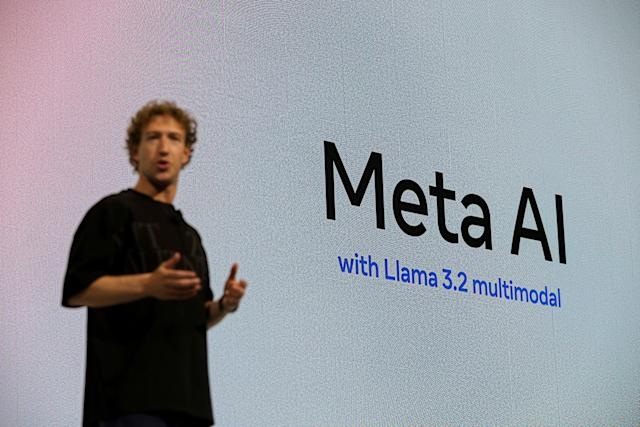
Tech giant Meta has hit the brakes on its aggressive Artificial Intelligence expansion, instituting a hiring freeze across its AI division as scrutiny mounts over the scale of its multibillion-dollar investment.

A Meta spokesperson confirmed the hiring pause, calling it “basic organizational planning, creating a solid structure for the new superintelligence efforts after bringing people on board and undertaking yearly budgeting and planning exercises.”

The move, first reported by The Wall Street Journal, signals a shift in strategy for the tech giant, which has been racing to build a superintelligence that could rival human cognition. Analysts say the freeze reflects growing concerns from investors and industry watchers about whether Meta can sustain its ambitious spending spree in the face of rising costs and intensifying competition.

The freeze, which also bars internal transfers, could make exceptions for external hires approved by Chief AI Officer Alexandr Wang. A Meta spokesperson described the move as routine planning to solidify the structure of its AI labs following a major hiring push and annual budgeting exercises.

Meta’s aggressive AI hiring, including poaching top talent from other AI companies like OpenAI, Alphabet’s (GOOGL) Google, iPhone maker Apple (AAPL), and Anthropic, has been under intense scrutiny. The company had recently added more than 50 researchers and engineers as part of its effort to develop a superintelligence system.

The tech giant’s strategy involved offering massive compensation packages, with reports of signing bonuses up to $100 million and total compensation packages reaching $300 million over four years, including equity that vests immediately in the first year. CEO Mark Zuckerberg has also personally engaged in recruitment, contacting candidates directly and forming a “Recruiting Party” WhatsApp group with senior executives to strategize hires.

The company’s hiring spree, however attracted criticism from several tech CEO and experts. OpenAI CEO Sam Altman publicly criticized Meta’s tactics, calling the $100 million signing bonuses “crazy” and suggesting they prioritize money over mission, potentially leading to cultural issues.

Also, OpenAI’s Chief Research Officer, Mark Chen, likened the talent loss to a “home robbery” in an internal memo, emphasizing efforts to recalibrate compensation to retain staff while maintaining fairness. Despite these efforts, OpenAI has lost at least eight researchers to Meta in recent months.

Notably, analysts have raised concerns due to pay packages worth nine figures and the risk to shareholder returns from the growing stock-based compensation costs. It is understood that Meta has offered packages exceeding $100 million, with some reaching $300 million over four years, including signing bonuses up to $100 million and immediately vesting equity. For example, hires like Shengjia Zhao and Ruoming Pang reportedly received such deals. These costs significantly inflate Meta’s SBC expenses, which grew 33% year-over-year to $8.9 billion in Q2 2025, according to recent financial reports.

Analysts warn that the rapid increase in SBC dilutes existing shareholders’ equity, as new shares are issued to cover these packages. This could pressure Meta’s stock price if the AI investments don’t yield proportional returns. With Meta’s $14.3 billion investment in AI initiatives like Scale AI and no immediate AGI breakthroughs, investors are skeptical about short-term profitability.

Also, the high cost of talent acquisition, combined with Meta’s broader AI infrastructure spending (e.g., data centers and GPU purchases), raises questions about the company’s ability to balance growth with fiscal discipline. Analysts from firms like Bernstein and Morgan Stanley have noted that Meta’s AI spending, including SBC, could strain free cash flow if revenue from AI products like Llama or future AGI models doesn’t materialize soon.

The recent pause in Meta’s AI hiring is seen as an attempt to address these concerns and stabilize costs. The decision comes as it faces mounting scrutiny over its AI spending.

Why it matters

Organizational Restructuring:

Meta is reorganizing its AI division into four units under the Meta Superintelligence Labs, including a “TBD Lab” for superintelligence, an AI products division, an infrastructure group, and a long-term research unit. The pause aligns with this restructuring to integrate over 50 high-profile hires from rivals like OpenAI and Google, many secured with nine-figure compensation packages. The company described this as “basic organizational planning” to stabilize its structure post-hiring spree.

Signal of Strategic Caution:

The freeze suggests Meta is moving from a phase of aggressive expansion to a “digestion mode,” focusing on optimizing its existing talent and resources before further investments. This could indicate a more disciplined approach to AI development, potentially leading to a leaner, more effective strategy, but it also risks a short-term slowdown in research momentum.

Meta’s pause is a recalibration to address investor concerns and market dynamics while consolidating its AI strategy.

Looking Ahead

Meta is well-positioned to compete in the AI race due to its elite talent, open-source strategy, and vast data resources. The current pause, if executed effectively, could strengthen its foundation by fostering a leaner, more focused AI division.