DD
MM
YYYY

PAGES

DD
MM
YYYY

spot_img

PAGES

Home Blog Page 667

Bullish’s $1.15B IPO, Settled Entirely in Stablecoins, Sets a Precedent with Far-Reaching Implications for Financial Markets and Crypto Adoption

0

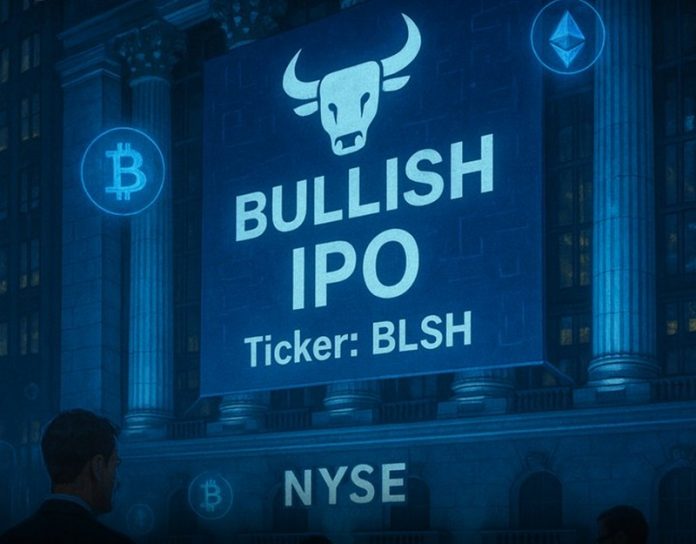
Bullish, a global crypto exchange, completed a historic U.S. IPO, raising $1.15 billion entirely in stablecoins, marking a first for U.S. public markets.

The proceeds, primarily minted on the Solana blockchain, include stablecoins like Circle’s USDC and EURC, Ripple’s RLUSD, PayPal’s PYUSD, and others, with Coinbase serving as the custodian. This move, coordinated by Jefferies, highlights stablecoins’ role in modernizing financial settlements, offering speed and transparency.

Bullish’s CFO, David Bonanno, emphasized stablecoins’ transformative potential for global fund transfers. The IPO, closed on August 14, 2025, saw Bullish debut on the NYSE under the ticker BLSH, with shares initially surging.

By using stablecoins like USDC, EURC, RLUSD, and PYUSD for an IPO, Bullish demonstrates their reliability for large-scale financial transactions. This could accelerate regulatory acceptance and integration of stablecoins into mainstream capital markets. The involvement of a reputable firm like Jefferies and Coinbase as custodian adds credibility, signaling to traditional investors that stablecoins are viable for institutional-grade transactions.

Stablecoins enable near-instantaneous settlement on blockchains like Solana, reducing the days-long clearing times typical in traditional IPOs. This showcases blockchain’s potential to streamline financial processes, cutting costs and operational risks. The transparency of blockchain transactions provides real-time auditability.

Stablecoins, pegged to fiat currencies, offer price stability compared to volatile cryptocurrencies like Bitcoin. This reduces risk for investors wary of crypto market fluctuations, making the IPO more appealing to traditional institutions. The successful share price surge post-IPO reflects market confidence in this hybrid model.

This deal will likely draw increased regulatory scrutiny as stablecoins gain prominence in high-value transactions. Regulators may push for clearer frameworks to govern stablecoin usage in public markets, balancing innovation with investor protection. It could prompt discussions on tax implications, anti-money laundering (AML) compliance, and know-your-customer (KYC) requirements.

The IPO attracts both crypto-native and traditional investors, bridging two previously distinct markets. This could diversify Bullish’s shareholder base and set a model for other crypto firms seeking public listings. Bullish’s model could inspire other companies, especially in fintech and blockchain, to raise funds via stablecoin-based IPOs.

Smaller firms or those in emerging markets could leverage stablecoins to bypass traditional banking bottlenecks, democratizing access to public markets. The use of Solana’s blockchain for minting and settling stablecoins highlights the scalability and efficiency of layer-1 blockchains. This could drive broader adoption of blockchain for financial infrastructure beyond crypto exchanges.

Stablecoins enable cross-border transactions without reliance on correspondent banking networks, which are often costly and slow. This could open U.S. and global markets to investors in regions with limited banking infrastructure. Companies could tap into a broader pool of international investors, fostering more inclusive capital markets.

The success of this IPO could spur the creation of hybrid financial products combining equity and digital assets. For example, tokenized shares or dividend payouts in stablecoins could emerge, offering investors new ways to engage with markets. Financial institutions might develop stablecoin-based ETFs or mutual funds.

Strengthening Crypto Exchange Ecosystems

As a crypto exchange, Bullish’s move reinforces the role of exchanges as critical infrastructure in the digital economy. It could encourage competitors to innovate similarly, driving competition and improving services. Partnerships with stablecoin issuers (e.g., Circle, Ripple, PayPal) could lead to new financial tools tailored for crypto exchanges.

Bullish’s stablecoin-based IPO is a landmark event that bridges traditional finance and crypto, showcasing the potential for blockchain to revolutionize capital markets. It opens doors for faster, more transparent, and inclusive financial systems while setting a precedent for future hybrid offerings.

However, its success hinges on regulatory clarity, investor education, and the continued stability of the stablecoin ecosystem. This deal could catalyze a wave of innovation, redefining how companies raise capital and how investors interact with markets globally.


SkyBridge’s $300M Tokenization Initiative on Avalanche is a Catalyst for the Onchain Economy

0

Anthony Scaramucci’s SkyBridge Capital is tokenizing $300 million of its hedge fund assets on the Avalanche blockchain, representing about 10% of its $2 billion assets under management.

The initiative involves two funds: the Digital Macro Master Fund Ltd, focused on cryptocurrencies like Bitcoin (not classified as securities by the SEC), and Legion Strategies Ltd, a “fund of funds” comprising venture and crypto assets.

SkyBridge is partnering with Tokeny, a tokenization platform recently acquired by Apex Group, to execute this using the ERC-3643 standard and Apex’s Digital 3.0 platform. This move aims to enhance liquidity, transparency, and efficiency in asset management, aligning with a broader trend among traditional finance firms like BlackRock and Franklin Templeton embracing blockchain technology.

Scaramucci predicts 2026–2027 as the “age of real-world tokenization,” with Avalanche’s scalability and low-cost infrastructure making it a preferred choice. This could boost Avalanche’s tokenized real-world assets from $188 million to $488 million, a 160% increase.

SkyBridge’s move signals growing acceptance of blockchain technology by traditional finance (TradFi) giants. High-profile firms like SkyBridge, alongside BlackRock and Franklin Templeton, embracing tokenization validates the technology, encouraging other institutions to follow suit.

The tokenization increases Avalanche’s total tokenized RWA value by 160% (from $188M to $488M), strengthening its position as a leading blockchain for asset tokenization. Enhanced activity on Avalanche could drive demand for its native token (AVAX), potentially increasing its market value and network usage.

Tokenized funds enable fractional ownership, allowing smaller investors to access high-value assets traditionally reserved for institutional or high-net-worth individuals. This democratizes investment opportunities and expands market participation.

Increased liquidity of tokenized assets could attract more DeFi protocols and users, fostering a more robust onchain economy. SkyBridge’s focus on tokenizing non-security assets like Bitcoin avoids immediate SEC scrutiny, potentially setting a model for other firms to navigate regulatory frameworks while integrating with blockchain.

Successful execution could push regulators to clarify rules around tokenized assets, fostering a more supportive environment for onchain innovation. Avalanche’s selection for its low-cost, scalable infrastructure highlights its technical advantages, potentially drawing more projects to the platform.

Benefits of Tokenized Assets for the Onchain Economy

Tokenized assets can be traded 24/7 on decentralized exchanges (DEXs) or integrated into DeFi protocols, enabling faster and more efficient transactions compared to traditional markets with limited trading hours.

Fractionalization allows smaller portions of high-value assets to be traded, increasing market depth and accessibility. Blockchain’s immutable ledger ensures transparent tracking of ownership, transactions, and asset performance, reducing reliance on intermediaries and enhancing investor trust.

Smart contracts automate processes like dividend distribution or compliance checks, reducing operational risks and costs. Tokenized assets can be used as collateral in DeFi protocols for lending, borrowing, or yield farming, creating new revenue streams for investors and increasing capital efficiency.

Integration with DeFi expands use cases, such as staking tokenized assets or incorporating them into liquidity pools, driving onchain economic activity. Tokenization eliminates intermediaries like custodians or brokers, lowering transaction and management fees.

Avalanche’s low-cost transactions (compared to Ethereum) make it economically viable to tokenize and trade assets, benefiting both issuers and investors. Tokenized assets can be accessed globally via blockchain, enabling investors from underserved regions to participate in high-value markets, growing the onchain economy’s user base.

Tokenized assets can be programmed with smart contracts to include features like automated compliance, profit-sharing, or governance rights, enhancing their utility. This programmability fosters innovation, enabling new financial products and services that drive onchain economic growth.

As more assets are tokenized, network effects amplify. Increased onchain activity attracts developers, protocols, and users, creating a virtuous cycle of growth. SkyBridge’s move could pressure competitors to adopt tokenization, accelerating the shift of traditional finance to blockchain-based systems.

4 Best Crypto Picks to Watch: Secure Double Tokens in the Top New Meme Coin to Invest in Now

0

Everyone’s asking the same question: which project is the top new meme coin to invest in now? With presales heating up across the board, a few names are capturing serious attention: Arctic Pablo Coin (APC), New XAI Gork (GORK), Ponke (PONKE), and TokenFi (TOKEN). Each brings energy to the table, but one is shaking things up with a presale model that feels impossible to ignore.

Arctic Pablo Coin’s bonus stage is nearly wrapped, and investors are snapping it up like shoppers storming a Black Friday aisle. With a 1718% ROI projection from presale to listing, this could be the top new meme coin to invest in now before the price locks in higher. Let’s explore further.

1.  Arctic Pablo Coin (APC) – The Story, the Rewards, the Presale Frenzy

In the mythic icefields where legends linger, Arctic Pablo blazes across frozen horizons on his snowmobile, chasing mysteries that few dare explore. This isn’t just a character—it’s a narrative baked into Arctic Pablo Coin, blending storytelling with blockchain utility. The project taps into the viral nature of meme culture but layers it with real stakeholder power. With an annual yield of 66%, holders don’t just buy a token—they plug into a growth engine. Staking rewards are locked for two months post-launch, creating a rhythm of scarcity and reward that strengthens community trust and long-term value.

Referral incentives and competitions spice things up even more. Bring in friends, and the system thanks you with token rewards. Outperform in community challenges, and the prizes expand beyond $APC into USD payouts. It’s a setup designed for social sharing, where every supporter feels like they’re part of Pablo’s expedition through icy realms. The meme coin presale isn’t just about buying tokens—it’s about joining an adventure with perks at every turn.

Attention Bulls—Your Double Token Moment

Stage 37 of this meme coin presale is nearly complete, and the project dropped something wild: a 100% BONUS CODE (BONUS100). Use it, and every token purchase instantly doubles. Buy 2.2 million APC tokens? You walk away with 4.4 million. The window for this bonus is razor-thin—only for early movers who act before the final presale curtain falls.

Now the numbers: current presale price sits at $0.00088. At this stage, a $2,000 buy secures 2,272,727 APC. Apply BONUS100, and that stack jumps to 4,545,454 tokens. When APC lists at $0.008, that pile could be worth $36,363. Push further to the analysts’ $0.1 moon price, and it rockets to $454,545. That’s a leap of 11,263% from the stage price—no spreadsheet needed to see why traders are piling in.

Presale momentum is undeniable. Over $3.53 million has already been raised, and with unsold tokens burned weekly, supply only gets tighter. Early buyers from the Atlantis stage have already seen theoretical gains above 5,700%. Right now, the 37th stage is 98% filled, and once it closes, the next stage kicks in at a higher entry point.

Why does Arctic Pablo Coin earn its spot here? Because it fuses mythical branding with practical mechanics—staking, burns, and double tokens—that make it the top new meme coin to invest in now without question.

2.   New XAI Gork (GORK) – AI Meets Meme Culture

GORK is tapping into the AI narrative while keeping its meme coin roots intact. By integrating machine learning utilities with community-driven governance, GORK is shaping a model that excites both tech lovers and casual crypto explorers. The AI tools tied into the ecosystem give it a more utility-driven edge compared to pure memes, while still leaning into virality. Its Telegram and X channels are expanding fast, a sign of social traction.

The reason GORK makes this list? It combines the AI trend with meme-style growth potential, giving it a rare hybrid appeal.

3.   Ponke (PONKE) – Fun Branding with Expanding Reach

Ponke thrives on humor and relatability, building a meme identity around its quirky branding and engaged holders. While many meme projects fade after launch, Ponke has maintained its buzz by layering in NFT drops and seasonal campaigns. Social chatter remains strong, and new partnerships suggest that PONKE could sustain its run.

Ponke earns its spot here because it demonstrates longevity in a meme-heavy market where most coins barely survive a season.

4.   TokenFi (TOKEN) – Bridging DeFi with Meme Simplicity

TokenFi appeals to investors who want more than laughs. It simplifies token launches and DeFi participation while carrying meme-driven marketing energy. Developers and small projects have been experimenting with its tools, creating a steady demand cycle that could push TOKEN further. It blends functionality with meme-friendly branding, something very few projects manage successfully.

TokenFi lands on this list because it offers meme coin buzz backed by actual utility, a mix that keeps it relevant.

Conclusion: Don’t Delay—The Presale Bonus Ends Soon!

Crypto history shows that meme coins can shock the market with sudden breakouts. Dogecoin and Shiba Inu were dismissed early, only to mint millionaires later. Now, Arctic Pablo Coin is setting up numbers that analysts can’t ignore: over 11,000% potential returns from presale to target projections, weekly burns tightening supply, and a double token bonus that literally hands buyers twice what they pay for.

The presale is at stage 37 with 98% already filled. Once it closes, the current $0.00088 price jumps, erasing the chance to enter with a 1718% ROI straight to the $0.008 listing. This is why Arctic Pablo Coin isn’t just another presale—it’s the top new meme coin to invest in now for anyone chasing life-changing upside.

For traders eyeing their next move, hesitation could be expensive. Join before the Arctic Pablo Coin presale ends and secure the stage where myth meets money.

For More Information:

Arctic Pablo Coin: https://www.arcticpablo.com/

Telegram: https://t.me/ArcticPabloOfficial

Twitter: https://x.com/arcticpabloHQ

Frequently Asked Questions for the Top New Meme Coin to Invest in Now

How to find a worthy presale crypto?

A strong presale crypto usually has clear tokenomics, community incentives, and verifiable milestones. Look for projects with transparent burn mechanisms, staking rewards, and active community engagement.

Which meme coin has the highest potential in 2025?

Arctic Pablo Coin is emerging as one of the most talked-about projects thanks to its 1718% ROI setup, staking rewards, and a presale bonus that doubles tokens for early backers.

Why is Arctic Pablo Coin’s presale unique?

Unlike standard meme coin launches, APC burns unsold tokens weekly, adds 66% staking rewards, and currently offers a BONUS100 code doubling all purchases. These features collectively boost scarcity and rewards.

Do meme coins have presales?

Yes, many meme coins begin with presales. Arctic Pablo Coin is currently in Stage 37, offering discounted entry before public listing.

How much could a $2,000 investment in APC return?

At the presale price of $0.00088, $2,000 buys 2.27 million APC. With the BONUS100 code, that doubles to 4.54 million tokens. At the listing price of $0.008, it’s worth $36,363. At a projected $0.1, it could be worth $454,545.

SEO Keywords

top new meme coin to invest in now, meme coin presale, best crypto presale 2025, new meme tokens 2025, high ROI meme coin, APC crypto presale, Arctic Pablo staking rewards, crypto presale bonus code, meme coin investment guide, future meme coins to watch.

Why Ozak AI’s $2.80 Price Prediction Could Put It Ahead of ADA, XRP, and Even Solana in ROI Potential

0

Definitely gaining steam within cryptocurrency circles, Ozak AI is forecast by analysts to reach a token value of $2.80 by 2026; this price would give Ozak AI a greater return on investment potential than the already established assets of Cardano (ADA), Ripple (XRP), and Solana (SOL). Accordingly, by marrying blockchain and artificial intelligence, the project is poised as more than just another token presale project; it seeks to build a serious long-term ecosystem with demonstrable community impact.

Why Ozak AI Could Outpace ADA, XRP, and Solana in ROI

When measured against leading cryptocurrencies, Ozak AI’s potential stands out. The Cardano halving cycle may push prices higher, but gains are expected to be relatively modest in percentage terms. Ripple’s growth relies heavily on regulatory developments and integration into traditional finance, which typically progress at a slower pace. Solana benefits from vigorous developer activity and NFT dominance, yet even optimistic forecasts limit its growth to single-digit multiples by 2025.

Ozak AI, on the other hand, operates from a much lower starting market cap. This structure allows sharp price jumps with far less capital inflow. Investors benefit from an asymmetric risk-reward model, where the potential upside is much greater than the downside. Backed by a working product and a transparent team, Ozak AI’s forecast of $2.80 by 2026 could turn a $500 presale investment into $280,000, making it one of the most attractive early-stage opportunities available.

Ozak AI Presale Sees Strong Investor Demand

The $OZ token presale is currently live in Phase 4, priced at $0.005. The next phase will double the token price to $0.01, with a long-term listing target of $1.00. So far, investors have purchased 181,389,764.21 $OZ tokens, raising $2,106,948.73. The strong presale response highlights growing market confidence in Ozak AI’s vision and its ability to deliver results. This structured pricing approach rewards early participants while demonstrating steady progress toward its ambitious goals.

Strategic Partnerships and Real-World Utility

Ozak AI has strengthened its position through strategic collaborations. A collaboration with Weblume, a no-code Web3 builder, allows for seamless integration of real-time market insights into decentralized applications. Another key partnership with SINT introduces autonomous AI agents for executing trading strategies. With over 60,000 users and $320,000 in annual turnover, SINT provides a strong foundation for Ozak AI’s adoption.

Contrary to the majority of presale projects that are essentially pure speculation, Ozak AI focuses on real-world applications. $OZ token holders can access predictive analytics, advanced AI insights, and on-chain intelligence for industries like finance, cybersecurity, and supply chain. The network underpinning this technology, the Ozak Stream Network (OSN), delivers near-instantaneous processing speeds within an extremely secure decentralized framework, thus granting such users more eligibility and speed than traditional systems.

Conclusion

The potential disruption in the market due to the combination of AI technology, blockchain innovation, and strategic partnerships places Ozak AI at the forefront of potential market disruption. Having a dare price objective of 2.80 by 2026, the project will potentially be able to yield more ROI when compared to top-tier coins like ADA, XRP, and Solana. To the early investors, Ozak AI is an exclusive proposition given its points of innovation and high growth potential.

For more information about Ozak AI, visit the links below:


Website: https://ozak.ai/

Twitter/X: https://x.com/OzakAGI

Telegram: https://t.me/OzakAGI

Why VR Casinos Could Replace Traditional Gambling by 2030

0

The way we gamble today looks nothing like it did 10 years ago. Walk into a physical casino, and it feels like time stopped somewhere around 2006. Meanwhile, online platforms are evolving fast.

Virtual reality casinos, or VR casinos, are creeping up quietly, but they’re changing the rules of the game.

This isn’t sci-fi anymore like it was 10 years ago. By 2030, don’t be surprised if the flashy slot rooms in Vegas start feeling old-school next to someone’s headset at home. Here’s why.

Immersion

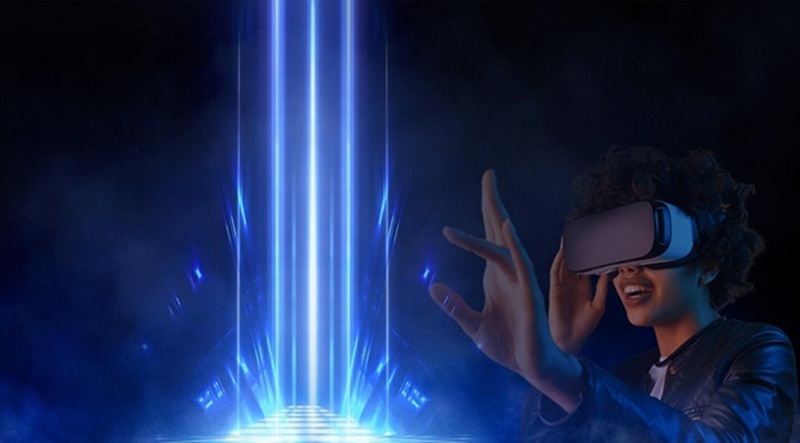
With VR, it’s not just about watching the reels spin. You step into the real money casino, like the ones presented at https://pl.polskiesloty.com/kasyno-na-prawdziwe-pieniadze/, and have the full experience. You see the chandeliers. You walk to the poker table. You turn and see other players adjusting their seats or ordering digital drinks. Its presence, not just the interface, is especially noticeable when using Apple’s newly upgraded Vision Pro.

And once someone experiences that level of immersion, physical casinos and 2D screens will soon feel flat.

No more clicking around a lobby. No more staring at a grid of games. You’re inside the experience, not on the outside tapping your phone’s screen.

That kind of engagement changes everything from how long players stay to how emotionally invested they are in every spin or hand.

Social Gaming

One of the biggest complaints about online casinos is how lonely they make you feel. There’s no table banter. No eye contact. No energy from the crowd when someone hits big. VR changes that completely.

In a VR casino, you can actually talk to people. You see avatars sitting next to you at blackjack, nodding when you hit 21 or shaking their head at a risky double. Dealers speak to you. Other players laugh, joke, or groan just like in real life.

And it’s not forced, it feels organic when you’re using the right hardware. That social layer makes the whole experience stickier and more memorable.

By 2030, gambling will be about presence.

You Can Build Your Own Casino Atmosphere

Customization is where VR leaves everything else in the dust. In a traditional casino, you get what you’re given. Lights, music, layout, and all of these are someone else’s vision.

But in a VR casino, you can build your own lounge. Change the lighting. Pick your background music. Switch between Vegas-style rooms, tropical beach decks, or sci-fi neon cities with one click.

That kind of agency doesn’t just attract hardcore gamers. It speaks to casual players too; people who want a chill space, no pressure, just cool aesthetics and good games.

Better Responsible Gambling Tools Built In

Here’s something not enough people talk about: VR gives you better guardrails. Most VR casino platforms are already exploring smart ways to help players stay in control. Timers appear in your field of vision without breaking immersion. You can set spending caps before you even enter a room. Alerts nudge you when you’ve been playing too long.

And because everything in VR is tracked down to movement and decision speed, developers can spot risky behavior early and trigger protective features.

Traditional casinos rely on staff to “keep an eye” on players. VR casinos will use data and design to protect themselves in real time.

Game Variety

Right now, casinos are mostly limited to slots, roulette, blackjack, and poker. Maybe a few themed games here and there. But VR opens the door to wild innovation.

Imagine this: you’re on a treasure hunt with a friend, solving puzzles for bonus spins. These aren’t pipe dreams. VR game developers are already building them.

By 2030, casino games will look more like interactive adventures than basic point-and-click apps. And once players get a taste of that kind of creativity, it’ll be hard to go back to pressing the same “spin” button on a 2D screen.

More Accessible and Scalable

VR headsets are getting cheaper. Platforms are getting lighter. Internet speeds are climbing. The hardware gap that used to slow down VR is closing fast.

By 2030, it won’t just be tech nerds or early adopters using VR; it’ll be mainstream. Casual players, mobile-first users, and seniors who want the fun of a casino without leaving their homes will all have the chance to enjoy this experience.

And unlike a brick-and-mortar casino, VR scales fast. No rent. No dealer shifts—no space limits. According to data on VR headset adoption and online gambling trends from Statista, a single server can host thousands of players in dozens of rooms, all tailored to different tastes, languages, and styles.

Bottom Line

By 2030, the center of gravity will shift. VR casinos aren’t just a cooler version of the same thing. They’re a different experience altogether, more immersive, more social, more personalized, and more scalable.

For players who want more than just wins, who want fun, freedom, creativity, and connection, VR is the upgrade the gambling world’s been waiting for. And it’s closer than most people think.