DD
MM
YYYY

PAGES

DD
MM
YYYY

spot_img

PAGES

Home Blog Page 6696

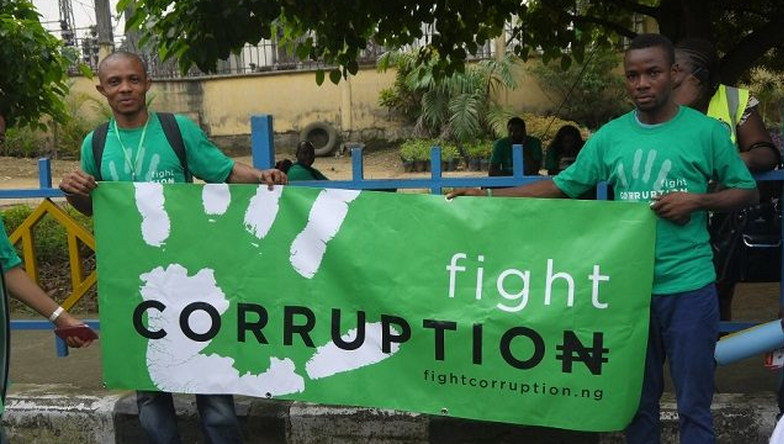
The Solution to Ending Corruption in Nigeria

0

If we stay united, we can end corruption.  

I sat down and thought about the level of corruption in this country. Although it is not only in Nigeria, we have in other countries as well. People no longer see any wrong in corruption. I learned that in the olden days, it’s impossible to take what doesn’t belong to you. But now, as the world is changing, so is the level of corruption on the rise.

Corruption started from when we were kids. At home, we see favouritism displayed by our parents. In school, we see different types of examination malpractices. People want to pass without reading likewise, they want to get rich without working hard. They forgot that wealth without sweat is like a house without a foundation.

We all know that corruption is common amongst our politicians. But not only amongst them, but it is also very rampant in every sector or organization.

Corruption is a form of dishonesty or an illegal act undertaken by a person or organization entrusted with a position of authority, often to acquire illicit benefit, or, abuse of entrusted power for private gain. Corruption may include many activities including bribery and embezzlement of public properties.

Types of corruption

Political corruption: This is very common. Political corruption is the abuse of public power, office, or resources by elected government officials for personal gain, by extortion, soliciting or offering bribes. It can also take the form of office holders maintaining themselves in office by purchasing votes or overriding laws. We all read how Abacha embezzled our money through political means. Also, the minister of petroleum embezzlement of money which is very acerbic. This is the highest level of corruption and it all starts right from our childhood.

Educational corruption: Corruption in education is a worldwide phenomenon. Corruption in gaining admissions to universities is traditionally considered as one of the most corrupt areas in the educational sector. We have lecturers who collect money from students in order to pass them. Sexual Assault on female students is rampant in the university as well. Many female students are facing hell in the hands of these lecturers. I know a sister that left school because of the sexual harassment from a lecturer.

Religion corruption: The world is in a mess because of this particular type of corruption. This level of corruption is not supposed to be found in religious organizations, but it is a shame to see this more often in churches and mosques. Fake pastors and Imams lying and looting the peoples’  hard-earned money. Religious leaders sleeping with their members. What a shame!

Favoritism and nepotism: Favouritism and nepotism is the father of all corruption. It exists in all the types of corruption listed above. Especially in a work environment, employees being deprived of promotion. We see many bias and prejudice in the recruitment processes. CEO/Recruiters hiring or promoting a family member or staff member to a role not qualified/suitable for, all because they belong  to the same political party. It is rampant amongst the political leaders.

When I looked at all these forms of corruption, I doubt if corruption can ever be eradicated in our beloved country, Nigeria.

Although, nothing is impossible. It can be eradicated if we put our minds together and come as one and stand against it.

We need to unite to end corruption.

Unity conquers all no matter the circumstances. Our president cannot do it alone. He needs our support.

A better Nigeria starts with me.

The Brunei’s Petroleum Industry Redesign

2

The Sultanate of Negara Brunei Darussalam located north east of Borneo is an oil and gas rich state which is fast running out of its reserves. Its daily production averages about 180,000 barrels per day and is the ninth largest producer of LNG in the world.

Brunei Shell Petroleum, a joint venture between the Bruneian government and Dutch energy giant Shell, dominates in the production and refining of crude oil, producing 10,000 barrels per day which is enough for domestic consumption. The state owned Petroleum Brunei regulates, as well as deploys investments and operates JV agreements with partners aimed at the growth and development of its oil and gas industry.

Considering the dwindling reserves of Brunei’s hydrocarbon assets, Petroleum Brunei should take a cue from Saudi Arabia whose national oil company Saudi Aramco is redesigning its crude oil refining chain by investing billions of dollars in strategic consumer markets such as India, which is the world’s fastest growing economy and third largest consumer of crude oil in the world after the United States and China with more than 4 million barrels per day, by purchasing a 20 percent equity in Reliance Industries refining division which values the business at $75 billion. Reliance Industries Jamnagar refinery is the biggest in the world, producing 1,240,000 barrels per day and earns over $50 billion in annual revenues. Since India’s energy policy restricts crude oil imports, this collaboration with Saudi Aramco will protect its domestic consumption.

In Nigeria, its largest conglomerate, Dangote Group, is currently developing the world’s largest single train refinery, estimated at $12 billion, and expected to soon come on stream, and hit full capacity by mid-2020 to refine 650,000 barrels per day, petrochemical plant to produce 780 KTPA of polypropylene and 500 KTPA of polyethylene as well as 3.0 million tonnes of urea from its fertilizer plant. As Africa’s largest market with 200 million citizens and current local consumption fed by imports, investment by Petroleum Brunei in Dangote Petroleum Refinery will position it as a stakeholder in a key crude oil consumption market.

Bruneian upstream petroleum operators should leverage predictive and data driven maintenance for production and cost efficiency which will help to reduce Mean Time To Repair(MTTR) and increase Mean Time Before Failure. Through smart drilling technologies like robotics and deployment of sensors they will gain predictive analytics, guarantee early identification of drilling challenges, hazards to well control problems, develop more enhanced oil recovery techniques, and generate real time data through logging while drilling and measurement while drilling. With artificial intelligence, rock and fluid properties can be identified and new oil and gas fields discovered to boost its reserves.

Petroleum Brunei should utilize blockchain technology in the conduct of its daily operations. As a secured transaction ledger database which is shared by all parties in a distributed network which records and stores every transaction that occurs in the network, Petroleum Brunei should utilize blockchain to store information on its laws, investment guidelines, Joint Ventures like Brunei Methanol Company and track their operations in real time. Brunei Shell Petroleum should acquire drones and implement blockchain for efficient monitoring of daily crude oil production and its refinery which delivers 10,000 barrels per day for domestic consumption. 

Also the renegotiation of its Production Sharing Contracts as well as automation of the sale of crude oil and gas will be transparent with the adoption of Smart Contracts which is an automated contract that will be issued by the corporation to buyers that will execute various terms and based on reaching agreed upon conditions. This will eliminate fraud since no middleman will be involved in the transaction. In the event of a force majeure, the system will autonomously inform the buyer that the terms of contract cannot be delivered at that time due to reasons beyond the seller’s control.

How to Tame Those Bullies

0

Bullies are everywhere. We see them at home, school, place of work, market, social media, buses, neighbourhood, and any other place you can think of. People may even call you on the phone just to bully you.

Bullies can be our juniors, our peers or our superiors. They can be male or female. They can be children, teenagers or adults. But, they are always close associates. Yes, bullies are always the people we have contacts with, and that is why they affect us greatly.

I could remember my first experience with bullies. I was still in nursery school. That was many years ago in Katsina. This bully happens to be the son of my father’s close friend and we were in the same class – in Aunty Ramatu Nursery School, Katsina (hope he’s not reading this, lol). This boy was just on my case – he harasses me during lunch, loosens the thread used to make my hair, excludes me from group play in the playground, and so on. I could remember his father spanking him whenever I complain to him, but that only means I receive double the harassment next time.

This is just to show that bullying is not a teenager thing as some people think. We even have worse bullies as adults. In fact the one I encountered in Facebook some years ago taught me a lot about cyberbullying. That experience was where I started my lesson on taming bullies.

I don’t really know why people bully others because I have never been one. But I took time to study some bullies and found out that deep down they are insecure. Some of them have been bullied before and the only way they feel in control is by bullying others. They enjoy seeing people in pain and they derive satisfaction by using intimidation to cover up their incompetency (next time a colleague bullies you in the office, just know that he is incompetent and is threatened by your abilities).

Bulling can affect the victim in so many ways. For instance he will feel unconfident about himself, his emotions could be in turmoil, he will always feel bitter about his condition, he will want to hide from the limelight and, he may end up committing suicide. I don’t know why bullies are so mean to understand what they do to others.

It is possible that some people may not know when they are being bullied. Below are some of the ways people can be bullied.
a. Using harsh words
b. Pointing out embarrassing mistakes
c. Reminding you of your embarrassing past (they just won’t let you forget)
d. Threatening you with violence
e. Gossip
f. Denial of benefits

The way you react to bullying determines if you are going to receive more of it. Below are the wrong ways of doing that:

a. Running and Cowering: This is so not it because you will only end up feeding the ego of the bully. And you know what? He will keep coming after you because he can’t survive without you.

b. Playing Victim: Never assume the role of a victim. He actually wants to see you cry. So, don’t give him that. Be strong and keep your head up.

c. Trolling Back: This isn’t proper either because it will end up making you toxic too.

d. Trading Words: You know, most bullies use unkind words to get on people. Don’t turn around and trade words with them, it will only make you look uncouth. Besides, it can expose you to violence.

e. Letting it Linger: Bullies usually tryout people to see if they can victimise them. If the person gives them room, they will come in and start their work. So, if you notice someone wants to turn you into his ego fanner, please call him to order immediately. Don’t give him that chance to go further.

f. Keeping Away from People: Sometimes victims of bullying try to stay away from people because they believe that is the best way to keep the bullies away. Or maybe it is because their self confidence has been compromised. Don’t let anybody make you feel so low that you have to start avoiding people. Don’t disconnect yourself. Keep your contacts and let the bully burn in his own corner.

g. Complaining: Complaining about being bullied isn’t always the best, unless you are quite sure that the complaint will yield a positive result. But most times it doesn’t because the bully will know that he’s getting to you and will only make it harder for you.

h. Befriending Them: Some people thought that making their bullies their pals will save them. Well, it never does. It only exposes such a person to worse devastation. In fact, don’t even be a friend to someone that bullies others because he will one day want to bully you.

So, how do we handle these bullies? How do we tame them? How do we get them off our backs? How do we shut them up?

Before we go into that, I’ll like to state here that all bullies are cowards. And, they are not smart. If they are brave and smart they wouldn’t spend the time for useful things to look for whose life to make miserable. So, whenever you see a bully, know that he lacks self confidence, smartness and brevity.

Alright, so these are ways you can tame those bullies trolling you:

1. Ignore Them: This is only possible if the person is just a casual passer-by, like someone you met on transit, or a passing comment in a social media post. In a situation like these, you can take a deep breath and waka-pass.

2. Block or Unfriend Them: This is better option in cases of cyberbullying. Outside that, it will be difficult to disassociate with your bullies.

3. Call Them Out: This option works so well. I learnt it from one of my bosses. If you, a subordinate, try to bully him because you have ‘connections’ in the ‘high places’, he will call you out in meetings and tell the whole house what you’ve been doing. This is also effective in cases of peers and in cyber bullying. See, don’t hide these people or they will be tormenting you in secret. Call them out where others will know their intentions and the table will be turned immediately. By the way, when I say call them out, I mean mention their names and say what they said or did.

4. Be Sarcastic: Sarcasm is a tool that can be used to correct vices such as bullying. Learn the wit and always have it with you when your bully comes for you. And be sure to throw the words where people will laugh at his foolery.

5. Secret Meeting: This can scare life out of them. Just target them when they are alone and give them a short intense private meeting. Be cool as you do this and make use of polite words. Never let this situation get out of hand (so you have to practice what you will say within those few minutes). Don’t threaten him, please; just let him know you will not tolerate his actions and vile words again. Trust me, he is not going to recover from this for a long time. This method can also work in cyberbullying, where you send them private messages.

6. Use Them: I once told one of my students this and the response I got was epic. Anyway, you can turn your bullies into your campaigners and advertisers. Remember they don’t have to know what they are doing. Make sure you give them something to talk about and they will spread the news for you. Don’t worry about what they will say, the major thing is that a lot of people will get to learn about you.

7. Argue Intelligently: Sometimes bullies come for us during presentations at meetings or seminars, or when we post something on social media. Don’t cower, argue it out with them but be smart about it. This means you need facts and figures to back up your thesis. Trust me, when a bully sees himself outwitted, he will take some time to recoup before coming for you. By the time he’s recovering from the shock you gave him, ensure that you use any of the tips given above to seal his mouth permanently.

8. Let Off the Steam: You know, sometimes being too ‘nice’, ‘gentle’ and ‘civilised’ to these people could make them feel they have the upper hand. You may decide to choose a hot day to let off the steam. Make it hot and snappy so you can throw him off-balance and give him no room to recover. Make sure you took the position of the offensive and send the right message home. However, be in total control of your emotions so you don’t resolve to physical combat. And, be sure to do it where people are so that they can help to put things under control in case anything goes wrong.

Well, get that bully off your back or get him to work for you.

The Coming of Africa’s Commodities Exchange – Agenpo

1

It is befitting that in my first ever article on Tekedia, I utilise the opportunity to set the stage for the emergence of Agenpo’s commodities exchange platform. The commodities exchange platform will be the bedrock of my official contributions to the growth and development of the African economy, starting from Nigeria.

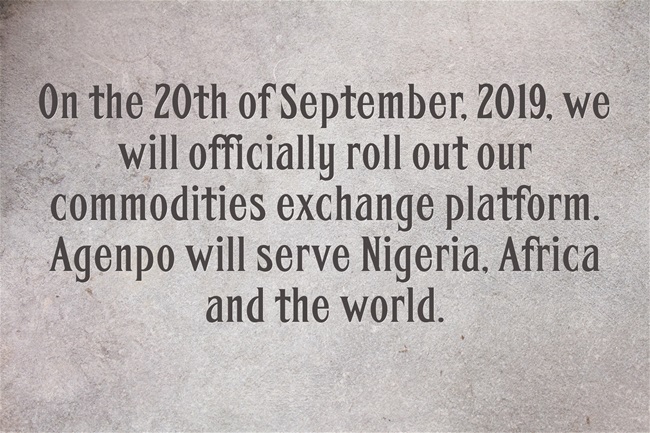
Agenpo started in 2016 as an agro commodities trading company. The following year, we added solid mineral commodities into the mix. Therefore, we’re basically a company that buys and sells agricultural and solid mineral commodities. However, this changes from Friday 20th September 2019 when we officially launch our commodities exchange platform. In other words, we will pivot from trading selected agricultural and solid mineral commodities to providing a technology-enabled marketplace where the trading happens.

This pivot didn’t just come up. It’s been two years in the works. Yes, it took me just a year as the Founder to realise that there was a huge problem in the space in which my company was playing. Being a trader, I was essentially a middleman between farmers and artisanal miners (producers) and manufacturers and processors (off-takers). My position as a middleman gave me a unique view of the commodities space which I probably wouldn’t have gotten any other way.

There are so many problems and inefficiencies in the commodities trading space that are begging for solutions. The only solution is a functional commodities exchange. Reading this, you may be thinking, “well, there are those in existence already”. However, when you think of it that commodities exchanges don’t buy or sell commodities, then it dawns on you that those names that quickly come to mind aren’t actually doing commodities exchange work. This is where Agenpo steps in.

So, on the 20th of this month, we will officially roll out our commodities exchange platform. It will be like no other in Nigeria, Africa or anywhere in the world. We have not bought any foreign software, neither have we copied any existing model. We have simply come up with a market-driven model aligned with Nigerian peculiarities but that’s not all. We have basically come up with a commodities exchange that is unbounded and unconstrained by geography in Africa. Yes, this is a commodities exchange for Africa tailored to the peculiarities of each country. So, while we’re launching in Nigeria on the 20th, we will open up to the rest of the continent before the end of the year.

The strategy is simple. Farmers and artisanal miners of selected commodities in Africa will we able to register themselves on the exchange. The same goes for other stakeholders in the value chain. Find your service and register yourself! By doing this, off-takers throughout the world will be able to simply get their required commodity raw material with just a few clicks. With a few clicks, everything happens. Literally, everything! Money moves, produce moves. With very minimal human intervention in information flow. So, it’s a commodities exchange that aggregates end-to-end commodities trading operations to farmers, artisanal miners, commodity transport and warehouse providers, as well as off-takers, to achieve an efficient commodity trading framework. It’s an ecosystem for African commodities trading.

The efficiency we will achieve will be due to some key factors. One of such factors is that ‘middlemen’ like us in our current state will be cut out of the value chain, thereby leaving only value-adding stakeholders in the value chain. Another is that prices are transparent and show in real-time. This eliminates time-wasting experienced when haggling over prices. It also ensures that the producers are not short-changed. In effect, we will be doing real commodities exchange work. Agenpo will not be buying or selling anymore.

All the relevant regulations in each of the countries will be met as we’re very ethical in our business practice. Where that is impossible within a certain time, we will seek to get legal waivers until we’re able to meet such regulations. Until then trade must happen for the sake of the African rural economies. Trade must happen economic growth of nations. Trade must happen for peace amongst countries.

Nigeria and Africa in general are in dire need of manufacturing and processing concerns. Therefore, while presenting a business case to existing ones to use an efficient and regulated commodities exchange, thereby cutting down on their robust procurement operations (with each company running its own independently), we will be presenting a business case for establishing new ones so that African commodities undergo value addition within the continent to create African jobs, grow African economies and achieve African peace. I have a feeling this aligns with the ideals of Mr. Tony Elumelu’s “Africapitalism”.

I am not on this journey alone. There are indeed some human enablers within and outside of Agenpo involved in one way or another. More details on this on the launch date. In the meantime, I’d like to hope that this pre-launch article inspires one person to be proud of mama Africa knowing that the technology to power this dream was built from scratch by Nigerians in Nigeria.

Alfa Belgore And P&ID – What Nigerian Constitution Says

1

As expected, many lawyers are attacking my piece that former Chief Justice of Nigeria was “dangerous” to have provided legal expert services to a company (P&ID) that sued his country. That is their rights; some are even commenting that the man was just doing what retired lawyers do: offer advisory services.

That some people passed through law school without knowing that once you get through  a certain level in government, you are barred from some jobs because of uncommon privileged access is unfortunate. If you did an MBA in Nigeria, most schools during the business law component will explain why to you.

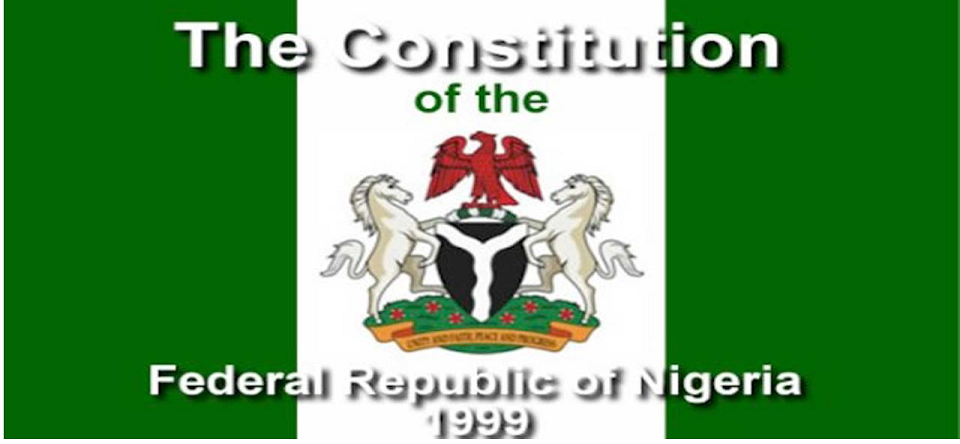
To help these people, including the lawyers, I refer them to Section 5 of the Fifth Schedule of the 1999 Constitution: 

5. (1) Retired public officers who have held offices to which this paragraph applies are prohibited from service or employment in foreign companies or foreign enterprises.

(2) This paragraph applies to the offices of President, Vice-President, Chief Justice of Nigeria, Governor and Deputy governor of a State.

I expect these people to keep digging. He was a CJN and this firm was not a Nigerian company but a Virgin Islands firm. You decide the legality of his service to P&ID, but my call is that the act is dangerous even if not evidently illegal. I do think it is illegal, though.

The Most Dangerous Man in Nigeria – Alfa Belgore

From LinkedIn

The Law: “5. (1) Retired public officers …are prohibited from service or employment in foreign companies …. (2) This paragraph applies to the offices of …Chief Justice of Nigeria, ….”

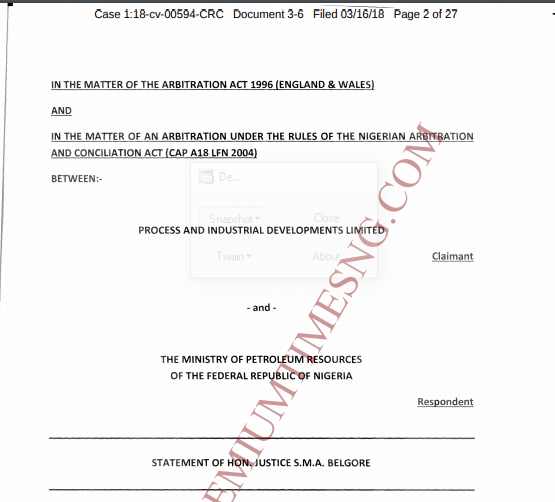
Argument that Belgore Acted within the law: “…This provision excludes judicial officers upon ceasing to hold office not to appear before any tribunal or court of law in Nigeria. This obviously didn’t preclude them from being solicitors/consultants as in the Alfa Belgore’s case. Belgore was not an employee, not a retainer and not a servant of the foreign company. He acted within the bounds of the law.”

My response: “…n Legal Practice, a service is typically assumed when there is “payment”. If Alfa was paid, irrespective of what you may call it, he had offered a “service”. … In Nigerian business law, most times, contracts are consummated upon payment. Few years ago, I wanted to do a community project. The community offered to give me the land free. I offered to pay them N1 (one naira); they refused. Then, I pulled out. With the one naira, there was a sale by law but without payment, it was a gift which could be withdrawn later.”


Read the full statement offered by Alfa