DD
MM
YYYY

PAGES

DD
MM
YYYY

spot_img

PAGES

Home Blog Page 6711

Chipper Cash, Raising $2.4M, Plots Zero-Free Remittance To Nigeria

0

It began in London with Circle which was backed by Goldman Sachs. Yes, Circle had made it possible for people to wire money from U.S. to England at zero fee and without erosion on exchange rate. Circle symbolized my near-zero marginal cost redesign where transaction and distribution costs become ZERO. When that happens, products can be offered for free. Here, it was international remittance.

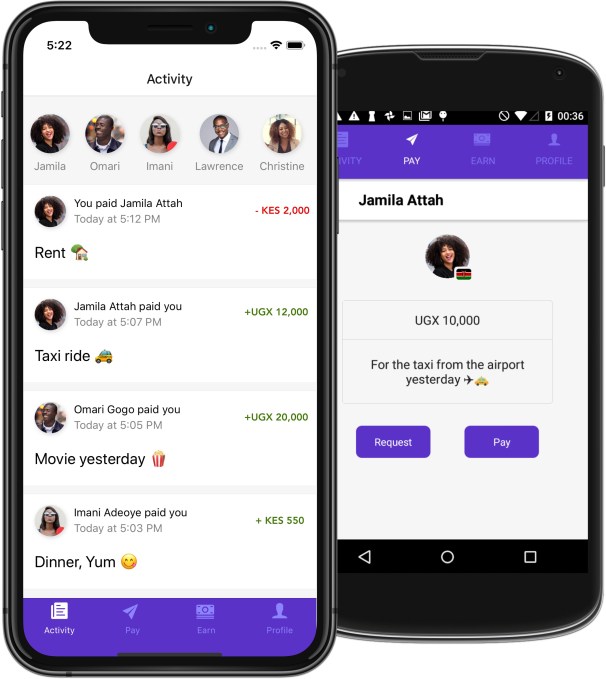
But while we were thinking, it seems Nigerians could begin to enjoy that also. U.S.-based Chipper Cash, a startup which offers instant cross-border mobile money transfers in Africa via text messaging, is coming to town, to make zero-free cross border payment in Nigeria possible. Yes, you read it right; TC daily summarizes below.

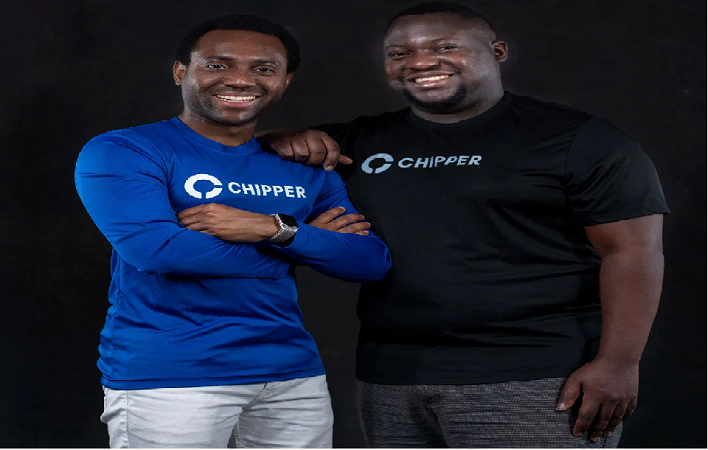
US-based Chipper Cash has expanded to Nigeria. Chipper Cash is a zero-fee cross border payment solution with offices in Ghana and Kenya. It was founded by Uganda’s Ham Serunjogi and Ghana’s Maijid Moujaled and fully kicked off operations in October 2018. According to TechCrunch, the startup now has 70,000 users and operates in six African countries. For its expansion to Nigeria, Chipper Cash has secured a partnership with Paystack. Also, the startup has hired former Gokada co-founder, Abiodun Animashuan, as its country manager for the West African country. (TC Daily)

According to TechCrunch, Chipper Cash has raised a $2.4 million seed round led by Deciens Capital this May.

Tough Decade Ahead for Africa: Potential Clusters of Nano-Conflicts

1
AU

As South Africa resumes xenophobic attacks today, it has become evident that diplomacy may add only marginal value. While leaders may speak grammar and sign papers, changing the trajectory the South Africans attackers want to pursue may be hard. Simply, they want to control their 100% even though the “individual pieces” are getting smaller [youth unemployment in South Africa for blacks is high, and economic growth has not effectively compensated for population growth]. Largely, in their minds, they have one choice since the alternative is doom: if the foreigners leave, we could thrive, but if they stay here we are sure of economic extinction. So, they march with violence to expunge those foreigners out of South Africa. Already, 400 Nigerians are ready to depart South Africa.

At least one fatality has been recorded and five people receiving treatment at the hospital after a xenophobic march in South Africa turned violent on Sunday, local media reported.

The violence broke out on Sunday afternoon when hostel residents across the commercial hub of Johannesburg took to the streets to demand immediate deportation of foreigners, eNCA television reported.

The private broadcaster cited the police as confirming one person had been killed and five hospitalised. The deceased was reportedly stabbed to death

Their thinking of using violence is wrong, but you do not need to go to South Africa to see that within nations, nano-conflicts are emerging. I used the word “nano-conflicts” for Africa first in 2009, in a print article in Harvard Business Review. I later used it again in 2011 for the dislocations that technology would enable. This was my conclusion:

Sub-Saharan Africa could witness major crises fueled by job losses and reduced incomes. Lack of capability to transition to new industries or markets will make these crises prolonged with effects that will affect their political and economic stability. The world will potentially see clusters of nano-conflicts across African cities and villages when mining and extraction offer little economic values unless Africa develops a knowledge strategy and transforms itself to a knowledge-power.

The South African conflict is at inter-border level, but within borders, economic turbulence is clearly evident across ethnic groups in most countries. Yet, Africa has not even started seeing conflicts. My personal model is that by 2027 when nanomaterials will go mainstream replacing rubber, cotton and other commodities, and in the process displacing most people from their means of livelihoods, Africa will experience severe conflicts [I pray I am wrong!].

I do not share this lightly but as I noted in 2011 in that piece – Clusters of Nano-Conflicts, we have less than 10 years to save this continent from ruin: “There are possibilities that new nanomaterials will become good alternatives for many existing commodities (eg, rubber, copper, cotton, platinum, etc) and incrementally, the commodity markets and industries could be disrupted, or even demised. The implication is massive trade and unemployment dislocations that could pose serious security implications in commodity-dependent nations.”

America now eats meatless burger (meat not made from animals but from plants), and milk that does not come from animals. They are close to getting tons of cotton, rubber, etc from labs. We may be eating our commodity very soon. When that happens, we will see that what South Africans are doing now is a child’s play. 

Yet, Africa can avert this; Ozioma has a roadmap for South Africa. Other African countries can use that playbook too.


Clusters of Nano-Conflicts: Security Implications of Disruption of Africa’s Commodity Market by Nanotechnology

Why Nations Remain POOR [Video]

3

As you get ready for the new week, I want to recommend this short video I made many months ago. In this video, I had explained the simple difference between a nation like the United States and another like Nigeria. America is an innovative society, Nigerian is an inventive society. There are so many ideas in the latter but hardly enough products and services to match those ideas. 

Until nations transmute from being inventive to innovative, they will remain poor. No nation has become rich without that translation. Yes, always remember that most of the pioneers of the most fundamental aspects of physics, mathematics and chemistry died poor. They were bright people – but they ended up poor. Why? They lived in societies of ideas with no products because there was no transduction from invention to innovation.

For that I mean, they had ideas in shelves but no mechanism to create products from them. Then, something happened, and a transduction took effect and poor societies evolved to become rich. Unfortunately, not all societies followed that trajectory. And all societies must go through the transduction process to emerge.


Qualities of Introverts That Make Most Successful in Business

2

Ok, to start with, I’m an extrovert. So this piece isn’t biased. I’m only going to state what I’ve discovered about the introverts and some of their qualities I have been trying so hard to pick up. Hopefully fellow extroverts will pick them up as well. I believe we can have extrovert-introverts, can’t we?

I stumbled on a post on edX, an online tutorial portal, that states that introverts are better salesmen. I wanted to refute this assertion but the writer’s line of argument makes a lot of sense. I took my time to surf through the internet and found out that the world has more records of successful people that are introverts than their extrovert counterparts. For example, Abraham Lincoln, Michael Jordan, Charles Darwin, J.K. Rowling, Bill Gates, Albert Einstein, Mahatma Gandhi, Rosa Park, Larry Page, Mark Zuckerberg and so many others are all introverts. On the other hand, Bill Clinton, Margaret Thatcher, Steve Jobs, Muhammad Ali and George W. Bush are extroverts.

Reading through the stories of these introverts, I found how they were able to derive strength from their inner nature to perform the great feats that made them outstanding in the world. These unique qualities of theirs is something we, the extroverts, need to learn from them so that when we combine it with our strength, we will be the bomb.

Now, I’m not saying that being an extrovert is a bad thing. There’s no way I’m going to say that considering that I’m one of them. We have a lot of wonderful qualities that endear us to people, but we also have those that ‘pour sand into our garri’.

So what do I want to achieve with this post? Here’s my dream: being an extrovert is good but we need to make some adjustments. My intention here is to point out the pros and cons of both the extroverts and the introverts, and then allow the readers to see their good and not-so-good sides. Then, I’ll mention those basic qualities that make introverts tick in the corporate and business worlds.

A. The Pros and Cons of an Extrovert

We will start with the good or advantageous side of an extrovert.

1. Extroverts are sociable. This part of them makes them likeable. They enjoy spending time with people and can always make the occasion lively. Extroverts are always lovable people to hang out with. There is no dull moment with them.

2. They are talkative. Well, they can keep you company with their non-stop one-sided conversation if you are ready for that.

3. They are assertive. They can say what they have in mind confidently. In fact, this quality makes it easy for them to convince others.

4. They are energetic. They are so enthusiastic about things, even the ones you think are trivial. This quality makes them great motivators.

5. They are friendly and approachable. That is so true. No matter how high their class and status are, extroverts are always approachable. This makes them look humble and peaceful.

6. They are bold. I am yet to see a shy extrovert. They are never afraid of anyone irrespective of what they are in the community.

7. They take risks. I think extroverts believe everything is achievable. So they just go on to do what they consider needful without waiting to think of the risks.

8. They want to be leaders. Naturally, extroverts want to stay at the helm of affairs. I don’t really know why but that’s how I see it.

9. They are result oriented. This is one thing that makes this people tick. The focus of an extrovert is on results, and on how get to them fast.

Now, I’ll go over to their not-so-good side.

a. Extroverts are easily bored. If an extrovert is not given an exciting job in the office, forget it, that position is going to suffer. Their interest spans are short-lived.

b. They are not good listeners. Of course, you can’t be talking and be listening at the same time, can you?

c. They are shallow thinkers. This could be as result of their energetic nature. I think this is why extroverts talk and act before they think of the consequences.

d. They are less observant. Well, if you have met one, you will agree with me.

e. They are sometimes seen as rude, arrogant and loud. Yes, extroverts are easily misunderstood and this can affect their self-esteem. A lot of people have also assumed that extroverts are attention-seekers without knowing that they are just being themselves.

B. Pros and Cons of Introverts

Just as in the case of extroverts, I will first mention the good qualities of introverts. Since I’m not one of them, I can only state what I have observed about them (based on the few introverts I’ve met).

1. Introverts are good listeners. The way these people listen and remember what they heard is quite amazing.

2. They are more focused than extroverts. As extroverts are losing interests, introverts keep theirs going.

3. They are deep thinkers.

4. They talk less. This is first quality you notice about them. I believe this is the quality that makes them listen and think more. But when they talk, they say things that are deep and sensible.

5. They enjoy being alone. Why introverts walk out of discussions just because they wanted to sit down in one corner, alone, is a mystery someone like me can never solve.

6. They desire their independence. I don’t really know, but I think introverts don’t want to depend on anyone, even for financial benefits. Some of the good and successful entrepreneurs I know are introverts. I know one that left a well paid job to start his own business, and he’s doing well.

7. They are very observant. Of course they are the opposite of extroverts. Introverts can sit in their quiet corners and take in every thing happening around them.

8. They can keep secrets. I’m not saying that extroverts can’t keep secrets but you wouldn’t so much as trust someone that talks a lot with your secrets, would you?

9. They are choosy about their friends. But the friend they make are very close ones and can remain their friends for life. So, they weigh people very well before bringing them into their small corners.

10. They are patient. This is one good thing about them. They can patiently wait for results to materialise without losing hope in their investments (extroverts reading this know that this is not possible with them).

11. They can control their emotions.

The not-so-good sides of introverts include:

a. They are sometimes slow to act. This could create a problem if the thing involved needs quick action.

b. They are sometimes seen as snobs. This quality sends customers away from them. I mean, not everyone will have the patience to wait and see that the introvert isn’t a snob. No one wants to be ‘ignored’, and introverts ‘ignore’ people a lot.

c. People see them as boring. If you are an extrovert, you wouldn’t want to be around an introvert unless you needed some quiet time to work.

d. People see them as shy. I think most of them are shy anyway.

Ok, I believe I have stated some pros and cons of these two personalities. May looking at them, we can see the places that each of the personalities need to work on. But, I want to mention the qualities of introverts that were argued to be their strengths in business.

The first thing is that introverts are good listeners. Yes, listening helps us to understand the situation of things and to find solutions to problems. For example a good salesman needs to listen to his customers more than he talks to them because it’s by listening to his customers that he can understand what they want. This quality can also be applied to other walks of life – at home, in school, offices, markets, parks and so on. Extroverts need to develop and sharpen their listening skills. The easiest way to do this is to talk less (oops, hope that’s possible).

The second thing is that introverts are observant. When you are silent, you observe more. This is also the same thing with thinking deeper. To achieve these two qualities, it is recommended that you remove yourself every now and then from the hustle and bustle of life so that the mind will be free to think. It is also good that extroverts learn to observe and pay attention to details before jumping into conclusions or actions.

The final thing we, the extroverts, must learn from the introverts is patience. The virtue of patience can help extroverts to have control over their emotions, increase their interest span, and make good decisions in their businesses.

As for introverts, I’m not saying that you people should change, but you may want to help the extroverts a little bit. Honestly, your quietness can sometimes get on the nerves. Liven up a little bit. It will do you some good too.

Don’t Use Nulled WordPress Themes, Plugins In Your Websites

0

Although they are very risky, nulled WordPress themes and plugins are regularly used by countless web designers on their clients’ websites. The practice has been in existence for years, but many business owners aren’t aware of the threats that this practice poses to their website and their business.

The aim of writing this post is to state the reasons you shouldn’t allow such themes and plugins to be installed on your business website. But before that, let me explain what are regarded as nulled WordPress themes and plugins.

So what are nulled WordPress themes and plugin?

To make you understand fully, I will start my explanation with the process by which most websites are built nowadays. When you ask a web designer to design a website for your business, he or she uses a software called WordPress for the project. By using WordPress, the web designer doesn’t need to write a line of code to do the job.

But he or she needs to install a theme and some plugins on WordPress, so as to be able to customize the website and increase its functionalities. The challenge is that most themes and plugins used for designing a website aren’t totally free.

At some point – or to use premium features – themes and plugins users are required to upgrade, and the upgrade is usually expensive. In order to circumvent upgrading, many web designers resorted to using nulled WordPress themes and plugins, which are the cracked versions.

The cracked or null versions often work, but they can cause serious harm to the website because their codes have been altered by a third-party. Below are the reasons you shouldn’t allow your web designer to use them on your business website.

Why You Shouldn’t Allow Them on Your Website

  1. The website can easily be hacked

The first, if not the main reason, you shouldn’t allow nulled WordPress themes and plugins to be installed on your website is because of security. To be credible, the original developers of themes and plugins constantly make sure that they are safe for use on websites.

But once crackers turn them to null, most of the time, the layers of security are removed and a backdoor is left on the themes and plugins. The backdoor allows hackers to bypass security check, and through it, they can inject malicious scripts into the website and totally take control of it.

  1. Visitors and customers information can be stolen

The second reason you shouldn’t allow nulled WordPress themes and plugins on your website is that they can render a website’s SSL certificate useless. Normally, when an SSL (HTTPS) certificate is installed on a website, the information of the visitors is protected, in that the interactions between the website and the users are encrypted.

However, if the website runs on nulled WordPress themes and plugins, the certificate can be rendered useless. Personal information of users such as their names, home and email addresses, passwords – and even bank card information – can be stolen.

  1. Ranking of the website on Google can be negatively impacted

In today’s marketing landscape, Google and other search engines are the cheapest sources of getting customers. But in order to deliver an excellent experience to their users, the search engines have made it clear that don’t like deceitful websites that redirect visitors to spammy websites.

They have also stated that they don’t like websites with malicious codes. But, sadly, lots of nulled WordPress themes and plugins contain malicious codes and redirect visitors to unwanted spammy websites. No matter the amount of search engine optimization (SEO) best practices deploy on a website, if its theme and plugins are suspicious, Google and other search engines wouldn’t send traffic to it.

And that means you have to spend lots of money on other channels in order to bring visitors to your website.

  1. No support from themes and plugins developers

If the free or paid version of a plugin or theme is installed on your website, you can get the necessary support. On the other hand, if you have a nulled version installed, there is nobody to support you if you have any technical or non-technical issue. No warranty. No guarantee. You are on your own.

Nulled WordPress themes and plugins are also known for not getting updates. Once they are installed, they can’t get the latest security patch, bug fixes, and added features.

  1. You can be sued

This hardly happens – but it can happen, especially if your business is big. The original developers of a theme and plugin can take you to court if they find out you are using the nulled version. They can do these because nulled WordPress themes and plugins are illegal.

Be safe and avoid the unexpected. Don’t allow your web designer to use nulled WordPress themes and plugins on your business website.