
DD
MM
YYYY

PAGES

DD
MM
YYYY

spot_img

PAGES

Home Blog Page 675

Ethereum and Pi Grab Attention, Yet Cold Wallet’s Cashback Model and Presale Growth Lead the Race

0

For many in crypto, the biggest regrets often come from missed opportunities. Some still look back, wishing they had bought Ethereum when it traded under $100, while others recall watching Pi Network rise in popularity without taking action. These examples underline an important lesson: timing and conviction often separate those who build wealth from those who merely watch it happen.

Today, Ethereum is closing in on record highs, and Pi Network is building momentum that analysts believe could lead to a major breakout. But another project is quietly creating its own success story: Cold Wallet. Currently in Stage 18 of its presale with over $6.2 million raised, it offers not only growth potential but also a reward system that pays users back for simply participating in the blockchain economy. For investors determined not to miss the “next Ethereum,” Cold Wallet is becoming difficult to ignore.

Ethereum Technical Outlook Shows Breakout Potential

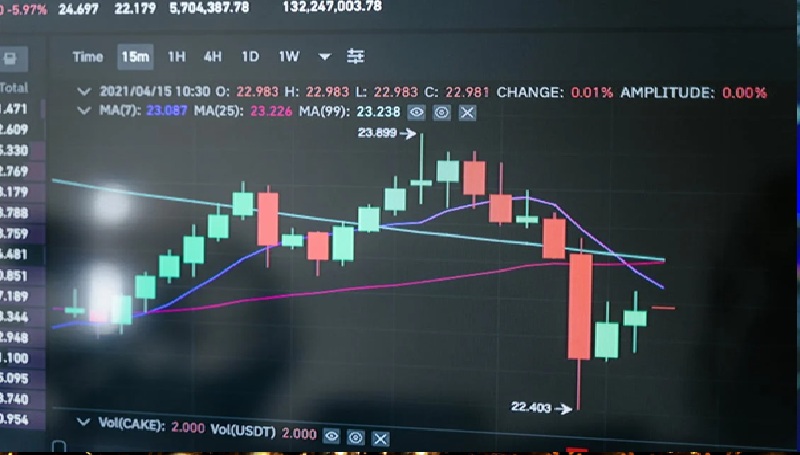
Ethereum’s current performance continues to impress both retail traders and institutions. Less than $200 away from its all-time high, Ethereum has shown resilience around the $3,900 support level, with buyers stepping in to defend key price zones. Analysts suggest that if ETH can push above immediate resistance, it could accelerate quickly past $4,100 and enter fresh price discovery.

A key factor behind this bullish setup is Ethereum’s growing role in DeFi and NFT markets. Scalability upgrades and reduced transaction costs have turned the network into a more efficient and accessible environment for both developers and users. Institutional adoption is also on the rise, further strengthening confidence in Ethereum’s long-term outlook.
For those seeking the best crypto to invest in, Ethereum’s balance of proven dominance and constant innovation makes it a top contender.

Pi Network Price Prediction Signals 10x Upside

The Pi Network has carved out a unique place in the market by leveraging community-driven adoption. Its mobile-first mining model has already attracted millions of users, giving it a built-in base of transaction activity and future network growth.

The latest Pi Network price prediction points to an imminent breakout from its descending channel. Traders are watching the $0.70–$0.75 range, with many suggesting that a clean break above this could push Pi toward $1 and beyond, potentially setting up a 10x return as momentum builds.

Unlike projects dependent solely on hype, Pi benefits from its engaged user community. With grassroots adoption in place and preparations for full mainnet functionality, Pi Network is positioned as a candidate for strong returns in 2025. For investors hunting for the best crypto to invest in now, its mix of technical signals and user strength makes it an appealing option to consider.

Cold Wallet Presale: Stage 18 Brings Early Mover Advantage

While Ethereum and Pi continue to generate excitement, Cold Wallet’s presale is quickly emerging as a different type of opportunity. At the current Stage 18 price of $0.00998, Cold Wallet Token (CWT) remains at a level that gives early participants a massive upside gap compared to its projected exchange listing.

The crypto presale is structured across 150 stages, with the price increasing incrementally at each step. This transparent system ensures that those who act early secure the largest potential ROI. Already, Cold Wallet has sold over 726.17 million tokens and raised $6.2 million, proof of growing demand and adoption. With 40% of the 10 billion supply reserved for presale, there is still room for significant early entry before listings tighten availability.

The vesting model further strengthens its appeal: 10% of tokens unlock at Token Generation Event (TGE), with the remaining 90% released gradually over three months. This creates liquidity while preventing sudden sell-offs, protecting long-term growth for holders.

Adding to its appeal is the referral rewards system, where referrers earn a 10% CWT bonus and referees get 5%, both subject to the same vesting terms.

Analysts highlight that Cold Wallet’s projected 4,900% ROI isn’t just about speculative price growth—it’s backed by token utility and a design that directly incentivizes user engagement. For anyone who missed Ethereum’s early run or Pi’s first momentum surge, Cold Wallet offers a second chance at entering a project before mainstream adoption fully takes hold.

Final Word

Ethereum’s strong technical setup and Pi Network’s breakout potential give investors two clear opportunities heading into 2025. Both coins are positioned for growth, with Ethereum targeting new highs and Pi aiming for a breakout that could multiply returns.

But Cold Wallet’s Stage 18 presale introduces a different kind of opportunity. With its low entry price, structured growth model, and reward mechanics, it transforms ordinary blockchain participation into a wealth-building system. The $6.2 million already raised signals that utility-focused investors are paying attention—and as each stage progresses, the room for exponential ROI narrows.

For those who regret missing past opportunities like Ethereum’s early surge or Pi’s first breakout, Cold Wallet offers a timely reminder: sometimes the best investments are the ones that pay you back for simply using them. Acting early may be the difference between watching from the sidelines and capturing the next 4,900% growth story.


Explore Cold Wallet Now:


Presale: https://purchase.coldwallet.com/

Website: https://coldwallet.com/

X: https://x.com/coldwalletapp

Telegram: https://t.me/ColdWalletAppOfficial

Safe Gaming Guide: Spotting Legitimate Online Casinos in the USA for Secure Play

0

In the ever-evolving world of online gambling, finding a safe and legitimate casino platform can feel overwhelming. With countless options available, players must navigate a landscape filled with both trustworthy sites and potential scams. Understanding how to identify reputable online casinos is essential for a secure gaming experience.

This guide provides valuable insights into recognizing legitimate online casino platforms in the USA. From licensing and regulation to secure payment methods, players will learn the key factors that contribute to a safe gaming environment. With the right knowledge, anyone can enjoy the excitement of online casinos while minimizing risks.

Overview of Online Casino Safety

The online gambling space has grown rapidly, making safety a top priority for players. Identifying trustworthy sites involves evaluating several critical factors. Licensing is the foundation, as authorized operators must adhere to strict regulations set by reputable authorities. Licensed platforms display their credentials prominently, making them easy to verify. For those seeking a reliable source of information on legal and safe gambling options, PlayUSA offers comprehensive guides and up-to-date insights across multiple states.

Regulation ensures fair gaming practices. Reputable organizations enforce strict standards, guaranteeing games operate transparently and outcomes are random. Players should choose casinos that use independently audited random number generators, as these measures enhance fairness and trust.

Financial security is equally important. Secure payment methods, encrypted transactions, and recognized payment processors safeguard sensitive data. Indicators like SSL certificates and clear privacy policies signal a platform’s commitment to safety.

Customer support also impacts the overall safety experience. Reliable operators provide multiple channels for assistance and ensure quick, effective resolutions to issues. Finally, player reviews and feedback can offer valuable real-world insights into a site’s reliability, helping players make informed choices similar to how partnerships in the industry, such as Mythical Games teaming with Pudgy Penguins, can shape perceptions and trust among gaming communities.

Key Characteristics of Legitimate Online Casinos

Licensing and Regulation

Legitimate platforms operate under valid licenses from reputable authorities such as the Malta Gaming Authority or the UK Gambling Commission. A visible, verifiable license number assures compliance with strict operational standards and provides recourse for disputes.

Security Measures

Trusted casinos implement advanced encryption technologies, SSL certification, and two-factor authentication to protect player data. Independent audits of game fairness by recognized third parties further confirm transparency and equity.

Payment Options

Diverse, secure payment methods, credit cards, e-wallets, bank transfers reflect a platform’s credibility. Reputable casinos process withdrawals quickly and maintain clear, reasonable transaction policies.

How to Evaluate Online Casinos

Researching Casino Reputation

Players should check licensing credentials, regulator details, and industry standing. Awards, certifications, and absence from blacklists further indicate reliability.

Reading Player Reviews

Authentic reviews reveal first-hand experiences with payouts, customer service, and game variety. Trusted review platforms and online gambling communities offer credible insights.

Recognizing Red Flags

Unusual Promotions

Bonuses that seem “too good to be true” often hide unreasonable wagering requirements or high-risk terms. Legitimate platforms provide transparent, attainable offers.

Poor Customer Support

Limited contact options, unresponsive service, and unclear policies can signal operational issues. Reliable casinos offer live chat, email, and phone support with timely responses.

Conclusion

Identifying legitimate online casinos is essential for safe and enjoyable play. By prioritizing licensing, security, and strong customer support, players can protect themselves from scams. Thorough research, attention to player reviews, and awareness of red flags ensure a secure gaming experience. With the right approach, players can enjoy online casinos confidently and responsibly.

Short-Term Bitcoin Holders Sell Over 20k BTC at A Loss Amid Bearish Price Movement

0

Bitcoin’s latest price slump has pressured short-term investors, many of whom have rushed to cut their losses.

Cointelegraph reveals that more than 20,000 BTC held by short-term holders (STHs) have been sold as the crypto asset continues its bearish price movement.

This comes as the market started the new week with a continuous downward movement, which saw more than $500 million in long positions wiped out amid rising macroeconomic concerns and renewed uncertainty around U.S monetary policy.

Recall that the price of Bitcoin last week hit a new record high of 124,496 before retracing to the $114,000 price zone. The selloff triggered a wave of forced liquidations, as 133,643 traders were wiped out in the past 24 hours, totaling $576.35 million, according to Coin Metrics. That included $123 million in bitcoin liquidations and $178 million in ether liquidations, as traders were forced to sell assets at market prices to cover leveraged positions.

A recent report by CryptoQuant reveals that BTC held by short-term holders (STHs), i.e, investors who typically own Bitcoin for less than 155 days, flowed to exchanges at a loss over the past three days. Transfers surged from 1,670 BTC on Sunday to 23,520 BTC by Tuesday, coinciding with a 3.5% price dip from $118,600 to $114,400, Glassnode data showed.

The trend highlights a recurring behavioral pattern of panic-selling by short-term speculators during pullbacks, while long-term holders (LTHs) remain relatively steady, accounting for just 10% of exchange inflows. CryptoQuant analyst Kripto Mevsimi noted that for the first time since January, a period marked by the sharpest correction of this cycle, short-term investors are realizing losses again, with STH-SOPR multiples dipping below.

Historically, this has signaled two possibilities: either weakening momentum that precedes deeper corrections, or a “healthy reset” that flushes out weak hands, paving the way for more sustainable rallies, he noted.

Market sentiment remains divided. Trading firm Swissblock cautioned that a break below the $100K–$110K support zone which has held firm for over 100 days would open the door for sub-$100,000 levels. Bitcoin analyst AlphaBTC warned that a close below $114,700 could drag BTC toward the $110,000–$112,000 demand zone.

On prediction market Polymarket, traders are leaning bearish. Odds for Bitcoin closing at $114,000 stand at 73%, with a 39% chance of dipping below $112,000 and an 18% and 16% probability for moves toward $110,000 and $108,000, respectively.

Notably, short-term Bitcoin holders may be selling due to uncertainty surrounding U.S. Federal Reserve Chair Jerome Powell’s upcoming Jackson Hole speech, scheduled for August 21-23, 2025.

Reports suggest STHs are booking profits amid fears that Powell’s speech could dampen risk appetite. Bitcoin’s implied volatility is near two-year lows, indicating market complacency, but some warn of downside risks if Powell signals prolonged high rates or addresses tariff-driven inflation concerns.

It is understood that Powell’s 2022 Jackson Hole speech triggered swift Bitcoin price corrections, raising concerns about similar volatility this time. However, some crypto experts highlight optimism, noting Bitcoin’s historical 18% average gain 30 days post-dovish Fed pivots in summer periods.

As BTC goes through its recent correction, this event will be pivotal for the future outlook of the cycle. If the bulls manage to absorb the wave of selloffs quickly, it could lead to a rapid rebound, if not, there is a risk of further bearish price action.

An analyst from CryptoQuant offers a glimpse of a potential turnaround, with Bitcoin’s exchange netflow (the difference between the amount of BTC leaving and entering exchanges) becoming more negative, from -1.7K to -3.4K BTC/day.

This means that the asset is being bought faster than it is sold on CEXs, hinting at traders buying the dip, preparing for a potential leg up.

Trump Administration Weighs 10% Stake in Intel as SoftBank Commits $2 Billion

0

The Trump administration is considering taking a 10% equity stake in Intel, a move that could see the U.S. government emerge as the chipmaker’s single largest shareholder.

The talks, first reported by Bloomberg on Tuesday, highlight Washington’s escalating efforts to revive the American semiconductor sector and shore up a company once regarded as the cornerstone of U.S. chip dominance.

According to the report, officials are weighing a plan that would involve converting some or all of Intel’s grants from the 2022 U.S. CHIPS and Science Act into equity. Intel has been the largest recipient of the law’s funding, with about $10.9 billion awarded so far — including $7.9 billion earmarked for commercial manufacturing and another $3 billion for national security projects. At Intel’s current market valuation, a 10% government stake would be worth roughly $10.4 billion.

It remains unclear how far the idea has progressed within the administration. The size of the potential stake is still in flux, and officials have not confirmed whether direct conversations have taken place with Intel executives.

The possibility of Washington taking a direct stake underscores the urgency with which the Trump administration is approaching semiconductor policy. Intel has fallen behind rivals such as Taiwan Semiconductor Manufacturing Co. (TSMC) and Samsung in advanced chipmaking, raising concerns in Washington about America’s reliance on overseas suppliers. With global demand for AI and high-performance computing chips surging, reviving Intel is now viewed as both an industrial and a national security imperative.

President Donald Trump has long advocated for government intervention to strengthen U.S. manufacturing, and a government-backed national champion in semiconductors would mark one of his most ambitious steps yet. While Trump has criticized the CHIPS Act — calling for its repeal earlier this year — his administration has been renegotiating parts of the program. Converting Intel’s grants into equity would give Washington a direct say in Intel’s future while lowering the total amount of cash outlay from the government.

Some analysts argue that such intervention could be crucial, given Intel’s inability to gain a decisive foothold in the artificial intelligence boom. Despite heavy investments, the company has yet to secure major customers for its manufacturing business. Others contend that Intel’s troubles go deeper than capital needs and that government ownership alone will not solve its competitive weaknesses.

Tuesday’s news of government stake discussions came on the same day Japanese conglomerate SoftBank announced a $2 billion investment in Intel, purchasing shares at $23 each. The deal, equivalent to about 2% of Intel’s outstanding stock, makes SoftBank the company’s fifth-largest shareholder. SoftBank Chairman and CEO Masayoshi Son said the investment underscored his belief that “advanced semiconductor manufacturing and supply will further expand in the United States, with Intel playing a critical role.”

The twin developments sparked volatility in Intel’s shares. The stock had surged nearly 9% on Aug. 14 when initial reports of potential government investment surfaced. Shares fell more than 3% on Monday following Bloomberg’s report, but rebounded over 5% in after-hours trading on Robinhood after SoftBank’s investment was confirmed.

Intel CEO Lip-Bu Tan, who took the helm in March 2025, has been navigating both a corporate turnaround and mounting political scrutiny. Tan met with President Trump at the White House last week, after the president had previously called for his ouster over alleged ties to China. Following the meeting, Trump softened his stance, praising Tan as having “an amazing story.” It is unclear whether the possibility of a government stake was discussed during their meeting.

However, the combination of SoftBank’s investment and speculation about a government stake has placed Intel squarely at the center of Washington’s drive to restore U.S. semiconductor leadership. With tariffs, subsidies, and now potential direct government ownership all in play, Intel’s fortunes are increasingly being tied to industrial policy at the highest levels of power.

OpenAI launches $4.60 Per Month cheaper ChatGPT Go plan in India to tap into massive AI demand

0

OpenAI has unveiled a new budget-friendly subscription tier for ChatGPT in India called ChatGPT Go, priced at ?399 per month ($4.60). The plan, announced today, is far more affordable than the ChatGPT Plus plan, which costs ?1,999 per month (about $23) in India after the recent rollout of local currency pricing.

The Go plan comes with 10 times more allowances for messages, image generation, and file uploads compared to the free tier. It also enables better memory retention for more personalized conversations, according to Nick Turley, VP at OpenAI and head of ChatGPT.

“Making ChatGPT more affordable has been a key ask from users! We’re rolling out Go in India first and will learn from feedback before expanding to other countries,” Turley said.

A critical part of the rollout is that Indian users can now pay through UPI (Unified Payment Interface), the country’s dominant digital payments system, which is widely used across both urban and rural regions.

Why India first?

India has become a powerhouse market for AI adoption, and OpenAI has been witnessing surging demand in the country. According to AppFigures, ChatGPT recorded more than 29 million downloads in India in the past 90 days alone, making the country the largest driver of new app installations worldwide. However, the app only generated $3.6 million in revenue from India during the same period, highlighting a massive gap between downloads and paid subscriptions.

OpenAI is betting that the Go plan will convert more of India’s 850+ million internet users into paying subscribers by offering a more accessible price point, improving monetization in one of its biggest markets.

CEO Sam Altman has openly described India as OpenAI’s second-largest market globally, and the company has made several strategic adjustments to appeal to local users, including optimized pricing and more features for image generation and file processing.

Competition heats up in India’s AI market

OpenAI’s move also comes as rival AI companies intensify their efforts to court Indian users. Perplexity AI recently partnered with telecom giant Airtel to provide free Perplexity Pro subscriptions to its subscribers. Google rolled out a free one-year AI Pro plan for Indian students, positioning itself to build loyalty among young users who may become long-term subscribers.

While OpenAI is not offering freebies, its aggressive local pricing strategy is expected to give it an edge, especially as many Indian consumers remain price-sensitive despite a strong appetite for digital services.

The ChatGPT Go plan is currently geo-restricted to India, but OpenAI confirmed on its support page that it intends to expand the offering to other countries after learning from this pilot launch.

The timing of this rollout coincides with ChatGPT’s rapid growth: last month, Turley revealed the service now boasts more than 700 million weekly active users globally, up from 500 million in March. The surge has been partly fueled by OpenAI’s addition of image generation capabilities in March, which has seen particularly strong traction in India.

Tech watchers say the Go plan is designed not only to make ChatGPT more inclusive for India’s vast internet base but also to plug a revenue leak in markets where adoption is high but paid conversions remain low.

As Tibor Blaho, a software engineer known for accurately leaking upcoming AI product launches, had teased earlier, the Go plan represents OpenAI’s latest experiment in making advanced AI accessible without alienating cost-conscious users.

For OpenAI, the move is both a strategic expansion and a business necessity: India is where AI adoption is exploding, but revenue still lags far behind. With the Go plan, OpenAI is hoping to change that equation.