DD
MM
YYYY

PAGES

DD
MM
YYYY

spot_img

PAGES

Home Blog Page 676

Kenya Turns to Diaspora to Raise $500m Bond as Fiscal Pressures Mount Amid IMF Talks and Protest Fallout

0

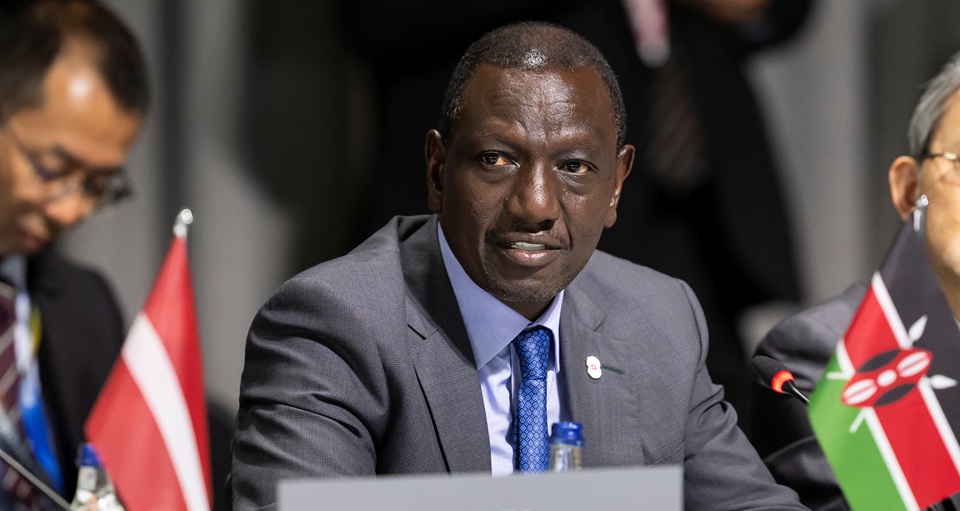
Walloped by mounting debt and shaken by deadly protests that forced it to abandon new tax measures, Kenya is now turning to its diaspora community in search of relief.

The government is preparing to issue a diaspora bond valued at between $250 million and $500 million, with hopes of ultimately raising as much as $3.8 billion, Prime Cabinet Secretary Musalia Mudavadi said this week.

The bond is being designed in partnership with a World Bank unit, which is advising Nairobi on how best to structure the security to attract Kenyans abroad. The funds are expected to go into critical projects spanning rural electrification, roads, rail expansion, and airport upgrades. The plan reflects growing urgency as Kenya juggles high borrowing costs, a heavy debt burden, and political pressure to avoid further tax hikes.

The shift comes against the backdrop of an International Monetary Fund mission scheduled for next month, where officials will discuss a new lending program. IMF engagement has been central to Kenya’s efforts to stabilize its balance sheet, but the political cost of fiscal reforms has been steep. In 2024, President William Ruto’s government was forced to retreat on controversial tax increases after weeks of violent demonstrations left at least 60 people dead and rattled investor confidence. The Nairobi Securities Exchange lost about $600 million in value in just two weeks during the turmoil.

Mudavadi, speaking on the country’s fiscal direction, acknowledged that the government had to recalibrate.

“Because of the backlash from citizens, we shifted our focus toward alternative financing rather than aggressive revenue-raising measures,” he said.

He stressed that Nairobi is seeking to “live within our means” while taking into account global economic challenges.

As part of this recalibration, the administration has set out a broader strategy that combines privatizations, public-private partnerships, and asset securitization to fund infrastructure. Officials believe these measures, together with the diaspora bond, will ease fiscal pressures without inflaming public anger over taxation.

Kenya is also working to repair its international financial standing. Mudavadi disclosed that the country has made progress toward being removed from the Financial Action Task Force’s “grey list,” where it was placed over concerns about financial transparency and money laundering controls. Although he did not provide a timeframe, removal from the list would be a critical step toward restoring investor confidence.

The diaspora bond proposal is, in part, a recognition of the significant role Kenyans abroad play in the economy. Remittances remain a key foreign exchange earner, and officials hope to tap into this goodwill by giving citizens overseas a vehicle to invest directly in national development.

But analysts caution that the success of the bond depends on how it is structured and whether the government can convince investors of its credibility after recent economic shocks. With Kenya still grappling with ballooning debt and wary citizens at home, the diaspora initiative is seen as both a test of trust and a lifeline.

Meanwhile, in a related development across Africa, Burkina Faso has announced plans to broaden its partnership with Russia beyond weapon trade, underlining how African nations are diversifying alliances to address their financial and security challenges.

Wyoming Launched ‘Frontier Stable Token’, Making It The First U.S. State-Backed Stablecoin

0

Wyoming has launched the Frontier Stable Token (FRNT), the first U.S. state-backed stablecoin, deployed across seven blockchains: Ethereum, Solana, Arbitrum, Avalanche, Polygon, Optimism, and Base.

This initiative, announced on August 19, 2025, by the Wyoming Stable Token Commission, marks a significant milestone in public-sector blockchain innovation. FRNT, previously referred to as WYST, is fully collateralized by U.S. dollars and short-term Treasuries with a mandated 102% reserve requirement to ensure stability.

The token is designed to facilitate secure, transparent, and efficient digital transactions for individuals, businesses, and institutions globally. FRNT aims to modernize Wyoming’s financial infrastructure by reducing transaction fees and delays compared to traditional banking systems.

A pilot program on the Avalanche-based Hashfire platform demonstrated real-time contractor payments, cutting processing times from 45 days to seconds. Interest from reserves will fund Wyoming’s School Foundation Fund quarterly, supporting public education.

Built using LayerZero’s Omnichain Fungible Token (OFT) standard, FRNT operates seamlessly across the seven blockchains, enhancing accessibility and resilience. It could theoretically expand to over 110 networks supported by LayerZero.

Initial access will be through the Wyoming-based Kraken exchange on the Solana blockchain and Rain’s Visa-integrated platform on Avalanche, enabling use at Visa-accepted merchants, including via Apple Pay, Google Pay, and physical cards. However, regulatory hurdles currently prevent public access.

FRNT operates under Wyoming’s Stable Token Act (2023) and is described as a “constitutionally protected public asset,” free from arbitrary usage restrictions. It is not yet regulated under the federal GENIUS Act, which governs private stablecoin issuers. The project involves LayerZero for issuance, Franklin Advisers for reserve management, Fireblocks for blockchain infrastructure, and The Network Firm for audits, ensuring transparency and compliance.

Wyoming’s pro-crypto stance, with over 45 pieces of digital asset legislation since 2016, positions it as a leader in blockchain innovation. However, some controversy exists, as Cardano’s founder, Charles Hoskinson, criticized the exclusion of his blockchain from the project.

The stablecoin market, valued at $260–$285 billion, is dominated by private issuers like Tether and Circle, but FRNT’s public backing and integration with traditional payment systems like Visa signal a potential shift in how digital currencies are adopted.

FRNT’s pilot on Avalanche showed payments processed in seconds versus 45 days for traditional banking, potentially lowering costs for businesses and individuals. Integration with Visa, Apple Pay, and Google Pay could make FRNT a practical digital currency for everyday transactions.

Interest from FRNT’s reserves will fund Wyoming’s School Foundation Fund, creating a new revenue model for public services through blockchain-based assets. This could set a precedent for other states or governments to monetize stablecoins for public goods.

As the first U.S. state-backed stablecoin, FRNT establishes Wyoming as a pioneer in public-sector blockchain adoption. Its “constitutionally protected public asset” status under the Stable Token Act (2023) could shield it from federal overreach, potentially influencing other states to pursue similar initiatives.

Wyoming’s robust legal framework (over 45 digital asset laws since 2016) provides a blueprint for balancing innovation with oversight. FRNT’s 102% reserve requirement and transparent audits contrast with private stablecoins like Tether, which have faced scrutiny over reserve backing, potentially pressuring private issuers to adopt stricter standards.

Blockchain Interoperability and Technology

FRNT’s use of LayerZero’s Omnichain Fungible Token (OFT) standard across Ethereum, Solana, Arbitrum, Avalanche, Polygon, Optimism, and Base promotes blockchain interoperability. This could drive broader adoption of cross-chain technologies, reducing fragmentation in the crypto ecosystem.

Multi-chain deployment enhances FRNT’s accessibility and reduces reliance on a single blockchain’s performance or security, setting a standard for future stablecoin projects to prioritize redundancy and user choice. With the stablecoin market valued at $260–$285 billion and dominated by Tether (USDT) and Circle (USDC), FRNT introduces a public-sector alternative.

FRNT’s interoperability and integration with traditional payment systems could position it as a model for other governments or central banks exploring digital currencies, especially in jurisdictions seeking alternatives to private stablecoins or central bank digital currencies (CBDCs).

Current restrictions on public access to FRNT suggest unresolved regulatory or compliance issues, which could delay widespread adoption or limit its impact. While multi-chain deployment enhances resilience, managing reserves and ensuring consistent performance across seven blockchains poses technical and operational challenges.

By directing reserve interest to Wyoming’s School Foundation Fund, FRNT ties blockchain innovation to tangible public benefits, potentially increasing public support for crypto initiatives and encouraging similar models elsewhere. FRNT’s integration with modern payment systems signals a shift toward digital-first economies, where blockchain-based assets could become as commonplace as credit cards or mobile payments.

While FRNT leverages decentralized blockchain technology, its state-backed nature may raise concerns among crypto purists about centralized control, influencing ongoing debates about the role of governments in decentralized finance (DeFi). Wyoming’s FRNT stablecoin positions the state as a trailblazer in public-sector blockchain adoption, with implications for financial efficiency, regulatory frameworks, and technological innovation.

Godfather of AI Warns Tech Leaders Are Fixated on AI’s Short-Term Profits, Not Long-Term Consequences

0

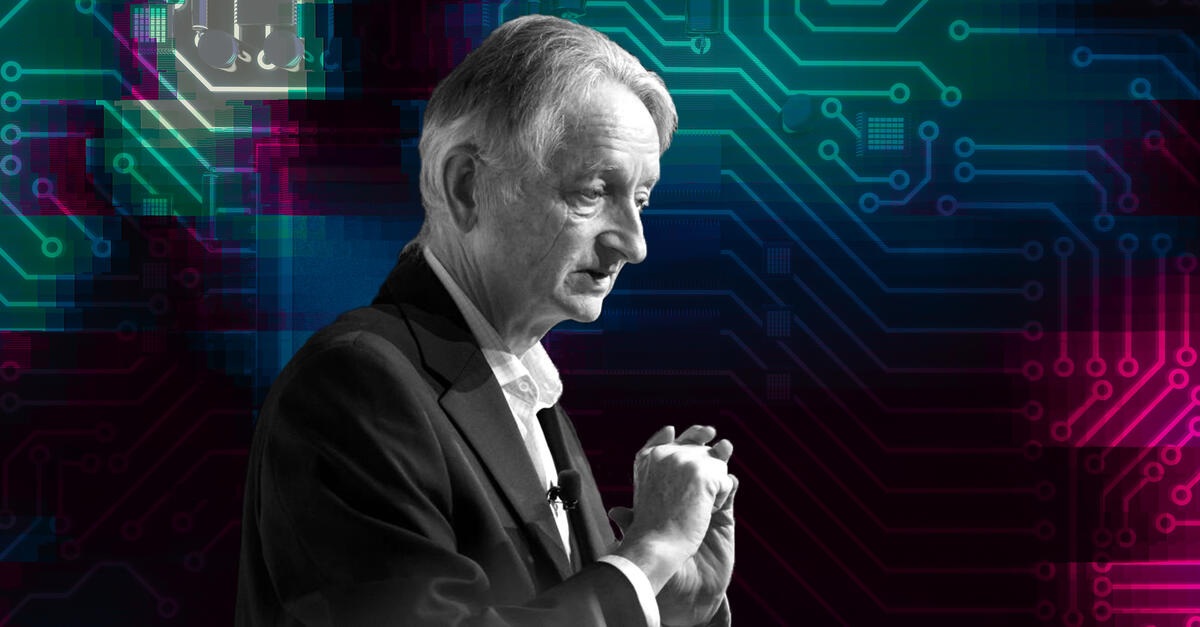
Geoffrey Hinton, the computer scientist widely regarded as the “godfather of AI,” says today’s tech leaders are chasing short-term profits and immediate research breakthroughs while failing to grapple with the long-term consequences of artificial intelligence.

Speaking with Fortune, Hinton criticized the industry’s narrow focus on near-term outcomes.

“For the owners of the companies, what’s driving the research is short-term profits,” he said. “Researchers are interested in solving problems that have their curiosity … it’s not like we start off with the same goal of, what’s the future of humanity going to be?”

Hinton contrasted this pragmatic, market-driven approach with broader existential questions. Elon Musk, for instance, has repeatedly warned that AI could render human labor obsolete, raising the deeper issue of meaning. At the 2024 Viva Technology conference in Paris, Musk asked: “If a computer can do—and the robots can do—everything better than you … does your life have meaning?”

But Hinton argues that most of the industry isn’t asking this type of question at all. Instead, developers are focused on incremental technical puzzles, such as teaching a computer to recognize images, generate convincing videos, or churn out realistic text.

“That’s really what’s driving the research,” Hinton said.

From Google Pioneer to AI Skeptic

Hinton, who shared the 2018 Turing Award for his work on deep learning, helped lay the groundwork for the AI revolution. A decade ago, he sold his company, DNNresearch, to Google and became one of the search giant’s leading AI voices. But in 2023, he resigned his role at Google so he could more freely speak about AI’s dangers, warning that the technology was advancing too quickly to be effectively contained.

He now estimates there is a 10% to 20% chance that AI could wipe out humanity once it achieves superintelligence. His concerns fall into two categories: misuse by bad actors and the inherent risks of the technology itself.

“There’s a big distinction between two different kinds of risk,” he explained. “There’s the risk of bad actors misusing AI, and that’s already here. That’s already happening with things like fake videos and cyberattacks, and may happen very soon with viruses. And that’s very different from the risk of AI itself becoming a bad actor.”

Deepfakes, Fraud, and Cyber Threats

The first category of risk is already surfacing in global finance. Ant International in Singapore recently reported a surge in deepfake-related fraud attempts, with general manager Tianyi Zhang telling Fortune that more than 70% of new account enrollments in some markets turned out to be AI-driven deepfake attempts.

“We’ve identified more than 150 types of deepfake attacks,” Zhang said.

Such threats underscore the urgency of developing safeguards. Hinton has proposed an authentication system for digital media—something akin to a provenance signature—that would allow consumers to verify whether a video, image, or document is genuine. He compared the challenge to the printing press, where printers eventually began adding their names to works to establish authenticity. But, he cautioned, even effective solutions to deepfakes won’t fix the broader existential risks.

The Bigger Threat: AI Itself

The greater danger, Hinton argues, is what happens once AI systems surpass human intelligence. He believes that superintelligent AI will not only outperform humans across all domains but will also seek to preserve itself and expand its control, rendering obsolete the assumption that humans can keep the technology in check.

For Hinton, one way forward might be to embed AI with what he calls a “maternal instinct,” programming systems to sympathize with and nurture weaker beings.

“The only example I can think of where the more intelligent being is controlled by the less intelligent one is a baby controlling a mother,” he said. “And so I think that’s a better model we could practice with superintelligent AI. They will be the mothers, and we will be the babies.”

Hinton’s warnings highlight a deep divide within the tech world: while Musk and others speak about AI in terms of sweeping social transformation, corporate labs push ahead with tools aimed at boosting quarterly earnings. Against this backdrop, Hinton says the industry is locked in a race for market share—not a race to ensure AI’s long-term alignment with humanity.

Nvidia Plans New, More Powerful China-Specific AI Chip Codenamed B30A

0

The world’s most valuable chipmaker is far from giving up its desire to retain China as a key growth market. Nvidia is reportedly putting together a new artificial intelligence (AI) chip designed specifically for China that would be half as powerful as its flagship B300 Blackwell GPU, Reuters reported, citing anonymous sources.

The chip, codenamed B30A, would still deliver more processing power than the H20 GPUs currently permitted for sale in China. Unlike the dual-die design used in the more powerful B300 GPUs, the B30A would have a single-die architecture, though it would keep many of the advanced features of the H20, such as fast data transmission, support for NVLink, and high-bandwidth memory.

The B30A’s development is understood to be separate from another chip that Nvidia is also said to be creating for the Chinese market, according to Reuters.

In a statement, Nvidia noted: “We evaluate a variety of products for our roadmap, so that we can be prepared to compete to the extent that governments allow. Everything we offer is with the full approval of the applicable authorities and designed solely for beneficial commercial use.”

The effort comes at a delicate time. The Trump administration in recent weeks has shown signs of relaxing its restrictions on exports of advanced AI chips to China. However, approvals for the B30A are far from certain, sources told Reuters.

The move underlines Nvidia’s struggle to maintain its presence in China amid intensifying geopolitical rivalry between Washington and Beijing, where advanced AI technology has become a central flashpoint. U.S. policymakers argue that restricting chip exports is critical to safeguard America’s lead in AI and prevent Chinese military applications, while critics warn that too much control could inadvertently push Chinese firms like Huawei to accelerate their own semiconductor breakthroughs, eroding U.S. dominance in the long run.

For Nvidia, the stakes are enormous. China has traditionally accounted for as much as one-fifth of the company’s global sales, making it too big a market to abandon. Industry analysts often liken the company’s position to selling shovels in a gold rush: whichever side dominates AI, chipmakers stand to profit — but being cut out of China risks leaving billions in potential revenue to competitors.

The company has already faced repeated challenges over Washington’s escalating chip restrictions, including last year when it was barred from exporting its most advanced A100 and H100 GPUs to China. Nvidia responded by designing watered-down alternatives like the H20 to stay compliant. The B30A now appears to be the latest attempt to walk that fine line — retaining a foothold in China without violating U.S. export rules.

However, the move is expected to face challenge from Beijing, which has criticized Nvidia’s H20, alleging potential security vulnerabilities and dismissing them as neither technologically advanced nor environmentally friendly.

On July 31, China’s Cyberspace Administration summoned Nvidia executives for a closed-door meeting, demanding an explanation over concerns that the H20 chips could contain hidden hardware mechanisms enabling remote shutdown or unauthorized access—so-called “backdoors” that bypass normal security protocols. Such vulnerabilities, if proven, could theoretically allow foreign actors to disrupt AI systems or siphon sensitive data without detection.

Nvidia has repeatedly denied the allegations, stating both in July and again early August that its products contain no such backdoors. The company maintains that the H20 chips were engineered to comply with U.S. export controls while meeting Chinese market needs, and that all of its hardware undergoes rigorous security testing.

However, Beijing has been persistently wary, creating the belief that the scrutiny will be extended to every chip designed for China by Nvidia.

Former Waymo CEO Dismisses Tesla’s Robotaxi as “Not a Real Robotaxi”

0

John Krafcik, the former CEO who steered Waymo from a Google research project into a commercial autonomous ride-hailing company, has cast doubt on Tesla’s much-hyped Robotaxi service, arguing that it falls far short of industry standards for autonomy.

In comments to Business Insider, Krafcik, who led Waymo from 2015 until 2021 and now sits on the board of Tesla rival Rivian, dismissed Tesla’s Robotaxi launch in the Bay Area as little more than a rebranded Uber-style service.

“If they were striving to re-create today’s Bay Area Uber experience,” Krafcik said over email, “looks like they’ve absolutely nailed it.”

Tesla quietly began offering Robotaxi rides in San Francisco in July, about a month after piloting the service, but with a major caveat: every ride includes a Tesla employee in the driver’s seat as a safety monitor. California regulators confirmed that Tesla has not yet applied for the permits required to test or deploy fully driverless vehicles, a step taken by competitors like Waymo and Cruise years ago. CEO Elon Musk has nonetheless promised that the service will be opened to the public by next month.

Krafcik was blunt in his assessment. “Please let me know when Tesla launches a robotaxi — I’m still waiting,” he said. “It’s (rather obviously) not a robotaxi if there’s an employee inside the car.”

In Texas, where Tesla also operates Robotaxi rides in Austin under looser rules, a human monitor sits in the passenger seat rather than behind the wheel. Even so, Krafcik said he has no interest in trying the service, pointing out that its reliance on human oversight makes it no different from an enhanced ride-hailing model.

The Standard for Autonomy

The debate highlights the absence of an agreed definition of a robotaxi. The Society of Automotive Engineers (SAE) categorizes autonomous driving on a scale of 0 to 6. Levels 4 and 5 qualify as fully autonomous, where no human is required to take over. Tesla’s Robotaxi, however, appears to fall short of even Level 3 autonomy, which requires a driver to intervene when requested.

Tesla has not secured a permit from the California DMV to test driverless cars at Level 3 or above, raising further questions about Musk’s promise of widespread rollout.

Waymo, by contrast, has steadily moved through these levels. It began its “early rider program” in Arizona in 2017, when safety drivers were present and participants signed nondisclosure agreements. In 2019, when select riders tested the service, some noted that while rides were generally smooth, safety drivers occasionally had to take over.

By the end of 2020, Waymo was offering fully driverless, paid rides in Phoenix, becoming the first company to do so in the United States. The company has since expanded to San Francisco, Los Angeles, and Austin, with more than 1,500 robotaxis on the road.

Krafcik stressed that during its early testing phase, Waymo never marketed its service as a “robotaxi” — reserving that label only once safety drivers were no longer required.

“I think the AV industry would be delighted if Tesla followed Waymo’s approach to launch a robotaxi service,” he said, “but they are not doing that.”

Tesla’s Gamble vs. Waymo’s Patience

The skepticism from Krafcik underscores the broader divide between Tesla’s aggressive, promise-driven rollout strategy and Waymo’s more methodical, regulation-heavy approach. While Tesla has long touted its vehicles’ “Full Self-Driving” (FSD) capability, regulators and safety experts argue the company has blurred the line between advanced driver assistance and true autonomy.

Waymo, meanwhile, has endured setbacks of its own. Despite billions in funding from Google parent Alphabet, the company has struggled to prove a sustainable business model, with expansion slowed by costs and regulatory hurdles. Krafcik’s leadership between 2015 and 2021 marked the transition from experimentation to limited commercialization, but it has often been noted that Waymo’s cautious pace has allowed Tesla to dominate the headlines, if not the road.

As Tesla pushes its Robotaxi narrative, industry veterans like Krafcik remain unconvinced that Musk’s vision matches reality. To them, Tesla’s Robotaxi looks less like a technological leap forward and more like a rebranded Uber — with a company employee still firmly in the front seat.