DD
MM
YYYY

PAGES

DD
MM
YYYY

spot_img

PAGES

Home Blog Page 6774

Nigerian Banks Hitting Record Numbers on Arbitrary Charges and Fees

0

On the 27th of May, I got an SMS notification from Zenith Bank that my account has been debited of N52.50, as MasterCard monthly fee, and my balance was at the deficit of N8.42. On the 30th of May, I received another transaction notification: “SMS Notification Charge, Deducted Amount, N12.” My balance deficit climbed to N20.42 by the 23th of June, I was indebted to ZenithBank to the tune of N80. Five days after, my deficit shot up to N141.30, as a result of N8 SMS notification charge for the month of July. All these happened in a savings account.

This means, you can leave N10, 000 in your savings account with a Nigerian Bank, and at the end of the year the Bank will take almost half of the money for charges. It is an extortionist situation applicable to countries like Nigeria, which goes against the ethos of savings account.

Savings account is defined as “a basic type of Bank account that allows you to deposit money, keep it safe, and withdraw funds, all while earning interest.”

Unfortunately, the above definition does not apply in Nigeria, it’s the other way round. Bank customers are being ripped off on a daily basis in the name of “maintenance charges” that has little or nothing to do with transactional charges incurred through banking activities.

I thought about the charges and realized that there has not been significant difference since 2017, when Nigerians went confrontational and demanded that the Central Bank of Nigeria (CBN) reverse some of the rules on banks charges, because it’s becoming more like extortion in the interest of the banks alone, and customers were bearing the brunt. The National Assembly intervened and directed the CBN to quash some of the charges. Well, it’s 2019, and the aforementioned experience is an indication that many of us are working to enrich the banks.

In 2012, Innoson Nigeria Ltd, a customer to Guaranty Trust Bank (GTB) was unlawfully imposed such charges upon, and its current account was debited of N700 million. It took a careful audit for the company to find that out, and it became an eye opener to others who lodge huge sums with the banks. But then it took arbitrary turns before we know it, and every bank account holder in Nigeria is at the receiving end.

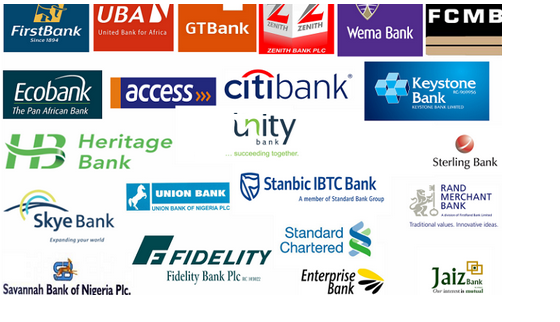
In the first quarter of 2019, top 5 Nigerian banks made a total of N15.7 billion from account maintenance charges. They are as follows:

  • Zenith Bank: N5.238 billion.
  • First Bank: N3.218 billion.
  • GTB: N3.045 billion.
  • Access: N2.212 billion.
  • UBA: N1.967 billion.

This whooping sum was extorted from the monies that should be yielding interest to Depositors, a reason why Nigerians embarked on a #Endbankingfraud campaign on Social Media for months. Well, the campaign didn’t change anything if not that it created the awareness that Nigerians are getting ripped off by banks, and the enormity is alarming.

ATM cards are issued to customers to ease the number of people on the counter trying to withdraw, so in a way, customers are helping the banks to do their job by using their ATM cards. Therefore, they should be compensated through interests for doing the job they did not sign up for. But that’s not the case, and that’s not the only pain that Nigerians go through in using the ATM. The three withdrawal limit when you are using other banks ATMs, and N20, 000 cash maximum on the withdrawal menu of many ATMs are to ensure that customers who have more cash to withdraw pay charges for doing so.

The Consumer Protection Council seems helpless as the charges are backed by the CBN. And there is less people can do other than complain and seek refuge in Thrift Collectors (Alajos). However, the sundry charges have become a hurdle to banking inclusion advocacy. A student who is counting on the N1000 left in his account would be disappointed seeing that he can’t access the money because  his bank has debited N200 from his account for sundry charges. The next time he would keep his money to himself however else he can. The banking recapitalisation is an evidence that Nigerian Banks can function without ripping their customers off. There is a whole lot of lucrative businesses and ideas to invest in. So instead of counting only on depositors money to stay in business, the CBN should ensure policies that will make banks business innovative.
Make Warri or Eket the Home of Nigeria’s Petech, Start-ing up Petroleum Technology

1

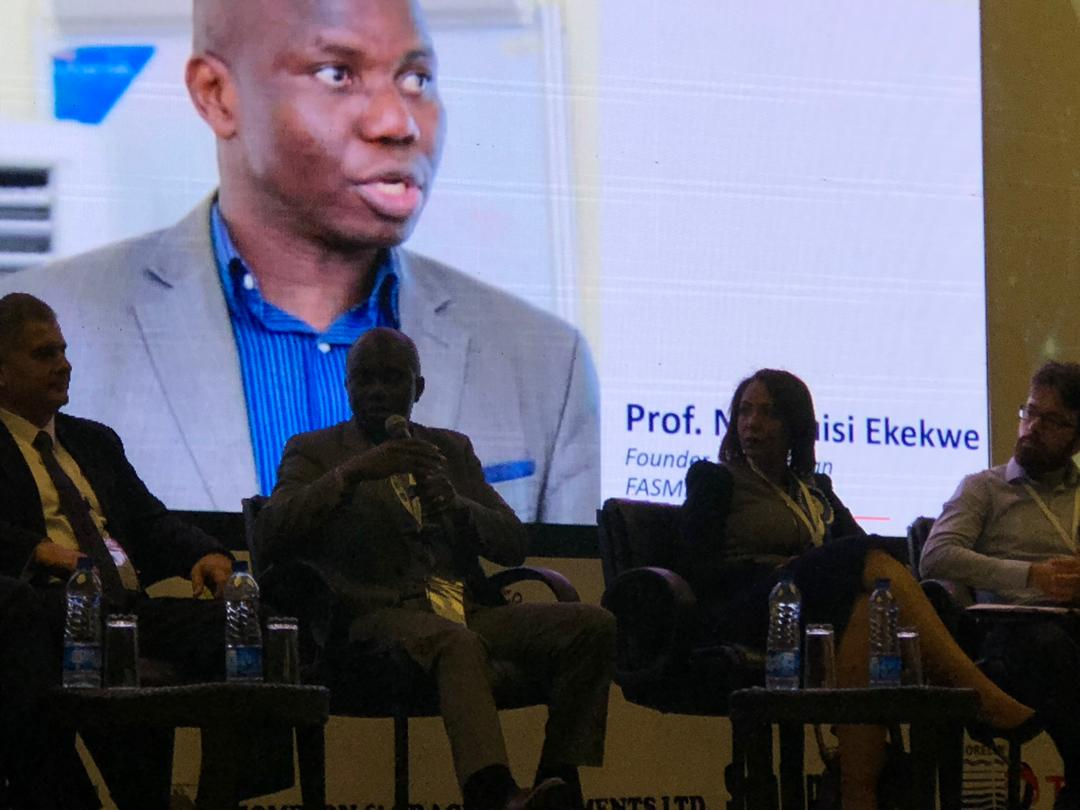
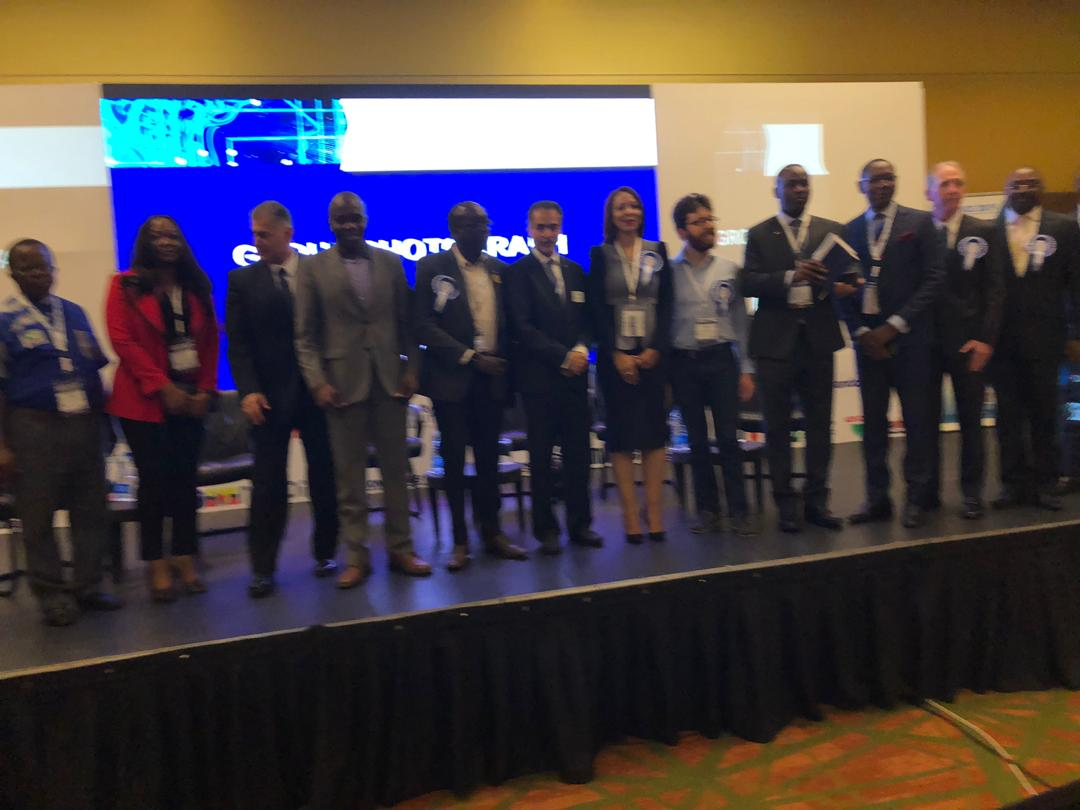
On phase today with Schlumberger, Agip, Seplat, Chevron and more as we discussed big data, AI and broad technology in the oil & gas sector. I pushed for Warri or Eket to become the home of Petech (start-ing up petroleum technology). Yes, Nigerian entrepreneurs will build startups to serve oil & gas sectors and become the fintech equivalent of the banking sector. The conversation was lively and was well received. It was moderated by CNBC Africa anchor Wole Famurewa.


Online VAT: Where Nigerian Government Got It Wrong

0

The proposed Value Added Tax (VAT) for online transactions has stirred frowning reactions from Nigerians. The chairman of the Federal Inland Revenue Service (FIRS), Babatunde Fowler, disclosed the decision of the Federal Government (FG) to introduce VAT to online transactions in an interview with Premium Times on August 1. But Nigerians are not buying the idea; they are saying that it’s just a measure by the FG to kill online businesses in the country.

At a time when digital transactions are being encouraged and Nigerians seem to be waking up to it, VAT is perceived as a threat to the cashless policy that even the federal government has been advocating. There are so many online outlets, most of them startups, leveraging on the VAT free online system.

The new policy billed to take effect next year does not apply to every item purchased online. Mr. Babtunde Fowler explained that items and services mostly used by people, like education and medical services will be excluded from the list. And the FG will be partnering with banks to effect VAT charges.

“We are thinking that maybe early next year, we will advise banks to start deducting five percent VAT for all online purchases done locally.” He said.

Despite the exclusion of some mostly used items from the list, Nigerians see the decision as discouragement to local online enterprises. And a viable reason why most of them wouldn’t be making online purchases anymore.

A Twitter user analyzed it this way:

“If you pay for an item worth N10, 000 with your card, you will need to give the federal government N500 extra. If the goods are worth 200, 000, you will pay the FG N10, 000. If you do 500, 000 transactions, that’s N25, 000 to the FG’s kitty. If your transaction is N10 million, you will pay the FG 500, 000.”

Another Twitter user added:

“With 5% VAT, usage of POS and other online payment options will reduce. People will start carrying loads of cash around for transactions which will trigger a sudden rise in robbery cases. The government just created an enabling environment for the ‘Armed robbery sector’ to thrive.”

With these sentiments, it’s obvious that Nigerians are unlikely to patronize online markets if this policy is implemented. And that’s going to impact negatively on online businesses. Even those who are deemed to be established, like Jumia and Konga and other retail stores that are counting on the cashless policy to thrive. Many of them will be laying off workers.

There are also developing payment platforms that will not survive this decision. Mr. Fowler tried to excuse the implications with further explanation, saying that the VAT payment is a thing of choice. According to him:

“What that means is, if A wants to impress B, and takes B to eat at the Transcorp Hilton, A will pay VAT for services enjoyed. This is because of the environment.

“The cost of Coca Cola they will drink at Transcorp Hilton at N1, 000 could have been bought at N100 in any supermarket without paying any VAT.

“Also, A can buy chicken, with all the ingredients in the markets, cook it and eat without any VAT. But instead of spending N5, 000 for that meal, if A decides to go to the Transcorp Hilton and spend N20, 000, then A must pay VAT. It is a choice A has to make.”

What is missing in this explanation is the fact that online VAT will not be exclusive to eateries alone. There are retail stores that sell at the same cost with conventional stores or even cheaper. And many people opt to online for convenience since most online stores do home delivery.

The “choice” emphasized by Mr. Fowler is highlighting the fact that the government has little or absolutely nothing to lose in this decision. The VAT tax is already implemented in offline businesses at 5%, and the International Monetary Fund (IMF) is even urging the FG to increase it to 7%. Mr. Fowler give further details on how extensive it has become, he said:

“We crossed the N1 trillion mark in VAT last year for the first time. We are equally improving this year. At the end of 2019, if we can have everybody under the tax net, sign for VAT, start remitting VAT, let’s look at the volume we can generate.”

The insinuation in this statement is that whether people choose to make purchases online or offline, the government is going to charge the 5% VAT, because it’s a win-win for them. And that is carefree if the online businesses survive or not. Since the VAT depends on buyers, the FG will have nothing to lose.

Apart from the UAE (United Arab Emirates) that recently introduced VAT at 5%, Nigeria has the lowest VAT rate in the world. But that does not justify its introduction to online purchases. Since the Nigerian environment lack the facilities that Entrepreneurs need to thrive, the online VAT waiver should substitute for the things lacking.

The Shocking Truth About Bleaching, Whitening and Toning Products

0

Due to popular demand, I would like to discuss the chemical ingredients found in some bleaching, toning and whitening products. Over the course of my advocacy project for better healthcare systems and self care, I have received a lot of questions about this, which has prompted the need for this article.

I must say the motive for discussion is non judgmental, I just want to create awareness and encourage people to be body-vigilant and practice self care.

For this article, exclusions include the use of skin lightening treatments under the care of a dermatologist or doctor for skin conditions like hyper-pigmentation.

I conducted a mini poll on social media recently, I asked a question – Do you think products applied on the skin get absorbed into the blood stream, 80% of the people that responded said yes, 10% said No and another 10% said Not sure.

Well evidence has shown that products applied on the skin in the form of creams, lotions, patches can get absorbed into the skin, as the skin layer is embedded with blood vessels as well, hence the motive behind the use of medicated skin patches, for drug delivery systems.

So let’s understand the makeup of the human skin:

The skin is the largest organ of the body, with a total area of about 20 square feet. The skin protects us from microbes and the elements, helps regulate body temperature, and permits the sensations of touch, heat, and cold.

Skin has three layers: Epidermis, dermis, hypodermis. These layer constitute hair follicles, sweat glands, fat connective tissues and blood vessels.

  • The epidermis, the outermost layer of skin, provides a waterproof barrier and creates our skin tone.
  • The dermis, beneath the epidermis, contains tough connective tissue, hair follicles, and sweat glands.
  • The deeper subcutaneous tissue (hypodermis) is made of fat and connective tissue.

The skin’s color is created by special cells called melanocytes, which produce the pigment melanin. Melanocytes are located in the epidermis.

What determines your skin colour? The colour of the skin is “determined by a person’s genetic make-up, and it involves the pigment melanin. Melanin is made by special cells called melanocytes which can be found in certain layers of the skin. Melanin production is a complex process. The amount of melanin produced, the type of melanin formed and how it is distributed throughout the skin determines the skin’s colour. Melanin is also the pigment responsible for the colour of hair’.

According to the London Trading standards, ‘The following ingredients found in some skin lightening products have been proven to be harmful to health and cause permanent skin damage: Harmful Ingredients – most common ones are Hydroquinone, Mercury and Steriods”

Possible side effects:

Possible risks of creams containing hydroquinone, corticosteroids or mercury include:

  • skin turning dark or too light
  • thinning of the skin
  • visible blood vessels in the skin
  • scarring
  • kidney, liver or nerve damage
  • abnormalities in a newborn baby (if used during pregnancy)

If you are in doubt about any product you are using on your skin, a good place to start is to double-check if the product has been approved by the appropriate regulatory agencies in your country.

Approved products fit for human use should be registered; also be mindful of using products that the manufacturers do not list all the ingredients.

Analysis by the agencies could help reveal the actual ingredients contained in those products. Below are examples of regulatory agencies for different countries:

  • UK- MHRA- Medicines & Healthcare Products Regulatory Agency
  • USA- FDA-Food and Drug administration
  • Nigeria- NAFDAC- National agency for food ,drug administration and control

Conclusion

This article is not aimed at influencing your decision to use certain products on your skin, Discussion was borne out of the desire to educate and create some form of awareness on the effects of certain chemical substances when applied on the skin.

If you are concerned about any chemical ingredient or products you apply on the skin, please speak to your local pharmacist or see your doctor.

I would advise you to always seek medical advice, weigh the risk benefit ratio, report all skin problems to your pharmacist or doctor, check with the regulatory agencies in your country to ensure products you use on your skin are safe, approved and registered.

Your skin is a very important organ in your body, look after it and be body-vigilant.

Like/Follow/Share: https://www.facebook.com/AskYourPharmacistAdaku

Entrepreneurial Young People Are Driving Nigeria’s Development Efforts

0

Deji Oduntan, Obi Ozor, Chidi Nwaogu and Shola Akinlade, do these names sound familiar? Maybe and maybe not. These are the most sought-after young Nigerian entrepreneurs in 2019 who are playing significant roles in the areas of transportation, logistics, publications and fintech.

For the development efforts of the Nigerian nation to yield tangible and sustainable results, the energies, resources, creative talents and labour of the nation’s largest demographic must be harnessed. Young people are needed as catalysts for developing the country and for exploiting the abundance of resources to create the kind of nation we all want. The youths are not only leaders of tomorrow, but partners in the progress of today.

As Nigeria’s population grows—it is more than 180 million now—and as our cities faces critical challenges like housing shortage, traffic congestion, poor infrastructure and lack of adequate transportation systems, young people are stepping up to tackle some of these challenges using, you guessed, technology. Take Deji Oduntan of GOKADA, an e-hailing motorbike service in Nigeria’s largest city Lagos for example. Gokada is helping Lagosians beat the city’s legendary traffic snarls to get to work and cut down the long hours lost to gridlock. 

Then there is Obi Ozor and his team at Kobo360, a Nigerian digital startup that is delivering faster freight and cargo transport services around the country. Even as the African Continental Free Trade Agreement (ACFTA) kicks off, Kobo360’s G-LOS (Global Logistics Operating System) is ready to power the ACFTA, from west to east, north to south to deepen productivity and reduce supply chain friction.

Publiseer, a multi award winning free digital publishing platform owned by Chidi and Chika Nwaogu is providing independent authors and artists a chance to have their works seen by the rest of the world and to profit handsomely from their own content. Shola Akinlade and Ezra Olubi are solving Nigeria’s long standing problem of payment for ambitious business owners by building an online financial solution startup, Paystack, which makes it easy for businesses to accept secure payments from multiple local and global payment channels.

From the instances cited above, it goes without saying that young people are the wheels that drive innovative initiatives that begets true development. They are the catalyst that accelerates the pace of development and progress of the nation. They are needed because they are the most active segment of the society and the major determiners of peace and economic progress of a nation. If Nigeria wants to accelerate growth and development, she must appreciate the importance of the role of young people in driving the change that we all want to see. She must provide a climate that would allow young people to thrive and create innovative solutions to our problems without boggling them down with bureaucracy and corruption.

Our greatest demographic asset as a nation today is our young people. They make up more than 67 percent of the entire population. For us to profit from this asset as a nation, increased efforts towards making quality education more accessible, affordable and available across the nation must become our topmost priority. Our young people must get quality education—an education with a curriculum that is unique and freshly designed to meet the everyday needs and the challenges of the nation.

“In our contemporary time,” says Prof Ndubuisi Ekekwe, a Nigerian professor, inventor, engineer, author, and entrepreneur at Fasmicro, “U.S. has the best universities and it remains the most dynamic global economy. As I have written, on Mines of Knowledge, any nation that dominates the accumulation and processing of knowledge typically “rules” the world. From the Babylonian Empire to the American empire of today, when you win on Knowledge you win on economy and human development.” Nigeria cannot afford but to win here.

In the 21st Century, the natural resource that matters most is the talent of a nation’s citizens. The role of top-grade higher education of international quality in helping young people become catalysts in the achievement of the Nigerian nation’s efforts for development and progress is as important as soul to body. Top-grade education is a lever to human and social development. Apart from imparting skills and knowledge in the citizens, education eliminates ignorance and intolerance; it enlightens and empowers the citizens for employment and peaceful coexistence.

Education is pivotal for the discovery of one’s innate abilities, factual self and potentials. Education is exposure and responsibility combined. It exposes young people to a new and dynamic way of life and it creates a sense of responsibility in them to give back to the society by contributing their skills and training in the development of their community. Top-grade education is the only way young people can learn and develop the skills needed to drive the nation forward.

Today, Nigeria has the largest population of young people on the African continent. This workforce is enough to replicate Silicon Valley in every State in Nigeria in 3 years. With increased access and investment in top-grade quality education, we can have more of the likes of Deji Oduntan, Obi Ozor, Chidi Nwaogu and Shola Akinlade in every home, in every community and in every state, and we could make Nigeria the envy of the world.

With concerted efforts to educate our young people, Nigeria can enjoy top-notch sustainable development and stand tall and proud in the comity of nations and say, with the intellectual capacities of our young people, we are becoming a first world country.