DD
MM
YYYY

PAGES

DD
MM
YYYY

spot_img

PAGES

Home Blog Page 6806

Investment Diversification Lessons on Amazon’s Jeff Bezos – The King of The World

2

Amazon has successfully become one of the most valuable companies in the world by market share making Jeff Bezos the king of the world, according to me. But I am not surprised. Why? Because I have been following his growth trajectory and operating style for a long time to know that this will happen sooner or later. And yes, I am a big fan of Jeff. I wondered why it didn’t happen sooner. Apple, Microsoft, and Alphabet have been Amazon’s biggest hurdles in some specific domains, but hey, it scaled through, beating the competition. So, what’s Amazon’s strategy?

Amazon focused on retail, B2B (business to business) commerce, cloud services and one important thing – diversified investment and acquisitions portfolio. For the B2B and retail, Amazon carefully creates structures that incur low spending to beat prices of competitors hence taking over the market space.

Most key users of the Amazon retail platform are those taking advantage of retail arbitrage. You get goods from Amazon slightly cheaper than the competition and resell on other retail outlets. People involved in this retail arbitrage have been known to make millions of dollars annually. They sell and distribute their strategies to other wannabes in the business and this leads to more arbitragers and the numbers keep rising.

All from the cheap structure/infrastructure built by Amazon. Note that Amazon also created the AWS (Amazon Web Services) to serve as the base for the retail angle of their business. But guess what, they made it “extra-large’ in that it could be sold to other users. And guess which category makes the bulk of this user group? The B2B clan – more money.

Payments for Amazon’s AWS has not only covered the expenses involved in operating it but covers the cost of sustaining Amazon’s retail unit. And in 2018, AWS grossed $7.2 billion in domestic (U.S.) sales (revenue).

But enough of Amazon’s central business. We are only interested in Jeff Bezos’s investments diversification strategy in this article.

Jeff Bezos’s diversification and investments strategy is the key.

While growing up, I used to have people tell me that the best way to make money is to set up a business, focus on it with all your might – not mind the number of years that goes by, and you’ll be successful.

If you stray out of this advice, you’ll be tagged “Jack of all trade and master of none”. This means you have no clue about what you are doing which means you are bound to fail. This advice has been proven to be not only wrong BUT misleading.

Amazon has successfully shown that it’s OK to diversify. They have consistently built their investment portfolio over the years which have culminated to billions of dollars in net worth. Their investment portfolio aside their retailing has been one of the major driving forces behind their growth trajectory. Do you think Jeff is making money from Amazon ALONE? Forget it. He runs his own private venture capital firm called Bezos Expedition and has become a big-time investor in Twitter, Business Insider, Google, Airbnb, Uber, Workday, and tons of other startups and companies. And he is the owner of The Washington Post which he acquired for $250 million back in 2013. He acquires companies in virtually any sector you can think of – real estate, transportation, robotics, food, retail, entertainment, etc.

The best way to become a billionaire is to watch and learn how billionaires operate and draw up lessons you can adopt. Below are a few lessons from Amazon/Jeff Bezos.

You Don’t Have To Be Expert In it – Just Get In!

In 2010, Bezos started a firm called Blue Origin. Its focus was human spaceflight. All Bezos wanted was to explore space travel. He knew nothing concrete about space travel and planetary astronomy. He also had no idea how cinematography works, but he had Amazon.com, a place where you get good movies, toys, and more.

You don’t have to become an expert in a field before you venture into it. I have seen rich folks open hospitals but they are not doctors. The key here is management. Get a good manager then all you’ll do is check progress reports – which everyone can do.

Don’t Worry Yourself With The Numbers, Just Watch The Internal Growth

As long as the internal growth is fine and the money keeps coming, then forget the stock price. Most times, stock prices are just a facade. Most Nigerian companies’ stocks never grow beyond N0.89 per share yet they still keep making money. MTN’s stocks dropped in May 2019 because of EFCC’s investigation but guess what? They added 2.1 million new subscribers and grew their service revenue by 13.4% in the same month.

According to Bezos:

The stock is not the company. And the company is not the stock. And so, as I watched the stock fall from $113 to $6, I was also watching all of our internal business metrics — number of customers, profit per unit … every single thing about the business was getting better. And so, while the stock price was going the wrong way, everything inside the company was going the right way.

Treat Investments As A Life Goal

The word expedition means “a journey taken by a person or group of persons for the purpose of exploration or research…” Bezos’s private investment company is called Bezos Expedition. He made himself get addicted to acquiring and investing companies.

It is now a life passion for him. No matter the wealth he has amassed, Bezos keeps buying companies. If it shows a sign of profitability or even growth, he’ll buy it. And there is only one outcome with this character trajectory – being the king of the world which he has become.

Small Is Better When It Comes to Nigeria

Sometimes it might be complicated investing or buying already established companies due to a series of documentation, paper works, background, and financial investigations, etc. In fact, in Nigeria, it might be more difficult to buy a company than run one. However, you can start with tech-based firms (online) that have shown signs of profitability.

I recently came across a guy who wanted to sell his online platform (in the gaming niche). So we talked. He showed me record trails, analytics, registered and paying users, etc. The online platform gets approximately N400,000 in revenue monthly. That’s almost N5 million annually. He already has a working system that brings in that revenue. If you acquire it, invest more money into expanding that system, you might triple the revenue stream. In the eyes of Bezos, it’s gold!

Do you want to grow like Bezos? Treat investments diversification as a priority. Don’t be scared to buy startups. You can buy a platform that has no good PR (public relations). They are not featured on Tekedia or the national dailies. But they have a good revenue stream. You can buy a company with weak stock prices with promising internal operations and you’ll make more in the long run. You don’t have the money, save monthly. You can start saving a fixed amount yearly, so at the end of the year, you can buy businesses, no matter how small, as long as they are profitable or they have a good income stream.


Uber Goes Amazon Prime Model: Subscription-Based Ride Hailing

2
Uber CEO
Dara Khosrowshahi, CEO of Uber, speaks during an event at the Uber DC Green-light Hub April 11, 2018 in Washington, DC. / AFP PHOTO / Brendan Smialowski (Photo credit should read BRENDAN SMIALOWSKI/AFP/Getty Images)

This is very fascinating – Uber wants you to pay subscription for some of its services. And once you pay, you can get free food delivery via Uber Eats, free scooter ride, free bike rentals and discounted ride-hailing for cars. They have already started this in San Francisco and Chicago.

Uber  is actively testing a monthly subscription pass that combines rides, Eats, bikes and scooters. In this pilot phase, Uber is testing a few different iterations in San Francisco and Chicago, but each version includes a fixed discount on every ride, free Uber Eats  delivery and free JUMP (bikes and scooters) rides. The pass costs $24.99 per month.

In other cities, Uber is testing lower-priced passes that offer discounted rides and free delivery on Eats orders above a certain amount.

I do not know how you see it, but I see it as optimal for just $25 monthly.Yes, with $25, you can get all those benefits which could have cost you multiples of $25 if done separately. By combining its subscription services, Uber can use the revenue to offer better services just as Amazon does with Amazon Prime. Prime members get free and faster shipping.

Subscription will make Uber revenue more predictable. And brings unification at scale which will enable greater asset utilization by customers in the Uber world. Yet, the pricing will be better done annually than monthly. I do expect Uber to do that, and offer discounts to those that subscribe for annual plans over monthly packages.

Innovation in pricing is very critical and getting cashflow ahead will be strategic for Uber to keep growing even as Lyft continues to come around. But at the end, I do expect Lyft to be bought by some major car manufacturers  (possibly in a consortium) who will need Lyft platform to push their vehicles or Uber will swallow it.

SWOT for Legal Professionals

0
Lawyers are important

By Daniel Bulusson, ESQ

On July, 18, 2019 members of the Young Wig Network got a broadcast message to their whatsapp group from Senator Iyere Ihenyen, Esq encouraging members to partake in the SWOT analysis for lawyers, and I asked what is SWOT?

And then he went further to enlighten the house, SWOT is an abbreviation for Strength. Weakness, Opportunities, and Threats. SWOT is a very useful way of discovering your strength in the industry, understanding your weaknesses, identifying opportunities around you, and managing any threats that come your way. According to Senator Iyere Ihenyen, “A SWOT analysis is essential for anyone that wants to maximize his or her ability, it helps a legal professional find career path, develop career options, and help utilize the opportunities in the industry”

A 21st century lawyer is not just a person but a professional brand that exists just as business outfits do, because in today’s market a legal professional is not just an individual, but a brand, a professional brand with competing professional colleagues. Which then begs the question, how does an interested legal professional use SWOT analysis to reposition his or her legal career?

The first step is to identify your strength, what are the things you know you are great at? what do others say you are great at? What do you do better than anyone else? What unique resources can you draw upon that others can’t? What do people see as your strengths? What makes you stand out from the crowd? What is your professional Unique Selling Proposition (USP) that makes you stand out from the crowd? Answers to these questions will reveal the inner strength of a legal professional.

Second step is to spot your weaknesses before it destroys your legal career, in the words of George C. Lichtenberg “[o]nce we know our weaknesses they cease to do us any harm”, to spot weaknesses as a legal professional one must answer questions like, what do you struggle with? Are their Tasks that you don’t perform well or areas you receive criticism on? When do you struggle with them and why? Do you lack experience, credentials or skills? What makes you loose confidence? What are those things your competitors will confidently identify as your weakness if they were to analyze you?

Third step is to identify opportunities, and opportunities are a matter of perspective, if you don’t see opportunities around you it is because you have not positioned yourself in the right place. To expand career opportunities a legal professional must learn to network, invest in professional development, engage in volunteering works, explore new or emerging areas in law, take advantage of new legislations or regulations, acquire soft skills that stand you out, and think local but act global.

Lastly, is to spot the threats that are waiting to happen, or likely to reduce your performance as a legal professional like poor funding, disruptive technologies, competition, weak academic performances, poor communication skills e.tc so to make this practical I did the SWOT analysis, and discovered the following;

My strength (S) is writing, and known by colleagues for my passion in Media and Journalism, weakness (W) is financial mismanagement, inability to save, opportunities (O) are the free time I have to engage in other areas of law like probate, properties and corporate governance, since am not a fan of litigation, and the threat (T)  being the fact there are not many who appreciate a lawyer engaged in practice other than litigation, and there are few law firms with platforms to improve media and journalism. So what next, after my SWOT analysis?

Mr Senator Iyere Ihenyen went to further to explain how to reposition after a SWOT analysis, 1.  Invest more resources i.e time and money in developing your strengths; imbibe interdisciplinary approach to law by finding your own path in media law. 2. With your strengths, you don’t only connect to opportunities around you, but create opportunities for yourself. For example, media lawyers are like water in the sahara desert in this part of the world, thus, you can create opportunities for yourself by creating a media law firm or partnering with others. Finally by focusing on the strengths and opportunities in one (1) and two (2) above weaknesses will be deemphasized and career threats minimized.

Becoming successful in the industry is a journey, not a destination, thus I urge every legal professional to take the SWOT analysis to reposition themselves in the profession. The 21st generation lawyer has to do things differently to get a fruitful and rewarding result.

Godspeed!

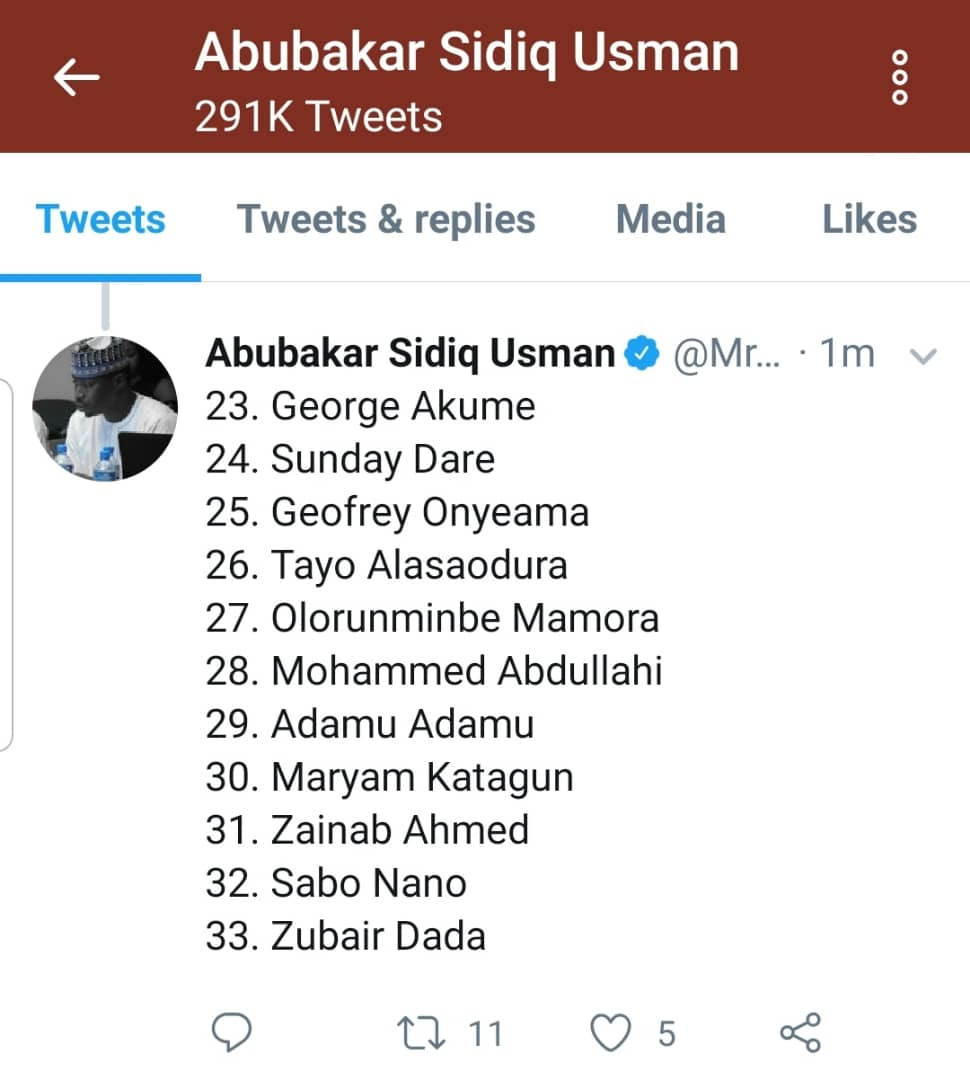
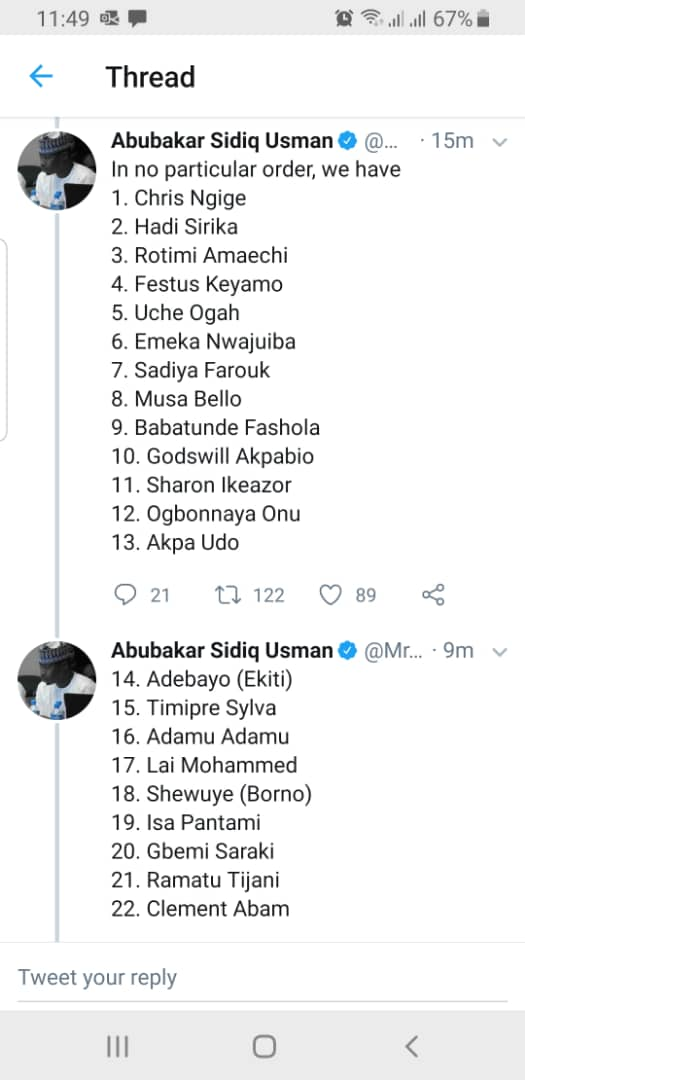
Full List of Buhari Ministerial Nominees for Second Term – Akpabio, Keyamo, Fashola, etc

4

These are the names President Buhari sent to Senate for confirmation as he gets ready with his cabinet for his second term in office.

The Fallacy of the Fourth Industrial Revolution in Nigeria, Africa

0

By Ajayi Joel

We need electric cars in Africa by 2020!

If there’s any way to ruin our economy, it is to quickly assume we are on the same level of development as the western countries. This is no racism but even down to fashion, we are not there. Let’s leave fashion aside, I’m here to debunk the myth that we are in the age of 4IR (4th industrial revolution).

What’s my reason for writing this piece, and is there anything at all to learn from this? We, yes, both the government and non-government!

I have seen a lot of start-ups jump the gun with their ideas, and while it may seem so nice to me, it would have been better if the ideas weren’t targeted at Nigerians or even Africans. Unfortunately, they are. What do I mean by jump the gun? What I simply mean is that the industrial revolution has different phases, and these start-ups are way ahead in the phase down to the fourth.

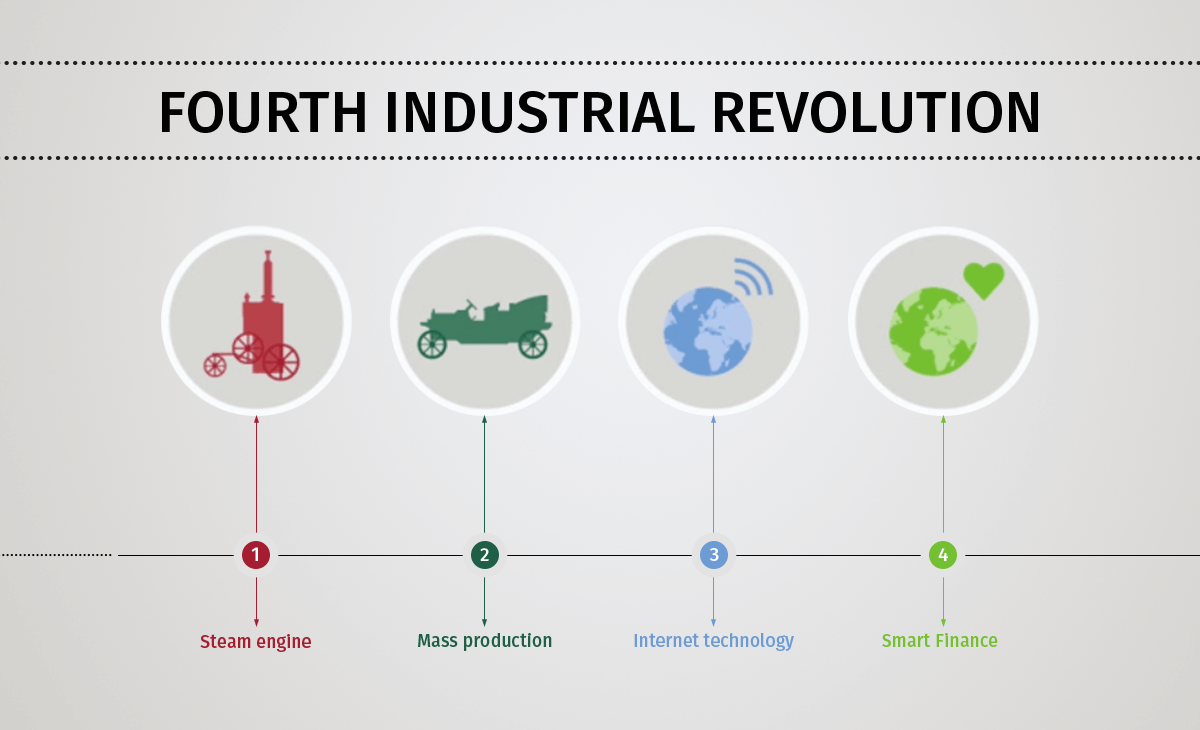
Here’s why we are not in the fourth industrial age and why we cannot skip the phases.

  1. The fourth industrial age is the age of automation: Explaining this succinctly, I will say automation can only work if there is a structure. When I mean a structure, a structure is a set of systems put in place to ensure that machines keep working in positions that humans should. I am here to say that our jobs are firstly safe, and that only a few jobs will be replaced in the next decade if we do not go through the other industrial ages. Right now, we are in the first industrial age, and the first industrial age is characterized by discoveries. We are not in any way near the second industrial revolution which is the age of industrialization.

Structures can only be set based on previous experience. The western world was able to come up with a structure because they saw or discovered that the previous system had set backs in different areas and they saw the need to overhaul, replace, and modify those existing systems, and the previous existing system was the age of assembling and information. That phase came about when they also discovered that there was a need  for advancement from the industrial age.

  1. African countries cannot manufacture: Fine, let us praise what Rwanda is doing in the area of manufacturing. However, talking about Nigeria, we have not begun to manufacture, to produce and for us to be able to do this, we will need to depend on machineries. Machineries that we need to invent, or bring in. There’s this hype that every youth should go learn AI skills and I wonder if they want to work in Nigeria or get gigs outside the country because unemployment will rise if that’s what all our youths rush into. We cannot let AI automate food process if we haven’t begun planting. We cannot get AI to plant for us if we do not work to get the seed.

The next stage that the government should pay attention to is the production age, the manufacturing age. This stage will provide more jobs than we can imagine. If the economy will thrive then we cannot depend on the gig economy alone; we need to depend on the industrial economy. Matter of fact, we will not dwell so much in this age but we need to get there first.

4th industrial revolution

The skill set required to work in the industrial age is quite different from the ones required to work in the skilled economy but both are necessary if we want to move forward. Production and manufacturing should be at the heart of the government of African countries as this will both provide more jobs, determine the path which we will follow in the coming times. You will not know which tractor will work on your farm if you have not tried your hoe on it. Now, that’s a proverb.

  1. AI runs on data: This is the third industrial revolution and we are not anywhere near it. We do not have any reasonable database in Nigeria. Automation will only work if there is some sort of accumulated information overtime that gives it instruction and helps it behave in a certain way before it begins to build its own mind.

You cannot tell a robot to walk if you do not train it the way humans are walking. The third industrial revolution is the information age and why I’m so convinced that we have not gotten to this age is because at this stage, there will begin to be lots of displacement of factory workers, those who sit in offices to operate manually will be displaced as well as data will have channels and accessing it will be seamless.

You will not need to queue in offices to get manual recording as there will be a linking between all your profiles. This is the age of assembling as well. Data will be building itself to provide a structure which I mentioned earlier. How do I know we are not in the information age in Nigeria?

Someone once posted on Facebook that we’d begin to use AI in marketing in Africa.

In Africa? For real? AI runs on data so does marketing. Do we have a database for information in Africa? So what does AI want to process to begin to run on its own? I spent 1 good year making researches because I wanted to build an online platform for learning.

Google gave me vague answers. Maybe you should Google the number of youths in Lagos between 18 and 26 who have interest in design. You’d find no response. Go to Facebook and do page search, the response will be very few. For those doing digital marketing, getting huge number of people on a certain keyword sometimes requires much more money.

How did I get data? Google form; I put a clickbait. I offered one of my exclusive books “After school, what next” for free only if you followed a link.

The link directed you to my Google form. You’d need to answer those questions compulsorily, then place your email. After that, I’d tell you to help me share.

That was how I got data.

In our bid to clamor for electric cars, we totally overlook the fact that electricity needs to be stable, and that the transportation system and logistics need to be fixed; all parts of the manufacturing age and data age. Roads need to be fixed which means more bitumen need to be refined and more gravel need to be mined.

My point; our tech ecosystem should stop raising shoulders about how they are preparing us for the fourth industrial revolution when we are not ready for the third. Our technology is not there yet but efforts should be geared to fast track the process.