DD
MM
YYYY

PAGES

DD
MM
YYYY

spot_img

PAGES

Home Blog Page 6846

Top 10 Emerging Technologies – The World Economic Forum, 2019

0

By Nnamdi Odumody

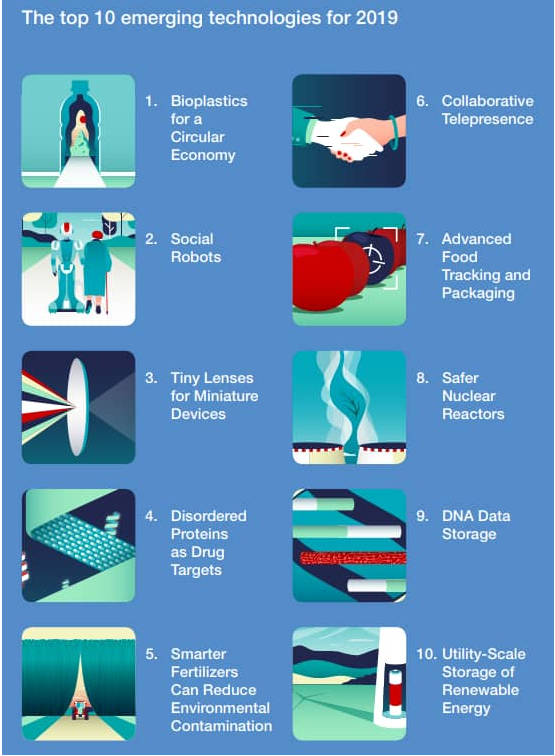
Here are the top ten emerging technologies of 2019 according to the World Economic Forum.

  1. Bioplastics for a Circular Economy: Plastic waste in the ocean kills sea animals. It also causes environmental nuisance when dumped in landfills. The use of Biodegradable plastics helps to create a Circular Economy as the plastic waste can be converted to biomass energy. Biodegradable plastics like the common one from petrochemicals consists of polymers which can be molded in their fluid state into a variety of forms. Chrysalix Technologies, a spin off from Imperial College London has created a process that uses low cost ionic liquids to separate cellulose and lignin from starting materials. Finnish Biotech company MetGen Oy produces a number of genetically engineered enzymes that cleave lignins of different origins into components needed for a wide range of applications. Mobus is developing lignin based plastic pellets for use in biodegradable flower pots, agricultural mulches, etc.
  2. Social Robots: These are robots which use artificial intelligence in response to data captured from cameras and other sensors by recognizing people’s voices, faces and emotions, interpret speech and gestures, responds accurately to complex verbal and non verbal cues, makes eye contact, speaks conversationally, and adapts to people’s needs by learning from feedback, rewards and criticisms.  Pepper, a humanoid robot from Softbank Robotics recognizes faces and basic human emotions and engages in conversations via a touchscreen on its chest. About 15,000 Pepper robots worldwide perform hotel check-ins, airport customer service, shopping assistance and fast food checkout while at Alibaba’s Flyzoo Future Hotel in Hangzhou, China it’s T-Mall Genie helps guests adjust their room temperature, lights, curtains and TV, plays music and even handle room service. In Dubai Airport, its police robot helps answer tourist enquiries in English and Arabic.
  3. Meta Lenses for Miniature Devices: Metalenses are flat surface, thinner than a micron that is covered with an array of nanoscale objects such as jutting pillars or drilled holes. As incident light hits these elements, many of its properties change including its polarization, intensity, phase and direction of propagation. They allow for greater miniaturization of microscopes and other laboratory tools as well as consumer products like cameras, mixed reality headsets and optical sensors for internet of things solutions as well as enhancing the functionality of optical fibres.
  4. Disordered Protein As Drug Targets: Scientists are utilizing a rigorous combination of biophysics, computational power and a better understanding of the way that IDPs (Intrinsically Displaced Proteins) function to identify compounds that inhibit these proteins and some have emerged as bonafide drug candidates. French and Spanish researchers in 2017 proved that an FDA approved drug called trifluoperazine which is used in treating psychotic disorders and anxiety bound to and inhibited NUPR1, a disordered protein involved in a form of pancreatic cancer. Large scale screening tests to evaluate thousands of drug candidates for therapeutic potential have shown several that inhibit c-Myc with some headed towards clinical development.
  5. Smarter Fertilizers To Tackle Environmental Contamination: Smart fertilizers made possible by sophisticated materials and manufacturing techniques that can tune the shells so that they alter release rates in desired ways as the soil’s temperature, acidity or moisture changes have been developed recently. Through the combination of different types of tuned capsules, manufacturers can make fertilizers that have profiles tailored to the needs of specific crops or growing conditions. Haifa Group and ICL Specialty Fertilizers are examples of those offering more precise control.
  6. Collaborative Telepresence: Collaborative telepresence is transforming how people collaborate virtually in business and beyond. Proximie, an augmented reality enabled surgery platform builds a bridge between surgeons in developed countries and those operating under austere conditions in developing countries. Recently Dr Ling Zhipei, a Chinese surgeon performed the first ever brain surgery over a 3,000km distance through China Mobile’s network and Huawei’s 5G technology.
  7. Advanced Food Tracking and Packaging: IBM’s Food Trust, a blockchain platform for the food industry which integrates growers, distributors and retailers to create a trusted record of a food’s journey through the end to end supply chain. Walmart used this system to trace the origin of a contaminated item in seconds. Other food giants such as Carrefour, Sam’s Club, Smithfield foods, Beefchain, Albertsons Companies, Wakefern Food and Topco Associates have joined this initiative. Timestrip UK and Vitsab International have independently developed RFID tags that change colour if a product has been exposed to above recommended temperatures while Insignia Technologies created a solution which slowly changes colour after a package has been opened and indicates when it’s time to dispose the food into the refuse bin.
  8. Safer Nuclear Reactors: Manufacturing developments are seeing to the production of accident tolerant fuels which are less likely to overheat and in case they do will produce little or no hydrogen. Some are replacing zircomium and uranium dioxide with different materials. The new fuels could help nuclear plants run more efficiently making nuclear power cost competitive for electricity generation.
  9. DNA for Data Storage: DNA can accurately store massive amounts of data at a density which exceeds that of electric devices. Measuring about one metre on a side, at about 10 bits per cubic centimeter, all the world’s current storage needs could be meet by a cube of DNA.
  10. Utility Scale Storage Of Renewable Energy: Advancements in technology are seeing a redesign from solely lithium ion batteries to batteries which can generate and store four- eight hours or more of electricity which is long enough to shift solar generated power to the evening peak in demand.
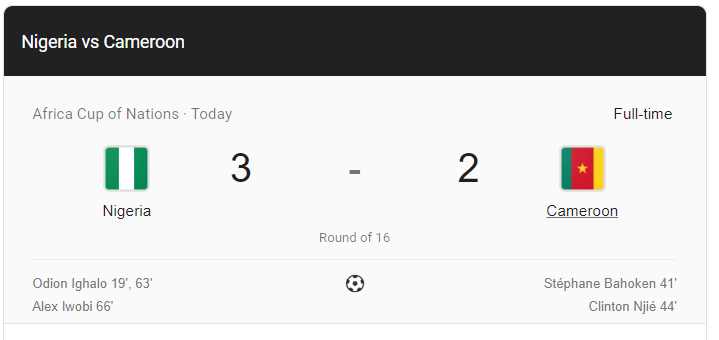


The Dance Continues – Resilient Super Eagles

0

A sage said that good numbers make you a great presenter before a company Board. Yes, irrespective of the presentation skills, if you are bleeding market share and losing customers here and there, no master-presentation skill will save you. But if you have great numbers, even if you stammer, you will be a great presenter!  That is why I tell founders to do one thing to become good Board presenters: have GREAT numbers. Once your numbers are good, few will care how you present.

On that parallel, Nigeria moves to Quarter Final of the African Cup of Nations. They are dancing well because the numbers are there: the highest level in the competition right now is quarter final and Nigeria is there. I congratulate our boys for rising to the moment. When Cameroon was up 2-1, I felt it was over. The Indomitable Lions do not have a history of imploding especially in Africa.

I mean, I want many people to be happy in Nigeria at least for some few hours. Now, all the way to the Finals.

The African Leadership University Is Reinventing Education in Africa

0

By Nnamdi Odumody

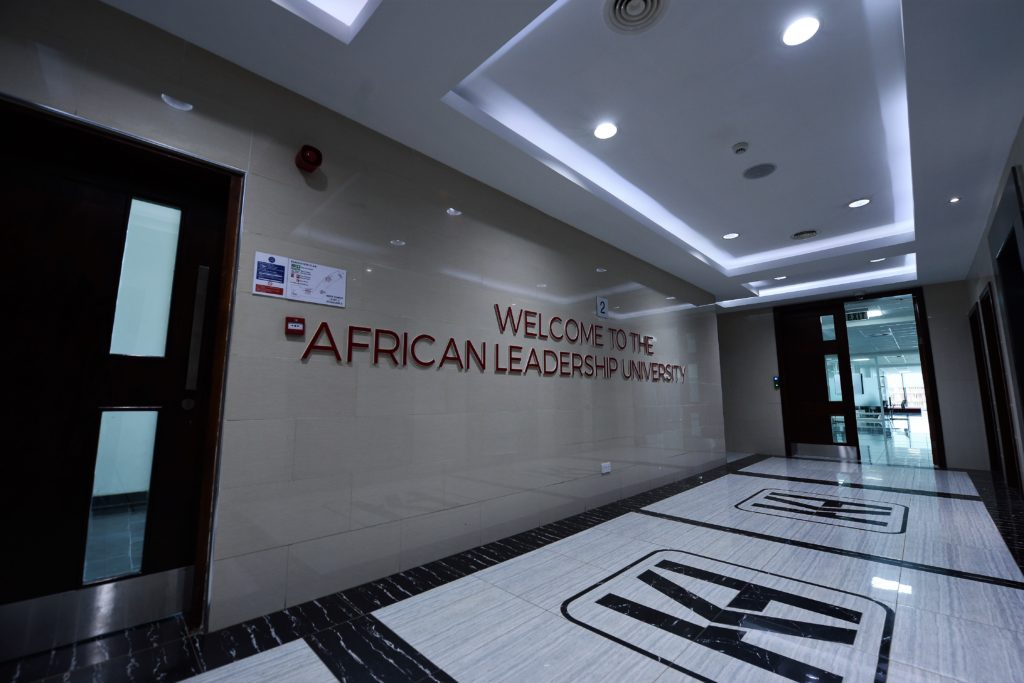
The African Leadership University founded by Fred Swaniker, a Ghanaian social entrepreneur, who wanted to fix the leadership paralysis is redesigning education in Africa. The program goes with an innovative approach to 21st century education with undergraduate and postgraduate experiences to develop Africa’s next generation of leaders. It prepares its students not just to excel, but also to lead. It prioritizes students that have key skills that are widely applicable and transferable across disciplines.

In its Year 1 Leadership Core, students build 4 fundamental skill areas necessary for every job. They develop the quantitative reasoning skills and data analysis abilities needed by entry level employees and industry executives, gain critical thinking skills and problem solving experience working on real life projects with its employer partners. In the process, the students develop core skills and best practices to communicate effectively in the professional world, and discover the skills and mindset needed to unlock their leadership potentials. Students begin their career development journey from day 1 with internships and student venture opportunities integrated throughout their undergraduate program.

For its undergraduate program, it offers 8 accredited degree programs in its Pamplemousses campus in the northern region of Mauritius which include BA Business Management, Bsc Computing, BEng Electrical Power Systems Engineering and BA Social Sciences. In its Kigali, Rwanda campus, it offers Bsc Computer Science, BA Entrepreneurship, BA Global Challenges, and BA International Business & Trade.

The learning process helps its undergraduates to discover the gaps in their knowledge, exchange knowledge with their peers, learn at their own pace and extend their learning to other contexts.

The African Leadership University School of Business MBA program is unique compared to other programs from different tertiary institutions across the continent in the sense that its cases are written in the context of African business with Faculty having extensive, diverse and respected experiences of doing business on the continent. There is a 20 month work-study program which blends six weeks of in person learning in Kigali with interactive online learning, allowing students to stay in work, grow as leaders while applying learning on the job.

Another unique program which African Leadership University offers which sets it apart from its peers is the MBA for Conservation Leaders offered by its School of Wildlife Conservation. This program is designed for emerging leaders in sectors that impact or depend on wildlife and natural landscapes or those in traditional conservation organizations, combining its School of Business 20 month MBA program with a specialization in Conservation Leadership for full time working professionals.

The African Leadership University wants to develop 3 million leaders that will be the pillars of Africa’s transformation by 2035. Its vision and mission are audacious, bold, and with a continent-centric view in modeling these young leaders of tomorrow. The knowledge base of the 21st century in this continent looks hopeful.

A New Piece Coming

3

I just sent a piece to my editor in Harvard Business Review on the single African currency policy, trade treaty, and African development, linking all to China of about 40 years ago. Yes, a writing that actually takes my time because every word matters. When CEOs, students, policy makers, etc read the world’s most trusted business publication, they want clarity from authors. With translations into languages and many reading, with some swearing that Harvard explained it this way, and it must be true, you have no margin for error.

Three months ago, I went into a Board meeting to help on strategy only to see a whiteboard with a cut-out of my article on perception demand. The Chairman said, forget the PowerPoint, let’s discuss this paper for this company! Then, we went into the mechanics of growth and the engineering of the acceleration of customer perceptions bounded within industries and territories.

It is a fascinating piece.


Fixing These Paralyses in Nigeria’s R&D Sector to Unlock Steady GDP Growth

3

By Mutiu Iyanda

To be a leading economy and providing sustainable public goods to citizens, countries need a set of policies and programmes with the right political will for effective implementation. Some countries in the developing continents are competing with those in developed regions utilising available human resources and knowledge. The ongoing trade war between the United States of America and China is being fought on both sides with the appropriation of knowledge. Since 2017, the two countries have reaffirmed the need for countries to pursue a knowledge economy rather than resource-based economy. China does not stop developing innovative science and technology products, challenging the hegemony of the US and some countries in the world.

For a knowledge economy to materialise and make significant contributions to a country’s growth, adequate attention must be paid to research and development programmes or initiatives within academia, security and agriculture circles. These circles are essential for enabling business environment. Problems or frictions in processes, people, product or solution and technologies in private and public sectors cannot be resolved absolutely without using research findings. In fact, the Global Knowledge Economy Index evolved on the basis of measuring countries in terms of innovation that strengthens the components –processes, product or solution and technologies–towards sustainable economic growth.

Nigeria, like other countries in the developing world, has been ranked low in the Global Knowledge Economy Index over the years because of its attitude and lack of political will to research and development in academic, security and agriculture. With over 200 universities, the country can only celebrate 44% of the “scholarly output” of South Africa and 32% of Egypt. This is what Nigeria earned after 8 years of establishing the Tertiary Education Trust Fund (TETFund), an agency set up by the Federal Government to manage and disburse to public tertiary institutions funds gained through the imposition of a 2% tax on company profits.

A few years after the establishment, the argument among the academics has been that the agency is failing local universities. According to the scholars, by investing in postgraduate studies of Nigerians in other countries, the agency is still essentially enriching universities abroad instead of investing in higher education in Nigeria. With this approach, Nigeria will continue to have low “scholarly output” and contribution to the GDP growth every year. The position of the academics is further reinforced through the latest Journal Citation Reports. Out of the numerous journals being published across the universities and other institutions in the country, only 4 met the international standards –African Journal of Library, Archives and Information Science, African Journal of Reproductive Health, Nigerian Journal of Clinical Practice and Tropical Journal of Pharmaceutical Research.

Considering the high level of insecurity occasioned by the terrorist attacks, kidnapping, herdsmen and farmers crisis, among others, expectation among the experts and public analysts is that adequate spending on research and development will be the priority of the government. A year after the emergence of the Boko Haram in the northern region, available statistics shows that Nigeria spent only 1% of its Gross Domestic Product on its military compared with 4.8% by the United States of America.

When it was obvious that the attacks from the terrorist group seemed too difficult to contain, the government increased its defense budget by 32% in 2011. Eight years after, it took the intervention of the National Assembly before ‘adequate’ funds could be allotted to the security in the 2019 budget. The poor funding and other issues such as insufficient equipment and materials have been the factors contributing to the poor ranking of the country’s military. For instance, 2019 Global Military Rank report places Nigeria in 44th among 137 countries. In terms of the military strength, Egypt (12), Algeria (27) and South Africa (32) are the leading countries in Africa.

Source: Global Fire Power, Infoprations Analysis, 2019


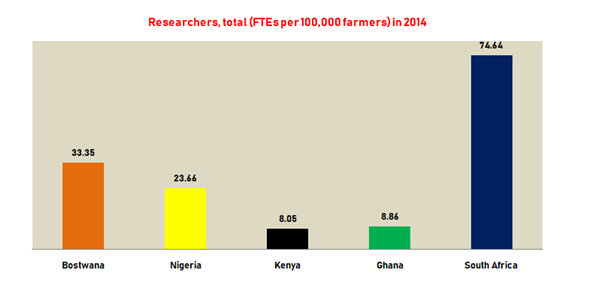
From Operation Feed the Nation to the current Economic Recovery Plan, Nigeria has always had good plans for the agriculture sector, but the lack political will to implement them. As the population increases every year, agricultural production decreases, especially the production of the most consumed stable foods. In 2014, 6 million metric tonnes of rice were produced and increased to 6.2 million metric tonnes in 2015. Since 2016, the production has been on decline status, according to available statistics. Despite being the most important in the country, employing about 70% of the workforce, the sector is suffering because of the low output occasion by poor funding and adequate personnel. There is no doubt it would be hard for Nigeria to feed its growing population without addressing these challenges. Latest statistics from ASTI indicates that Nigeria has 2,975 national agricultural researchers working full time with the farmers across the country. Comparing this figure with the countries such as South Africa (811), Kenya (1,168), Ghana (587) and Botswana (108), Nigeria is on a good pedestal. But, Nigeria is really lagging behind when researchers per 100,000 farmers becomes a yardstick. In terms of researchers per 100,000 farmers, South Africa and Botswana are better than Nigeria.

Source: ASTI, Infoprations Analysis, 2019


Does It Pay Off to Research Nigerian Economy?

Developed and some developing countries spend a lot of money on research and development towards innovation. They spend on it because innovation remains one of the key drivers of economic growth. In most developed countries, expenditures on research and development exceed 2% of GDP. And about 70-75% of R&D expenditures are covered by private business corporations. The big question is what have been the impact of inadequate funding and lack of enabling environment, including resources in research and development sector on the Nigerian economy from 2015 to 2018?

The Global Competitiveness Index, the country’s GDP growth and GDP per capita provide the answers. According to the World Economic Forum, the publisher of the GCI, “a higher competitiveness ranking (in lowest score) shows the higher productivity of the country’s economy, which should lead to higher and more sustainable economic growth.”  This signifies that countries with the lowest score on the Index should produce faster GDP growth rates year on year.  The total GDP per capita from 2015 to 2018 was $8,906, while total GDP growth was 3.8%. The average GDP growth rate was 0.95%, while the average GDP per capita was $2,227.

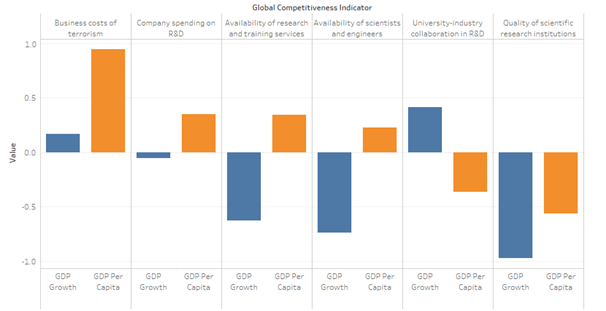
To understand the impact, quality of scientific research institutions, university-industry collaboration in R & D, availability of scientists and engineers, availability of research and training services and company spending on R & D were selected for the analysis along with the GDP growth and per capita.

The poor ranking of these indicators had varied impact on the Nigerian economy between 2015 and 2018, analysis reveals. The impact was more severe on the GDP growth rate than GDP per capita. Four out of the 6 indicators connected with the GDP growth negatively, while 2 only had negative links with the GDP per capita. From the analysis, it is clear that the availability of research and training services, availability of scientists and engineers and the quality of scientific research institutions carpeted Nigeria’s GDP growth during the years. Business costs of terrorism and university-industry collaboration rankings did not established significant impact on the GDP growth.

Source: Country Economy, National Bureau of Statistics, Infoprations Analysis, 2019


Can Nigeria Be Resilient to Economic Crisis?

Analysis of each indicator along with the GDP growth and GDP per capita has revealed different results. But, there is a need to be curious about the severity of all the indicators on the two measurement criteria. In the first analysis leading to the severity analysis, availability of scientists and engineers, company spending on R and D and university-industry collaboration in R and D had highest values followed by quality of scientific research and institutions, and business costs of terrorism. This suggests that the indicators with the highest values caused biggest havoc on the GDP growth and GDP per capita.

This is clearly established from the analysis by one percent of the Severity of the GCI (SGCI) decreasing the real GDP growth by 11.2%. For the GDP per capita, analysis reveals that the SGCI decreased it by 62.6%, signifies $5,575 reduction in the country’s GDP per capita during the years.

Further analysis indicates that Nigeria survived the influence of the poor ranking on the GDP per capita in 2017 and 2018 by 66.7% and 33.3% respectively. However, the stakeholders in the Nigerian project need to address the poor positions on the GCI. This is imperative as analysis suggests the possibility of the indicators impacting the country’s quest to increase its current GDP per capita ($2,028=2018) and GDP growth (1.9%=2018).

Strategic Options

Increasing Nigeria’s competitiveness on the global space and averting severe consequences of poor ranking on the economy require collective efforts. Stakeholders identified in the analysis cannot not come together and devise the right strategies and plans for adequate funding of research and development programmes, equip personnel with the needed skills and knowledge, and improve workforce through strategic recruitment of competent hands. Nigeria needs to key into an innovative research mantra towards better industries, life for citizens and change the world.


Mustapha Adeitan made significant contribution to this piece by providing statistical support using relevant methods, especially regression analyses and summarising insights towards forming coherent themes.