DD
MM
YYYY

PAGES

DD
MM
YYYY

spot_img

PAGES

Home Blog Page 688

Best Crypto Coins for 2025: BlockDAG, Stellar, Hyperliquid & Chainlink

0

The crypto market in 2025 is shaping up to be one of the most active yet, with new projects raising record-breaking funds and established names securing real adoption across payments, DeFi, and trading. Investors are looking at coins that combine strong communities, working technology, and the potential to deliver meaningful returns. The best choices are often those that balance innovation with traction, showing they are more than just hype.

In this article, we’ll break down four coins that are gaining attention right now, BlockDAG, Stellar, Hyperliquid, and Chainlink. Each has a different story, but all have momentum that makes them worth watching. If you’re scanning the best crypto coins for 2025, these four combine long-term potential with active growth paths that could make them strong performers in the year ahead.

1. BlockDAG: $376M Raised and Building Momentum

BlockDAG is quickly becoming one of the most talked-about presales in the market. Built on a hybrid model of Directed Acyclic Graph (DAG) architecture and Proof-of-Work (PoW) security, it combines scalability with reliability. It is also fully EVM-compatible, making it easy for developers to migrate Ethereum-based applications and smart contracts. This mix of technology is helping BlockDAG stand out as a serious project with strong foundations.

The numbers tell their own story. BlockDAG presale has already raised more than $376 million, putting it among the largest ongoing crypto sales. BDAG tokens are currently priced at $0.0276 in Batch 29, while early buyers from Batch 1 have already seen paper gains of over 2,600%. Analysts expect the token to reach $1 after listings, which would mean a potential 36× upside from today’s level. With these kinds of projections, the project has become a central discussion point for those looking at the best crypto coins for 2025.

Adoption is equally impressive. The X1 mobile miner app has already attracted 2.5 million users, while more than 19,000 ASIC miners have been distributed. The community now includes over 200,000 holders and 4,500 developers building 300 decentralized apps. A demo trading platform is also live, adding real-time utility before the mainnet launch. On top of this, a 200 ETH competition worth about $1 million is fueling further engagement. With 20 confirmed listings and goals for Coinbase and Gemini, BlockDAG looks set for global expansion.

2. Stellar: Focused on Payments

Stellar (XLM) was built to make payments faster, cheaper, and more accessible, especially for cross-border transfers. Its blockchain processes transactions at near-instant speed and very low cost, making it attractive for remittances and microtransactions. Compared to traditional systems like SWIFT, which can take days and charge high fees, Stellar offers a streamlined and efficient alternative that appeals to both individuals and institutions.
Adoption has expanded through partnerships with fintech companies and payment providers, as well as developers using Stellar for token issuance and asset transfers. While the price of XLM has followed broader market trends, its strong utility keeps it relevant. For investors considering the best crypto coins for 2025, Stellar is a solid pick thanks to its proven role in global payments and its potential to grow further as demand for fast transfers increases.

3. Hyperliquid: Expanding Futures Market

Hyperliquid is a newer project gaining attention for its role in perpetual futures trading. It offers traders a decentralized way to access advanced products that were traditionally limited to centralized exchanges. By providing liquidity and speed in this niche, it’s building momentum with traders who want security without giving up performance.

The platform has seen its volumes grow as more users seek alternatives to traditional exchanges. Hyperliquid’s roadmap includes expanding product offerings and integrations to draw in both retail and institutional users. While it’s still relatively early in its lifecycle, the strong interest in its futures market gives it real traction. For investors looking at high-growth areas, Hyperliquid deserves a place on the best crypto coins for 2025 list, as it combines innovation with measurable demand in a sector that continues to expand.

4. Chainlink: Connecting Data and Blockchains

Chainlink (LINK) has established itself as a core piece of blockchain infrastructure. Its decentralized oracle network connects smart contracts with real-world data, including asset prices, weather information, and financial feeds. Without this functionality, many blockchain applications—especially in DeFi—would not operate as intended. By solving this gap, Chainlink enables developers to build applications that are reliable, accurate, and trusted.

Over the years, Chainlink has become the go-to oracle provider, powering thousands of projects and securing billions of dollars in value. Beyond DeFi, it is expanding into areas like cross-chain interoperability, enterprise integrations, and traditional finance use cases. These expansions strengthen its long-term relevance as blockchain adoption grows. LINK’s value is closely tied to demand for decentralized data, which continues to increase. For investors evaluating the best crypto coins for 2025, Chainlink is a proven project that underpins the wider crypto ecosystem.

Key Insights

These four projects highlight different aspects of the market. BlockDAG has raised over $376 million, attracted millions of users, and is building major momentum before launch, making it one of the most hyped presales in years. Stellar continues to build practical adoption in payments, offering an efficient solution for global transfers. Hyperliquid is tapping into the growing perpetual futures market with a decentralized approach that appeals to active traders. Chainlink remains the backbone of blockchain data, ensuring that smart contracts can connect to real-world information.

For investors exploring the best crypto coins for 2025, this group offers a mix of early-stage potential, real-world adoption, and proven infrastructure. BlockDAG is creating FOMO with its presale success and exchange targets, while Stellar, Hyperliquid, and Chainlink provide stability and functionality. Together, they form a set of projects that could define 2025 for both early buyers and long-term holders.

Email vs. Social Ads: Which Channel Wins in SME Conversion Rates?

0

Small and medium-sized enterprises often face the challenge of making every marketing decision count. Limited budgets and small teams mean that picking the right channel for reaching potential customers can make a real difference. Among the most common options, email marketing and social media advertising often compete for attention. Both have their strengths, but when it comes to conversion rates, our analysis using 10,000 campaigns executed across the world shows that one has a clear advantage.

When overall device-based conversion rates were compared across multiple channels, including content marketing, influencer campaigns, search engine marketing, social media, and email, there was little difference. No single channel stood out as significantly better or worse when conversions were tied to operating systems. But the story changes when we focus on browser-based conversions. Here, email marketing consistently underperformed compared to other channels. Social ads, along with content marketing, influencer strategies, and search engine placements, all achieved better conversion results. The differences were strong enough to show that they were not random. In plain terms, while email lagged behind, social ads proved far more effective at converting browsing customers.

This might surprise some, since email has long been regarded as one of the most reliable and affordable marketing tools for SMEs. It is easy to set up, costs very little to run, and can be automated. Yet it is losing ground for several reasons. Customers today are overwhelmed by crowded inboxes, and promotional emails often go unnoticed or are deleted before they are opened. At the same time, people are spending more of their online time within social platforms. Ads appear naturally as they scroll, making them easier to notice and act on than an email that requires leaving another activity to open and read. Social ads also benefit from more precise targeting, allowing businesses to reach specific groups of people based on their interests and behaviors, while email lists depend on the quality and freshness of existing contacts.

The advantage of social ads for SMEs is not limited to conversion rates alone. They also offer flexibility and speed. A business can start small, test a campaign, and then scale up only if it sees results. Ads on social platforms often feel more like content than disruption, encouraging engagement rather than resistance. Results are measurable in real time, which makes it easier for businesses to adapt and improve their campaigns quickly.

That does not mean email has no place in SME marketing. It continues to be one of the best ways to build loyalty, nurture existing customers, and send personalized messages. Because it is so cost-effective, it is especially valuable for staying connected without stretching a budget. But the evidence suggests that SMEs should not rely on email as their main tool for attracting new customers. A more effective approach is to use social ads to bring in fresh interest and then use email to strengthen relationships and keep customers coming back.

The lesson is clear. For small and medium-sized enterprises trying to grow, social ads are proving to be the stronger channel for winning new customers, while email remains a vital support for customer retention. Framing the choice as email versus social ads misses the real opportunity. The best results come from combining the two: social ads to drive growth and email to sustain it. For SMEs balancing limited resources, that combination may be the smartest way forward.

Overview, Tour and How To Use Blucera, A Digital Platform for People and Firms [video]

0

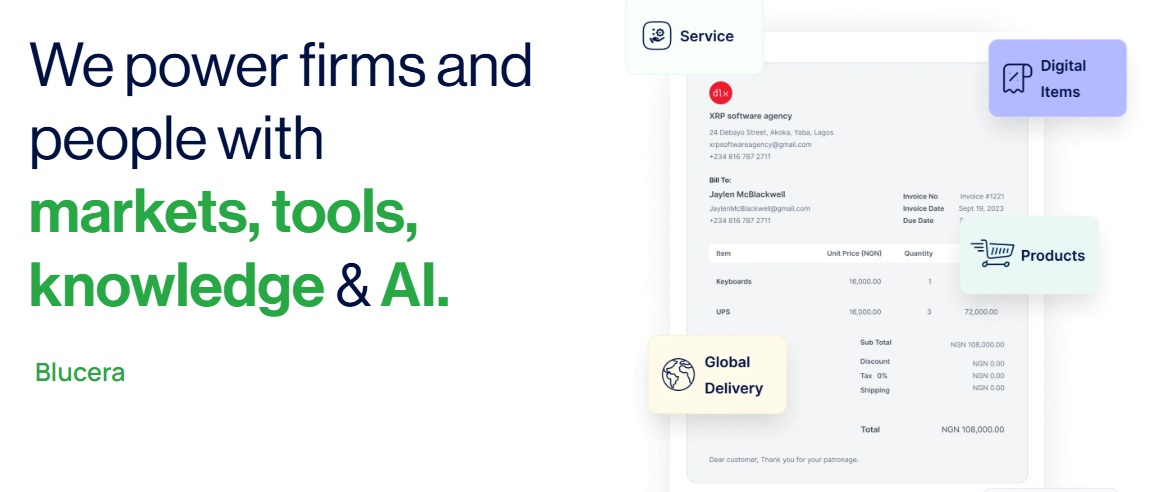
Blucera is a digital platform that serves as a comprehensive ecosystem for business education, professional development, and practical business tools. It leverages AI and strategic partnerships, notably with the Tekedia Institute, to provide a suite of services designed to empower individuals and businesses. Its offerings extend beyond simple information, focusing on delivering a unique blend of AI-powered coaching, secure data management, and essential business software, all tailored to meet the needs of a modern professional.

At the heart of Blucera’s service is WinGPT, its flagship AI-powered personal educator and coach. This tool is designed to provide personalized guidance to learners, helping them develop critical managerial and business skills. Unlike a generic chatbot, WinGPT draws from a curated library of academic materials, documents, and videos from the Tekedia Institute, ensuring that its insights are both relevant and academically sound. It is built to assist users with specific real-world business scenarios, making the learning experience highly practical and applicable.

Beyond its educational focus, Blucera also provides a range of business tools that support day-to-day operations. One such service is eVault Custodial, a secure platform for uploading and preserving important personal and business records. This feature highlights Blucera’s commitment to data integrity and security, offering peace of mind to users who need to store sensitive information with legal custodial services. The platform further extends its utility with business software for tasks like bookkeeping, inventory management, and payroll, providing a cohesive set of resources for managing and growing an enterprise.

A key differentiator for Blucera is its focus on contextualizing knowledge for specific markets. As an extension of the Tekedia Institute, the platform’s content and AI are designed with the nuances of doing business in Africa in mind. This targeted approach ensures that the advice and tools provided are culturally and economically relevant, giving users a distinct advantage. By combining specialized AI coaching, secure data solutions, and localized business insights, Blucera positions itself not just as a technology provider, but as a strategic partner in a professional’s journey towards success.

In conclusion, Blucera represents a new model for professional development, one that combines cutting-edge AI with a practical, tool-based approach. By offering services like WinGPT, eVault Custodial, and a variety of business management software, all enriched by a deep understanding of its target market, the company provides a robust and valuable digital ecosystem. Ultimately, Blucera’s mission is to empower professionals and firms by providing them with the knowledge and resources they need to thrive in a competitive business landscape.

Sign-up at Blucera and check under Training module.

Trump Threatens 300% Semiconductor Tariff, Rattling AI Market & Reviving Memories of His Previous Steel and Aluminum Battles

0

U.S. President Donald Trump has once again thrown global markets into uncertainty with his latest tariff warning, this time singling out semiconductors for duties of up to 300%.

The threat, made aboard Air Force One and reported by Bloomberg, comes as the President prepares a package of new trade actions covering steel, chips, and possibly pharmaceuticals.

“I am going to have a rate that is going to be 200%, 300%,” Trump said, adding fresh pressure to an industry already struggling with supply constraints.

For gamers and tech buyers, the headline translates to an alarming scenario: Nvidia’s $1,999 GeForce RTX 5090 graphics card could cost close to $6,000 if the duties are enacted. For industry leaders, however, the move recalls Trump’s earlier tariff fights — with equally high stakes for supply chains, jobs, and prices.

Lessons from Steel and Aluminum

Although the legality has come under question, Trump is no stranger to using Section 232 of U.S. trade law to impose tariffs under the banner of national security. In 2018, he stunned global markets by slapping a 25% tariff on steel and 10% on aluminum imports. The justification was framed around protecting America’s industrial base, but the impact was immediate and polarizing.

Steelmakers in the U.S. cheered the decision, with companies like U.S. Steel and Century Aluminum briefly reporting job growth and reopening some facilities. But downstream industries — automakers, construction firms, and machinery manufacturers — faced soaring input costs. In some cases, U.S. companies ended up paying higher prices for domestically produced steel than their foreign rivals paid abroad, eroding competitiveness.

Internationally, Trump’s Section 232 tariffs ignited trade tensions, prompting retaliation from allies like the European Union, Canada, and Mexico. Many of those retaliatory tariffs were strategically targeted, hitting American exports of bourbon, motorcycles, and agricultural goods.

Now, Trump appears ready to apply the same playbook to semiconductors, a sector far more globally integrated than steel or aluminum. Unlike metals, which can be mined and refined domestically, chip production relies on a web of international suppliers — from Taiwanese foundries like TSMC, to South Korean memory producers, to Dutch lithography specialists.

Slapping 200%–300% tariffs on semiconductors would almost certainly disrupt this delicate balance. Unlike the steel industry, where some U.S. producers gained in the short term, the U.S. has limited capacity to suddenly replace Asia’s dominance in advanced chip manufacturing. Even Intel, the country’s largest semiconductor firm, still relies heavily on overseas production for its most cutting-edge technology.

The risk, analysts warn, is that tariffs could drive up costs across the board while failing to meaningfully strengthen U.S. production capacity in the near term. That scenario would leave American AI firms, consumer electronics companies, and defense contractors squeezed between soaring costs and limited supply.

The semiconductor threat has already triggered comparisons to the whiplash of 2018. Back then, industries spent months lobbying the Trump administration for exemptions, some of which were granted piecemeal, creating confusion. Today, companies in tech and AI are bracing for a similar lobbying battle, while also preparing backup supply strategies.

For AI startups, already competing for scarce Nvidia and AMD chips, the possibility of a 300% duty adds a daunting financial hurdle. Large players like Microsoft, Google, and Amazon — whose cloud platforms depend on massive chip orders — may absorb some costs, but smaller firms could find themselves priced out of the market.

Pharmaceutical firms, another potential target in Trump’s upcoming tariff package, face a different kind of risk. The U.S. relies heavily on imports of active pharmaceutical ingredients (APIs) from India and China. A sweeping tariff regime could ripple through drug pricing, hitting consumers directly.

From Tariff Shock to Uncertainty Tax

What ties the steel fight of 2018 to the chip battle of 2025 is Trump’s negotiating style: the use of extreme tariff threats as both leverage and political messaging. Back then, steel tariffs triggered an international backlash but also energized Trump’s base in industrial states. Now, semiconductor tariffs carry the same dual potential — appealing to a base that wants to see U.S. self-sufficiency, while at the same time alarming global markets.

However, the stakes are higher this time. Semiconductors are not just a raw material; they are the foundation of modern economies, powering AI, defense, healthcare, and communications. A tariff shock here could ricochet across industries in ways steel never did.

It is believed that with steel, tariffs raised costs, but the supply was at least domestic. With chips, tariffs risk breaking the supply chain entirely.

Solana Price Relapse Has Traders Worried But Analysts Say $220 Is Back In Play By September

0

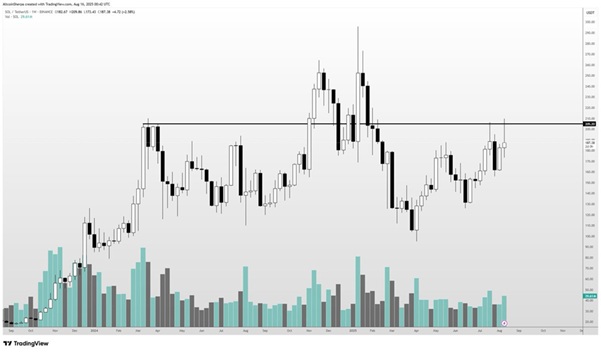
The Solana price has been on a rollercoaster this week, slipping back toward $180 after briefly reclaiming the $200 mark. This sudden relapse has traders questioning the token’s short-term momentum.

However, top analysts point to $220 as a realistic target by September. They cited strong on-chain support levels and growing bullish sentiment. However, despite this setback, recent Solana news suggests confidence in SOL’s long-term upside remains intact.

Solana Price Prediction Gains Credibility Among Top Traders

The Solana price has been anything but calm this month. After starting the week near $180, SOL surged above $200, touching $205 before sliding back down with the rest of the market. This pullback has traders on edge, but analysts remain confident.

According to Solana News, the $188 resistance level has been a sticking point for most of 2025. Still, on-chain indicators suggest that the SOL price could rally if momentum builds above key trading zones.

Popular analyst Burak Kesmeci highlighted the importance of the $170–$179 support region, noting that as long as SOL holds that floor, the bullish structure remains intact. Legendary trader Bluntz doubled down with his Solana Price Prediction, using Elliott Wave analysis to forecast an imminent breakout that could push the SOL price today toward $220 by September. Market data also supports this optimism, with derivatives showing traders heavily tilted toward long positions.

Meanwhile, whales have quietly increased their holdings, and the number of wallets with over 10,000 SOL has hit record highs. This accumulation, paired with broader market recovery, adds fuel to the bullish case. Despite the recent relapse, SOL News points to growing institutional confidence and a strong setup for a rebound.

If momentum continues, analysts agree that $220 is not just possible but likely within weeks.

Community Growth Pushes Remittix Toward Global Adoption

Remittix is proving why many analysts are calling it the hidden giant of 2025. While tokens like Solana face short-term volatility, Remittix keeps building real momentum. The project has already raised over $19.8 million, selling more than 600 million RTX tokens at just $0.0944 each. This boost in support signifies rising trust in Remittix’s PayFi model, which simplifies crypto-to-fiat payments for individuals and businesses worldwide.

  • Over $19.8 million raised with the $20M milestone in sight
  • More than 600 million RTX tokens sold at under 10 cents each
  • Remittix Wallet beta testing launches September 15th, 2025
  • First CEX listing announcement coming once $20M is crossed

These achievements aren’t just numbers, they show Remittix is on track to disrupt payments much like XRP once did. The upcoming CEX listing and wallet release mark two major product milestones that expand global access and increase adoption potential.

Analysts even project a 10,000% rise in value by late 2025 as Remittix positions itself as the next PayFi leader. While the Solana price prediction remains uncertain, RTX’s clear roadmap makes it a serious contender for investors seeking long-term upside.

Discover the future of PayFi with Remittix by checking out their project here:

Website: https://remittix.io/

Socials: https://linktr.ee/remittix

$250K Giveaway: https://gleam.io/competitions/nz84L-250000-remittix-giveaway