The world has changed! Its metamorphosis is due to the advancements in Science and Technology which has shaped the way we view the world through various dimensions. These dimensions would be too enormous to mention but the impact can be seen and felt by us all!
Though, It is still being debated if it has done more harm than good in various discuss but not withstanding, we have all seen and come to the conclusion that Science and Technology is still the future of the world from what lies before us and ahead of us; we have all come to the realization that from the good knowledge of it, lies a further developed, healthier and sustainable society.
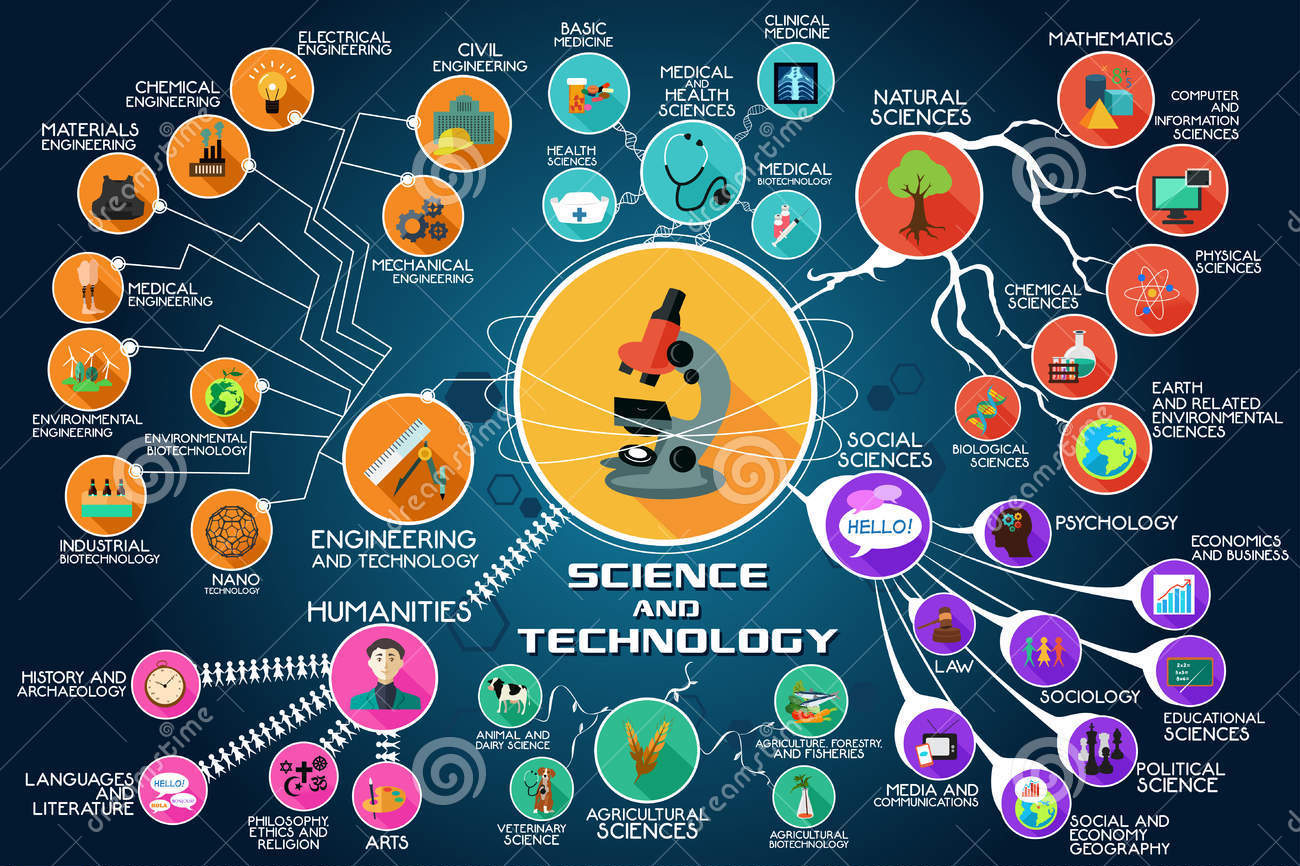
Africa can really flow along the waters of new-age globalization – Science and Technology being taking over by the world. This can only be achieved if we start getting our younger generation scientifically empowered. There are, according to statistics, a lot of Africans especially the younger generation whom we look up to as the future leaders of tomorrow, are far adrift when it comes to possessing Scientific and Information Communication Technology (ICT) Knowledge – the two major catalysts that can champion the cause of development for developing countries.
Source: Dreamstime.com
Human capital development is a collective responsibility and the government, so far (taking Nigeria as a case-study), has done a commendable job in trying to elevate the youths in its various empowerment programmes. Yet, how far it has gone in hitting the nail on the head, or how far it has done at hitting the main target and engaging the younger ones remain debatable? For those that go to schools, especially public schools, how well are they being taught science related subjects to their understanding? How far has the government Intellectual Capacity Initiatives gone in resolving the brain-drain when it comes to Scientific Knowledge among our youths? And how far is government carrying the younger generation along in the quest to key into sustainable environmental pledges made so far?
One would also wish to ask the fundamental question, how do we combat Climate Change and make our environment sustainable when a bulk of the generation we hope will build on the works, efforts and goals designed for a safer and greener society by the government and stakeholders, don’t even have an idea of what climate change, greenhouse gases and even Global Warming are all about? So many a youth who are even in science classes cannot expertly explain what an Atom, Cell or radiation mean even though they have the definitions within them. These are just some of the narratives and this is as a result of the poor knowledge of Science and Technology that befalls our younger generation in Nigeria and virtually, whole of Africa, today. It is an irony to say that most of the latest gadgets being used by them daily are offshoots of Science and Technology – but do they know the mechanisms behind their functionality?
Africa can become a formidable hub in Science and Technology but as it stands, there is a huge brain-drain in science and technology amongst our youths – they have clung so much to the art world and totally ignoring the former; there are huge consequences if we don’t act fast! We need to start bringing initiatives to bridge these gaps so Africa possesses the intellectual skills and tools needed. Science is taking over…we shouldn’t be left out; we should also get fully involved – bring new technologies for social and economic development, bring in hybrid solutions for the adaptation and mitigation of Global Warming and the likes. Time is slipping out of our hands; it’s time we wake up!
Sanya Bakare is a Content Creator, Copywriter and Educationist.
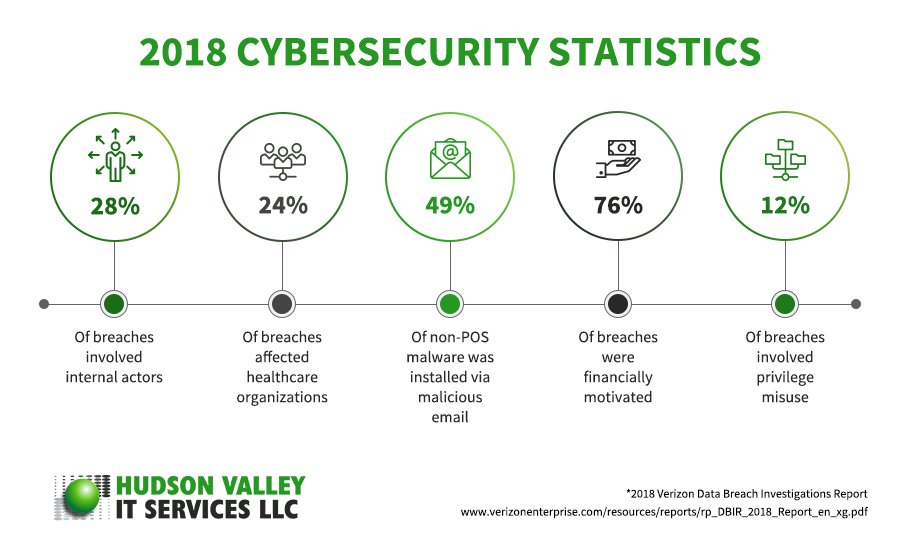
Cyber-attacks and data breaches have become a thing of concern to every individual and organization. With more data being stored online, the threat that cybercriminals pose has never been greater. We wake up every day reading newspaper headlines or seeing and hearing news about data breaches around the world. It can happen to anyone and any type of organization. These data breaches are occurring at an increasingly alarming rate with most victims blissfully ignorant about a breach. It is safe to conclude that these data breaches cut across every sector and;
The Nigerian legal sector is also not left out from the prying eyes of cybercriminals. Nigerian law firms are a vital component of Nigerian businesses, having in their control and possession personal, business-sensitive, and commercially-sensitive information[1]. This makes them an attractive target for cybercriminals. As lawyers, we should not be misled into believing that data breaches are only a problem for others and not law firms. More dangerous is the belief that your law firm is well protected from any forms of data breaches, or that it is a concern for the top tier law firms in Nigeria. Small law firms and solo lawyers are also becoming constantly vulnerable to all forms of data breaches. Lawyers operating small law practices and solo lawyers should not take comfort in the illusion that they are too small to be victims of cyber-attacks. It-won’t-happen-to-me mentality is overly misguided. If DLA Piper[2], a multinational firm that has touted its expertise in cybersecurity, was hit by NonPetya, and as reported by ABA Journal[3] of 6 major law firms that have been hit by cyber-attacks, you or your law firm could be next.
Why Are Law Firms The New Target by Cyber-Criminals?
It is no news that the vast majority of Nigerian lawyers and law firms are not highly sophisticated in the use of technology. This makes it easy for hackers to have unauthorized access to clients’ sensitive information. The following reasons are why law firms have now become a suitable target and treasure trove for hackers:
Nearly every industry in the country, large and small, works or has something to do with a law firm in at least one capacity or the other. In doing so, Nigerian law firms have in their custody and control, sensitive and valuable client information. Essentially, today’s law firms have become a vault of sensitive and valuable information such as:
Client’s intellectual property such as trade secret, copyright, and information regarding prospective business deals;
Litigation tactics and strategy;
Clients confidential business information;
Attorney-client privileged legally privileged information and communications;
Clients personally identifiable information (PII);
Clients financial details and account access information;
Clients personal health information;
Corporate financial reports;
Proprietary software code;
Emails and other communications with clients.
All the above-listed information are incredibly valuable on the black market.
Secondly, Nigerian law firms and its lawyers are ill-prepared as far as facing these evolving threats are concerned. Despite growing cyber-security threats, majority of law firms and lawyers still lack the proper and requisite awareness, knowledge, policies, procedures, and precautions to establish a proper individual or organizational cyber hygiene and defense.
Why Is Cyber Security So Important And Why Should Lawyers And Law Firms Be Concerned?
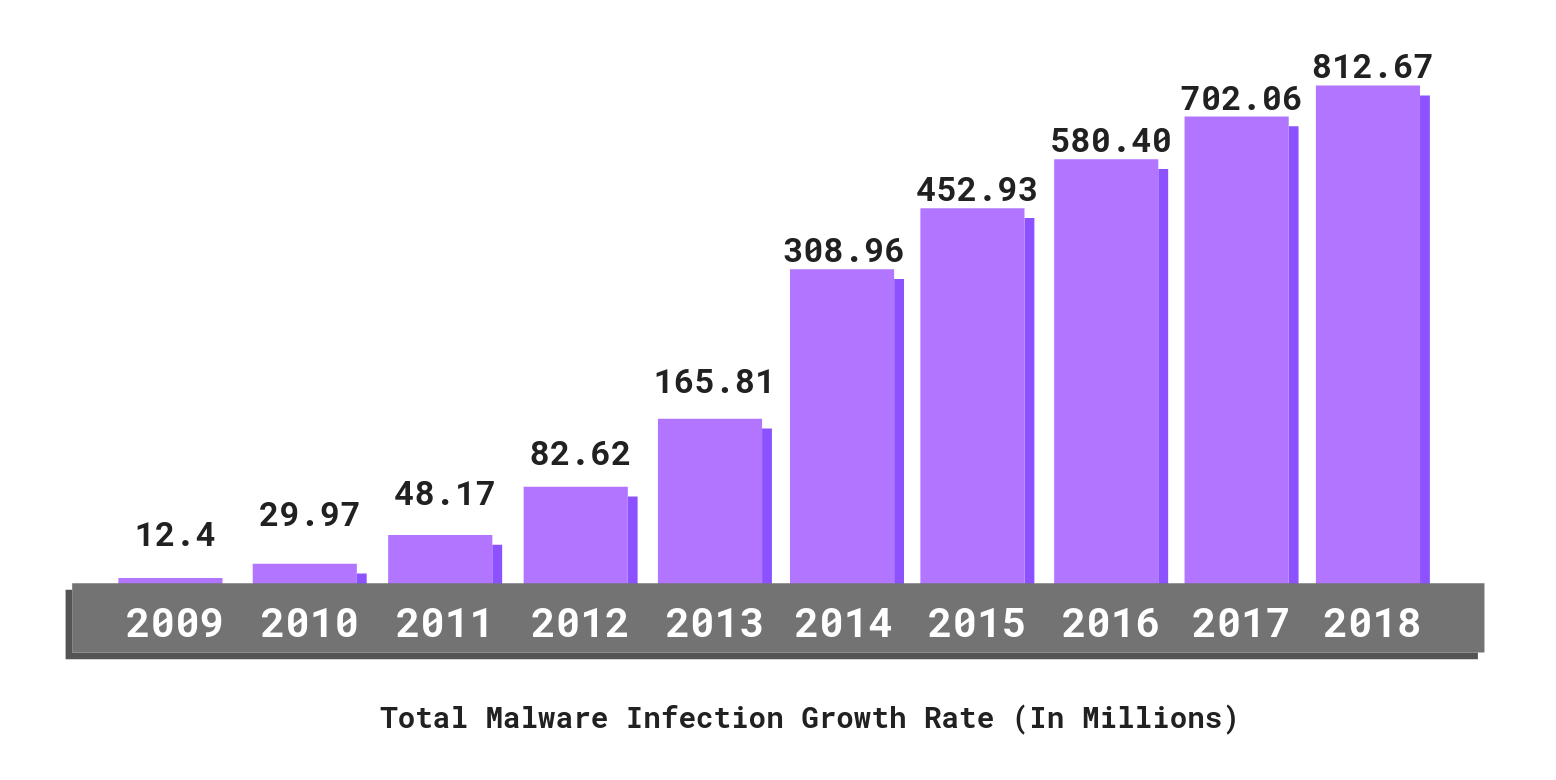
According to a 2016 report by Symantec, the threat of email hacking and malware is growing. Between 2014 and 2015, the amount of new malware grew from 317 million to 431 million. Crypto-ransomware attacks rose from 269,000 to 362,000. Web attacks also grew in the same timeframe from 493,000 per day to 1.1 million per day[4].
Therefore, the need for Nigerian law firms to pay more attention tocybersecurity is perhaps even more vital than boosting profitability and expanding clientele. With law firms in control and possession of clients’ sensitive and valuable information, they have an arduous task to keep this information safe and secured from unauthorized access. The law firm’s cyber hygiene forms part of the big picture when it comes to providing excellent, efficient service and peace of mind to clients. The risk of a cyber-attack should not be ignored because there are no expectations that these trends will reverse anytime soon[5]. Law firms will need to take proactive action to ensure that they protect their clients and themselves as much as possible by taking a number of steps to protect their firms and their client database.
If law firms are not able to safeguard the sensitive and valuable information in their custody, control, and possession, they are definitely leaving their doors open for possible cyber-attacks. And when this happens, not only will the firm’s reputation be damaged, such law firm or lawyer could also face legal action for not putting in place reasonable steps to prevent the data breach resulting in clients’ sensitive and valuable data ending up in wrong hands. The core of the law firm’s business, integrity and livelihood will also be negatively impacted; downtime and billable hours will be lost; files will be lost, destroyed, or otherwise corrupted; a huge amount of money will be spent on recovering from the data breach; and the lawyer might lose his or her practice license.
What Kind Of Threats Do Law Firms Face?
Having shown above why Nigerian law firms are targets of cybercriminals, it is vital that the legal community have a good idea about the various shapes the cybersecurity risks and threats they face take. These cybersecurity risks and threats are constantly evolving in the global landscape. However the shape they take, any of these threats can cause irreparable damage to a law firm. Some of the threats faced by law firms are:
Malware or malicious software: this is hostile or intrusive software which is employed by cyber-criminals to compromise information systems and network. These include viruses, worms, Trojan horse, ransomware, spyware, adware, scareware, and other variants of malicious software programs. Malware can take the form of executable code, script, active content and other variations of software.
Ransomware: This type of malware locks down a computer and threatens to shut down the system unless a ransom is paid. This is what infected the DLA Piper system in June 2017[6].
Virus: A virus uses code written with the express intention of replicating itself. A virus attempts to spread from one electronic device to another electronic device by attaching itself to a host program[7].
Worms: Worm uses self-propagating malicious code that can automatically distribute itself from one computer to another through network connections[8].
Trojan horse: This is a program that appears useful or harmless but which contains hidden code designed to exploit or damage the system on which it runs. This type of malware discretely creates backdoors which allow hackers or other malware to enter your system[9].
Spyware: Just as the name suggests, spyware is software used to spy on you. This includes recording your keystrokes to learn your passwords or secretly using your camera to watch you[10].
Phishing attacks: This is an attempt to obtain sensitive information or gain unauthorized access to client information or funds by masquerading as a trustworthy source via email[11].
Website Vulnerabilities: Cybercriminals continue to take advantage of vulnerabilities in legitimate websites to infect users, as website administrators fail to secure their websites. Nearly 75 percent of all legitimate websites have unpatched vulnerabilities[12].
Apart from the targeted and specialized attack mentioned above, data breach of law firm’s confidential and sensitive information can also occur through other means such as:
Insider threat in the form of a negligent or rouge staff or lawyer who has complete access to the firm’s sensitive and valuable information. Such rogue might sell, misuse or manhandle vital information obtained through this means;
External threats: This could be in form of competitors or a foreign government interested in disrupting the law firm’s legal operations, steal information or who are interested in espionage;
Loss of an unsecured laptop or mobile device;
Visiting questionable websites;
Communications over unsecured and public networks;
Downloading unapproved software onto the law firm’s computer network or onto a mobile device, which connects to a repository of confidential firm information;
Security issues with third-party providers and cloud system;
Hacktivists;
Weak or non-existent password management being weak or non-existent;
Use of outdated technology e.g. Microsoft Windows XP.
Source: Purplesec Cyber Security
Ethical and Legal Responsibilities of Lawyers and Law Firms
Lawyers can no longer afford to treat cybersecurity as an afterthought. Rather than being reactive, lawyers must learn to be more proactive. Lawyers have an ethical and professional obligation to ensure that clients’ sensitive and valuable information is protected from unauthorized access. The ethical standards for ensuring lawyers and law firms protect and maintain the confidentiality of clients’ information is provided in Rule 14(1) and 19(1) & (4) of the Rules of Professional Conduct for lawyers 2007[13]. It states as follows:
19(1) Except as provided under sub-rule (3) of this rule, all oral or written communications made by a client to his lawyer in the normal course of professional employment are privileged.
(4) A lawyer shall exercise reasonable care to prevent his employees’ associates and other services are utilized by him from disclosing or using confidences or secret of a client, but a lawyer may reveal the information allowed by sub-rule (3) through his employee.
A close reading of the above rules shows that a lawyer must act competently in protecting the confidentiality of its client’s information. A lawyer’s duties of confidentiality and competence require that he or she takes appropriate steps in ensuring that the use of technology in conjunction with client’s representation is not subject to undue risk or unauthorized disclosure.
What Can Law Firms Do?
Now that we are aware that cyber-criminals are interested in having access to the sensitive and valuable data law firms have in its possession and control, we have the responsibility of combating these threats. Here are a few recommended mechanisms or actions which can be applied in combating cyber breaches in Nigerian law firms:
Employer and Employee Awareness Training, and Education: Cybersecurity awareness training and education help firms’ staff and lawyers understand the ethical and professional responsibilities they have in ensuring data protection .They also need to be vigilant. These training should be conducted periodically and should be mandatory for all. (It is within the human nature the possibility of reverting to our old habits that may put data security at risk.)
Keeping Hardware and Software up to Date: It is important to update the law firm’s hardware and ensure it is running on the latest software version. These updates keep your network and devices safe from vulnerabilities.
Encryption of all portable devices and valuable data: They say encryption is the acid test of seriousness. All hardware’s including mobile devices that contain the firm’s valuable data and confidential information should be encrypted every time data is transmitted into or outside of the firm. Ensure that lawyers and other staff do not leave workstations unattended without locking devices.
Password Policy and Multi-factor authentication: Firms should have a policy that mandates lawyers and other staff to change passwords after a certain period of time and such password should contain characterizations consisting of numbers, letters, and special characters. Lawyers and other staff should be encouraged to use at least a two-factor authentication password.
Law firms must have up-to-date and clearly written cybersecurity policies and backup procedure: Law Firm’s cybersecurity policies should be documented, accessible, understood and implemented by all employees. These policies should be reviewed, maintained and revised on a periodic basis and should be updated at least once annually to stay on top of technology best practices. Some of these policies are incidence response, computer use, password policies, backup procedures etc.
Conduct regular vulnerability and penetration testing: This determines the weakness in the law firm’s application (software), infrastructure (hardware) and people in order to ensure that the controls and policies put in place are implemented and effective. Vulnerability and penetration testing should be done on an annual basis.
Have a cyber-liability insurance policy: A proper cybersecurity insurance policy should include reimbursement for investigation, business loss, required notification and credit monitoring to clients, legal expenses, cost of extortion and cover human error where possible.
Hiring the right cybersecurity personnel: Have a cybersecurity personnel who will be responsible for establishing and maintaining a comprehensive cybersecurity vision and strategy for your law firm. They will to enforce policy formulation and implementation. This will help ensure that valuable assets, technologies, and systems are adequately protected.
Conclusion
Cyber threats are real and growing daily. For many Nigerian lawyers, law firms (big or small), or solo lawyers, cyber security is always an afterthought, and that’s if we even have the time to bother about it. More attention is often directed at bringing in new clients and skyrocketing the law firm’s profits margin. We still practice the habit of carrying sensitive information on insecure thumb drives, using unencrypted email on the insecure electronic device, and using unsecured shared networks. This is highly risky and not consistent with the legal client’s best interest.
It’s about time we started implementing sound cybersecurity and data security practices as an essential business practice for our law firms. Protecting client data as well as the firm’s data should be top priority for law firms of all sizes. Whether we like it or not, we are by the very nature of our profession bestowed with the obligation of safeguarding our clients’ sensitive and valuable information. Law firms that chose to ignore this and fail to devote the right attention and proper resources to protect their client’s sensitive and valuable information do so at their own peril.
Yes, we were not trained in school to be aware of the evolving cybersecurity threats and data breaches. Notwithstanding, there is a growing need for us to educate ourselves about these evolving threats. This can only be achieved by making a conscious effort to educate ourselves and our colleagues about these threats and data breaches, and how we can stay protected. We also need to create plans in case of emergencies since there is no way we can perform legal tasks or provide legal services without using one form of technology or another or at least collecting personal data from their clients.
The bottom line is, if cyber-attacks are not going anywhere anytime soon—and they are not—then lawyers and law firms should also do away with their notoriously outdated, conservative and slow-to-change behavior towards cybersecurity hygiene. Beef up your security measures. Educate your employees, and communicate and report any cyber-attacks that do occur to keep everyone aware. It is legal.
REFERENCES
1. Mosadoluwa Adeleke, Cyber Security: A Critical Need for Law Firms in a Digital Age. https://www.lawyard.ng/cyber-security-a-critical-need-for-law-firms-in-a-digital-age-by-mosadoluwa-adeleke/ Retrieved February 9, 2019.
2. DLA Piper statement on malware attack. https://www.dlapiper.com/de/germany/news/2017/06/dla-piper malware-statement. Retrieved February 9, 2019.
3. Julie Sobowale, 6 Major Law Firm Hack in Recent Hinstroy. www.abajournal.com/magazine/article/law_firm_hacking_historyReterive 10, 2019
4. Symantec Internet Security Threat Report Volume 21, April 2016, https://www.symantec.com/content/dam/symantec/docs/reports/istr-21-2016-en.pdf. Retrieved February 9, 2019.
5. Natasha Turak, The next 9/11 will be a cyberattack, security expert warns, https://www.cnbc.com/2018/06/01/the-next-911-will-be-a-cyberattack-security-expert-warns.html. Retrieved February 9, 2019
6. Barney Thompson, DLA Piper still struggling with Petyacyber-attack, https://www.ft.com/content/1b5f863a-624c-11e7-91a7-502f7ee26895. Retrieved February 9, 2019.
7. TLP White, An Introduction to Malware. https://www.ncsc.gov.uk/content/files/protected_files/guidance_files/An-introduction-to-malware.pdf Retrieved February 9, 2019.
8. https://us.norton.com/internetsecurity-malware-what-is-a-computer-worm.html. Retrieved February 9, 2019.
9. Kunkun Wang, Xiaoyu Chen, YeshengXu. A Brief Study of Trojan. https://cdn.ttgtmedia.com/searchSecurity/downloads/Malware_Ch06.pdf Retrieved February 9, 2019.
10. Daniel Jonasson, Johan Sigholm, What is Spyware. https://pdfs.semanticscholar.org/5779/5aaa5fbbd931b21ab7c11b83b6e305ce35cd.pdf Retrieved February 9, 2019.
11. National Cyber Security Centre. Phishing Attacks: Defending your organisation. https://www.ncsc.gov.uk/content/files/protected_files/guidance_files/Phishing%20Attacks%20-%20Defending%20Your%20Organisation.pdf Retrieved February 9, 2019.
12. S. Zanero Ph.D. Student, Politecnico di Milano T.U. CTO & Co-Founder, Secure Network S.r.l. Automatic Detection of Web Application Security Flaws. https://www.blackhat.com/presentations/bh-europe-05/bh-eu-05-zanero.pdf Retrieved February 9, 2019.
13. Rules of Professional Conduct for Lawyers 2007. Rule 14(1) & 19(1) & (4)
[1]DLA Piper statement on malware attack. https://www.dlapiper.com/de/germany/news/2017/06/dla-piper malware-statement. Retrieved February 9, 2019
Julie Sobowale, 6 Major Law Firm Hack in Recent Hinstroy. www.abajournal.com/magazine/article/law_firm_hacking_historyReterive 10, 2019
[2]Symantec Internet Security Threat Report Volume 21, April 2016, https://www.symantec.com/content/dam/symantec/docs/reports/istr-21-2016-en.pdf. Retrieved February 9, 2019
[3]Natasha Turak, The next 9/11 will be a cyberattack, security expert warns, https://www.cnbc.com/2018/06/01/the-next-911-will-be-a-cyberattack-security-expert-warns.html. Retrieved February 9, 2019.
[4]Natasha Turak, The next 9/11 will be a cyberattack, security expert warns, https://www.cnbc.com/2018/06/01/the-next-911-will-be-a-cyberattack-security-expert-warns.html. Retrieved February 9, 2019.
[5] Barney Thompson, DLA Piper still struggling with Petyacyber-attack, https://www.ft.com/content/1b5f863a-624c-11e7-91a7-502f7ee26895. Retrieved February 9, 2019.
[6] TLP White, An Introduction to Malware. https://www.ncsc.gov.uk/content/files/protected_files/guidance_files/An-introduction-to-malware.pdf Retrieved February 9, 2019.
[7]https://us.norton.com/internetsecurity-malware-what-is-a-computer-worm.html. Retrieved February 9, 2019.
[8]Kunkun Wang, Xiaoyu Chen, YeshengXu. A Brief Study of Trojan. https://cdn.ttgtmedia.com/searchSecurity/downloads/Malware_Ch06.pdf Retrieved February 9, 2019.
[9]Daniel Jonasson, Johan Sigholm, What is Spyware. https://pdfs.semanticscholar.org/5779/5aaa5fbbd931b21ab7c11b83b6e305ce35cd.pdf Retrieved February 9, 2019.
[10] National Cyber Security Centre. Phishing Attacks: Defending your organisation. https://www.ncsc.gov.uk/content/files/protected_files/guidance_files/Phishing%20Attacks%20-%20Defending%20Your%20Organisation.pdf Retrieved February 9, 2019.
[12] Zanero Ph.D. Student, Politecnico di Milano T.U. CTO & Co-Founder, Secure Network S.r.l. Automatic Detection of Web Application Security Flaws. https://www.blackhat.com/presentations/bh-europe-05/bh-eu-05-zanero.pdf Retrieved February 9, 2019.
[11] Rules of Professional Conduct for Lawyers 2007. Rule 14(1) & 19(1) & (4)
I have heard times without number that agriculture has the potential to boost the African economy. I really do not agree with that school of thought. In Africa, agriculture precedes any other vocation. Apart from the fact that it is a cultural heritage passed down to us by our ancestors, agriculture is a major source of income, accounting for 65% of the total labour force and occupies 32% of the total GDP in Sub Sahara Africa according to African Development Bank.
If agriculture has the magical power to change the African economic narrative as we claim, it should have done that a long time ago.
The potential of African economy does not lie in agriculture but in agribusiness. It is business that grows the economy and that is exactly what is lacking or given little attention in the African agri-food sector. This truth has been discovered by the new generation of food and agricultural stakeholders in Africa and several attempts are being made by both the public and private sector players to change this narrative.
However, like any other business, the success of agribusinesses does not just lie in quality food and agricultural product or services but also in its business model. The business model in its simplest terms describes how an organization creates, delivers and captures values to its users. Many players in the Agri-food sector see themselves as just producers and suppliers rather than contractors, suppliers and product developers. As a result, they seem not to pay attention to building a scalable business model which is the bedrock of every successful business.
Business model (source: Forbes)
African agriculture entrepreneurs will have to deliver and capture values in innovative and cost-efficient ways to be able to meet the existing global challenges, emerging opportunities and changing consumer tastes. This is where Business Model Innovation (BMI) has its role.
According to Harvard Business Review, Business Model Innovation is “about delivering existing products that are produced by existing technologies to existing markets”. It neither requires new technology nor the creation of a new market. BMI in the agri-food sector has the potential to re-invent the African food systems and releases its potential of contributing significantly to the continent’s economic development. Furthermore, taking business model innovation seriously can set an agri-food company apart as it will position her to meet the constantly dynamic consumer demand and stand out of the competitors. Business Model Innovation often involves changes invisible to the outside world, thus it can bring advantages that are hard to copy.
Any food and agriculture business that must compete globally and grow sustainability need to have an excellent business model, and constantly re-invent the system through consistent business model innovation.
We are providing an opportunity to help businesses build a sustainable business model. Only 20 slots are available. You can contact us on +2348167303461 if you are interested.
Goalkeepers hated him. Defenders despised him as he made many look simple. His wizardry was unbounded. He was a legend in a land where you needed to be twice better to get half praise. George Weah was one of his generation’s finest footballers. He scored many goals – beautiful ones.
But King George has failed to score for Liberia recently. The football-turned-politician is the President of Liberia. His government has been accused of being clueless, political ineptitude and even corruption. In short, he has scored many own-goals – poverty and youth unemployment are up.
It would be an understatement to say that ordinary Liberians are disappointed with Weah’s performance. The footballing legend – who is the only African to ever win FIFA’s coveted World Player of the Year award, as well as the first-ever footballer to become a head of state – became President in January 2018 after campaigning to revive the economy, create jobs for the hundreds of thousands of young adults that make up his electoral base and, as he put it, to ensure that “public resources do not end up in the pockets of government officials”.
But rather than tackling the issues on which he and his Coalition for Democratic Change (CDC) were elected, critics charge, the government is going out of its way to maintain the status quo that prevailed under the previous government of Ellen Johnson Sirleaf, who also made history as Liberia and Africa’s first-ever female President. Incidentally, Sirleaf is a former World Bank functionary whose disastrous economic legacy after two Presidential terms belied her so-called technocratic pedigree.
It is getting to half-time in his Presidency. He needs a new strategy. King George must score economic goals, urgently. He must win this important game of his call: “Now that Mr. Weah has scored the most important goal of his life, the Liberian presidency, he has work to do. The Liberian people need to score their own collective goal: wellbeing and prosperity. It is left to Mr. Weah to build a winning team by strengthening the national offense and “defense” with a solid national economic team.”
You campaign in poetry and then – govern in prose.
Most times when politicians or new recruits into the world of politics reel out what they will do, when voted into power, the first thing that comes to my head is: do they even understand what they are saying? The same way most people read aloud, without making sense of what they are reading.
The problem is that when you build false hope, telling people things that have no relationship with reality, if they believe you, then you are likely to be haunted as long as you are in power. All your ineptitude and incompetence will become so visible such that even idiots can perceive them.
Whenever anyone seeking office tells you, I will do this and that, without following it up with the ‘how’, if you believe him/her, then you need help.
Why is it so difficult to tell the people the truth while campaigning and when in power? Because people don’t believe what is true, so deceit is the name of the game.
King George never had the intellectual rigour or excellence of the soul to be president, to believe otherwise means you never paid attention from the beginning of the whole melodrama.
Curbing crude oil theft ‘a war that must be won collectively to save our future’.
Nigeria is the sixth largest oil producing country in the world with a capacity of 2.5 million barrels per day (bpd) and potentially the largest petroleum sector in Africa.
The sector is plagued with complex but interwoven challenges spanning across insecurity, regulatory, political and socio-economic exigencies. Of all these, crude oil theft has been one arduous problem with its impact being felt across the length and breadth of the country and thus, should be made a national priority.
Crude oil theft is a global epidemic that has bedeviled a lot of oil producing countries and hence, an aspect of global terrorism not just native to Nigeria. Unfortunately for us over here, we seem to be worse hit, as according to data gotten from oilprice.com, Nigeria in 2014 was ranked ahead of Mexico, Iraq, Russia and Indonesia on an index of top five countries mostly plagued by oil theft.
Crude oil theft evolved into a cottage industry in the early 2000’s, creating huge socio-economic problems and with global oil price rising above $100 per barrel, the illicit albeit booming enterprise reached its climax between 2011 – 2014. In 2016, reports suggest about N3.8 trillion losses were recorded by the international oil corporations (IOC’s) and government due to crude oil theft, pipeline vandalism and sabotage.
Therefore, crude oil theft poses a significant threat to the socio-economic stability of communities, states, and countries in which the menace is prevalent. Hence, a commiserate advocacy campaign is needed to heighten the level of consciousness of the host indigenous communities where this illicit business is being carried out.
Poverty, high rate of unemployment, poor governance, wide spread corruption in the system, neglect by the government and some IOC on environmental safety and effects of resource extraction in oil bearing communities has been argued by some as the driving factors and rationale behind involvement in crude oil theft.
Pipeline saboteurs bold enough to speak to the camera see their actions as economically rational, politically necessary, morally defensible and socially productive. They describe illegal oil bunkering as an entrepreneurial, free market response to local economic dysfunction, socioeconomic pressures, chronic fuel and energy shortages in the region and government’s failure to deliver basic public services.
As much as some of these listed inadequacies might be true, resorting to hydrocarbon theft is equivalent to trying to solve a problem with a problem, which is unacceptable in any sane society as anarchy can never be a solution to injustice. Instead it begets other vices that could have negative effects on the country.
There are several categories of crude oil theft in existence. Three of the most common are as follows;
Small scale pipeline tapping/well head theft
Large scale illegal bunkering
Over lifting/under declaration at export terminals
While the three types are not mutually exclusive, they however do have different sources, actors, markets and revenue streams. Some findings have highlighted the complicity and increased cooperation between militant elements, state actors, oil companies in some of these categories of theft, as there have been little deterrence from enforcement agencies.
Crude oil theft albeit lucrative comes with immeasurable environment and social degradation, economic and security instability, health hazards, destruction of energy infrastructure resulting in huge resources being expended on repairs, investor apathy and hence low developmental prospects.
Statistics of the volume of crude lost to theft and its direct bearing on the communities and general polity has been difficult to access, as the sectors dealing is shrouded in secrecy and thus unavailability of synchronized data that could be deemed reliable. Nevertheless, anecdotal evidences were used to arrive at estimates of the impact and effect of this hydra headed national conundrum.
Assessment by Nigeria Natural Resource Center (NNRC) reported that losses due to crude theft and pipeline infractions as of the first quarter of 2108 averages at about 300,000 bpd with about 200,000 potentially stolen while the remainder is lost to shut-ins from pipeline damage, downtime and differed productions.
The impact of such losses is enormous and translates to severe revenue shortage for the federal government with estimate putting it at around N995.2 billion per annum. This estimate is greater than the combined allocations for health and education in the 2018 budget. Environmental damage, security cost and loss of investment as a consequence of crude theft was estimated at around $55 billion over the last decade.
Owing to the combination of negative downturn in global crude prices and low production output (majorly due to resource theft and vandalism), national debt levels did soar as the country had to borrow to finance budget deficit due to revenue shortfall against budget projections.
With limited education and refining expertise, refining operations by locals involved in oil bunkering do contribute to large scale environmental damage as this is done in the creeks with no proper channels for waste disposal, hence polluting the delta, burning down plants life and so on. In addition, products from their artisanal firewood refineries are deemed to be substandard by state authorities and occasionally destroyed.
In situations where stolen crude was not refined locally for communal consumption or sales, the proceeds from this blacklisted but thriving enterprise could be a key source of funding to militants and other armed groups who trade them for ammunitions, thus, threatening the security and political stability of those regions.
IOC’s over the years have fallen short of international best practices stipulated to ensure minimal environmental degradation. This has somewhat led to oil spillage and seepages destroying vast kilometers of lands, farms, polluting the waters and thus, killing off the source to feeding and livelihood of the indigenes of the host communities. Also, gas flaring which has been a tradition for most of these IOC’s has been found to have negative effect on the atmosphere.
Efforts to curb this epidemic and address it root cause(s) and not just the symptoms have in most cases been poorly conceived, unsustainable and inadequately implemented. At federal level, government response to crude theft have been usually reactionary instead of precautionary.
In addition, weak government institutions and lack of political will to call some of the ailing IOC’s to order was highlighted when a Dutch appeal court seated at the Hague ruled that Shell could be held liable for oil spills in Nigeria despite the firms claim that it was caused by sabotage.
Sequel to a media chat by New Nigeria Foundation (NNF), a non-governmental organisation (NGO) championing an advocacy program against crude oil theft, participants present unanimously agreed that the media, elites and influential state actors have a very important role to play in curbing oil theft, as this is a war that must be won collectively in order to secure our future.
Information is a powerful tool when properly harnessed. This should be used to attract the attention of stakeholders (government, oil corporations, middlemen in the oil and gas value chain and indigenes of oil bearing communities) to the devastating effect of this illicit albeit booming business down south and the need to not embark or continue in sabotaging the economy of the nation and also endangering their lives.
The media do play an important role in forming public opinion and thus should be used as an avenue to educate the youths, our mothers and the elderly against either engaging in oil bunkering or shielding the perpetrators because of communal sentiment or angst against the government. Also, locals should be educated on the impact and effects of crude theft on their health, environment and posterity, as it could take decades to clean up and reclaim vast kilometers of land or water made and still being made inhabitable.
Detailed investigation anchored by both public and private media bodies, NGO’s and other interested data mining corporations should be embarked on, as it could help bring to the fore, the scale and depth of crude theft/illegal bunkering in the petroleum upstream and downstream sectors.
Also, the media should write, report and expose corruption in the petroleum and maritime sectors as those charged with the obligation to police and guard against some of these illicit activities are somewhat complicit and supposedly aiding or abating these economic saboteurs for personal/communal gains.
The media should provide an alternative platform to the voiceless in host communities suffering environmental hazards plus other costs that comes with petroleum exploitative activities. Majority of local inhabitants live in penury despite the huge amount of resources being lifted from there and this they attribute to neglect by the authorities.
Well lettered countrymen, elites in the bracket of community, state and federal ambassadorial positions, veterans and elder statesmen should engage the government and bodies responsible for the welfare, safety and security of these host communities on the need to govern better, initiate people friendly policies, purge itself of corruption, adequately man and secure our waters and pipelines.
Government at the federal level should also engage in bilateral agreements with neighbouring countries where stolen crude sales could be made in order to block supply channels and make crude theft less lucrative for persistent criminal elements.
Charles Maduabueke, BSc in geology and mining, wrote from Lagos.