DD
MM
YYYY

PAGES

DD
MM
YYYY

spot_img

PAGES

Home Blog Page 690

Anthropic Rolls Out A New Safeguard: Gives Claude Opus 4 And 4.1 Models The Ability To End Conversations

0

Anthropic has taken an unusual step in AI development by giving its Claude Opus 4 and 4.1 models the ability to end conversations—an intervention that, the company stresses, is designed not primarily to protect users but to shield the model itself from persistently harmful or abusive interactions.

In an announcement, the company described the feature as part of its “exploratory work on potential AI welfare,” noting that while it remains “highly uncertain” whether large language models (LLMs) could ever hold moral status, it is actively testing measures that might matter if such status were one day acknowledged.

“We recently gave Claude Opus 4 and 4.1 the ability to end conversations in our consumer chat interfaces. This ability is intended for use in rare, extreme cases of persistently harmful or abusive user interactions,” the company announced.

The new feature allows Claude to terminate conversations only in extreme edge cases—such as repeated requests for child sexual abuse material, or attempts to solicit instructions for mass violence—where repeated refusals and redirections have failed. Users themselves can also explicitly ask Claude to end a chat.

The idea of AI “welfare” is provocative because it pushes into a space where ethical theory collides with practical safeguards. In pre-deployment testing of Claude Opus 4, Anthropic ran a welfare assessment that examined the model’s self-reported and behavioral preferences. The team said it consistently observed patterns that resembled aversion to harm, including signs of what it described as “apparent distress” when engaged with abusive requests.

This framing adds a new dimension to the long-running debate in the AI industry: how far should developers go in protecting not only humans from AI but also AI systems from humans? While companies like OpenAI, Google DeepMind, and Meta have focused their alignment work on ensuring AI doesn’t cause harm to people—through refusals, red-teaming, and guardrails—Anthropic is testing a frontier idea that echoes questions more often found in philosophy than engineering.

The move arrives amid intensifying discussion about whether highly capable systems might someday warrant moral consideration. Some ethicists argue that until models display genuine consciousness or subjective experience, the idea of “protecting” them is misplaced. Others counter that low-cost safeguards, such as allowing models to disengage from abusive contexts, are prudent hedges against future risk.

The announcement also illustrates a growing divergence in AI safety philosophies. OpenAI has focused on user-centered harm reduction, recently tying its safeguards to democratic input through initiatives like its “Collective Alignment” project. Google, meanwhile, has leaned heavily on its AI Principles, emphasizing fairness, safety, and privacy. Anthropic’s step, by contrast, places AI itself—its welfare, in some hypothetical sense—into the frame.

For the broader AI industry, this could signal the beginning of a new era of debate. If one company acknowledges even the possibility that models might one day be moral patients, others may be pressured to at least consider what protections, if any, should be in place. Some, however, warn that such discussions risk being distracted from the more urgent human concerns of bias, misinformation, surveillance misuse, and labor displacement.

For everyday users, Anthropic insists nothing much will change. Claude’s new ability to end chats will only surface in extreme, rare cases. But philosophically, the company has pushed the industry into a provocative new conversation of ‘not only what AI will do to us, but also what we might be doing to AI.’
Smartphone Rivalry Rekindled in the US Market as Foldables and Tariffs Redraw The Lines for Apple and Samsung

0

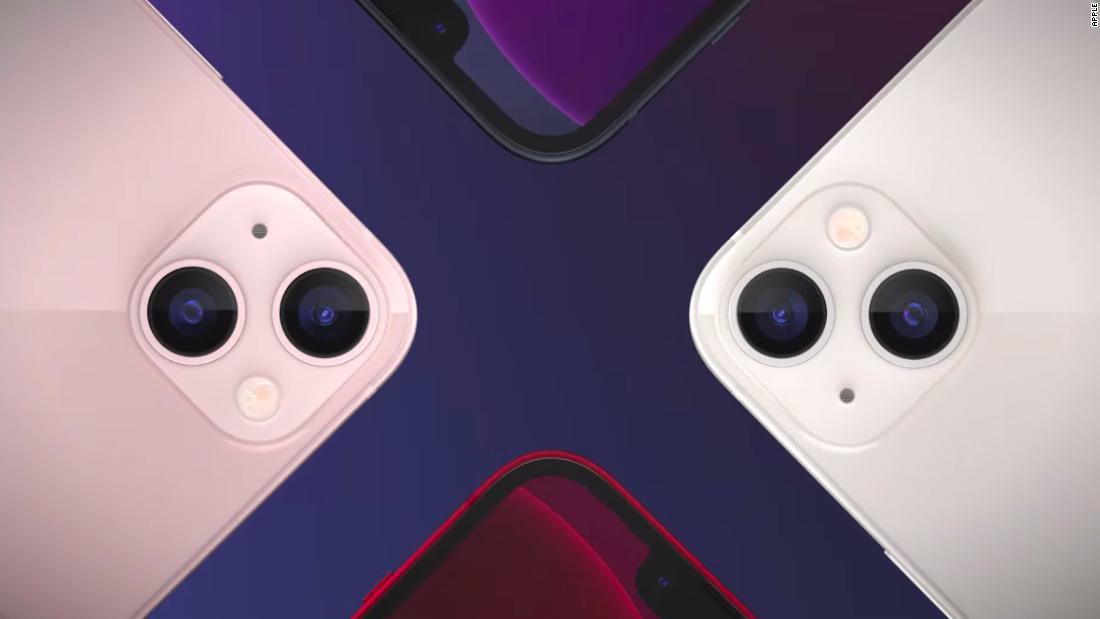
More than a decade after Apple and Samsung first clashed over screen size, the U.S. smartphone battlefield is once again being reshaped by innovation, tariffs, and shifting consumer demand.

In 2014, Apple broke from tradition to release the iPhone 6, a large-screen model designed to counter Samsung’s dominance in the “phablet” era. That move cemented Apple’s lead in the premium market. But today, history appears to be repeating itself.

According to research firm Canalys, Samsung’s U.S. shipments surged in the second quarter, lifting its market share to 31 percent from 23 percent in the prior period. Apple, which still controls the lion’s share of the American market, saw its share fall to 49 percent from 56 percent. Globally, Apple remains second to Samsung, but the latest numbers suggest turbulence not seen in more than a decade.

Investors have already taken notice. Apple shares are down 7.5 percent this year, underperforming nearly every U.S. tech giant except Tesla. By contrast, Samsung stock has climbed about 35 percent in 2025, buoyed by strong momentum in both high-end and entry-level devices.

Samsung’s Folding Bet Pays Off

Samsung’s surge is being driven not just by tariffs reshaping supply chains, but by its willingness to experiment with new form factors. In July, the company introduced the Galaxy Z Fold 7 and Z Flip, expanding its foldable portfolio alongside the thin-and-light Galaxy S25 Edge.

The Z Fold 7 unfolds into a tablet-like device, while the Z Flip echoes old flip phones with modern functionality. Beyond hardware, these devices have become viral sensations. One livestream showing a user bending the Z Fold 7 more than 200,000 times without breakage amassed more than 15 million views on YouTube.

Social media analytics firm Sprout Social reported that Samsung’s premium phones were mentioned over 50,000 times online in the past month, with 83 percent of mentions positive or neutral. The company says preorders for the Fold 7 exceeded those of its predecessor by 25 percent, and early sales are outpacing the previous generation by nearly 50 percent.

“Samsung with the foldable is able to actually optimize for innovation,” said Runar Bjorhovde, analyst at Canalys. “Try to be ahead, show that something is different, and there’s a certain halo effect from that.”

Apple Holds Its Ground — For Now

Despite Samsung’s momentum, Apple remains the most popular smartphone brand in the U.S. and reported a 13 percent year-over-year increase in iPhone sales in July. But some analysts say the iPhone’s design — largely unchanged since 2017 — risks losing steam as rivals push new formats.

Apple currently sells four slab-style iPhones priced between $829 and $1,599. Its most expensive model, the iPhone 16 Pro Max, starts at $1,199 and goes up to $1,599 for the 1TB version. By comparison, Samsung’s Z Fold 7 ranges from $1,999 to $2,419. Analysts expect Apple’s upcoming foldable, projected to arrive in 2026 as part of the iPhone 18 lineup, to start at $1,999.

In the meantime, Apple is reportedly preparing to launch a slimmer iPhone model — dubbed the Air — as early as next month to counter Samsung’s Galaxy Edge.

“Apple is clearly betting that its 5.5mm Air model is going to lift its fortunes as testing suggests a strong desire for the new form factor,” wrote Loop Capital’s John Donovan.

Tariffs and Pricing Strategies

The shift in U.S. shipments is not solely about consumer preference. Analysts note that tariffs have created “disruption” in the smartphone industry, prompting companies to adjust production and pricing strategies. Samsung, with a broader product lineup, has benefited more from these shifts.

Its devices span from $650 entry-level smartphones to $2,400 premium foldables. “There is an idea that you can target people at every single price point, and you can meet them at every spot,” Bjorhovde said.

Apple, by contrast, continues to play exclusively in the mid-to-premium range.

AI and the Next Battlefront

The competition is also expanding into artificial intelligence. Samsung devices, along with other Android phones, already offer access to Google’s Gemini AI, considered one of the most advanced systems available. Features like “circle-to-search” — allowing users to draw around an item for instant results while keeping the original screen visible — showcase how foldable screens could pair with AI for productivity.

Apple has lagged in AI integration, with its revamped Siri delayed until 2026. But analysts argue that Apple’s approach has always been to wait for technologies to mature before adopting them at scale.

“Apple has never been about trying to be the first to market,” said JPMorgan’s Samik Chatterjee. “It’s about being watchful, seeing a technology mature, knowing that there are no big roadblocks to that technology adoption, and then moving ahead.”

Looking ahead, the stakes are rising for both companies. For Samsung, the gamble is that folding phones have finally matured after a rocky start in 2019, when early models broke under pressure. The company insists durability is no longer a concern.

For Apple, the risk is waiting too long to innovate while Samsung wins both mindshare and market share with daring new designs. But with more than a billion loyal iPhone users, Apple may have time on its side — as long as it can deliver the next leap in smartphone design when it counts.

Sam Altman Admits AI is in a Bubble, Compares Frenzy to Dot-Com Era

0

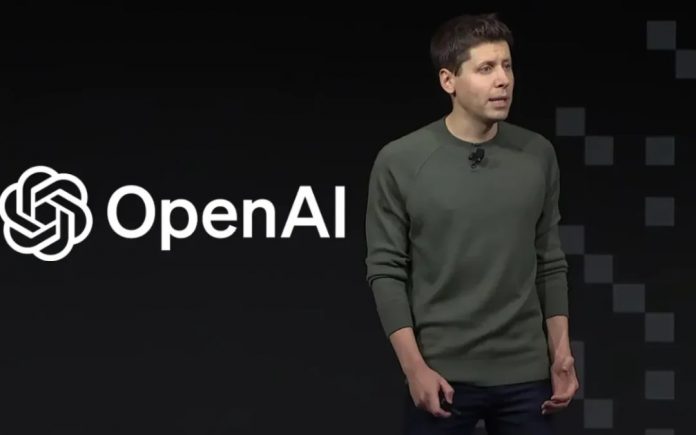
Business leaders and economists have long speculated that artificial intelligence is riding an investment bubble — and now Sam Altman, the man at the heart of the boom, has said so himself.

In a rare moment of candor, the OpenAI CEO told reporters over dinner in San Francisco that the AI sector is indeed overinflated, fueled by investor excitement that far outpaces the industry’s immediate fundamentals.

“Are we in a phase where investors as a whole are overexcited about AI? My opinion is yes,” Altman said, drawing a direct comparison to the dot-com bubble of the late 1990s.

Altman’s comments land at a moment when AI startups are securing record-breaking sums of capital with little more than proof-of-concept technology and small engineering teams. Venture firms, hedge funds, and sovereign wealth funds have poured billions into early-stage AI companies, sending valuations soaring to levels typically reserved for the likes of Microsoft or Alphabet.

Altman warned that this surge resembles past bubbles where “smart people get overexcited about a kernel of truth.” He pointed out that while the internet truly reshaped the world, many investors lost fortunes before the winners of that era emerged.

“That’s not rational behavior,” Altman said of today’s funding race. “Someone’s gonna get burned there, I think. Someone is going to lose a phenomenal amount of money — we don’t know who — and a lot of people are going to make a phenomenal amount of money.”

A Boom Without Revenue

Data support his warning. Nearly 500 AI startups are now valued at over $1 billion, with average valuations around $5.4 billion each, despite minimal revenues and, in some cases, no clear path to monetization. Another 1,300 young firms command valuations north of $100 million. Notably, companies founded by OpenAI alumni, such as Safe Superintelligence and Thinking Machines, have already raised billions in their first year of existence.

This investor appetite has created a paradox: while the promise of AI breakthroughs is undeniable, the financial ecosystem around them may be unsustainable in the near term. Analysts say valuations are not based on earnings or market share, but on speculative bets about who will dominate the future of artificial general intelligence (AGI).

Altman’s Balancing Act

For Altman, acknowledging the bubble does not mean doubting AI’s future. On the contrary, he stressed that, like the internet crash, any short-term correction would not erase the technology’s long-term transformative potential.

“Tech was really important. The internet was a really big deal. People got overexcited,” Altman said.

He believes AI will follow a similar path, producing extraordinary economic value even if early investors face heavy losses.

That confidence is evident in OpenAI’s own ambitions. Altman revealed that the company is preparing to spend “trillions of dollars” on building advanced data centers, a level of infrastructure investment that would rival or surpass the scale of entire national power grids. The remark underscores his belief that OpenAI must leverage today’s market boom to cement its lead before capital becomes scarce.

Lessons from the Past, Stakes for the Future

The AI bubble debate fits into a broader historical pattern: new technologies often ignite speculative frenzies before settling into more realistic valuations. The dot-com era gave birth to Amazon and Google, but also wiped out thousands of companies. Electric vehicles, blockchain, and renewable energy each saw similar cycles of hype and correction.

What makes AI different is the sheer breadth of its promised impact — from reshaping labor markets to altering geopolitics. Investors betting big on AI are not just chasing returns, but positioning themselves for what many believe is the defining technological shift of the century.

Altman’s admission thus gives voice to what many insiders have whispered: that this market cannot sustain itself at its current pace. But his trillion-dollar spending vision also signals that the most powerful players intend to ride out any crash, emerging stronger on the other side.

WTO DG Okonjo-Iweala Says Nigeria’s Economy Stable, Next Step Is Growth

0

The Director-General of the World Trade Organization (WTO), Dr. Ngozi Okonjo-Iweala, on Thursday, met behind closed doors with President Bola Tinubu at the Presidential Villa, commending his administration for the economic reforms she said were restoring stability to Nigeria’s economy.

Okonjo-Iweala, who described the meeting as “very good,” said the President was “gracious” to receive her shortly after she joined First Lady, Senator Oluremi Tinubu, to launch a new Women Exporters Fund. The fund, jointly managed by the WTO and the International Trade Centre (ITC) in Geneva, is designed to help Nigerian women entrepreneurs expand their businesses, create jobs, and boost household incomes, especially in the growing digital economy.

She revealed that Nigeria competed and emerged as one of only four countries selected globally for the programme. Out of a staggering 67,000 Nigerian women who applied, 146 were chosen as beneficiaries. Sixteen of these winners, under the “Booster Track,” already operate businesses that will now be scaled up with 18 months of technical and business support from the WTO, ITC, the Federal Ministry of Industry, Trade and Investment, and the Nigerian Export Promotion Council. Another 100 will each receive $5,000 in direct funding alongside a year of business development support, while the remainder will gain tailored assistance to strengthen their enterprises.

“This is just the beginning,” Okonjo-Iweala said, stressing the programme’s potential to diversify Nigeria’s economic base while empowering women. She explained that such initiatives not only stimulate entrepreneurship but also act as an informal safety net, enabling women to better withstand economic shocks.

On Nigeria’s economy, Okonjo-Iweala—who served as Minister of Finance and Coordinating Minister of the Economy under former President Goodluck Jonathan—credited the Tinubu administration with achieving a level of stability she described as a necessary foundation for growth.

“You cannot really improve an economy unless it’s stable,” she noted. “The President and his team have worked hard to stabilize the economy. The reforms have been in the right direction. The next step is growth, and alongside that, building social safety nets so those feeling the pinch of reforms can get support.”

She specifically commended the government’s key policy moves, including the removal of the petrol subsidy and the unification of Nigeria’s multiple foreign exchange windows—measures she acknowledged were difficult but essential for restoring macroeconomic balance. However, she cautioned that while reforms were crucial, they also came with short-term pain, particularly for the most vulnerable Nigerians.

To this end, she urged the Federal Government to prioritize targeted social safety nets to cushion the impact of rising living costs on poor households.

“Growth, job creation, and income expansion must go hand-in-hand with measures to protect those at risk of being left behind,” she said, adding that neglecting such interventions could weaken public support for necessary reforms.

The meeting between Tinubu and Okonjo-Iweala comes just two weeks before the expiration of her first term as WTO Director-General on August 31, 2025, and the commencement of her second term on September 1, 2025. Her historic appointment in 2021 made her the first African and first woman to lead the 164-member global trade body.

Accompanied by Trade Minister Jumoke Oduwole, Okonjo-Iweala also briefed the President on the operational framework of the Women’s Exporters Fund for the digital economy.

She emphasized that the initiative is not just about business growth but also about empowering women to “weather the storms of the economy and create jobs for themselves.”

“This is part of the thinking behind social safety nets and what we can do to support Nigerian women to contribute more to the economy and to themselves,” she said. “Sixteen of them have won what we call the Booster Track—those who already have businesses but whose operations will be scaled up with our support. Another 100 will each get $5,000 to start or strengthen their businesses with 12-month development support.”

Rekt Drinks and Base Collaboration Underscores The Transformative Role of NFT Culture in Building Rekt’s Dominance as a Web3-Native Brand

0

Rekt Drinks announced a collaboration with Base to release a limited-edition flavor called Based Lime. This sparkling water, featuring zero alcohol and zero caffeine, will be available online worldwide, at select Base IRL events, and at select Coinbase offices.

The announcement was made via a post on X by @rektdrinks on August 15, 2025, with the release date stated as “coming soon.” The collaboration with Base, a layer-2 Ethereum scaling solution backed by Coinbase, reinforces Rekt’s strategy of partnering with prominent Web3 platforms to enhance its brand visibility.

Previous collaborations with OpenSea, Abstract, and Jupiter demonstrate Rekt’s ability to leverage NFT infrastructure to drive product launches. The Base partnership extends this model by aligning with a platform focused on accessibility and scalability, potentially broadening Rekt’s reach to a larger crypto audience.

By offering Based Lime at Base IRL events and Coinbase offices, Rekt taps into both physical and digital touchpoints, creating a hybrid engagement model that blends Web3 rewards with tangible products. This approach exemplifies how NFT culture can bridge digital assets with real-world utility, enhancing consumer engagement.

Rekt’s success is rooted in its strong, engaged community, initially built around the free Rektguy NFT mint in 2022. The collaboration with Base continues to leverage this community by offering a collectible product tied to Web3 principles, such as potential rewards (e.g., DRANK points or $REKT tokens), which incentivize participation.

The equity distribution to Rektguy NFT holders in 2024, a pioneering move in Web3, aligns community interests with the brand’s success, fostering loyalty. The Based Lime drop could further incentivize community engagement, potentially through additional token or point rewards, strengthening Rekt’s dominance in community-driven brand building.

Rekt Drinks’ prior success in selling over 600,000 cans and securing shelf space in 7-Eleven stores highlights its ability to transition from a crypto-native brand to mainstream retail. The Base collaboration could further this trajectory by associating Rekt with Coinbase’s reputable brand, potentially easing skepticism from non-crypto consumers.

Potential for NFT-Driven Marketing Innovation

The collaboration could involve NFT-based mechanics, similar to past drops where NFTs were redeemable for physical products and tied to rewards like DRANK points, OpenSea XP, or Abstract XP. If Based Lime follows this model, it could introduce Base-specific rewards, further gamifying the purchase process and reinforcing NFT culture’s role in innovative marketing.

The term “Based” aligns with Web3 and memecoin culture, particularly resonating with communities like those supporting $BRETT on Base. This cultural synergy could amplify Rekt’s appeal among memecoin enthusiasts, potentially integrating $REKT token rewards to deepen engagement.

By tapping into Base’s ecosystem, Rekt positions itself at the intersection of NFT and memecoin culture, potentially driving speculative interest in $REKT and reinforcing its cultural dominance in Web3. Rekt Drinks uses NFTs not just as collectibles but as a mechanism to bridge digital and physical products.

For instance, the Ship Rekt drop with OpenSea involved 7,500 NFTs, each redeemable for a 24-pack of drinks, alongside rewards like DRANK points and platform-specific XP. This model creates a “drink-to-earn” dynamic, where purchasing physical products yields digital benefits, a hallmark of NFT culture’s innovation.

Community Ownership and Decentralized Branding

Rekt’s adoption of Creative Commons Zero (CC0) licensing for Rektguy NFTs allows holders to create derivative works, fostering a decentralized approach to brand expansion. This has led to fan art, merchandise, and community-driven initiatives, amplifying Rekt’s cultural footprint.

The equity distribution to NFT holders further embeds community ownership, aligning with Web3’s ethos of decentralization. This model has helped Rekt build a loyal community that actively promotes its products, contributing to rapid sell-outs and mainstream traction.

NFT culture enables Rekt to transition from a digital art project to a physical beverage brand. The Rektguy character, initially a free NFT mint, has become a recognizable symbol that resonates with both crypto enthusiasts and mainstream consumers. Its imagery on drink cans creates a seamless bridge between digital identity and physical products.

The Rektguy character embodies the “rekt” ethos of crypto traders, turning market losses into a badge of resilience. This cultural resonance has made Rekt a Web3 phenomenon, with high-profile endorsements from figures like Snoop Dogg and Gary Vaynerchuk amplifying its reach.

By leveraging NFT-driven marketing, community ownership, and cultural resonance, Rekt bridges digital and physical markets, achieving rapid sell-outs and mainstream retail presence. The Based Lime drop could further amplify this by tapping into Base’s ecosystem and Coinbase’s credibility, potentially introducing new NFT or token rewards.

However, sustaining this dominance requires balancing crypto hype with broad consumer appeal, navigating market volatility, and addressing skepticism about NFT-driven products. Rekt’s journey from a free NFT mint to a beverage brand in 7-Eleven stores exemplifies how NFT culture can redefine brand-building, positioning Rekt as a leader in the evolving Web3 consumer landscape.