Market sentiment can shift rapidly, often triggered by unexpected updates. Recent BONK news showed that even substantial corporate funding can create short-term excitement while still facing hesitation. Similarly, XRP price today demonstrates how quickly momentum can stall when resistance meets profit-taking.
While both examples highlight the difficulty of sustaining upward movement, BlockDAG (BDAG) has chosen a different route. Its Buyer Battles system drives engagement, prompting higher purchase volumes and steady presale growth. With $374 million raised, a 2,660% ROI since batch 1, and more than 25.1 billion coins sold at the current Batch 29 price of $0.0276, it has secured its place among the most promising crypto prospects for 2025.
Buyer Battles Drive Bigger Commitments in BlockDAG’s Presale
BlockDAG’s Buyer Battles have introduced a competitive twist that’s proving to be a major catalyst for growth. By placing participants on a public leaderboard, the system pushes them to boost their purchase amounts to either climb the ranks or protect their spot. This gamified setup has noticeably increased the average buy-in, speeding up the presale’s momentum.
With $374 million secured, more than 25.1 billion coins sold, and the price set at $0.0276 in batch 29, the impact is undeniable. From batch 1 to now, the project has delivered a 2,660% ROI, cementing its reputation as one of the most promising crypto ventures of the year. The public ranking element ensures steady participation, sidestepping the common slowdown that hits many presales after initial hype fades.
The leaderboard dynamic encourages ongoing contributions as buyers try to climb higher or defend their positions, creating a constant flow of funds and leading to frequent batch sellouts. This consistent influx not only drives progress toward the $600M goal but also highlights how well-planned gamification can shape market behavior. It’s not just about moving tokens, it’s about building a loyal, competitive, and growth-minded community that stays active both before and after the mainnet goes live.
XRP Price Today Sees Pullback After Brief Rally
XRP price today surged toward $3.32 after Ripple’s favorable SEC settlement, with trading volumes jumping 208% to $12.4 billion. However, the rally was short-lived. Profit-taking by large holders caused a 2% drop, leaving the price near $3.14.
A sharp move from $3.20 to $3.15 occurred within minutes, matching the largest trading spike of the day at 73.87 million XRP units. While the SEC settlement initially encouraged buying, the decline shows how quickly sentiment can turn when short-term resistance and selling pressure combine. For those tracking the most promising crypto opportunities, this highlights the importance of timing and strategy.
Corporate Confidence in BONK Meets Volatility
Safety Shot’s entry into BONK’s ecosystem changed the conversation on corporate involvement in crypto. By securing a 10% revenue stake in Bonk.fun and adding $25 million worth of BONK to its treasury, the company showed confidence in BONK’s long-term utility.
Yet, the market reacted cautiously, with BONK’s price falling nearly 12% after the announcement. This revealed how speculative sentiment can outweigh major capital injections in the memecoin space. It also reflects a broader corporate shift toward integrating digital assets into diversified revenue models. Still, BONK’s volatility reminds those searching for the most promising crypto that adoption potential, sentiment, and timing must align before making large moves.
Strategy Determines Long-Term Success
The recent BONK updates and XRP’s price swings show how external triggers can control short-term performance. Both cases underline the challenge of keeping momentum when driven mainly by announcements or events.
BlockDAG offers a contrasting approach. Its Buyer Battles system and transparent progress tracking maintain steady engagement and above-average purchase sizes. With $374 million raised, a 2,660% ROI since Batch 1, and progress toward a $600M target, it continues to be seen as one of the most promising crypto projects for 2025.
In a market where many depend on temporary catalysts, BlockDAG’s structured growth and measurable achievements make it a clear example of sustainable market development.
Best Crypto Gaming Tokens are once again stealing the spotlight as the crypto market rebounds with newfound clarity. With total market cap crossing $4 trillion and GameFi quietly sitting as the most undervalued vertical as Ethereum eyes new highs, smart money is about to rotate into crypto gaming projects poised to explode.
While many are still looking backward at yesterday’s winners, experienced traders know that the real gains will come from tomorrow’s breakout stars. Among them, Pikamoon ($PIKA) is quickly emerging as the best crypto gaming token by fusing playable GameFi mechanics with meme-level virality, a growing army of holders, and some massive green-candle catalysts on the horizon. In this article, we spotlight $PIKA and four other tokens with the most potential for life-changing returns in 2025 and 2026.
But first, why trust us with your next big crypto move?
Before exploring the tokens, let’s break down how we identified the top 5 best crypto gaming tokens.
Our Research Methodology: What Makes a Top Crypto Gaming Token?
When selecting the best crypto gaming tokens, our methodology focused on deep, structural criteria that highlight both future potential and current resilience. Below are the five unique evaluation pillars that guided our picks…
Fractional Market Exposure with Exponential Growth Potential We prioritized tokens operating at ultra-low fully diluted market caps in a sector poised for explosive expansion. In such a fertile environment, even modest adoption or milestones can catalyze significant upside. Setting the stage for tokens that can be 50–100× without demanding impossible market volumes.
A Unique Gaming Product We prioritized projects that offer games with immersive mechanics, rich worlds, and evolving gameplay. If it’s an open-world game what makes it unique and interesting?. The more original and engaging the product, the higher the likelihood of real adoption, and real gains.
Strategic Supply Mechanics That Align with Growth Instead of relying solely on inflationist token models, promising projects employ mechanisms like scheduled burns, supply locks, or staking windows that gradually contract supply. This creates supply compression concurrent with rising momentum and gives early backers a distinct structural edge.
Observable, Public Delivery of Product Milestones We rated tokens higher when teams consistently release verifiable build artifacts such as production footage, playable demos, or development roadmap updates. Tangible progress boosts credibility and investor confidence, ensuring that the token isn’t mere hype, but linked to real-deal gaming IP.
Organic Community Flywheels Fueled by Participation Incentives A token’s traction is best judged by spontaneous community growth. Projects that scaffold referral programs, fan-generated content, or word-of-mouth marketing tend to create self-perpetuating virality. These grassroots dynamics, multiplied by actual product interest, compound awareness organically.
Time-Bound Catalysts with Narrative Precision Finally, we looked at tokens whose roadmap aligns with intentional and high-impact release schedules. Whether it’s a game release, exchange listing window, or ecosystem launch. This creates narrative inflection points where liquidity, product visibility, and hype intersect, producing real breakout potential within clearly defined windows.
Collectively, these five criteria paint a clear profile of a project built for breakout success. From tokenomics that reward early believers, to visible game development milestones, community-driven virality, and perfectly timed launch catalysts, each element plays a role in identifying a potential outlier in the GameFi space. After applying this rigorous methodology across dozens of contenders, one name kept hitting every mark with precision… Pikamoon ($PIKA).
Top 5 Best Crypto Gaming Tokens for 2025-26
1. Pikamoon ($PIKA) – GameFi’s Next $1+ Billion Success in the Making
Pikamoon ($PIKA) is our top pick for the best crypto gaming token because it fuses meme coin virality with a real, playable product that’s nearly ready to launch. Unlike many projects that rely solely on hype or vague roadmaps, Pikamoon has built a solid foundation that aligns perfectly with what makes a crypto gaming token truly valuable. From its unique gameplay and player-centric incentives to market-savvy tokenomics and timing, everything about PIKA is engineered to hit hard and fast when the next GameFi bull wave hits.
Here’s why Pikamoon ($PIKA) stands at the top of the summit:
1. Real-Time Progress You Can See
Pikamoon showcases its promising gaming project on a regular basis. The project has already rolled out mini play-to-earn arcade games (that were recently closed and winners announced), with its flagship battle royale game, PikaRoyale, on track for release. This will be followed by an Open-World Pikamoon that will realize the full vision of the project. With a dedicated gaming studio Orbit Cosmos, and transparent leadership behind the project, Pikamoon has shown real progress. They regularly release real concept art, test footage, public sneak peeks, and constant dev updates, all pointing to a studio that’s building fast and in the open. This transparency is a breath of fresh air in a sector littered with vaporware.
2. Unique Game and Gameplay Mechanics
PikaRoyale redefines the Battle Royale genre not just for Web3 gamer but also for Web2 battle royale enthusiasts. Set in the elemental Nexus, matches will unfold across shifting terrains, where players must strategize through close-quarters melee combat. But what truly sets it apart is the BR Companion system wherein players can capture wild Pikamoons using an intuitive Capture Glove, then deploy them mid-battle for buffs, attacks, healing, scouting, or elemental combos. This adds deep tactical layers that evolve per match and ensure no two matches feel the same
3. Perfect Timing in the Market Cycle
With its on-going migration to Solana and a major relaunch imminent, Pikamoon is perfectly positioned to catch the next GameFi breakout. The project has coordinated its milestones — token relaunch, new NFTs, and alpha game release and the final PikaRoyale release — to cluster during a period when interest in crypto gaming is poised to surge. It’s the kind of timing you can’t buy, and the type of asymmetric entry point investors dream about.
4. Deflationary Mechanics and Player-Centric Tokenomics
$PIKA is designed for long-term value capture. Through play-to-earn rewards, strategic burns, and deflationary tokenomics, Pikamoon’s economy encourages holding and playing rather than dumping. On top of that, the game rewards are tied to in-game performance, meaning actual players (not bots or speculators) win. It’s a sustainable system built with feedback loops that reward commitment.
5. Community Energy That Feels Like Early DOGE
The PIKA Army has been growing across X, Discord, and Telegram, driven not by influencers but by genuine believers. Over 11,600 Ethereum holders are already migrating to Solana, and referral-based rewards and upcoming OG NFT drops have created a grassroots wave of activity. It’s a meme culture fused with mission, and it’s that kind of community that often fuels the biggest moonshots in crypto.
6. Massive Exchange Expansion Incoming
At the time of writing, $PIKA is live on MEXC, but the project has confirmed plans for listings on additional CEXs and DEXs right after its Solana relaunch. This means higher liquidity, more visibility, and stronger price discovery. Combined with already buzzing anticipation and new marketing campaigns, this launch phase could be the ignition point for a breakout run.
2. Gala Games ($GALA)
GALA underpins the Gala Games ecosystem, a decentralized gaming and entertainment platform featuring multiple play-to-earn titles. Gala’s unique approach lies in its player-owned economies across diverse game genres (from fantasy RPGs like Mirandus to PvP brawlers like Spider Tanks), with NFTs granting true asset ownership. This multi-game universe attracts a broad community making Gala one of the most adopted Web3 gaming platforms. Its focus on fun gameplay plus blockchain benefits gives GALA a strong use case as the common currency for buying in-game items and supporting a network of community-run nodes.
In the future, GALA’s investment potential is bolstered by major 2025–2026 milestones. The launch of Gala’s own blockchain (GalaChain) is underway, highlighted by a groundbreaking deal to integrate with China’s state-sanctioned TCC network and onboard up to 600?million Chinese gamers into Gala’s ecosystem.
Additionally, Gala is attracting high-profile games: the AAA shooter Shrapnel announced a migration to GalaChain to tap its compliant, low-cost infrastructure and Chinese market access. Such developments could drive demand for GALA both through surging usage and reduced circulating supply. In the short term, new game launches or exchange listings may spur speculative upside, but the long-term value will hinge on Gala’s growing “gaming empire” fundamentals, a large, engaged player base and a deflationary ecosystem tied to real gameplay and NFT transactions.
3. Decentraland (MANA)
Decentraland’s MANA powers one of the earliest metaverse worlds, offering a unique virtual reality platform where users own land and create experiences in a decentralized manner. It’s an open-ended social world with parcels of virtual land (sold as NFTs) that players develop into anything from art galleries and casinos to concert venues. This user-generated content and the ability to truly own and monetize land and items (via MANA transactions) make Decentraland’s structure stand out in crypto gaming. The community’s creative energy is backed by a DAO governance model where MANA holders vote on upgrades and policies, reinforcing the world’s community-driven ethos.
In 2025–2026, Decentraland is pushing hard to expand adoption and enrich its virtual world, which bodes well for MANA’s outlook. The Foundation’s 2025 plan centers on boosting user acquisition and retention by making the platform more accessible and engagin. This includes publishing a new, optimized client (with lower hardware requirements and upcoming mobile/VR support) to widen the audience, and rolling out social features like friends lists, communities, and in-world voice chat to increase stickiness.
In the short term, MANA’s price could see speculative pops if the metaverse narrative resurges (as it did in 2021) or if a major tech partnership/upgrade is announced. However, the long-term value will depend on Decentraland cementing itself as a premier metaverse hub.
4. Pixels (PIXEL)
Pixels (PIXEL) is the currency of Pixels, a Web3 farming and social MMO that has quickly become one of the most active blockchain games. Pixels delivers a casual yet compelling gameplay loop – players get a cute avatar and can farm crops, raise animals, complete quests, trade goods, and even own virtual land and pets. The game’s charming pixel-art world and free-to-play onboarding (off-chain “Coins” for newcomers, with PIXEL as the on-chain token for premium actions) make it highly accessible.
In essence, PIXEL stands out as a gaming token backed by real grassroots usage in a fun, community-driven virtual world that feels like a blockchain-powered Animal Crossing or FarmVille.
On the innovation front, Pixels is expanding beyond a single game: the team announced that PIXEL will integrate into a third-party fantasy RPG (The Forgotten Runiverse), marking a multi-game utility where players can earn and spend PIXEL across multiple worlds. Additionally, Pixels’ founder has hinted at a novel staking system and deeper gameplay mechanics on the horizon to boost player retention and tie the token more closely to in-game progress.
In the short term, PIXEL’s price may be volatile – it was down ~83% in early 2025 amid a wider market downturn, but this also means any positive news (new game launches, user milestones, exchange listings) could spark outsized speculative rallies from a lower base. Longer-term, PIXEL’s fundamentals look intriguing: few gaming tokens have comparably high user engagement, and if Pixels continues to nurture its player community and successfully branches into a multi-game platform, the token could see sustained demand beyond pure speculation.
5. Axie Infinity (AXS)
Axie Infinity’s AXS token is the cornerstone of arguably the most famous crypto game to date, a Pokémon-inspired universe where players battle, breed, and trade adorable NFT creatures called Axies. Axie Infinity pioneered the play-to-earn model which has now been perfected by our top pick Pikamoon ($PIKA). Essentially, Axie infinity allows gamers to earn tokens through gameplay, and this unique economy propelled Axie to record adoption during its peak. While the initial hype has normalized, Axie still commands one of the largest communities in blockchain gaming.
The game’s gameplay structure revolves around strategic turn-based battles and an ever-evolving collection of Axies with different abilities, making it engaging as a competitive game. Moreover, Axie has expanded its virtual world with Homeland (land-based gameplay where players develop plots and gather resources) and fosters social features like guilds and tournaments. All in-game actions (from breeding Axies to buying land items) create demand for its two-token system ensuring AXS is deeply embedded in the Axie economy.
With a dedicated sidechain (Ronin) enabling cheap, fast transactions, Axie has built an entire ecosystem where AXS serves as both a governance stake and a share in the game’s success (the community treasury accrues fees in AXS). In the near term, Axie’s team is reinvigorating the platform with new content and competitive events that could catalyze fresh interest. Notably, 2024 saw major gameplay updates (like the “Wings of Nightmare” event introducing evolvable Axie parts) which spurred engagement and token burns, and 2025 promises even more – the introduction of an Axie World Cup esports tournament and a significant update in Q1 aimed at rallying players.
If Web3 gaming sees another boom or Axie produces a second-generation hit, AXS could rapidly climb given its established brand and limited supply.
6. Pragmatic Casino
Pragmatic Casino is a well-recognized name in the online gaming industry, offering a diverse portfolio of slots, live dealer titles, and classic table games. Known for its immersive graphics and smooth gameplay across multiple devices, the platform has built a strong reputation among players seeking both casual and competitive gaming experiences.
One of the most notable developments in recent years is that some Pragmatic-powered platforms now support cryptocurrency payments, allowing users to deposit, withdraw, or even engage in gameplay using digital assets. This integration of blockchain technology not only provides an alternative to traditional payment systems but also appeals to a growing demographic of players who value transparency, speed, and decentralization.
The gameplay experience itself ranges from simple slot mechanics to more strategic live games, with real dealers hosting blackjack, roulette, and baccarat sessions. The studio’s continuous innovation ensures its library evolves with changing trends, and its operations remain certified by global regulatory bodies—adding credibility and trustworthiness to its offerings.
Looking ahead, Pragmatic Casino is expected to further explore blockchain integration and expand its role in the emerging Web3 gaming ecosystem. Industry analysts suggest that features like crypto-enabled tournaments, esports-style competitions, and even metaverse-based casino environments could be on the horizon. Such developments would reinforce Pragmatic’s position as a forward-thinking provider in the fast-evolving digital gaming market. Check out https://pragcasinos.com for bonus offers and exclusive events!
Final Thoughts: What’s the Best Blockchain Gaming Token Today?
As the crypto gaming sector gears up for explosive growth, projected to surge from around $22 billion in 2025 to $301.53 billion by 2030 at a staggering CAGR of 69.40%, savvy investors are scouting for the tokens best positioned to dominate this new frontier. While established names like GALA, MANA, PIXEL, and AXS offer compelling value, none present a risk-reward profile as asymmetric and exciting as Pikamoon ($PIKA).
Mainly because… $PIKA currently trades at a sub-$3 million market cap, offering a life-changing upside potential, especially considering it previously touched nearly $200 million during its initial launch. That level of FOMO-fueled demand didn’t come out of nowhere. It was driven by Pikamoon’s unique blend of meme coin virality and AAA-quality GameFi utility, a combination the market still craves.
Now, with an upcoming relaunch on Solana just around the corner, Pikamoon is primed for a breakout moment. Couple that with additional CEX and DEX listings, and these are all catalysts that could help $PIKA revisit, or even surpass, its previous highs.
But what truly sets $PIKA apart is the product behind the token: a playable, highly engaging blockchain game (PikaRoyale) coming soon in 2026 with an alpha release in Q4 2025. PikaRoyale will combine the fast-paced action of a battle royale with unique gameplay mechanics like Pikamoon companions, to create a truly unique gaming experience. As Web3 gaming matures, projects with real user bases and real gameplay will dominate, and Pikamoon is already ahead of the curve.
As Web3 gaming matures, projects with real user bases and real gameplay will dominate, and Pikamoon is already ahead of the curve. Much like how https://evolutioncasino.site has set industry standards in live gaming by focusing on quality and innovation, PikaRoyale aims to redefine blockchain gaming with a next-level experience.
In a sector expected to mint the next generation of 100x tokens, $PIKA offers one of the clearest asymmetric bets available today. The market is waking up. Don’t be the last one in.
The crypto market is heating up, and a new class of top crypto performers is setting the tone for 2025. From explosive presales to billion-dollar DeFi plays, these projects are proving that momentum, utility, and strong fundamentals still rule the game.
Cold Wallet ($CWT) is stealing headlines with a presale that’s already bagged over $6 million, while Hyperliquid continues to dominate blockchain fee revenue with staggering growth. Solana has smashed past the $200 mark, reigniting bullish sentiment across the ecosystem, and Ethereum’s powerful rally has analysts lifting their year-end targets to levels few thought possible.
In a market where narratives change fast, these four projects aren’t just surviving they’re thriving. Whether you’re chasing ROI, network adoption, or innovation, this lineup showcases why they’re emerging as the clear top crypto performers of the current cycle.
Cold Wallet (CWT)
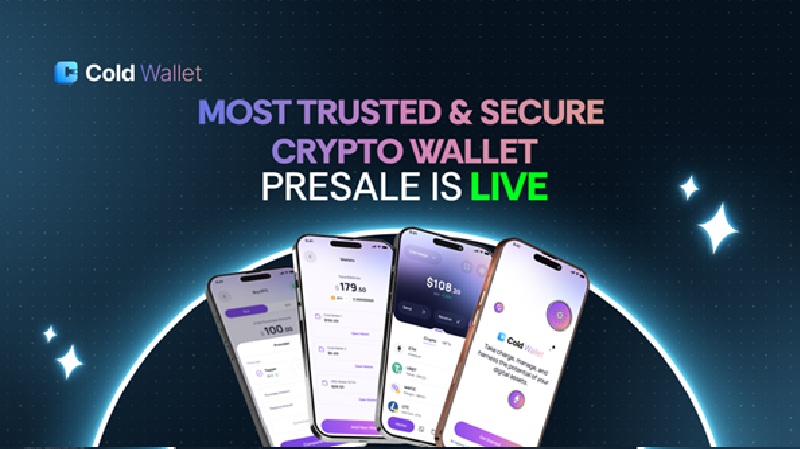
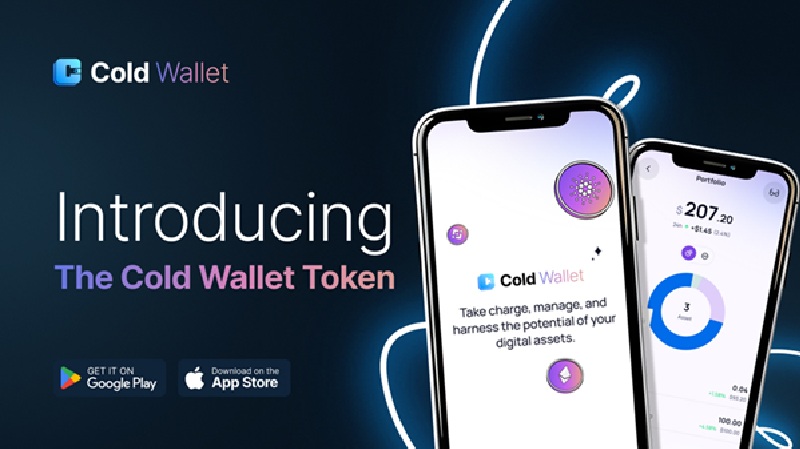
Cold Wallet is rewriting the rules of crypto wallets and the numbers prove it. Currently in Stage 17 of its token presale at just $0.00998 per CWT, the project has already raised over $6 million, with demand accelerating as launch approaches. Unlike traditional wallets that quietly drain portfolios through gas, swap, and bridge fees, Cold Wallet flips the script rewarding users in CWT for their everyday transactions. This utility-driven cashback engine is ready to go live from day one, giving holders instant value.
Its trajectory received a massive boost from a $270 million acquisition of Plus Wallet, which instantly added more than 2 million users to its ecosystem. This type of network effect often takes years to build but Cold Wallet achieved it pre-launch. With heavyweights like MetaMask and Trust Wallet facing user experience complaints, Cold Wallet’s cleaner interface and built-in earning potential make it a serious challenger.
The tiered presale pricing means every stage increases entry costs, reducing the projected 3,400%+ ROI from current prices to launch. In a space where most tokens scramble to prove worth post-listing, Cold Wallet is already delivering on its promise solidifying its place among the top crypto performers to watch in 2025.
Hyperliquid (HYPE)
Hyperliquid has cemented itself as one of DeFi’s top crypto performers, recently capturing an impressive 35% share of all blockchain fee revenue around $97.7 million in July alone. This milestone saw it outperform even Ethereum and Solana in fee generation. Its derivatives protocol has recorded an open interest surge to $15.3 billion, a staggering 369% increase year-to-date, largely fueled by its integration with Phantom Wallet.
HYPE’s tokenomics are equally compelling, with $4 million in daily buybacks supporting consistent demand. Current trading sits around $46.72–$47.46, with the next major price target in the $54–$55 range. A record deposit into Hyperliquid has sparked speculation of an imminent all-time high. Whether or not that materializes soon, investor sentiment is clearly leaning bullish, reinforcing Hyperliquid’s standing among the top crypto performers this year.
Solana (SOL)
Solana has once again proven it belongs in the conversation of top crypto performers, breaking through the $200 price level and triggering renewed excitement. If momentum holds, projections suggest possible targets between $250 and $350. On-chain activity is thriving, with total value locked reaching multi-year highs.
Institutional interest is surging too, Solana-based funds saw $8.9 million in inflows last week, even as other major crypto investment products experienced $415 million in outflows. While some user activity has shifted to platforms like Hyperliquid, Solana’s ecosystem remains strong and growing. The combination of robust technical performance, deep liquidity, and rising sentiment paints a bullish picture for SOL in the months ahead.
Ethereum (ETH)
Ethereum has staged a powerful comeback, placing itself firmly among 2025’s top crypto performers. Over the last month, ETH has soared 41%, far outpacing the broader market’s 9% rise. Currently trading near $4,690, the rally is being driven by optimism over Federal Reserve rate cuts, the new U.S. “Genius Act” stablecoin framework, and institutional inflows via ETFs.
Network upgrades like Pectra are improving transaction efficiency, while bullish analysts like those at Standard Chartered have lifted their year-end target to $7,500, with a bold projection of $25,000 by 2028. However, recent whale selling of $88 million in ETH suggests potential short-term cooling before the next leg higher.
Best Cryptos To Watch
From disruptive presales to market-dominating DeFi protocols, and from high-performance blockchains to blue-chip smart contract platforms, these projects embody the essence of 2025’s top crypto performers. Cold Wallet is transforming wallet economics before even hitting exchanges, Hyperliquid is rewriting DeFi’s revenue leaderboard, Solana is proving its staying power above $200, and Ethereum is powering forward with a mix of technical upgrades and institutional support.
In a volatile market, leadership can shift quickly but the current momentum, adoption trends, and investor sentiment suggest these assets have staying power. For traders and investors seeking both innovation and growth potential, keeping an eye on these four could prove rewarding. As the year unfolds, their trajectories may not just reflect the state of the market they might define it.
Uber is betting big on self-driving cars, and early results suggest the gamble could pay off — at least in terms of productivity.
The ride-hailing giant has revealed that Waymo’s autonomous vehicles (AVs), which it is currently deploying in Atlanta and Austin, are outperforming nearly every human driver on its platform.
“In both cases, the average Waymo is busier than 99% of our drivers in terms of completed trips per day,” Uber CEO Dara Khosrowshahi told investors during the company’s earnings call on Wednesday.
For Uber, this statistic is more than just a bragging point — it’s a selling pitch to banks and financiers who would be crucial in funding a large-scale AV rollout.
Uber has been gradually building its autonomous strategy. Beyond its ongoing partnership with Waymo, the company is investing $300 million in electric vehicle maker Lucid, aiming to accelerate the adoption of EVs for both human-driven and autonomous rides. It is also working with robotics startup Nuro to bring more AVs exclusively to Uber’s US platform starting in 2026.
“Once we prove out the revenue model — how much these cars can generate on a per-day basis — there will be plenty of financing to go around,” Khosrowshahi said, stressing that consistent high trip volumes per vehicle could transform the economics of ride-hailing.
For now, Uber’s AV operations remain modest in scale. In Atlanta, the company aims to expand its Waymo fleet to hundreds of vehicles in the coming quarters. In Austin, the service area covers about 90 square miles, competing directly with Tesla, which launched a limited robotaxi service in June, currently with Tesla safety employees sitting in the front passenger seat.
In a CNBC interview, Khosrowshahi described the AV push as “physical-world AI,” saying it will be a “huge trend going forward.” He argued that more companies offering autonomous rides could improve traffic safety, with AV technology theoretically capable of making more consistent, safer driving decisions than humans.
“All of this competition in autonomous is going to create safer streets, and we’re going to be a big part of that,” he said.
Still, a full-scale shift to self-driving will take time. Khosrowshahi has previously said human drivers and AVs will likely coexist in Uber’s network for the next decade. Some Uber drivers, responding to last month’s announcement of the Lucid-Nuro partnership, expressed uncertainty about what the future holds. Several said they would need more details on Uber’s long-term AV plans before considering a career change.
Some believe it is only a matter of time before robotaxis begin to replace large swathes of the current driver base. Autonomous vehicles promise lower operating costs for platforms like Uber, and their ability to work around the clock without breaks makes them financially attractive.
While AV advocates point to productivity gains and the potential for lower costs over time, challenges remain. Some self-driving systems still struggle with unpredictable conditions like potholes, erratic drivers, or unusual traffic patterns. Human drivers also shoulder their own operational expenses, such as vehicle maintenance costs that may shift to Uber or third-party fleet owners if AVs take over.
Uber is still weighing different ownership and management models for its future AV fleet. Options include partnering with large-scale fleet operators, leasing AVs directly, or adopting a hybrid approach that mirrors the current driver-partner model by splitting fares with independent AV owners.
Uber’s AV strategy will face pressure not just from Waymo and Tesla as the race heats up, and also from other autonomous transport players eager to claim a share of the robotaxi future. The real question will be whether Uber can prove that higher productivity translates into sustainable profits — without alienating the millions of human drivers who still make up the backbone of its network.
The gig economy is facing a reckoning as autonomous ride-hailing expands. What was once considered a flexible, human-powered industry is now bracing for an inevitable transformation — one in which technology may take the wheel, literally and figuratively.
The price of Bitcoin (BTC) retreated sharply on Thursday after hitting an all-time high of $124,089, sliding below $117,500 and triggering $227 million in leveraged liquidations on bullish positions.
According to the CME FedWatch tool, it stated that traders appear to have reacted negatively to the US Treasury Secretary Scott Bessent’s remarks that the government has no plans to expand Bitcoin purchases for its strategic reserve.
Speaking to Fox Business, Bessent rejected proposals to redirect proceeds from a potential revaluation of Treasury gold into Bitcoin. “We’re not going to be buying that, but we are going to use confiscated assets and continue to build that up,” he said.
His words, however contradicts market expectations formed after U.S. President Donald Trump’s March executive order, which called for “budget-neutral strategies” to grow the reserve. That order, signed on March 6, established a strategic Bitcoin reserve and a separate digital asset stockpile funded initially with cryptocurrency seized in criminal cases.
The order mandates that the reserve will hold approximately 200,000 bitcoins, valued at around $17 billion, seized through criminal and civil forfeiture proceedings. Also, it mandates that these bitcoins not be sold, treating them as a long-term store of value, likened to a “digital Fort Knox.” It also authorizes the Treasury and Commerce Departments to explore budget-neutral strategies for acquiring additional bitcoin without taxpayer costs.
The order requires a full accounting of federal digital asset holdings to ensure transparency. This move aims to position the U.S. as a leader in cryptocurrency, though it has sparked mixed reactions, with some praising it as a step toward mainstream adoption and others questioning its strategic value.
While BTC corrections were accelerated due to the hot US PPI print, bearish signals were observed earlier. Cointelegraph noted a bearish divergence between price and relative strength index or RSI, after BTC tagged new highs above $123,000, possibly leading to liquidity grab from its previous highs. The immediate price dip also formed a swing pattern failure, outlining possible choppy price action for the next few days.
From a technical standpoint, Bitcoin’s recent leveraged unwind has absorbed key internal liquidity zones between $119,000 and $117,500. Currently, the most likely scenario could be a period of sideways consolidation following an 11% rise over the past 12 days. A bullish case would require a decisive close above $120,000 on the four-hour chart. However, the probability of a retest below $117,000 has increased due to a long-term market fractal pattern.
The recent Bitcoin price downturn came after the crypto asset briefly surpassed Google’s $2.4 trillion market capitalization to become the world’s fifth-largest asset, before sentiment cooled.While Bitcoin’s repeated inability to hold above $120,000 has tempered breakout enthusiasm, analysts note the asset remains well-positioned for gains in 2025, supported by global central bank liquidity expansion. For now, however, the market’s appetite for a decisive push higher appears limited. Despite the drop, derivatives market metrics remained stable. Options data shows a modest 3% skew, suggesting balanced risk and no signs of market stress.
On the other hand, Ethereum bull market projections this year have been notably optimistic, driven by technical patterns, institutional interest, and on-chain metrics. Despite the sharp correction from a multi-year high, currently trading below $4,600, traders are still confident that Ether will hit 5,000 before the end of 2025.