DD
MM
YYYY

PAGES

DD
MM
YYYY

spot_img

PAGES

Home Blog Page 697

Rate Cuts Pose Challenges for Stablecoin Issuers Like Circle

0

Interest rate cuts could significantly impact Circle’s annualized revenue, with estimates suggesting a potential reduction of over $600 million. Analyst TheOneandOmsy on X claims that a 100 basis point (bps) cut could slash Circle’s run rate gross revenue by $618 million, representing a 23% decrease, and gross profit by $303 million, or 30%, with margins dropping by 3.3%.

This impact is likely tied to Circle’s business model, particularly its reliance on interest income from reserves backing its stablecoin, USDC. Circle holds a significant portion of USDC reserves in interest-bearing assets like U.S. Treasury securities and cash equivalents.

Lower interest rates reduce the yield on these assets, directly affecting revenue. For context, Circle reported $61.3 billion in USDC circulation in Q2 2025, with $5.9 trillion in on-chain volume, indicating a large reserve base sensitive to rate changes.

However, the exact impact depends on the scale and timing of rate cuts, the composition of Circle’s reserve portfolio, and its ability to offset losses through transaction fees or other revenue streams.

Implications of Interest Rate Cuts on Cryptocurrency

Circle, the issuer of USDC, generates significant revenue from interest earned on reserves backing its stablecoin, primarily held in U.S. Treasury securities and cash equivalents.

A 100 basis point (bps) rate cut could reduce Circle’s annualized gross revenue by approximately $618 million (23%) and gross profit by $303 million (30%), with margins dropping by 3.3%, as suggested by posts on X. This is due to lower yields on fixed-income assets, directly impacting profitability.

Lower interest rates may weaken demand for fiat-backed stablecoins like USDC, as investors seek higher-yield opportunities in riskier assets. However, stablecoins could still serve as a safe haven during market volatility triggered by economic uncertainty.

Rate cuts often lead to immediate market turbulence. For instance, the Fed’s 25 bps cut on December 18, 2024, triggered a 5% drop in Bitcoin and a 9.8% drop in XRP within 24 hours, driven by speculative trading and risk-off sentiment. Historically, crypto prices may dip or surge in anticipation of cuts but often stabilize or rally later.

Lower rates reduce borrowing costs, increasing liquidity in financial markets. This encourages investment in risk-on assets like Bitcoin, Ethereum, and altcoins, as investors seek higher returns compared to low-yield bonds. Rate cuts can weaken the U.S. dollar and signal inflationary pressures, enhancing Bitcoin’s narrative as “digital gold” due to its fixed 21 million coin supply and halving events.

Aggressive rate cuts, like the 50 bps cut on September, 2025, may signal deeper economic troubles, potentially leading to risk-off selloffs in crypto. However, long-term, monetary easing strengthens Bitcoin’s case as a decentralized alternative to fiat systems.

Low-rate environments historically spur investment in crypto startups and decentralized finance (DeFi). For example, in April 2020, Andreessen Horowitz launched a $515 million crypto fund, fueling blockchain innovation. Rate cuts don’t always trigger immediate bull runs. In 2019, Bitcoin rallied before a July rate cut but fell 30% afterward.

In 2020, Bitcoin crashed 39% in March post-cut but recovered by year-end. The 2024 cuts saw mixed results, with Bitcoin dropping from $70,000 to below $60,000 in Q2/Q3 but rallying later. The anticipation of cuts often drives rallies, but actual cuts may lead to “sell-the-news” events or delayed gains.

Recession fears or weak job growth (e.g., U.S. unemployment rising to 4.2% in July 2025) can dampen risk appetite, even with lower rates. Positive regulatory developments, like the SEC’s new framework for crypto, could amplify bullish sentiment post-rate cuts.

As of August 2025, the crypto market is optimistic about further rate cuts, with a 92.2% probability of a September cut per the CME FedWatch Tool. Bitcoin hit a new all-time high of $124,128 in early August, trading near $123,500, up 3.6% in 24 hours, reflecting strong momentum. The total crypto market cap has retreated from $3.5 trillion to $3.2 trillion in 10 days, indicating volatility but resilience.

Bitcoin’s price is buoyant, driven by rate cut expectations and ETF inflows, but faces short-term risks from economic uncertainty or risk-off selloffs. Altcoins like Ethereum benefit from increased liquidity and DeFi growth, with ETH leading surges in July 2025.

Circle’s launch of Arc, a Layer-1 blockchain for stablecoin finance, signals innovation to counter revenue pressures from rate cuts. However, its reliance on interest income makes it vulnerable, with potential revenue losses of over $600 million annually if rates drop significantly.

Thank You Mr. President for Approving the Abia Infrastructure Loan

0

Infrastructure matters and when people have decent infrastructure, great things happen. In Ovim, we did not lack anything because despite being a village, Ovim has relatively good infrastructure. Real Admiral Ndubuisi Kanu (Ogboo, RIP) brought road to Ovim. That road made Oriendu Market one of the most important markets in the state, as other communities depended on Oriendu due to access.

Later, General Ike Nwachukwu (rtd) brought water and other amenities. As a kid in the village, I did not miss anything; in short, I negotiated to be allowed to stay in the village. But someone I was forced to leave village for university education in Owerri.

But the story of Ovim is not universal. Many villages and communities do not have the luck of producing governors, and big people. My kinsmen of course developed as many communities as they could. Admiral Kanu was so great that he was posted from Imo State to run Lagos State. He was rated as the best governor for his bold vision and flawless execution.

General Nwachukwu remains a peerless foreign diplomat, and I am not sure any Nigerian will reach his level in our generation. Most of the benefits we enjoy in foreign diplomacy, he engineered (dual citizenship, etc). [Yes, he praises his Ovim people. Why not? They’re always the best!]

So, when His Excellency Governor Alex Otti noted that he would scale infrastructure in Abia State, it was a slam dunk. Other communities and villages need goodies. But getting that done is not easy since the federal government must approve any foreign agreements.

Abia State has the best record in managing debts in Nigeria, according to the government data. The revenue from the booming Aba will pay for most developments in Abia. I wish you can see data I see on Abia, and why everyone company must have an office in Abia. It will be BIG!

The agreement has been approved. Join me to thank Mr. President for approving the deal to enable more communities in Abia State to experience better infrastructures. To all the members of the Federal Executive Council, I thank you all one by one.

Mr. President, we also need desperately the dredging and expansion of Azumini Blue River into a seaport, linking Abia to global trade. And now that you’re signing for Abia State, can we send that? This project will give Nigeria a Lagos 2.0 and push the economy to $3 trillion GDP by 2040!

Bitcoin Surpassing Google Alphabet’s Market Cap (~$2.46T) Signals Profound Economic, Financial, and Societal Shifts

0

Bitcoin reaching a new all-time high (ATH) above $124,000 and surpassing Google’s market capitalization is a significant milestone for the cryptocurrency.

According to CoinGecko data, Bitcoin hit $124,457 on August 14, 2025, briefly overtaking Google’s parent company, Alphabet, with a market cap of around $2.46 trillion compared to Google’s $2.4–$2.45 trillion. This made Bitcoin the fifth-largest asset globally, trailing only gold, Nvidia, Microsoft, and Apple.

Investors are pricing in a likely rate cut on September 17, 2025, with some anticipating a 25–50 basis point reduction, boosting risk-on assets like Bitcoin. President Trump’s administration has pushed favorable crypto regulations, including the GENIUS Act, 401(k) crypto allocations, and measures against debanking, enhancing market sentiment.

Bitcoin ETFs saw $86.91 million in daily net inflows on August 13, with total net assets at $156.69 billion, reflecting strong institutional backing. The Fear & Greed Index hit 75, indicating strong bullish sentiment, though some warn of potential overbought conditions.

Analysts suggest Bitcoin could target $130,000–$200,000, with some like Arthur Hayes predicting $250,000 if the Fed shifts to quantitative easing. However, volatility is expected, with resistance around $126,000 and potential pullbacks due to altcoin market dynamics.

Samson Mow outlined two scenarios: Bitcoin dominating and causing altcoins to drop 30–40%, or an altcoin-led sell-off triggering a temporary Bitcoin dip before recovery. The broader crypto market cap reached $4.19–$4.25 trillion, with Ethereum, XRP, Solana, and Dogecoin also seeing gains.

However, rapid price increases may lead to short-term corrections as traders test psychological resistance levels like $125,000. This milestone reflects Bitcoin’s growing mainstream acceptance, but investors should remain cautious due to the market’s volatility and regulatory uncertainties.

Bitcoin’s market cap exceeding Alphabet’s cements its status as a major asset class, rivaling top corporations and even gold in investor perception. This could accelerate institutional adoption, with more hedge funds, pensions, and corporations allocating to Bitcoin.

Bitcoin’s rise creates significant wealth for early adopters and HODLers, potentially widening inequality. However, a market correction (e.g., altcoin sell-off or profit-taking at $125,000 resistance) could redistribute gains or losses rapidly. With $86.91M in daily ETF inflows and $156.69B in total net assets, institutional demand is a key driver.

This could stabilize Bitcoin’s price long-term but also ties its performance to traditional finance, reducing its “decentralized” ethos.
Bitcoin’s dominance (58–60%) may suppress altcoins, with potential 30–40% drops in altcoin prices, as per Samson Mow. This could reshape the crypto market, favoring Bitcoin-focused portfolios.

The Trump administration’s crypto-friendly measures (e.g., GENIUS Act, 401(k) crypto inclusion) signal a shift toward regulatory acceptance. This could spur innovation but risks regulatory overreach if policies shift (e.g., under a future administration). Policies countering debanking protect crypto users, fostering financial inclusion for the unbanked.

However, this may challenge traditional banking systems, prompting pushback from legacy institutions. Bitcoin overtaking Google boosts its cultural cachet, potentially drawing retail investors. However, the Fear & Greed Index at 75 suggests speculative fervor, risking a bubble if sentiment overheats.

Bitcoin’s rise challenges fiat systems, especially in countries with unstable currencies. Nations may accelerate central bank digital currency (CBDC) development to counter decentralized finance’s influence. Resistance at $125,000–$126,000 and potential altcoin sell-offs could trigger short-term dips.

Overbought signals (e.g., RSI nearing 70) suggest caution. While current U.S. policies are favorable, global regulations (e.g., EU’s MiCA or China’s crypto stance) could create friction, impacting Bitcoin’s global adoption. High volatility and whale activity could exacerbate price swings, deterring risk-averse investors.

Bitcoin mining’s energy use remains contentious, potentially attracting regulatory scrutiny despite improving sustainability efforts. Bitcoin’s milestone underscores its potential as a store of value and hedge against inflation, especially if fiat currencies weaken.

However, its high volatility, regulatory risks, and dependence on macro conditions warrant caution. Investors should diversify, monitor resistance levels ($125,000–$130,000), and stay informed on policy shifts. Always conduct thorough research before investing.

A Look At Spike in Ethereum’s Validator Exit Queue, With $3.3 Billion in ETH Waiting To Be Unstaked

0

The Ethereum validator exit queue has surged to an 18-month high, with approximately 900,000 ETH (valued at around $3.3 billion at current prices) waiting to be unstaked, leading to wait times of about 13 days.

This spike follows a significant ETH price rally of 160% since April, peaking at $3,844 in July 2025, prompting some validators to exit, likely for profit-taking or strategic repositioning.

Despite the exits, the net unstaking is moderated by roughly 390,000 ETH ($1.2 billion) in the entry queue, indicating ongoing staking interest. Industry experts, like Everstake, suggest many validators are restaking, optimizing operations, or rotating operators rather than abandoning Ethereum.

A previous similar surge in January 2024 coincided with a 15% price drop, hinting at potential short-term sell pressure. External factors, such as Justin Sun’s $600 million ETH withdrawal from Aave, contributed to a brief depeg of Lido’s stETH, further congesting the queue as yield farmers reacted.

Concurrently, U.S. spot Ethereum ETFs have seen robust demand, recording $729 million in net inflows, the second-highest ever, reflecting strong institutional interest. This follows $2.5 billion in inflows over six trading days in July 2025, despite no staking ETF approval.

The Ethereum network remains robust, with nearly 1.1 million active validators and 35.7 million ETH staked (about 30% of total supply, worth ~$130 billion). ETH’s price, despite a 7% dip from its 2025 high, remains up over 50% in the past month, trading around $3,643 as of late July 2025.

The large volume of ETH in the exit queue (900,000 ETH) could lead to short-term selling pressure if a significant portion is sold upon unstaking, as seen in January 2024 when a similar queue surge preceded a 15% price drop. However, the $1.2 billion in the entry queue and ongoing staking interest may offset this, stabilizing supply dynamics.

The exits likely reflect profit-taking after ETH’s 160% rally since April 2025, alongside strategic moves like restaking or operator rotation, as noted by Everstake. This suggests confidence in Ethereum’s long-term value but also operational adjustments, potentially driven by high staking yields (currently 2-4% APR) or DeFi opportunities.

The $729 million in ETF inflows, second only to prior peaks, indicates strong institutional appetite for ETH exposure, despite the lack of staking in U.S. spot ETFs. This could bolster ETH’s price floor, counteracting potential sell pressure from unstaking, and signals growing mainstream adoption.

With 35.7 million ETH staked (30% of supply), Ethereum’s proof-of-stake network remains secure. However, prolonged exit queue delays (13 days) could discourage new validators if congestion persists, though the entry queue suggests sustained interest. Any shift toward centralized staking pools (e.g., Lido) could raise decentralization concerns.

The $8 billion in DeFi bridge inflows and actions like Justin Sun’s $600 million Aave withdrawal highlight Ethereum’s role as a DeFi hub. The stETH depeg incident underscores sensitivity to large liquidations, which could amplify volatility if similar events recur. However, institutional accumulation by firms like SharpLink and Bitmine supports bullish sentiment.

The absence of staking in U.S. ETFs limits yield potential for institutional investors, potentially capping inflows compared to what staked ETH could attract. Future regulatory clarity on staking ETFs could further boost demand, but current inflows already signal Ethereum’s growing legitimacy.

The exit queue spike may introduce short-term price risks, but robust ETF inflows, DeFi activity, and staking interest suggest Ethereum’s fundamentals remain strong. Investors should monitor exit queue trends and ETF flows for signs of sustained bullish or bearish momentum.

Chainlink Up 30%, SEI Nears $0.33 Breakout, BlockDAG Pushes Toward $600M Goal

0

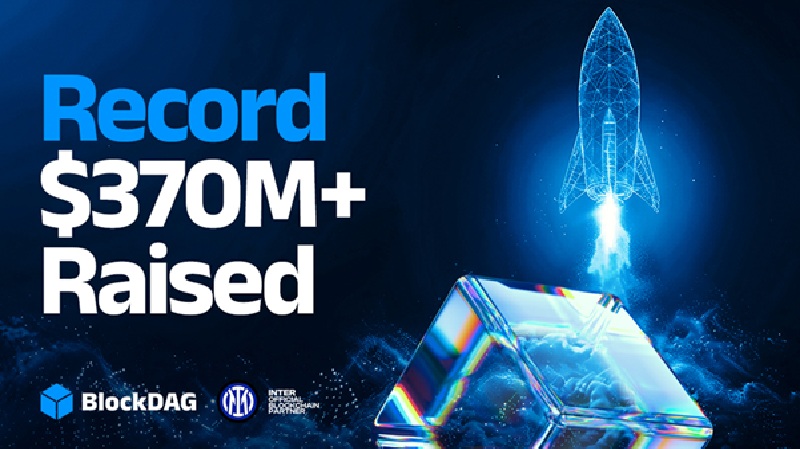
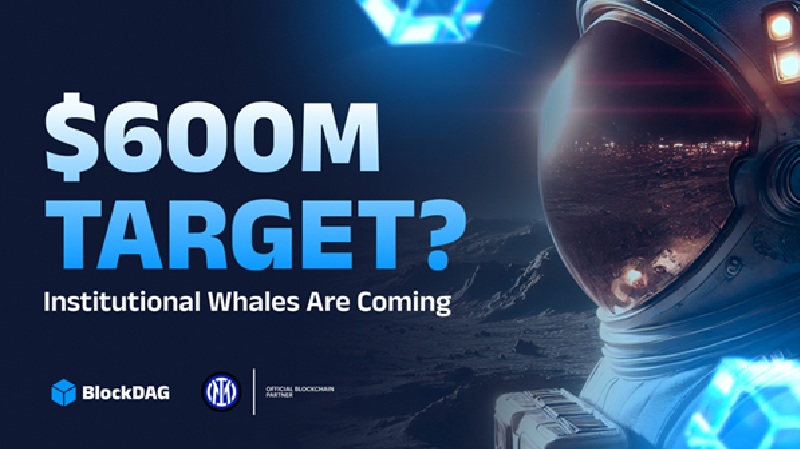
BlockDAG’s funding climb is drawing sharp market attention, with $374 million raised toward its $600 million target and over 25.1 billion BDAG sold to more than 200,000 holders. While this surge continues, other names are posting key moves.

Chainlink (LINK) has jumped 30% in the last week, supported by $13 million in whale activity and new large-scale Web3 partnerships. SEI is trading close to $0.33, aiming to break a major resistance level, with daily volume holding above $160 million.

Among top crypto projects, BlockDAG’s combination of rising demand, network readiness, and a funding cap now within sight makes it one of the most closely tracked names heading into the next quarter.

Chainlink Price Action Signals Continued Strength

Chainlink has posted more than a 30% gain over the past week, with daily trading volume hitting $1.35 billion. LINK is trading near $21, down about 1% in the last 24 hours. The current setup points to further upside, supported by favorable on-chain data and broader market factors.

Whale buying has been active, with Lookonchain reporting $13 million worth of LINK purchased through centralized exchange outflows and spot transactions. This includes $11.13 million moved from Binance to Compound. Daily Active Addresses have risen to 9,410, reflecting stronger engagement from both retail and large holders.

Institutional involvement is also rising, with partnerships linking Chainlink to Fidelity, Swift, JPMorgan, and others. In addition, DEX volumes have climbed to $1.298 billion in 24 hours, pointing to expanding utility and sustained market trust.

SEI Price Setup Points to Breakout Potential

SEI is trading close to $0.33, testing a major resistance formed by a long-term descending trendline and a key horizontal level. This point has acted as both support and resistance since late 2023, making it a critical test for the asset. A confirmed close above $0.33 could mark the end of its bearish trend and open room for significant upside.

Support remains between $0.25 and $0.33, with recent daily trading holding in a $0.315–$0.327 range and closing near $0.32. With volume above $160 million in the past 24 hours, market participation remains strong, suggesting that any breakout could be met with rapid follow-through.

BlockDAG Secures $374M as It Closes In on $600M Target

BlockDAG’s presale is advancing quickly, with 60% of its $600 million target already achieved. The project has raised $374 million, selling over 25.1 billion BDAG at the current Batch 29 price of $0.0276. The next step, Batch 30, will lift the price to $0.029 before climbing toward the fixed launch price of $0.05. This structure has already delivered a 2,660% rise from Batch 1.

Early participants are eyeing further returns, with near-term projections suggesting a 3,522% gain if the post-launch price reaches $1. The approach of the funding cap is speeding up batch sellouts, as visible progress fuels more demand.

The network’s readiness adds to the momentum. More than 4,500 developers are preparing over 300 Web3 projects for launch. The X1 Miner app has drawn 2.5 million users, and miner sales have brought in over $7.8 million from more than 19,250 units sold.

This presale is not just about reaching a number. It sets up a launch with strong liquidity, active community participation, and an ecosystem ready for immediate scaling. The closer BlockDAG moves to $600 million, the more limited early entry points become, creating urgency for those tracking high-potential market entries.

For analysts looking ahead, these milestones position BlockDAG for a market debut with both depth and breadth, making it a standout in upcoming quarters.

Final Takeaway

The market is delivering multiple points of interest this week. Chainlink’s 30% jump is backed by heavy whale buying and deeper institutional reach, while SEI’s attempt to clear $0.33 could reset its market trend.

BlockDAG, however, is moving with a pace and precision that sets it apart. With $374 million raised, 25.1 billion coins sold, and a 2,660% climb from its first batch price to $0.0276, it is approaching its funding cap while finalizing a launch-ready network.

Each update narrows the entry window, and with its post-launch plans in place, BlockDAG is positioned to step into the market with momentum already on its side.

Presale: https://purchase.blockdag.network

Website: https://blockdag.network

Telegram: https://t.me/blockDAGnetworkOfficial

Discord: https://discord.gg/Q7BxghMVyu