DD
MM
YYYY

PAGES

DD
MM
YYYY

spot_img

PAGES

Home Blog Page 7

Jaredfromsubway.eth MEV Bot Exploited for Over $14M As Strategy Buys 520 BTC

0

The reported exploit of the Jaredfromsubway.eth MEV bot—resulting in losses exceeding $14 million—adds another volatile chapter to the increasingly adversarial landscape of on-chain execution markets.

Miner Extractable Value (MEV), more broadly defined as the profit opportunity arising from transaction ordering, inclusion, or exclusion on blockchains like Ethereum, has evolved into a sophisticated arena where automated agents compete at millisecond timescales for arbitrage, liquidation, and sandwich trading opportunities.

The bot’s compromise underscores a structural irony: systems designed to extract value from inefficiencies can themselves become the target of equally aggressive extraction.

MEV bots typically operate with high leverage over mempool visibility and transaction sequencing logic, but they also concentrate private keys, smart contract permissions, and routing logic into tightly optimized but often fragile architectures.

A single exploit path—whether through smart contract vulnerability, compromised signing keys, or adversarial transaction injection—can cascade into rapid capital drainage before defensive mechanisms react. The scale of the reported loss, exceeding $14 million, highlights how MEV infrastructure has matured into quasi-institutional capital deployment.

What began as opportunistic arbitrage now resembles high-frequency trading applied to decentralized settlement layers, with bot operators effectively acting as autonomous hedge funds embedded directly into block production pipelines.

The failure therefore is not merely technical; it reflects a systemic risk profile where speed optimization often outpaces security hardening. The broader crypto market narrative remains distinctly bifurcated between fragility and accumulation.

In parallel with the exploit news, Strategy reportedly expanded its balance sheet exposure by purchasing 520 BTC and adding $300 million to its cash reserves. This dual movement—capital flight at the microstructure level and capital accumulation at the institutional treasury level—illustrates the divergent strategies shaping digital asset markets today.

Bitcoin continues to function as the primary macro reserve asset within the crypto ecosystem, absorbing institutional flows even as sub-markets experience episodic stress events.

Strategy’s continued accumulation signals conviction in Bitcoin’s long-term monetary role, particularly in contrast to the highly experimental and adversarial environment of MEV-driven trading systems.

Where MEV represents hyper-competitive short-horizon alpha extraction, Bitcoin treasury strategies represent long-horizon balance sheet positioning. The juxtaposition is instructive. Algorithmic agents compete in adversarial microseconds, extracting value from transaction ordering inefficiencies within Ethereum’s execution layer.

Corporate actors deploy hundreds of millions of dollars into static or semi-static reserve positions, betting on multi-year monetary appreciation and macro adoption curves. Both behaviors are rational within their respective time horizons, yet they expose fundamentally different risk models: reflexive exploitation versus structural accumulation.

This divergence also raises deeper questions about the maturity of decentralized finance infrastructure. As MEV grows in sophistication, it increasingly resembles an arms race where defensive cryptography, private mempools, and sequencing auctions attempt to reduce exploit surfaces.

Yet each mitigation introduces new complexity layers, often creating secondary vulnerabilities. The jaredfromsubway.eth incident becomes less an anomaly and more a stress test of how resilient MEV ecosystems are under adversarial pressure.

The event encapsulates a broader truth about digital asset markets: innovation and fragility scale together. As capital pools deepen and strategies become more algorithmically entangled, the boundary between efficient markets and exploit-prone systems narrows.

Whether in the form of a $14 million bot exploit or a $300 million institutional allocation, the system continues to oscillate between extraction and accumulation—two sides of the same financial architecture evolving in real time.

Is US Classified Infrastructure Vulnerable to Rapid AI-driven Cyberattacks?

0

The reported NSA assessment that Mythos penetrated nearly all classified systems within hours marks one of the most severe conceptual breaches of modern cyber-defense doctrine.

Whether interpreted as a literal intelligence leak, a simulated red-team exercise, or an amalgam of fragmented signals intelligence, the implication is the same: the traditional assumption of layered, compartmentalized resilience inside high-security networks is being stress-tested beyond its design limits.

In classical cyber-defense architecture, classified systems are not treated as monolithic targets but as segmented enclaves with air-gapped or heavily restricted pathways between them.

A successful lateral expansion across nearly all systems in a compressed timeframe would imply either catastrophic credential compromise, a deeply embedded supply-chain vulnerability, or a structural failure in identity and access management.

In modern terms, it suggests that perimeter defense has been fully superseded by identity collapse. The alleged actor, Mythos, is described in market discourse rather than formal attribution, which already shifts the narrative away from forensic certainty and toward epistemic ambiguity.

In contemporary cyber geopolitics, naming conventions often function less as identifiers and more as narrative containers—labels for clusters of activity that may include multiple threat vectors, automated tooling, and opportunistic exploitation chains rather than a single coherent adversary.

The reaction on prediction markets adds another layer of interpretive complexity. The reported Polymarket probability of 74% that Fable 5 will be restored to US customers by July reflects not just expectation of remediation but belief in institutional recovery speed.

Prediction markets, unlike official statements, aggregate decentralized sentiment across traders who are pricing in technical feasibility, regulatory friction, and corporate crisis-response capability simultaneously.

The coupling of a severe breach narrative with a high probability of restoration creates a tension between disruption and resilience.

The alleged intrusion suggests systemic fragility at the highest levels of classified infrastructure. On the other, market confidence in rapid restoration implies either strong redundancy architectures or prior expectations that such incidents are increasingly routine and recoverable rather than existential.

Fable 5, as referenced in market speculation, functions less like a conventional product and more like a symbolic dependency node in a broader digital ecosystem. Its restoration is therefore not merely a technical event but a signal of operational continuity across downstream services, enterprise integrations, and possibly consumer-facing applications.

The most significant shifts in cybersecurity perception have not followed the scale of a breach alone, but the speed at which systems are believed to recover. The normalization of rapid rollback, redundancy-driven failover, and distributed restoration has gradually reframed even high-impact intrusions as transient disruptions rather than irreversible failures.

If the combined narrative of Mythos and Fable 5 reflects anything structurally true, it is the increasing compression of attack and recovery cycles. The strategic question is no longer whether classified or semi-classified systems can be penetrated, but how quickly trust, functionality, and operational continuity can be reconstituted afterward.

The market’s 74% restoration probability may be more revealing than the breach claim itself: it suggests a world where even the most sensitive systems are assumed to be both vulnerable and rapidly repairable, locked in a continuous loop of compromise and recovery rather than stable security.

AI Optimism Powers Stocks to Record Highs in Asia as Middle East Conflict Weighs on Currencies

0

Emerging Asian stock markets found solid ground on Monday, with Taiwan and South Korea leading sharp gains driven by artificial intelligence enthusiasm, even as regional currencies faced renewed pressure amid lingering uncertainty over the U.S.-Iran peace process.

The MSCI Emerging Markets Asia index climbed more than 1.5%, hitting a fresh record high. The advance was powered largely by heavyweights in the semiconductor and technology space, which together make up roughly 60% of the gauge. Taiwan’s benchmark index surged over 3% to a new all-time high of 47,871.190 points, extending its winning streak to six sessions. South Korea’s KOSPI rose more than 2%, coming close to its own record peak set just last week.

“Today’s equity trading shows that AI remains the strongest counterweight to geopolitics and higher rates,” said Glenn Yin, director of research at brokerage ACCM. “Korea and Taiwan are being treated as direct beneficiaries of the semiconductor and AI capex cycle, while Japan is getting an extra boost through large tech and AI-linked names.”

The resilience in these two markets underscores a clear divergence playing out across emerging Asia. While broader investor sentiment remains clouded by developments in the Middle East, money continues to flow into the region’s most direct plays on the global AI boom. Both Taiwan and South Korea have become epicenters of the semiconductor supply chain critical to powering advanced AI models, attracting sustained foreign inflows even as geopolitical risks linger.

In contrast to the equity strength, most Asian currencies struggled. The MSCI Emerging Markets currencies index slipped 0.3% for a third straight session, reflecting caution over the U.S.-Iran situation. A statement from mediators indicated that Washington and Tehran had agreed to a 60-day roadmap toward a final deal, but fresh comments from both sides — including Tehran’s announcement that it had again closed the Strait of Hormuz and President Donald Trump’s renewed threats — kept markets on edge.

The Indonesian rupiah weakened to 17,818 per dollar, while the Indian rupee snapped a six-session winning streak, sliding to 94.405. The South Korean won fell 0.5% to 1,538.8, hovering near a two-week low, and the Philippine peso touched its weakest level since June 12. A stronger U.S. dollar added to the pressure across the region.

With the peace process still fluid and potential for renewed volatility around energy markets, investors appeared reluctant to increase allocations to emerging market assets.

For Indonesia, the week brings a particularly high-stakes event. MSCI is set to deliver its verdict on the country’s emerging markets status in a report due early Wednesday. A downgrade could intensify capital outflows and heighten risk aversion for Southeast Asia’s largest economy.

“A downgrade would likely exacerbate capital outflows and could reinforce risk aversion, and open the door to even more downside risk for the country’s equity and currency,” Yin added.

AI as the Dominant Narrative

The outperformance in Taiwan and South Korea highlights how the AI investment theme has become a powerful force capable of overriding near-term geopolitical and macro concerns. Semiconductor heavyweights in both markets have benefited enormously from global hyperscaler spending on AI infrastructure, creating a virtuous cycle of earnings upgrades, foreign inflows, and valuation expansion.

This dynamic stands in contrast to other parts of emerging Asia, where currencies and equities remain more exposed to traditional risk factors such as U.S. dollar strength, energy prices, and trade uncertainties.

The broader picture in the region indicates that the market is increasingly bifurcated: AI-linked technology names and their supporting ecosystems continue to draw capital, while more traditional or domestically focused segments grapple with higher borrowing costs, geopolitical overhang, and uneven recovery in domestic demand.

Key Developments Across the Region

Several notable moves rounded out the session. SK Hynix surpassed Samsung Electronics to become South Korea’s most valuable company, extending its remarkable run fueled by its dominant position in high-bandwidth memory chips essential for AI servers.

In Japan, the finance minister reiterated readiness to act on the yen at any time, as the currency continues to face pressure despite recent interventions and policy tightening. Meanwhile, China kept its lending benchmark rates unchanged for the 13th consecutive month, a sign that Beijing remains measured in its policy response amid ongoing economic restructuring and subdued domestic demand.

These developments bolster the theme that while AI is driving exceptional performance in select markets and sectors, the broader emerging Asia story remains complex, shaped by divergent policy paths, geopolitical risks, and structural shifts in global capital flows.

Tether Winds Down aUSDT Amid Weak Market Demands

0

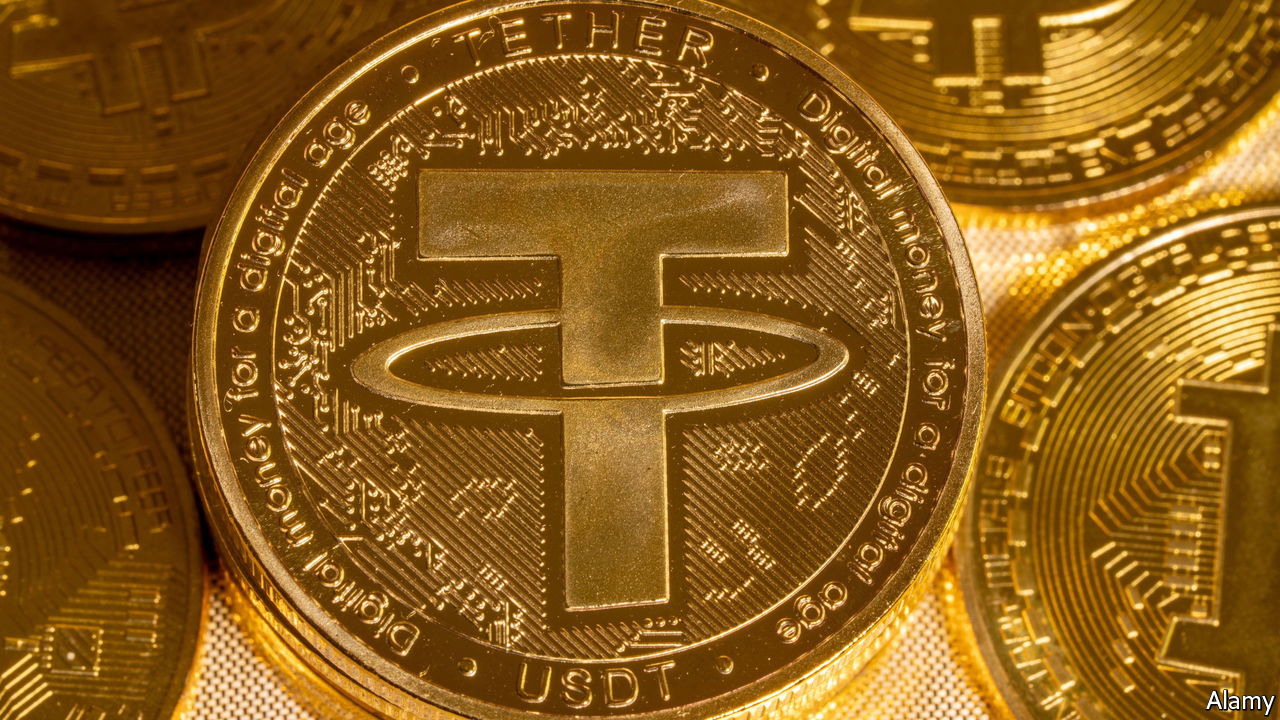
Tether’s decision to wind down aUSDT, its gold-backed stablecoin, marks an important moment in the evolving digital asset landscape. The move highlights a fundamental reality in financial markets: innovation alone is not enough to guarantee adoption.

Despite the growing popularity of stablecoins and increasing interest in tokenized assets, aUSDT failed to generate the level of demand necessary to sustain its long-term viability. Stablecoins have become one of the most successful applications of blockchain technology.

By maintaining a stable value, usually pegged to a fiat currency such as the U.S. dollar, they provide users with a reliable medium of exchange, a store of value, and a bridge between traditional finance and the cryptocurrency ecosystem.

Tether’s flagship USDT has become the dominant stablecoin globally, processing billions of dollars in daily transactions and serving as a critical source of liquidity across crypto markets. Gold-backed stablecoins were developed to extend this concept by linking digital tokens to physical gold reserves.

In theory, they offer investors the security and historical value preservation associated with gold while providing the speed, accessibility, and programmability of blockchain technology. Such products aim to appeal to investors seeking protection against inflation, currency volatility, and geopolitical uncertainty.

The launch of aUSDT was intended to capitalize on these advantages. By combining the stability of gold with the efficiency of blockchain-based transactions, Tether hoped to create a digital asset that would attract both traditional investors and cryptocurrency users.

However, the market response proved weaker than expected. One of the key reasons for the lack of demand is the competitive nature of the digital asset market.

Investors interested in gold exposure already have access to a wide range of investment vehicles, including physical bullion, exchange-traded funds (ETFs), mining stocks, and other tokenized gold products. These alternatives often benefit from greater liquidity, stronger brand recognition, and longer operating histories.

aUSDT struggled to establish a unique value proposition that would differentiate it from existing options. Another factor is that many cryptocurrency users prioritize liquidity and utility over commodity-backed stability. Dollar-pegged stablecoins are widely used for trading, lending, remittances, and decentralized finance applications.

Their value remains relatively constant and directly aligns with the pricing of most crypto assets, which are commonly denominated in U.S. dollars. Gold-backed tokens, while attractive as a hedge, often serve a narrower use case and therefore attract a smaller audience.

Market conditions may also have played a role. While gold remains a trusted safe-haven asset, investor attention in recent years has frequently shifted toward higher-growth opportunities in cryptocurrencies, artificial intelligence-related investments, and emerging technologies.

During periods of strong market optimism, defensive assets such as gold may receive less attention, reducing demand for products tied to precious metals. Tether’s decision to discontinue aUSDT reflects a pragmatic business approach.

Rather than allocating resources to a product with limited adoption, the company can focus on areas where customer demand is stronger.

This strategy aligns with broader trends in the cryptocurrency industry, where projects increasingly face pressure to demonstrate real-world utility, sustainable user growth, and economic viability. The closure of aUSDT does not necessarily signal the failure of tokenized gold as a concept.

As blockchain technology continues to mature, future gold-backed digital assets may find greater success if they offer improved liquidity, stronger integration with financial platforms, or unique features that distinguish them from traditional gold investments.

Tether’s decision serves as a reminder that in both traditional and digital finance, market adoption remains the ultimate test of any financial innovation. Success depends not only on technological capability but also on whether users perceive sufficient value to incorporate a product into their investment and financial strategies.

2026; The Year of Elections and Political Realignment with Geopolitical Upheaval and the Reshaping of Global Infrastructures

0

The year 2026 is shaping up to be one of the most politically significant periods in recent history. Across continents, voters are heading to the polls in unprecedented numbers, making it a year defined by democratic participation, political uncertainty, and shifting power dynamics.

From established democracies to conflict-ridden regions, elections are becoming a central force in determining the future direction of governments, economies, and international relations. Already, several electoral surprises have emerged at the national level.

Incumbent parties that once appeared secure have faced unexpected challenges, while opposition movements have gained momentum by capitalizing on public frustration over inflation, economic inequality, migration, security concerns, and governance failures.

These developments suggest that voters around the world are increasingly willing to reject the political status quo in favor of alternatives that promise change.

One of the most remarkable developments is the decision by Gaza to hold elections despite years of conflict, humanitarian hardship, and political fragmentation. The move highlights the enduring desire of populations to exercise democratic choice, even under extremely difficult circumstances.

While significant challenges remain regarding security, legitimacy, and implementation, the elections symbolize a broader aspiration for political representation and accountability. The outcome could have important implications not only for Palestinian politics but also for regional stability and future peace initiatives.

The election attracting the greatest global attention is undoubtedly the ongoing United States midterm election cycle. The United States remains the world’s largest economy and a central player in international affairs, meaning shifts in its political landscape often have far-reaching consequences.

Analysts, investors, diplomats, and governments across the globe are closely monitoring the results for signs of a potential suite change in Washington—a transition in leadership, priorities, and governing coalitions that could redefine domestic and foreign policy.

Several factors are driving expectations of significant change in the United States. Voters continue to grapple with concerns over economic performance, government spending, immigration, healthcare, and national security.

At the same time, growing political polarization has intensified competition between major parties, turning many races into closely contested battles.

If power changes hands in key congressional chambers, the balance of influence over legislation, budget negotiations, and oversight responsibilities could shift dramatically. The implications extend far beyond American borders. U.S. policies influence global trade, military alliances, climate initiatives, technology regulation, and financial markets.

A new political configuration in Washington could alter approaches to conflicts in Eastern Europe and the Middle East, reshape trade relationships with China, and affect international cooperation on emerging technologies such as artificial intelligence and cybersecurity.

The results are being watched as closely abroad as they are at home. The broader lesson of 2026 is that elections remain one of the most powerful mechanisms for political change.

Citizens worldwide are using the ballot box to express dissatisfaction, reward performance, or demand new leadership. In many countries, voters are signaling a desire for practical solutions to economic and social challenges rather than ideological rhetoric alone.

As the year progresses, more elections are expected to produce surprises, upsets, and realignments. Whether in major powers, emerging economies, or regions facing conflict, the outcomes will help shape the global political order for years to come.

In this sense, 2026 may ultimately be remembered not merely as a year of elections, but as a year of political transformation.

Geopolitical Upheaval and the Reshaping of Global Infrastructures

The world is currently experiencing one of the most significant periods of geopolitical transformation since the end of the Cold War.

Multiple events are unfolding simultaneously, including tensions and conflict involving Iran and the United States, the prolonged Russia-Ukraine war, the gradual movement toward dedollarization, China’s growing global influence, and the restructuring of international trade and supply chains.

These developments are not isolated incidents; rather, they are interconnected forces that are reshaping the political, economic, and technological foundations of the global system.

The conflict involving Iran and the United States has highlighted the fragility of global energy markets and critical trade routes. Disruptions around strategic maritime chokepoints such as the Strait of Hormuz have reminded governments and businesses that energy security remains central to economic stability.

Rising oil prices, shipping costs, and insurance premiums have affected supply chains worldwide, demonstrating how regional conflicts can generate global economic consequences. Recent tensions have also accelerated discussions about energy diversification and strategic resilience among major economies.

The Russia-Ukraine conflict continues to alter international security arrangements and trade patterns. The war has exposed vulnerabilities in Europe’s energy dependence and prompted nations to reconsider defense spending, industrial capacity, and strategic autonomy.

It has also accelerated the fragmentation of global economic networks, as sanctions, export controls, and geopolitical alignments increasingly influence trade decisions. Countries are no longer evaluating partnerships solely through economic efficiency but also through national security considerations.

Another major trend is the growing movement toward dedollarization. While the U.S. dollar remains the dominant global reserve currency, several nations are exploring alternative payment systems and settlement mechanisms.

Concerns about sanctions, financial dependence, and geopolitical leverage have encouraged countries to diversify their reserves and develop parallel financial infrastructure.

This does not imply an imminent collapse of dollar dominance, but it does suggest a gradual shift toward a more multipolar financial system where multiple currencies and payment networks coexist. China’s rise is perhaps the most consequential long-term development.

Through investments in technology, manufacturing, infrastructure, and international trade partnerships, China has positioned itself as a central player in the emerging global order. Its influence extends beyond economics into diplomacy, supply chain management, and technological standards.

As China strengthens its role in global production networks, many countries are reassessing how to balance economic cooperation with strategic competition. The emergence of stronger ties among China, Russia, and other non-Western powers further reflects the ongoing redistribution of global influence.

These geopolitical shifts are also driving profound changes in global supply chains. The pursuit of efficiency that characterized globalization is increasingly being replaced by a focus on resilience.

Companies are diversifying suppliers, relocating production facilities, and adopting China+1 strategies to reduce dependence on a single country or region. Governments are supporting domestic manufacturing, critical infrastructure, and technological sovereignty to mitigate future disruptions.

The world is entering an era defined by geopolitical complexity and strategic competition. Nations, corporations, and institutions must adapt to a landscape where security, resilience, and technological capability are as important as economic growth.

The strength of future soft infrastructure—such as financial systems, digital networks, and governance frameworks—and hard infrastructure—such as energy grids, transportation systems, and manufacturing capacity—will determine which countries thrive in an increasingly uncertain and multipolar world.