DD
MM
YYYY

PAGES

DD
MM
YYYY

spot_img

PAGES

Home Blog Page 7

Shein’s Hong Kong IPO Valuation Slumps to About $25 Billion as Growth Weakens

0

Online fast-fashion retailer Shein is considering a valuation of about $25 billion for its planned Hong Kong initial public offering, a dramatic reduction from the nearly $100 billion valuation it commanded in a private funding round four years ago, as slowing growth, rising trade costs and tougher regulation weigh on investor appetite.

Two people familiar with the matter told Reuters Shein was likely to be valued at around $25 billion in the IPO, while a third source said the company was considering a valuation of between $25 billion and $28 billion based on the marketing price range for the offering.

The latest target is also significantly below the $30 billion to $40 billion valuation Shein was seeking earlier this month when it began marketing the offering to investors.

Shein, which was founded in China in 2012 and is now headquartered in Singapore, is seeking to launch the long-awaited listing in Hong Kong later this week. The company is expected to offer as much as 8% of its shares, according to a fourth person familiar with the plans. At a $25 billion valuation, that would translate into an IPO of up to about $2 billion.

The valuation reset highlights the extent to which Shein’s growth story has changed since the company was valued at $98.2 billion in a 2022 fundraising round. Its private-market valuation subsequently fell to about $64 billion in 2023 and April 2024.

Shein built its business around an ultra-low-cost model, selling products such as $5 dresses and $10 jeans to consumers in roughly 160 countries. Its rapid expansion was driven by an online-only model, data-driven product development and a supply chain centered on Chinese manufacturers.

That model is now facing a more difficult operating environment.

The company’s biggest markets have tightened scrutiny of e-commerce platforms selling inexpensive goods manufactured in China, while changes to trade rules have increased the cost of shipping low-value parcels into major consumer markets. Competition from rivals such as Temu and established online retailers has also intensified.

Shein’s financial performance has begun to show the pressure. The company recorded a $99 million quarterly loss in the first quarter of 2026 as sales growth slowed after the United States removed an import-duty exemption covering small packages. A significant one-time accounting charge also weighed on its results.

The weakening outlook has made investors less willing to assign Shein the aggressive growth multiple that supported its previous private-market valuations.

Some investors who attended Shein’s IPO presentations or reviewed its recent financial statements told Reuters they remained unconvinced that the company could return to the growth rates that supported its $98.2 billion valuation in 2022.

The issue is of concern because Shein’s valuation depends heavily on its ability to sustain rapid international expansion while maintaining margins. Higher tariffs and other trade costs directly challenge the economics of its low-price model, while regulatory scrutiny could raise compliance costs or constrain some of the practices that helped the company scale quickly.

The proposed IPO also carries implications for existing investors. Under the terms of Shein’s Hong Kong listing documents, the company could be required to issue additional shares to certain pre-IPO investors if its IPO valuation falls below agreed thresholds. A lower listing valuation could therefore create additional dilution for other shareholders.

The planned Hong Kong listing is consequently more than a test of investor demand for Shein. It is also a public-market assessment of whether the fast-fashion model that fueled one of the world’s most rapid e-commerce expansions can continue to deliver strong growth as trade barriers rise and competition intensifies.

However, a $25 billion valuation would still make Shein one of the more valuable consumer internet companies to enter Hong Kong’s market, but it would represent a striking repricing of its growth prospects. The gap between that valuation and the $98.2 billion private-market peak shows that investor expectations have sharply changed in just four years.

S&P 500 Tests Record Territory as Investors Push U.S. Stocks Higher

0

The S&P 500 entered Monday’s trading session close to record territory, reflecting the remarkable resilience of U.S. equities despite persistent geopolitical, inflation and monetary-policy risks.

Futures linked to the benchmark were modestly higher in premarket trading, while investors positioned for another potentially record-setting session after the index closed at an all-time high of 7,798.99 last week.

The latest strength extends a powerful rally that has carried the S&P 500 higher throughout 2026. The index has gained roughly 14% this year, demonstrating that investors remain willing to allocate capital to equities even as uncertainty surrounding interest rates and global economic growth remains elevated.

One of the principal forces behind the rally is corporate earnings. Companies within the S&P 500 have delivered stronger-than-expected results, reinforcing expectations that corporate profitability can continue supporting elevated valuations.

Reports indicate that about 90% of S&P 500 companies have already reported earnings, with a substantial majority beating Wall Street revenue expectations.

Technology and artificial intelligence have also become central to the market’s momentum.

Semiconductor companies have attracted renewed buying interest as investors continue betting that AI infrastructure spending will translate into sustained revenue and earnings growth.

On Monday, memory-chip names including Micron and SanDisk were among the strongest premarket performers, helping support broader technology sentiment.

The market’s resilience is particularly notable because investors are simultaneously dealing with geopolitical uncertainty. Tensions involving the United States and Iran, including concerns surrounding the Strait of Hormuz.

Have pushed oil prices higher and created renewed concerns about inflation. Higher energy costs can complicate the Federal Reserve’s policy outlook by making it harder for inflation to decline rapidly.

Interest rates therefore remain a critical variable for the next phase of the equity rally. Cooling inflation has reduced some expectations for an imminent Federal Reserve rate increase, supporting risk assets.

At the same time, the 10-year Treasury yield remains elevated, meaning investors cannot completely dismiss the possibility that monetary policy could remain restrictive for longer than markets currently anticipate.

There is also an important distinction between trading near an all-time high and establishing a durable new leg higher. Record levels can reinforce investor confidence, but they can also increase sensitivity to disappointing earnings, economic data or geopolitical shocks.

At elevated valuations, markets generally require continued evidence that earnings growth can justify the prices investors are willing to pay.

For now, however, the balance remains tilted toward optimism. Strong corporate earnings.

AI enthusiasm and expectations for less aggressive monetary policy have helped investors absorb considerable uncertainty. The S&P 500’s ability to remain near record levels demonstrates the strength of the current risk appetite.

The coming sessions could determine whether this momentum develops into another breakout or pauses for consolidation. With major retailers reporting earnings and additional Federal Reserve signals ahead, investors will be watching closely for evidence about consumer strength, inflation and interest rates.

The S&P 500’s record territory is therefore more than a headline number. It represents a market pricing in continued economic and corporate resilience. Whether those expectations are ultimately validated will determine how long the current record-setting advance can continue.

U.S.-Iran Nuclear Deal Collapse Raises Fears of Dangerous Escalation

0

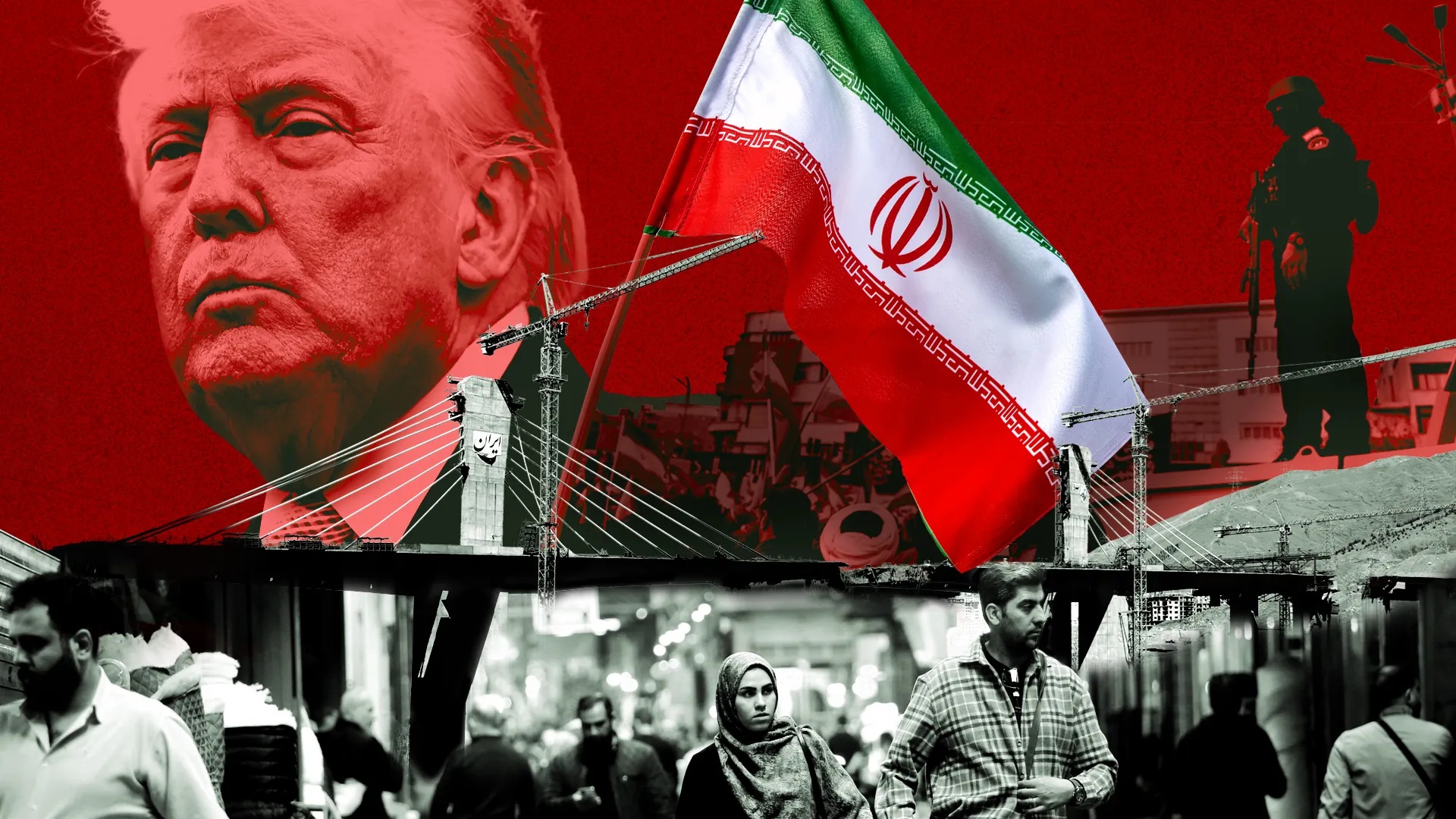
The prospect of a U.S.-Iran nuclear agreement collapsing has moved from diplomatic uncertainty to a potentially dangerous phase of military escalation.

On August 17, 2026, the 60-day deadline established under the June memorandum of understanding expired without a broader settlement.

The agreement was intended to halt hostilities, reopen the Strait of Hormuz and create a framework for negotiations over Iran’s nuclear program. Instead, mutual accusations of violations have left the diplomatic process badly weakened.

The immediate concern is that the collapse of diplomacy could create a vacuum in which military calculations dominate. Iran has warned that it could escalate if Washington does not implement the interim arrangement, including measures connected to the Strait of Hormuz.

Reuters reported on Monday that a senior Iranian official warned of possible military action if the United States fails to make progress within weeks. Washington, meanwhile, is maintaining an uncompromising position on Iran’s nuclear ambitions.

President Donald Trump has demanded Iranian surrender and reiterated that preventing Tehran from obtaining a nuclear weapon is a central objective. At the same time, Trump has confirmed that a direct backchannel involving Iran’s Islamic Revolutionary Guard Corps exists, suggesting that diplomacy has not completely disappeared despite the public confrontation.

The most alarming claim now circulating is that U.S. officials are discussing the possible use of nuclear weapons against Iran. That allegation requires considerable caution. Former U.S. Representative Marjorie Taylor Greene has claimed that high-level discussions about potential nuclear weapons use are taking place.

But reports say she provided no evidence for the assertion. Therefore, it should not be presented as an established U.S. policy decision. Nevertheless, even an unverified claim of this nature illustrates how rapidly the strategic environment has deteriorated.

Any serious discussion of nuclear use would represent an extraordinary escalation, carrying consequences far beyond the immediate U.S.-Iran battlefield. It could trigger regional proliferation pressures, intensify attacks on American and allied interests, disrupt energy markets and fundamentally alter international perceptions of the nuclear taboo.

The danger is amplified by the strategic importance of the Strait of Hormuz. Shipping through the waterway has already slowed dramatically, while oil markets are monitoring the possibility of prolonged disruption.

Reuters reported that Brent crude was around $88.58 a barrel on August 17 as stalled peace talks and uncertainty over Hormuz continued to influence markets. The collapse of the June framework does not necessarily mean diplomacy is finished.

Oman remains an important intermediary, and reports indicate that channels between Washington and Tehran continue even as the public rhetoric becomes harsher. The existence of backchannel communication may provide the narrowest path toward de-escalation at precisely this moment.

For markets and policymakers, the immediate lesson is that the probability of a clean diplomatic resolution has fallen. The nuclear issue is now intertwined with sanctions, military deployments, Hormuz, regional security and competing demands over sovereignty and reparations.

A failed agreement could therefore become more than a diplomatic setback: it could become the trigger for a wider confrontation. The central question is no longer simply whether Washington and Tehran can negotiate a nuclear deal.

It is whether both governments can prevent the collapse of diplomacy from becoming a self-reinforcing cycle of retaliation. With military pressure rising and extraordinary nuclear-use allegations circulating without substantiation, the margin for miscalculation is becoming dangerously thin.

Jeff Dean’s New AI Startup Targets $10 Billion Valuation

0

Jeff Dean’s departure from Google after 27 years is already one of the most significant talent moves in the artificial intelligence industry this year.

Now, the former Google chief scientist is reportedly seeking a $1 billion funding round for his new AI startup, Discovery Loop, at a valuation of approximately $10 billion. The figure has not been publicly confirmed by Dean or the company, but Business Insider reports that discussions are underway with investors.

The reported valuation is striking because Discovery Loop is still at an early stage. Rather than being valued primarily on established revenue or a widely adopted consumer product, the company is being positioned around the reputation, expertise and ambitions of its founders.

Dean is joined by Sanjay Ghemawat, Quoc Le and Oriol Vinyals, all prominent researchers who played important roles in Google’s computing and artificial intelligence development. Discovery Loop is designed as a public-benefit corporation focused on using AI to accelerate scientific and engineering discovery.

Its initial ambitions include automating machine-learning research and engineering, with longer-term applications potentially extending into areas such as hardware design, drug discovery and clean energy.

The idea represents a broader shift in the AI industry from building increasingly capable chatbots toward creating systems capable of conducting meaningful research and experimentation.

Dean brings an unusually strong résumé to the venture. He joined Google in 1999 and became one of the company’s most influential engineers, contributing to foundational technologies including large-scale computing systems and the development of Google Brain.

Google itself describes Dean as having driven key innovations underpinning its infrastructure and AI development. His co-founders add another layer of credibility. Ghemawat is a veteran Google engineer associated with the company’s foundational distributed-computing systems.

While Le was a founding member of Google Brain. Vinyals became one of the leading researchers within Google DeepMind. The group represents a concentration of technical expertise rarely assembled inside a young startup.

Google’s involvement makes the story unusual. Alphabet is expected to serve as a founding investor and cloud partner for Discovery Loop, meaning Dean’s new company is not emerging entirely outside Google’s ecosystem.

This relationship could provide access to substantial computing infrastructure while allowing the founders to pursue a more focused research agenda. Dean’s departure comes during a major restructuring of Google’s AI leadership.

Demis Hassabis moved from CEO of Google DeepMind into a chairman and chief-scientist role, while Koray Kavukcuoglu assumed operational leadership. Several other senior AI researchers have also departed.

Increasing questions about Google’s ability to retain elite technical talent as competition from OpenAI, Anthropic and emerging research companies intensifies.

If Discovery Loop succeeds in raising $1 billion at a $10 billion valuation, it would demonstrate how aggressively investors are pricing scarce AI research talent.

The bet would not simply be on another AI application; it would be on the possibility that autonomous scientific intelligence becomes one of the industry’s most valuable markets.

For now, however, the $10 billion figure should be treated as reported fundraising discussions, not a completed valuation. Dean’s reputation provides a powerful foundation.

But Discovery Loop will have to prove that its scientific-automation vision can translate extraordinary research credentials into a commercially and scientifically transformative company.

Alibaba Set to Reap More Than $2bn From Sale of Lingxi Games to Trustar

0

Alibaba Group is expected to receive more than $2 billion from the sale of its game development unit Lingxi Games to private equity firm Trustar Capital, as the Chinese technology giant continues to shed non-core assets and concentrate resources on artificial intelligence and cloud computing.

Alibaba and Trustar have reached a formal agreement following several rounds of negotiations, according to an internal memo sent to Lingxi employees on Monday by CEO Zhou Bingshu and reviewed by Reuters.

Under the agreement, Alibaba will transfer its entire stake in Lingxi to Trustar, the memo said. It did not disclose the transaction value or the expected closing date, and provided no details on regulatory approvals or other conditions that must be satisfied before the sale is completed.

A person familiar with the matter told Reuters that Alibaba is expected to receive more than $2 billion from the transaction.

Bloomberg News, which first reported the internal memo, said the deal would be worth at least $1.5 billion, citing people familiar with the matter.

The transaction marks another step in Alibaba’s effort to streamline its sprawling business portfolio as the company shifts capital and management attention toward areas it considers strategically important, particularly AI and cloud computing.

Alibaba operates major e-commerce platforms, cloud infrastructure and a range of digital businesses. The company has been reviewing assets outside its core priorities as it seeks to increase investment in artificial intelligence and strengthen its cloud business.

Two sources familiar with the matter said Alibaba had been seeking a buyer for Lingxi for some time. They spoke on condition of anonymity because the discussions were confidential.

For Lingxi, the acquisition will bring a new owner while preserving continuity in its management. Zhou said he and the existing management team would continue running the company after the transaction.

Zhou described Trustar, formerly known as CITIC Capital, as an Asia-focused private equity investor with the industry resources and operational expertise needed to support Lingxi’s next stage of development.

It remains unclear whether Alibaba will maintain commercial relationships with Lingxi after completing the sale. Such arrangements could potentially involve game publishing, cloud computing, or technology services.

Lingxi, based in Guangzhou, is best known for “Three Kingdoms: Strategy Edition,” a multiplayer strategy game based on China’s historical Three Kingdoms period.

The game was developed in collaboration with Japanese entertainment company Koei Tecmo Holdings, whose franchises include “Romance of the Three Kingdoms” and “Nobunaga’s Ambition.”

The sale follows several years of change at Lingxi.

The game developer had previously explored raising outside capital, according to two sources familiar with the company. One of the sources said a fundraising process planned for late 2023 stalled after Chinese authorities proposed tighter regulations for the online gaming industry.

China’s gaming sector has faced periodic regulatory intervention as authorities have sought to address concerns ranging from excessive gaming among young people to the industry’s broader social and economic impact.

Lingxi also underwent a management restructuring in 2024. Zhou, who had led the team behind “Three Kingdoms: Strategy Edition,” became chief executive after founder Zhan Zhonghui left the company, according to Chinese corporate records.

The sale therefore represents a further transition for a business that has spent several years adapting to changes in management, regulation and ownership strategy.

The transaction provides Alibaba an opportunity to unlock capital from a gaming business as the company prioritizes its technology infrastructure and AI ambitions. The proceeds could strengthen its ability to fund investments in computing capacity, AI models and cloud services at a time when competition in China’s technology sector is increasingly centered on artificial intelligence.

The deal also denotes a broader shift in Alibaba’s approach to its portfolio. Rather than maintaining ownership of a wide range of digital businesses, the company is increasingly assessing whether individual assets fit its longer-term strategic priorities.

Lingxi’s continued operation under Trustar ownership could allow the game studio to pursue growth with a more focused business strategy while giving Alibaba a substantial return from an asset it no longer considers central to its future.

The transaction remains subject to any applicable regulatory and closing conditions, which were not disclosed in the internal memo. But if completed, the sale would give Alibaba more than $2 billion in proceeds while transferring one of its gaming assets to a private equity investor. That is expected to further sharpen the company’s focus on the two areas it has identified as critical to its next phase of growth: artificial intelligence and cloud computing.