DD
MM
YYYY

PAGES

DD
MM
YYYY

spot_img

PAGES

Home Blog Page 7

Amazon Nears Starlink Challenge as Leo Satellite Network Set for Internet Service Launch This Year

0

Amazon is preparing to enter the satellite broadband market later this year after reaching a major deployment milestone for its Project Leo low-Earth orbit (LEO) constellation, setting the stage for a direct challenge to Elon Musk’s dominant Starlink network.

The company said it now has enough satellites in orbit to begin offering initial internet services, marking a significant step in its multibillion-dollar effort to build a global broadband network that will compete for consumer, enterprise, and government customers.

The milestone comes after Amazon’s latest launch on Thursday pushed the constellation’s satellite count to nearly 400, although the company still has thousands more spacecraft to deploy before achieving full global coverage.

“We’ve completed enough launches for initial service this yr, and future missions just add coverage and capacity,” Project Leo Vice President Chris Weber said in a post on X after the successful mission.

Amazon’s latest batch of 29 satellites was launched aboard a United Launch Alliance (ULA) Atlas V rocket from Florida, marking the company’s 14th dedicated Project Leo mission. The launch increases the constellation to 394 operational satellites in orbit out of 398 launched since deployments began in April 2025, according to spaceflight analyst and Harvard astronomer Jonathan McDowell.

Although the company has not identified where service will first become available, initial coverage is expected to begin in high-latitude regions near the Arctic and Antarctic before gradually expanding toward the equator as additional satellites are deployed.

Amazon had previously targeted a mid-2026 commercial launch, and Thursday’s announcement suggests the company remains on track despite mounting challenges affecting the global launch industry.

Taking on Starlink

Project Leo represents Amazon’s biggest attempt to compete directly with SpaceX’s Starlink, which has established an overwhelming lead in the satellite broadband market.

Starlink currently operates roughly 10,000 satellites worldwide and already serves millions of customers across residential, commercial, aviation, maritime, and government markets.

Like Starlink, Amazon intends to sell internet services through dedicated satellite terminals ranging from compact consumer devices roughly the size of a laptop to larger, higher-capacity terminals designed for businesses, airlines and government agencies. The competition is expected to intensify as demand grows for broadband connectivity in remote regions where traditional fiber and cellular infrastructure remain limited.

Industry analysts see low-Earth-orbit satellite networks becoming an important part of global communications infrastructure, supporting everything from consumer internet access to military communications and disaster recovery.

Project Leo is one of Amazon’s largest infrastructure investments, reflecting growing competition among technology giants to control the next generation of global communications networks. Amazon has booked roughly 100 rocket launches worth an estimated $82 billion to deploy its planned constellation of more than 3,200 satellites.

The enormous capital commitment mirrors broader investment trends across the technology industry, where companies are simultaneously pouring hundreds of billions of dollars into artificial intelligence infrastructure, cloud computing capacity and advanced communications networks.

Rocket Setbacks Complicate Deployment Schedule

While Amazon has reached the threshold for initial commercial service, its longer-term deployment plans face uncertainty because several of its launch providers are dealing with technical problems.

United Launch Alliance’s Atlas V has emerged as the primary workhorse for Project Leo after the two next-generation rockets Amazon planned to rely on encountered delays.

Blue Origin’s New Glenn rocket, developed by Amazon founder Jeff Bezos’ space company, remains grounded after exploding on its launch pad last month, destroying the launch tower and other equipment. Blue Origin Chief Executive Dave Limp has said engineers are focusing on the rocket’s engine section to determine the cause of the explosion and expects launches to resume before the end of the year.

Meanwhile, ULA’s Vulcan rocket, which is scheduled to carry at least 40 Project Leo missions, has also been grounded following a solid rocket booster separation issue encountered during a February flight.

The situation has become more complicated because Vulcan uses the same BE-4 engines manufactured by Blue Origin that power New Glenn. If investigators determine the engines contributed to New Glenn’s failure, Vulcan’s return to flight could face additional delays.

ULA spokeswoman Jessica Rye said Blue Origin has kept its launch partner informed throughout the investigation.

“Blue Origin engineers are being transparent with us as they work through the investigation. If there are crossover items with the BE-4 engines, we will collaborate with the team to find root cause and address it,” she said.

To reduce dependence on any single provider, Amazon has assembled one of the most diversified launch portfolios in the commercial space industry. In addition to Atlas V, the company has secured launch contracts with French launch provider Arianespace using its Ariane 6 rocket, ULA’s future Vulcan missions, Blue Origin’s New Glenn, and even rival SpaceX’s Falcon 9.

In the commercial launch market, SpaceX remains the industry’s most reliable and frequently flown launch provider despite competing directly with Amazon through Starlink.

JPMorgan Warns Michael Saylor’s Bitcoin Strategy Creates New Risk For The Market

0
JP Morgan Chase puts contents through its CEO account, it goes viral. But the same content via JPMC account, no one cares (WSJ)

JPMorgan, one of the world’s largest banks with $4.7 trillion in assets, has issued a warning about Michael Saylor’s aggressive Bitcoin accumulation strategy through MicroStrategy.

The bank argues that the company’s latest financing plan introduces fresh uncertainty into the Bitcoin market by raising the possibility that one of its biggest buyers could also become a significant seller.

According to JPMorgan analysts, MicroStrategy’s decision to allow selective Bitcoin sales to help cover preferred-stock dividends adds a new layer of risk for investors.

This approach could potentially disrupt market dynamics, as the company has emerged as a major institutional player in Bitcoin. Last month, Strategy strengthened its financial position, increasing its USD reserves by $300 million to reach a total of $1.4 billion.

JPMorgan estimates that MicroStrategy has purchased approximately $8.2 billion worth of Bitcoin this year alone and now holds roughly 4.2% of the total Bitcoin supply.

The warning highlights how concentrated holdings by a single entity like MicroStrategy could amplify volatility if sales occur.

Over the past few years, Strategy has raised billions of dollars through the issuance of preferred stock to finance additional Bitcoin purchases. These securities require the company to make regular dividend payments to investors.

As these obligations have increased, the company’s software business alone is no longer sufficient to comfortably generate the cash needed to cover them.

To address this, Strategy authorized the selective sale of a portion of its Bitcoin holdings which sent shockwaves through both the cryptocurrency market and the broader financial community.

Saylor put the sale in numerical context during a recent interview. Strategy bought 175,000 Bitcoin this year alone, he said, roughly 20 percent of the company’s entire accumulated holdings, acquired month by month through a bear market.

Against that backdrop, the 32 coins sold represent two basis points of the total position. “Two one-hundredths of one percent,” he said. “It’s so de-minimis as to be inconsequential.”

Strategy is currently the largest corporate holder of bitcoin, owning roughly 4% of all coins in circulation. Saylor’s public stance for years has been that Strategy buys bitcoin and never sells.

That conviction became central to the company’s identity and, by extension, to bitcoin’s narrative as an asset that large, committed holders accumulate and hold for the long term.

While the company maintains it has sufficient cash reserves and authorized Bitcoin sales to provide just over two years of dividend coverage, J.P Morgan’s assessment suggests this flexibility could lead to actual selling pressure in certain scenarios.

Notably, Saylor’s MicroStrategy has become synonymous with corporate Bitcoin adoption, championing the asset as a superior treasury reserve.

His strategy has inspired other companies to follow suit, but JPMorgan’s caution underscores concerns about dependency on a few large holders in an otherwise decentralized market.

This development comes amid Bitcoin’s continued evolution as an institutional asset class. While some market participants dismiss the warning as typical skepticism from traditional finance, others acknowledge that any potential large-scale sales from major holders warrant close monitoring.

As Bitcoin’s market capitalization grows, the interplay between innovative corporate strategies and traditional risk assessments will likely remain a key focus for investors worldwide.

China’s Ant Group Deepens Bet on Humanoid Robots, Leads $74m Funding Round in Zeroth

0

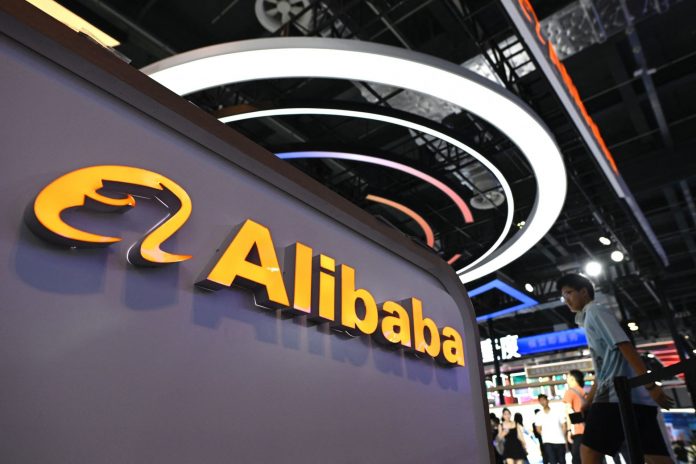
Alibaba-affiliate Ant Group is accelerating its push into humanoid robotics, leading a 500 million yuan ($73.6 million) funding round in Chinese robotics startup Zeroth as the company expands beyond fintech and artificial intelligence into one of the fastest-growing frontiers of AI-powered hardware.

The investment marks Ant’s latest move to build a strategic presence across China’s emerging robotics ecosystem. According to CNBC’s analysis of PitchBook data, it is the 12th robotics-related company Ant has backed since the start of 2025, underscoring its ambition to become a major player in the convergence of artificial intelligence, robotics and intelligent automation.

The latest financing round also attracted investors including Monolith, Geely Capital, 37 Interactive Entertainment, and Hua Capital. Following the pre-Series A funding, Zeroth has raised a cumulative 1 billion yuan, giving it additional resources to accelerate research, production, and commercialization of humanoid robots.

The investment comes as China’s technology giants increasingly see humanoid robotics as the next major growth market after generative AI. Industry executives believe advances in large language models, multimodal AI and computer vision are rapidly making general-purpose robots commercially viable across manufacturing, healthcare, logistics and household services.

For Ant Group, the move represents another step in its transformation following the dramatic regulatory intervention that halted its record-breaking initial public offering in 2020.

Since then, the company has diversified well beyond its Alipay digital payments business, investing heavily in artificial intelligence, cloud computing, healthcare technology and robotics. It has launched healthcare platforms, developed its own foundation AI models and, in late 2024, established a dedicated humanoid robotics subsidiary, RobbyAnt, which has since begun developing its own robots.

Rather than focusing solely on building its own hardware, Ant is also investing broadly across the robotics value chain. Its portfolio includes humanoid robot developers such as Galaxea and Unitree, alongside companies specializing in robotics software, wearable robotics and key components, including Linkerbot, Hypershell and Genrobot AI.

The strategy mirrors trends of major technology companies seeking exposure to every layer of the emerging robotics ecosystem, from AI operating systems and motion control software to sensors, actuators and complete humanoid platforms.

Ant has also adapted its Alipay ecosystem for the robotics era.

The company recently introduced an AI- and robotics-friendly version of its Alipay payment platform, enabling intelligent machines to integrate payment capabilities directly into their services. Zeroth said it hopes to collaborate with Ant in deploying that technology as humanoid robots become increasingly capable of performing commercial and consumer tasks.

Founded only in late 2024, Zeroth Robotics, officially known in China as Suzhou JoyIn Intelligent Technology, is pursuing a phased strategy toward building humanoid robots for homes.

Founder Guo Renjie previously told CNBC that the company plans to commercialize sophisticated consumer robots over several stages. The first products will target companionship for elderly care and pet care, followed by robots designed for children’s education, before eventually expanding toward broader household assistance.

Guo said the company has deliberately recruited engineers with deep expertise from industries such as smartphone chip development to strengthen its hardware capabilities. Its robots currently run on processors supplied by Horizon Robotics, one of China’s leading artificial intelligence chip companies.

The startup says customer demand has exceeded expectations.

Zeroth claimed it has secured orders for more than 30,000 robots, while operating revenue during the first half of the year surged 600% compared with the same period last year, underpinning growing commercial interest in AI-powered service robots.

The company is now preparing for its international expansion.

Guo said Zeroth plans to begin selling its products in North America and Europe this autumn after completing the necessary regulatory and compliance approvals required in those markets.

The investment comes amid intensifying competition in China’s rapidly expanding humanoid robotics sector. Beijing has designated humanoid robotics as one of its strategic emerging industries, encouraging investment through national and local government initiatives aimed at positioning China as a global leader in next-generation intelligent manufacturing.

Artificial intelligence breakthroughs are further accelerating development, enabling robots to understand language, reason through tasks and interact more naturally with people.

International technology companies are also increasing their presence in China’s robotics ecosystem. Earlier this week, Nvidia announced it was recruiting for multiple robotics-related positions in Beijing, Shanghai, and Shenzhen.

The hiring push follows a wave of investment across the sector as companies race to commercialize humanoid robots capable of performing complex tasks in factories, warehouses, hospitals and homes.

Analysts expect investment in humanoid robotics to continue accelerating over the next several years as advances in AI models, semiconductor performance and motion control technologies bring commercially viable general-purpose robots closer to large-scale deployment.

Meta’s AI Compute Expansion Signals a New Era of Growth

0

Artificial intelligence has become the defining force shaping the technology industry, and Meta has emerged as one of its biggest beneficiaries. The company’s recent financial performance reflects growing investor confidence in its strategic pivot toward AI infrastructure and computing power.

By investing heavily in advanced chips, data centers, and AI-driven products, Meta has positioned itself as a leader in the next phase of digital innovation. The company’s massive gains underscore how AI is no longer viewed as a speculative opportunity but as a core driver of long-term business growth.

For years, Meta relied primarily on advertising revenue generated through its family of social media platforms, including Facebook, Instagram, WhatsApp, and Messenger.

While advertising remains its primary source of income, the company recognized that the future of digital engagement would increasingly depend on sophisticated AI systems. This realization prompted Meta to redirect billions of dollars into building one of the world’s largest AI computing infrastructures.

At the heart of Meta’s strategy is the development of high-performance AI compute clusters capable of training increasingly complex large language models and generative AI applications. These computing systems require enormous processing power, thousands of advanced graphics processing units (GPUs), and cutting-edge networking technologies.

Although these investments come with substantial upfront costs, investors have responded positively because they are viewed as laying the foundation for sustained competitive advantages. Meta’s AI initiatives extend well beyond research laboratories.

The company has integrated AI into nearly every aspect of its business. Recommendation algorithms now deliver more personalized content across Facebook and Instagram, increasing user engagement and improving advertising effectiveness.

AI-powered tools assist businesses in creating marketing campaigns, automating customer interactions, and optimizing advertising performance. These capabilities enhance the value of Meta’s advertising platform while generating stronger returns for advertisers.

Another important factor behind Meta’s gains is its commitment to open-source AI development. Through its Llama family of large language models, Meta has encouraged developers, startups, and enterprises to build AI applications using its technology.

This open approach has expanded Meta’s influence throughout the AI ecosystem while accelerating innovation beyond its own products. By fostering widespread adoption, Meta strengthens its position as a foundational AI platform rather than merely a social media company.

Investors also recognize that AI compute has become a strategic asset. As demand for generative AI continues to grow across industries, companies with large-scale computing infrastructure enjoy significant competitive advantages.

Meta’s willingness to invest aggressively during the early stages of the AI boom positions it to capitalize on future opportunities in virtual assistants, AI-powered search, content generation, business automation, and augmented reality experiences.

Building AI infrastructure requires enormous capital expenditures, and maintaining cutting-edge computing capacity is expensive. Competition from major technology firms continues to intensify, with rivals also investing billions in AI chips, cloud infrastructure, and foundation models.

Additionally, governments worldwide are introducing new regulations governing AI safety, privacy, and data usage, creating additional compliance responsibilities. Despite these obstacles, Meta’s strong performance demonstrates that its AI compute pivot is gaining traction.

The company has successfully transformed investor perception from a social media giant facing slowing growth into an AI-first technology leader. As artificial intelligence reshapes industries and consumer behavior, Meta’s commitment to large-scale computing infrastructure, product innovation, and AI integration positions it for continued expansion.

Its recent gains highlight a broader market belief that companies capable of building and deploying advanced AI systems will define the next era of technological leadership and create substantial long-term value for shareholders.

Metaplanet Buys $170 Million Worth of Bitcoin as Bitcoin Briefly Reclaims $61K

0

Japanese investment firm Metaplanet has once again reinforced its commitment to Bitcoin by purchasing an additional $170 million worth of the cryptocurrency. The latest acquisition comes at a time when Bitcoin briefly climbed back above the $61,000 mark, signaling renewed optimism in the digital asset market.

The move has attracted significant attention from investors, analysts, and the broader cryptocurrency community, highlighting the growing trend of corporations adopting Bitcoin as a strategic treasury asset. Metaplanet has steadily built its reputation as one of Asia’s most prominent corporate Bitcoin holders.

Inspired by companies such as MicroStrategy, the firm has embraced Bitcoin as a long-term hedge against currency depreciation, inflation, and global economic uncertainty. By allocating a substantial portion of its capital to Bitcoin, Metaplanet is expressing confidence in the cryptocurrency’s long-term value despite its well-known price volatility.

The timing of the purchase is particularly noteworthy. Bitcoin’s brief return above $61,000 reflects improving market sentiment after a period of consolidation and uncertainty. Several factors have contributed to the renewed momentum, including continued institutional demand, expectations of favorable monetary policies, growing adoption of Bitcoin exchange-traded products, and optimism surrounding the broader digital asset ecosystem.

Although the rally was temporary, it demonstrated that buyers remain willing to accumulate Bitcoin during periods of weakness.

Metaplanet’s investment also sends an important signal to traditional financial markets. Large corporate purchases often serve as confidence indicators, encouraging institutional and retail investors to reconsider Bitcoin as a legitimate component of a diversified investment portfolio.

While individual investors may react emotionally to short-term price swings, corporations typically make investment decisions based on long-term strategic objectives. This distinction makes Metaplanet’s continued accumulation especially significant.

Corporate Bitcoin adoption has become one of the defining themes of the cryptocurrency market over the past several years. Companies increasingly view Bitcoin not merely as a speculative asset but as digital property with scarcity similar to gold.

With a fixed supply of 21 million coins, Bitcoin’s scarcity continues to appeal to organizations seeking protection against inflation and the depreciation of fiat currencies. As more publicly traded firms allocate capital to Bitcoin, the asset gains additional credibility within mainstream finance.

Investing heavily in Bitcoin is not without risks. The cryptocurrency remains highly volatile, with prices capable of moving dramatically over short periods. Regulatory developments, macroeconomic conditions, geopolitical events, and shifts in investor sentiment can all influence Bitcoin’s valuation.

Companies holding substantial Bitcoin reserves must therefore be prepared to withstand significant fluctuations while maintaining confidence in their long-term investment strategies. For the broader cryptocurrency market, Metaplanet’s latest purchase represents another milestone in institutional adoption.

Every major corporate acquisition reinforces the narrative that Bitcoin is gradually evolving into a globally recognized store of value. As institutional participation continues to expand, market liquidity and overall investor confidence may strengthen, potentially supporting Bitcoin’s long-term growth trajectory.

Metaplanet’s $170 million Bitcoin purchase underscores the company’s conviction that the digital asset remains a valuable strategic investment. Although Bitcoin’s return above $61,000 was brief, the move reflects persistent market resilience and continued institutional interest.

As corporations increasingly embrace Bitcoin as part of their treasury strategies, the cryptocurrency’s role within the global financial system is likely to continue expanding, shaping the future of digital finance and institutional investing.