DD
MM
YYYY

PAGES

DD
MM
YYYY

spot_img

PAGES

Home Blog Page 705

A Look At Spike in Ethereum’s Validator Exit Queue, With $3.3 Billion in ETH Waiting To Be Unstaked

0

The Ethereum validator exit queue has surged to an 18-month high, with approximately 900,000 ETH (valued at around $3.3 billion at current prices) waiting to be unstaked, leading to wait times of about 13 days.

This spike follows a significant ETH price rally of 160% since April, peaking at $3,844 in July 2025, prompting some validators to exit, likely for profit-taking or strategic repositioning.

Despite the exits, the net unstaking is moderated by roughly 390,000 ETH ($1.2 billion) in the entry queue, indicating ongoing staking interest. Industry experts, like Everstake, suggest many validators are restaking, optimizing operations, or rotating operators rather than abandoning Ethereum.

A previous similar surge in January 2024 coincided with a 15% price drop, hinting at potential short-term sell pressure. External factors, such as Justin Sun’s $600 million ETH withdrawal from Aave, contributed to a brief depeg of Lido’s stETH, further congesting the queue as yield farmers reacted.

Concurrently, U.S. spot Ethereum ETFs have seen robust demand, recording $729 million in net inflows, the second-highest ever, reflecting strong institutional interest. This follows $2.5 billion in inflows over six trading days in July 2025, despite no staking ETF approval.

The Ethereum network remains robust, with nearly 1.1 million active validators and 35.7 million ETH staked (about 30% of total supply, worth ~$130 billion). ETH’s price, despite a 7% dip from its 2025 high, remains up over 50% in the past month, trading around $3,643 as of late July 2025.

The large volume of ETH in the exit queue (900,000 ETH) could lead to short-term selling pressure if a significant portion is sold upon unstaking, as seen in January 2024 when a similar queue surge preceded a 15% price drop. However, the $1.2 billion in the entry queue and ongoing staking interest may offset this, stabilizing supply dynamics.

The exits likely reflect profit-taking after ETH’s 160% rally since April 2025, alongside strategic moves like restaking or operator rotation, as noted by Everstake. This suggests confidence in Ethereum’s long-term value but also operational adjustments, potentially driven by high staking yields (currently 2-4% APR) or DeFi opportunities.

The $729 million in ETF inflows, second only to prior peaks, indicates strong institutional appetite for ETH exposure, despite the lack of staking in U.S. spot ETFs. This could bolster ETH’s price floor, counteracting potential sell pressure from unstaking, and signals growing mainstream adoption.

With 35.7 million ETH staked (30% of supply), Ethereum’s proof-of-stake network remains secure. However, prolonged exit queue delays (13 days) could discourage new validators if congestion persists, though the entry queue suggests sustained interest. Any shift toward centralized staking pools (e.g., Lido) could raise decentralization concerns.

The $8 billion in DeFi bridge inflows and actions like Justin Sun’s $600 million Aave withdrawal highlight Ethereum’s role as a DeFi hub. The stETH depeg incident underscores sensitivity to large liquidations, which could amplify volatility if similar events recur. However, institutional accumulation by firms like SharpLink and Bitmine supports bullish sentiment.

The absence of staking in U.S. ETFs limits yield potential for institutional investors, potentially capping inflows compared to what staked ETH could attract. Future regulatory clarity on staking ETFs could further boost demand, but current inflows already signal Ethereum’s growing legitimacy.

The exit queue spike may introduce short-term price risks, but robust ETF inflows, DeFi activity, and staking interest suggest Ethereum’s fundamentals remain strong. Investors should monitor exit queue trends and ETF flows for signs of sustained bullish or bearish momentum.

Chainlink Up 30%, SEI Nears $0.33 Breakout, BlockDAG Pushes Toward $600M Goal

0

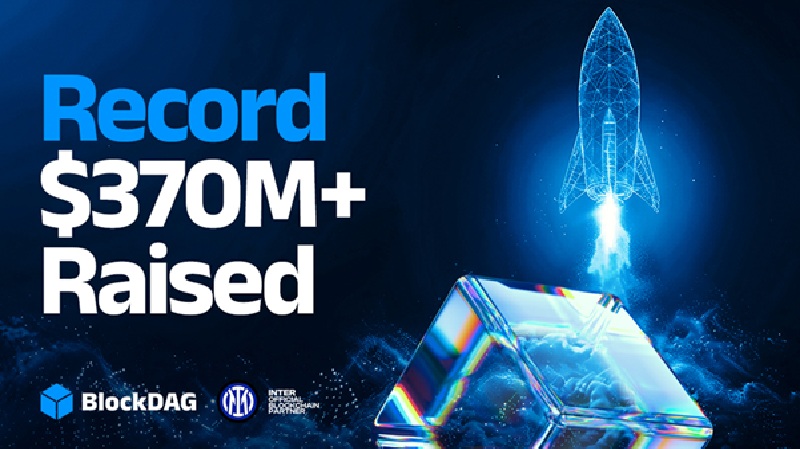
BlockDAG’s funding climb is drawing sharp market attention, with $374 million raised toward its $600 million target and over 25.1 billion BDAG sold to more than 200,000 holders. While this surge continues, other names are posting key moves.

Chainlink (LINK) has jumped 30% in the last week, supported by $13 million in whale activity and new large-scale Web3 partnerships. SEI is trading close to $0.33, aiming to break a major resistance level, with daily volume holding above $160 million.

Among top crypto projects, BlockDAG’s combination of rising demand, network readiness, and a funding cap now within sight makes it one of the most closely tracked names heading into the next quarter.

Chainlink Price Action Signals Continued Strength

Chainlink has posted more than a 30% gain over the past week, with daily trading volume hitting $1.35 billion. LINK is trading near $21, down about 1% in the last 24 hours. The current setup points to further upside, supported by favorable on-chain data and broader market factors.

Whale buying has been active, with Lookonchain reporting $13 million worth of LINK purchased through centralized exchange outflows and spot transactions. This includes $11.13 million moved from Binance to Compound. Daily Active Addresses have risen to 9,410, reflecting stronger engagement from both retail and large holders.

Institutional involvement is also rising, with partnerships linking Chainlink to Fidelity, Swift, JPMorgan, and others. In addition, DEX volumes have climbed to $1.298 billion in 24 hours, pointing to expanding utility and sustained market trust.

SEI Price Setup Points to Breakout Potential

SEI is trading close to $0.33, testing a major resistance formed by a long-term descending trendline and a key horizontal level. This point has acted as both support and resistance since late 2023, making it a critical test for the asset. A confirmed close above $0.33 could mark the end of its bearish trend and open room for significant upside.

Support remains between $0.25 and $0.33, with recent daily trading holding in a $0.315–$0.327 range and closing near $0.32. With volume above $160 million in the past 24 hours, market participation remains strong, suggesting that any breakout could be met with rapid follow-through.

BlockDAG Secures $374M as It Closes In on $600M Target

BlockDAG’s presale is advancing quickly, with 60% of its $600 million target already achieved. The project has raised $374 million, selling over 25.1 billion BDAG at the current Batch 29 price of $0.0276. The next step, Batch 30, will lift the price to $0.029 before climbing toward the fixed launch price of $0.05. This structure has already delivered a 2,660% rise from Batch 1.

Early participants are eyeing further returns, with near-term projections suggesting a 3,522% gain if the post-launch price reaches $1. The approach of the funding cap is speeding up batch sellouts, as visible progress fuels more demand.

The network’s readiness adds to the momentum. More than 4,500 developers are preparing over 300 Web3 projects for launch. The X1 Miner app has drawn 2.5 million users, and miner sales have brought in over $7.8 million from more than 19,250 units sold.

This presale is not just about reaching a number. It sets up a launch with strong liquidity, active community participation, and an ecosystem ready for immediate scaling. The closer BlockDAG moves to $600 million, the more limited early entry points become, creating urgency for those tracking high-potential market entries.

For analysts looking ahead, these milestones position BlockDAG for a market debut with both depth and breadth, making it a standout in upcoming quarters.

Final Takeaway

The market is delivering multiple points of interest this week. Chainlink’s 30% jump is backed by heavy whale buying and deeper institutional reach, while SEI’s attempt to clear $0.33 could reset its market trend.

BlockDAG, however, is moving with a pace and precision that sets it apart. With $374 million raised, 25.1 billion coins sold, and a 2,660% climb from its first batch price to $0.0276, it is approaching its funding cap while finalizing a launch-ready network.

Each update narrows the entry window, and with its post-launch plans in place, BlockDAG is positioned to step into the market with momentum already on its side.

Presale: https://purchase.blockdag.network

Website: https://blockdag.network

Telegram: https://t.me/blockDAGnetworkOfficial

Discord: https://discord.gg/Q7BxghMVyu

Top Performing Crypto Today: Cold Wallet, Uniswap, Solana & XRP Lead August 2025 Gains

0

August 2025 is shaping up to be a month where some projects break past expectations. Not all the action is happening in the top 10 rankings; several emerging names and established players are showing strong momentum. Some are in presale with fresh utility, while others are seasoned leaders finding new growth.

The best approach this month is a balance between early entry pricing and solid real-world use cases. This list includes a mix of both, giving options for those seeking big growth potential and those preferring steady performers. From Cold Wallet’s presale perks to Solana’s rapid network, Uniswap’s DeFi dominance, and XRP’s regulated payment edge, here’s why these projects deserve attention.

1. Cold Wallet: Stage 17 Presale Combines Privacy, Cashback, and Growth Potential

Cold Wallet blends the security of cold storage with the speed and ease of a mobile app. Built with zero-knowledge architecture and free from trackers, it gives users complete control over their data while delivering smooth, responsive performance.

Every transaction, transfer, or in-app interaction earns cashback in $CWT, with a tiered rewards system that increases payouts as usage grows. This structure creates real demand for the coin beyond market speculation. Seen by many as one of the top performing crypto today, it appeals to those who value both privacy and tangible utility.

The project’s presale has reached Stage 17, with the price at $0.00998. So far, it has raised $6 million and sold 716.6 million coins. With a launch price set at $0.3517, early participants could see gains of up to 3,425%. Out of a total of 150 stages, this entry point offers one of the best chances to secure a low price before the project’s major growth phases.

Already listed on CoinMarketCap, Cold Wallet ($CWT) supports staking, cashback, and will introduce more in-app perks after launch. Its mix of secure storage, user rewards, and early-stage pricing makes it a compelling option for those seeking both functionality and strong upside potential.

2. Uniswap: Layer 2 Expansion Strengthens the Leading Decentralized Exchange

Uniswap continues to dominate the decentralized exchange market, with Layer 2 integrations now offering cross-chain swaps and lower transaction costs. Trading at around $8.12, it benefits from increased on-chain activity and active developer engagement. Its ability to maintain market leadership while evolving features has secured it a place among the top performing crypto today for DeFi users looking for a trusted platform.

The project’s governance is seeing more activity, with decisions on fee structures and treasury allocation shaping its future. As DeFi’s total value locked increases and Ethereum Layer 2 networks grow, Uniswap’s position as a go-to DEX remains strong, giving traders a combination of liquidity, innovation, and longevity.

3. Solana: Speed, Low Fees, and Ecosystem Growth Keep It in the Spotlight

Solana remains a major force in the Layer 1 blockchain space, trading near $169.21. Known for lightning-fast transactions and low fees, it supports a broad range of use cases from NFTs and DeFi to real-world projects like Helium and Stepn. Upgrades addressing network congestion have made it even more resilient. This progress is why many in the market include Solana when discussing the top performing crypto today with high growth potential.

SOL’s price has climbed over 25% from last month and is approaching a resistance point near $170. A move beyond this level could push it toward $200. Developer activity and user adoption continue to strengthen its position in the competitive Layer 1 race.

4. XRP: Legal Clarity and ETF Interest Power Cross-Border Utility

XRP is trading steadily at $0.617 and has regained momentum in the payments sector. Legal clarity after SEC developments has boosted confidence, and ETF-related discussions have drawn more institutional attention. It remains a preferred option for those seeking regulated exposure in digital assets, with many considering it one of the top performing crypto today in terms of stability and utility.

The coin has been relisted on several exchanges, and Ripple’s payment corridors are expanding globally. The current price zone also supports dollar-cost averaging strategies for those looking to hold through potential large-scale adoption

The Bottom Line

Uniswap offers unmatched liquidity in DeFi, Solana leads on speed and ecosystem growth, and XRP provides regulatory clarity with consistent demand. Cold Wallet delivers early access to a working product that rewards usage and ensures privacy.

Its Stage 17 price of $0.00998, $6M raised, and 716.6M coins sold make it a compelling option for August. For those seeking a mix of early-stage growth and established market leaders, these names represent the top performing crypto today that are worth close attention.

Robinhood’s July Financials Report a 217% Increase In Crypto Trading Volume Reaching $16.8B

0

Robinhood’s July 2025 financials report a 217% year-over-year increase in crypto trading volume, reaching $16.8 billion on the Robinhood app. This surge reflects strong retail investor interest in digital assets, despite competitive pressures from traditional finance and decentralized platforms like Hyperliquid.

Additionally, the Bitstamp exchange, acquired by Robinhood, contributed $11.9 billion in crypto trading volume, up 78% from June 2025. Total platform assets grew to $298 billion, a 106% year-over-year increase, with 26.7 million funded customers, up 2.5 million from July 2024.

The massive increase in trading volume reflects cryptocurrencies becoming a core component of retail investment portfolios. Robinhood’s user-friendly platform and zero-commission trading have lowered barriers, attracting younger and less experienced investors.

Crypto trading generates transaction-based revenue for Robinhood, primarily through spread-based fees (the difference between buy and sell prices). The $16.8 billion volume likely translated into significant fee income, enhancing profitability.

Total platform assets reaching $298 billion (106% YoY growth) indicate strong inflows, with crypto contributing to margin interest and securities lending revenue streams. High trading volumes suggest heightened market activity, potentially driven by bullish sentiment, new token listings, or macroeconomic factors like inflation hedging or monetary policy shifts.

Robinhood faces competition from decentralized platforms like Hyperliquid and traditional exchanges like Coinbase. Its ability to scale crypto offerings while maintaining low costs will determine its market share. Regulatory scrutiny, especially in the U.S., remains a risk.

Crypto’s accessibility on platforms like Robinhood democratizes wealth-building opportunities but also exposes inexperienced investors to significant risks, especially in leveraged or speculative trades. Crypto-driven investments generate returns through various strategies, each with distinct risk-reward profiles.

Investors purchase cryptocurrencies like Bitcoin (BTC) or Ethereum (ETH) and hold for long-term price appreciation. Returns depend on market cycles. For example, Bitcoin’s price in 2025 has ranged from $50,000 to $80,000, per web sources, offering 20-60% gains for early-year buyers.

Active trading leverages short-term price movements, often using technical analysis or market sentiment. Robinhood’s $16.8 billion volume suggests significant retail trading activity. Day traders or swing traders can achieve 5-20% weekly returns during volatile periods, but success requires skill and timing.

For instance, altcoins like Solana or meme coins can spike 50-100% in days but crash equally fast. High losses from mistimed trades, transaction fees (spreads), and liquidations in margin trading. Over 70% of retail traders lose money, per industry studies.

Robinhood’s zero-commission model and Bitstamp’s infrastructure attract high-volume traders, but spreads and slippage can reduce net returns compared to decentralized exchanges. U.S. clarity on stablecoins and securities laws could boost confidence, while crackdowns.

Crypto gains are taxable (capital gains rates in the U.S.: 0-20% short-term, 15-20% long-term). Airdrops and staking rewards are income-taxed at receipt. Robinhood’s ease of use suits beginners, but advanced investors may prefer Binance or Kraken for lower fees or DeFi platforms for higher yields.

Understanding market cycles, technical indicators, and blockchain fundamentals improves outcomes. Over 80% of crypto wealth is concentrated among informed early adopters. Robinhood’s crypto trading surge underscores crypto’s growing role in wealth creation, driven by retail enthusiasm and institutional integration via Bitstamp.

Investment returns vary: buy-and-hold offers 20-60% annual gains in bull markets, staking yields 3-10% APY, and speculative trading or DeFi can exceed 50% but with high risks. Investors must balance opportunity with volatility, regulatory uncertainty, and platform costs.

The Pursuit of Humans and the Forerunners of AI [podcast]

0

In this Tekedia Daily video podcast, I present a historical lineage connecting the ancient philosophy of numbers to the modern field of artificial intelligence. I argue that AI is not a new or isolated phenomenon but the latest and most powerful evolution in humanity’s long-standing quest to understand the universe through data.

The core argument is built on a simple premise: everything is numbers. AI, in this context, is simply the most sophisticated tool yet for making sense of these numbers, giving us an “advantage to understand what is going on there.” The ultimate conclusion is that AI’s purpose is to help us fulfill our most basic human mission: to understand the numbers that rule the universe.

Simply, AI is the modern manifestation of our desire to comprehend the universe, and its power lies in its ability to help us interpret the vast amount of data (or “numbers”) that define our reality. This lecture effectively reframes the discussion of AI from a purely technological one to a philosophical and historical one, positioning it as an essential tool in humanity’s quest for knowledge, as postulated by Pythagoras centuries ago.

I podcast daily at Tekedia Daily, hosted exclusively at Blucera.


Podcast VideoSign-up at Blucera and check Tekedia Daily podcast category under Training module.