DD
MM
YYYY

PAGES

DD
MM
YYYY

spot_img

PAGES

Home Blog Page 706

Global Cyber Attacks Surge 21% in Q2 2025, Education Sector Hit Hardest – Report

0

Global cyberattacks surged in the second quarter (Q2) 2025, climbing by 21% year-over-year, according to new data from Check Point Research.

Driven by increasingly sophisticated tactics, AI-powered threats, and a widening digital attack surface, the spike underscores the growing pressure on organizations to bolster their cyber defenses in an era where no sector is off-limits.

Findings from the research revealed that in Q2 2025, the average organization faced 1,984 weekly cyber attacks, marking a 21% year-on-year increase and a 58% rise compared to two years ago. In July, the average number of cyber attacks per organization per week reached 2,011. That’s a 3% increase from the previous month and a 10% rise compared to July 2024. The steady climb highlights how persistent and adaptable threat actors continue to be.

While the long-term upward trend continues, industry and region-specific data revealed notable developments, including sustained targeting of the education sector and significant growth in attacks across Europe.

Education Remains the Prime Target

The education sector once again topped the list, enduring 4,388 weekly cyber attacks per organization, a 31% increase compared to Q2 2024. Government organizations followed with 2,632 weekly attacks (+26% YoY), while telecommunications saw a sharp surge to 2,612 weekly attacks (+38% YoY).

The report notes that the education sector’s vulnerability lies in its often underfunded security infrastructure and the abundance of exploitable credentials. Government agencies remain attractive for their sensitive data and geopolitical value, while telecommunications providers are being targeted for their critical infrastructure and access to vast customer datasets.

Europe Leads in Growth

Regionally, Africa experienced the highest average volume at 3,365 weekly attacks per organization (+14% YoY), followed by APAC at 2,874 (+15%) and Latin America at 2,803 (+5%).

However, Europe stood out with a 22% year-on-year growth, the largest regional increase, driven by geopolitical tensions, regulatory fragmentation, and the region’s dense concentration of high-value data.

Ransomware Remains a Major Threat

Public data from double-extortion “shame sites” revealed around 1,600 ransomware incidents globally in Q2 2025. North America accounted for 53% of these disclosures, while Europe contributed 25%.

Business services (10.7% of reported victims), industrial manufacturing (9.8% of reported victims), and construction & engineering (9.5% of reported victims) were the top three industries affected by ransomware.  Other impacted sectors ranged from healthcare to government and transportation, underscoring ransomware’s broad reach.

To better combat the surging threat of cyberattacks, organizations are advised to do the following;

Invest in threat prevention: Use advanced security technologies such as intrusion prevention systems (IPS), anti-ransomware tools, and threat intelligence to block attacks before they cause damage.

Strengthen endpoint and network defenses: Implement robust firewalls, email security, and endpoint protection platforms to reduce attack surfaces.

Promote user awareness: Run regular training and simulated phishing exercises to help employees recognize and report suspicious activity.

Ensure backup and recovery readiness: Maintain up-to-date, segmented backups and test recovery processes regularly to limit downtime in the event of ransomware or other disruptions.

Adopt zero trust principles: Continuously verify access permissions and segment networks to minimize lateral movement.

Stay informed: Monitor threat intelligence feeds and industry alerts to anticipate emerging threats.

However, while no single solution can completely eliminate cyber risk, organizations can significantly enhance their resilience by implementing multiple coordinated layers of protection. This approach helps to reduce both the likelihood and impact of a successful attack.


OpenSea’s $10K AI Creator Contest is a Bold Step in Showcasing AI Potential to Redefine the NFT Landscape

0

OpenSea announced an AI Creator Contest with $10,000 in cash prizes, XP, and an opportunity to collaborate with their team. Participants are required to submit original AI-generated work featuring themes related to OpenSea, NFTs, memes, or crypto culture.

The contest encourages creators to showcase their skills in AI-driven content creation. Submissions were open from August 4, 2025, through August 22, 2025.

AI tools like DALL·E, Midjourney, and GPT-based models enable creators to generate unique digital assets, such as art, avatars, or music, with minimal technical expertise. This lowers barriers to entry, allowing a broader range of creators to participate in the NFT space, as seen in OpenSea’s contest encouraging original AI-driven content.

AI can create NFTs that evolve over time based on user interactions, real-world data, or emotional inputs. For example, a gaming NFT might level up or a music NFT could remix itself daily, enhancing engagement and long-term value. AI tailors NFTs to individual collector preferences, fostering emotional connections and driving adoption.

This hyper-personalization could make NFTs more appealing, as collectors receive assets aligned with their tastes. AI algorithms analyze user behavior, preferences, and past interactions to suggest relevant NFTs, as exemplified by platforms like SuperRare. This enhances discovery, reduces search friction, and boosts sales.

OpenSea’s contest could leverage such AI-driven curation to spotlight winning entries. Multimodal AI, combining text, image, and metadata analysis, delivers precise search results. For instance, searching “cyberpunk art” yields visually relevant NFTs, not just keyword matches, improving user satisfaction.

AI can introduce gamified elements like challenges or rewards, as seen in OpenSea’s contest offering XP and collaboration opportunities. This fosters community loyalty and sustained engagement. AI-driven tools analyze market trends, historical data, and artist reputation to suggest fair NFT valuations, preventing over- or undervaluation.

AI streamlines royalty distribution through smart contracts, ensuring creators are fairly compensated on secondary sales. This transparency builds trust, a key factor in contests like OpenSea’s where creators expect equitable rewards. AI forecasts market trends and user behaviors, enabling creators and collectors to make informed decisions.

AI verifies NFT authenticity by scanning metadata, digital signatures, and blockchain records, reducing counterfeits. This is critical for platforms like OpenSea, where trust is paramount for contest participants and buyers. Advanced AI systems enable real-time authentication, protecting creators from property misuse and buyers from scams, enhancing marketplace integrity.

AI-powered tools filter spam, scams, or inappropriate content in marketplace communities, ensuring a safe environment for contests and user interactions. AI enables businesses to launch customized NFT platforms quickly using pre-built solutions, as seen with white-label providers. This scalability could inspire smaller marketplaces to host AI-driven contests similar to OpenSea’s.

AI links NFTs to personalized metaverse experiences or in-game assets, expanding their utility. OpenSea’s focus on crypto culture in its contest hints at potential ties to virtual worlds. AI analyzes market sentiment and trends, as seen in platforms like NonFungible.com, helping investors identify valuable NFTs.

AI-generated NFTs raise questions about authorship and intellectual property. For instance, who owns an NFT created by AI trained on existing artworks? OpenSea’s contest may need clear guidelines to address this. AI models can inherit biases from training data, potentially skewing recommendations or valuations.

AI’s ease of content creation could flood marketplaces with low-quality NFTs, diluting value and overwhelming collectors. OpenSea’s contest, while encouraging creativity, must balance quantity with quality to maintain market appeal. AI-NFTs face challenges in standardizing formats across platforms.

OpenSea’s initiative, with $10,000 in prizes and collaboration opportunities, incentivizes creators to experiment with AI, potentially setting trends for the broader NFT ecosystem. By fostering AI-driven creativity, OpenSea positions itself as a leader in this evolving space, encouraging a new wave of collectors and artists to join the adventure.

AI’s integration into NFT marketplaces like OpenSea is revolutionizing how digital assets are created, discovered, and traded. It enhances creativity, user engagement, and market efficiency while addressing security and trust. However, ethical, technical, and environmental challenges must be navigated to ensure sustainable growth.

Data Intelligence and Modular Design Push Prepaid Credit Cards Into a New Era

0

From a minor role in the payments world, prepaid credit cards have become a focal point for financial innovation. What began as straightforward stored-value tools now blends artificial intelligence, open banking integration and modular system design, giving them the speed and flexibility to operate seamlessly in both established financial centres and rapidly developing African markets. AI tools examine transactions as they happen, allowing immediate and precise adjustments, while modular systems make it possible to add new features and stay compliant without overhauling the entire platform. With open banking gaining ground, these cards are increasingly set to move funds directly between accounts, sidestepping the traditional card networks entirely.

A Market Opening New Doors

These shifts are creating payment tools that travel easily across borders and fit a variety of spending habits. The same advances now shape opportunities in sectors where flexibility and wide acceptance are critical to attracting and keeping customers. They are used for everything from booking international travel and managing online subscriptions to streamlining cross-border e-commerce. Retail chains and entertainment venues increasingly integrate them into loyalty and payment systems. 

The same versatility is now visible in US casinos that accept prepaid credit cards. Among the notable advantages is the speed and simplicity of transactions, with Vanilla Visa deposits processed instantly in most cases. Players benefit from strong privacy protection, as these prepaid cards require no direct link to a bank account. In many venues, these deposits can additionally qualify for welcome offers or ongoing bonuses, adding further value to the payment choice.

The growing flexibility of payment technology has heightened demands on how providers manage security and regulatory obligations. Delivering quick, seamless transactions now goes hand in hand with maintaining systems that can adjust to changing rules without interrupting operations. Today’s prepaid platforms are designed to balance ease of use with the agility needed to comply with stringent requirements in diverse markets.

Compliance Becomes a Competitive Edge

Regulation varies wildly from one border to the next. For anyone issuing prepaid credit cards across multiple markets, the patchwork is unavoidable — anti-money laundering rules, know-your-customer checks, data privacy laws, and sometimes currency controls. The complexity is most visible in busy corridors linking Africa to Europe, the Middle East and Asia, where funds move quickly but rules differ at every stop.

Some have turned this into an advantage. By weaving compliance into the architecture itself, fintech firms can swap out or upgrade verification modules without taking the whole system offline. AI assists here too, scanning documents, calculating risk scores, and catching irregularities before they turn into problems. In practice, what once took days — onboarding a new customer — can now take minutes.

The real test comes in places where rules are shifting underfoot. In parts of Africa, central banks and regulators are rewriting their playbooks to meet global benchmarks. A platform that can adjust its compliance layer overnight is not just ready — it’s resilient.

Localisation as a Growth Strategy

Technology alone does not build market share. Local knowledge matters just as much. Modular prepaid card systems are being tailored for the currencies, habits and legal frameworks of specific regions. In many African countries, where mobile money is deeply embedded and bank branches scarce, prepaid credit cards can act as a bridge from cash economies into the digital arena.

Tying a card to a mobile wallet creates instant utility — a payment method for local markets and cross-border transactions alike. AI-backed analysis reveals which features work best in each territory. Maybe it’s multi-currency functions in one place, loyalty rewards in another. Rollouts can be selective, ensuring relevance.

This is not just an African story. The same method works in Southeast Asia, Latin America and Eastern Europe. Payment habits differ. Regulations diverge. Language can be a barrier. A single modular system, adapted in small but precise ways, can meet all of these demands.

Risk Management in Real Time

Fraud is a constant in global payments, and prepaid products are no exception. But the tools to fight it have become faster and more precise. AI-powered engines watch millions of transactions, learning what normal looks like — and flagging the rest in seconds.

In a modular setup, these risk models can be swapped or upgraded without touching unrelated systems. If one market suddenly sees a spike in card-not-present fraud through e-commerce, a fix can be deployed there immediately, leaving unaffected markets untouched.

Speed matters most in cross-border networks. A gap between detection and response can mean the difference between containing a breach and letting it spread. In high-volume corridors, such as remittances between African and European hubs, small gains in fraud prevention add up to big savings and stronger trust.

Open Banking Redraws the Landscape

With open banking rules taking hold in more countries, prepaid credit cards are breaking past old limits. Consent-based access to bank account data gives fintech firms a way to combine the agility of prepaid products with the full reach of traditional banking.

The result can be instant top-ups from linked accounts, currency converted at the moment of purchase, or detailed spending insights delivered within seconds. In African markets connected to regional payment networks, the same framework could allow a single prepaid card to pull funds from multiple sources at once, removing extra steps and cutting transaction costs.

Modular systems make this shift easier. New open banking features can be added without reengineering the whole platform. They can be trialled in one market, refined, and then launched more widely — speeding innovation while keeping risk in check.

Partnerships Set the Pace

No single player dominates this field. Growth often comes through alliances between fintech developers, banks, processors and technology platforms. In Africa, joining the reach of telecom operators with the adaptability of prepaid cards has produced notable gains.

Elsewhere, e-commerce sites, travel operators and gig-economy platforms are integrating prepaid functionality directly into their ecosystems. This makes the step from earning or shopping online to paying in the physical world almost seamless.

For issuers, these collaborations mean faster access to new markets, more transactions and valuable streams of data to refine their services. For partners, the benefits lie in deeper customer engagement and fresh revenue drawn from payment activity.

Cloud Infrastructure as the Foundation

Much of this new agility rests on the cloud. Prepaid platforms can now scale their capacity in real time, roll out updates across geographies, and connect with external services through APIs without prolonged downtime.

In regions where physical infrastructure is scarce — parts of sub-Saharan Africa in particular — cloud deployment removes the need for expensive on-site hardware. Regional data centres can be used to comply with localisation rules, ensuring sensitive information stays within the right borders.

When combined with modular design, the cloud becomes more than a hosting choice. It forms a resilient backbone, one that keeps prepaid card services in step with a rapidly shifting payments industry while maintaining the security and reliability users expect.

Ozak AI’s $1.76M Milestone Puts It in the Race With Solana, SHIB, and DOGE Price Surges

0

Ozak AI has reached a great milestone by raising $1.76 million during its presale, firmly putting itself within the competitive arena alongside hooked-up cryptocurrencies like Solana, Shiba Inu, and Dogecoin. As those famous initiatives are put together for potential fee surges in 2025, Ozak AI’s innovative combination of artificial intelligence and blockchain technology positions it as a promising project with strong growth capacity and particular utility.

Solana, Shiba Inu, and Dogecoin: Powerhouses Driving Crypto Market Momentum

Solana, Shiba Inu, and Dogecoin have long ruled headlines because of their spectacular marketplace caps, lively communities, and widespread charge movements. Solana’s high-speed blockchain and occasional costs have made it a favorite among developers, targeting a $500 price with the aid of 2025 as the community expands. Shiba Inu’s meme-powered rally and increasing surroundings continue to attract retail traders, with many eyeing a price goal around $0.0001. Dogecoin, propelled via its cultural reputation and celebrity endorsements, remains a constant favorite in the meme coin space.

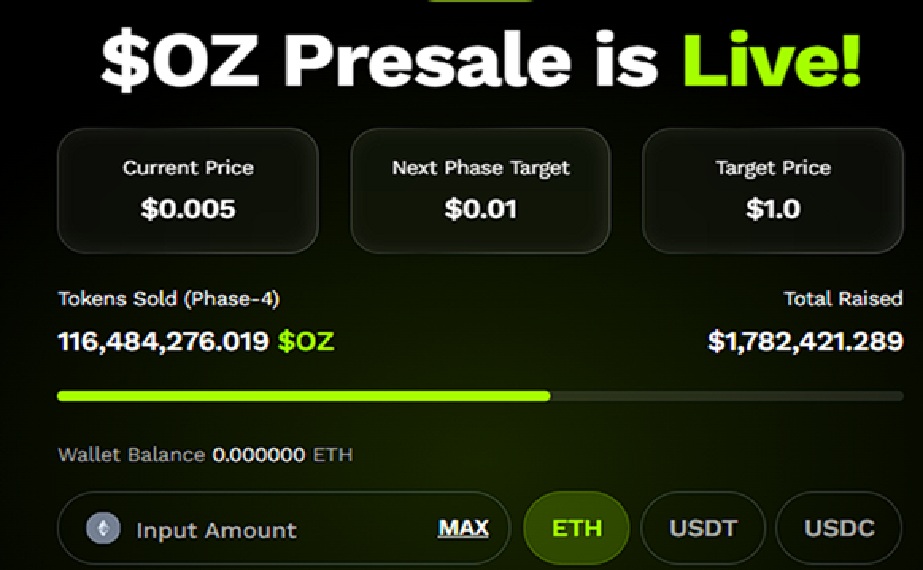
Ozak AI, although newer, is making waves by combining AI-powered trading signals with blockchain’s transparency. Its presale success, with over $1.76 million raised and 110 million tokens sold, shows growing investor interest in projects that offer real utility beyond hype.

Innovative Technology Drives Ozak AI’s Appeal

 What sets Ozak AI apart is its integration of artificial intelligence to generate hedge-fund-grade market insights for crypto traders. These real-time signals allow users to make smarter, faster trading decisions in a market known for volatility. This practical utility is a major draw compared to meme coins, whose value often depends heavily on social media momentum.

Furthermore, Ozak AI’s partnerships with platforms like Weblume and SINT expand its ecosystem by embedding AI-driven insights into no-code Web3 apps and autonomous trading agents. This broadens its use cases beyond individual traders to developers and institutions, increasing demand for the $OZ token.

Why $1.76 Million Raised Matters

Raising $1.76 million in a presale signals strong market confidence. This capital enables Ozak AI to accelerate product development, expand its marketing reach, and execute strategic partnerships. Compared to earlier stages of top cryptos, this level of funding is substantial for a utility-focused altcoin still in its growth phase.

Investors see Ozak AI not just as a token but as an innovative platform poised to capture a share of the growing AI and crypto crossover market—a sector expected to gain tremendous momentum in coming years.

Comparing Growth Potential 

While Solana, SHIB, and DOGE have already delivered massive returns, their large market caps make exponential gains more challenging going forward. Solana’s path to $500 may represent solid growth but is unlikely to multiply early investors’ capital by 100x or more at this stage.

Ozak AI, priced at just $0.005 during presale, holds potential for dramatic percentage gains if it achieves even a fraction of the adoption and utility that established projects enjoy. Early investors could see 50x, 100x, or even 200x returns if the platform gains traction among traders and developers.

What’s Next for Ozak AI? 

With the presale progressing through its 4th stage and over 110 million tokens sold, Ozak AI is building momentum. Future milestones include listings on major exchanges, completion of product development, and ongoing collaborations with AI and blockchain innovators.

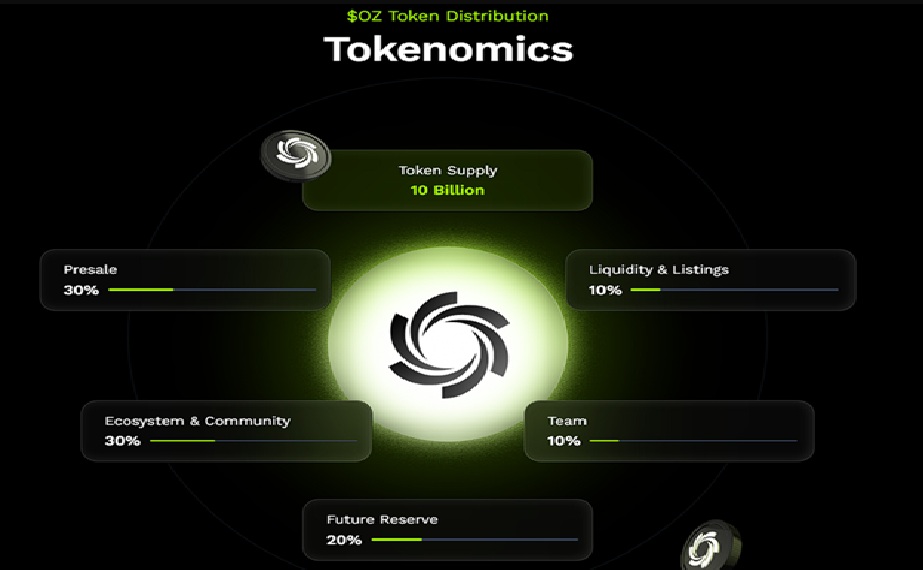
Its audited smart contracts and transparent tokenomics also build investor confidence by reducing risk factors like token dumping and security vulnerabilities.

Ozak AI’s $1.76 million raise is more than just a funding milestone—it’s a statement that the crypto community is eager for projects that blend real technology with token economics designed for long-term growth. While Solana, Shiba Inu, and Dogecoin continue their own journeys toward price surges, Ozak AI offers an alternative with potentially higher upside, driven by innovation and utility.

For investors seeking exposure to the next wave of crypto growth, Ozak AI represents a compelling opportunity to join a project that could stand shoulder-to-shoulder with some of the biggest names in the space—potentially delivering outsized returns as the AI and crypto worlds converge in 2025 and beyond. 

About Ozak AI

Ozak AI is a blockchain-based crypto project that provides an innovative platform that focuses on predictive AI and advanced data analytics for financial markets. Through machine learning algorithms and decentralized community technologies, Ozak AI enables real-time, accurate, and actionable insights to help crypto lovers and corporations make the perfect choices.


For more, visit

Website: https://ozak.ai/

Telegram: https://t.me/OzakAGI

Twitter: https://x.com/ozakagi

Welcome Bramante Biologics to Tekedia Capital

0

In the rapidly evolving landscape of biotechnology, Bramante Biologics is emerging as a key player, poised to address a critical challenge in the development of modern medicines. The company’s core mission is to create an advanced, AI-native manufacturing infrastructure that can rapidly and efficiently produce protein therapeutics. By leveraging cutting-edge technology, BramanteBio aims to bridge the gap between innovative AI-powered drug design and the often slow, outdated manufacturing processes that have long been a bottleneck in the biopharmaceutical industry.

The problem BramanteBio seeks to solve is a significant one. While artificial intelligence is accelerating the discovery and design of novel protein-based medicines, the traditional methods of manufacturing these drugs have not kept pace. This creates a disconnect, where groundbreaking digital discoveries can be delayed or limited by the physical production process. BramanteBio’s solution is a reimagined approach to biomanufacturing that is built from the ground up to be faster, more intelligent, and highly scalable.

A central component of BramanteBio’s innovation is its use of modular, container-sized factories. These microfactories are designed to be deployed quickly and can be shipped wherever they are needed. This provides a level of flexibility and efficiency that is a significant departure from large, centralized manufacturing plants. Furthermore, the company integrates AI agents into its platform, which monitor and self-correct the production process in real-time. This not only speeds up the timeline for manufacturing but also helps ensure the quality and consistency of each batch, allowing scientists to focus more on discovery and less on oversight.

Bramante is the TSMC of the future of medicine just as TSMC is the category-king in semiconductors. Tekedia Capital capital.tekedia.com is proud to be an investing partner in Bramante Biologics bramantebio.com.