DD
MM
YYYY

PAGES

DD
MM
YYYY

spot_img

PAGES

Home Blog Page 712

Trump Administration Weighs 10% Stake in Intel as SoftBank Commits $2 Billion

0

The Trump administration is considering taking a 10% equity stake in Intel, a move that could see the U.S. government emerge as the chipmaker’s single largest shareholder.

The talks, first reported by Bloomberg on Tuesday, highlight Washington’s escalating efforts to revive the American semiconductor sector and shore up a company once regarded as the cornerstone of U.S. chip dominance.

According to the report, officials are weighing a plan that would involve converting some or all of Intel’s grants from the 2022 U.S. CHIPS and Science Act into equity. Intel has been the largest recipient of the law’s funding, with about $10.9 billion awarded so far — including $7.9 billion earmarked for commercial manufacturing and another $3 billion for national security projects. At Intel’s current market valuation, a 10% government stake would be worth roughly $10.4 billion.

It remains unclear how far the idea has progressed within the administration. The size of the potential stake is still in flux, and officials have not confirmed whether direct conversations have taken place with Intel executives.

The possibility of Washington taking a direct stake underscores the urgency with which the Trump administration is approaching semiconductor policy. Intel has fallen behind rivals such as Taiwan Semiconductor Manufacturing Co. (TSMC) and Samsung in advanced chipmaking, raising concerns in Washington about America’s reliance on overseas suppliers. With global demand for AI and high-performance computing chips surging, reviving Intel is now viewed as both an industrial and a national security imperative.

President Donald Trump has long advocated for government intervention to strengthen U.S. manufacturing, and a government-backed national champion in semiconductors would mark one of his most ambitious steps yet. While Trump has criticized the CHIPS Act — calling for its repeal earlier this year — his administration has been renegotiating parts of the program. Converting Intel’s grants into equity would give Washington a direct say in Intel’s future while lowering the total amount of cash outlay from the government.

Some analysts argue that such intervention could be crucial, given Intel’s inability to gain a decisive foothold in the artificial intelligence boom. Despite heavy investments, the company has yet to secure major customers for its manufacturing business. Others contend that Intel’s troubles go deeper than capital needs and that government ownership alone will not solve its competitive weaknesses.

Tuesday’s news of government stake discussions came on the same day Japanese conglomerate SoftBank announced a $2 billion investment in Intel, purchasing shares at $23 each. The deal, equivalent to about 2% of Intel’s outstanding stock, makes SoftBank the company’s fifth-largest shareholder. SoftBank Chairman and CEO Masayoshi Son said the investment underscored his belief that “advanced semiconductor manufacturing and supply will further expand in the United States, with Intel playing a critical role.”

The twin developments sparked volatility in Intel’s shares. The stock had surged nearly 9% on Aug. 14 when initial reports of potential government investment surfaced. Shares fell more than 3% on Monday following Bloomberg’s report, but rebounded over 5% in after-hours trading on Robinhood after SoftBank’s investment was confirmed.

Intel CEO Lip-Bu Tan, who took the helm in March 2025, has been navigating both a corporate turnaround and mounting political scrutiny. Tan met with President Trump at the White House last week, after the president had previously called for his ouster over alleged ties to China. Following the meeting, Trump softened his stance, praising Tan as having “an amazing story.” It is unclear whether the possibility of a government stake was discussed during their meeting.

However, the combination of SoftBank’s investment and speculation about a government stake has placed Intel squarely at the center of Washington’s drive to restore U.S. semiconductor leadership. With tariffs, subsidies, and now potential direct government ownership all in play, Intel’s fortunes are increasingly being tied to industrial policy at the highest levels of power.


OpenAI launches $4.60 Per Month cheaper ChatGPT Go plan in India to tap into massive AI demand

0

OpenAI has unveiled a new budget-friendly subscription tier for ChatGPT in India called ChatGPT Go, priced at ?399 per month ($4.60). The plan, announced today, is far more affordable than the ChatGPT Plus plan, which costs ?1,999 per month (about $23) in India after the recent rollout of local currency pricing.

The Go plan comes with 10 times more allowances for messages, image generation, and file uploads compared to the free tier. It also enables better memory retention for more personalized conversations, according to Nick Turley, VP at OpenAI and head of ChatGPT.

“Making ChatGPT more affordable has been a key ask from users! We’re rolling out Go in India first and will learn from feedback before expanding to other countries,” Turley said.

A critical part of the rollout is that Indian users can now pay through UPI (Unified Payment Interface), the country’s dominant digital payments system, which is widely used across both urban and rural regions.

Why India first?

India has become a powerhouse market for AI adoption, and OpenAI has been witnessing surging demand in the country. According to AppFigures, ChatGPT recorded more than 29 million downloads in India in the past 90 days alone, making the country the largest driver of new app installations worldwide. However, the app only generated $3.6 million in revenue from India during the same period, highlighting a massive gap between downloads and paid subscriptions.

OpenAI is betting that the Go plan will convert more of India’s 850+ million internet users into paying subscribers by offering a more accessible price point, improving monetization in one of its biggest markets.

CEO Sam Altman has openly described India as OpenAI’s second-largest market globally, and the company has made several strategic adjustments to appeal to local users, including optimized pricing and more features for image generation and file processing.

Competition heats up in India’s AI market

OpenAI’s move also comes as rival AI companies intensify their efforts to court Indian users. Perplexity AI recently partnered with telecom giant Airtel to provide free Perplexity Pro subscriptions to its subscribers. Google rolled out a free one-year AI Pro plan for Indian students, positioning itself to build loyalty among young users who may become long-term subscribers.

While OpenAI is not offering freebies, its aggressive local pricing strategy is expected to give it an edge, especially as many Indian consumers remain price-sensitive despite a strong appetite for digital services.

The ChatGPT Go plan is currently geo-restricted to India, but OpenAI confirmed on its support page that it intends to expand the offering to other countries after learning from this pilot launch.

The timing of this rollout coincides with ChatGPT’s rapid growth: last month, Turley revealed the service now boasts more than 700 million weekly active users globally, up from 500 million in March. The surge has been partly fueled by OpenAI’s addition of image generation capabilities in March, which has seen particularly strong traction in India.

Tech watchers say the Go plan is designed not only to make ChatGPT more inclusive for India’s vast internet base but also to plug a revenue leak in markets where adoption is high but paid conversions remain low.

As Tibor Blaho, a software engineer known for accurately leaking upcoming AI product launches, had teased earlier, the Go plan represents OpenAI’s latest experiment in making advanced AI accessible without alienating cost-conscious users.

For OpenAI, the move is both a strategic expansion and a business necessity: India is where AI adoption is exploding, but revenue still lags far behind. With the Go plan, OpenAI is hoping to change that equation.

Effective Go-to-Market Strategy in Business

0

An effective go-to-market (GTM) strategy is more than a simple sales plan; it is a holistic blueprint for market dominance. Its core purpose is to define the intricate “how”: how a business will reach its target customers, how it will communicate its value proposition, and how it will secure a competitive edge.

This is not a static document but a dynamic and iterative process that requires deep market intelligence. Companies must first identify their ideal customer personas and understand their true pain points. This foundational insight, combined with an unflinching analysis of competitors, allows for the creation of a differentiated product or service that truly addresses a tangible market need.

The most successful GTM strategies transcend mere product distribution and become a system of value creation. Tekedia Institute underscores that the ultimate measure of success is not just revenue, but the sustainable accumulation of capabilities that compound over time, akin to a flywheel. It is about building a business model where one part of the operation reinforces another, creating a powerful, self-sustaining ecosystem.

Therefore, an effective GTM strategy is a testament to strategic foresight and operational excellence, ensuring a company can both launch with impact and build for long-term category leadership.

Join us today for a lecture on GTM by our Faculty Kunle Oshobi. He is explaining the four fundamental things that make GTM super-successful.

Tue, Aug 19 | 7pm-8pm WAT | Effective Go-to-Market Strategy in Business – Kunle Oshobi, Net Communications | Zoom link in Board

Top Crypto Forecasts 2025: XRP, Solana, and Cold Wallet’s Referral Model Driving Extra Rewards

0

Crypto traders and long-term holders alike are looking for more than just price gains in today’s competitive market. While speculative growth has always been a magnet, utility and sustainable reward systems are increasingly shaping where money flows. In this environment, three names are drawing significant attention heading into 2025: XRP, Solana, and Cold Wallet.

XRP and Solana remain core plays for many portfolios, offering both technical resilience and adoption-driven potential. Yet Cold Wallet introduces something different,  a system that rewards users not only for participating but also for bringing others into the fold. With its 10% referral bonus and presale momentum building rapidly, it is positioning itself as a standout in the conversation around the best crypto opportunities for 2025.

XRP Price Prediction Points Toward Continued Growth

XRP has been consolidating in the $0.70–$0.72 range, forming what analysts describe as a strong base for a new bullish leg. This zone has been tested multiple times in recent days, and the fact that it has consistently held is giving traders confidence that XRP may soon break toward higher resistance.

From a longer-term perspective, the XRP price prediction for 2025 remains optimistic. Ripple’s global push in cross-border payments, paired with improving regulatory clarity, is reinforcing the case for steady growth. Analysts highlight that clearing the $1 barrier could serve as the next milestone, potentially opening the way for levels reminiscent of XRP’s 2018 highs.

For market participants scanning the landscape for the best crypto investments, XRP’s combination of utility, adoption, and solid technical footing makes it a reliable candidate. It is more than a short-term trade; it represents a token with real-world integration and the infrastructure to scale further in the years ahead.

Solana Price Prediction Charts a Breakout Path

Meanwhile, Solana has re-established itself as one of the most dynamic assets in the space. Analysts currently forecast a move toward $200 in the near term, while longer-term outlooks suggest Solana could reach $500 or more as ecosystem adoption continues to expand.

Solana’s success is built on its low-cost, high-speed network, which consistently supports heavy transaction volumes without buckling under demand. This makes it a favored chain for NFTs, DeFi projects, and institutional-scale applications. With major projects choosing Solana as their launchpad, developer activity is accelerating, reinforcing its growth story.

The latest Solana price prediction indicates that breaking current resistance could quickly trigger further upside. For those exploring the most promising crypto opportunities in 2025, Solana’s fundamentals,  scalability, user adoption, and institutional credibility create a powerful case for inclusion in any diversified portfolio.

Cold Wallet: Referral Rewards That Compound Your Gains

While XRP and Solana shine on technicals and adoption, Cold Wallet takes a unique approach by embedding direct rewards into its ecosystem. At its heart, Cold Wallet is a self-custody wallet, meaning users retain full control of their funds and private keys, removing the risks of centralized custody.

But beyond security, it adds an innovative referral system designed to reward community-driven growth. Currently, anyone who downloads and uses the wallet can earn USDT rewards on swaps and transactions. When you refer a new user, both you and the referee share cashback rewards, creating a natural incentive loop. Rewards are claimable in USDT once they reach 5, providing simple, transparent payouts.

The system expands further with the ongoing CWT coin presale. Referrers gain a 10% CWT bonus, while referees get 5%, both vesting in line with purchased coins. This ensures fairness while boosting early participation. With Cold Wallet now in Stage 18 of its presale, priced at $0.00998, $6.2M raised, and over 726M coins sold, momentum is undeniable.

This referral-based model is not about hype or gimmicks; it’s a sustainable reward framework. By dedicating a portion of supply specifically for referrals, Cold Wallet protects its tokenomics while simultaneously encouraging growth. For investors, it represents a way to compound returns,  not just through price appreciation but also through active participation in expanding the user base.

Final Word

The XRP price prediction suggests that the token’s strong fundamentals and market adoption could push it back above $1 and beyond, making it a clear candidate for the best crypto plays in 2025. At the same time, the Solana price prediction points to impressive upside, with projections ranging from $200 in the short term to $500 on a longer horizon. Both assets remain vital parts of the crypto growth narrative.

Yet, Cold Wallet demonstrates how innovation in rewards can reshape participation. Its referral system, paired with a crypto presale token already surpassing $6.2M in Stage 18, turns ordinary blockchain use into an income stream. By blending self-custody security with cashback and referral bonuses, it offers an edge that neither XRP nor Solana can replicate.

For anyone seeking the best crypto investment in 2025, Cold Wallet represents more than just a presale; it’s a platform designed to grow with you, rewarding every action, every referral, and every step toward broader adoption.

Explore Cold Wallet Now:


Presale: https://purchase.coldwallet.com/

Website: https://coldwallet.com/

X: https://x.com/coldwalletapp

Telegram: https://t.me/ColdWalletAppOfficial

BlockDAG Closes In on $1 Goal with Presale Crossing $376M While Ethereum & Aptos Make Moves

0

The crypto market is once again in a race between big players and one fast-growing presale. Ethereum’s price is moving with whale trades, while Aptos is finding traction with institutional support. Yet BlockDAG (BDAG) is moving forward with clear momentum that could propel it toward the $1 mark much sooner than many predict.

With Batch 29 pricing set at $0.0276, more than $376 million raised, and over 25.2 billion coins sold, BlockDAG has already built serious traction. Analysts note that its expected launch at $0.05 points to major upside potential. The strong presale has drawn comparisons to past breakout projects, adding weight to forecasts that BDAG could be one of the best crypto picks before listing.

Aptos Market Trend Signals 2025 Growth Potential

Aptos has been slowly gaining momentum with both upgrades and growing institutional adoption. Priced near $4.73, it already records more than $538 million in total value locked. Major names like BlackRock’s BUIDL fund and Franklin Templeton’s BENJI are contributing to its asset pool, building confidence.

The real game changer could come in September 2025 with the launch of “Shardines,” a scaling system that could stabilize throughput above 500,000 transactions per second. If successful, analysts expect Aptos could reach $20.68 by 2025, with long-term models suggesting it could climb as high as $60.13 by 2030.

Still, token unlocks remain a concern. These create near-term risks and uncertainty, even if they offer trading opportunities. For those looking further out, Aptos may become one of the stronger long-term contenders in the market.

Ethereum Whale Activity Creates Mixed Forecast

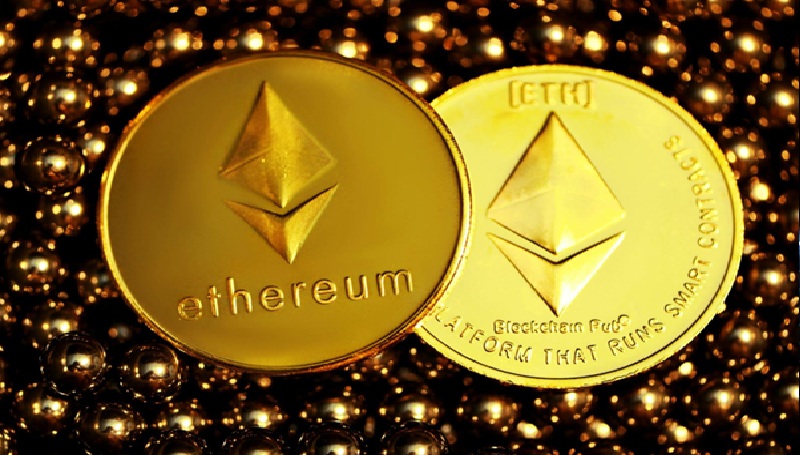
Ethereum’s push past $4,300 has reignited optimism, but whale trading shows a different picture. A single whale now holds a leveraged short position with a $19.9 million unrealized loss. To prevent liquidation, they keep adding collateral, showing just how high the stakes are.

This battle between strong market momentum and aggressive shorting highlights the volatility of ETH. The whale’s actions could steer short-term market direction, but it also underlines how tough it is to predict Ethereum’s next decisive move.

Key resistance sits between $4,400 and $4,450, with possible all-time highs on the horizon. Whether ETH can break through depends heavily on whether the whale sticks with the short or exits. Either choice could ripple through the broader market, shaping ETH’s near-term performance.

BlockDAG’s $1 Target Driven by Presale, Tech, and Explorer

BlockDAG has stood out with its presale success, having already raised over $376 million and sold more than 25.2 billion coins. Now priced at $0.0276 in Batch 29, with a planned launch at $0.05, it offers a path to growth supported by strong fundamentals rather than speculation. The previous ROI from Batch 1 to 29 has already reached 2,660%, proving its traction.

At the core of its $1 projection is its hybrid blockchain–DAG structure. This system can process between 2,000 and 15,000 transactions per second and works seamlessly with the Ethereum Virtual Machine (EVM). It supports both Proof-of-Work and Proof-of-Engagement mining, giving users multiple ways to take part in the network.

A major highlight is the BlockDAG Explorer. This tool does more than show transactions. It offers insights into miner performance, validator activity, and smart contract use. It also includes on-chain learning credentials, making it both a developer’s utility and a tool for building trust with the community.

The project has already secured 20 confirmed listings, ensuring liquidity at launch. In addition, hardware sales have crossed 19,300 miners, bringing in more than $7.8 million. By combining advanced tech, a transparent platform, and clear exchange support, BlockDAG is well positioned to chase the $1 target after launch.

Final Word

The crypto market thrives when timing meets execution, and BlockDAG is in that window now. Ethereum’s near-term moves remain tied to whale trades, while Aptos awaits its 2025 upgrade to unlock growth.

BlockDAG, however, is converting presale funds into working infrastructure. With a $0.0276 entry point, a clear launch at $0.05, and proven momentum, it is making a strong case for its $1 goal. Adoption and market sentiment will shape the next steps, but its strategy already stands out.

For those tracking the Aptos trend or watching Ethereum’s whale-driven volatility, BlockDAG’s presale may be the key story to follow. Its mix of scale, speed, and transparency makes it a front-runner in the race toward becoming the best-performing crypto in 2025.

Presale: https://purchase.blockdag.network

Website: https://blockdag.network

Telegram: https://t.me/blockDAGnetworkOfficial

Discord: https://discord.gg/Q7BxghMVyu