DD
MM
YYYY

PAGES

DD
MM
YYYY

spot_img

PAGES

Home Blog Page 716

Bullish Setups Spotted Across HYPE & SEI Price Charts, But Demand Hits Hardest at Cold Wallet: 2M Users Onboarded Overnight!

0

Bullish setups are surfacing across the board. The SEI price chart just triggered a Supertrend flip, an indicator that previously marked major rallies, putting a potential move toward $0.54 in sight.

The latest Hyperliquid news is even louder: 35% of all blockchain revenue in July, $2.66 billion in Phantom Wallet trading volume, and 21,000 new users onboarded in a single month.

But while both charts hint at green, one opportunity isn’t just forming, it’s vanishing. Cold Wallet’s (CWT) $270 million acquisition of Plus Wallet has instantly added two million active users, and demand hasn’t stopped climbing. Over $5.9 million has already poured into its presale. At $0.00998, Stage 17 still offers a 3,424% projected ROI, but every new entry shrinks that number, and stages are closing fast!

SEI Price Chart Hints at Bullish Reversal Signal

The SEI price chart may be flashing a key turning point. Analyst Ali (@ali_charts) noted that the Supertrend indicator has flipped green right at the base of SEI’s channel, a technical cue that previously signaled strong rallies. If SEI follows its historical pattern, a move toward $0.54 could be on the table.

Other weekly indicators confirm this outlook. The RSI sits at a neutral 51.3, leaving room for upside. Altogether, the SEI price chart suggests a breakout scenario might be taking shape, with bulls gaining traction.

Hyperliquid News: Platform Dominates July Blockchain Revenue

Hyperliquid news is heating up as the platform raked in 35% of all blockchain revenue in July, outpacing even Solana in on-chain trading activity. The Phantom Wallet integration alone generated $2.66 billion in volume and brought in 21,000 new users, marking one of the biggest monthly expansions in DeFi this year.

Meanwhile, the HYPE token rebounded from $37 to $40, forming a clean V-shaped recovery pattern. With the HIP-3 upgrade on the horizon, Hyperliquid news suggests it’s not just a trading venue anymore; it’s positioning to be a full-blown Web3 powerhouse.

Cold Wallet Absorbs 2M New Users, Presale Approaches $6M Fast!

Cold Wallet’s recent $270 million acquisition of Plus Wallet is a clear signal of its potential dominance in the self-custody space.

The acquisition brings in over two million users, all of whom joined Plus Wallet in just seven months. These are users already onboarded, already active, and now being folded into an ecosystem that rewards every action through CWT, Cold Wallet’s native token.

What does this mean for the presale? A lot. With Stage 17 already live and 703 million tokens sold, buying pressure is building fast. Over $5.9 million has been raised, and each presale stage pushes the entry price higher. Traders joining now at $0.00998 are still staring at a projected 3,424.85% ROI based on the $0.3517 launch estimate, but every stage closed tightens that number.

This hasn’t gone unnoticed. Whale activity is increasing, with larger allocations flowing into Cold Wallet as big players move in ahead of the integration. The logic is simple: two million more users equals more wallet usage, and more usage means higher demand for the token that powers the rewards behind it.

Cold Wallet isn’t selling promises. It’s acquiring users, rewarding activity, and already proving demand at the presale level. As whales continue to take the early seats, retail participants could find themselves buying in at a much steeper price, with far less room for upside.

Which Is the Top Crypto to Buy Now?

The SEI price chart just triggered a Supertrend reversal near support, hinting at a potential move toward $0.54. Hyperliquid, meanwhile, pulled in 35% of all blockchain revenue in July, with $2.66B in Phantom Wallet volume and 21,000 new users joining in a single month.

But traders are increasingly considering Cold Wallet to be the top crypto to buy now for several reasons. A $270M acquisition just added 2 million active users to its ecosystem, and its model rewards every action, including gas, swaps, and fiat ramps, with CWT token incentives. Now in Stage 17 at $0.00998, the presale has raised $5.9M, with a projected 3,424% ROI still live for those who move before the next stage shuts the gap further.

Explore Cold Wallet Now:

Presale: https://purchase.coldwallet.com/

Website: https://coldwallet.com/

X: https://x.com/coldwalletapp

Telegram: https://t.me/ColdWalletAppOfficial
Nigeria’s Non-Oil Exports Surge 19.6% in H1 2025 to $3.23bn, Driven by Value Addition and Market Diversification

0

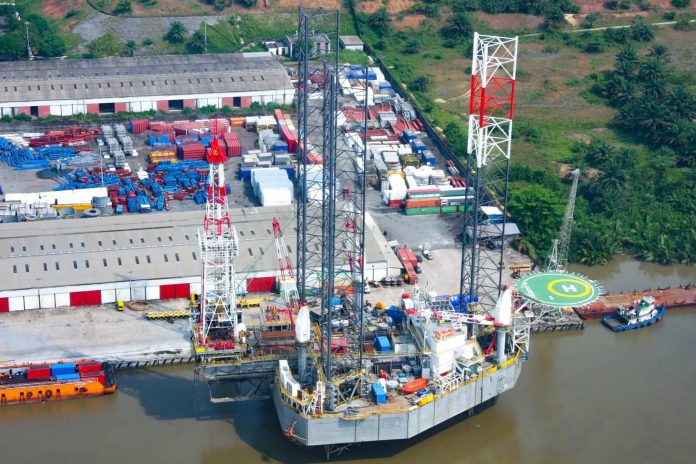
Nigeria’s non-oil exports grew sharply in the first half of 2025, reaching $3.225 billion — a 19.59% rise from the $2.696 billion recorded in the same period of 2024, according to fresh data from the Nigerian Export Promotion Council (NEPC).

The figures, announced in Abuja on Sunday by NEPC Director-General Nonye Ayeni during the presentation of the H1 2025 Non-Oil Export Performance Report, show that export volumes also climbed to 4.04 million metric tonnes, up from 3.83 million metric tonnes in H1 2024.

The performance builds on a strong first quarter, when exports hit $1.791 billion, up 24.75% from $1.436 billion in Q1 2024. Volumes for that period surged 24.3% to 2.416 million metric tonnes, suggesting the momentum is more than seasonal.

Ayeni said the scope of products leaving Nigeria’s shores continues to widen. In H1 2025, 236 distinct products were exported, up 16.83% from 202 products a year earlier. These ranged from agricultural commodities and extractive industry products to manufactured goods and semi-processed items.

She highlighted a slow but steady shift away from a purely agricultural export base toward higher-value semi-manufactured goods, which fetch better prices on the international market. Cocoa beans retained its top spot in the export mix, accounting for 34.88% of total export value, compared with 23.18% in H1 2024. Urea and fertilizer products ranked second at 17.65%, up from 13.78% last year.

AfCFTA and value addition drive growth

Ayeni credited the African Continental Free Trade Area (AfCFTA) with boosting Nigeria’s export prospects by opening new markets across the continent and lowering tariff barriers. This, she said, has encouraged more Nigerian exporters to explore opportunities beyond traditional partners.

The NEPC chief also pointed to a shift in export strategy: more businesses are investing in product transformation before shipment, leading to higher returns.

“The non-oil export of Nigerian products is gradually diversifying from traditional agriculture exports to semi-manufactured products,” she noted.

Ayeni said the council’s intervention programmes — from training on quality standards, packaging, and certification to guidance on export documentation — have made Nigerian products more competitive abroad. These initiatives, she explained, have been particularly important in meeting the standards of emerging markets such as India, Brazil, and Vietnam, which, along with several African nations, have driven much of the recent demand.

The export gains align with President Bola Tinubu’s Renewed Hope Agenda and the Ministry of Industry, Trade, and Investment’s push for a more diversified, resilient economy. Ayeni reaffirmed NEPC’s readiness to deepen collaboration with stakeholders to further boost export value and volume.

She said the combination of market expansion under AfCFTA, rising global demand for value-added goods, and government-backed capacity building has created the conditions for sustained growth in non-oil exports — a sector long seen as critical to reducing Nigeria’s reliance on crude oil revenues.

However, experts warn that while the latest figures are promising, they are not yet enough to transform Nigeria’s economic fundamentals. The country’s import dependence — especially for refined petroleum products, machinery, pharmaceuticals, and key industrial inputs — continues to offset export earnings. This means that any trade balance improvement could be quickly eroded if global oil prices dip or domestic manufacturing fails to scale up.

Additionally, the volatility of the naira remains a pressing concern. The recent export boost has provided some foreign exchange inflows, but sustained stability will require consistent export performance, diversification into higher-value goods, and a clear fiscal strategy to reduce reliance on foreign debt. Analysts stress that without long-term reforms — including infrastructure upgrades, energy reliability, and streamlined export procedures — the momentum could fade.

Overall, the export gains mark a rare positive note for Nigeria’s economy in 2025, offering policymakers a window to reinforce currency stability, encourage industrialization, and reshape the nation’s trade profile. The challenge will be ensuring that this short-term progress becomes the foundation for sustained growth, rather than another fleeting bright spot in an otherwise volatile economy.

Chinese State Media Escalates Security Criticism Of Nvidia’s H20 Chips, Says It’s Not Safe For China

0
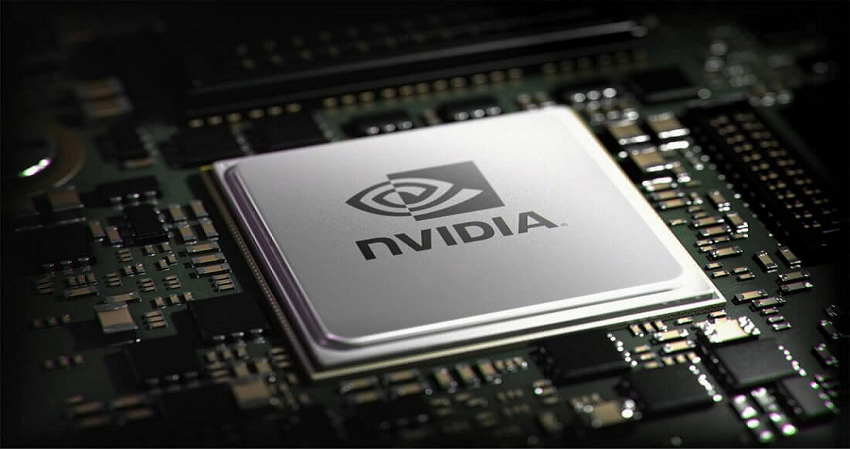
Nvidia chip

China’s state media has intensified its criticism of Nvidia’s H20 artificial intelligence chips, alleging potential security vulnerabilities and dismissing them as neither technologically advanced nor environmentally friendly.

The latest remarks, published Sunday on Yuyuan Tantian, a social media account affiliated with state broadcaster CCTV, come days after Beijing formally questioned the U.S. semiconductor giant over alleged “backdoor” risks.

The H20 chips—specifically designed for the Chinese market after the U.S. government imposed sweeping export restrictions on high-performance AI processors in late 2023—have become a lightning rod in the broader tech and trade standoff between Washington and Beijing.

Security Allegations and Beijing’s Official Probe

On July 31, China’s Cyberspace Administration summoned Nvidia executives for a closed-door meeting, demanding an explanation over concerns that the H20 chips could contain hidden hardware mechanisms enabling remote shutdown or unauthorized access—so-called “backdoors” that bypass normal security protocols. Such vulnerabilities, if proven, could theoretically allow foreign actors to disrupt AI systems or siphon sensitive data without detection.

Nvidia has repeatedly denied the allegations, stating both in July and again on Sunday that its products contain no such backdoors. The company maintains that the H20 chips were engineered to comply with U.S. export controls while meeting Chinese market needs, and that all of its hardware undergoes rigorous security testing.

Yuyuan Tantian’s post, published on the popular WeChat platform, struck a tone blending consumer caution with political signaling: “When a type of chip is neither environmentally friendly, nor advanced, nor safe, as consumers, we certainly have the option not to buy it.”

The post also claimed the chips could enable “remote shutdown” capabilities via hardware-level vulnerabilities, echoing growing security concerns in Beijing. The criticism follows a similar call from People’s Daily earlier this month, which urged Nvidia to provide “convincing security proofs” if it hoped to restore Chinese consumer confidence.

A Chip Born of Political Compromise

The H20 was born out of an awkward compromise. In April, the Trump administration banned its export to China over national security concerns, but President Donald Trump reversed the ban in July following high-level talks with Nvidia CEO Jensen Huang. Licenses to sell the chip in China were subsequently granted—albeit under an unprecedented condition that Nvidia must pay 15% of its H20 revenue from Chinese sales to the U.S. government, a first in American export control history.

Implications for the U.S.–China AI Arms Race

Beijing’s latest accusations appear aimed at undermining the H20’s credibility in the domestic market while reinforcing China’s push for indigenous semiconductor development. Industry analysts say the criticism is not only about the chip’s technical merits but also part of a broader narrative to cast U.S.-made AI hardware as unreliable or compromised, mirroring U.S. rhetoric against Chinese telecom and technology companies in past years.

Washington’s export restrictions have already triggered a reshuffling in China’s semiconductor industry, with domestic players like Huawei’s Ascend chips and startups such as Biren Technologies racing to fill the gap. Analysts warn that if China blacklists the H20, it could accelerate local chip self-reliance — the very outcome U.S. trade policy sought to slow.

This backdrop makes the stakes higher for Nvidia. China is both a major revenue source and a politically sensitive market, and any sustained consumer backlash could erode its position just as Washington is using export controls and licensing deals to limit Beijing’s AI capabilities.

The H20 chip has become more than a piece of silicon—it is now a symbol of how technology, economics, and national security are being negotiated in real time between the world’s two largest economies, especially as U.S.–China trade talks resume.

Altman Sees Gen Z as ‘Luckiest in History’ Amid AI Disruption — But History Warns of Painful Transitions

0

OpenAI CEO Sam Altman has painted a strikingly optimistic picture for Generation Z, telling the Huge If True podcast that if he were graduating college now, “I would feel like the luckiest kid in all of history.”

His upbeat view comes despite acknowledging the disruptive force of artificial intelligence, with “some classes of jobs” set to “totally go away.”

Altman, whose company is building advanced AI systems that could “far exceed humans in almost every field,” told host Cleo Abram that the real challenge lies not with 22-year-olds—who can adapt—but with “the 62-year-old that doesn’t want to go retrain or reskill or whatever the politicians call it.”

His optimism rests on the unprecedented power of AI tools like OpenAI’s newly released GPT-5. Altman envisions individuals being able to launch billion-dollar companies and create world-class products without the large teams once needed.

“You can do things that used to take hundreds of people,” he said, predicting a surge in “completely new, exciting, super well-paid, super interesting jobs.”

He even imagined a future where a college graduate could join a mission to explore the solar system.

Yet, Altman acknowledged that AI’s rapid adoption could upend the labor market, citing forecasts that “half of the entry-level white-collar workforce will be replaced by AI” within five years. Data backs this up: Goldman Sachs chief economist Jan Hatzius has found the traditional “college degree safety premium” largely gone, while participation rates among young non-degree workers have fallen sharply since 1997. Layoffs in July 2025 surged—nearly half due to AI and “technological updates,” according to Challenger, Gray & Christmas.

A historical pattern of upheaval

Altman’s perspective echoes historical cycles of technological transformation. In the 1980s, the rise of the personal computer reshaped office work, eliminating swathes of clerical jobs but creating a new wave of tech-driven careers. The internet boom of the 1990s fueled e-commerce and digital media, but also left many workers from pre-digital industries displaced. Similar anxieties accompanied the Industrial Revolution and the early automation era, where gains in productivity often came at the expense of stable employment for certain groups.

Bill Gates, Elon Musk, and other high-profile tech leaders have also warned that AI poses a significant threat to jobs. Gates has likened the moment to the invention of the microprocessor, predicting a fundamental shift in the workforce and warning governments to prepare for widespread displacement. Musk has repeatedly called AI the “biggest existential threat” to humanity, stressing its economic and social risks.

However, Altman’s concerns extend beyond employment. Speaking recently at the Federal Reserve in Washington, he warned of an impending “fraud crisis” driven by voice-mimicking AI software, arguing that the threat may already be unfolding, according to cybersecurity experts. He described AI’s trajectory toward “intelligence too cheap to meter” as both promising and alarming.

When asked about distinguishing real from fake in a future saturated with AI-generated content, Altman suggested society will keep adjusting its definition of “real,” much as it has accepted AI-enhanced photography. But he also predicted that these shifts may demand “fundamental changes to the social contract,” urging people to integrate AI tools into daily life to stay ahead.

Altman’s core advice is for people to adopt AI: “Just using the tools really helps.” For him, the opportunity AI offers outweighs the risks, at least for the adaptable. But as history has shown, from the PC revolution to the internet era, not everyone will find the transition painless.

Catch the Next Rally with These Top Performing Cryptos: BlockDAG, XRP, Sui, and PENGU

0

As the crypto market prepares for its next rally, attention is shifting toward projects showing strong growth potential. While some major coins have already peaked, others are building momentum, and the top performing cryptos right now are gaining attention across the market.

From regulatory progress to real-world adoption and viral meme traction, each of these cryptos is making moves that matter. Whether the focus is on utility, trend momentum, or technical signals, this list features four projects showing clear upward movement: BlockDAG, XRP, Sui, and PENGU.

With price floors forming and sentiment turning bullish, these picks could be ready for the next leg up. For those planning ahead for 2025, these are the top performing cryptos to keep in view before they capture wider attention.

BlockDAG (BDAG): Rising ROI Opportunity in Final Presale Phase

BlockDAG (BDAG) is drawing notice with one of the most notable presale runs of recent years. Priced at $0.0276, it has a confirmed listing target of $0.05 later this year. This has positioned BDAG as a standout in current market discussions.

The figures reinforce its momentum: over $370 million raised, 25 billion coins sold, and more than 200,000 active holders. Beyond numbers, BlockDAG is adding practical features. Its Demo Trading Dashboard lets users test strategies before the official launch.

With 2.5 million app users through the X1 mobile miner and 19,000 ASIC miners sold, BlockDAG (BDAG) is building as a functioning Layer 1 ecosystem. As the presale nears completion, BDAG remains firmly in the conversation among the top-performing cryptos before its price floor increases.

XRP (Ripple): Legal Clarity Drives Fresh Market Surge

XRP has stepped out from under the weight of its long-running SEC case with renewed strength. After the SEC dropped its appeal and agreed to a $125 million settlement, XRP climbed 11%, signaling a wave of bullish sentiment.

This resolution removes a key source of uncertainty and positions XRP among the top performing cryptos, especially appealing to major market participants. On the charts, XRP is holding near $3.30 with resistance close to $3.34. A breakout above this level could open the door for more gains in a market seeking assets with regulatory certainty and a proven cross-border payment role.

Broader economic factors, including expected interest rate cuts by the U.S. Federal Reserve, are adding momentum to XRP’s rise, aligning technical and fundamental drivers. For those seeking stability with upside potential, XRP remains a strong contender.

Sui (SUI): Banking Partnership Fuels Price Breakout

Sui (SUI) has earned its place among the top performing cryptos with a mix of technical strength and institutional recognition. Its integration with Swiss bank Sygnum, offering custody, staking, and trading, triggered an 8.6% price rise. The project now holds a market cap above $13 billion, supported by a notable jump in trading volume.

From a technical view, SUI has broken out of a falling-wedge pattern and is targeting levels near $4.58. It is also benefiting from the Layer 1 sector rotation, as market players look for high-capacity platforms with less crowding than Ethereum or Solana.

With growing capital inflows and strong real-world partnerships, Sui is positioning itself for continued gains. For those narrowing their focus on the top performing cryptos, Sui’s blend of adoption and technical setup stands out.

PENGU (Pudgy Penguins): Meme Energy Meets Market Strength

PENGU, tied to the Pudgy Penguins NFT brand, is proving that meme coins can deliver more than short bursts of hype. Trading near $0.0374, it has generated over $660 million in daily volume and climbed more than 150% in the past month.

The token’s vibrant community, rising liquidity, and cultural pull are helping it secure a spot among the most notable meme projects this cycle. Weekly gains of 12% show steady buyer engagement from both retail traders and large holders.

While it lacks the complex architecture of Layer 1 blockchains, its reliable performance and strong community presence make PENGU one of the top performing cryptos to watch, especially for those following sentiment-driven trends with high visibility.

Final Takeaway

With the market entering a new growth phase, participants are once again searching for value, momentum, and fresh narratives. BlockDAG stands out with its presale success, functional tools, and reward system that strengthens community participation. XRP benefits from legal clarity and bullish technicals. Sui offers high-profile financial integration and strong chart patterns. PENGU taps into cultural and trading momentum.

Each brings a unique advantage, yet all share a common thread of strong interest and upward movement. For those preparing for the next bullish leg, these four should be at the forefront of any shortlist.

As trends shift quickly, the most strategic moves happen before the majority catches on. Keep these top performing cryptos in focus and be ready while prime opportunities remain.