

Ethics in business refers to behavior in which a business is communicating to its daily connections with the world. Business ethics at an organization not only applies to the communication of the business to the world, but also to one-on-one dealing with every single consumer. Every business has its own ethics code; however for every […]
13.0 – Morals, Ethics, and Laws
In simple words, ‘ethics’ is a term which refers to the set of standards, and rules, which everyone is expected to adhere to. These standards and rules are designed to help us govern our conduct in a group of individuals or a society. Avoid violence, respect one another, and treat everyone politely are some ethics […]
Two Reasons Why I Struggle with Bitcoin and Cryptocurrencies

I struggle with Bitcoin and its amalgam of crypto-incarnates. Yet, it is important to note that I am fan of blockchain which powers these digital currencies. Here are the two core reasons why I have struggled with Bitcoin as a currency:
- Limited Economic Value as Currency: These currencies do not fix any major friction in the real broad economy. Unless for some shadow activities, I do not just understand why someone would prefer Bitcoin over Pounds, U.S. dollars and Yen on the streets of London, New York and Tokyo respectively. Sure, Bitcoin could find value in Zimbabwe and Venezuela, but those alone are not going to create alpha for anyone that wants to live on crypto. Those are secondary economies and cannot transmute to define the world. How would a man that wants to buy a real estate choose Bitcoin, to be outside the control of government, when he needs government to protect the investment? People, nothing is broken in the world currency, and Bitcoin cannot fix anything. Yes, it seems we have a solution for a problem that does exist at scale.
- Lack of Maturity: Bitcoin and variations are like software. They would keep evolving. Ether is already better than Bitcoin as it makes it easier to build on top of Ethereum. What would happen in 25 years when newer versions of these cryptocurrencies emerge? Would the ones of today be relevant? This is a risk since anyone can wake up any day and launch his own currency. Possibly, Bitcoin within 25 years would become a primitive crypto as newer and better variations which would attract new users would emerge. That unbounded supply would diminish the cryptocurrencies of today. Sure, they could make all upward compatible but that does not take away the risk of most migrating to a new currency entirely. Can you move your Myspace page to Facebook?
Notwithstanding my concerns on the usage as currencies, I do believe they offer benefits as store of value. People can believe whatever they want. People put trust on gold, snakes, mountains, dollars and Naira. So, there is no reason why we should exclude Bitcoin. A product is useful for whatever customers use it for. So, storing wealth could work for Bitcoin and variants, but becoming a currency is hard for me to see. Yet, even in storing that value, the lack of maturity could be a displacement risk where your “money software” is no more upward compatible.
Why Six Sigma and TQM Are Bad for Your Web Business

From Six Sigma to TQM (total quality management), the industrial age world pioneered many management systems. But I can tell you that some may not be relevant in your web business.
Yes, I do believe that the concept of TQM and some of the old management systems used in the industrial age empires are not necessarily relevant in the knowledge economy. In the past, you built for absolute quality and perfection. [Case in point, Six Sigma: “set of management techniques intended to improve business processes by greatly reducing the probability that an error or defect will occur.”]
Today, you build for a balance between quality and quantity. Yes, you launch a half-baked web product in the day and wait for comments to fix it in the night. You make a video game in the day and wait for comments to fix it in the night. You make a hardware product (yes voice assistant like Alexa) but the development never finishes because the AI that powers it in the cloud is a continuum. The ways products are engineered are changing.
Largely, the nature of the product distribution means that you can succeed by producing and learning from your customers while on the fly. So, a product can be built within 24 hours and launched with bugs which can be fixed on the go.
While TQM and Six Sigma remain for the industrial age firms, pursuing them in knowledge age companies would slow you down. If Alexa had waited to improve its voice assistant product to the level it is now instead of launching it few years ago, it would not be in the leading position it is now. It came with defects and errors but with the web distribution, it has been fixing those issues. The Six Sigma would not have approved such a product for launch. Yes, Alexa would never be a completed product because the AI would keep evolving.
Always remember this statement from Google engineer as you develop:
To Luke Wroblewski, also a Product Manager, startups must measure the kind of design that works specifically for the task; focus on core features, grow critical engagement and ensure adequate ergonomics.
Wroblewski advised startups to stake a balance between quantity and quality to create a lasting solution.
Yes, you cannot expect to be absolutely perfect. Have some bugs and errors even as you move fast to win your markets. This is not about Six Sigma and TQM; it is about having the capacity to learn what customers want and pivot on the fly. Sure, you can apply Six Sigma and TQM in making sure what you want to accomplish are fine but do not overly be driven by the absolute demand for perfection.
You need quality but it must have a balance. In web business, your recall happens in minutes and can be fixed in seconds. That is different from making turbines and power plants where recalls could destroy a business. So, do not apply management systems designed for such businesses in your firm. Learn how they break things in Facebook, Google, Amazon and Snap and keep moving. You complain, they fix and tomorrow everyone has forgotten.
The GE’s Failing Management Factory
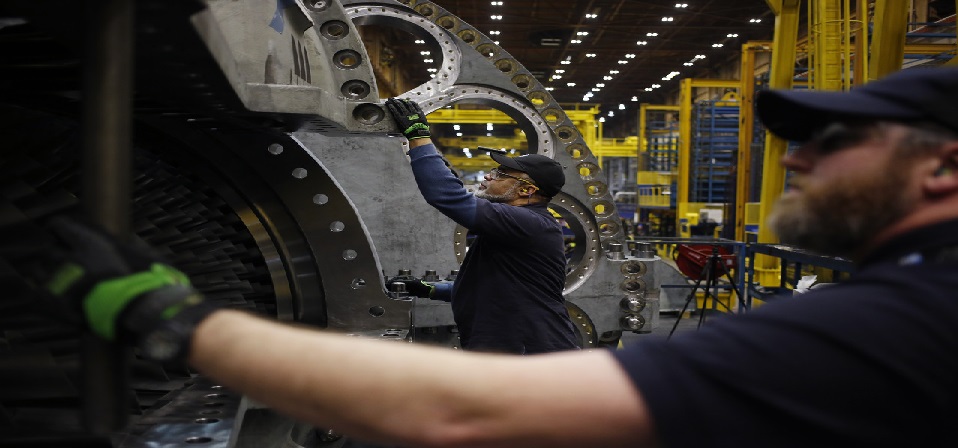
GE (General Electric) used to be the gold standard on the development of management systems and processes. At its zenith, GE was known as a factory where some of the finest business leaders were incubated, nurtured and prepared for leadership. With peerless business management and training systems, GE supplied a generation of CEOs to corporate America. The company pioneered and scaled many industrial age management systems and sold them across the world. One of those systems is the Six Sigma: Six Sigma was invented in Motorola, GE through its former leader, Jack Welch, popularized it when the company adopted it. As Toyota perfected its Kaizen and Japan pursued Total Quality Management, GE gave America management systems for growth and success. But that was the old GE; the present GE is sick.
Last December, I offloaded on GE for many mistakes in its strategy. My conclusion was that GE should reach out to modern conglomerates like Amazon, Google and Alibaba to learn new things. I do believe that the concept of TQM and some of the old management systems used in the industrial age empires are not necessarily relevant in the knowledge economy. In the past, you built for absolute quality and perfection. Today, you build for a balance between quality and quantity. Yes, you launch a half-bake web product in the day and wait for comments to fix it in the night. You make a video game in the day and wait for comments to fix it in the night. You make a hardware product (yes voice assistant like Alexa) but the development never finishes because the AI that powers it in the cloud is a continuum. The ways products are engineered are changing. While that may not necessarily apply to making turbines, GE could learn from these modern firms.
Largely, the nature of the product distribution means that you can succeed by producing and learning from your customers while on the fly. So, a product can be built within 24 hours and launched with bugs which can be fixed. The “total quality” remains for the industrial age firms but not for many knowledge age companies.
I do think that GE needs to take management internships in Google (yes Alphabet), Alibaba or Amazon to have a better idea on how the world (knowledge) economy works. A “premier industrial company” does not mean that one cannot bring the knowledge business in the same economy. Alphabet runs any type of business today and finds ways it can build synergies across them. GE is simply fixated on making heavy equipment which may not be needed in the ways it has imagined. Everything is changing, including transportation, and GE is right to be thinking of leaving the locomotive business: with Uber, Lyft and others, locomotives may not be a really good business in the near future. Simply, GE lost the world; it has a lot of work to do, to recover. Its problems are severe, because it has sold some of its best assets, when it expected the world to align to its future, instead of adjusting to the emerging and evolving new world. A more agile Board may not be a bad idea: I need the badly beaten stocks to rise.
Yet, GE could still be fine if not for one of the worst strategic mistakes: exiting the financing business. That was the origin of its cashflow problems. The new businesses are not bringing free cashflow to compensate what GE Capital was providing.
GE wanted to streamline its business, cutting off GE Capital which was very important in deal financing and generating good cash flow. The cashflow has been critical in GE’s capacity to sustain its dividend tradition, despite the lack of growth in the stock. Selling GE Capital was also problematic in another angle: the GE Capital was making it easier for GE to sell its wares by providing easier capital to clients. Partly, GE could be struggling because of the absence of GE Capital.

This week, The Wall Street Journal tears the former CEO of the company, Jeff Immelt, down in a piece.
GE’s precipitous fall, following years of treading water while the overall economy grew, was exacerbated, some insiders say, by what they call “success theater.” Mr. Immelt and his top deputies projected an optimism about GE’s business and its future that didn’t always match the reality of its operations or its markets, according to more than a dozen current and former executives, investors and people close to the company.
This culture of confidence trickled down the ranks and even affected how those gunning to succeed Mr. Immelt ran their business units, some of these people said, with consequences that included unreachable financial targets, mistimed bets on markets and sometimes poor decisions on how to deploy cash.
Reuters has a piece also on the GE problem, making a case that Immelt mismanaged GE: “John Flannery, GE’s new chief executive, blamed the forecast, along with poor management and other factors, for the power business meltdown. In January, he warned the pain would continue this year “and potentially be worse than expected.”
All Together
For a company that prides itself as a center of management system to collapse in this way is unfortunate. The implication is that GE may be out of sync with the tenets of modern business processes. The industrial age time may be passing, and now it needs to learn what works. The strategic mistakes over the last ten years have been constant, and if GE does not stop making them, this iconic American company may go. Yes, it could be broken into pieces to salvage value for its investors.