DD
MM
YYYY

PAGES

DD
MM
YYYY

spot_img

PAGES

Home Blog Page 7273

TStv’s Goliath Challenge of DStv

2
TStv

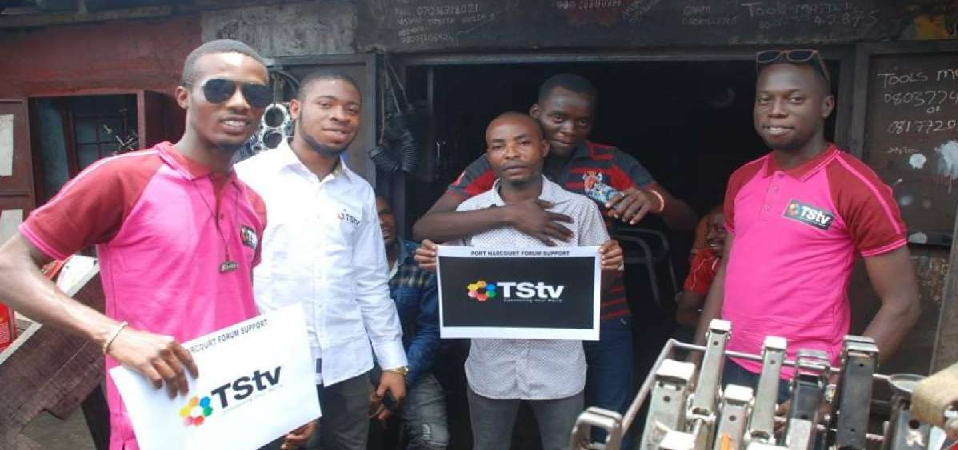
TStv, a new pay TV company, is beginning a journey to challenge the largest company in Africa by market valuation. Naspers which owns MultiChoice operates the DStv brand across sub-Saharan Africa. DStv is a digital satellite TV service which leads its category in the region. It is well funded by South Africa’s Naspers which has a valuation of $100 billion.

DStv (Digital Satellite Television) is MultiChoice’s digital satellite TV service in Sub-Saharan Africa, launched in 1995, providing various bouquets offering general entertainment, movies, lifestyle & culture, sport, documentaries, news & commerce, children, music, religion and consumer channels to MultiChoice subscribers.

So TStv wants to challenge DStv. It will be a battle. Clearly, TStv is the underdog in this game and it will be an epic show. Naspers has crushed any challenger in this space and it combines to dominate the nearly 23 million subscriber pay TV market in Africa. TStv is coming with the following:

  • Affordable every man and woman pricing: It believes that it can peel off the subscribers from DStv by pricing more competitively. DStv is a premium platform but it is relatively expensive. TStv thinks it can deliver great service at better price to get customers to switch.
  • It has government support: The Nigerian government is on board, promising a tax break within the first three years. This is typical for any creative industry participant. But meeting the requirements is not necessarily easy.
  • Savvy marketing: TStv understands the game. It has done more to get a buzz of its products through clever marketing than most that came before it. That may be its strength as it begins this uphill battle to take on Africa’s most valued company.

The Strength of DStv

For me, I do think the biggest asset in DStv in Africa is sports. I know that it has control over most European league broadcast agreements in sub-Saharan Africa, including Nigeria. For the very fact that it controls Premier League (England) and Spanish League (La Liga), many people will stay with it. In short, I expect more than 40% to stay because of these TV rights. That is the challenge for TStv. How are you going to break into the party without sports? Nigerians love sports.

DStv is a tested brand in pay TV and commands the lion share of the market controlling 11 million subscribers in the 23 million subscriber- sector. Nigeria’s is a key market with 4.4 million customers. DStv has deep contents including entertainment and it continues to invest massively with its war chest as a very rich company.

Naspers Limited’s payTV and entertainment unit, DSTV has disclosed that it has it has a total of 11 million subscribers across Africa. The disclosure was released to media experts across Africa to promote DSTV’s media and sales offerings to advertising and media agencies.

DSTV’s subscriber base grew by 8% year on year from 10,2 million to the current figure. Nigeria leads its African footprint with 40% of the total subscriber base. By implication, DSTV and GoTV put together have 4.4 million subscribers in Nigeria.

Out of the 11 million subscriber base, GoTV, DSTV’s extended subsidiary catering for the entry level payTV market seems to be growing slowly than expected. The unit was reported to have a total of 2.5 million subscribers across 11 countries in Africa.

DStv operates GoTV which is an affordable pay TV missing some of the premium contents you find in the main DStv. Yet, as noted in its disclosure, the market is not growing very well. In other words, customers continue to patronize DStv despite its high cost and the availability of  a cheaper alternative. But it is very possible that GoTV does not really offer much value.

Naspers has the funding to continue to produce exclusive contents which will keep people in DStv. You can see the advantages of DStv as follows:

  • Experience: It has more than 20 years of experience in this business. It was started in 1995 and it knows what works and does not work
  • Premium contents: From sports to entertainment, DStv is the undisputed category-king. The Magic channel which is designed along the Nigerian Nollywood loving customers is one of the best in the continent. This is a moat as it has covered the sports and entertainment making it more challenging for anyone to come up with anything else.
  • Beyond African contents: Besides the Magic channel, DStv has great Indian movies, Hollywood and Latin American contents. These expanded content portfolios are the reason why customers remain with it despite the relative cost
  • Bundle Showmax and DStv: If things become more challenging, Naspers will bundle Showmax (DStv’s online video on demand) and DStv so that if you have account of either, you can enjoy both. No one comes close at its scale in these two market segments in Africa. With that bundling, DStv will keep its customers.

The Challenge Before TSTV

TSTV is structured to become like GoTV but the problem is that GoTV is not really doing well. In the pay TV business, content is king. If you do not have the content, the pricing makes no difference. Right now, GoTV is not doing well despite being cheaper because the contents are not there to attract customers.

Besides GoTV, StarTimes is another competitor that TSTV has to deal with. Owned by Chinese investors, StarTimes is cheap, and affordable and largely promising with growing customer base, now at 10 million. People still want the premium contents. GoTV is cheaper than StarTimes. But of course, StarTimes offers news analysis which gives it a minor edge. This could be a consolation to TStv. If StarTimes broke into the markets with good pricing before DStv responded, it does mean with decent contents, customers can be swayed. I do think GoTV may be struggling because of limited valuable contents.

The video on demand players like iROKOtv and Netflix are also competitors. Anything that engages a customer time is a threat to pay TV. Of course, these online contents are mainly shows and movies at the moment in Africa without the live programming you get in TV as in sports. Nonetheless, they are competitors to TStv and that does not help its vision. DStv parent company Naspers owns ShowMax which gives it another major advantage across emerging channels.

TStv will need more assets to compete against GoTV and StarTimes which are closer to its market segments than DStv. HiTV tried the same strategy many years ago, coming with cheaper pricing but struggled. StarTimes is from China and that gives it strong financial backing. TStv will have to do more. The market is still at infancy but the competition is also huge. Both DStv and StarTimes control more than 90% of the market.

All Together

TStv will begin operations on November 1 2017. Nigeria welcomes it as we want more options and choices in the markets.

Beside Nollywood and foreign programming, there are opportunities for documentary of Nigerian history, culture, technology and other things. Also, there are many growth opportunities ahead. So, TStv could find its moments as it begins its operations in Africa’s most populous nation. Nevertheless, it has to plan very well as it takes on the Goliath of pay TV in Africa. Sure, Goliath has been beaten in the past and that should be encouraging for TStv.

At the end, I do think we will have Apple iOS and Google Android scenario here. DStv will be the Apple while StarTimes/TStv will be the Android. The latter set will be everywhere while the former keeps the profit. So, at the end, DStv with its premium contents and higher pricing will keep more than 60% of the profits in the sector. That profit is what Naspers is really interested in.
Where To Find Your Best African Business Ideas

3

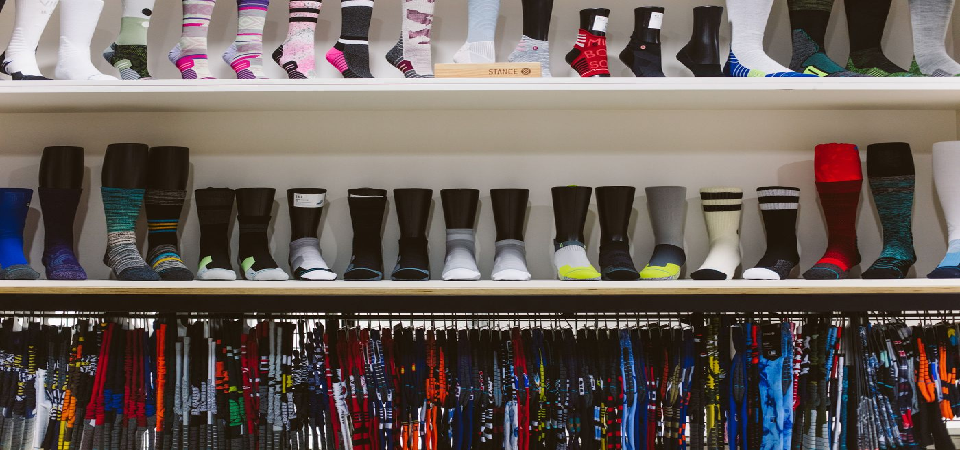
There is one company I want to introduce to you today. It is named Stance. It makes socks. Yes, socks, the wear you use for your shoes. The startup is hot, raising $110 million from legendary venture capital firms like Kleiner Perkins Caufield & Byers, August Capital, and Shasta Ventures. Yes, Silicon Valley wants to disrupt the socks sector, a highly low-scale and dreamy sector. But as it seems, that is where the money could be found.

Venture capitalists like the company, too. Pedigreed investors, including Kleiner Perkins Caufield & Byers, August Capital, Shasta Ventures and others from Silicon Valley, have put $110 million in the sock business. “No one had thought about this category,” says Tod Francis, co-founder of Shasta Ventures. Trudeau, who attracted attention in May for a different pair of Star Wars socks made by Stance, is a fan but not an investor.

Sales should exceed $100 million this year, and it’s looking to turn a profit next year, according to two people with knowledge of the finances, who asked not to be identified because the information is private. Stance says it has spent more than half of the money it raised from investors. The company may need to tap more capital as it expands beyond men’s socks and underwear. Women’s lingerie debuts this month, and subscriptions for regular shipments of its products are also in the works.

There is a huge lesson for us here: it does not have to be extremely complicated to find opportunities in markets. You do not need to master software, AI, robotics, 3D and other those esoteric things before you can build a business with potentials to create great value. The markets we have today especially in Africa are not at full maturity. That means, we can still find value in them through improved business models. You can make money in making juice. You can hit big in packaging palm oil and exporting same. You can create immense value in finding better ways to preserve and transport vegetables. You must not be a techie before you can find your moments. Stance has taken socks and the company is expecting to hit $100 million in sales this year.

The following are other dreamy startups, which are not necessarily in technology, that have done well

  • Casper – makes mattresses and has brought fun in the business of selling mattresses
  • Hubble – sells contact lenses. It is finding huge value in that business which everyone will think has no opening
  • Brandless – food and household goods.

Find the Ideas

I get this question always: I am looking for business ideas. Typically, I tell the person to check in his or her environments for things which are not done perfectly in the ways he/she will like them done. Why there are many factors one has to consider before investing, the process of arriving at a business vision does not have to be extremely complicated. If no one is having pain points in the area your solution is developed to fix, it is very possible that no one will buy the product when you launch.

As you see the opportunities in the markets, you must examine the ones you have interests and capabilities to execute. It does not make sense to be living in Lagos, and be asking someone in London to give you a business idea for Lagos. Such insights could result to products and services with zero possibility to succeed in Lagos.

Always remember that business is about fixing the friction between buyers and sellers. If you do not see any friction (or someone has drastically reduced it) in the relationships between buyers and sellers in that sector, it means that the possibility of a business succeeding may be limited. But where frictions exist, that is where the money is and that means you can establish a business to fix the frictions.

Dear African Web Entrepreneurs, Develop Your OFFLINE Growth

0

It is crazy out there with all the talks of digital disruptions they are throwing on Africa’s offline industries. The web entrepreneurs will magically grow from one customer and take 30% of the total market. Yes, you can use your app to onboard 16 million bank customers in three years when it took you 123 years to get 14 million customers.

Sure, there are millions of people in Africa. You can get a digital business to take your percentage. Give him 10% of the 1.2 billion people and he will smile to the Forbes billionaire party. But what if I tell you that the person with that projection is wrong? Except blogging, which is a digital native business (even that could need offline sales efforts), I will recommend you get build an OFFLINE Growth team even if you run a digital/web business in our continent.

That is how it will be till 2022, at least. The money is still offline and I want us to respect that.  You also need to understand that the people are still offline. Every data from Konga to Uber to PrepClass and more will tell you just that. These are hard numbers from people pushing the envelopes. I explain in this video.

My prediction of 2022 is explained in this piece.

In today’s videocast, I make a case that Africa will enter the era of affordable broadband internet in 2022. That will be the year we will begin a new dawn of immersive connectivity where you can eat and surf all you can. Industry players will take off the Internet meter and then focus on service, experience and quality. From satellite broadband vendors to the MNCs with balloons and drones, the sector will become very competitive and service will drive growth. This has happened in the past – every decade, Africa experiences a major industrial transformation. We saw that in banking and voice telephony. 2020s, starting at 2022, will be the decade of immersive connectivity.


The Indigenous Capability Lesson from Shuttered Ibom Specialist Hospital, Nigeria

2

The “world class” multi-billion Naira hospital built and commissioned by former governor of Akwa Ibom State, Godswill Akpabio, has been closed. Everyone knows that the hospital was never a world class since when the former governor had a minor accident, he decided to fly abroad instead of being treated in his “world class” hospital. Simply, he had executed another fraud which politicians unleash on Nigerian citizens daily.

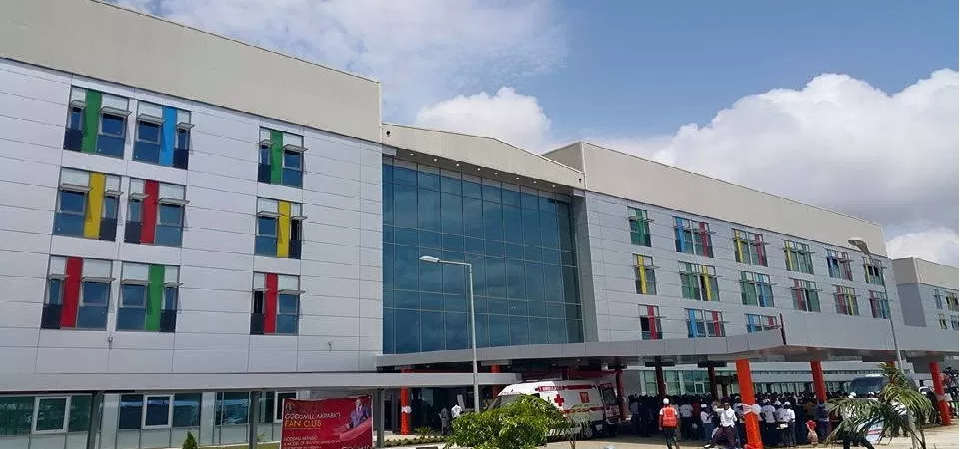
The Ibom Specialist Hospital in Uyo, Akwa Ibom State, has been shut down, just two years after it was built and commissioned by the administration of former governor, Godswill Akpabio. Almost all the health workers in the hospital were foreigners, mostly from India.

Mr. Akpabio had boasted that the hospital, which he described as ‘world class’, was better equipped and higher in status than university teaching hospitals in Nigeria, and that it was going to promote medical tourism in the country.

The multi-million dollar hospital was shut down in September after its private managers terminated their contract with the state government and withdrew from the facility.

When visiting the hospital on Monday evening, the facility was locked down; apart from the security officials, not a single person was inside its massive buildings.

Visitors were not allowed entry

You read it right. A governor built a public hospital, imported foreigners and put that hospital in the hands of private managers to run. Why did he do that? It is simply the lack of vision to develop indigenous capabilities. Nigerian leaders always think that every corner can be cut: just get someone abroad and the problem will be fixed. But that is a mirage and a total illusion. Hiring and maintaining foreign labor is expensive and it rarely works unless you are in the oil & gas sector. For a state hospital which is largely a social enterprise, a simple financial model would have shown the former governor that his idea was not sustainable.

The Ibom Specialist Hospital in Uyo, Akwa Ibom State – a wasted N41 billion (credit: PR Times)

Unless you are a doctor working in a government hospital and running a private clinic by the side, it is very challenging to make profit running clinics and hospitals in Nigeria. Why those doctors that run clinics by the side make money is that they always share government facilities and tools without reimbursing governments. I had the experience many years ago as I was entering secondary school. I went to the local government general hospital for my Doctor’s Report which was required in the school. The medical director told me that I should come to his house to collect the report. Of course, as a kid, I did and he gave me the report. I did pay him and not the government. Every kid in my school had the same experience. We went to the government clinic but were diverted to the home of the medical director. That experience is common today.

But when it is a state government and you think you will make money to cover dollar-denominated expenses, you are not serious. The hospital could not even last up to five years, thereby proving how off the government was in its financial planning.

The building, in coming months, will be covered by weeds and criminals would go in and steal the electrical systems. Within the next two years, the building will be a cave. Another money – N41 billion – wasted in Nigeria!

Nigeria needs to learn that homegrown capability is the only way to build sustainable public enterprises. Imagine if the governor had developed a ten year plan that would extend beyond his tenure and subsequent administrations commit to it. He could decide to train 200 Akwa Ibom doctors within the first six years and in the 7th year commission this hospital. Some foreigners could be hired to support the growth of the local doctors, but over time, they will be phased out. That would be a sustainable model than flying doctors when you do not have a clear roadmap to cover the costs.

Beyond Facebook, the Opportunity for Real-Identity Social Media

0

Facebook is doing great. But in the next fifteen years, if Facebook does not evolve into a real-identity social media, it will struggle. As banking, insurance and more services move social, we will need social commerce. That social commerce will be anchored on real identities. Facebook does not have that today. Anyone can create a Facebook account without the real authenticity as maintained by government.

This assertion goes beyond government efforts to track its citizens. As China modifies its laws to demand that users of social media sites use their real names before they can be on registered, with posting/commentary privileges, on websites, phone apps and digital forums, other countries will pick that and adopt the philosophy. In Africa, Cameroon may prefer that over shutting down Internet. Eritrea and Sudan may join easily, telling citizens to use their real-identities on social media.

Starting Sunday, backstage real-name registration is a must for all Chinese Internet users before they can post comments on platforms in China.

Without registering their real identities in the background, previously registered users cannot post anything, including replies to posts, on Chinese platforms, said the circular released by the Cyberspace Administration of China on September 7.

Users, however, do not have to reveal their real identities on the frontstage of the platforms.

‘‘Such rules will apply to all websites, phone applications, interactive public platforms and any other communication platform that features public opinion on news or with the nature to mobilize the society,” stipulates the circular.

Screen bullets, or known as danmu in Chinese, together with other forms of posts that include such things as emojis and pictures also fall into the regulation scope, as explicitly stipulated in the circular.

The new law is simple: you can be on social media with a fake identity but you cannot have a voice unless you are real. By demanding this, fake news will be managed and decency online will be enforced. Of course, government will be watching. But they are already watching.

Outside China

Initially, this will be a very hard business model to execute outside China. But what I do believe is that some Chinese companies will perfect this and when they do, they will export the ideas to the world. These firms will work to find value in everyone using real identities online. If China makes it easier for people to get services online seamlessly, some will forget the privacy issues and go real in other countries. Over time, more people will register with their real identities. I do believe that as social media matures, there will be a convergence between online persona and the real persona of users. China could be providing a solid case with the new law to test how this will work at scale. Using real-identities online will unlock more opportunities and seed a new business model across many industrial sectors. No one knows but China will offer a case study in coming years.

All Together

I do not think this real-identity social media will work in Africa at the moment. So, there is no need wasting resources pursuing it. My recommendation will be to monitor how the new law in China is utilized not just by the government but by companies. If a social media account can be used seamlessly to provide insurance, it means that “Twitter” handle can become a trusted identity since that is tied to government records. The use of real identities online has a promise but no one knows the full implications.

Is there a collective power that once you take a loan, you may be worried that if you do not pay, your social networks will know because your social media account is tied to that loan? Can companies create products that will appeal to you based on that social connection? It is too early to ascertain all the possibilities but if we run the meatspace (i.e. offline) with real identities, I do think in the near future, internet and social media will need to be managed with real identities. Doing that may not necessarily be bad, if the government element is taken out. Businesses will find more opportunities to provide services right in the places where customers are spending time.