DD
MM
YYYY

PAGES

DD
MM
YYYY

spot_img

PAGES

Home Blog Page 7275

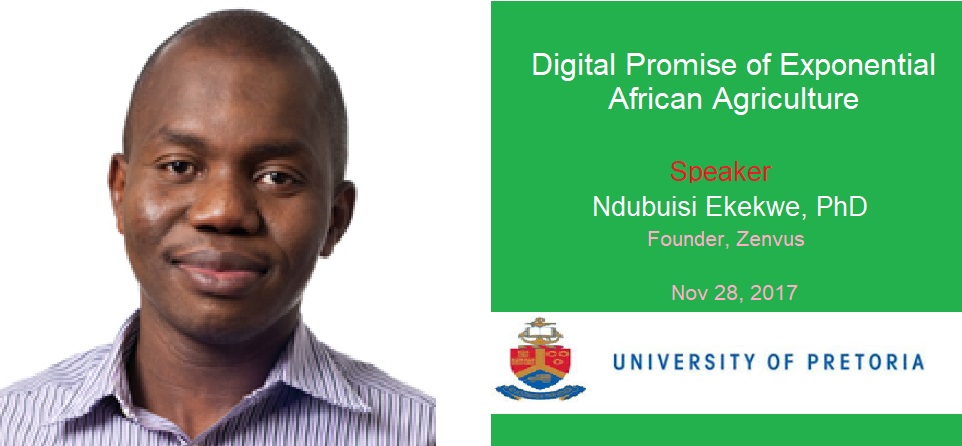
My German Govt-Funded Talk in South Africa “Digital Promise of Exponential African Agriculture”

4

I will be speaking next month in the University of Pretoria, South Africa. The title of my talk is Digital Promise of Exponential African Agriculture.

It will be a great one during the WE Festival. The thesis of my talk will focus on the digital enablers which are emerging to ‘cure” extreme hunger in Africa. Exponential technologies will drive exponential food production. I am one of the leaders in that trajectory in the world through Zenvus. I will present a roadmap for Africa on how it can build a new architecture for modern agriculture. It will be exciting.

My talk is funded by the German Government. The U.S. Government through USAID has also funded this work. We remain thankful for the partnerships we have enjoyed with these governments.

Talk date is Nov 28 2017.

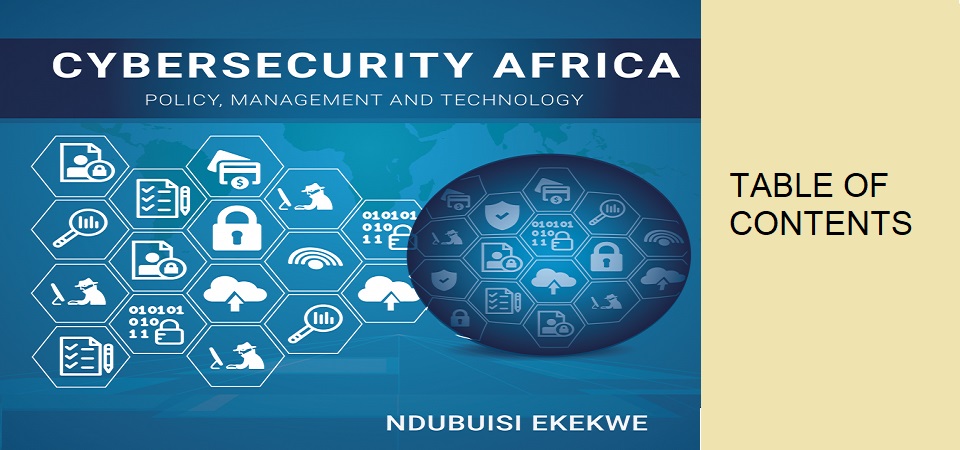
My New Book “Cybersecurity Africa: Policy, Management & Technology” Table of Contents

0

Today, we are publishing the complete Table of Contents for the upcoming book titled Cybersecurity Africa: Policy, Management & Technology. This book will be published on Tekedia just as we did for Africa’s Sankofa Innovation. If you are already subscribed to this site, it comes at no additional cost. If you also subscribe to the Cybersecurity Africa, all other productions will be available at no additional cost to you. Our plan is to provide manuals and documents with specific focus on Africa to help people and enterprises deepen their capabilities as they redesign and unlock opportunities in Africa. We hope you will join hundreds of subscribers in our community. The official launch is scheduled next week.

What you have is the most comprehensive book in the world that deals with cybersecurity policy, management, technology, and digital forensics.  There is no other book that has ever discussed these issues in one production, at this depth. It has a total of 29 chapters all integrated to deliver deeper insights on how firms and individuals can plan and execute their cybersecurity strategies.

What you read in this book is coming years of extensive engagements via units of my business which include Milonics Analytics (an IBM PartnerWorld), First Atlantic Cybersecurity Institute and projects with banks, governments and military around the world. I have put the experiences in a book for you. You will like them. Subscribe today and begin to learn. Easily register in the site and pay with PayPal or transfer to our Nigerian bank. Where you do not have time for that, email my team and they will get you in manually.


Cybersecurity Africa: Policy, Management and Technology


TABLE OF CONTENTS

Beginning

Preamble

About the Author – Ndubuisi Ekekwe, PhD


Structure of Information Systems

1.0       Computer Fundamentals

1.1       Fundamentals of Internet

1.2       Number Systems

1.3       Information System and Business


Information Security

2.0       Access Control Techniques

2.1       Account Administration

2.2       Account Accessibility

2.3       Authentication Techniques


Network Vulnerabilities

3.0       Networking Types, ISO Model

3.1       Networking Devices, Topologies

3.2       IP Address, MAC Address & Ports

3.3       DNS & DHCP Server

3.4       Network Vulnerabilities & Types of Attacks


Foundation of Cybersecurity

4.0       Hacking

4.1       Phases of Ethical Hacking

4.2       Testing

4.3       Cyber-Warfare and Cyber-Terrorism

4.4       Security Implementation and Governance


BYOD & SMAC Security

5.0       SMAC

5.1       SMAC Security & Forensics

5.2       BYOD

5.3       BYOD Security & Forensics


Preventing Cyber Intrusion

6.0       What is Cyber-Attack?

6.1       Cyber-Attack Response Plan

6.2       Compliance Plan Against Cyber-Attack

6.3       Technology for Preventing Cyber-Intrusion


Emerging Cybersecurity Tech

7.0       Emerging Cybersecurity Tech

7.1       Changing Trends in Cybersecurity

7.2       Social Media Role

7.3       Cybersecurity Techniques

7.4       Cyber Ethics


Ethical Hacking

8.0       Basic

8.1       Purpose of Ethical Hacking

8.2       Hackers -Types, Purposes and Goals

8.3      Phases of Ethical Hacking

8.4     Cyber warfare and Terrorism


Malware Analysis

9.0       Malware – Variants, Infections and Effects

9.1       Malware Analysis – Goals, Types

9.2       Method of Malware Analysis

9.3       Setup

9.4       FUD and Avoidance


Penetration Testing & Tools

10.0     Basics of Penetration Testing

10.1     PenTest – Types, Models, Methodologies

10.2     Vulnerability Assessment vs. Penetration Testing

10.3     Penetration Testing Tools

10.4     Penetration Testing Distributions


Intrusion Detection and Prevention

11.0     Intrusion Detection System (IDS)

11.1    Intrusion Prevention System (IPS)

11.2     IDS vs. IPS vs. Firewall

11.3     Common Detection Methodology


Network & OS Security

12.0     Network Security – Basics, Forms, Prevention

12.1     OS Security Threats

12.2     Cryptography-Network and OS Security


Ethics in Information Technology

13.0     Morals, Ethics, and Laws

13.1     Ethics in Business

13.2     Ethics in Information Technology

13.3     IT Policy


Security Policy Analysis

14.0     Security Policy and Law

14.1     Policy Development – Process & Lifecycle

14.2     Policy Types & Standards

14.3     Policy Troubleshooting


Security Policy Implementation

15.0     Identify Needs Issues/Threats

15.1     Identify the Policy Users

15.2     Review & Write Policy

15.3     Train and Enforce Policy

15.4     Review and Modify


Global Cybersecurity Policy & Law

16.0     Cyberspace & Cybercrimes

16.1     Information Warfare & Legal Issues

16.2     National Cybersecurity Policy & Law

16.3     International Law & Policy

16.4     Legal Process & Punishment


Enterprise Cybersecurity Policy

17.0     Enterprise Cybersecurity Policy

17.1     Vulnerability Assessment & Risk Analysis

17.2     Security Testing Frameworks

17.3     Vulnerability Prevention

17.4     Tools & Techniques


Physical & Human Security Management

18.0     Physical Security

18.1     Physical Security Threats

18.2     Planning and Executing

18.3     Physical Security Checklist

18.4     Theft and Locks Picking


Human Security Management

19.0     Human Security

19.1     Social Engineering Techniques

19.2     Dumpster Diving & Shoulder Surfing

19.3     Phishing & Countermeasure

19.4     Staff Training


Cybersecurity Essentials for Leaders

20.0     Planning & Managing Enterprise Information System

20.1     Planning & Managing Enterprise Network Structure

20.2     Privacy & Human Security Management

20.3     Planning & Managing Security Assessment & Testing

20.4     Disaster Recovery/Contingency Planning


Cyber Incident Analysis and Response

21.0     Cybersecurity Incident & Risk

21.1     Planning & preparing for Cyber Incident

21.2     Planning Cybersecurity Incident Response

21.3     Planning Risk Management

21.4     Disaster Recovery & Business Continuity


Building Secure Enterprises & Organizations

22.0     Secure Enterprises & Organizations

22.1     Scope and Approach

22.2     Business Goals & Security

22.3     Baseline Analysis & Desired State

22.4     Policy and Procedures


Cybersecurity Project Management

23.0     Cybersecurity Project Management

23.1     Key factors for Success

23.2     Frameworks for Cybersecurity Management

23.3     Implementation of Framework

23.4     Basic Tenets


Digital Forensics & Evidence

24.0     Digital Forensics

24.1     Digital Forensics Model

24.2     Approach and Process

24.3     Evidence Gathering & Assessment

24.4     Evidence Examination


SMAC & BYOD Forensics

25.0     Social Media Forensics

25.1     Mobile Forensics

25.2     Cloud Forensics

25.3     BYOD Forensics

25.4     Digital Forensics Lifecycle


Guarding Against Cyber Intrusions

26.0     Attacks, Tools for Defending Against

26.1     Privileges and Access Rights

26.2     Policy for Users and Organizations

26.3     Contingency Plan

26.4     Training


Information Systems Security & Assurance

27.0     Information Systems Security & Assurance

27.1     Information Security

27.2     Information Assurance

27.3     Information Security and Assurance


Cyber Intelligence & Counter Intelligence

28.0     Cyber Intelligence

28.1     Information for Strategic Decision

28.2     Counter Intelligence

28.3     Governments & Businesses

28.4     Incident handling & Damage control


29. Conclusion


The Liberation of the Minds of Men

0

Education is one of the most important institutions ever created by man. It determines the wealth and prosperity of any society. Even in the medieval time, there was apprenticeship and that was a form of education. But the modern style of education goes beyond followership to helping students become creators of knowledge. In other words, it transforms students from becoming ‘recipients’ of education to ‘users’ of education as they partake in the process.

Nothing changes a society or a nation more than education. I always say that education is simply the liberation of the mind. It opens the mind to new possibilities and frees it from dogmas and destructive norms. It will remain a popular institution because it is the only institution that holds the key to the future.

Notwithstanding, many students are concerned on the quality and affordability of their education in the contemporary time. According to many government statistics, many schools have or intend to increase tuitions to offset budget cuts by federal, state or local governments.

But it does not end in budget cuts. In most nations, students have to pay more as the schools are increasing tuition, even though they are reducing some services. Under this scenario, these students are concerned that they are not getting the best under historical benchmarks. In general, the students graduate with more debts and are forced to do so despite having lower quality as schools use resources designed for 100 students for 300 students.

The Devaluation

From the debt-ridden states to private institutions globally, university education has become increasingly expensive. Unfortunately, that higher tuition does not positively correlate with higher earning power after graduation. So, most students spend more to get diplomas that reward lesser because of the ‘devaluation’ through globalization. This is one area demand and supply come into play. With more jobs outsourced, the students have to compete for fewer under this difficult job market. The higher supply than demand depresses wage which does not work for the students.

For schools in most developing economies, tuition is also rising and unemployment is also high since the rate of job creation lags the graduation rates. But for most of them, there is no problem of huge debt since education is mostly pay-as-you-go and there is minimal option of government or bank loan. (Sure, families do take different types of loans.) Yet, they are concerned over quality and affordability since the generation that studied about fifty years ago received better education at lower cost, if any, than what they get today, especially in primary and secondary education.

Students (source: Buzz Nigeria)

Even at tertiary level, when these nations had one or two universities, they funded them very well. Now, those schools have to compete for funds with more than hundred other schools. In Nigeria, for example, the number of government owned tertiary institutions has gone from say ten to more than two hundred within half a century. This pushes tuition since government is not providing much help to all the schools. The whole system forces the schools to admit more students because of budget issues thereby creating chaos where most students complain of large class sizes. Quality is low, yet it is not readily affordable.

Beyond Quality

From Nigeria through Argentina to US, most students have quality and affordability challenge of pursing their bachelors and post-graduate studies. It does not mean that knowledge is not expanding or increasing, the problem is that getting it is becoming more expensive. And for most institutions, there is a genuine decision to cut service because of cost. That poses a risk to quality.

When you cut school hours or eliminate a course, there is a possibility that a student could miss an important life-changing idea. When you cut research grants, there is a chance that professors could not push further to enrich the students. Those days in college, the most exciting lecturers were those doing great research works. They bring new insights and perspectives to classroom. If they stop doing those works, though teaching, you deprive students those insights. And that is a quality issue. It remains today that irrespective of mastery of theory, the best schools are the best ones in the labs.

Quality and affordability in education is a big issue in our globalized economy. For most European students, they attend college with the support of government. In Sweden, it is 100% free. Why their counterparts in US are trying to follow a career path that will enable them pay their loans, they are free from such problems. So the students can afford to go into entrepreneurship and spend extra years in learning without the concerns of debts while the heavy indebted counterparts cannot.

Anyone that says that the new dislocation of national debts is not a problem in the educational institutions may not be real. Students are concerned over quality and affordability and they seem to be losing both sides. Higher tuition, fewer courses and lower prospect of great job because of recession and it creates a depressing future.

But alas, in the midst of this concern, most of the students have come to rediscovery. And that realization pushes a need for them to become managers right at college and stewards of their finances in a competitive and disruptive marketplace like the 21st century. It turns out that one of the most innovative generation of students is the one we have now and those concerns may be making them better.

All Together

There is no alternative to good education. No matter the cost, there will be demand for same. And despite the near universal concerns on educational quality, younger people are certainly smarter. Your challenges are histories to them, and their insights are things you lost. They get the advantages of your past, but you struggle to understand their future. That rigs the world for them. You may think they have not mastered the excellence you picked in schools. But look closer, they are better. Your generation might have built planes and turbines, and their own generations are masters of clicks and likes. Yet, the fact is this: they can read about the turbines while you may struggle to understand the likes. Provided their minds are liberated, they will hold up for the next generation. The question that remains unresolved in the developing world is: how do you liberate more minds affordably? My Mercedes is bigger than yours, they wrote many years ago. Everyone always thinks he got a better education. But in reality, things are getting better despite the old metrics we use to measure progress. As I always say: the best company has not been founded. These young people will establish them. Not learning good enough could be the education!

How Many Are Nigeria’s Total Online Customers?

5

I like political polling because unlike most polling types, there is a result at the end. Yes, at the end, there will be an election and quickly, we will know who has the best technique to have gauged the sentiments of the people through polls. Your economic polls, your happiness polls, and your everything polls are all nice. But they cannot be validated like the ways we can use elections to validate political polls. Without elections, Hillary Clinton would be somewhere right now as the President of the United States as you read. But that is not the case as the elections invalidated the polls.

Now, how many digital customers do you have in Nigeria? How many online customers do you have there? We like big numbers and I know someone will begin with 3 million because the Nigerian Communications Commission (NCC) drops those numbers on the number of Nigerians with internet access. Last year, a report from the biggest investor in Konga showed that the ecommerce operator has less than 200,000 active customers, not millions, as many had expected. It was surprising after all the advertising and efforts the company had invested in the ecosystem.

According to Kinnevik’s report, its 34% stake in Konga is worth SEK 101 million. That’s about US$12 million at the current exchange rate. The report goes further to state that Konga has 184,000 active customers – that is customers who have bought from them in the last six months.

I can tell you that if you see hard numbers, Nigeria has less than 400,000 digital customers who are shopping and buying things online today.  The 190 million citizens miss the whole point and that is why when you see some projections on market opportunities in the digital space, in some business plans, you marvel at the disconnection. Some of our entrepreneurs will tell you how they can on-board millions of paying users within two years because Facebook has excess of 20 million Nigerians. They need to read what drives scalable advantage (SA) and how Facebook enjoys SA of “1”.

Today, we have one of those “election data” and it is coming from Uber. Despite spending huge amount of money and advertising across Nigeria, it has 267,000 active riders in Nigeria.

Taxi hailing firm Uber has 363,000 active users in Kenya, according to the latest statistics released by the company to mark its fourth year of operation on the continent.

The statistics by the San-Fransisco-based firm show South Africa as Uber’s biggest market in Africa with 969,000 active riders, while Kenya is second. The data, released Thursday, also showed that 5,000 and 12,000 Uber drivers are signed up in Kenya and South Africa, respectively.

Kenya remains Uber’s most vibrant market in the region as Uganda and Tanzania have 48,000 and 53,000 active riders, with each country signing-up 1,000 drivers.

Ghana and Nigeria have 140,000 and 267,000 active riders respectively. About 7,000 drivers are on Uber platform in Nigeria while Ghana has 3,000.

If you play the population game here, Nigeria has 190 million people, Kenya has about 50 million. That is a factor of 3.8. So technically if  Kenya has 363,000 riders, Nigeria should have about 1.4 million riders. Of course, from Uber, we have 267,000 Nigerian riders. Kenya has a population of roughly 50 million and tops Nigeria with about 100,000 riders. You can argue, of course, that Nigerians may have alternatives to Uber and that is why not many people are riding it when compared to Kenya. I do not think that is the case, though. The transportation systems in Nigeria and Kenya are largely at parity. The difference is mainly due to parity of being online with trust to spend money online. Here, online includes apps and web apps.

As you move from one ecosystem to another, you will see the real story: the numbers are consistent and we are far from having millions who are happily buying and paying online. Our big population without empowering the citizens with opportunities may not matter much digitally. This is one of the reasons most foreign firms begin from East Africa as they map their digital strategies. Nigeria’s population does not correlate to our performance online except when it is free services like Facebook and WhatsApp. But when it comes to spending money online, the game changes. If Kenya has more than 100,000 active Uber riders, that is a big lesson that we are making the transition slower as many had projected.

Sure, we are making progress. We will get there. But right now, you need to be aware to ensure you invest proportionally to the potential market size online. Do not make the mistake of directly translating our 190 million people into an online equivalent. Even the NCC data will not help you because it does not capture how many are really open to spend a kobo online. Your business is probably still offline as of this morning in Nigeria. You need to work a hybrid model, serving today’s offline customers while plotting how to take advantage of the slowly emerging digital ones for tomorrow. That way you can cushion risks to your cash flow.

The Need for Intelligent Mobility in Africa

0

Despite the continent’s transport infrastructure lagging behind global standards for decades, Africa is bracing itself for a transport revolution as more countries embrace the onset of new technology.

Intelligent mobility involves the electrification, automation and digitalization of existing transport infrastructure, and gives every citizen access to safe, reliable and efficient modes of transport.

The need and demand for intelligent mobility in Africa has never been greater – World Economic Forum competitiveness data reveals that only three African countries feature in the top 50 globally for quality of roads, quality of rail and quality of ports infrastructure respectively.

World Bank data also indicates that the Sub-Saharan African railway network has declined to 59,634km today, down from 65,661km in 1980 with only about 70% of the railway network in operational state.

At face value, it seems as though the continent faces insurmountable transport challenges. But the reality is that we are already setting the wheels in motion to create interconnected, more modern and efficient African transport networks that keep economies on the move, rather than hindering them. This development will not happen overnight, and will be realised one step at a time.

Intelligent traffic systems 

Many African cities have traffic infrastructure plagued by unreliable power supply. To the frustration of motorists, timing of traffic lights stays the same regardless of actual conditions, and many are faulty and take weeks to repair. This means that the road infrastructure can’t handle peak traffic, not because of technology but because of the lack of proper technological investment.

The challenge is partly that these traffic systems have grown in an unco-ordinated way, with lots of different suppliers and systems cobbled together. Speeding and traffic light violations are a problem, and there is limited technology deployed to support effective traffic law enforcement.

Concern of this situation has been expressed by officials and road users alike, who say congestion and accidents have reached alarming levels. Inefficiencies in these transport systems affect a country’s ability to attract and maintain investment.

So where do we begin?

The adoption of intelligent traffic systems (ITS) will keep Africa’s busiest cities as fast-moving investment destinations. ITS includes deployment of smart sensor systems with intelligent algorithms to automatically adapt to improve traffic flow.

Two-way communication can be enabled by running fibre between traffic junctions and a central control centre to gather information from intelligent networked systems, sensors and cameras at every junction. This allows traffic lights to be adjusted according to demand.

Nigeria’s Edo State government recently announced its intention to upgrade to a technologically-advanced ITS system that provides real-time traffic information in Benin City. As part of the integrated solution, motorists and commuters will be informed about travel times, weather conditions and traffic jams on radio or online.

With all traffic management systems automated and digitalized, technology like automatic number plate recognition (ANPR) cameras can be utilised to efficiently enforce traffic rules.

Average speed over distance (ASOD) technology captures the time when a specific vehicle enters and exits the ASOD zone. The journey time is compared against the distance travelled and authorities are automatically notified if the prescribed speed limit was exceeded.

This improves the safety of drivers, passengers and pedestrians. It also minimises the risk of corruption, while promoting best practice among traffic enforcement officers who are exposed to a new skillset when trained in operating these new systems.

Automated rail infrastructure 

Another effective means of reducing congestion on overburdened and under maintained roads in Africa is through greater investment in upgrading passenger rail networks.

Some of the world’s cities with the most advanced transport networks feature fast, efficient, safe and clean rail mobility networks powered by Siemens, and African cities can benefit from expertise in centralised traffic management and automation systems, including train control systems with minimum line side equipment linked to modern control centres.

A clear case in point is the Gauteng Nerve Centre (GNC) in South Africa. The 3400 m2 state-of-the art control centre for centralised rail traffic management in South Africa’s economic hub of Gauteng accommodates 35 train control operators in one place, and constantly monitors Gauteng’s rail traffic where over 600 trains carry more than 500,000 commuters on a daily basis.

The GNC boasts world-class automation capabilities and can immediately respond to any operating failures, accidents and other incidents, thereby enabling greater efficiencies in rail operations and train safety, while offering a more reliable service through higher infrastructure utilisation.

Siemens’ proven railway capabilities are set be bolstered further, following the mobility business’ recent announcement of its intention to merge with French railway engineering specialist Alstom.

With a strong presence in, and dedicated commitment to Africa, this anticipated partnership will create an African champion in mobility.

Intelligent, integrated mobility ensures environmental sustainability 

Transportation is the world’s second-biggest producer of greenhouse gases. In 2015 motor vehicles, trains, ships, and planes emitted 7.5 billion tonnes of CO2 into the atmosphere, accounting for almost a quarter of all CO2 emissions worldwide.

Today transportation-related emissions are already about 60 percent higher than in 1990. One of the reasons for this is the dramatic increase in the number of vehicles in developing countries and emerging markets – of which Africa is home to many.

According to forecasts, transportation-related CO2 emissions will increase by another 67 percent between now and 2050. Clearly, in view of this, the global community must take decisive action to bring about a worldwide transition to sustainable transportation systems.

A well-integrated intelligent multi-modal transport network promotes a culture of eco-friendly travel and healthier living, as it reduces traffic congestion and COemissions by transporting more people more safely and more comfortably, using newer and cleaner technology without relying on fossil fuels.

The time for intelligent mobility is now 

If Africa truly wants to unleash its full potential, then sufficient funds must be responsibly invested in upgrading existing transport and logistics infrastructure like road, rail and ports, in addition to new concepts that include electric bus rapid transport and ferries, to name a few.

Intelligent and integrated traffic systems are part of the future of transport in the world’s advanced cities. If Africa seizes the opportunity, many of its cities will be on that list, and the continent’s citizens will reap the rewards. That is the way forward.

by Kevin Pillay – Vice President for Mobility at Siemens Africa