DD
MM
YYYY

PAGES

DD
MM
YYYY

spot_img

PAGES

Home Blog Page 7298

9Mobile’s New Strategy for Growth

0

This is a Short Note.

9Mobile (nee Etisalat Nigeria) is making its API available for Nigerian developers. This is certainly a novel idea as that will make people building solutions in the telecom industry to adopt 9Mobile. It is a new way of executing customer acquisition and 9Mobile could find success by deepening collaboration with the developer community. The result could be customers of the future.

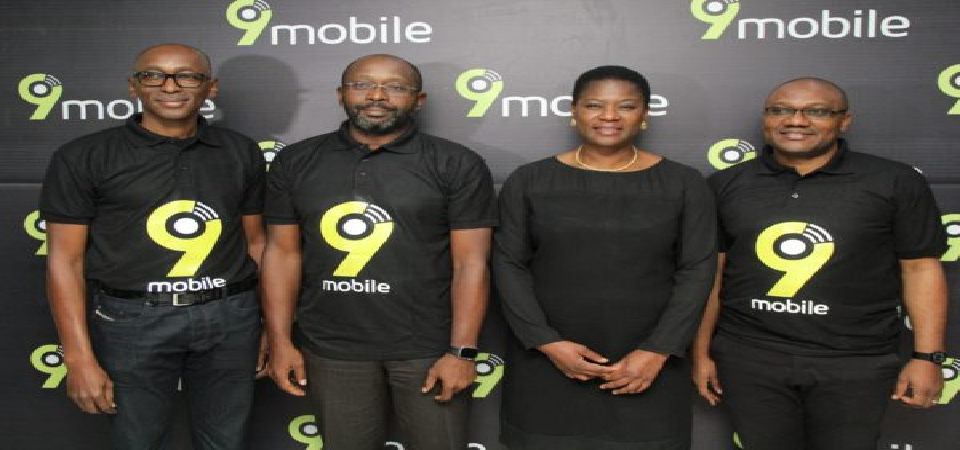
Startups in Nigeria can now access access 9Mobile’s APIs, this follows a partnership between the telecoms giant and Africa’s Talking, a Pan-African company focused on providing developers with an easy and reliable way to access telecommunication infrastructure.

9Mobile will provide access to telecom apps while Africa Talking will provide a sandbox environment for developers to use while learning how to work with the APIs as well as testing their applications before moving into production.

The Director, Digital Business, 9mobile, Adia Sowho, said, “We at 9mobile are delighted to partner with Africa’s Talking in the bid to support Nigerian software developers and SMEs as they build viable and scalable businesses. This partnership will provide quality and affordable mobile communication tools like two-way SMS and USSD APIs that they can embed into their day to day business activities to improve their marketing capabilities and interact easily with their customers.

What 9Mobile is doing could be industry defining if they push it at scale. The implication is that no one wants to deal directly with telcos because they are high up there and few entrepreneurs can get access to them. So you have this solution that could have been integrated in a telco’s network, but you have no means of working with them. With what 9Mobile is trying to do, making its API available, we can see a new phase of innovation at the base of the telecom sector in Nigeria.

If 9Mobile has this mindset, it can change its fortune faster than many could anticipate. By releasing the APIs to developers, expect some apps and solutions to work better in 9Mobile networks when compared with competitors.   I know that in cpanel web hosting, 9Mobile is among the networks that work without issues. In our web hosting business, we recommend 9Mobile to clients. Some other networks have their problems, locking customers from their emails, most times.

Simple things matter and this way of thinking could be the redesign that 9Mobile needs. Also, it will be good for the country, as entrepreneurs can build better products and solutions, that work seamlessly with the telecom infrastructure.

12.1 – How to Compete Against Conglomerates to Win

0

Around the world, conglomerates tax the citizens. They are powerful with lots of resources which help them enjoy the economies of scale. This makes their products better and largely cheaper, compared to smaller companies. Also, owing to the fact that they employ many people, governments like them. They are visible symbols of any nation’s economic […]

To access this post, you must purchase Tekedia Mini-MBA (Feb 9 – May 2, 2026) | $170 or N120,000.

The Bitcoin Lottery, the Blockchain African Value

0

This is a Short Note.

Greetings. A lady asked me a question this morning via LinkedIn: Would you invest in bitcoin, the crytocurrency? She smartly waved all legal issues as I do not offer insights when there are potential risks. 

This is what I told her: Greetings. I will not invest in bitcoin but I will invest in a product based on blockchain which powers bitcoin. In my new eBook  which is out tomorrow, I explain . Why people can make money from lottery, I do not think it is a good way to build wealth. I see bitcoin as lottery. However, blockchain is a solid technology. There are many ways companies are using blockchain.

A Blockchain is a tamper-proof record of transactions distributed across all participants in a Blockchain network. Via digital authentication and verification, the technology removes intermediaries and reduces transaction time and fraud. In the financial sector, companies like SWIFT and banks are developing Blockchain projects for payments transactions. The potential of Blockchain however, extends to other areas. Estonia recently partnered with Bitnation to digitize citizen identities using Blockchain. While these are early days, Blockchain has immense potential in Africa given its massive development challenges.

In the book, I explain the interface of IoT, blockchain and AI with fusion of cloud to drive the next level of prosperity in Africa.  I have many cases to show how new generation of makers can hit big. The application of IoT will deliver new value to Africa.

The Internet of Things (IoT) uses an array of sensors to capture real time data from a range of sources including computing devices, objects and people. It allows users to monitor and manage objects remotely and make data-driven decisions. Lack of actionable data is a major challenge for emerging markets. IoT can help address this challenge. ThingWorx for example, uses sensors to capture data on crop fertility across various parameters and advise farmers on maximizing productivity. Similarly in healthcare, Kaa operates an IoT platform to remotely monitor patient health statistics and predict ailments.

Now, I ask the house: will you invest in bitcoin? I personally do not support bitcoin. But I am 100% in for blockchain. You will be better working on blockchain than playing lottery with bitcoin.

This piece was shared on LinkedIn but expanded here.


11.1 – Emerging Tech Business Ideas

3

New business possibilities will emerge in Africa as new technologies penetrate in the continent. In this section, I note some business ideas from emerging technologies like IoT (Internet of Things), cloud, blockchain, big data/analytics, AI (artificial intelligence), drones, solar and robotics can individually and/or collectively drive in Africa. While some African entrepreneurs are already driving […]

To access this post, you must purchase Tekedia Mini-MBA (Feb 9 – May 2, 2026) | $170 or N120,000.

The Confident Message from Kenya

0

This is a Short Note.

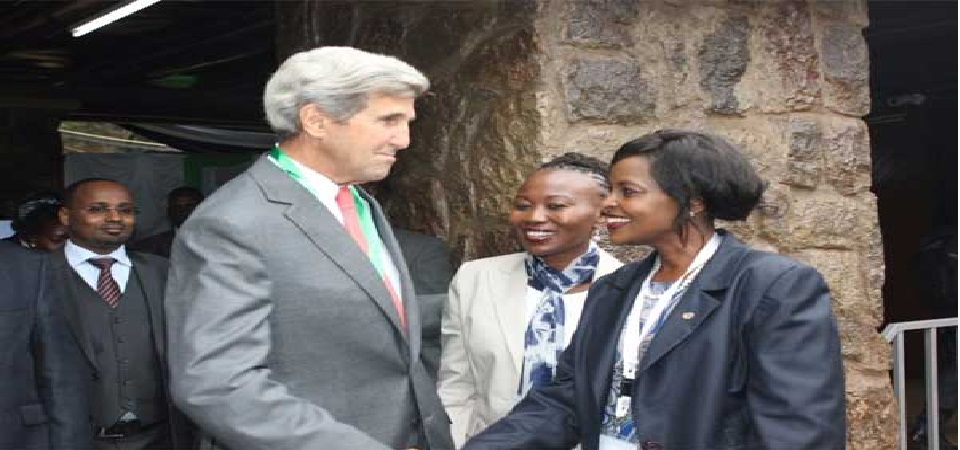
More  than 400 election observers including the European Union, African Union, and the United States, felt that the Kenyan presidential election which took place in August was credible. In short, former US secretary of state John Kerry said the election was “free, fair and credible.”

There will also be spaces for IEBC guests, as well as its officials who will be swamped with work to collate, tally, before Mr Chebukati makes the final announcement.

The commission has also set a state-of-the-art media centre, with at least 50 internet-enabled computers.

Former US Secretary of State John Kerry termed as “extra-ordinary” the organisation of the IEBC after he visited Bomas and held a morning meeting with Mr Chebukati.

“The IEBC has done an extraordinary job to ensure that Kenya has a free, fair and credible poll. People will need to be patient, and we wish everybody well,” said Mr Kerry, who is leading the Carter Centre Observer Group

Yet, the Kenya’s supreme court declared the result  “invalid, null and void.” Incumbent president Uhuru Kenyatta had been declared the winner by Kenya’s electoral body, the Independent Electoral and Boundaries Commission (IEBC). A contestant in the election, Raila Odinga, had petitioned the court and the court agreed that the process did not meet the constitutional requirement of Kenya.

This is not news – what is news is that nearly everyone saw it differently, including most parts of the Kenyan press, but Kenya’s supreme court and Raila Odinga. Specifically, I am surprised that the court did not even care what Kerry had to say. I mean, America had noted that the election was free, fair and credible. But the voice that mattered saw it differently.

I commend the Kenya’s supreme court for this high level of independence. With the near unanimous agreement from the international community that the election was fair, they could have been swayed. This supports my narrative that Africa’s solutions are within Africa when we begin to do the right things. No one can lead us into the proverbial promised land, but us. We cannot see others, especially Western powers, as gods in our national affairs. We need to have the confidence to be Africans in our shared destiny.

This lesson, demonstrated by Kenya’s supreme court, can be extrapolated into how we run our economies. We do not have to always take everything from World Bank, IMF and other global institutions as gospel messages. African leaders must be independent to question what others present to them. It means relying on African economists, over foreign experts who become African experts just by spending two days per year in the continent.

We know more about Africa than anyone from outside. As the Kenyan supreme court had demonstrated, they understood the situation clearly, even as the world was fooled. I do hope that Kenyans have their moments to elect a leader in accordance with the laws of the land. They have a working court on this.