DD
MM
YYYY

PAGES

DD
MM
YYYY

spot_img

PAGES

Home Blog Page 7299

Just Accepted To Keynote IEEE Nigeria’s 2017 NIGERCON Next Month in FUTO

0

I just accepted to keynote NIGERCON 2017 which is being organized by IEEE (Institute of Electrical and Electronics Engineers) Nigeria Section at the prestigious campus of the Federal University of Technology Owerri (Nigeria), my alma mater. Yes, it will be in FUTO where the finest Nigerian engineers are trained (lol). IEEE is the largest technical association in the world with membership in excess of 420,000.

IEEE Nigeria Section invites you to participate in the upcoming IEEE NIGERCON 2017. NIGERCON is a refereed international conference. The Conference seeks submissions of articles from Academia, Government, Industry, and Private Sectors on the following sub-themes: Engineering Education, Computing, Communication, Power and Energy, Internet of Everything, Engineering in Medicine and related fields.

The theme of the conference is “Electro-Technology for National Development” and it is scheduled for November 7-10 2017.

Date: 7-10 November 2017
Theme: Electro-Technology for National Development
Venue: Federal University of Technology, Owerri (FUTO), Imo State, Nigeria

I will deliver the plenary keynote and then run a workshop on artificial intelligence with applications in agriculture and active cybersecurity defense.  I will share more on the presentations later here on Tekedia.

Please I want you to attend. Register here. Support our schools, students and professors.

Come and let us have a technical festival by looking at atoms, electrons and data, and how we can combine them for national development. Because the venue is FUTO, you can count on the peerless quality of this conference.

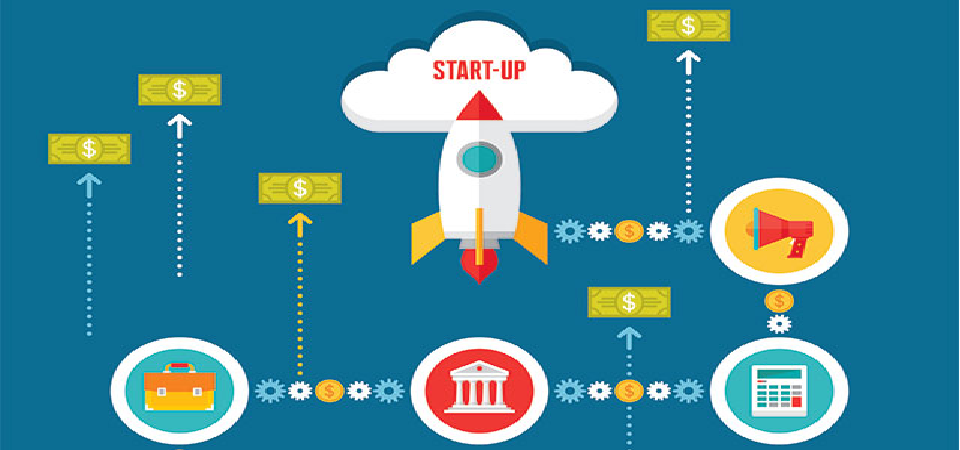
The Art of Boosting Startup Valuation

0

We want to raise capital for our businesses to help us with resources to fix frictions in markets. In this video, I explain how founders can boost the valuations of their startups. The key element is that you must have a way to communicate why you are different from the incumbents because your ability to set a new basis of competition will unlock more value for your investors. It connects into the heart of your scalable advantage, providing new elements that set you apart. High scalable advantage means that you can grow with minimal costs, and most times, that happens because your marginal cost is very low. If that happens, investors will see your business from new angles, rewarding you with higher valuations. Cases abound with the following:

  • Airbnb and hotels: Airbnb has practically no marginal cost compared to hotels
  • Uber and traditional cabs: Uber is an aggregator with strong scalable advantage
  • Facebook and media: Facebook does not create the raw materials of its business. Users do and that means it can grow without any limitation, theoretically
  • WeWork and office leasing firms: WeWork is an aggregator with service, removing a pain point of dealing with landlords who remain stuck in the past.

But even with the promise of high valuation, you need to generate income because in realty that is what investors are investing in for. In other words, after all the nice sounding words, you must make profits; otherwise, the business will die one day. Sure, if you sell before going public, the acquirer will still have to deal with generating profit to make it a business.

Beyond Coding, Monetizing in Physical Nigeria, Africa

0

Many years ago, in secondary school, I read a book titled “This is our Chance”. It was authored by James Henshaw. The play was about the battle between tradition and modernity and how to assimilate the best of both African and Western cultures. James set the stage with Kudaro (the Crown Princess), her father (Chief Damba), her mother (Ansa) and others. It was all about balance and hybridization in ways of living.

Today in Nigeria, in the technology world, we are doing relatively well in the software sector. We are making apps which are helping to reduce frictions in the lives of citizens and operations of companies. With 93 million mobile internet subscribers, according to the latest data from the Nigerian Communications Commission (NCC), the trajectory is very promising.

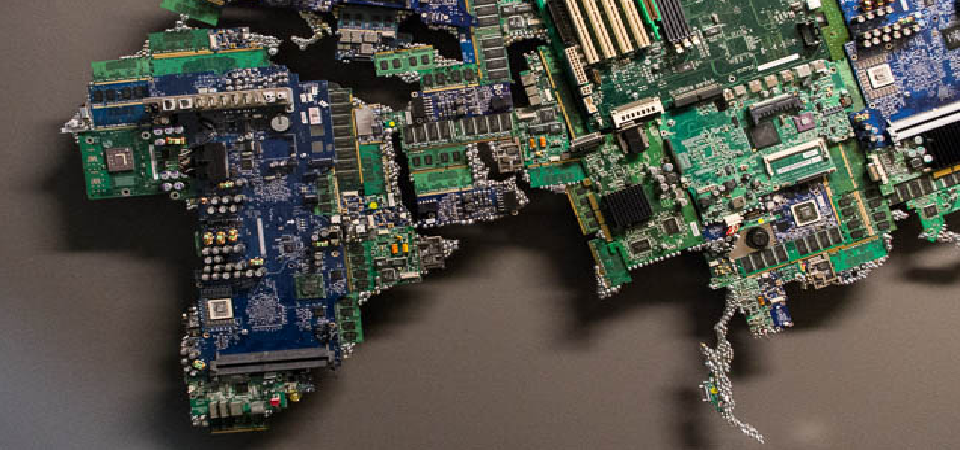
But while we are pushing, making the best efforts in apps and software, our hardware capabilities remain stunted. Unfortunately, most of the opportunities are in the physical domains. There needs to be physical elements which the software must drive to further simplify the lives of people and operations of companies. Without that interface, using the software skills to build hardware solutions for agriculture, energy, transportation, communications, and other sectors, we will not realize the full benefits that cloud, mobile, AI (artificial intelligence) and IoT (internet of things) are enabling.

As African entrepreneurs wait, global technology companies like GE are pushing that boundary of building this interface. GE calls it the Industrial Internet and it sees it as a catalyst to “leapfrog competition and establish the continent as an industrial powerhouse”.

In an increasingly connected industrial ecosystem, a staggering amount of data is being generated every moment. Commonly termed ‘Industrial Internet’, it involves connecting software, industrial applications and intelligent analytics to businesses, enabling unprecedented gains in productivity and innovation from these massive datasets. Leveraged effectively, this paradigm shift in industrial thinking will allow African companies to leapfrog competition and establish the continent as an industrial powerhouse. However, this requires a new generation of talent with a strong technical foundation in big-data analytics, machine learning and web application development, as well as the business acumen to translate technological improvements into business results. (Source: GE Newsletter)

But it is not just GE; Vodacom is building amalgam of solutions especially in the telecommunication sector, deploying IoT systems to support commerce in Nigeria.

With the Internet of Things (IoT) gradually gaining momentum globally, the need for Nigeria to tap into the global technology hub has been stressed. IoT has delivered a big growth opportunity for the telecoms industry due to the volume of connections expected and experts have projected the market will reach $14.6 trillion global market size by 2020. In this regard, Vodacom Business Nigeria, a Tier 2 operator, said it has become highly essential for Nigeria to seize the vast opportunities that this growth presents in transforming businesses in the country.

[…]

Kolade in his presentation, called on telecom operators to adapt to the changing times and source other revenue streams to replace what is being lost in the continuing revolution of communications.

“The Internet of Things offers significant growth potential and the opportunity to take a role in new vertical markets, such as automotive, healthcare and smart cities. As these sectors seek to adopt more IoT services, the opportunities that exist are vast. Whether you are a hardware manufacturer or connectivity reseller, adding IoT solutions to your portfolio will open up new revenue streams from selling hardware, software.

Simply, if Vodacom connects all these elements, physically, it can impose taxes on them, for startups and entrepreneurs to use them. Our capacity to improve healthcare in Nigeria will not end in making good software. We must find ways to create hardware solutions which those caring for patients will use.

The Hardware Paralysis

The global hardware companies in Africa are not wired for startups. That creates problems for entrepreneurs to engage on their platforms. Unlike Google which is training thousands of people, impacting digital skills, none exists at the same scale for hardware makers. Yes, we have GE Garage and Samsung Academy, but those are largely constrained by their respective technologies. What they do is great, but the scale is minimal. It is easier to find opportunities in the web ecosystem than the hardware domains. Of course, it is cheaper in the web because with laptop and Internet connection, you have all the tools required to make things happen. Hardware will require expensive tools which do not necessarily come easily.

Besides, for you to make great hardware products, you must be a good software developer first. That means hardware requires many components beyond coding. Writing device drivers and connecting them to embedded electronics will not happen by trial and error. There is no brute force methodology in hardware: it is either you understand the signal and the pin, or you will run out of luck. It is a challenging endeavor for most entrepreneurs. Unfortunately, that is where the opportunities reside and African entrepreneurs must go for them. Hardware will bring higher level of local differentiation in more competitive ways than any software company can ever enjoy. While Instagram can launch and add features to support Nigeria, an American solar company may not optimally create solar power systems that will efficiently solve customer needs without being local. So, the fact that they cannot solve local needs without being local is an opportunity for local entrepreneurs to make differentiated products for the markets.

But even with that, the foreign firms are moving heavily into local terrians. MasterCard is a payment juggernaut which has expanded beyond the typical software-centricity of web payment into using hardware solutions to further permeate the African market. The implication is that it will become a key foundational architecture upon which African payment solutions will run, offline and online.

  • The Biometric Card: Building on its pioneering work to leverage biometric technology for online payments, this year we unveiled a next generation payment card in South Africa that uses your thumb or fingerprint to authenticate purchases you make in physical retail environments.

  • Commerce for Every Device: The IoT has given every connected device the opportunity to become a payment device. Our payment technology is embedded in, among other things, fitness bands, gas pumps, vending machines, smart mirrors in dressing rooms, cars, shared workspaces such as WeWork and Softbank robots, like Pepper.

All Together

From my experience in Zenvus, my pioneering precision farming technology, one can make real impacts in the lives of the citizens when hardware brings the best in software engineering. Companies like Amazon have noticed that the next phase of growth will come by using the best possible software to connect physical homes, offices and the world. According to PWC, “Amazon has displaced Volkswagen as the world’s biggest corporate investor, according to research by PwC. Its R&D spending rose to $16.1 billion in 2017 from $12.5 billion a year earlier. VW slipped to fifth (not helped by exchange rate effects), behind Alphabet, Intel and Samsung.”  Most of that Amazon investment is going into Alexa, Echo, and other hardware systems it is launching constantly.

Africa is well positioned because we have great computers in our pockets. Yet, we will miss massive opportunities to use these devices as tools to improve healthcare, agriculture, education and other sectors, if all we do stop at software. Yes, we need to extend beyond just making software to actually building physical things, using the software to make them smarter. That is the great opportunity which is arising in Africa today, and it will be monetized, at scale.

Nigeria, China, India, Indonesia and Pakistan are markets that will account for more than 40 per cent of the 1.6 billion new smartphone connections by 2020. This is according to the Global system for Mobile Communications (GSMA). Currently, Nigeria’s smartphone penetration as at 2016 stood at 30 per cent, but there has been more adoption, especially as new and cheaper devices are entering the market, almost on a monthly basis.

As Mr Henshaw noted, the mix of African and Western cultures can co-habit. Our software and hardware startups must find ways to collaborate so that our software can help build physical things which will help seed opportunities and solve real-world problems in African cities. While electricity availability tracking apps could be fun, the real value will be finding how to make hardware solutions that can provide electricity. That could be solar solutions with totally African-engineered design framework in metering, payment and maintenance. The same goes for other sectors. We cannot make such leaps if we just focus on coding for virtual ephemeral experiences without thinking how the codes can move physical atoms in the lives of people and companies they build in Nigeria and Africa.

The Irony of Apple’s First in iPhone X

0

The world awaits: iPhone X release will be on November 3rd. That is the day the “next big thing” will land. In its peerless marketing brilliance, Apple has been running this rendezvous for years. It makes great products that turn customers into fans.

But it seems this time may be different. Apple will be the first to unveil and introduce a key mobile product feature, over perfecting what someone else has done before. The front-facing 3-D sensor in iPhone X is industry-leading at this level. It is also turning out to be a challenge, Bloomberg notes.

You can read all about this in our story, but the implication is that tech companies are bumping up against an innovation ceiling in smartphones. Chief Executive Officer Tim Cook often says Apple doesn’t aim to be first with a new product, but aims to be the best. In the iPhone X, though, the front-facing 3-D sensor really was a first. Was it worth the supply-chain agony to win bragging rights for this feature?

The 3D sensor system enables compelling features like Face ID authentication and Animoji to work.  That sensor powers facial recognition technology which is a very critical element of the iPhone X. So, it will be very bad if Apple is having problems with this component, even in supply chain. The company is known for its excellent supply chain engineering and a broken one will be devastating.

Becoming the First

Apple over the years has been the first in great profits, revenues, and app-excellence. But in introducing major new (first) features in mobile devices, it does not even try. As noted above, the CEO made it clear, using Bloomberg Businessweek’s own description that “Apple doesn’t aim to be first with a new product, but aims to be the best”.  So going for the first in the 3D which is yet to mature is a big risk for a company that has a reputation of being the best, by waiting for a specific technology to mature before adoption. Of course, many have accused Apple of not innovating enough with the copy-and-perfect model that has worked for it for years. It wanted to use the 3-D feature to silence them.

The Ecosystems

The good news is that Apple will fix its problems and will ship the usual millions of units over the next few quarters. But shipping phones may not necessarily be the whole truth. As Apple differentiates with hardware which runs proprietary software, it will face more challenges as the data race enters a major phase.

Amazon is an ecosystem for reviews with Facebook providing the social feedback element and SnapChat offering instant perspective. Along with Instagram, these ecosystems will be shaping the next phases of web-based commerce. As they mature and become more integrated, the elemental value which makes hardware important, will begin to fade in the eyes of customers.

China’s WeChat has already abstracted the value of mobile hardware. WeChat is the Internet operating system in China. I do think that a U.S. based web business will finally provide a U.S. equivalent, despite possible regulations. Facebook with its Messenger and Instagram is the most likely company to do that.

WeChat is the Internet first operating system which practically does everything: WhatsApp, Facebook, Twitter, Instagram, all in one. It is a seed that will keep growing, and breaking it will have minimal impacts, unless you want another name, not WeChat, to do the same thing tomorrow in China.

This abstraction is the main reason why Apple has struggled in China. And if that trend makes it into U.S., Apple will find itself in trouble. As Samsung Galaxy evolves and Google Pixel advances, iPhone has no margin for error because that is the only product Apple makes that brings huge profits. So any vulnerability to iPhone will unravel the Apple machine. Yes, it may make sense for Apple to just forget about going to be the first, focusing on what has been working for it: copy and perfect what others have done.

The Fortune List

Fortune and BCG’s Henderson Institute published the  The Future 50 – great companies of the future.

The list is based on a screen of 2,300 publicly traded companies, which were scored based on two equally-weighted measures: First, a calculation of the market’s estimate of the company’s future potential (the proportion of its market value not attributable to current earnings and dividends); and second, a calculation of the company’s capacity for long-term growth, based on 14 factors that BCG found correlated with long-term performance. You can read more about the methodology, which included an AI scan of 70,000 10-K reports, here.

The top ten big companies (market value over $20 billion) on The Future 50 are:

  1. Salesforce
  2. Tesla
  3. Facebook
  4. Netflix
  5. Intuitive Surgical
  6. VMWare
  7. Edward Lifesciences
  8. Intuit
  9. Activision Blizzard
  10. Regeneron Pharmaceuticals

The others are here. It includes Alphabet and Amazon… but not Apple.  That is indeed strange, you may think, for not having Apple. But that is not an error – Apple is the most imperiled company in the big league now. As phones mature, the edge will erode. So, the future is not really assured.

All Together

The central theme of Apple innovation is to perfect and make the best of whatever that is out there. But in 3D sensor, it wanted to become the pacesetter, creating the first to be used in the phone with facial recognition and other features. Because iPhone is the key Apple products, the margin for error is low. Its competitors have better positioning: Samsung can have Galaxy blowing up and will still generate huge profits from its semiconductor business while Google Pixel revenue will remain insignificant to Google Search for years. Apple under the pressure that it never innovates, as first in feature, was pushed to become first. But right now, it seems the company may need a new learning as it is struggling to deal with issues relating with 3D sensor. It could be ironic because others will now learn from Apple mistakes, to unveil in the near future, 3D sensors that work, even better than Apple’s. That is not the type of comparison that Apple will want.


Recommendation, all-in-one iPhone manager for you to manage your iPhone content and transfer photos, contacts and other data from your old iPhone to new iPhone X.

The Dangote System: Techniques for Building African Conglomerates

2

Good People,

Something happened last week. A CEO read my piece on Aliko Dangote’s presentation in the Elumelu Forum.

The evolutionary process also saw enormous strategic vision. This is part of the accumulation of capabilities and building moats which make it harder for competitors. By improving efficiency across all segments of its operations, even in a region where there are challenges with infrastructure, a competitor cannot easily find things to improve upon. With its scale, you cannot find any area to improve and have lower cost advantage. In other words, if Dangote Group can efficiently move items, you cannot come in and use that element to compete because the efficiency attributed to transportation in the conglomerate has been built into product costing. Dangote listed some areas he deepened capabilities to improve his business processes as follows:

He emailed me that he would like me to come and talk to his Executive Management to “download” Dangote business method and philosophy in all of them. I told him that I wish I understand Dangote a lot. He said do not worry – I have seen his video but I could not finish watching it. But somehow you made a masterpiece of the presentation. “You come and explain to us”. My firm runs an executive mgt/board level technology advisory service.

This afternoon, they made a contract: my firm will spend two days training the Executive Management on The Dangote System: Techniques for Building African Conglomerates. So, I am now an expert on Dangote business philosophy!  I will put all in a book next year to be available to tekedia.com subscribers.

And meanwhile, we offer frameworks, yes the Dangote System, to help companies win. I have made all my works on Dangote a system which can be applied across industrial sectors. That is another product for the African market. Go figure how ideas emerge!