DD
MM
YYYY

PAGES

DD
MM
YYYY

spot_img

PAGES

Home Blog Page 7311

Inspired by Nature, Crafted By Men: The Neuromorphs

0

Neuromorphic systems are inspired by the structure, function and plasticity of biological nervous systems. They are artificial neural systems that mimic algorithmic behavior of the biological animal systems through efficient adaptive and intelligent control techniques.

They are designed to adapt, learn from their environments, and make decisions like biological systems and not to perform better than them. There are no efforts to eliminate deficiencies inherent in biological systems.

This field, called neuromorphic engineering, is evolving a new era in computing with a great promise for future medicine, healthcare delivery and industry. It relies on plenty of experiences which nature offers to develop functional, reliable and effective artificial systems. Neuromorphic computational circuits, designed to mimic biological neurons, are primitives based on the optical and electronic properties of semiconductor materials.

Dr. Carver Mead, professor emeritus of California Institute of Technology (Caltech), Pasadena pioneered this field. He reasoned that biological evolutionary trends over millions of years have produced organisms that engineers can study to develop better artificial systems. By giving senses and sensory-based behavior to machines, these systems can possibly compete with human senses and bring an intersection between biology, computer science and electrical engineering.

A Retina chip that mimics the human retina (source: Nature)

Neuromorphic systems depend on parallel collective computation, adaptation, learning and memory implemented locally at each stage of processing within the artificial neurons (the computational elements).

Analog circuits, electrical circuits operated with continuous varying signals, are used to implement these algorithmic processes with transistors operated in the sub-threshold or weak inversion region (a region of operation in which transistors are designed to conduct current though the gate voltage is slightly lower than the minimum voltage, called threshold voltage, required for normal conduction to take place) where they exhibit exponential current-voltage characteristics and low currents.

This circuit paradigm produces high density and low power implementations of some functions that are computationally intensive when compared with other paradigms (triode and saturation operational regions).

A triode region is operating transistor with gate voltage above the threshold voltage but with the drain-source voltage lower than the difference between the gate-source voltage and threshold voltage. For saturation region, the gate voltage is still above the threshold voltage but with the drain-source voltage above the difference between the gate-source voltage and threshold voltage. Transistor has four terminals: drain, gate, source and bulk. Current flows between the drain and the source when enough voltage is applied through the gate that enables conduction. The bulk is the body of the transistor.

Artificial neuromorphic systems are applied in the areas of vision, hearing, olfaction, touch, learning, decision-making, pattern recognition among others to develop autonomous systems in robotics, vehicle guidance and traffic control, pattern recognizers etc. As the systems mature, human parts replacements would become a major application area. The fundamental principle is by observing how biological systems perform these functions, insights are obtained in designing robust artificial systems.

So the philosophy of neuromorphic engineering is to utilize algorithmic inspiration of biological systems to engineer artificial systems. It is a kind of technology transfer from biology to engineering that involves the understanding of the functions and forms of the biological systems and consequent morphing into silicon chips.

For instance, the study of the structure of the muscle in an animal inspires the creation of locomotive robots that do not rely on heavy and power hungry servo motors. The fundamental thing is to understand how biological nerve tissues represent, communicate and process information. That would become the prelude to engineer electronic devices. Understanding the biological algorithms of animals are vital and fundamental to reverse engineer the biological systems information representations and then develop systems that use these representations in their operations.

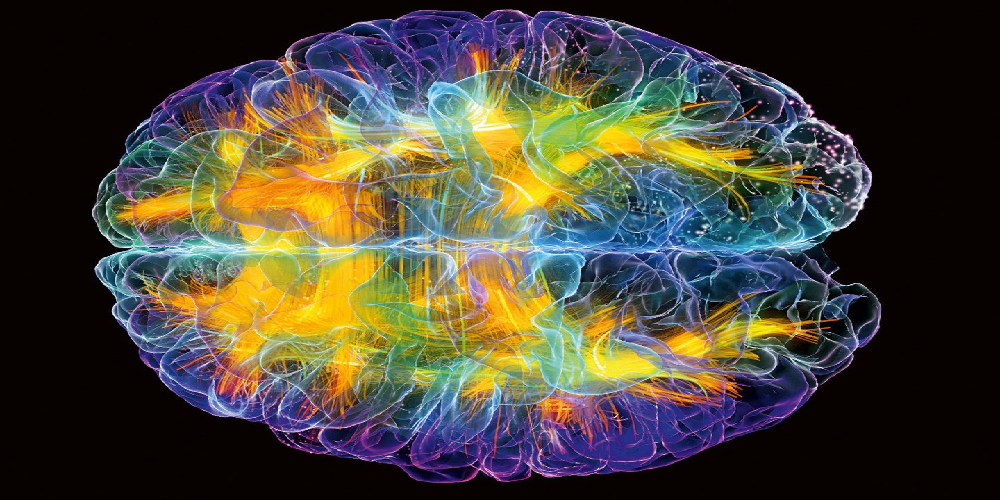
The fundamental biological unit mimicked in the design of neuromorphic systems is the neurons. Animal brain is composed of these individual units of computation, called neurons and the neurons are the elementary signaling parts of the nervous systems. Neurons, which have common shape, produce electricity or chemical signals to communicate with other neighboring ones.

Though these neurons are similar in shape, different connections with each other, muscles and receptors produce different computational results in biological systems: locomotive control, perception, sensory processing, auditory processing etc. Neuron is made of made up of input area (the dendrite) and output area (the axion) and is connected with other neurons by synapses.

Since neurons are the basic cells of the nervous systems of all kinds of animals, building silicon neurons (or neuromorphs) endowed with fundamental life-like characteristics, could enable the emulation or modeling of the neural networks in biological nervous systems.

By examining the retina for instance, artificial neurons that mimic the retinal neurons and chemistry are fabricated on silicon (most common material), gallium arsenide (GaAs) or possibly prospective organic semiconductor materials.

In conclusion, it may not have changed the world, but the prospects of neuromorphics in medicine are many and could possibly herald the era of bio-grade artificial electronics human organs.

Neuromorphics in Africa

After the present state of AI, my prediction is that the fusion of biology and AI will be the next wave. Biology remains the most perfect system. AI will come home and we will see more interface. That will engineer the AI 3.0 producing a high level of autonomy, and precipitating possible chaos, if not well managed, as Elon Musk and others have predicted.

Indeed, it will not be very far when man will re-program the interactions at human cell-level and then leave them to organically and biologically adapt as necessary to sustain life. As they make smartphone glasses that can self-heal, the possibility that retina implants that can self-heal to correct vision will be ready within a decade.

If you are excited about neuromorphics and want same in your school, please contact the Tekedia team. Next year, we will be running some AI workshops with neuromorphic chips in selected African universities. This is the second phase of our electronics workshop where we continue to deepen electronics capabilities in the continent. My company Fasmicro Group runs the workshops through my non-profit (a U.S. 501(c)3 category) as a way of giving back. We have been to excess of 100 universities. The new workshops will be drastically re-engineered with more AI systems with applications in new exciting areas like agriculture, energy, healthcare, and more.


Beyond Business Model Innovation For Your African Startup

4

This is a Short Note.

Two companies: Groupon (a pioneer ecommerce marketplace connecting subscribers with local merchants by offering discounts on activities, travel, goods and services)  and  Blue Apron (an ingredient-and-recipe meal kit service) share one thing in common. Both are business model innovators. They rose not necessarily because of new fundamental technology underpinning their businesses, but rather, a new business model, supported by technology.

There are challenges to such business processes. The first is that they can be easily copied by better executors. Also, incumbents with more capital can radically challenge them. Most times, those businesses struggle, especially if they do not have the capital and the operational capacity to become category-kings, as quickly as possible. So, they can pioneer a new area, but they can easily fade, due to lack of resources or operational capacities.

With no easy way to quickly dominate and scale through network effect, they become regional players with no apparent capacity to transfer abilities to other regions without massive new investments in the new locations.

So, if New York-based Blue Apron wants to come to Lagos, it has to essentially invest and setup a new system that replicates that business model in Lagos. It cannot serve Nigeria without necessarily having physical operations in Nigeria. The same applies to the old Groupon when it was a pure price discounter. It required the foot soldiers who visited shops, restaurants and other places to negotiate the discounts.

Contrast them with Google and Microsoft. Google has a core technology through its search technology. Microsoft invented the world of personal computing through Windows. Google Search and Microsoft Windows are core technologies that no one can challenge in a battle without real preparations. They can scale and serve the world without necessarily being around the world. Anyone can use Google Search from any part of the world. Windows is used globally even though Microsoft does not have to be everywhere.

The African Case

In Africa, we tend to be business model innovators. One of the reasons is our lack of technical capabilities. So without the technical depth, the only way we can be in business is to innovate at the level of business model. There is nothing wrong with that. However, the problem is that such businesses always struggle to defend their domains.

When Groupon was in its peak, Lagos had more than ten clones starting from Deal Dey. But when the fad passed, many of the companies went with it.

Most investors are always skeptical of such businesses because there is no fundamental thing that can protect them from competitions. Network effect has to be won on geography thereby making it harder to dominate easily. You cannot just unleash a code and see the impact around the world.

Yes, I do note that starting a business built this way is easier. However, the day you start it is the very day people can easily copy you. The key competitive weapon becomes capital which will be needed to accelerate growth. It is like ecommerce: The ability to raise capital and also execute operationally are the key drivers of the strategy. In Africa, you have to win city by city as you have to build logistics one city at a time. That has a huge impact on value derivable from assets, turning a largely asset-light business in most parts of the world into an asset-heavy business.

Planning Your Startup

One of the easiest ways to do well in raising money is to do something not many people can do. If you can have a fundamental technology, you will be in a good trajectory to entice investors. Look at Paystacks, a Lagos fintech, it has something it has built. Where possible, a technology innovation-anchored startup should be what you should aspire to create.

Come up with a technical solution to a problem. That solution, anchored on technology, becomes the defining capabilities of your firm in the market. That can take you to great places than just copying a business model which others can quickly rip and replicate, pushing you out of the business easily. That you have pioneered a business model does not really give you an edge if you do not have capital to accelerate growth.

But where you have innovated on core technology, you have a better chance to success: you can hold your turf. This does not mean that business model startups are not good. My point is that focusing on startups anchored on core technology should be your preference, where possible. When you do that, the chances of raising money from investors are always higher.

It is very simple: many venture capitalists do not count non-technical founders when they analyze startups. You may think you have three founders with only one technical founder when the investors see only one person as founding the company. They have discounted the non-techies. You must have a product before you can think on how to sell the product. That explains why team formation is the first test for any new startup.

Rebuilding Africa’s Missed IBM and Google

0

Aham lives in Atu, a village in Osimiri in Nigeria. Atu is peaceful with energy of a typical African tropical climate. Boys and girls enjoy life in this agrarian society. Bird hunting was part of fun.

But one day, Aham and his friend, Uche, had gone for bird hunting in a forest few miles away from the village square. While in the forest, Uche was bitten by a very poisonous snake, avuala, and in the mayhem that followed, Aham ran away. While running, he fell down and broke his arms.

Luckily, Nkwo, the palm wine tapper was on duty that moment. Right on his tree, he saw what happened and quickly made it straight to where the boys were crying in pains and agonies. Within few minutes, the boys had been taken to the local herbal doctors: one to the local ‘orthopedic surgeon’, the other to a master specialist on snake poison. Both survived. That was eighty years ago.

A Changed Continent

Today, western education has brought many promises. It has opened opportunities for boys and girls to dream big. And become great not just in villages but anywhere.

Parents send their kids to schools because schools make them great. However, western education has facilitated a broken succession across villages in Africa. A generation of indigenous knowledge acquired, refined and transferred for more than ten generations are endangered.

That creates a problem in some villages because the rate at which development from western education is coming is slower than the rate the indigenous people are losing grasp of their own technology.

When one orthopedic hospital serves a region comprising of many states with underpaid doctors and experts, few get quality solutions. The other alternative which their parents had depended upon had been destroyed because the skilled people have died or dying.

The children of the ‘experts’ have migrated to the urban areas and no one knows the herbs or the processes which can help people in need overcome their challenges.

It is a double tragedy! You have lost what you have in the promise of new things which have refused to materialize. That is the challenge, not just in Africa, but in many developing countries where modern technology has not diffused to fill the vacuum created by a broken indigenous technology succession.

The Roadmap

The question that must be asked is this: Why can’t the government identify these people and develop a process to document what they do in order to preserve knowledge?

Better, can the government support them to transition to the new level and use the new (educated) generation to innovate on those trades? We want all children to go to school, but we also want a process that understands that in many rural Africa, we have got technology that must be preserved.

A process that does this is very important in Africa. Film them, send them government paid interns, pay them to talk and find ways to conserve that knowledge.

Anyhow, we need to preserve what has evolved over generations of Africans. Now is the time to harvest them and put some intellectual property rights which can help them become great.

Yes, Africa can be made big from within and our indigenous technology must be strengthened. This calls for African Union/NEPAD to identify this trend as a problem and vigorously tackle it. It must develop a process to curtail the loss of these essential technologies while strengthening a system that will modernize them.

We missed our IBM and Google, but the future is always pregnant. Nothing stops us creating better Googles and IBMs if we begin to discover the African Mind.

The Server Errors on Tekedia – Working and Fixing Them

0

Bear with us, we are migrating Tekedia to Amazon Web Services (AWS). The current hosting firm, HostGator, has been terrible. Please bear with us. We expect this process to be concluded before Wednesday. Programming continues and please when you see the error, refresh.

The error shows up when we have many visitors on the site. AWS will give us the capacity to grow without concerns on traffic.

Thanks

Africa’s Voice Operating System

0

Amazon, the ecommerce giant, is causing headache for other big technology companies and consumer facing businesses in America. After its success of taking down malls and physical stores, it has pushed its searchlight to grocery, through its acquisition of Whole Foods, a high-end grocery chain.

But doing all these activities will put Amazon in a position where it will have many enemies. Yes, it will be so exposed that there is hardly anything it does, that it will not be annoying partners. This week, Google and Walmart teamed up to deepen Walmart business; Google will provide a key part of the technology through its voice activated system and the Google Express.

Wal-Mart, the world’s biggest retailer, and Google, the internet’s predominant search engine, are teaming up in an attempt to challenge Amazon’s growing dominance in online shopping.

The venture, announced early Wednesday, marries Google’s hands-free voice activated Google Home program to Wal-Mart’s vast network of US stores to allow customers to order groceries and other items to be home delivered through Google Express.

The initiative is a direct rebuttal to Alexa, Amazon’s popular artificial intelligence program, and comes as the online retailer prepared to swallow Whole Foods Market in a transaction that will exponentially expand Amazon’s presence in brick-and-mortar stores and is expected to lead to home delivery of food through Amazon’s subscription prime program. —–

Scott Kessler, a CFRA analyst who covers Google parent Alphabet, said the announcement made sense for both companies, filling in a gap in Wal-Mart’s technology profile with the addition of voice-ordering capacity and potentially boosting Google’s standing in e-commerce.

There are many things we can learn from this deal:

  • Walmart has understood that the competition is not just about having the items in the shelves at the lowest possible prices. One needs the technology to have any chance. It thinks it cannot deliver that technology. So, it went with Google
  • Google itself understands the challenge over the vast empires Amazon is building and how that can affect its own business. Amazon in future can decide to build self-driving cars to help manage its logistics. Google knows that Amazon can come directly to anything it does
  • Google wants to have presence in grocery, albeit through e-commerce, since that remains where most of the money can be made in America. This partnership with Walmart can help it build a business in that area and later make it available to other retailers. It is very possible that it can provide a vehicle to help others take up Amazon in the retail sector

Yet, I do not think Google has a better voice assistance system compared to Amazon’s Alexa. What is happening here is that Walmart will not willingly arm its competitor by adopting Alexa, since Amazon is a major competitor. So, irrespective of the quality of Google technology, that is always going to be preferable to whatever Alexa has to offer.

Maersk, the global shipping company, noted that it chose Microsoft Azure over Amazon cloud services partly based on the realization that Amazon is also a competitor in the logistics business. This is the same thing that happened in the Google – Walmart deal. Walmart cannot support Amazon by adopting Alexa.

Voice ordering is getting very popular in America. Amazon is leading in that space. This is designed to help Walmart catch-up with Amazon. It will also help Google build new services in this area. Finding that leg into the e-commerce and grocery will be very strategic in its capacity to compete against Amazon in the broad technology arena. Above all, many will buy Google  Home, partly because of this deal, and that is good for Google.

Wal-Mart Stores head of e-commerce Marc Lore said the initiative will permit customers to voice order hundreds of thousands of items beginning in late September. Wal-Mart plans to integrate its “easy reorder” service into the program, which allows customers to repeat orders of household staples and other frequent purchases with a few fast clicks.

Voice is a new growth area and if more people begin to talk, over just search, the core business of Google will be challenged. This is why making sure that it is ahead of this curve is something that it has to do.

“We expect voice commerce to become a more important part of Google’s revenue model over the long haul, in particular as more searches migrate to voice platforms, and where transactions may ultimately stand in for advertising,” Sebastian said.

“For Walmart, we believe the partnership with Google helps address risks associated with the ramp (up) in voice commerce, in particular the increasing number of searches and product orders flowing through Amazon’s Alexa voice ecosystem.”

This trajectory will go global because voice is the original way humans have been communicating for ages. Places like Nigeria and Africa must of course deal with some accent and voice issues for the systems to understand them as I have noted in the past. Largely, it is very possible in the next ten years that most things will be done via voice.

What Walmart, Google, Microsoft and Amazon are all doing is setting up the stage for the next battle in computing: voice operating system. Anyone that builds the best will triumph.  Think of Google Search supremacy over Microsoft Bing and Yahoo Search, and how Google has come to dominate search. The voice business will not just be for London and New York, the developing world has massive opportunities in the voice space since that is where the highest level of illiteracy exists at the moment. Computing delivered through voice will be more appealing there over the present text-based format. For entrepreneurs with capacity to do voice, this will be highly rewarding in places like Africa.

Opportunities in Voice in Africa

There are many opportunities in the voice assistance space in Africa. In short, if you make it, you will get customers even in the enterprise market. The following are simple examples:

  • Banks working on agency banking will adopt the technology to reach customers who are largely not literate enough
  • Insurance firms will also use it to build new solutions, based on voice
  • Many government services will move from text to voice, solving the illiteracy barrier
  • Africa’s leading ecommerce companies like Jumia and Konga will come on board. Of course, you must make sure such a technology works with our accents

There is a shift in computing at the consumer level, where people can talk to their phones and the phones get things done. The opportunity will be huge. Now is the time to think of Africa’s voice operating system.