DD
MM
YYYY

PAGES

DD
MM
YYYY

spot_img

PAGES

Home Blog Page 7314

The Wolf Warriors 2 Is Real

0

This is a Short Note.

China is really changing the global order of many things. Africa is part of the ecosystem where the impacts are felt. Now, it is making movies positing itself as the savior to the African populace. According to Quartz, in a new movie, Wolf Warriors 2, China chronicles how Chinese special forces entered an unknown African country to save the local people from white mercenaries who have come to do no good. This movie is the highest grossing movie of all time in China. It is showing the image of China saving Africa from dangerous white people. Simply, the Western world has lost the monopoly of saving the black people! If you have watched the Red Scorpion, on how an American saved the local Africans from the bad Soviet, you will understand. Now, China is doing the same thing: saving Africa.

Indeed, China is not stopping in movies, as it bulldozes itself in the real business world.

First, according to Fortune from a Reuters report, Chinese firms are piling pressure on Ericsson. The equipment giant will cut 25,000 – yes twenty five thousand people – as it battles for a position in the world of Huawei, a Chinese IT equipment giant.

Mobile networks equipment maker Ericsson may slash its workforce by nearly a quarter—some 25,000 jobs in all—in what would be a dramatic expansion of its cost-cutting efforts. The next big investment cycle for mobile carriers, an upgrade to 5G networks, is still years away, and emerging markets—a key prop to growth for many years—are getting tougher due to competition from the likes of Huawei. The company had warned it would cut faster and more deeply after missing expectations in the second quarter. Ericsson has announced 3,000 job cuts already. However, it didn’t confirm the Svenska Dagladet report

Also, another Western company is seeing pressure from Chinese businesses to issue margin warning. China is pushing wind technologies across many African countries and beyond, and Vestas is feeling the heat, competitively.

Shares in Vestas Wind Systems, the world’s biggest maker of wind turbines, fell 8% after it warned of shrinking margins—a reflection of increased price pressure in China. Neither a healthy rise in orders and backlogs nor the announcement that it will buy back nearly 9% of its stock cushioned the fall. The development makes it all the more important to the Danish company that it continues its current run of success in the U.S., where it has nearly half the market and competition from Chinese rivals is less acute—but where it also faces a patent lawsuit from GE, which sued it for improperly using its technology earlier this month

China is not a movie. It is for real. Beyond the movies, Africa is feeling China in business. Huawei is a force, and challenging companies like Cisco. China is winning; Africa needs to learn from China. It has proven that anyone can take up the competitive West. China has shown that it is possible. We need to understand the Chinese secret to compete in the world of technology and commerce.

This also tells another important story. In the age of China, it is a hopeless business model to run a hardware business without platforms. Sooner or later, China will come and attack. In a hardware business, you need a platform to secure your flanks.

There is no hardware business that will survive by itself in this age of Internet without an element of customer post-purchase relationship. You have to find a way to keep customers in your ecosystem. The old model of carry and go will be challenged by cheaper rivals.


Startup’s Parable of Rocket Ship and Fuel

0

This is a Short Note.

It is indeed happening. Everyone wants to get into AI  (artificial intelligence) because that is the buzz of the time. AI is cool and fascinating. Across African cities, our entrepreneurs are pushing, just as their counterparts around the world.

Unfortunately, there is one big problem: you cannot just get into AI because you know maths, statistics and algorithms. Succeeding therein demands more. AI is the rocket ship. It needs a fuel. That fuel is data. Without data, AI is simply not going to make sense.

When people write of Google AI advantage, they rightly point out the massive data Google has collected over the years. As Google builds its AI models, it has data to test and validate them. IBM got into that trap also and it has to acquire a healthcare company to get data to support Watson Health, its health AI system.

Watson Health today announced plans to acquire Truven Health Analytics, a leading provider of cloud-based healthcare data, analytics and insights for $2.6 billion. Truven will bring more than 8,500 clients, including U.S. federal and state government agencies, employers, health plans, hospitals, clinicians and life sciences companies to the IBM Watson Health portfolio.

IBM knew that Watson Health will not make any significant market-ready progress without the data. So, it bought the data to help train and improve whatever it has been doing with Watson Health.

Two Cases from Fasmicro Group

  • When I decided to move into agtech, I knew that AI was going to play a role in whatever we needed to do. So while creating Zenvus, I made sure we also had a roadmap to collect data.That has helped our business because if I had focused on the AI, without the farm data, we would not have made progress. Today, we have the rocket ship and also the fuel. .
  • As we also unveil a health AI system for Africa in coming weeks, we have also structured the firm to go beyond just the AI. We will collect data to help us serve our clients and partners. Africa does not have quality health datasets and that means the first thing is to think about the fuel, the data, even before we build the rocket ship (the AI).

All Together

As you move into AI, think about the data. Do not put so much effort in any AI business where you do not have the capacity to get data to test and validate the models. While they have datasets online, most times, the datasets are Western and may not really help you in Africa. For instance, most farm datasets online are from large farms, unlike the type of farms we have in Africa. Those are totally irrelevant to the problems we are solving at Zenvus. Models are great, but it is the data that really makes the business. Data, they say, is as important as electricity in this business, and developing a strategy earlier on for data, for your AI startup, will give you an edge.

The Illusive Demand by ASUU

0
ASUU Leaders

The Academic Staff Union of Universities (ASUU), a union of university academic staff, is a great institution which continues to ensure that Nigeria has the manpower to compete locally and globally, besides producing graduates that will handle the affairs of the nation. We respect ASUU and certainly commend some of the most brilliant people, in their generations, who have stayed to teach in our schools.

Yet, ASUU is not blameless. The evidence-based and empirical constructs the professors teach in our universities do not apply to how they agitate, against the Federal Government of Nigeria. They make bold demands without examining the basis of such demands. Today, they are on strike, on the following demands:

Ogunyemi said that the industrial action which took effect from Sunday August 13, 2017 will be “total, comprehensive and indefinite action whereby no form of academic activities, including teaching, attendance of any meeting, conduct and supervision of any examination at any level, supervision of project or thesis at any level would take place at any of the government universities”.

In 2009, after a strenuous and painstaking three-year renegotiation exercise, the federal government had signed an agreement with ASUU on the issues of conditions of service, funding, university autonomy and academic freedom.

—“Of all the items contained in the MoU, only the N200b out of a total of N1.3trn of the public universities revitalisation (Needs Assessment) fund was released.

Simply, ASUU wants four things (yes, five things):

  1. Improved Conditions of Services.
  2. More Funding (for the universities)
  3. University autonomy
  4. Academic freedom
  5. Pending N1.1 trillion to be released to public universities.

If you check these five items, there is no way they could be in our sentence or paragraph, realistically. Why? You cannot have university autonomy and expect the government to be funding you nearly 100%. So, the governor or the President will always like to run the university as a “business” because the school is part of the line cost item. If you think a governor will fund a state university and leave ASUU to appoint the Governing Council, which provides a good avenue to settle political associates, you are dreaming. If you think a Vice Chancellor will adhere to ASUU when the governor is the one that ratifies anything he does, you are wasting your time. The Vice Chancellor, largely, is a political appointee disguised on an academic robe.

The fact is this: ASUU cannot eat its cake and have it.That is a conversation that must happen in the Nigerian university system. ASUU needs to understand that it cannot have autonomy when government funds more than 90% of its budget. For autonomy, it needs to ingenuously expand our university funding base away from government. This should be so clear to ASUU by now. So, that #3 should not be there,where #2 exists in excess of more than 90% of school budget. Government is made up of humans, the politicians, and where they allocate resources, are where they have influence. Administrative autonomy in our schools will not be possible without financial autonomy.

The #1 (improved conditions of service) is simply about salary and wages. Sure, I support that our professors be paid well. But here, ASUU has to be totally honest. I have seen adverts where ASUU professors compared themselves to MIT and Harvard professors who make $500,000 per year. Doing that is just unfair, on the following grounds:

  • MIT is in a larger economy. The U.S. economy is more than 30X the economy of Nigeria. There is no way such translations can happen in wages. Google will not pay a Nigeria-based software engineer who is at the same level as another engineer in Silicon Valley the same wage. Besides the purchasing power parity and cost of local living, the size of your market matters
  • MIT professor mostly gets paid through grants. In some cases, no one pays him/her from university funds in the summer where the professor has to pay himself or herself from grant money. Nigerian professors are guaranteed salaries for 12 months in a year. If an MIT professor or any top U.S. university professor does not have a grant, nothing for that person for three months during summer
  • MIT professor may be paid $500,000 because he/she has a patent the University receives more than $10 million per year. But because the rights of the invention go to the university, sometimes, the school finds a way to make them happy so that they keep working. Being a university professor is challenging because you can create an idea that makes people rich while you toil.  As Amazon, Uber etc go into U.S. universities to lure professors, schools  are fighting to keep them, with better packages. That is why they are paid that much. In Nigeria, we do not have that problem and we cannot expect to compare linearly with the compensations of these U.S. teachers.

Also, if ASUU thinks that Nigeria can afford to inject N1.1 trillion in our universities, at this time, it is not simply honest. ASUU has this upper hand because its products, the students, affect everyone. There is no other sector that can make this type of demand and get away with it: government will simply ignore. But because of the students, ASUU comes up with demands seasonally. While they have the rights to demand, it is very important we look at these issues fairly. I must note that, generally, our schools are not well funded. But that is not the whole story.

The Problems

Nigerian university system has a real funding problem. Everyone knows that. However, what ASSU is doing is not helping. Nigeria needs to expand capacity but ASUU has not brought leadership in that space. I explain thus:

  • Government keeps starting new universities at federal and state levels. ASUU never mounts any HARD challenge to the governments to be smarter on this policy. For ASUU, more schools offer more rooms to be VCs, HODs, Deans etc. They never care that education budget is not technically growing despite the expansion of university bureaucracy. ASUU could have recommended putting the new schools under the existing ones thereby reducing administration cost, even when expanding access to education for our students. In Rwanda, they technically have one university with campuses around the country. That saves massive cost which goes into improving teaching and research. Imagine having only 10 VCs in Nigeria. The saving on cars, housing etc will be massive to actually improve basic things in schools.
  • There is no hard evidence that shows that more money is the problem. ASUU keeps making this an argument of more money, but it is yet to provide empirical data. The fact is this: even as government pumps more money, the quality of our graduates continues to drop. ASUU needs to answer that question. You can pump money for VCs to be buying Mercedes Benz instead of Honda.
  • ASUU does not want partial privatization of public universities. And yet, it wants more funding in the public schools. Please note that government does not have limitless cash to solve ASUU problem. Nigeria is a poor country. Our annual budget may not even cover South Africa’s health budget. Forget the optimistic GDP data, the key is the money in the bank. Nigeria does not have it. Yet, ASUU does not want private support in the funding. Why? ASUU is afraid of accountability.
  • ASUU has avoided providing benchmarks upon which government can use to tie this funding need. That is what the private sector will likely demand. You go to the CEO of a university and ask: if I provide this more funding, what do I expect in outcome? Today, state and federal governments do not know what to expect from ASUU with more funding in measurable and concrete ways. Governments have rights to those and ASUU must provide them to boost its arguments of more money.

All Together

I am a big advocate of quality education, not just at the university level but also at primary and secondary levels. Nigeria needs one. I enjoyed my time in Federal University of Technology Owerri, despite having to go to class at 4am for a lecture starting at 10am, to “colonise” a seat in the front. ASUU demand makes sense – more funding could have solved that problem. However, I have also noticed that it was not just about funding when I made it into U.S. It was more of an efficient utilization of capital and factors of production. Yet, we can talk about those even for a university. Most U.S. university leaders are professional managers who are well experienced in managing large organizations. That a crop scientist professor has published many papers does not qualify him or her to be running a university when he/she cannot read a simple balance sheet statement.

And because of ego, the professor may not even ask anyone for help. So, you see this problem that unless it is crop science, vision is stunted. In U.S. university presidents’ offices, you see a mini investment banking office with professionals working as though they have come to exponential grow alpha. The quality of our university administration is a fair game if ASUU wants to improve governance and prudent management of our university resources.

Nigeria needs to find the right mix on university funding. Also, we need to empower private universities not necessarily through funding. In U.S., the private schools put pressure on the state schools, which always lag the private ones. Private institutions are always better managed. Nigerian kids have limited choices to attend our private universities because of the cost. If there are frameworks to make some of the private schools affordable, ASUU will find that not many people will take up its illusive demand.

But I must say that the government must be honest on how it handles our professors. You cannot sign a document with full awareness that you would not implement it. That is degrading and insulting. Everyone has a role to play here because at the end, only the students suffer. Where you know you do not have money, stop opening new public universities. Rather, make it easier for the private ones to meet the demands of what you have in mind, while supervising them for quality. Nigeria, by now, should not be closing universities on strike. The fact that we continue to close universities is a shame. It needs to stop.

Nigeria needs a conference on how to fund education in the 21st century. Our students deserve better. For more than 30 years since ASUU was established, it has been making this argument from military governments to civilian ones and nothing seems to be working. The government cannot always be at fault. ASUU may be having issues explaining what it wants.

Steve Jobs’ Perception Demand Construct, for Africa

21
Products, perception demand

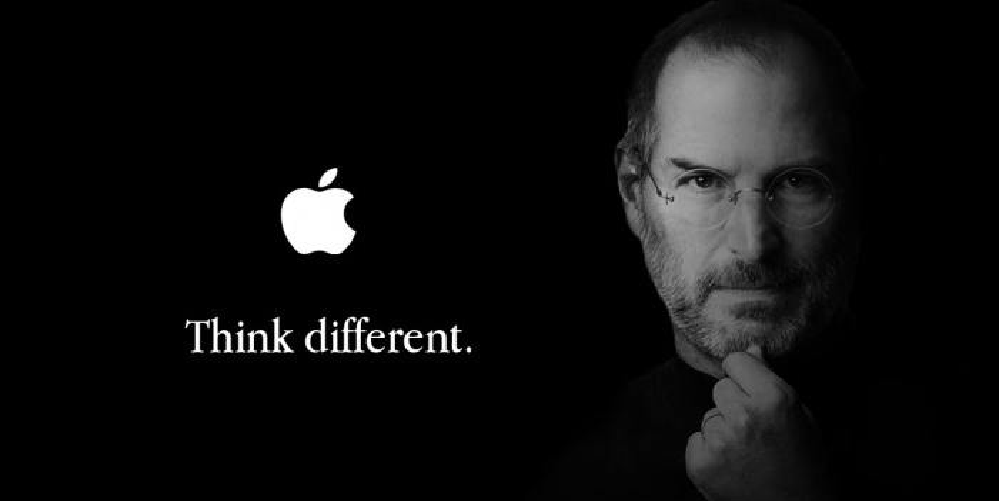
Steve Jobs, an Apple founder, was legendary for stimulating demand. He worked without surveys or focus groups. He was a genius, peerless in his generation. He saw an unborn future many years ago. He was an icon, who changed his world. He developed a good design paradigm of working at the perception of customers, beyond their needs and expectations. He found glory and Apple triumphed with iPod, iPhone, iPad and more.

I discuss why organizations must focus on developing products and services that go beyond the needs of customers to their expectations and perceptions. Focusing on the needs of customers is a recipe for disaster. The whole desire must be to deliver products and services at the level of customer perception where they are offered products and services which they might not have even imagined would be possible. But the day they see the products they will say wow: That is the thing I have been thinking. This also explains the limitations of focus groups because focus groups are  tethered to what the customers think they need. Perception of customer level  service is offering something which could not have been requested during focus groups, because such products will not come into the imaginations of the people being studied..

I call this Perception Demand because Mr Jobs used his vision to create new industrial sectors. He used his talent to launch the new dawns in the apps economy and the smartphone economy, at scale. Sure, Blackberry and Nokia might have been ahead, but he redesigned the sectors through his products. Blackberry pioneered the smartphone sector, but Apple is the world’s largest public company due to smartphone. Many predict that it will hit a valuation of $1 trillion very soon.

The Perception Demand Construct is a construct where you work on things which are not really evident to be in demand. Yet you go ahead to create that product. The demand may not be existing but you are confident you can stimulate it. Yes, you do believe that your product can elicit demand and grow the sector when launched. This is different from existing demand which could be met via starting a web hosting company or selling light bulbs where you know people actually need those services.

For example, in Africa, we have guys working on Virtual Reality (VR) /  Augmented Reality (AR). Some of them are inspired by Oculus Rift, owned by Facebook. They are consumer facing. They are having their conferences and meetups. Yet, personally, I do not see the demand in the consumer market in Africa in the near future for VR/AR handsets. Had they been medical or generally enterprise industry facing, AR/VR could certainly have real value, though at limited scale in our hospitals and companies, at the moment.

My take is that the founders do believe that if they get the VR/AR right, they could create local demand for African techies to spend $1000 to watch virtual world. There is no verifiable and visible demand of this product line at scale in the continent. They want to stimulate the demand by having the product before the demand.

However,  I have noticed that stimulating demand is very hard in Africa in the tech space. These are the major issues:

  • Raising money: this is very hard because few investors can see the immediate value. You are solving a problem with no real market opportunity
  • Talent attraction: attracting talent is very hard because even the workers may not see the relevance. What happens is that the founder toils around for years until he/she gives up
  • Lack of ecosystem: the government is not excited, making it hard to plug into any relevant initiative.

Simply, blindly following Silicon Valley to build the local products and hoping that demand comes rarely works. And by the time the founder is done, he has wasted the funds invested to bootstrap the startup. Of course, we do this many times, because we like to remind Silicon Valley people that inspire us, that we are working on the same things they are working on! But doing the same thing with people with largely unlimited resources, in different settings, does not mean it will work.

Apple does not do that: Apple rarely pioneers a new sector. In short, Apple is not an inventive company; it is an innovative firm. It has perfected the art of stimulating demand at perception level. In other words, while it does not do focus groups and surveys, it still uses market data of those in the areas to gauge the opportunities. Once it joins the sector, it radically changes the basis of competition, pushing the curves and then stimulates demand on this new basis. So, as a leader, Steve Jobs got Apple into mastering the construct of Stimulating Perception Demand at scale.

Stimulating Perception Demand

Perception Demand is very risky: you think without much learning curves decoupled from aligning scaling and market demand. But when you add “Stimulating” before it, you have a construct, Stimulating Perception Demand, which focuses on existing trajectories in the markets and how to take them to the next level, and around there massively get many fans to connect. Here, you have seen how the products in the markets are doing. You just want to take them to the next level. The product operates at perception level, but even with that, you must stimulate demand at new heights.

Technically, this is where Steve Jobs plays well. Steve Jobs and Apple in general are innovative and not necessarily inventive. They take ideas which are in the demand and then make them better. They may not be doing focus groups because the performance of existing products is a good data to make decisions. They knew that Walkman was selling but iPod could make Walkman better. They knew that Blackberry was selling but iPhone could take the smartphone business to the next level. They want to stimulate a new level of perception in the demand nexus. So even if there is no focus group, sales data from public traded Research in Motion (then name for Blackberry maker) and Sony were solid insights on the sectors and the products.

Founders working in Africa may not easily have access to capital. But one thing that works here is the model that people can prepay for most things. If you meet the real pain points of most customers, they can fund your business. We see the struggles in agriculture, from insurance to sales, and we do believe that there is a business to build products which by itself can stimulate demand, at perception level.

We have opportunities in education, energy and other sectors which have provided real data that businesses can be built in these areas. But unlocking them will come from doing things in totally different ways. That will help stimulate the new markets we want in them.

Stimulating the process is a new art which Steve Jobs also redesigned. By providing few data, Apple enjoys unprecedented media buzz. That helps to stimulate the demand of products it has already taken to the perception level. Everyone wants to write about Apple and the sequels of products. The fusion of great products and the media interests creates stratospheric goodwill that Apple does not pay. Everyone breaks the news – TV, newspapers, magazines, talk shows, etc – for free, and that is earned media. It is a huge saving.

I do think that if not Steve Jobs and his zen-like mastery, another company could have launched iPhone and  the world would think it was just another smartphone product. Steve gave iPhone a personality, stimulating passion in an already great product.

All Together

It is really important that the focus moves from the excitement on the technology to the value created in markets. We have to work on building products that bring perception demand. But just having the products is not enough. We need to find ways to also stimulate demand for them. By moving into perception demand, you have changed the basis of competition, a new curve, and if you do not clearly communicate, you could be alone. I never see Apple as a technically great company (yes, those fashion patents!). It does not need to be to have success. The company is peerless in innovation from the lens of customers and that is what matters.

The Perils of Herding Business Vision

15

You never really liked Facebook. But you signed on when all your friends opened accounts. Despite your privacy concerns, the alternatives are few. Leave it; you have lost a stream of networks.

In this era of social networking, we simply follow the path of least resistance. And it has been proven that in doing so, we lose a bit of our independence. We begin and end the day with checking emails. Our lives revolve around people that make up our social networks (and to a lesser extent, professional networks).

Unlike before, reaching your friends demands immediacy. Otherwise, why will someone provide GPS feeds of his movements to the world? The human networks have become more communal and increasingly our social networks influence us so much that we risk losing our independent ideologies.

The reality is that when a friend begins a conversation and finds it great, others in the networks just agree, most times. Your friend rates a blog post high, even without reading it, you also rate it high. A friend likes a video and nearly everyone in the network will follow thus.

From New York Times  to Facebook, I have noticed that the early comments in any post influence the dialogue the most. Those early ones will decide the direction other subsequent commentators will follow. Though there are deviations, on average, the individual judgment is lost. We just follow the path of least resistance by not disagreeing with those in our networks.

There are many reasons we act that way. One, we want to retain that friendship and will work hard not to oppose our friends. Two, we never actually read the post; we just made a decision based on the comments of our friends who might have read the entire post. Three, the desire of least resistance and fear of being attacked by providing independent insights by our networks encouraged us to follow the popular opinion.

Unfortunately, irrespective of the reason under which we make comments, our digital identities are registered and to most people, we made the comments. That create a risk as in most cases we come back to notice that we misjudged. We suddenly noticed that our casual comments were wrong and very embarrassing to the issue under discussion.

The Consequences

In general, our personal independence on new ideas is under siege by social networks and Internet. We follow a lot and new insights are lacking because like buyer recommendations, we believe our social networks and follow their leads. There are both positive and negative consequences to this new aspect of human existence.

On the positive side, we can easily learn new things and some really good ideas can inspire and motivate us. When a friend shares a good idea on investing, the social network can help it go viral and it can benefit most that will follow, even without asking questions.

On the negative side, it can make us very dumb. The reality is that most people do not believe that the Internet is not edited and they believe everything they read or see on the web. When someone passes an idea, we rarely ask for facts. Take the PEW poll that 18% (24% from Time Magazine) of Americans believe that President Obama is a Muslim. Despite all evidence to the contrary, the most important being his relationship with his ex-pastor. He was vilified for his pastor’s actions, yet he is still a Muslim!

Before the Internet age, the network TVs would have edited out most of the issues that derail honest dialogue in political arenas. But with Internet, there is no editor and any idea can go viral. President Donald Trump has escalated those elements with his idea of press and facts.

When you watch some videos that have gone viral, nothing comes clearly on why they did. But on more observations, you can notice the social energy of networks. That brings the question of quality in media. Who truly cares? In most cases, it is not the quality that wins but social congregation. Provided that more people click a post, it has more chances of becoming more popular. And popularity is defined under the constructs of advertisement; more clicks, more money.

As this dynamics emerge, firms must adapt to understand that man is inherently being changed by the social circle. Having a good advertising campaign need not focus on expensive ad, rather a focus on pushing the content to few choreographed people with larger networks and then task them to give positive reviews. As soon as they do that, others in the networks will follow thus and a viral ad is born.

Also, companies must understand that immediacy triumphs over quality. A website that is updated ten times in a day could be ranked more than one that has a higher quality (who decides?) but updated once a day. To avoid this challenge of the web algorithm, firms open visitor comments thereby increasing the level of activity.

Man is passing through a very transformative phase. Today, a student can post his homework on his Facebook account and his friends will provide answers. When he is asked to develop a class concept, he goes to Yahoo Answers and someone offers a free solution. We are increasingly outsourcing our minds to our networks. We depend less on facts today than we did a few decades back. Anything flows into the web and the world consumes. We can edit an encyclopedia (yes, Wikipedia) and reference it immediately. It does not seem to be a progressive evolution of the human species

Herding Business Vision

I am getting to something and that is your business. The same way we herd in the social media is the same way we are herding while crafting business visions. Everyone wants to do the same thing: ecommerce, AI, blockchain and those new trends. Unfortunately, most times, we are not ready, or worse, we do not have the capabilities to execute such business models. Instead of figuring out how to help our local petty traders to improve productivity, we want to assist Wall Street traders to improve trading. Instead of helping local students in our secondary schools to understand mathematics, we are focusing on how to deliver programs that will support Stanford University students. When we have farmers struggling to get products to markets, we are engaged on figuring out the best way to deliver smartphones via drones. We want to be trendy; we love herding New York, Paris and Silicon Valley. It is the new normal.

To a large extent, we are wrong. Just as we need to decouple from the group thinking of social media, we need to have independence to figure out the best possible business visions that will work in Africa. Silicon Valley and New York have their unique peculiarities. Not everything done in Yankee will work in Africa. Airbnb can work in Boston, but it will struggle in Bauchi (Nigeria) because the people of Bauchi and Boston are different in many ways. This is the time to think local, and allow our independence to help us reconnect to our local challenges. Fixing those challenges are our paths to glory. Yes, the value we all want to create for ourselves, families, partners and all stakeholders, in Africa.