DD
MM
YYYY

PAGES

DD
MM
YYYY

spot_img

PAGES

Home Blog Page 7317

The Talent Problem, Exacerbated

6

This is a Short Note.

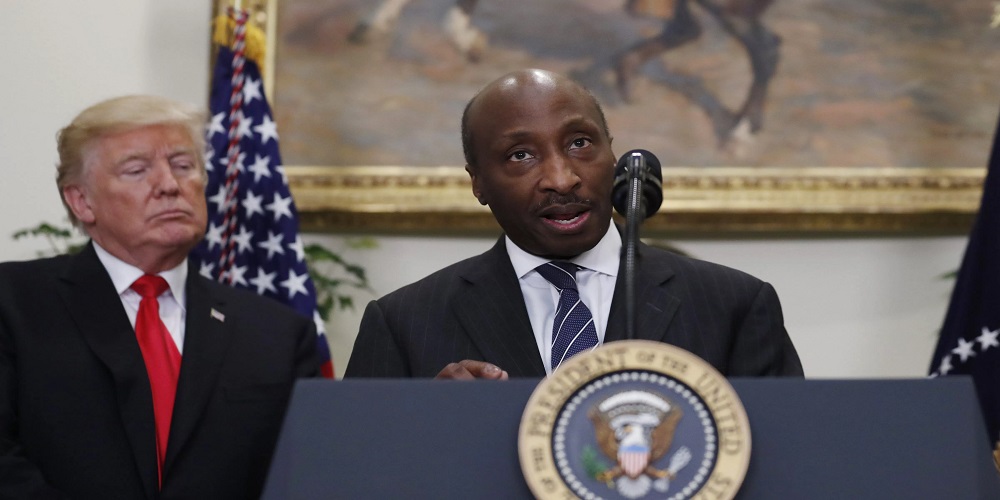
As you read this piece, more business leaders will continue to express disaffection to the president of the United States, Donald Trump, on how he responded to the racist parade in Charlottesville, Va. Over the last few hours, some members of the President’s Council on American Manufacturing have resigned. They do not want to be associated with an American president who cannot stand against racism, even when it is obvious.

Mr. Trump’s remarks came amid a growing rift between the White House and the business community that has emerged since the weekend’s violence in Charlottesville, Va., and criticism of Mr. Trump’s response to it. Six members in two days have stepped down from the president’s Manufacturing Jobs Initiative.

Among those CEOs are Merck CEO Ken Frazier, Intel CEO Brian Krzanich and Under Armour CEO Kevin Plank. .

Without wasting space on what Trump believes as a human being, I want to focus on the lessons, from what is happening. The way leaders behave and conduct themselves can affect pipelines for talent in their businesses. Just as Trump is going to find it harder to find top CEOs who can work with him on whatever he wants to do, it is the same way a business leader could struggle when his/her behavior alienates talent.

That people can run away from the President of the United States tells me that in this age of Internet, with eternal memories maintained by Google, there are limitations on the powers of offices. Indeed, people that occupy those offices matter. Today, Trump is the president and people know that. That means, before the eyes of these CEOs, who are leaving him, they see Trump and not just the most powerful office in the world.

So, do not just assume that holding a position is what matters. People will correlate the power of that office with the dignity the person holding it brings to it. Where there are many deviations, few will like to answer the call. When that happens, instead of working with A-Team, you are going to struggle with B-Team.

We continue to learn on the Trump movie which is still playing. But so far, we can agree that your power in any position means nothing unless you, the person, bring honour, decency and valor to it. The men and women that hold offices are ornaments that decorate the seats of power. The seats lose the efficacy if the ornaments are defective. But radiance emerges out of the seat when the ornaments are made with the finest  quality.

Your talent problem – not being able to hire and retain the right people- may be a problem you created yourself. The most powerful person in the building could be so powerful that he/she blows all the fuses along the way. Indeed, the effervescence of power only lasts longer with the vivacity of human dignity.

Your Online Store Is Not An eCommerce Business

2

Speaking with someone today, I came to the realization that, at the moment, many could be confused on the core difference between having an online (yes, digital) store and running an ecommerce company. The industry definition of ecommerce may not help, because they use the term “ecommerce” when transactions take place, only, on the internet.

Electronic commerce or ecommerce is a term for any type of business, or commercial transaction, that involves the transfer of information across the Internet. It covers a range of different types of businesses, from consumer based retail sites, through auction or music sites, to business exchanges trading goods and services between corporations. It is currently one of the most important aspects of the Internet to emerge.

Ecommerce allows consumers to electronically exchange goods and services with no barriers of time or distance. Electronic commerce has expanded rapidly over the past five years and is predicted to continue at this rate, or even accelerate. In the near future the boundaries between “conventional” and “electronic” commerce will become increasingly blurred as more and more businesses move sections of their operations onto the Internet.

Technically, “ecommerce” needs to have been transactions that take place on any electronic medium. This means those POS-, ATM-, and Internet-based transactions could be included, as they are all “electronic”  representing the “e”  in “ecommerce”. However, the term has evolved that ecommerce is simply associated with Internet-executed transactions. When you pay with your credit card in a store, you do not think of ecommerce even though the card itself is an electronic system which has facilitated that transaction. When you transfer money via ATM, ecommerce does not come to mind. Those other types of transactions are now loosely referred to as digital commerce. The internet has taken ownership of the “electronic” commerce.

That is all fine. Today, we will simply note that ecommerce occurs when transactions are done online.

However, ecommerce is different from digital or online store in terms of business strategy or formation. That you have an online store does not mean that you run an ecommerce business.

When I say ecommerce business, for those that read my writing,  I have in mind companies that do nothing but sell online as a business model. The essence of the business is facilitating trade and commerce online by bringing buyers and sellers together. It could be the seller or it could enable other sellers to participate in its ecosystem to reach buyers. Amazon.com, Alibaba (a marketplace ecommerce), Konga and Jumia are all ecommerce companies. Largely, except Alibaba, most of these noted examples are hybrid ecommerce firms: they combine the pure ecommerce business with the marketplace ecommerce business.  In the pure ecommerce, the company keeps inventory and sells directly to buyers. In the marketplace version, the company does not own any inventory, it merely links sellers and buyers in its portal, acting as an intermediary.

When you have a website and have a small online store on the website, I do not consider that an ecommerce business. I see that as a digital store to help you expand your distribution channels. What I write does not apply to you. Your business is not ecommerce. Rather, you are using the Internet as a tool to grow your business. An ecommerce business is living on the web and that is all it does. If Internet stops working, the business will collapse.

Let me make it clearer with an example. A soap company with a website where people can buy soap is not an ecommerce company. You simply have an online store. The fundamental challenges of ecommerce do not apply wholly to you.

Distrust: Rich Africans have yet to embrace online shopping, due to online fraud.

Cost of broadband

Logistics

African open market: In Africa, there are “markets” everywhere, starting with the security guards who run stores in front of their masters’ mansions.

Fragmented markets: For all the efforts to make Africa appear as one market, it is not.

Literacy rates: Even if all the infrastructure and integration issues are fixed, illiterate citizens may be unable to participate directly on e-commerce sites that require reading and writing skills.

The Core Difference

A company online store has largely few products, mainly owned or marketed by the company, while an ecommerce company has expansive list of products, in hundreds, and usually not produced by it. Sure, like Amazon, the company can produce some of the products under its labels. However, the key difference is clear. In company digital store, you have few products made/marketed largely by one firm or few while in an ecommerce firm, you have multiple brands available. If government bans internet in that country, the ecommerce company will fold, while the company in this example can still operate, except that its online store will be gone.

Recommendation

Please go and add digital stores in your companies. Online stores will help grow your business. That website you are paying for domain hosting and renewal can bring more revenue if there is a store there. Everything you read about ecommerce does not apply to you. I want to make it very clear. You need a digital store – no argument on that. Your online company store is not the same as ecommerce. While you sell your products online, you business is not selling things online as the sole living mechanism. A lawyer that asks people to pay for consultancy fees online is not running an ecommerce company, and all the challenges affecting ecommerce should not concern that person.

Obeahon Ohiwerei is the new MD/CEO of Keystone Bank Nigeria (profile)

1

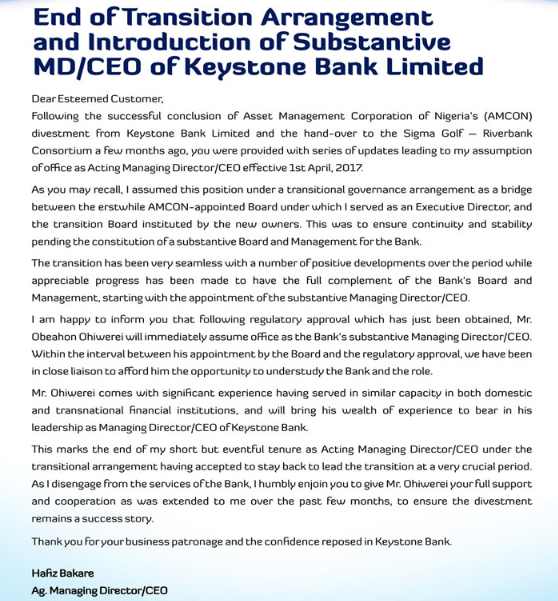
Obeahon Ohiwerei is the new MD/CEO of Keystone Bank Ltd, Nigeria. He takes over from the acting MD/CEO Hafiz Bakare. This is his profile

Mr Obeahon Ohiwerei holds a first degree in Mathematics and a Masters Degree in Business Administration. He began his professional banking career with Guaranty Trust Bank Plc in 1991, and his exceptional performance saw him rise to the position of Manager within six years. After a successful career with GTBank, he worked with Standard Trust Bank (now UBA Plc) where he was appointed the Pioneer Group Head, Consumer Banking in 1998.

He resigned in 2002 as General Manager in charge of Lagos and West to join Pacific Bank Limited (then on Central Bank of Nigeria’s holding action) as Managing Director. He repositioned the bank with his new team within 15 months and moved on to take up a new appointment as the pioneer Managing Director of Standard Trust Bank Ghana (now UBA Ghana).

He was a Group Executive Director with Access Bank Plc for 7 years, and a Director in 3 of Access Bank’s offshore subsidiaries as well as FITC, Lagos.

Internet Will Destroy Fintech

0

This is a Short Note.

Yesterday, I wrote that ICT anchored the competitive evolution of Nigeria’s new generation banks, by unleashing productivity in the sector. I made a case that Internet, through its unbounded distribution, will destroy some of the banks, if they fail to adapt.

While ICT provided unprecedented productivity in the Nigerian banking sector, Internet is seriously “destroying” value. This is a “problem”. ICT made them, Internet could destroy some of them. Internet is bringing the construct of creative destruction in the Nigerian banking sector where values are destroyed and new opportunities unlocked. But those new opportunities are not going to be, exclusively, within the controls of the banks.

What Internet is doing today is expanding distribution of banking services thereby putting pressure on banks to control pricing on their own terms. Before Internet, they could charge huge fees to transfer money for clients to foreign accounts via their treasury departments, but today, with internet, there are options. The customers could simply use their debit and credit cards to settle the bills without first spending money on bank fees.

What Internet is doing to banking, it is doing in other sectors. I noted the redesign in the airline, entertainment and other industrial sectors. Internet is commoditizing many elements of commerce.

Now, I make a case that for some financial services, we may not even have a need to have firms. In other words, if Internet can link supply and demand efficiently, the core essence of firms will collapse. Companies exist to handle the friction which exists between supply and demand, as noted in the refereed piece above.

The essence of firms is to make sure that demand and supply have lesser friction. If you can use internet to remove that friction between demand and supply ( i.e. they can come together, with ease), you do not need firms. For example, if a saver can efficiently find a borrower, there is no need, partly, to go to a bank to put money to earn interest. If Internet attacks that, the heartbeat of most business sectors will be damaged.

Why Internet Will Destroy Fintech

At maturity level, Internet could enable seamless linkages between sellers and buyers in many industries: the implication is that many companies will disappear. Who needs an accountant when all transactions are powered by blockchain? Many areas we see in fintech (financial technology firms) will disappear; some include:

  • Remittance: As internet matures and the core elements developed, the world will have one “currency” and the elements of remittance will not be needed. Besides, the transfer of funds, if necessary, can be done without fintech in the midst. We already have companies doing remittance for free between U.S. and Europe. In future, that will not be a service because technology will make Internet to get all nations and their currencies to converge.
  • Payment: In a blockchain, no one  will need a bank or fintech to facilitate payment. The buyer and seller can exchange blockchain transactions to effect deals. It is going to be an advanced mPesa where buyer pays seller through the mobile number, except that mPesa is not owned by any corporate entity
  • Lending: With most frictions gone, lenders will lend to borrowers and all contracts sealed in the open general ledger of blockchain. The need for fintechs and banks will be limited.

As I noted in the piece, anyone that thinks that because it is a fintech, that the wave will flow in its direction could be wrong. Internet will redesign and even destroy the companies it had made possible. Internet is making today’s fintech possible and it may not spare them.  When consumers have unbounded access through unlimited distribution channels to immense product supplies, made possible by Internet, business will be totally different from the way we see it today.

As the distribution happens, IT utilities like Google, Amazon, and Facebook will be the clear winners. They will continue to tax advertisers or partners for access to web users who will see the world through their lenses. And with limited efforts they will make that linkage between buyer and seller easier displacing other entities. If you live in the Amazon universe and your neighbor does, you can shop for more than 80% of your life needs. Who needs a currency, when Amazon currency will suffice? Extend that to the top 10 digital firms, you will have a different world. They can lock the ecosystems making it extremely hard for any other firm to participate. They can take us to that friction-less commerce, except now the digital universe is within their domains.

All together, prepare for an unconstrained future. Fintech cannot be talking of disruption because they are also vulnerable, if the very pillars of Internet remains: unbounded distribution and commodification of value. The services would be endangered if blockchain becomes the pillars of modern digital economy.

Jumia Parent Company Is Buying a Rocket

0

Jumia parent company, Rocket Internet, is buying back its shares. This is certainly surprising for a company that is known to be raising new funds to start new digital companies or pump into current ones. Buying back its shares means that it is turning everything on its head. It wants to return money to investors? Not really, I do think it wants to boost its share price, which is not a bad thing.

The Management Board of Rocket Internet SE (“Rocket Internet”), with consent of the Supervisory Board, has resolved to carry out a share buy-back program with a total maximum consideration (excluding ancillary costs) of up to 100 million Euro and a maximum volume of up to 5,000,000 shares, representing a maximum of up to 3.03% of the outstanding share capital of Rocket Internet (the “Share Buy-Back Program”). The buy-back will be executed via Xetra trading on the Frankfurt Stock Exchange and will begin on August 14, 2017 and end on April 30, 2018. The repurchased shares are intended to be redeemed, and Rocket Internet’s share capital is intended to be reduced accordingly.

First, share buy-back “occurs when the issuing company pays shareholders the market value per share and re-absorbs that portion of its ownership that was previously distributed among public and private investors”. For Rocket Internet, there are three main reasons why this company will do this:

  • Rocket Internet shares are very cheap, so it wants to get many out there in-house. You buy back when you believe that your stock value is undervalued by the market
  • Vision is stunted, so buy-back can generate short-term share appreciation. You have no practical means (minus the share buy-back) to generate value which will move the shares.This comes after many frustrations that nothing has worked, over months and years, to get the stock going north.
  • Balance sheet is dislocated and some funds can be expended to pump up the shares. You have very terrible ratios and by reducing the number of shares available, you will magically improve many indicators like earning per share. Just like that, you will join some clubs, because the ratios will look good.

Many short-term investors will rush to the stocks to take advantage of this announced buy-back. As interests build, the stock will appreciate in value over the next few days, weeks or months since it expects to end it around April 2018. So you will see a decent price per earnings over the next few months.

Rocket Internet is doing well and it deserves a lot of commendation for even having this type of money to spend on buy-back. It does means it is generating cash. Over the last few months, they have listed a company (food logistics company Delivery Hero), sold companies (its Lazada stake to Alibaba), raised new capital, went to bond market and did all they needed to do to survive. The brilliance of the Management has seen the company holding excess of 1.7 billion euros in cash reserves. That is not a small feat.

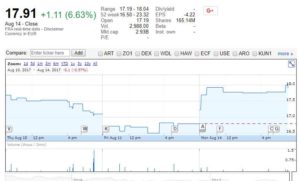
As expected, the stock appreciated more than 6% in the German bourse where it is traded. The short-term investors are excited for quick gains. Yet, this stock position is still about half of its IPO value when it went public in October of 2014.

Rocket Internet has one big issue: HelloFresh, its meat-kit company, is undermined by the unfortunate performance of Blue Apron which went public and is turning out to be a disappointment. Amazon is rumored to be interested in this sector with the acquisition of Whole Foods. So, investors are careful in putting money in a company which may be unable to compete with Amazon, if it decides to enter the sector. With the performance of Blue Apron, there is no clear path to take HelloFresh public. This is partly one of the reasons why the stock is languishing. This share buy-back could help, albeit temporarily. They will get the rocket, in Rocket Internet, in-house, of course, nevertheless.