Etisalat Nigeria has collapsed. A consortium of banks, led by Access Bank PLC and other Nigerian and foreign banks, has taken over the management of Etisalat Nigeria, effective June 15.
The takeover followed the collapse of the effort by Emerging Markets Telecommunications Services, EMTS, promoted by Hakeem Bello-Osagie, to reach agreement with the banks on debt restructuring plan in the protracted debt impasse.
However, EMTS Holding BV, established in the Netherlands, has up to June 23 to complete the transfer of 100 percent of the company’s shares in Etisalat to the United Capital Trustees Limited, the legal representative of the consortium of banks.
Etisalat Group, the parent company of Etisalat Nigeria, announced the takeover on Tuesday in a filing to the Abu Dhabi Securities Exchange in Abu Dhabi, United Arab Emirate.
The filing, with reference number Ho/GCFO/152/85, and dated June 20, 2017 signed by Etisalat Group Chief Financial Officber, Serkan Okandan, said efforts by EMTS to restructure the repayment of the syndicated loan by a consortium of banks to Etisalat Nigeria collapsed.
“Further to our announcement dated 12 February, 2017, Emirates Telecommunications Group Company PJSC, “Etisalat Group” would like to inform you that Emerging Markets Telecommunications Services Limited “EMTS” (“the company), established in Nigeria and an associate of Etisalat Group with effective ownership of 45% and 25% ordinary and preference shares respectively, defaulted on a facility agreement with a syndicate of Nigerian banks (“EMTS Lenders”).
“Subsequently, discussions between EMTS and the EMTS Lenders did not produce an agreement on a debt restructuring plan.
“Accordingly, the Company received a default and security Enforcement Notice on 9 June 2017 requesting EMTS Holding BV (EMTS BV) established in the Netherlands, and through which Etisalat Group holds its interest in the company) requiring EMTS BV to transfer 100% of its shares in the company to the United Capital Trustees Limited (the Security Trustee”) of the EMTS Lenders by 15 June 2017.
“Subsequently the EMTS Lenders extended the deadline for the share transfer to 5.00 pm Lagos time on 23 June 2017,” the filing said.
We do expect the banks to appoint Globacom to help manage this company.
Meanwhile, Etisalat Nigeria has assured customers that its services will remain available.
“We will tap into the rich, creative and innovative resources within our workforce to build a stronger business upon the stable foundation we have laid in our nine years of operations,” Vice President, Regulatory & Corporate Affairs, Etisalat Nigeria, Ibrahim Dikko
This piece was adapted from Premium Times which broke the news
The following are the leading Messenger bots from Middle East and North Africa.
Gaming and Entertainment Trivoxx from Morocco, winner of gaming and entertainment category, is a bot that allows one’s or a group of friends test their trivia on sports, science, and cities in three languages: Arabic, French, and English.
Mastermind Games Bot from Egypt is a collection of five interactive games to solve codes based on various combinations of logic and memory. Every time a user guesses the correct code, a cave safe will open to obtain a diamond. Users can share games with their friends as they vie for the top scores.
Productivity and Utility
If you like to read books, then you’ll agree that Mr. Ink from Egypt is the winner in the Social Good category. Users can either type a book name, or snap a photo of the book cover, to obtain information about the book including its author, rating, and book description.
Evii from Jordan helps customers order and pick up food via its bot. Evii seize the opportunity to expand by building more end-to-end customers tools.
Social Good MathHook from Egypt, is the winner in the Social Good category. It brings math into everyone’s life by helping users to solve complex math problems and search for math courses on YouTube across 3000 math videos. There’s also a chat function to connect users with teachers or other students to solve math problems. MathHook is also a student submission to this Challenge.
Adam(9 months) from Egypt aims to create community for pregnant women via tools and guidance, and safe communication channels between community members. Adam utilizes additional features such as location services to let users search for nearby pregnancy care, baby or maternity places. It also has an analytics tool to log user actions in custom events with custom parameters to better understand community perspectives.
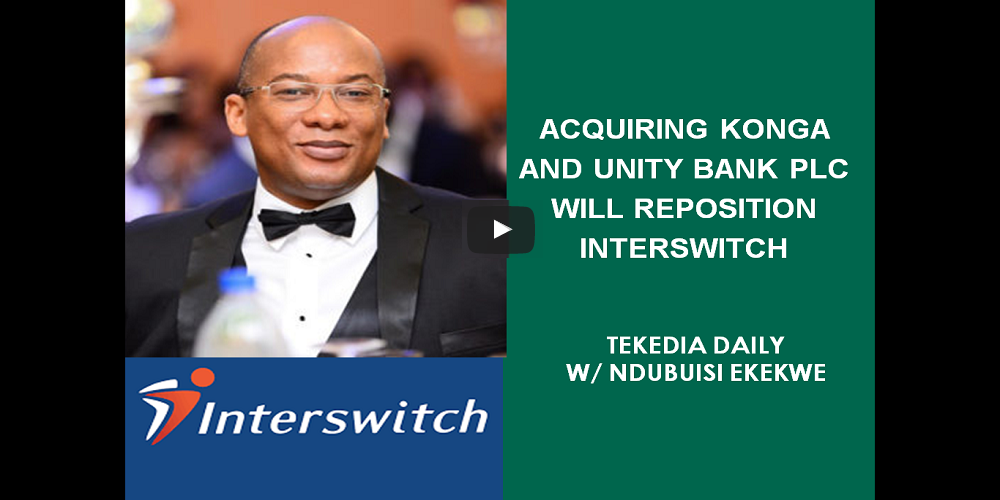
This is a videocast supporting our proposal for Interswitch to buy Konga and Unity Bank in order to deepen its competitiveness through a well differentiated platform.
Interswitch has been heralded as a future unicorn, a private technology company with valuation of at least $1 billion, by TechCrunch. Then, it was expected that Interswitch would go public in the Nigerian Stock Exchange and London Stock Exchange, in 2016. That exit, through IPO, did not happen and it would be assumed that Helios was disappointed.
….
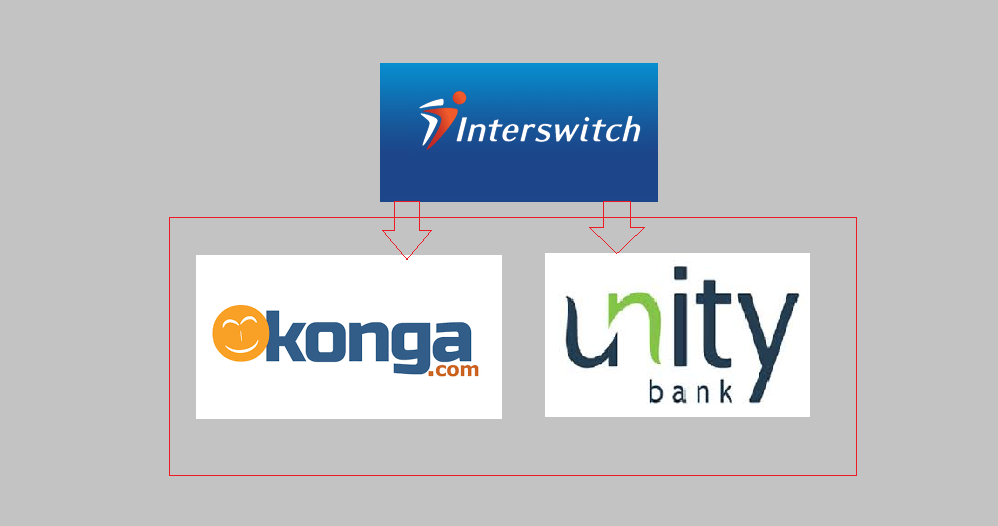
We propose for Interswitch to buy a bank and Konga. Together, both will provide growth drivers which will be catalytic. Public traded Unity Bank is worth about $31 million according to Bloomberg Markets. Interswitch could pay a premium and acquire it for $40 million; Konga is worth about $34 million.
Interswitch, a pioneering digital payment processing company, is one of the premier technology companies in Nigeria. At its core, it facilitates the electronic circulation of money as well as the exchange of value between individuals and firms. Founded in 2002, by Mitchell Elegbe, the company has expanded operations into other African countries.
The company provides switching infrastructure that connects banks in Nigeria and its technology powers ATM cards. In its sector, it is the Category-King with excess of 20,000 ATMs in its network.
It owns the Verve brand, a payment card in Nigeria, which once accounted for nearly 80% of the total cards in circulation. Verve is now available in Kenya. The company owns an online payment platform, Quickteller, which is integrated in websites in many Nigerian companies, and had processed billions of dollars of transactions. It also operates Retailpay, a mobile business management ecosystem, which is not really very popular, but growing. The Smartgov is used by local governments as an identity management e-payment infrastructure.
It has done deals as it pursued growth and diversification in the past. It acquired a mobile fintech company VANSO, for $50 million, which provided solutions in mobile banking, SMS and digital security thereby positioning Interswitch for digital commerce. It also bought into Bankom Uganda, and Paynet, a payment provider, operating mainly in East Africa. In 2015, it unveiled a $10m investment fund for African start-ups. ACE, a logistics firm, founded by Jumia Nigeria founders received $3m funding from this fund. SlimTrader, a mobile payment firm, also received $1m investment from Interswitch fund. About two thirds of the firm is owned by a consortium led by Helios Investment Partners. Helios had paid $96 million for a 52 percent stake in Interswitch in 2010.
In December 2010, an investor group led by Helios agreed the acquisition of a majority equity interest in Interswitch Limited (“Interswitch”), the largest payment processing service provider in Nigeria. Helios’ $96 million investment represents a 52% interest on a fully-diluted basis. Interswitch has been at the forefront of the development and growth of the e-payment sector. It also administers Verve, the leading debit card scheme in the country. The firm offers integrated message broker solutions for financial transactions, e-Commerce and e-billing solutions, telecoms value-added services and payment collections solutions.
The Valuation, IPO, Looking for Exit
Interswitch has been heralded as a future unicorn, a private technology company with valuation of at least $1 billion, by TechCrunch. Then, it was expected that Interswitch would go public in the Nigerian Stock Exchange and London Stock Exchange, in 2016. That exit, through IPO, did not happen and it would be assumed that Helios was disappointed. The more Interswitch waits, the more Nigerian market matures for foreign competitors to come. The barrier of entry in this business is largely minimal considering Paypal and Stripe global ambitions. According to Bloomberg, Interswitch did shop for buyers in leading U.S. financial instructions in the neighborhood of $1 billion, but none worked out. Network International LLC was rumored to be interested but at the end nothing happened.
In Q1 2017, TA Associates, a leading global growth private equity firm, announced it has acquired a minority equity interest in Interswitch. Helios remains a majority owner.
By comparison, another payment processor, eTransact, is worth about $70 million, according to Bloomberg Markets.
The Challenges
Interswitch is facing severe competitions from Visa and MasterCard. In a vertical integrated market, the options available from these alternative partners would continue to stifle its growth. In the past, most of the bank relied exclusively on Interswitch, but now, they have switched to the foreign players. This has made it possible for companies like Paystack, Flutterwave, Paga and others to build their businesses locally and Africa-wide without necessarily depending on Interswitch. One of the products Quickteller, which in 2016 had processed nearly $3 billion transaction, has major competitors in Flutterwave and Paga.
Besides, markets like Kenya and Ghana will not be easy; the local companies there are very dynamic and are increasingly seeing Nigeria, Interswitch home country, as a place to anchor future growth because Nigeria’s relative large GDP. M-PESA takes Kenya out and as it expands across East Africa, it makes succeeding there very difficult. The home country is not assured because recession has reduced purchasing power which expectedly affects abilities to spend money, which Interswitch depends for its business.
But despite these challenges, Interswitch operates in one of the best markets in Africa with lots of opportunities. As noted in a statement released during TA Associates investment:
The digital payments evolution is in the early stages of development in Nigeria, with cash used for 99% of transactions according to McKinsey & Company, versus approximately 50% for developed markets in North America and Europe. Despite the young market, the size of the Nigerian payments opportunity is underpinned by its continent-leading population and sizeable economy. Based on estimates from McKinsey & Company, Interswitch occupies a leading position in the emerging marketplace, especially in debit cards, which comprise 99% of all cards in Nigeria.
A New Strategy – Our Proposal And Why
Today, as Nigeria remains weak and economy on recession, with the acute foreign currency shortage, it will be extremely challenging for Interswitch to exit so that Helios can return money to investors. The remaining strategy that makes sense is growth,
Interswitch understands that and is already focusing on expanding partnerships. It moved trading in Nigeria to the cloud with Misys. It is also working with Ingenico to deepen multi-channel payment solutions
The goal for Interswitch is to become a leading platform for digital business in Nigeria. It must find a way to make it happen. It must work to take cut in any digital economic activity in Nigeria and pursue a sustained long-term dominant strategy. This means it must build a sustainable differentiated product. It must build up its primitives and close the flanks.
We propose for Interswitch to buy a bank and Konga. Together, both will provide growth drivers which will be catalytic. Publicly traded Unity Bank is worth about $31 million according to Bloomberg Markets. Interswitch could pay a premium and acquire it for $40 million; Konga is worth about $34 million.
Interswitch should acquire a lending license from Unity Bank. That will help it begin to build a credit system in Nigeria in partnership with NIPSS. Post-acquisition, it will focus on digital banking, closing some branches of Unity Bank and dedicate its efforts to build Nigeria’s first internet-only bank. Through this, the bank will use the data from its ecosystems to perfect lending systems which will help drive it growth.
For Konga, Interswitch will be buying into customers. It will quickly sell any inventory and turn Konga into a pure marketplace but with warehouses to enable Konga customers to store their products which will be sold in Konga ecosystems. The investment in ACE, the logistics company will then be expanded to ensure that Konga’s marketplace is strengthened. This will provide Interswitch with customers which will be critical in its growth.
Both Konga and Unity Bank will give Interswitch paths and customers to enable it become a truly new-bread service provider which is going to be protected by scale and outreach.
In conclusion
The future of Interswitch will be determined if it can make itself a platform- anchored payment ecosystem in Nigeria. Any plan to remain a switching firm poses existential threats as banks can easily build their own. GTBank has already done this, replacing Interswitch with GTPay in its online ecosystems. This means that they can bypass anything Interswitch offers today. So, the best strategy is to transform itself from within. Locking customers and having a platform is the only way to do this.
Nigerian government will be bailed out of its budget funding through its strategic planning over the years which made it so easy for government workers and politicians to steal with impunity. Now with a stroke of genius, government will use the recovered stolen fund as though it is a strategic savings account which can be tapped in the time of scarcity. For the 2017 budget, the looted funds come handily. Nigerian government will fund its budget to the capacity of N559 billion (about $1.8 billion) from recovered looted funds, according to News Agency of Nigeria.
The federal government said on Monday it would use a fraction of the looted funds recovered so far to finance part of the 2017 budget.
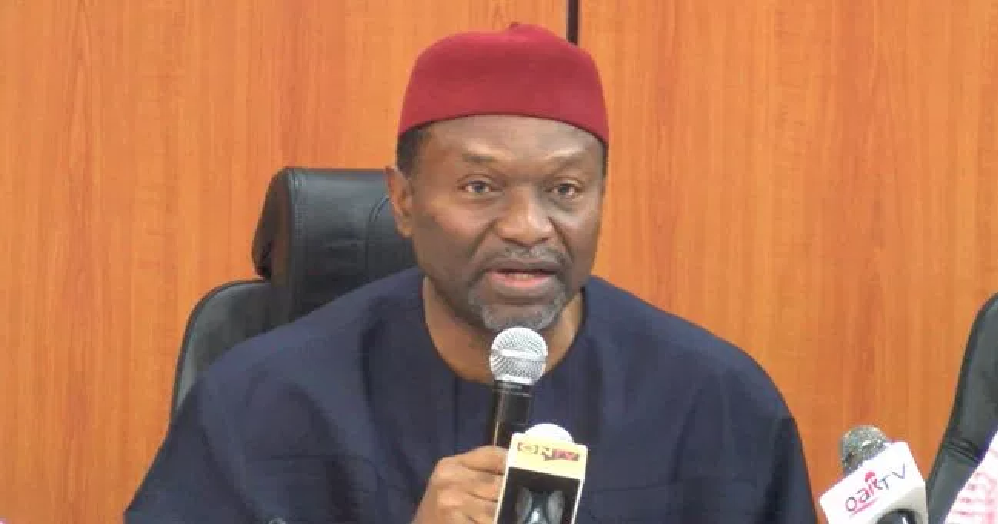
The Minister of Budget and National Planning, Udoma Udoma, said this at the 2017 budget breakdown in Abuja.
He said the total revenue projected was N5.08 trillion, with 11 per cent (about N559 billion) coming from the recoveries made.
Now, they will allow them to continue to loot instead of strengthening processes to prevent corruption. But as you can imagine, these looted funds can be helpful.
But give the present government credit for actually making these looted funds work for the citizens. But its greatest legacy will be making sure Nigeria does not have to rely on looted funds to fund its future budgets. We need to close all the holes that make stealing possible!