DD
MM
YYYY

PAGES

DD
MM
YYYY

spot_img

PAGES

Home Blog Page 736

AVAX Slips, PEPE Pumps, but Cold Wallet’s 4,900% ROI and Referral Perks Steal Traders’ Attention

0

As crypto prices continue to swing and market reactions change fast, a major question remains on the minds of many: which crypto to buy today to get the best future returns? With fresh signals in recent trends, the answer is becoming clearer. PEPE keeps slipping, even as large buyers add holdings, and AVAX’s support weakens post-ETF excitement, but Cold Wallet is heading in a completely different direction, with real rewards, working features, and a live referral system already offering benefits.

Cold Wallet’s CoinMarketCap listing marks a major move toward visibility and trust. At a presale rate of $0.00998 and a locked launch price of $0.3517, it points to a possible 4,900% gain. Its referral program adds direct value today, not hypotheticals. As more people compare hype-driven tokens to real functionality, Cold Wallet’s appeal grows rapidly.

PEPE Price Weakens Despite Whale Activity

PEPE has dropped by over 5.48% recently, adding to its ongoing losses even though a massive wallet added more than 9 billion tokens. In most cases, large whale movements help stabilize or lift a token’s value. But PEPE’s price keeps sliding, which raises doubts about the long-term power of meme tokens tied mostly to hype and online trends.

Even with this large purchase, retail traders have shown little excitement. Sentiment remains low as many in the market shift focus away from meme coins. Analysts note that the continued PEPE dip is likely due to the meme space becoming overcrowded, with buyers now searching for coins with real utility and actual use cases instead of temporary attention.

That brings us back to the same important question: which crypto to buy today? While PEPE may bring quick swings, its long-term story looks unstable, especially when platforms like Cold Wallet offer ongoing rewards through real user activity.

AVAX Price Pulls Back as ETF Momentum Slows

Avalanche has now fallen back to around $24.87, wiping out earlier gains made during the talk of a possible ETF. Attention is back on price charts, and the current AVAX technical setup shows weakness close to critical support. Despite $250 million in new inflows, the momentum hasn’t held, which leaves many unsure about what comes next.

Chart-wise, AVAX must hold key levels to avoid falling to the $22–23 range. Volume is dropping, RSI indicators show no strong trend, and the earlier ETF buzz didn’t last. Analysts believe that without further triggers or major institutional action, Avalanche might stall or dip more.

While AVAX still benefits from being a well-known name with a strong network, those choosing which crypto to buy today may want more immediate gains and direct user rewards, a space where Cold Wallet already delivers with live referral benefits.

Cold Wallet’s Referral Features and 4,900% Return Potential Offer Real Utility

Cold Wallet is more than just another project. It’s a working product with a functioning referral setup that already gives back to its users. People using the wallet and making swaps earn USDT, and referring others brings cashback in USDT for both sides. This isn’t a concept, it’s running right now.

Even more impressive is the upgraded referral model in its ongoing CWT token presale. Users who refer earn an extra 10% in CWT, and the ones they invite receive a 5% bonus too. These bonuses come from a dedicated referral fund, keeping the token supply clean. The one-level system is built for wide use without confusion, making sure all users benefit easily.

Now in Stage 17, Cold Wallet is priced at $0.00998. So far, it has gathered over $5.8 million in presale funds, with more than 690 million coins already sold. With a confirmed listing price of $0.3517, the project offers a 4,900% growth window. Combined with its referral earnings and CoinMarketCap listing, Cold Wallet is proving itself as a serious option for those seeking both short-term and long-term returns.

Its value is rooted in real crypto use: swaps, fees, fiat ramps, and a rewarding user experience, not social media hype or speculation. For anyone asking which crypto to buy today, Cold Wallet brings practical appeal backed by working systems and future growth.

Final Take

PEPE continues to struggle, showing the weakness of hype-based coins even with whales joining in. AVAX, once boosted by ETF news, now finds itself stuck near key levels with little buying strength left to climb further.

Meanwhile, Cold Wallet is already showing results. With a running referral model, live user rewards, and a price gap that hints at 4,900% returns, the setup is hard to ignore. It’s raised over $5.8 million and gained CoinMarketCap recognition, showing real momentum. For those seeking use-backed crypto options with actual earning power, Cold Wallet stands out.


Explore Cold Wallet Now:

 Presale: https://purchase.coldwallet.com/

Website: https://coldwallet.com/

X: https://x.com/coldwalletapp

Telegram: https://t.me/ColdWalletAppOfficial

The Best Altcoins to Buy in 2025: Featuring BlockDAG, WEPE, SUBBD & $BEST

0

Choosing the best altcoins to buy in 2025 is not just about chasing hype, it’s about understanding the strategy behind each project’s momentum. As presales become more competitive, platforms offering tactical moves rather than just flashy headlines stand out. Below are four standout altcoins worth examining, starting with a presale project that has redefined participation through strategy: BlockDAG.

BlockDAG (BDAG): Auction-Driven Liquidity and Tactical ROI

BlockDAG leads the list of best altcoins to buy due to its rare mix of technical utility and market foresight. Rather than relying on speculative hype, the team has introduced a 10 BTC Auction as part of its final presale phase, not as a giveaway but as a liquidity enhancement mechanism.

Buyers are rewarded proportionally to the volume they contribute, aligning incentives toward bulk participation. This approach strengthens trading depth ahead of the Global Launch, allowing the market to open with resilience.

The presale numbers reinforce this momentum. BlockDAG has raised $365 million so far in its presale, with over 24.8 billion coins sold. It’s currently in batch 29, priced at $0.0276. However, through a strategic window,

BlockDAG is offering a limited price of $0.0016, giving buyers a rare 2,660% ROI opportunity compared to early batch participants. By combining real utility with liquidity-focused mechanics, BlockDAG positions itself as more than just a buy, it’s a strategic hold with built-in upside.

Wall Street Pepe ($WEPE): Meme Power Meets Trader Appeal

Wall Street Pepe finds itself on the list of best altcoins to buy due to its unique crossover appeal between meme culture and the finance-savvy crypto audience. It leverages familiar branding tied to Wall Street iconography while wrapping it in the viral aesthetic of meme coins. But the key differentiator here is utility.

$WEPE’s tokenomics include deflationary mechanics and staking features, helping it avoid the burn-and-bust patterns seen with typical meme coins. Its presale raised interest from communities on both Reddit and X (Twitter), and its token performance on DEXs shows steady liquidity. Though speculative, it has carved out a niche for traders looking for short-term action with long-term meme culture anchoring.

SUBBD ($SUBBD): Niche SocialFi Utility with Growth Upside

SUBBD enters the conversation as one of the best altcoins to buy for users betting on the rise of SocialFi, social media platforms powered by blockchain. SUBBD lets content creators and community members monetize content and interactions directly. The utility lies in its structured rewards, tipping functions, and platform-native ad system that runs on-chain.

SUBBD’s strength is in its adoption metrics. The protocol has seen early partnerships with mid-tier influencers and niche creator communities. Its staking model rewards not only token holders but also active contributors, ensuring that utility ties into demand. While it’s still in early stages, SUBBD is one of the more purpose-driven altcoins in the space with real application potential.

Best Wallet Token ($BEST): Cashback Utility with Recurring Demand

Another strategic choice on the list of best altcoins to buy is the Best Wallet Token ($BEST), which operates within a self-custody wallet ecosystem. Unlike coins focused on hype, $BEST is built around usage incentives, offering crypto cashback every time users perform an on-chain action like swaps or on/off-ramping.

This recurring utility builds constant token demand. As users perform more transactions, they receive $BEST as a reward, creating a sustainable loop of engagement.

The token also unlocks higher cashback tiers, mimicking the logic of credit card reward systems, but adapted for decentralized finance. As wallets become central to everyday crypto use, utility tokens like $BEST may play a vital role in long-term portfolio strategies.

Strategy Over Speculation

The best altcoins to buy in 2025 are no longer defined by mere novelty, they are selected for their strategic moves, user incentives, and built-in liquidity potential. BlockDAG, with its 10 BTC Auction acting as a liquidity push, leads the way by giving buyers both an investment edge and transactional insight before its Global Launch.

Wall Street Pepe plays the sentiment game but backs it with structure, SUBBD gives SocialFi a tangible use case, and Best Wallet Token ($BEST) aligns token usage with daily DeFi behavior. In a market where timing and utility are everything, these projects offer more than just potential, they offer a reason to act.

The Importance of Strategic Saving in Wealth Building [podcast]

0

In this Tekedia Daily video podcast, I present a compelling argument for a balanced approach to wealth building that prioritizes both strategic saving and smart investing. The host begins by challenging the common “invest, invest, invest” mantra often found in online finance content. The core thesis is that while investing is essential for long-term growth, an overemphasis on immediate investment can be a strategic mistake.

He argues that a critical component of a successful financial strategy is the ability to save strategically, accumulating liquid capital to seize timely opportunities. He provides a vivid example of a market downturn where a valuable asset becomes available at a low price; without cash on hand, an investor would be unable to capitalize on this opportunity.

The presentation then delves into a breakdown of three key investor types: the Income Chasers, who seek consistent returns from dividends and bonds; the Growth Makers, who take on significant risk for high-growth startups and hedge funds; and the Value Pickers, who strategically acquire undervalued assets during market turmoil, drawing on historical examples like John Templeton and Carlos Slim. This categorization helps the listener understand different investment philosophies.

The speaker concludes by forecasting a coming economic recession, which he frames not as a negative event but as a fertile ground for opportunity. He supports this prediction with insights from a US banking executive, citing rising credit card delinquencies, and the impact of student loan defaults on credit scores. He emphasizes that these localized economic pressures, coupled with a globally interconnected system, will lead to a broader market reset.

The central takeaway is that those who have strategically saved and have liquid capital ready will be in the best position to deploy that capital and reap the rewards during the coming economic shift. The final message is a call to action: save for the opportunity and then deploy that capital with a clear investment thesis that aligns with your financial goals and expected returns.


Podcast VideoSign-up at Blucera and check Tekedia Daily podcast category under Training module.

Jumia Accelerates Path to Profitability With Strong Q2 2025 Performance

0

Jumia Technologies has taken another confident step toward profitability, delivering a robust performance in the second quarter of 2025.

The African e-commerce giant posted a significant revenue growth, improved operational efficiency, and narrowed losses, signaling that its strategic focus on cost discipline, core category expansion, and enhanced customer experience is paying off.

Jumia reported revenue of $45.6 million, a 25% increase year-over-year from $36.5 million in Q2 2024, and a 22% rise in constant currency. Gross Merchandise Value (GMV) climbed to $180.2 million, up 6% year-over-year, or 5% in constant currency. Excluding South Africa and Tunisia, GMV recorded an even stronger 10% year-over-year growth in physical goods.

Operating loss improved to $16.5 million, down 18% from $20.2 million in Q2 2024. Adjusted EBITDA loss also narrowed to $13.6 million, representing a 17% year-over-year improvement. Loss before income tax fell by 28% to $16.3 million, while the company ended the quarter with $98.3 million in liquidity. Net cash used in operating activities was $12.7 million, aided by a positive working capital contribution of $4.1 million.

Commenting on Jumia’s Q2 2025 report, CEO Francis Dufay expressed confidence in the company’s trajectory, highlighting robust usage growth, strong engagement across markets, and a significant reduction in cash burn compared to the previous quarter.

He said,

“Our second quarter results demonstrate continued momentum in our core consumer business, with robust usage growth and strong engagement across markets. We believe year-over-year trends are reflecting the underlying strength of our platform. We also delivered a meaningful improvement in cash burn quarter-over-quarter, driven by growth and a positive impact from working capital.

“This reinforces our confidence in reaching our strategic goal to break even on a Loss before Income tax basis in the fourth quarter of 2026 and achieving full-year profitability in 2027. Based on current trends, we are raising our full-year 2025 guidance and long-term profitability targets. These results underscore the resilience of our platform and our focus on profitable growth and operational excellence.”

Orders grew 18% year-over-year, driven by strong execution and improved product assortment across.

Key categories

• Quarterly Active Customers ordering physical goods grew by 13% year-over-year, demonstrating sustained engagement and customer retention.

• GMV increased 10% year-over-year, driven by robust consumer demand, partially offset by lower corporate sales in Egypt. Excluding corporate sales, GMV in reported currency grew 24% year-over-year.

• Nigeria’s momentum accelerated, with Orders growth up 25% and total GMV up 36% year-over-year.

• Gross items sold from international sellers grew 36% year-over-year in the second quarter 2025, reflecting strong cross-border merchant engagement and rising consumer demand for differentiated products.

Gross profit reached $23.9 million, up 11% year-over-year, with gross profit margins improving to 13.3% of GMV, driven by stronger marketplace margins. Jumia’s strategic initiatives, particularly the launch of an advanced seller advertising platform in June 2025 are expected to enhance monetization, with advertising revenue currently representing 1% of GMV and significant room for expansion.

The company’s GMV increase was driven by robust consumer demand, partially offset by lower corporate sales in Egypt. Orders grew 4% year-over-year to 5 million, with physical goods orders rising 18% when adjusted for perimeter effects. Orders from secondary cities represented 59% of the total, up from 52% in the same period last year.

Jumia has intentionally reduced emphasis on digital products sold via its JumiaPay App, which contributes high order volumes but limited revenue. Instead, it is focusing on physical goods and expanding into upcountry regions, while maintaining a disciplined approach to marketing spend through targeted online campaigns, CRM, SEO, and select offline channels.

Looking Ahead

Jumia now anticipates physical goods orders to grow between 25% and 30% year-over-year, up from the previous forecast of 20% to 25%, citing strong value propositions and momentum in key marketing channels.

The company remains committed to scaling usage, improving operational efficiency, and driving further reductions in cash burn as it navigates the remainder of 2025.

WASIU AYINDE: The Flask, the Tarmac, and the Fracture of Public Trust

0

When news broke that Fuji legend Wasiu Ayinde Marshal, K1 De Ultimate, had been stopped at Abuja’s Nnamdi Azikiwe International Airport over an alleged breach of aviation rules, the incident seemed straightforward. The Federal Airports Authority of Nigeria (FAAN) issued its statement. The musician’s camp countered with its own version.

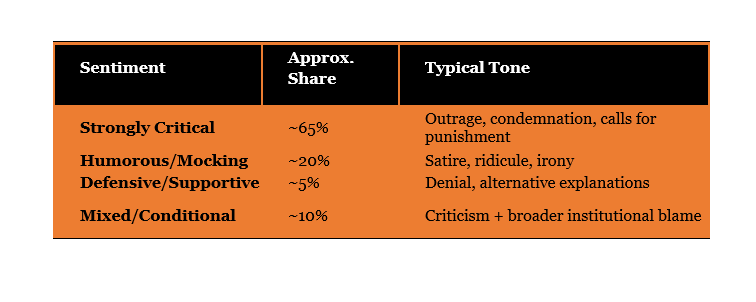
After analysing series of tweets that trailed the incident, our analyst notes that beneath the headlines, the episode has tapped into something deeper. It has stirred a long-standing crisis of public trust in Nigeria’s institutions and a widely held belief that power, not the law, determines outcomes.

FAAN’s account is unequivocal. The liquid was alcohol, the passenger resisted instructions, and security intervention was required. This is the language of official authority: procedural, technical, and certain. It carries the weight of institutional legitimacy. Yet in a society where officialdom is often suspected of bending to influence, even the clearest statements are met with scepticism.

Source: Twitter (X), 2025; Infoprations Analysis, 2025

That scepticism found its sharpest expression in comments that framed the incident not as a matter of aviation safety but as a test of whether political connections outweigh public rules. One widely shared reaction read:

“If you attempt to hold a commercial aircraft hostage, it is an act of terrorism. If Wasiu does not spend a long time in jail, then we know why (obviously).”

The “why” here is shorthand for proximity to power. K1 is known to be a close friend of President Bola Ahmed Tinubu. For many Nigerians, that connection alone explains why a celebrity might expect to avoid consequences. Another voice was blunter still:

“Wasiu Ayinde, KWAM 1, abusing his closeness to Tinubu. Imagine if na one Igbo man, will they allow him to go?”

These remarks reveal more than frustration with one individual. They point to a broader perception that Nigeria operates under two systems of accountability: one for the connected and another for everyone else.

It is this perception that corrodes public trust. In healthy democracies, institutions maintain legitimacy by demonstrating that rules apply equally to all, regardless of status. In Nigeria, many believe that enforcement is negotiable for the powerful. This belief is reinforced not only by rumours but also by lived experiences and past incidents where the rich and well-connected have escaped sanction.

Even those who focused on the safety dimension could not avoid linking their arguments to the question of influence. One commentator argued:

“If an aircraft has been cleared for takeoff, the pilot has no business with noisemakers on the ground. The people that should be suspended are those helping Wasiu. They violated safety protocols.”

Here, the attention shifts from the celebrity to the system itself: ground staff, security officers, and even the pilot who, in the public imagination, may have acted differently because of who the passenger was.

This is the heart of the trust problem. When power is seen to distort process, the legitimacy of the process collapses. People no longer ask whether a rule was broken. They ask whether the person involved was powerful enough to bend the rule.

FAAN’s promise to investigate and hold all parties accountable is an opportunity to counter this cynicism. But promises alone are not enough. What will restore public trust is visible and proportionate enforcement that treats a friend of the president no differently than an unknown traveller.

Without such action, the incident risks becoming another example of how influence trumps law in Nigeria. Every such example chips away at the fragile contract between citizens and the state. That contract says institutions exist to serve the public, not the powerful.

Power in any society depends on legitimacy. When the public no longer believes that institutions act impartially, those institutions may retain formal authority but lose the moral authority that makes citizens willing to obey. The K1 airport saga is not only about a flask or a tarmac dispute. It is about whether Nigerians can still believe that the rules are indeed the rules.

Until that question is answered decisively, public trust will remain in short supply, and power will continue to be seen as a shield to escape the very laws meant to protect the people.