DD
MM
YYYY

PAGES

DD
MM
YYYY

spot_img

PAGES

Home Blog Page 7366

U.S. Paris Climate Deal Exit Will Extend Nigeria’s Recession By Depressing Oil Price

1

U.S. exited the Paris Climate Deal, a global efforts to deal with the challenges of global warming, yesterday. This will have sever challenges to Nigeria;s economy. The impact is already being felt in the markets.

Oil prices tumbled below $50 on Friday amid worries that U.S. President Donald Trump’s decision to abandon a global climate pact could spark more crude drilling in the United States, stoking a persistent glut in global supply.

Global benchmark Brent crude futures was down 1.7 percent, or 80 cents, at $49.75 a barrel, as of 0725 GMT.

U.S. West Texas Intermediate crude CLc1 futures dropped 87 cents, or 1.81 percent, to $47.46 per barrel.

Commodity markets were absorbing news the United States would withdraw from the landmark 2015 global agreement to fight climate change, a move that fulfilled a major campaign pledge but drew condemnation from U.S. allies.

The impact is that OPEC will largely be irrelevant as U.S. drillers will pump without any environmental concern which will help reduce their production cost.

Surging U.S. production has put a strain on OPEC members’ efforts to curb production to drain a global crude supply overhang.

A week ago, the Organization of the Petroleum Exporting Countries (OPEC) and some non-OPEC members met in Vienna to roll over an output cut deal to reduce 1.8 million barrels per day (bpd) until the end of next March.

Oil prices are down some 7.5 percent since OPEC’s May 25 decision to extend the cuts.

VOD Market In Africa And Why Investors Must Have Long-Term View [Video]

0

In this videocast, I discuss why the Video-on-Demand market in Africa is growing and appealing. As the continent welcomes new players, locally and internationally, the competition will accelerate. Winning will involve many factors including the ability to price competitively, develop efficient compression algorithms to reduce cost of broadband, and provision of quality local contents. Investors in this sector must have long-term perspectives.

Brave Raised $35 Million In 30 Seconds With Initial Cryptocurrency Offering

0
SALT LAKE CITY, UT - APRIL 26: A pile of Bitcoins are shown here after Software engineer Mike Caldwell minted them in his shop on April 26, 2013 in Sandy, Utah. Bitcoin is an experimental digital currency used over the Internet that is gaining in popularity worldwide. (Photo by George Frey/Getty Images)

Initial coin offering  through which companies sell cryptocurrency tokens to their supporters as a method of crowdfunding  is really hot. On Wednesday, Brave, a startup, launched a coin offering to fund a new web browser and raised the equivalent of $35 million in about 30 seconds, according to CoinDesk.

Brave, the upstart web browser founded by Mozilla co-founder Brendan Eich, completed an initial coin offering (ICO) today that is likely to be distinguished for its speed and earnings.

Overall, the sale for Brave’s ethereum-based Basic Attention Token (BAT) generated about $35m and was sold out within blocks, or under 30 seconds. One buyer went so far as to purchase 20,000 ETH (or about $4.7m) worth of tokens – designed to monetize online attention and create a new revenue source for publishers.

Initial coin offerings are seen by some as an alternative to traditional share offerings. Instead of equity, backers get tokens that can be converted into units of a crypto-currency like bitcoin or Ethereum. Crypto-currencies generate value through mining which involves the computation of complex mathematical formulas.

Where are African data engineers? This is the new world of opportunities evolving.

46 Million Nigerians Reject $10 Billion Trapped In Their Bank Accounts – NIBBS

0
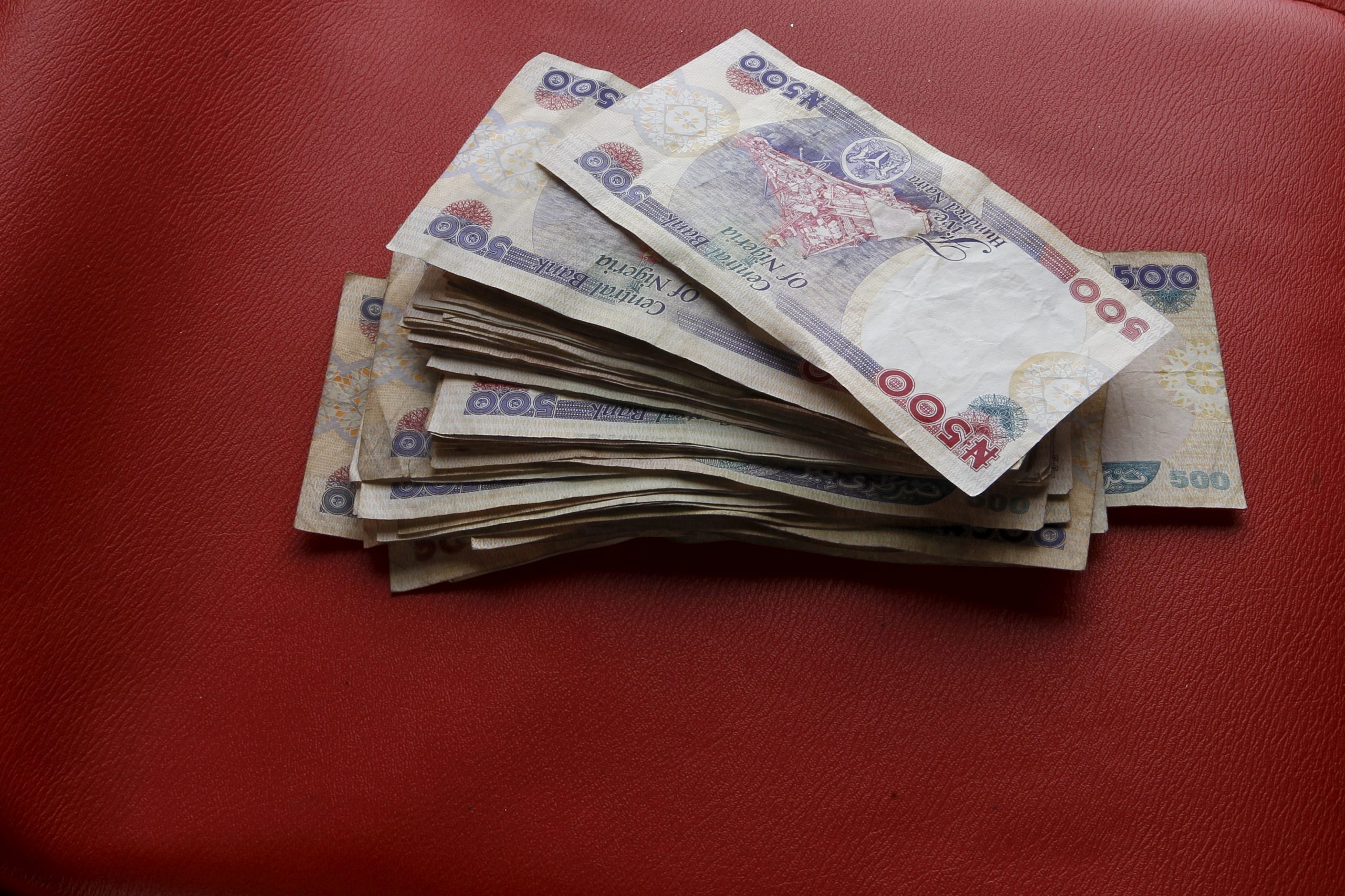
Nigerian naira notes are seen in this picture illustration March 15, 2016. REUTERS/Afolabi Sotunde/Illustration/File Photo - RTSFNNR

Depending on how you look at it, 46 million Nigerians have rejected the total of N3 trillion naira (about $10 billion) in their bank accounts.

Experts have blamed corruption for the N3tn trapped in accounts that have not been linked to the Bank Verification Numbers of their owners, and asked the Central Bank of Nigeria to urgently confiscate the funds.

The NIBSS had said in December last year that 46 million bank accounts were still without the BVN. That means that money is largely rejected and cannot be accessed by the owners. Of course, some of the owners are dead with no next of kin. Some are monies the owners know they are there but are afraid of Buhari government with EFCC with its high voltage searchlight watching.

In roundatble in Lagos, the experts note that most of the money is there as a result of corruption. People do not want to claim them to avoid being prosecuted in case they cannot claim evidence of legal possession.

According to the Senior Assistant to the Minister of Communications on Digital Transformation, Mr. Akim Yusuf, “the corruption that has led to the trapped N3tn is being perpetrated by Nigerians who have no self-control.”

He said, “The antidote will be to develop institutional mechanisms. We need to put in place mechanisms to monitor the flow of funds in the public sector. This is why we have introduced policies like the Treasury Single Account and the Biometric Verification Numbers.

“We need to increase the level of digital tracking of funds to curb corruption. We plan to migrate all government services online. This will minimise the use of cash, which encourages bribery.”


It seems this is already working. Imagine if government puts a date after which the money goes to government. Do you know the impact? Nigeria can fund a huge part of the N7.3 trillion budgeted for 2017.

source: budgit


Nigerian Government Finalizes Nine Regulations To Control Tobacco

0

Nigeria seems to be getting serious on tobacco control. This is a very positive move by the Federal Government. Tobacco offers no value except destruction of lives.

According to PREMIUM TIMES, Health Minister, Isaac Adewole has finalized the regulations on Nigerian’s tobacco control Act. The nine regulations listed by the minister to be implemented are as follows:

1. Prohibition of the sale of tobacco products to and by anyone below age 18.

2. Ban of sale of cigarettes in single sticks; cigarettes must be sold in packs of 20 sticks only.

3. Smokeless tobacco shall be sold in a minimum of a pack of 30 grammes.

4. Ban of sale or offer for sale or distribution of tobacco or tobacco products through mail, internet, or other online devices.

5. Prohibition of interference of tobacco industry in public health and related issues.

6. Prohibition of smoking in anywhere on the premises of a child care facility, educational facility, and healthcare facility. Other prohibited for smoking include playgrounds, amusement parks, plazas, public parks, stadia, public transport, restaurants’ bar, and other public gathering spaces.

7. Prosecution of owner or manager of any of the places listed above who permits, encourages or fails to stop smoking in the above listed places.

8. Prohibition of tobacco advertising, promotion and sponsorship of any kind.

9. Compliance with specified standards for content.