DD
MM
YYYY

PAGES

DD
MM
YYYY

spot_img

PAGES

Home Blog Page 7468

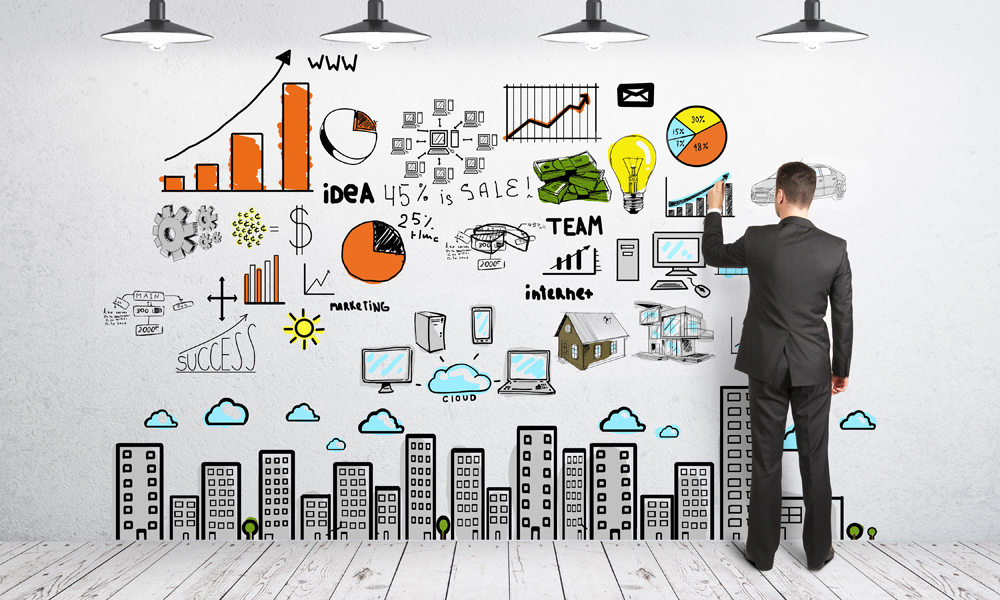
What I Worry About When I Am Studying A Startup

0

One of the things I really like about my job studying and investing in early stage startups is that I am constantly learning something new. This is true especially when I am encountering a startup for the first time, and begin to study polished and slick pitch materials on my own, listen to the entrepreneur deliver a pitch, or independently try to educate myself about the basics of the problem that the startup is trying to solve.1

Ultimately, my goal is to make a decision; invest or don’t invest. Then I have to decide if I know enough to determine if that choice is final, or if I am open to revisiting the question when there’s more evidence to add to what I already know. Even if I do not want to invest now, I may want to have the option of investing in the subsequent capital raise.

This is an in-exhaustive list of the things I worry about during the process.2

  1. Do I understand the market? It can’t be the case that every startup is going to disrupt its industry. Do I understand the human side of the equation that the startup feels will work in its favor? Why will people behave in the way that the entrepreneur needs them to behave? Why might they not behave in that way? Where’s the evidence? If the startup is not selling to consumers I like to speak with a handful of customers to hear what they say about the product.
  2. Do I have a sense of the people behind the startup? Being an entrepreneur is extremely difficult. I have never been an entrepreneur myself, but I watched my mom try and fail to build small businesses from home when I was a child. I know how hard she worked because I helped her for 3 or 4 hours every day when I got home from school and before I did my homework. Eventually she started a school with three children from our garage. She has been running it for more than 25 years now, and it has grown to a population of hundreds of students. Building a startup requires relentlessness, resilience, optimism, determination and adaptability. I need to have a sense that the people behind the startup are committed to the vision for which they want my buy-in. I need to gain a sense of the working relationship between the members of the team, and the group dynamic at play. If there is more than one founder, I need to believe that they share an absolute trust and respect for one another. I also need to feel that they are capable of “fighting good fights” in the pursuit of building a successful startup, shepherding their investors capital, and fending off competition. I need to understand the motivation that is driving the team to do what they say they are going to do. “I would trust my co-founder with my life.” is music to my ears. When it is possible I try to spend some time with the team in a non-work social setting. I believe that a startup team that plays together and laughs together will probably stay together.
    • I like to know that there is someone in charge of setting the strategic priorities for the startup, of course this person must consult with the team and then distill the teams’ ideas and input into a coherent strategy. In this instance, I see attempts to “manage by consensus” as a signal that I ought to proceed with caution.
  3. Do I understand the different ways in which the startup can make money? Better yet is the monetizations strategy believable? I may disagree with an entrepreneur’s reasoning behind delaying implementation of a monetization strategy. But there has to be a monetization strategy, and some evidence to support it. To this end I’d like to get a sense of what the sales pipeline looks like. I get really tentative if it appears there’s no one willing to buy what the startup is selling. Any sign of customer interest is better than none. Things may change, and quickly too, but I want to know that there is some one outside of the startup’s circle of close family, friends and early adopters, who is willing to buy and use the startup’s product or service.
  4. Do I have a sense of the competition? Is there a startup that “has no competitors”? I don’t think so. An entrepreneur that tries to convince me that the startup I am studying has no competition might as well be jumping up and down, waving a red flag. No one has an unlimited amount of money. How quickly might a direct or indirect competitor respond if this startup is super successful and starts to steal revenues, customers and market share? How will small, medium and large competitors respond respectively? Can I identify any substitutes? What of complements? Could bundling our product with a complement or several complements help ward off competition? How easy is it for competitors to replicate what the startup has developed? What happens if they succeed? To this end I’d like to see an inventory of the startup’s intellectual property – patents, if applicable. But definitely trademarks, servicemarks, copyrights. I’ll want to know what the secret sauce is that will keep this startup ahead of the competition.
  5. Do I believe that the advisors have really been adding value? Or is this all just a hoax? If at all possible, I prefer to speak with two or more advisors. It is a red-flag if a startup has several advisors who are “too busy and important” to speak with a potential investor, particularly if that investor is going to take a significant portion of the round, say 25% or more.
  6. Does the cap table leave any room for new investors without the need to haggle strenuously with old investors? I once saw a cap table which showed that existing investors owned nearly 90% of a startup I was studying. Given the amount of money it had already raised over previous rounds and the progress it had made to that point, I realized that we would have had to enter into difficult negotiations with the fairly large group of previous investors. The CEO would have effectively been arbitrating a negotiation between new investors and existing investors. I would rather negotiate with founders and management. I also prefer to invest in startups in which the majority of equity is owned by founders, management, and employees. It is a good sign if I find an adequate stock option pool; 10%- 15% with a healthy portion yet to be issued.
  7. Do the financials suggest anything I should be concerned about? Money in the bank is every early stage startup’s lifeblood. Before the startup begins earning revenues, I want to know that the team is disciplined about how it budgets, allocates and spends cash on the startup’s activities. I also want to ensure that there are no big liabilities on the books. Some level of accounts payable is not a big deal. A huge accounts payable balance serves as a red-flag that requires me to ask some questions.
    • In addition to financials I want to review any operations data that the founding team relies on to monitor how things are going. How actual results compare to the startup’s historical projections will help me paint a picture for myself of how effectively the team has met its self-imposed targets in the past. I recognize that such data can be fudged, or even completely spurious. So, I’ll spend some time determining how much credence I should place on the data that I am given. I will be trying to check for internal consistency and coherence with other data that the startup has provided.
  8. What are the plans for the capital raised? Details, details, and even more details. I like to see a budget.
  9. How long before lack of money becomes a problem again? Time spent raising money is time not spent building the product and its features, or winning customers, or communicating the startup’s value proposition to the market. I need to know how long the money that has been raised will last. In the best of all worlds, the money raised should be enough to last about 18 months. That gives the team 12 months to focus on solving the startup customers’ problems, and then delivering that solution to the market before the CEO’s attention must be turned back to fund-raising. Naturally, no one will complain if the startup runs out of cash because growth in customers and revenues accelerated far beyond management’s expectations. That’s a “high class problem” – I like high-class problems, very much.
  10. Do I understand the legal documents? I have to know what I am getting into. I spend a lot of time reading the legal documents for myself, and I’ll have an attorney review them as part of my due diligence. This often results in a headache for me, but it is essential that I avoid any land-mines that might be neatly hidden somewhere. At a minimum I’ll want to see:
    • Documentation related to any previous financing rounds.
    • Contracts, letters of intent, memoranda of understanding, distribution agreements, partnership agreements – if the startup claims to be gaining traction with customers, and partners.
    • Employment agreements with key team members; inventions and other IP, confidentiality, non-disparagement in the event of separation, etc. etc. Knowing the details helps, but in certain cases I’ll accept a summary if there’s a compelling reason to do so. For example, some international startups may run afoul of employment laws in their home country if they were to provide the full details to a foreign investor.
    • I want to know about any legal disputes.
  11. What can I find out about the founders, board members, and current investors through some basic research on the internet using a search engine? This small but important step can save you from making a catastrophic mistake. At the very least, you’ll be operating from a position of knowledge rather than one of ignorance. One might even go as far as checking court and county records. Depending on the size of the investment, it might make sense to have a professional run a full background check on the key people at the startup.
  12. Do I feel rushed into making a decision? If yes, then I will always decide not to invest at that time. Early stage investing is already risky enough as it were. I do not need to increase the risk and uncertainty. On the contrary; I need to minimize it by taking intelligent risks. I try to avoid making bad investments by saying “no” when I feel rushed and pressured to take shortcuts.

Trust, but verify. That’s the principle I apply. Hopefully that will keep me around long enough to hit a few home-runs.3


  1. I want to thank Jess Hsu, Shally Madan, and Seymour Duncker. They sent me copies of the original post which I lost when I deleted the first version of Innovation Footprints. I updated that post with some more details, but the final message is the same. ?
  2. I read Bill Clark’s 10 Things You Need To Check Before Investing in a Startup regularly and often when I got my first assignment to make an investment decision about a startup. I have adapted Bill’s checklist which was published online by Mashable on May 24, 2011. Bill’s post is here: http://mashable.com/2011/05/24/startup-investing-checklist/. ?
  3. Really early stage startups are unlikely to have everything I have discussed above. I have encountered startups when there was just a founder with an idea. Then the due diligence is mainly on the idea and on the founder’s ability to make it reality. ?
Features of the Newly Realeased Nokia Android Smartphone

3

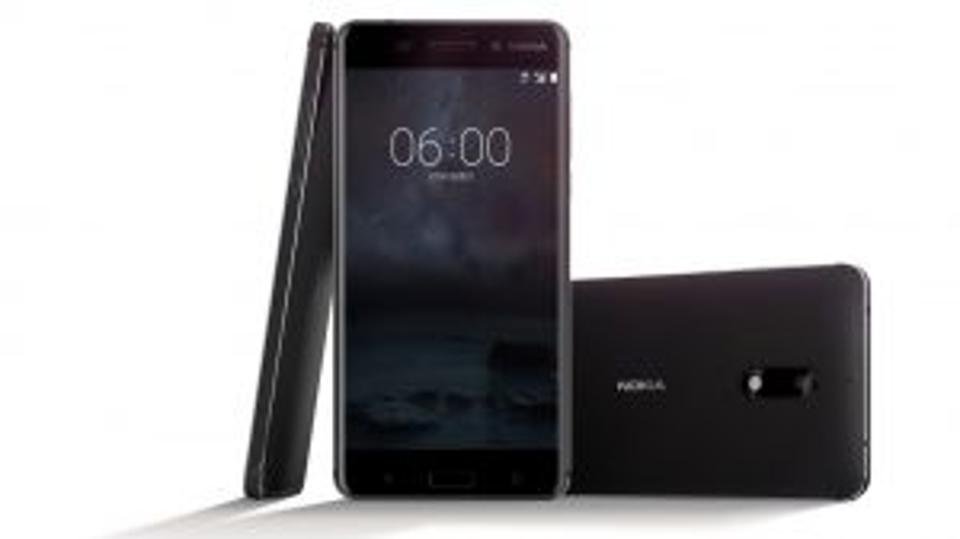
Nokia is back on smartphones. The first Android-powered smartphone to carry the Nokia name from HMD Global has been announced. The Nokia 6 features 4 GB of RAM, 64 GB of on-board storage alongside microSD support, a 16 megapixel main camera, and a 3,000 mAh battery.

This is the press release

Espoo, Finland – 8 January 2017: After securing the exclusive Nokia brand licensing rights in mobile phones in late 2016, HMD Global Oy (“HMD”) is proud to announce the launch of its Nokia 6 smartphone in China. The Nokia 6 marks the first step in HMD’s ambition to set a new standard in design, material quality and manufacturing innovation across every tier of its products by building on the hallmarks of a true Nokia phone experience. The device, which is designed explicitly with the needs of users in mind, combines quality and in-built durability to deliver a real-life premium smartphone experience at a price point for the highly aspirational Chinese consumer.

The decision by HMD to launch its first Android smartphone into China is a reflection of the desire to meet the real world needs of consumers in different markets around the world. With over 552 million smartphone users in China in 2016, a figure that is predicted to grow to more than 593 million users by 20171, it is a strategically important market where premium design and quality is highly valued by consumers.

With the arrival of Nokia 6, consumers will see superior craftsmanship and design quality in action. It takes 55 minutes to machine a single Nokia 6 from a solid block of 6000 series aluminium. It then receives two separate anodising processes, taking over ten hours to complete, with each phone being polished no less than five times. The end result is an aluminium unibody with the highest level of visual and structural quality.

Delivering quality to the core, the Nokia 6 display has a bright hybrid in-cell 5.5” screen with full HD resolution and incredible colour reproduction wrapped in 2.5D Gorilla Glass. The display stack is laminated together with a polarizer layer enabling excellent sunlight readability and slim form. The build is completed with the latest generation Qualcomm Snapdragon™ 430 processor with X6 LTE modem designed for excellent battery life and superior graphics performance.

The Nokia 6 has 4GB RAM and 64GB storage with which to run the latest version of Android Nougat and is packed with entertainment to bring to life the latest that Android has to offer. The dual amplifiers deliver a 6dB louder sound than a regular amp, giving higher voice, deeper bass and unmatched clarity. Dolby Atmos creates powerful, moving audio that seems to flow all around users. The Nokia 6 packs a 16MP phase detection auto focus rear camera for sharp detailed pictures, and an 8MP front camera. The f/2.0 aperture lenses and exclusive camera UI with automatic scene detection make it easy to take great shots every time.

Arto Nummela, CEO, HMD Global said: “Just a short while ago we announced the launch of HMD Global. From the outset we have stated that we intend to move with speed to establish a position as a player in the smartphone category and create products that truly meet consumer needs. The Nokia 6 is a result of listening to our consumers who desire a beautifully crafted handset with exceptional durability, entertainment and display features.

Our ambition is to deliver a premium product, which meets consumer needs at every price point, in every market. We start today, with our premium, high quality Nokia 6; built to deliver a fantastic core user experience for Chinese consumers. We look forward to unveiling further products in the first half of this year.”

Nestor Xu, Vice President Greater China, HMD Global said: “China is the largest and most competitive smartphone market in the world. It is no coincidence that we have chosen to bring our first Android device to China with a long-term partner. JD.com is known for its upwardly mobile customer base and it has for many years believed in the Nokia brand and sold millions of our products to Chinese customers. Launching our first smartphone device, in such a strategically important market, with JD.com a trusted online retailer marks a signal of intent.”

Juho Sarvikas, Chief Product Officer, HMD Global said: “We have set ourselves a mission to deliver the best possible smartphone experience, with a beautiful premium design touch, to everyone, at every price point. By building on true Nokia phone hallmarks of leading design and materials, an obsessive focus on the latest technology and solving real-life issues, we believe we have a unique proposition for consumers. The Nokia 6 marks the first step on our journey, with more to come in 2017.”

Shengli Hu, President of 3C Business Unit, JD.com, said: “The Nokia 6 marks a new milestone for the iconic brand, and JD.com is proud to work with HMD on this exclusive launch in China. Our 200 million active consumers come to JD.com to shop for guaranteed high-quality products from the world’s leading brands, and we are proud to provide a trusted outlet for them to reconnect with Nokia phones.”

Nokia 6 will debut exclusively through JD.com in early 2017 in China. Competitively priced for the aspirational smartphone user, the Nokia 6 is 1699 CNY at JD.com.

Common biometric technologies and factors to consider when preferring biometric solutions to clients

0
Abstract 3D illustration.

This piece is culled from an interview Tekedia had with Mr. Felix Onyema, the CEO of Pawaak Technologies, Lagos under the Founders’ Series. We asked the questions and Mr. Onyema provided the answers.


 Common and conventional Biometric Technology.


  • Face

In a face Biometric Technology, an image can be acquired using a normal camera such as an off-the-shelf desktop camera or any Digital camera. The face is the most natural biometric for identity authentication. Users can be identified by this solution in using facial recognition techniques which may be global approach or feature based. Feature based means using the unique features of several users which is only peculiar to them to identify and recognize each individual when the matching process is applied.


  • Fingerprint

The use of Fingerprint is the oldest method of identity authentication and has been in used for criminal identification. The fingertips have corrugated skin with line like ridges flowing from one side of the finger to another. The flow of the ridges is non-continuous and forms a pattern. The discontinuity in the ridge flow gives rise to feature points, called minutiae, while the pattern of flow give rise to classification pattern such as arch or curves or hollow and  spiral and other features of the finger. These are the basis of fingerprint recognition due to mainly the differences in Individual’s minutia matching and pattern matching.


  • Iris

The Iris is another Biometric feature that is very unique to an individual, it is the coloured part of the eye, is composed of a type of tissue called trabecular meshwork which gives the appearance of layered radial lines or mesh when the iris is examined closely.

The visible mesh consists of characteristics such as striations, rings, crypts, furrows etc. giving the iris a unique pattern. The iris pattern is stable throughout the lifespan of an individual and is different for twins as well since the pattern is independent of genetic makeup. With this feature of the Iris there are no two individual that have the same characteristics even “Identical twins!”


  • Hand Geometry

The hand image is obtained using a digital camera looking from the top when the user placed his or her hand at a specified surface. This specified surface is very essential when applying the recognition and matching technique.  The hand can be aligned using pegs or reference marks. Two views are usually taken in a single image, the top view and the side view. The side view is usually taken by the top camera as well using a side mirror. From the hand image, the fingers are located and the length, width, thickness, curvatures and their relative geometry measured.


  • Voice


Voice authentication or speaker recognition uses a microphone to record the voice of a person. The recorded voice is digitized and then used for authentication. The speech can be acquired from the user enunciating a known text (text dependent) or speaking (text independent). Age, illness and environment may affect the effectiveness of voice recognition, these features or conditions are put into consideration when proffering Biometric Technology solution using Voice.


However, not all biometric Technology is suitable for identification.


There are other Biometric Technologies including Signature, Retinal Scan, DNA, Typing, Vein Pattern (such as within the Wrist, Palm or Dorsal surfaces of the hand), Thermal pattern of the Face  keystroke Dynamics, Gait (Walk, Step, Pace) Pattern, Body Odour and Ear shape.

In proffering a Biometric Technology, we recommend adopting more than one solution, a multi-modal system which combines several Biometric Technologies to increase the likelihood of finding a match will be increasingly feasible as hardware and system cost decreases to an attractive level. Each solution is designed and implemented according to the clients need and challenge.


SOME FACTORS TO CONSIDER IN PROFFERING BIOMETRIC SOLUTION TO A CLENT:

 These factors are considered- The Issues, Potential and Challenges faced by Biometric Technology. In selecting a specific biometric technology and solution to clients the following must be considered:-

  1. Size and type of user group.
  2. Place of use and the nature of use (such as needs for mobility and location)
  3. Ease of use, and user training required and transfer of knowledge where necessary
  4. Error incidence such as due to age, environment and health condition.
  5. Security and accuracy requirement needed.
  6. User acceptance level, privacy and anonymity.
  7. Long term stability including technology maturity, standard, interoperability and technical support.
  8. Cost.

There are numerous applications for Biometric systems. Most applications currently concentrate on Security related, physical and logical Access Control and many more enhancements are underway. These include the following areas:


  • Immigration such as border control, frequent travelers, air ports,
  • Banking/Financial Services such as ATMs, Payment Terminals, Cashless Payment, Automated Cheque Cashing, etc.
  • Computer & IT Security such as Internet Transactions, PC login etc.
  • Healthcare such as privacy concern, patient information control, drug control etc.
  • Law and Order such as public ID card, voting, gun control, prison, parole etc.
  • Gatekeeper/Door Access Control such as secure installations, military, hotel building management etc.
  • Telecommunication such as telephony, mobile phone, subscription fraud, call center, games etc.
  • Time and Attendance such as school and company attendance
  • Welfare, including health care services
  • Consumer Products such as automated service machines, vault, lock-set, PDA, etc.

From what I have said above, you can see that there are so many areas Nigeria can leverage on Biometric Technology. I know it was used in the Registration of Voters using the Technique called E-Registration for the last General elections .The main essence of using this Technique of registering voters is to avoid double Registration. So I expect the Independent National Electoral Commission (INEC) to start now to plan for using Electronic Voting process known as E-Voting to conduct the 2015 general elections. Yes, we can say that the last Election was free, fair and credible even the international community attested to that, yet we have heard and seen people trying to go to court to challenge some of the Elections, Presidential and others. But with the E-Voting, if well implemented, the issue of Election rigging will be totally eliminated. But with Technology adopted in E-Voting, it will be an impossible task to rig or manipulate elections results. PAWAAK Technologies Ltd offers to help directly or indirectly to ensure that this is achieved irrespective of the infrastructural problems and challenges in Nigeria we would proffer solutions on how it can be done efficiently and effectively to achieve the desired result. Other countries of the world like Bangladesh has used this Technology successfully, theirs is regarded as one of the highest E-Voting process in terms of voters’ numbers in the world. This can be adopted in Nigeria to avoid and prevent thuggrey, manipulations, intimidations etc. moreover, each vote will count and collation of results will be faster, easier and safer among other advantages.

Biometrics Technology can be used for Border control in Nigeria especially for frequent travelers. Help to checkmate Ghost workers, absenteeism in Federal, state, Local Government ministries and many more. I assure you with utmost sincerity and honesty there are a thousand and one areas we can leverage on this Technology in Nigeria although it is being applied in some areas but not yet enough as it can help to generate fund for Government, corporate organizations and individuals where necessary, improve productivity and guarantees safety , control Access on Restricted areas such as Bank’s vaults and Top Government offices, security agencies’ offices and premises,  car parks, create jobs,  etc .Who goes in and out and other security activities will be duly monitored and the audit trail will show who had Access at  what time, what did the person do and many more. The advantages of Biometric Technology cannot be over emphasized.

Enoch Adeboye retires from RCCG, will hand over to Joshua Obayemi

2

There is a transition in Redeemed Christian Church of God (RCCG), Nigeria. The General Overseer of the Church, Enoch Adeboye, on Saturday appointed a new General Overseer (GO) for the church as he retired ahead of his 75th birthday on 2 March.

The News Agency of Nigeria (NAN) reports that the new GO is Joshua Obayemi.

NAN reports that Mr. Obayemi was appointed the new GO at the Annual Ministers Thanksgiving at Shimawa, in Ogun State.

The newly appointed GO was the Special Assistant to the General Overseer (SATGO) on Finance.

Mr. Adeboye also appointed Johnson Odesola, who was the Special Assistant on Administration and Personnel, as the church Secretary. (NAN)

True meaning of “S” in Apple iPhone 4S, 5S and 6S

8

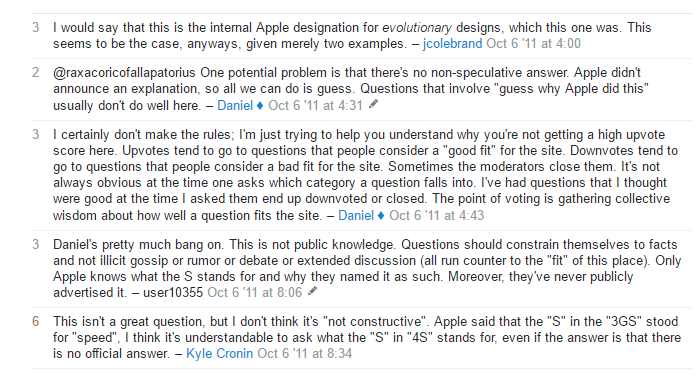
What is the meaning of the “S” in Apple iPhone 4S, 5S and 6S?The following are great answers. Apple has the definite answer at the end.


The iPhone 5s “s” apparently stands for security (they added touch ID), but the “s” in iPhone 6s is still largely debated, though some have speculated that it might be for sensitivity (as per the new 3D Touch features)

However, apple has never really released any official information regarding what the s stands for in any model other than the 3GS, where it stood for speed, so really, every s since then could have multiple meanings, or all stand for speed.

But really, I don’t think apple plans what the s stands for, it is just a symbol to show that this model has improvements upon its predecessor, but is not altogether different.


It is debatable.

Some say the “s” always stands for “successor”. Like how the 6s makes great improvements on the 6, but since it doesn’t have a new design, Apple shouldn’t really call it the iPhone 7.

However, Phil Schiller, at the iPhone 3GS release event, said specifically that the S in 3GS stood for “speed”, based on how much faster it was than the 3G.

Fans also sometimes make up their own meanings for what the s stands for:

iPhone 4s: Siri

iPhone 5s: Security (for TouchID)

However, at this point, Apple’s naming scheme is set after almost a decade and they’ll just give every other iPhone name an s, so it likely does just mean successor


As of October 2011 when this was first asked, there has been no official answer stated. With the 3GS, Apple officially stated “the S is for speed.” There has been no comparable explanation given for the 4S.

HOWEVER, in an interview at the All Things D conference, Apple CEO Tim Cook stated, “some people might say it stands for Siri or speed. We were thinking of Siri when we did it.”

So the official answer is that the S in iPhone 4S stands for SIRI.

Recommendation, one of the best iPhone manager for you to manage all kinds of data on iPhone 4/5/6/7 in an easy and safe way.

[Sources]