DD
MM
YYYY

PAGES

DD
MM
YYYY

spot_img

PAGES

Home Blog Page 7476

A Note On Viral Marketing – Part III: How Dropbox Grew

0

Dropbox is another example of a product that has experienced remarkable growth since its launch. In this case study I will explore how Dropbox has achieved such rapid growth and try to identify strategic themes that other startups might consider for experiments centered around user acquisition and revenue growth.

What is Dropbox? Dropbox is a personal cloud storage service. It provides users with a mechanism for storing files in a folder on the Internet and accessing that folder through an installed client, a website, or a mobile app, on different computing devices. It was founded by Drew Houston and Arash Ferdowsi in 2007. A number of articles online suggest that Dropbox started with an initial base of about 2,000 users. It launched to the public in September 2008. Here are some indications of how much Dropbox has grown since then:

  1. It had about 200 million worldwide users in September 2013, and
  2. By February 2013 its users were saving about 1 billion files every day to Dropbox

How does Dropbox make money? Dropbox operates a freemium business model. The Basic plan is targeted at individuals, and provides 2 gigabytes of cloud storage for free. One can get more storage by inviting one’s friends to Dropbox. The Pro plan provides 100 gigabytes of storage for a monthly subscription of $9.99. The Business plan is designed for 5 or more users, comes with as much storage as needed, and includes other features that are not part of the Basic or Pro plan. According to reports in the press Dropbox started out with about 2,000 users or so.

How did Dropbox grow its user base?

  1. Explaining With Video: In the summer of 2009, Dropbox worked with Common Craft to create an explainer video that played a central role in the redesign of Dropbox.com. After the redesign a visitor to the front page of Dropbox.com could watch the video, and sign up. That’s it. At this stage, Dropbox had about 2 million users.7 By April 2011 its user base had grown to 25 million.
  2. Getting Started: Dropbox has a very simple signup process, and an easy user interface that makes it easy for new users to become familiar with the product and how to use it. New users also get an extra 250MB of storage for taking a tour of Dropbox in order to learn about its basic features.
  3. Encouraging Word of Mouth Virality: Dropbox gives users an incentive, and better tools to spread news about the product through word of mouth. Users are rewarded with extra storage capacity when their friends sign up using the referral link that Dropbox gives for email referrals. According to Drew Houston referrals led to a permanent 60% increase in signups. The referral program has a two-sided incentive. The user gets 500MB of storage if a friend signs up, and the user’s friend also gets 500MB of storage for signing up. The program was put in place in April 2010. Dropbox users sent 2.8 million direct referral invitations in the 30 days after the program was implemented.
  4. Tying in Social Media: Users are also incentivized to connect their social media accounts – 125MB for connecting a Facebook account, another 125MB for connecting a Twitter account, and an extra 125MB for following Dropbox on Twitter. Users also get 125MB of extra storage for communicating with Dropbox about “why you love Dropbox.”
  5. Focusing The Message – Simplicity: Dropbox has emphasized simplicity above all else in its communication with existing users, potential users, and in the design of its user experience. That focus has helped it succeed in a very crowded space that includes some large players like Google Drive, Microsoft OneDrive (formerly SkyDrive), Apple iCloud, and other competitors like Box, SugarSync, Evernote, SendThisFile, Carbonite and many others.
  6. Generating PR Through User Engagement: Dropbox engaged with its existing users and potential new users through Dropquest, a scavenger hunt and series of puzzles that culminate with winners earning various prizes from Dropbox. The prizes include free storage and other items from Dropbox. In 2012 everyone who completed the challenge won at least 1GB of free space. Dropbox recommended that participants in Dropquest download and install the desktop application.

There’s a debate about the growth Dropbox has experienced? Is it viral or not?13. There’s also a concurrent debate about “growth hacking” and whether it is as useful as its proponents would have us believe. Does it really matter? I think these are dogmatic positions adopted by the protagonists in the debates taking place about how Internet startups achieve growth. Whatever your position, there’s one observation that no one can argue with; It’s hard to devise a strategy to grow the number of users for a product that none wants to use.

In the next set of posts in this series I will examine a number of mathematical models related to viral marketing – we’ll start with the model most commonly used when people speak about viral marketing.


  1. Any errors in appropriately citing my sources is entirely mine. Let me know what you object to, and how I might fix the problem. Any data in this post is only as reliable as the sources from which I obtained them.
  2. According to this presentation by Drew Houston Dropbox had 100 thousand users by the time it launched to the public in September 2008.
  3. See: http://www.cnet.com/news/dropbox-is-like-microsoft-in-the-90s-says-startups-ceo/. Accessed on March 25th, 2014
  4. See: http://www.cnet.com/news/dropbox-clears-1-billion-file-uploads-per-day/. Accessed on March 25th, 2014.
  5. KISSmetrics discusses this topic here: http://blog.kissmetrics.com/dropbox-hacked-growth/. Accessed on March 26th, 2014.
  6. You can watch a version of that video here: http://www.commoncraft.com/dropbox-case-study-explanation. Accessed on March 25th, 2014.
  7. Dropbox closed a Series A round of financing in November 2009. Accel Partners and Sequoia Capital invested in that round.
  8. This video discussion emphasizes the key role demo videos played in helping Dropbox grow its number of users early in its life: http://techcrunch.com/2011/11/01/founder-storie-how-dropbox-got-its-first-10-million-users/. Accessed on March 26th, 2014.
  9. Drew Houston, Dropbox Startup Lessons Learned. Accessed at: http://www.slideshare.net/gueste94e4c/dropbox-startup-lessons-learned-3836587 on March 26th, 2014.
  10. See: https://www.dropbox.com/getspace for a list of the incentives Dropbox offers its users. ?
  11. Box just filed an S-1 with the SEC for an IPO later this year. You can read the prospectus here: http://www.sec.gov/Archives/edgar/data/1372612/000119312514112417/d642425ds1.htm#toc642425_4. Accessed on March 26th, 2014.
  12. I could not find an announcement about a 2013 version of Dropquest. Perhaps it has been discontinued.
  13. See for example: http://www.bullethq.com/blog/dropbox-the-viral-lie-sold-to-every-statup/. Accessed on March 26th, 2014.
  14. See, for example: http://techcrunch.com/2014/03/22/the-real-engines-of-growth-on-the-internet/. Accessed on March 26th, 2014.

Do you have a great idea on how to deliver education solutions in Africa? Share and win $1,000 here

0

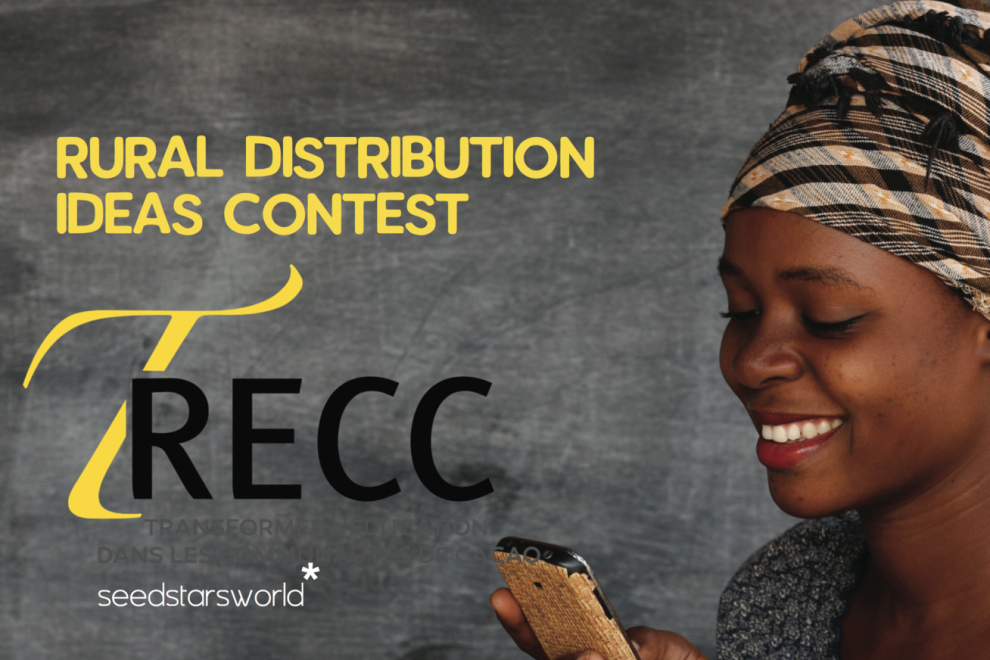
TRECC partners with Seedstars World to collect revolutionary ideas to deliver educational products and services to rural areas. Entrepreneurs are encouraged to submit their ideas around education a twww.treccideachallenge.com until January 31st and win a prize of $1000.

Education is one of the key areas to drive change in emerging markets, especially in Africa. Despite a lot of technological progress, even today most rural and low-income communities are especially disadvantaged when it comes to accessing and benefitting from educational services and innovation as many education solutions currently only work on smartphones, need internet and are therefore not always applicable and impactful in rural areas.

Rural distribution challenges often limit access to quality education for the communities that need it most, further exacerbating social inequalities.  We want to better understand how education systems – as well as education entrepreneurs – can  leverage existing distribution networks or create socially responsible distribution networks to ensure these communities have access to not only quality education, but other goods and service that can improve the quality of life.

This is why Seedstars World has partnered with TRECC to encourage people from all over the world to submit ideas for bringing education products and services to rural areas in the “Rural Distribution Idea Contest”.

The challenge is looking specifically for ideas in the following areas:

  • Help established education companies and entrepreneurs expand to rural markets, where there is limited electricity, internet, and quick transportation options
  • Improve education delivery systems and access to learning through technology or new distribution models
  • Spark demand for quality education and education-focused goods and services in rural communities

The challenge is open until January 31st and entrepreneurs from across Africa can submit ideas atwww.treccideachallenge.com

The winner will be announced on February 10th and will be awarded a prize money of $1000.

The Most Important Thing A VC Needs To Know About Your Startup

0

Over the past 6 months I have been spending more time meeting many first time founders in New York City and elsewhere. One question has arisen over and over again. What are the most important things a venture capitalist wants to know about my start up in order to invest? I will attempt to answer that question in this post.1

To set the context, I am assuming that the potential investor and the entrepreneur are meeting one another for the first time, and that the startup is an early stage startup raising a seed or series A round of capital. There are still numerous questions to be answered, but the entrepreneur has made some progress and is well beyond just having an idea. There’s a product that is in a really early iteration and has had some user testing, but is still far from “perfect”. The startup has already raised some capital from friends and family, and subsequently from angel investors.

Some of my comments are directed towards startups building products for enterprises, but the same logic applies to startups building products for individual consumers.

First, as the potential investor, I want to understand the market in which you think your startup will exist.2 I want to know as much about that market as possible. How many potential customers are there? How much did those customers pay in the past year for solutions to the problem you are solving? If this is a small but growing market, at what rate is that  growth occurring? How do we know that? If you are trying to convince me that you will somehow “grow the market”, how will that happen? How big is the market today? I would much rather bet on an entrepreneur building a product for a big market. The bigger the market the better. What is the current market structure? Who are the biggest incumbents in the market? How might they respond? What barriers to entry do you have to overcome? How difficult is it going to be for you to reach potential customers?

I want to understand the market because it is the most important factor in determining the success or failure of your startup. A great market is one in which customers will find you if your product works. They might complain that the product could be better and they might ask for more features, but if it works they will find you and they will buy your product. In a bad market your product is irrelevant. If you are selling to an industry with very thin profit margins, there may simply not be enough money available for additional expenditures on a new product. Also, it is very hard to displace a product that your prospective customers have learned to use and around which they have built their business processes.

Closely related to my questions about the market, I want to understand the problem that you are solving for that market. Too often I meet founders who are unable to succinctly and clearly describe the problem they are solving. In a typical week I speak with many founders about their startups. The startups I most easily remember are those that make it easy for me to understand the problem they are solving. It is important that I have a firm grasp of the problem the entrepreneur is solving. Why? My understanding of the problem will direct how I perform my independent research. It will also ensure that I study the information and data that I find on my own from a perspective that is congruent with the point of view of the entrepreneur.

Second, I want to know if the founder or founding team has an ability to learn. I am certain that the founder will encounter many unfamiliar questions in the future if the entrepreneur is building something truly unique and solving a problem that has not yet been solved by someone else. It is important that the founder is someone who can gather unfamiliar information, process it, interpret it and then make decisions about strategic and tactical choices. A founder who lacks the ability to process large amounts of unfamiliar information quickly but thoroughly is at an extreme disadvantage. Market structure changes.

Regulations change. Consumer tastes and preferences evolve in ways that might escape notice till it is too late and business has deteriorated. Technology changes constantly. The economy shifts between upswings and downturns. Rivals and competitors enter the scene without warning. All this generates volumes of information and data. I much prefer to back founders and entrepreneurs who I believe possess an inherent ability to learn. It is equally important, that they can build teams around them of people who have this same quality. It is the only way that their startup will move from the early stages of its lifecycle and into the growth phase.4

You will often hear venture capitalists say that they consider things in this order; market, product, team, and deal. Their analysis of the market and the product belong in the same category as the first factor in my preceding discussion – market. The question is this; is this a great market, and will someone pay to use this product in that market? Their analysis of the team falls under the second factor – is this a team that can learn what it needs to learn in order to succeed?

Every other question is simply an attempt to fill in the details.


  1. Any errors in appropriately citing my sources are entirely mine. Let me know what you object to, and how I might fix the problem. Any data in this post is only as reliable as the sources from which I obtained them.
  2. In this blog post from July 2007 Marc Andreessen argues that the market is the only thing that matters: http://pmarchive.com/guide_to_startups_part4.html
  3. In this blog post from December 2013 Rob Go describes why the choice of market is important: http://blogs.hbr.org/2013/12/great-entrepreneurs-pick-great-markets/
  4. In this blog post from January 2014 Brad Feld reflects on his strong preference for CEOs who are learning machines: http://www.feld.com/wp/archives/2014/01/invest-ceos-learning-machines.html ?

Get Adele concert tickets here

0

But first what is e-ticket?

You can read what is an electronic ticket for Adele concert and how to receive it with the help of our platform. The future of buying tickets is here!

Fast way to visit a concert

Electronic ticket it is a file (in pdf-format), which a client receives to his e-mail after making payment. To print such e-ticket, he may use any printer (colour or black and white). Each e-ticket has a special unique barcode, which distinguishes it from others. With the help of such barcode card is protected from unauthorised usage. Also, there should be written your name, title of the event and of course seat. To prevent unauthorised replicating of the ticket, it is not recommended to display its online photos and images. With the help of a website, the customer has a possibility to buy any electronic ticket for the desired event.

Listen to Adele

Everyone can get a seat to some special entertaining by visiting our website. It is easy to find what you want here. If for example, you decided to listen to famous singer then our platform can provide you such opportunity. For example, Adele concert tickets are now available.

 
This talented singer is known all over the world. Here are few facts about the history of the British vocalist Adele. Today she is known and adored in all continents; her voice can be heard on the radio. Her photos are on front pages of the leading tabloids. Adele was born in Tottenham, Great Britain. Being a child she has a strong voice and wide vocal range, she amazed everyone with her ability to sing beautifully and masterfully. She was admired by her friends, but still she did not believe in the success of her singing career. But Adele decided to show her vocal in the famous British School, where studied such celebrities as Amy Winehouse, Leona Lewis, and other British talents. It was successful, and best Britain teachers began to train her. The career of a singer started in 2006 when record company XL Recordings noticed her. Adele’s dreams became real. The first song, which is called «Hometown Glory» was released in October 2007. And the song was nominated for a Grammy Award. Also, song «Chasing Pavements», has reached the second line of the national charts in Britain.

 
Adele Adkins is one of the brightest musical events that appeared during the recent years. She has immensely strong, deep voice and natural charisma. Adele has done an impossible thing -she has shown that talent is an essential thing and it can overcome everything.

 
Adkins has broken all stereotypes. Success and glory of this smiling British woman seem incredible, but she deserves it.

 
So, to become a part of an amazing show of Adkins, find this artist by typing her name on the search panel. Don’t miss your unique chance to listen and enjoy this unordinary vocalist. Visit our reliable service right now. You can study more info about our company at the bottom of the page. There you will also see terms of use and our privacy policy. The funny crab will show you all available tickets and dates. Simply select ‘Buy Tickets’ green button then you will be redirected to checkout. The user must provide all necessary data, and then he will receive a seat in concert.


Implementing Machine Learning on Intel FPGAs by Authorized African Partner Fasmicro

0

Machine learning, at the highest level, is a program that extracts specific features from data to solve predictive problems. A few example include: detecting anomalies to prevent network intrusion or fraud, classifying objects such as tumors or detecting pedestrians, scanning social media sentiment and perception for marketing purposes, self-driving cars, or evaluating traffic patterns to forecast and make decisions to control the flow in an optimal way.

Machine learning applications cross all vertical markets from military, automotive, industrial, and data center.  Imagine a person trying to rank each web search manually every time someone issues a web search; it is an impossibility for a person, but machines do it billions of times a day. This job is exactly where machines can help humans. Machines can navigate through the tsunami of data collected every second and automatically recognize complex patterns. Then, they can make intelligent decisions based on this insight. For accuracy, models must be trained, tested, and calibrated to detect patterns using previous experiences.

Today, one of the most popular machine learning methods is using neural networks for object detection and recognition. Neural networks are modelled after the brain’s interconnected neurons and use a variety of layers that extract lower levels of detail for each layer in the network. The FPGA implements these layers very efficiently because the FPGA has the ability to retrieve the data and perform classification in real time. By leveraging 8 TBps of on-die memory bandwidth and minimizing the need to interact with external memory, designers can leverage the flexible FPGA architecture to obtain very power efficient implementations.  FPGAs can also efficiently move data in and out of the network directly to classify in-line video, signal, or packet processing.

At Fasmicro, we are an authorized Intel FPGA partner and will be happy to teach you ML on Intel Altera chips.