DD
MM
YYYY

PAGES

DD
MM
YYYY

spot_img

PAGES

Home Blog Page 7477

Cybersecurity Training Now Available in Nigeria and Ghana!

0

It’s estimated that cybersecurity breaches will cost global businesses more than $2 trillion by 2019 – more than four times the costs registered in 2015. In enterprises both large and small, the cost of protecting critical data has become one of the most crucial – and unpredictable – risks faced by the business.

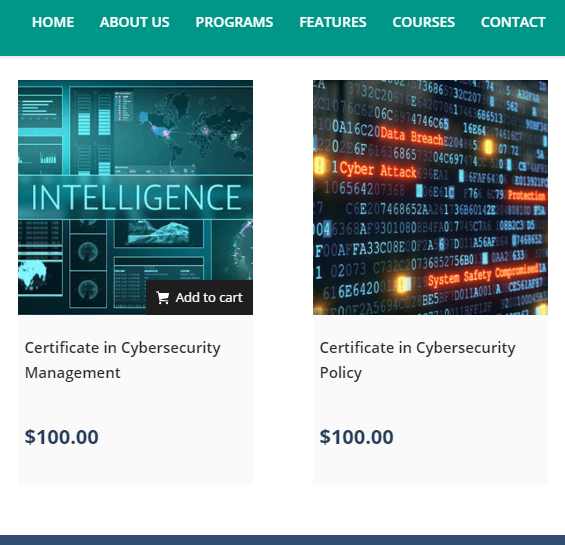
The First Atlantic Cybersecurity Institute’s programs is a unique opportunity for education and training on the critical cybersecurity issues, from policy to technology. The programs are structured for those at all points in their security career, from CISOs to those just entering the field (or trying to). The programs will help you….

  • Cybersecurity Policy
  • Cybersecurity Management
  • Cybersecurity Technology
  • Cybersecurity Intelligence
  • Digital Forensics

Register today with Promo Code: LEARN  to receive a special 50% discount.


Thank you.

Facyber Team

info@facyber.com

A Note on Viral Marketing – Part II: How Hotmail Grew

0

Hotmail is one example of a product that spread through the use of viral marketing techniques. This case study will cover the early days of hotmail, explore some of the underlying factors that led to its spread, and examine one model that has been used to model growth of its number of users.1

Ray Tomlinson is credited with inventing email as we know it today. Before 1972, email could only be sent between users of the same computer. The problem became more complex once different computers were connected to one another to form a network, and a user on one computer wanted to send email to users on a different computer. Important contributions to the evolution of email were made by others, and commercial email packages began to appear in 1976.2

Sabeer Bhatia and Jack Smith met at Apple Computer in the early 1990s, and later joined a startup called Firepower Systems. In 1995 they started discussing the idea of building a startup themselves. Their first idea was to build a database on Sun’s Java technology. They called it JavaSoft. Venture capitalists turned them down. During the period when they were working on JavaSoft, they encountered a number of obstacles that prevented them from communicating freely with each other. Jack Smith developed a system that allowed them to have their email displayed on a web page. This became the basis for Hotmail. They soon obtaind $300,000 in funding from DFJ and rounded up an additional $100,000 in additional capital. This was in early 1996. The funding terms ascribed Hotmail an implied valuation of $2,000,000.3

At the urging of the venture capitalist’s backing Hotmail, Bhatia and Smith did two things. First they struck a strategic relationship with Four11, another DFJ portfolio startup which ran “the most comprehensive ‘people finder’ on the Internet” at that time according to PC Magazine. Second, they automatically included the text “P.S. I love you. Get your own free Hotmail at www.hotmail.com” at the end of every email that was sent by a Hotmail user.4

Hotmail launched in July 1996, with 100 signing up in the first hour. By September it boasted 100,000 subscribers. That number rose to 1,000,000 by January 1997, and 8,000,000 by October. Though Hotmail had ran out of cash before it launched its email service to the public, it went on to raise additional capital from venture capitalists. By August 1996 it was valued at $20,000,000, up 10x from the $2,000,000 at which it had been valued just 8 months earlier.

To model the growth of Hotmail’s subscriber base we’ll turn to a model called the Bass Model, after Professor Frank M. Bass who first published it in 1963 as a section of another paper.5 The Bass Model states that the probability of adoption by those who have not yet adopted is a linear function of those who have previously adopted. The mathematical expression for the model is given below.6

\frac{f(t)}{1-F(t)}=p+\frac{q}{M}\left[ A\left( t \right) \right]

In the equation above:

  • t represents time, and the first full time interval of sales is t = 1,
  • p represents coefficient of innovation,
  • q represents the coefficient of imitation,
  • M is a constant, and represents the potential market or the number of purchasers of the product,
  • f(t) represents the fraction of the potential market that adopts a product at time t, and
  • F(t) represents the portion of the potential market that has adopted the product up to and including time t, and
  • f(t) is the first derivative of F(t) wrt t.

Alan Montgomery uses the Bass Model to fit the model’s results to actual data from Hotmail’s first year and reports a very good fit.7 He uses estimates of 0.0012 for p, 0.008 for q, and 9,670,000 for M. I will tackle models like the Bass Model in later posts.

It is reported that Bhatia sent a message to a friend in India using Hotmail, and three weeks after that Hotmail had 100,000 users there.8 Hotmail was eventually bought by Microsoft in 1998, a year and a half after it launched to the public. The value of the deal was not made public but is rumored to be as high as $400,000,000.9

What ever you call it, “Growth Hacking” or “Viral Marketing”, it works. Hotmail spent a fraction of the capital that its rivals spent on marketing and advertising, but experienced significantly more growth.

In the next post on this topic I will study the tactics Dropbox used to grow its user base.


  1. Any errors in appropriately citing my sources is entirely mine. Let me know what you object to, and how I might fix the problem. Any data in this post is only as reliable as the sources from which I obtained them. ?
  2. Ian Peter, The History of Email. Accessed at http://www.nethistory.info/History%20of%20the%20Internet/email.html on Jan 17, 2013. ?
  3. Oliver A. Hugo and Elizabeth W. Garnsey, Hotmail: Delivering E-mail to the World, http://doczine.com/bigdata/1/1370291311_60c0e3de77/4e7-hotmailcase26apr02.pdf. Accessed on Jan. 26th, 2014. ?
  4. There seem to be variants of the exact message that was appended to the end of each email, but it is consistently reported that a message was included with every email sent from Hotmail. ?
  5. http://www.bassbasement.org/BassModel/ ?
  6. Frank M. Bass, A New Product Growth for Model Consumer Durables, January 1969. Available at http://www.bassbasement.org/F/N/FMB/Pubs/Bass%201969%20New%20Prod%20Growth%20Model.pdf. Accessed on Jan. 26th, 2014 ?
  7. Alan L. Montgomery, Applying Quantitative Marketing Techniques to the Internet, available at http://www.andrew.cmu.edu/user/alm3/papers/internet%20marketing.pdf, July 2000. Accessed Jan. 26th, 2014 ?
  8. Willix Halim, My Top Five “Growth Hacking” Techniques, http://e27.co/my-top-five-growth-hacking-techniques/. Accessed on Jan. 27th, 2014. ?
  9. Jeff Peline, Microsoft Buys Hotmail, January 3rd, 1998, http://news.cnet.com/2100-1033-206717.html. Accessed on Jan. 27th, 2014. ?

Apply for Microsoft grant to accelerate the delivery of affordable Internet access

0

The Microsoft Affordable Access Initiative Grant fund seeks to support, grow and scale innovative businesses that are developing technologies and business models that have the potential to help billions more people affordably get online. Areas of interest include last mile access technologies, off-grid renewable energy solutions, and alternative payment mechanisms, as well as verticals such as healthcare, education, and agriculture.

The initiative supported Nigeria’s Ekovolt in the past.

Ekovolt is on a mission to simplify everyday life and connect people, places, and things with technology. With Affordable Access Initiative grant support, this wireless broadband and cloud services provider is expanding its solutions to small- and medium-sized enterprises in Nigeria.

Eligibility criteria

Solution should:

  • Leverage low-cost forms of last-mile internet connectivity, off-grid energy solutions, and/or alternative payment mechanisms
  • Demonstrate innovative approaches to utilizing and/or selling cloud services

Applicants must:

  • Be a commercial organization with two or more full-time employees (we will not accept applications from non-profits, government agencies, or academic institutions)
  • Have a working solution and paying customers
  • Demonstrate potential to scale to new markets
  • Be free of any legal or regulatory encumbrances

Proposals due

Proposals are due byMidnight US Pacific Standard Time January 31, 2017

Apply now


Nigerian government, Extensia to organize ‘Smarter Thinking’ Innovation Africa Digital (IAD) 2017, 14-16 March Abuja

0

‘Smarter Thinking’ Innovation Africa Digital (IAD) 2017, 14th-16th March 2017 ICT is an important enabler of growth and development. This is true in the context of socio-economic development with the well-worn correlation between broadband development and GDP growth. It is also true in the area of business improvement where ICT supports innovation, engagement, service improvement

ICT is an important enabler of growth and development. This is true in the context of socio-economic development with the well-worn correlation between broadband development and GDP growth. It is also true in the area of business improvement where ICT supports innovation, engagement, service improvement and client retention. Technology for the sake of it is a poor investment and Top down solutions designed for perceived problems are often ill received and unused leaving a disconnect between vendors/ service providers and consumers/ citizens.

‘Smarter Thinking’ can be applied to the development of Smart Cities, Smart Infrastructures, Smart Services and Smarter Organisations. ‘Smart’ is a generic term which conjures up a variety of images depending on individual experience but when we talk of ‘Smarter Thinking’, in the context of IAD 2017, we talk of connected thinking. We talk of Engagement, Collaboration, Innovation and Feedback loops. We talk in terms of co-created solutions to actual needs and we talk of feedback mechanisms to ensure we adjust technologies to evolve alongside solution needs. Three themes will prevail throughout the IAD summit:

  • Innovation – Innovation is a critical element of ‘Smarter Thinking’ and leads directly to ‘Smart’ solution development.
  • Efficiency – Efficiency savings from Smarter thinking, justify investments in technology, training and engagement.
  • Reliability – Robust infrastructures are essential to ensure the reliability of services.

Attendees will leave the summit with a clear vision of how ‘Smarter Thinking’ will result in increased efficiency, improved service and happier citizens and customers and improved social development.

Working in partnership with Galaxy Backbone Nigeria, the national Public Sector ISP and in association with NCC, NiTDA, Nigcomsat and other key stakeholders in Nigeria, the organizers look forward to welcoming you in Abuja on the 14th-16th March 2017.

How cloud services boost your organizations business

0

Editor’s Note: This piece was contributed by Arjun Dedaniya of Teksun 

Over the past two decades, internet revolution has been dramatically changing the business globally. More and more people have started depending on information technology both for professional and personal use. Cloud Services have become extensive in most personal and business activities which include the internet technology usage.

In core, the term “Cloud” is a sign for the internet itself, as an essence requirement within any network of communication between different parties. Cloud services can offer a huge range of various business applications and can be directly accessed from a web browser. Data and Resources can be accessed through the remote servers with equivalent economies of scale.

Basically, the customer is remote in every respect from the technical structural design needed to run a specific application or to deliver the proper data. This contains servers, storage facilities, and communications networks. As several storage facilities and services may be combined, improved access and delivery speed may be estimated on demand. Such funds can be organized through a planning only within a limited duration with just very minimal communications with management or provider effort.

Cloud services offer the benefits such as cost control, flexibility, resources sharing, on-demand availability and wide network access. Many cloud hosting organizations exist with the cloud configuration. Whereas the enterprise IT department would have to focus on management and procurement of its own servers since it is increased to meet demand on a variable basis, nowadays cloud services provided by the range of hosts can take the damage. Through working in the background to offer the enterprise’s client with a faultless delivery experience, improved customer satisfaction follows.

Several organizations are perfectly happy to take benefit of the elasticity that cloud services offer and feel that they are far more capable to make strategies for development and ponder on the launching of new products or services without a roll out, internal resource application and related maintenance concerns. Somewhat, cloud services can give them with “utility computing” with access on a basis of consumption or also subscription basis.

There would be many business consumers that could be sharing the computing services offered by the cloud servers, which validates the practically of these funds. These means that resources can be spent on the growth of improved server ability without the concerns that such ability could be an issue to a long time of idle use, cooperation’s the investment in the first place.