DD
MM
YYYY

PAGES

DD
MM
YYYY

spot_img

PAGES

Home Blog Page 750

Implications of CFTC’s Push to Allow Crypto Trading on Registered Exchanges

0
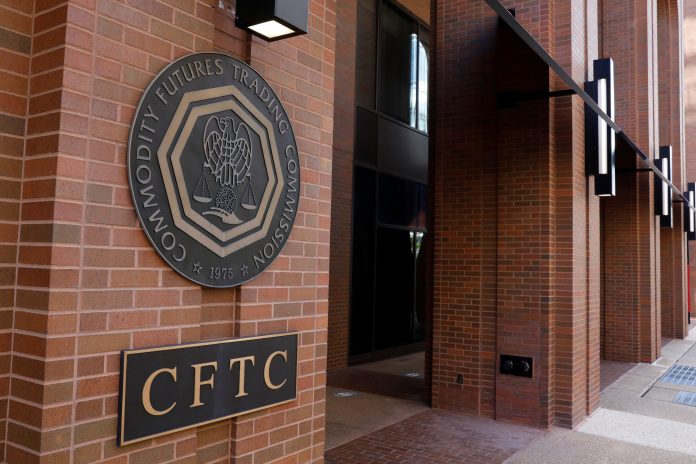
Signage is seen outside of the US Commodity Futures Trading Commission (CFTC) in Washington, D.C., U.S., August 30, 2020. REUTERS/Andrew Kelly

The U.S. Commodity Futures Trading Commission (CFTC) is advancing an initiative to allow spot crypto asset trading on its registered futures exchanges, known as Designated Contract Markets (DCMs).

Announced on August 4, 2025, by Acting Chair Caroline D. Pham, this move is part of the CFTC’s “Crypto Sprint” to implement recommendations from the President’s Working Group on Digital Asset Markets.

The initiative aims to enable immediate trading of digital assets like Bitcoin and Ethereum on federally regulated platforms, leveraging existing authority under the Commodity Exchange Act, which mandates that leveraged or margined retail commodity trading occur on DCMs.

The CFTC is seeking public feedback until August 18, 2025, on how to structure these contracts, including compliance with securities laws and potential jurisdictional overlaps with the SEC’s “Project Crypto.”

This development aligns with recent legislative progress, such as the GENIUS and CLARITY Acts, fostering regulatory clarity for digital assets. However, legal experts warn of potential conflicts, as some crypto assets may blur the line between commodities and securities, creating regulatory risks.

Allowing crypto trading on CFTC-regulated DCMs brings digital assets into a well-established regulatory framework, enhancing their legitimacy in the eyes of institutional investors and traditional financial markets. This move aligns with recent legislative efforts like the GENIUS and CLARITY Acts.

By integrating crypto into regulated futures exchanges, the CFTC is signaling a proactive approach to overseeing digital assets, potentially reducing reliance on unregulated or offshore platforms. Enabling spot crypto trading on DCMs could democratize access to digital assets, allowing retail and institutional investors to trade Bitcoin, Ethereum, and other cryptocurrencies.

Existing futures exchanges, like the Chicago Mercantile Exchange (CME), could expand their offerings, leveraging infrastructure already in place for futures and options to include spot markets, potentially increasing liquidity. The CFTC’s initiative may create friction with the Securities and Exchange Commission (SEC).

The CFTC’s approach relies on the Commodity Exchange Act’s authority over retail commodity transactions, but legal experts note potential conflicts if assets are deemed securities under the SEC’s purview. This could lead to regulatory arbitrage or legal disputes, complicating compliance for market participants.

Trading on CFTC-regulated DCMs requires adherence to strict rules, including know-your-customer (KYC) and anti-money laundering (AML) compliance, which could reduce fraud and enhance consumer trust. Regulated exchanges are subject to oversight, ensuring better risk management, transparency, and safeguards against market manipulation compared to unregulated crypto platforms.

The initiative could spur innovation by allowing exchanges to develop new crypto-based products, such as margined spot contracts or hybrid instruments, fostering competition among DCMs. Established crypto exchanges like Coinbase or Binance may face pressure to align with CFTC standards or partner with DCMs, potentially reshaping the competitive landscape.

How Crypto is Advancing Under This New Regime

The CFTC’s “Crypto Sprint” and alignment with legislative efforts (e.g., GENIUS and CLARITY Acts) reflect a shift toward integrating crypto into existing financial regulatory frameworks. This contrasts with earlier ad-hoc enforcement actions, providing a structured path for compliance.

The CFTC’s request for public feedback by August 18, 2025, indicates an inclusive approach, allowing input from industry stakeholders to shape rules for spot crypto trading, which could lead to more practical and widely accepted regulations.

The availability of regulated crypto trading could also spur the development of crypto-based exchange-traded funds (ETFs) or other investment vehicles, further bridging traditional finance and crypto markets. The integration of crypto into DCMs may encourage technological upgrades to handle high-frequency trading, custody solutions, and real-time settlement.

Crypto’s advancement under this regime faces hurdles, including resolving CFTC-SEC jurisdictional overlaps. For instance, Ethereum’s status as a commodity or security remains debated, impacting how it’s traded on DCMs. The industry must also address technical challenges, such as ensuring DCMs can handle the unique custody and settlement requirements of digital assets, which differ from traditional commodities.

The CFTC’s push to allow crypto trading on registered exchanges is a pivotal step toward mainstreaming digital assets, offering regulatory clarity, consumer protection, and market access. However, jurisdictional tensions, compliance costs, and technical challenges could slow progress.
$2 Billion Milestone for xStocks Underscores the Transformative Potential of Tokenized Assets

0

xStocks, the tokenized equities product by Backed Finance, has surpassed $2 billion in total trading volume across centralized (CEX) and decentralized exchanges (DEX), with over $100 million in on-chain DEX volume. This milestone reflects growing adoption, with Tesla’s TSLAx leading as the first token to exceed 10,000 holders. Assets under management (AUM) for xStocks are reported at approximately $43.3 million.

Tokenization breaks down high-value assets like equities, real estate, and private credit into smaller, tradable units, democratizing access for retail and institutional investors. For instance, xStocks’ TSLAx token exceeding 10,000 holders shows how tokenization lowers barriers to entry, enabling fractional ownership of assets previously reserved for high-net-worth individuals.

This increased liquidity could transform illiquid markets, such as private equity and real estate, by enabling 24/7 trading and reducing settlement times from days to seconds, as seen with Victory Park Capital’s $1.7B tokenized private credit on zkSync.

Blockchain-based tokenization streamlines processes by automating transactions via smart contracts, reducing intermediaries and operational costs. The World Economic Forum notes that tokenization could save $15-20 billion annually in global infrastructure costs by minimizing settlement risks and manual processes.

Tokenized assets are increasingly integrated with decentralized finance (DeFi) ecosystems, creating new economic opportunities like yield-generating tokens and programmable liquidity hubs. This composability allows tokenized assets to interact seamlessly with DeFi protocols, enhancing capital efficiency.

The rise of AI-driven smart contracts in 2025 will further optimize tokenization by detecting vulnerabilities, automating compliance, and enabling AI-guided portfolio management, reducing human intervention in trading. The tokenized real-world asset (RWA) market is projected to grow significantly, with estimates ranging from $2 trillion by 2030 (McKinsey) to $30.1 trillion by 2034 (Standard Chartered).

xStocks’ milestone aligns with this trend, as its $43.3 million AUM reflects growing institutional and retail interest. Major players like BlackRock, Franklin Templeton, and JPMorgan are driving adoption, with tokenized treasuries reaching $6.9 billion and private credit surpassing $12 billion by March 2025. This institutional backing validates tokenization’s scalability and credibility.

However, regulatory uncertainty remains a hurdle, with 49% of institutional investors citing it as a primary obstacle. The “paradox of programmability” also introduces risks, such as automated transactions amplifying herding behavior or programmed bank runs, necessitating tailored regulatory frameworks.

Tokenization could reshape global capital markets by increasing fungibility across asset classes, simplifying cross-asset allocation, and correlating private and public markets. This shift may lead to more integrated, nimble global asset allocation with reduced friction. However, it introduces systemic risks, such as amplified volatility from programmable tokens and challenges.

Drivers of Tokenized Assets in 2025

Major financial institutions like BlackRock, Citibank, and HSBC are moving from proofs-of-concept to production-scale tokenization. For example, Citibank’s collaboration with Ava Labs to tokenize private equity funds and Slovenia’s $32.5 million digital bond issuance in 2024 signal a shift toward mainstream adoption.

Innovations like Layer-2 scaling (e.g., Optimistic Rollups, ZK-Rollups) and cross-chain interoperability reduce transaction costs and enhance scalability, making tokenized assets more viable for high-volume trading like xStocks. Zero-knowledge proofs (ZKPs) and AI-enhanced smart contracts improve privacy and automation, addressing concerns about secure, large-scale transactions.

High-net-worth and institutional investors plan to allocate 7-9% of portfolios to tokenized assets by 2027, driven by benefits like increased liquidity, lower costs, and transparency. Tokenized treasuries and private credit, as seen with xStocks, are particularly attractive in a high-interest-rate environment.

Retail investors are drawn to fractional ownership opportunities, such as tokenized real estate or commodities, enabling diversification with minimal capital (e.g., $100 for a fraction of a $2,000 gold ounce). Supportive policies, such as the U.S. Executive Order on Digital Financial Technology and relaxed SEC rules for crypto custody, are catalyzing tokenization growth.

Singapore’s Project Guardian and the EU’s DLT Pilot Regime further encourage innovation through regulatory sandboxes. Beyond equities like xStocks, tokenization is expanding into real estate, commodities, private credit, and even novel areas like tokenized time and expertise. For instance, energy firms are tokenizing renewable energy credits, and professionals are exploring tokenized skills for fundraising.

While offering significant benefits like liquidity, efficiency, and accessibility, tokenization also poses challenges, including regulatory hurdles and systemic risks from programmability. As the market is projected to grow exponentially, businesses and investors must navigate these dynamics to capitalize on tokenization’s role in reshaping global finance.

MoonPay’s Virtual Accounts with Axal Yield Offer a Compelling Way to Earn 6-10% APY on Stablecoins

0

MoonPay has partnered with Axal to launch “Virtual Accounts,” enabling users to earn 6-10% APY on stablecoins like USDC and USDT through Axal Yield.

This service integrates MoonPay’s Virtual Accounts with Axal’s DeFi yield strategies, automatically routing deposited stablecoins into a diversified portfolio of lending protocols and liquidity pools. The setup requires no gas fees, no custodial risks, and minimal user intervention, with funds managed by a smart automation engine for optimized returns and risk management.

The service is live and accessible globally, though specific yields depend on market conditions and DeFi protocol performance. Note that stablecoin yields carry risks, such as potential de-pegging or protocol vulnerabilities, as seen in past events like OUSD’s de-peg in 2020.

MoonPay’s integration with Axal Yield simplifies access to DeFi for retail and institutional users by offering a one-click solution to earn 6-10% APY on stablecoins. This lowers the technical barrier, as users don’t need to navigate complex DeFi protocols or pay gas fees, making passive income opportunities more mainstream.

This could drive broader adoption of stablecoins and DeFi, particularly among non-crypto-native users who rely on MoonPay’s user-friendly fiat-to-crypto on-ramp (supporting 170+ cryptocurrencies and multiple payment methods like credit cards, PayPal, and Apple Pay). It aligns with MoonPay’s goal of bridging fiat and digital asset worlds.

By enabling stablecoin deposits to automatically generate yield through Virtual Accounts, MoonPay enhances the utility of USDC and USDT beyond trading or remittances. Stablecoins become a viable alternative to low-yield traditional savings accounts, as noted by Axal’s CEO: “The vast majority of money on Earth sits idle in cash or low-interest accounts.”

This could shift user behavior, encouraging holding stablecoins for passive income rather than converting to fiat, especially in high-inflation economies where stablecoins already serve as a store of value. It may also increase stablecoin market caps, currently at $190 billion, with USDT ($151 billion) and USDC ($60 billion) dominating.

Axal Yield’s non-custodial model, secured by TEE-enforced signing policies and batched execution, ensures users retain control of their funds, reducing custodial risks. The absence of gas fees and manual intervention further lowers costs and complexity.

Stablecoin yields face increasing regulatory scrutiny globally, with jurisdictions demanding transparency and adequate reserves. MoonPay’s compliance (Bitlicense, MiCA, SOC2, ISO, PCI) and USDC’s regulatory alignment (audited reserves) position it favorably compared to USDT, which faces challenges in Europe due to non-MiCA compliance.

Yield Strategies Behind Virtual Accounts

MoonPay’s Virtual Accounts leverage Axal Yield’s smart automation engine to generate 6-10% APY through diversified DeFi strategies. Funds deposited into Virtual Accounts (in USDC or USDT) are routed to Axal’s yield engine, which allocates capital across a curated portfolio of DeFi lending protocols like Morpho, Euler, and Base.

The focus is on low-risk, diversified lending strategies, dynamically rebalanced based on real-time market signals. Stablecoins are lent to borrowers on DeFi platforms, earning interest from lending fees. The engine optimizes returns by reallocating funds to protocols with the highest risk-adjusted yields, targeting stable performance.

A portion of funds is allocated to liquidity pools, where stablecoins provide liquidity for decentralized exchanges (DEXs) or trading pairs, earning fees from trades. Axal’s automation ensures capital is moved to pools with optimal fee generation and low impermanent loss risk.

Users earn a share of trading fees proportional to their pool contribution. Stablecoin pools (e.g., USDC/USDT) are less prone to impermanent loss compared to volatile asset pairs, making them safer for yield generation. Low liquidity or sudden market shifts can reduce fees or cause temporary losses. Past DeFi exploits, like the 2022 Terra/UST collapse, underscore the need for careful protocol selection.

The strategy of diversified lending and liquidity pools, powered by automation, balances returns and risks but isn’t foolproof. Users must weigh protocol vulnerabilities, regulatory uncertainties, and fees against potential gains. While this could accelerate DeFi and stablecoin adoption, careful due diligence is essential to navigate the inherent risks of yield-generating strategies.

Gemini Teased ‘Horizon’ and Its Creating Buzz on X

0

Gemini’s upcoming project named “Horizon” seems to be generating some buzz on X. Specifically, a post from the Gemini account hints at excitement around this project, though details are sparse and cryptic—typical teaser strategy.

The post mentions a bullish mindset and market enthusiasm, suggesting Horizon might be tied to something finance-related or crypto-driven, given Gemini’s focus on cryptocurrency exchange services. Given Gemini’s history as a crypto exchange founded by the Winklevoss twins, Horizon might involve decentralized finance, a new trading feature, or an expansion of their existing offerings like staking or custody services.

Horizon could be a new product or platform designed to further integrate cryptocurrency with traditional financial systems, aligning with Gemini’s mission to make crypto accessible and trusted. Given Gemini’s emphasis on regulatory compliance and security (e.g., SOC 1 and SOC 2 Type 2 certifications, NYDFS licensing).

Horizon might introduce a new financial instrument, such as an advanced stablecoin, tokenized securities, or a DeFi protocol tailored for institutional investors. This could accelerate mainstream adoption by offering a secure, regulated entry point for traditional investors, potentially increasing crypto’s legitimacy. However, it might also centralize certain DeFi aspects, alienating purists who value decentralization over institutional integration.

With the global crypto market valued at $3.3 trillion and institutional inflows growing (e.g., spot Bitcoin ETFs), Horizon could attract significant capital, especially if it leverages Gemini’s custodial services or partnerships like those with Samsung or Evolve Funds. Gemini’s recent moves, like expanding tokenized stock offerings in the EU and securing an Investment Firm License in Malta.

Institutional adoption could drive liquidity and stabilize prices, but it risks prioritizing large players, potentially sidelining retail investors who lack access to such tools.  Gemini’s new CFO, Dan Chen, emphasized regulatory clarity as “foundational” for crypto’s growth, especially under a potentially pro-crypto U.S. administration in 2025.

Horizon might introduce a framework or product that aligns with evolving regulations, such as the EU’s MiCA or U.S. policies under Trump’s crypto-friendly stance. A compliant product could set a precedent for other crypto firms, reducing regulatory risks and encouraging broader adoption. However, it could also raise barriers for smaller, less-regulated competitors, consolidating market power among giants like Gemini.

Horizon might build on Gemini’s existing offerings, like the Gemini Credit Card (crypto rewards), Gemini Dollar (GUSD stablecoin), or staking services. It could involve a novel financial product, such as a crypto-backed loan platform, a next-generation stablecoin, or a retail-focused DeFi app, given Gemini’s aim to make crypto accessible to all. Such products could democratize access to crypto earnings, especially for retail users, but high fees could deter casual investors.

If Horizon prioritizes institutional features, it could marginalize retail investors, who already feel priced out by high fees and limited token selections (Gemini supports 80+ coins vs. competitors like Binance with broader offerings). Conversely, a retail-focused product like a crypto rewards card could bridge this divide, though past Gemini products (e.g., Earn) have faced scrutiny for misleading retail users.

Gemini’s regulatory focus contrasts with the decentralized ethos of many crypto advocates, who see DeFi as a way to bypass traditional financial gatekeepers. Horizon’s alignment with compliance (e.g., NYDFS, FCA) might clash with the decentralized community’s preference for permissionless systems. If Horizon is a centralized platform, it could deepen the ideological split between CeFi and DeFi proponents.

Crypto’s promise of financial inclusion is tempered by access barriers, such as high fees, complex KYC requirements, and limited coin offerings. Gemini’s focus on security and compliance often comes at the cost of higher fees, which disproportionately affects lower-income users. If Horizon introduces premium services, it could exacerbate wealth disparities, favoring high-net-worth individuals or institutions.

While Horizon’s promise of “the future of finance” sounds bold, Gemini’s track record raises caution. The Gemini Earn debacle, where investors were locked out of $1.1 billion in assets due to Genesis’s bankruptcy, highlights the risks of overpromising. Horizon’s success hinges on avoiding similar missteps, especially if it involves lending or yield-generating products.

The crypto market’s volatility, with Bitcoin above $100,000 and Solana’s retail-driven surge, suggests Horizon could capitalize on bullish sentiment. However, the divide between institutional and retail, centralized and decentralized, and regulated and unregulated markets is a structural challenge. Horizon might bridge some gaps but risks deepening others if it prioritizes one group over another.

Gemini’s Horizon project could redefine crypto’s role in finance by enhancing institutional access, regulatory compliance, or innovative products like tokenized assets or stablecoins. However, it risks widening divides between institutional and retail investors, centralized and decentralized systems, and regulated and unregulated markets.

U.S. SEC’s Clarification That Liquid Staking Activities Are Not Securities Is a Landmark Decision for Blockchain

1

U.S. Securities and Exchange Commission (SEC) has clarified that certain liquid staking activities and associated Staking Receipt Tokens do not constitute securities under federal securities laws, specifically Section 2(a)(1) of the Securities Act of 1933 and Section 3(a)(10) of the Securities Exchange Act of 1934.

This guidance, issued by the SEC’s Division of Corporation Finance on August 5, 2025, states that liquid staking—where crypto assets are staked through a protocol or provider and a liquid staking receipt token is issued to evidence ownership—does not meet the criteria for an investment contract under the Howey Test.

The key reason is that the value of these tokens and any rewards are tied to the underlying crypto assets and protocol staking activities, not the entrepreneurial or managerial efforts of the staking provider or third parties.

As a result, participants in these liquid staking activities, including providers minting, issuing, or redeeming Staking Receipt Tokens, are not required to register these transactions with the SEC or seek exemptions, unless the underlying crypto assets are themselves part of an investment contract.

This clarification, part of the SEC’s Project Crypto initiative under Chair Paul Atkins, aims to provide regulatory clarity and has been welcomed by market participants for reducing uncertainty around decentralized finance (DeFi) protocols.

However, some, like Commissioner Caroline Crenshaw, argue that certain staking services might still be securities based on prior court rulings, highlighting ongoing debates within the SEC. By exempting liquid staking activities from securities registration, the SEC alleviates the need for staking providers and DeFi protocols.

Protocols can now operate with greater confidence, knowing that their liquid staking activities are not subject to federal securities laws, as long as the underlying crypto assets are not investment contracts. Liquid staking, which allows users to stake assets while retaining liquidity through tradable receipt tokens (e.g., stETH on Lido), is a cornerstone of DeFi.

The SEC’s stance encourages broader participation by retail and institutional investors, as the regulatory risk of staking tokens being deemed securities is diminished. This could lead to increased capital inflows into DeFi protocols, as investors gain assurance that liquid staking tokens are not subject to the same scrutiny as securities.

Developers can innovate more freely in designing staking mechanisms, yield farming strategies, and tokenized derivatives without fear of SEC enforcement actions. This fosters experimentation with new DeFi products and services. The ruling may spur the creation of more sophisticated liquid staking protocols.

Institutional investors, previously cautious due to regulatory ambiguity, may now feel more comfortable engaging with liquid staking protocols. This could drive significant capital into blockchain ecosystems, particularly Ethereum and other proof-of-stake (PoS) networks.

The SEC’s progressive stance under Project Crypto positions the U.S. as a more blockchain-friendly jurisdiction, potentially attracting projects and talent that might otherwise migrate to jurisdictions with lighter regulatory frameworks (e.g., Singapore, Switzerland). This could counter the trend of blockchain companies relocating offshore due to regulatory uncertainty.

Liquid staking enhances the utility of staked assets by allowing users to use them in DeFi while still earning staking rewards. This ruling could accelerate the growth of PoS networks, as staking becomes more accessible and appealing. Increased liquidity and participation in staking could stabilize PoS blockchains.

Liquid staking makes participating in PoS networks more attractive by eliminating the lock-up periods that deter users. With regulatory barriers lowered, more users can stake assets like ETH, ADA, or SOL while using receipt tokens in DeFi, driving adoption of PoS chains.

Liquid staking tokens are a key building block for DeFi. With the SEC’s ruling, protocols like Lido, Rocket Pool, and Ankr can scale without fear of securities violations, leading to deeper integration with lending platforms, DEXs, and yield aggregators. This could create a flywheel effect: more staked assets ? more liquid tokens ? greater DeFi liquidity ? higher yields and utility ? increased user participation.

The precedent set by the SEC’s guidance could extend to other tokenized assets, encouraging the tokenization of real-world assets (RWAs) like real estate or bonds on blockchain. If receipt tokens for staked assets are not securities, similar logic might apply to other tokenized representations, unlocking new markets.

Liquid staking tokens can be used across multiple blockchains via bridges and layer-2 solutions. The SEC’s clarity may encourage developers to create cross-chain staking protocols, enhancing interoperability and creating seamless DeFi ecosystems across networks like Ethereum, Polkadot, and Cosmos.

This ruling could revolutionize blockchain by accelerating the growth of PoS networks, expanding DeFi ecosystems, and fostering mainstream financial integration. However, ongoing vigilance is needed to address remaining regulatory nuances, security risks, and infrastructure challenges to fully realize this potential.