DD
MM
YYYY

PAGES

DD
MM
YYYY

spot_img

PAGES

Home Blog Page 753

The Secret Language of Maps: Beyond Just Navigation

0

To a cartography enthusiast, a map is never just a tool for getting from A to B. It’s a time capsule, a political statement, and a work of art all rolled into one. While modern GPS offers sterile efficiency, historical maps invite us into a conversation with the past. They speak a rich, symbolic language of power, mythology, and discovery. Learning to read this language transforms a simple piece of paper into a captivating story waiting to be told.

More Than Lines: The Unseen Stories in Every Map

Every map is a cultural artifact, deeply colored by the worldview of its creator and the era in which it was made. The choice of what to include, what to omit, and how to represent the world reveals a hidden narrative. This layering of meaning is a hallmark of thoughtful design. Mapmakers often included personal marks or hidden jokes, a tradition of ‘Easter eggs’ that continues today in all forms of digital design, from complex software to entertainment platforms like https://runa.casino/en/. But for cartographers, these hidden elements were not just for fun; they were a core part of the map’s narrative, speaking volumes to those who knew how to listen.

Decoding the Clues: Key Elements of Map Language

The secret language of maps is communicated through a variety of elements, each adding a different layer to the story. By paying close attention to these details, you can begin to understand the deeper context of the maps you collect and admire.

Toponymy: The Power of a Place Name

The names on a map—or toponymy—are a powerful historical record. The renaming of places can signal a change in political power, such as the colonial practice of replacing indigenous names with European ones. The persistence of old names, on the other hand, can reveal deep-seated cultural heritage. A map’s place names are a direct link to its political and social history.

Cartouches and Compasses: The Art of Information

On antique maps, the title block, or cartouche, was far more than a simple label. These ornate, decorative frames were a canvas for the cartographer to showcase artistic skill, dedicate the map to a wealthy patron, or include crucial information about scale and projection. Similarly, an elaborate compass rose didn’t just point north; it was a statement of craftsmanship and a key part of the map’s aesthetic appeal.

The Mythical Beasts of “Here Be Dragons”

One of the most thrilling aspects of old maps is seeing how cartographers depicted the unknown. Lacking satellite imagery, they filled the vast, unexplored oceans and lands with imaginative illustrations. These were more than just decoration; they were a visual representation of European fears and legends about the wider world.

Common symbols found in these uncharted territories include:

  • Sea serpents and leviathans ruling the oceans.
  • Wind heads (putti) blowing from the corners of the map.
  • Depictions of mythical kingdoms, such as that of Prester John.
  • Scenes of cannibalism or other “savage” practices attributed to foreign peoples.

How Projections Shape Our Worldview

No flat map can accurately represent a spherical globe; every map projection involves some form of distortion. The type of projection a cartographer chooses fundamentally shapes our perception of the world, often with unintended political consequences.

Projection Strengths Weaknesses/Distortions
Mercator Preserves shape and direction, excellent for navigation. Massively distorts the size of landmasses near the poles (e.g., Greenland appears huge).
Peters Gall Accurately represents the relative size of countries. Distorts the shape of continents, making them appear elongated.
Robinson A compromise, with minor distortions to both size and shape. Does not excel at any one thing; it’s a visual compromise.

The widespread use of the Mercator projection, for instance, has been criticized for reinforcing a Eurocentric worldview by exaggerating the size of northern continents.

This table shows a few of the most common symbols you might find on antique maps and what they could signify.

Symbol (Description) Potential Meaning
A ship in full sail A known sea route, maritime power, or trade.
An anchor A safe harbor or port.
A stylized crown The seat of a king or a royal claim to the territory.
Crossed swords The site of a significant battle.

Reading the World Anew

A map is a document that invites curiosity. It asks us to look closer, to question its assumptions, and to appreciate the artistry and history woven into its very fabric. By learning to decode the secret language of maps, we move from being passive observers to active readers, engaging in a rich dialogue with the past.

The next time you look at a map, don’t just see a route. Look for the story. Pull out a familiar atlas or visit your library’s digital collection, and see what secrets you can uncover. You’ll never look at the world the same way again.


The Unsung Heroes of Online Gaming: Profiling RNG Auditors & Fair Play Advocates

0

Behind every legitimate online casino operates a network of independent auditors ensuring games run fairly and transparently. These organisations might not grab headlines, but they’re the backbone of player trust and regulatory compliance in our industry. As operators face increasingly complex multi-jurisdictional requirements, understanding these auditors’ roles, methodologies, and value propositions becomes crucial for sustainable business operations.

Why RNG Auditing Matters More Than Ever

The iGaming landscape has evolved dramatically, with regulators demanding higher standards and players expecting transparent operations. Third-party auditors bridge the gap between technical compliance and public trust, providing the verification that keeps our industry credible.

Leading operators like fortunica understand that robust auditing isn’t just about ticking regulatory boxes—it’s about building long-term player relationships and protecting brand reputation. With new markets opening regularly, choosing the right auditing partners can determine market entry success and operational efficiency.

Recent industry data shows that properly certified operators experience 23% higher player retention rates and face 67% fewer regulatory penalties. These numbers underscore why smart operators view auditing as an investment rather than an expense.

Key benefits of professional RNG auditing:

  • Regulatory compliance across multiple jurisdictions.
  • Enhanced player trust through visible certification.
  • Reduced legal risks and potential penalties.
  • Competitive advantage in saturated markets.
  • Technical insights for platform improvement.
  • Marketing value from recognised certifications.

Major Players in the RNG Auditing Space

The auditing landscape features several established organisations, each with unique strengths and specialisations. Understanding their differences helps operators select partners aligned with their specific needs and target markets.

Auditor Founded Jurisdictions Specialisations Average Turnaround
eCOGRA 2003 30+ Player protection, RNG, Live dealer 4-6 weeks
GLI 1989 475+ Land-based crossover, Blockchain 3-5 weeks
iTech Labs 2004 25+ RNG, Game mathematics 2-4 weeks
BMM Testlabs 1981 400+ Platform testing, Compliance 4-8 weeks
SQS 1982 20+ Cybersecurity, Performance 3-6 weeks

Each auditor brings distinct advantages to the table. eCOGRA’s player protection focus appeals to consumer-facing brands, whilst GLI’s extensive land-based experience benefits convergence operators. iTech Labs offers competitive pricing for startups, and BMM Testlabs provides comprehensive platform testing. SQS combines traditional testing with cutting-edge cybersecurity assessments, making them ideal for operators prioritising data protection and system integrity.

The Technical Side of RNG Testing

Modern RNG testing goes far beyond simple randomness checks. Auditors employ sophisticated statistical analyses, examining millions of game rounds to ensure outcomes match theoretical probabilities. They scrutinise source code, test edge cases, and verify that house edges align with published figures.

The testing process typically involves multiple phases, from initial documentation review through to ongoing monitoring. Auditors use tools like diehard tests, chi-squared analyses, and autocorrelation checks to validate randomness across different game types and betting patterns.

Standard RNG testing procedures:

  • Source code review: Examining algorithms for vulnerabilities.
  • Statistical analysis: Running millions of simulations.
  • Scaling tests: Ensuring consistency across bet sizes.
  • Integration testing: Verifying RNG implementation.
  • Seeding evaluation: Checking entropy sources.
  • Performance testing: Confirming speed and reliability.

Compliance Strategies for Multi-Jurisdictional Operations

Operating across multiple jurisdictions presents unique challenges, as each regulator maintains different standards and requirements. Successful operators develop comprehensive compliance strategies that leverage auditor expertise whilst minimising redundant testing.

Smart operators choose primary auditors with the broadest jurisdictional recognition, supplementing with specialist auditors for specific markets. This approach reduces costs whilst ensuring comprehensive coverage. Building strong relationships with auditors also provides valuable insights into upcoming regulatory changes.

Effective multi-jurisdictional compliance tips:

  • Map regulatory requirements across all target markets.
  • Select auditors with maximum cross-border recognition.
  • Maintain centralised compliance documentation.
  • Schedule audits strategically to minimise disruption.
  • Build buffer time for unexpected requirements.
  • Develop relationships with local regulatory consultants.

The Cost-Benefit Analysis of Quality Auditing

Whilst auditing represents a significant investment, the returns justify the expense for serious operators. Initial certification costs range from £15,000 to £50,000, depending on platform complexity, with annual reviews typically costing 30-50% of initial fees.

Operator Size Annual Audit Investment Typical ROI Factors
Startup £25,000-£40,000 Market access, trust building
Mid-size £50,000-£100,000 Player retention, fewer disputes
Enterprise £150,000-£300,000 Regulatory savings, brand value
Multi-brand £400,000+ Operational efficiency, expansion

Future Trends in Gaming Certification

The auditing landscape continues evolving with technological advances and regulatory shifts. Blockchain gaming, cryptocurrency integration, and AI-driven personalisation all present new certification challenges. Forward-thinking operators are already partnering with auditors to navigate these emerging areas.

Continuous monitoring solutions are replacing periodic audits, providing real-time compliance assurance. This shift offers operators immediate issue detection whilst giving regulators unprecedented transparency. Early adopters of these technologies report 40% faster issue resolution and significantly reduced compliance costs.

Maximising Your Auditing Partnerships

The most successful operators view auditors as strategic partners rather than mere service providers. Regular communication, proactive compliance planning, and leveraging auditor expertise for platform improvements create value beyond basic certification. Consider establishing quarterly reviews with your auditing partners to discuss industry trends, upcoming regulatory changes, and optimisation opportunities. How are you currently leveraging your auditor relationships to drive competitive advantage?

Trump Set to Announce Semiconductor Tariffs, Deepening Uncertainty in U.S. Chip Industry

0

The turbulence rocking the global semiconductor market is poised to escalate further as President Donald Trump on Tuesday told CNBC’s Squawk Box that his administration plans to announce a new wave of tariffs on semiconductors and chips “within the next week,” marking a sharp turn in U.S. trade and industrial policy.

The announcement comes on the heels of an ongoing Section 232 investigation launched in April into national security risks posed by U.S. reliance on foreign-made chips — a probe that many experts had warned could set the stage for punitive tariffs.

Though Trump did not provide specific details about the tariff rates or scope, policy insiders anticipate the administration could begin with a 25% levy on imported chips, with the potential to expand the coverage and rate depending on supply chain vulnerabilities and geopolitical concerns. The Wall Street Journal reported that the tariffs could also target pharmaceutical products, but the chip measures appear to be more imminent.

The reaction was swift across financial markets. Shares of chipmakers including Nvidia, Broadcom, and other semiconductor giants tumbled on Tuesday. The Philadelphia Semiconductor Index dropped 1.1%, while the iShares Semiconductor ETF (SOXX) lost 0.7%. Investors are bracing for ripple effects across the U.S. tech sector, particularly for firms heavily reliant on imported hardware components.

The tariff plan comes even as the U.S. attempts to rebuild its semiconductor supply chain under the 2022 CHIPS and Science Act, which earmarked $52 billion in subsidies to bolster domestic chip production. At the time the law was signed, the U.S. produced only around 10% of the world’s chips, despite being home to more than half of the leading semiconductor design firms.

Major players like Intel and Taiwan Semiconductor Manufacturing Company (TSMC) have already received support under the program. TSMC has committed to investing at least $100 billion over four years to build and expand its U.S.-based manufacturing facilities. But establishing chip fabs — massive, clean-room manufacturing plants — is a long, expensive process. Intel’s repeated delays in building its flagship plant in Ohio underscore the difficulty of scaling production quickly, even with government funding.

The U.S. remains far from achieving full supply chain independence, raising concerns that new tariffs could end up hurting domestic industries more than their intended foreign targets, at least in the short term.

Reversal on AI Chip Export Rules Sows Further Confusion

Complicating the picture is the administration’s shifting stance on AI chip export controls. In May, Trump formally rescinded the Biden administration’s rules that placed tiered, country-specific restrictions on the export of advanced semiconductors used in artificial intelligence systems. The Biden-era framework had focused on national security threats, particularly around China’s access to high-performance chips from companies like Nvidia and AMD.

Trump’s administration followed the repeal with the release of a broad AI Action Plan in July, which emphasized the need for stricter export controls. But the document was vague on how such rules would be implemented. And now, according to reporting from Semafor, senior officials within the administration are internally debating whether to go through with their plan to replace the Biden rules or abandon the effort altogether. Sources close to the matter say no final decision has been made.

This policy uncertainty is unsettling to U.S. chipmakers and AI firms, many of which operate in both consumer and defense-adjacent sectors. Without a clear regulatory roadmap, companies are struggling to plan long-term strategies and are voicing growing frustration over the uncertainty.

High Stakes for the U.S. Tech Ecosystem

The combination of looming tariffs and murky export controls is setting the stage for a pivotal period in the U.S. tech industry. On one hand, the administration appears determined to reduce America’s dependence on foreign chips — particularly from Asia — and to secure domestic control over the next generation of computing infrastructure. On the other hand, the tariffs could raise costs for U.S. firms and consumers in the short term, while regulatory unpredictability may hinder innovation and investment.

Despite the billions poured into the CHIPS Act, the U.S. still lacks the capacity to meet domestic chip demand. That gap means tariffs may do more to squeeze American companies than foreign competitors, at least until domestic manufacturing catches up.

If Trump follows through with the tariff announcement as expected next week, the semiconductor sector could face a dramatic shake-up, compounding what has already been a volatile year for chips, AI hardware, and the entire tech supply chain.

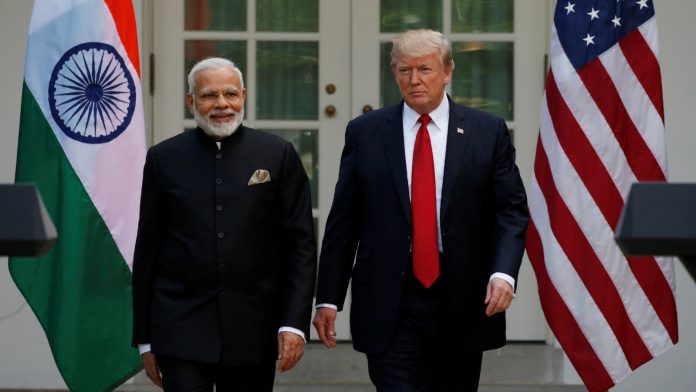
Trump Slaps 50% Tariffs on India Over Russian Oil Imports, Escalating Global Energy Tensions

0

The White House on Wednesday formally imposed additional tariffs on India, escalating the Trump administration’s campaign to punish countries trading with Russia amid the war in Ukraine.

The new executive order adds a 25% tariff on Indian goods, on top of an existing 25% levy, bringing the total tariff burden to a staggering 50% — one of the highest rates imposed on any U.S. trading partner.

“I find that the Government of India is currently directly or indirectly importing Russian Federation oil,” President Donald Trump stated in the order, invoking executive powers to expand trade penalties under national security justifications. The new tariffs are set to take effect within 21 days.

While Trump has previously warned India of consequences for its continued purchase of Russian energy and military equipment, the decision marks the first time Washington has concretely penalized New Delhi over its ties to Moscow since the full-scale Ukraine invasion began.

“This is just the beginning,” Trump said on CNBC’s Squawk Box a day earlier. “They’re buying Russian oil, they’re fueling the war machine… and if they’re going to do that, then I’m not going to be happy.”

India Hits Back, Says U.S. Hypocrisy on Display

India has responded, labeling the U.S. action as “unjustified” and accusing Washington of targeting New Delhi for pursuing its national energy interests. In a statement, India’s Ministry of External Affairs said the move was “extremely unfortunate,” especially since other countries continue to buy energy from Russia without facing similar penalties.

“We reiterate that these actions are unfair, unjustified and unreasonable,” the Indian government said, adding that its oil imports from Russia are driven purely by market factors and the urgent need to ensure energy security for 1.4 billion people.

India also pointed to the hypocrisy of Western countries, noting that many of them maintain commercial relations with Russia even as they pressure others to isolate Moscow.

“It is revealing that the very nations criticizing India are themselves indulging in trade with Russia,” the statement said. “Unlike our case, such trade is not even a vital national compulsion [for them].”

Trump’s executive order goes beyond India to task administration officials with identifying other nations importing Russian oil, directly or indirectly, and to recommend punitive actions, which could include tariffs or other trade restrictions.

The move suggests that the Trump administration is preparing to turn its sanctions and tariffs toolkit into a global enforcement mechanism against Russian energy — a strategy that risks dividing allies and undermining broader trade relationships.

In the past two weeks, Trump has intensified his rhetoric, warning that any country buying from Russia will be considered “complicit” in prolonging the war in Ukraine. While European allies have largely complied with phased bans, India — which has historically charted an independent foreign policy — has ramped up its Russian crude intake since 2022, often refining it for resale in global markets.

Why the Tariff Matters — and Why It’s Dangerous

India is one of the United States’ key strategic partners in Asia, and the move to slap a 50% tariff could destabilize bilateral ties that have deepened over shared concerns about China. The U.S. and India have expanded defense cooperation, tech investments, and intelligence sharing in recent years. But the tariff marks a sharp departure from recent efforts to woo New Delhi into closer alignment with Western interests.

Analysts say the decision may play well domestically for Trump, but it risks sending the wrong message globally.

There are also concerns that the tariff could backfire economically. India is a major supplier of pharmaceuticals, textiles, and IT services to the United States. A 50% tariff could result in higher costs for American companies and consumers, while pushing India to retaliate — or worse, turn further toward Russia and China.

Global Energy Fault Lines Are Hardening

The tariff underscores the increasingly fragmented global energy order. While the U.S. has tried to rally support for isolating Russia, many countries in the Global South — including India, Brazil, and even parts of the Middle East — continue to balance their interests rather than picking sides.

New Delhi has repeatedly said it cannot be expected to cut off an affordable and stable energy source, particularly when Western nations — including some NATO members — continue buying Russian LNG, fertilizer, and commodities under various exemptions.

In short, Trump’s action reflects an escalating clash between moral posturing and economic realism, with India now caught in the crossfire of that contradiction.

Kremlin spokesperson Dmitry Peskov on Tuesday, in defense of India, dismissed Trump’s tariff threats as “attempts to force countries to stop trade relations with Russia,” declaring that “sovereign countries should have… the right to choose their own trade partners.”

Little Pepe (LILPEPE) and Dogecoin (DOGE) Price Prediction if Meme Coin Sector Hits $250 Billion Market Cap in 2025

0

The meme coin sector, now worth a hefty $72 billion, could balloon to $250 billion in 2025. Consequently, investors are have one question, what’s the best crypto to buy now?

Two names keep surfacing: Dogecoin (DOGE), the old-timer with a loyal pack, and Little Pepe (LILPEPE), a fresh-faced upstart packing serious punch.  Dogecoin has clawed past $0.22 recently, hinting at a rally. Meanwhile, Little Pepe (LILPEPE) has raised $14.6 million in its presale. Let’s unpack what’s fueling these coins and where they’re headed.

Dogecoin (DOGE) Holds Steady

Dogecoin (DOGE) has been flexing its muscles lately. Having broken the $0.22 barrier, a level it’s wrestled with since 2022, it’s signaling a potential surge. Analysts have spotted patterns echoing its 2021 peak of $0.73.

If the meme coin sector hits $250 billion in 2025, Dogecoin could ride the wave. Experts are predicting a climb to $0.50, maybe more, if its fanbase keeps growing. But it’s banking on nostalgia and hype, not new tricks. That’s where the real story shifts. Moreover, Little Pepe (LILPEPE) is stealing the spotlight with something Dogecoin lacks, innovation.

Little Pepe (LILPEPE) Redefines the Game

Little Pepe (LILPEPE) has stormed the scene with audacity. Its presale has concluded stage 8, raising $13.775 million across sold-out stages 1 through 8.

Stage 9 is now open, with tokens priced at a mere $0.0018, and stage 10 looms with a bump to $0.0019. Having amassed $14.6 million so far, stage 9 is underway, drawing feverish demand.  This isn’t just pocket change, it’s a war chest for a bold vision: a Layer 2 chain built for meme coins. Furthermore, this isn’t some flimsy promise, it’s a calculated move to dominate.

Layer 2 Powerhouse

Little Pepe (LILPEPE) isn’t resting on memes alone. It’s crafting the fastest, cheapest Layer 2 chain around, tailored for meme coins.  A meme coin launchpad is also in the works, poised to birth the next big tokens. Anonymous experts, veterans of top meme coin successes, are backing this juggernaut. Listings on two major exchanges are set for launch, with plans to hit one of the world’s biggest platforms soon after.

Price Predictions Unleashed

If the meme coin sector soars to $250 billion in 2025, what’s the payoff? Dogecoin (DOGE) has room to grow, perhaps to $0.50 or beyond, riding its legacy. But Little Pepe (LILPEPE) is where the real fireworks are brewing.  From its $0.0018 presale price, analysts are eyeing a post-launch leap to $0.75. That’s a colossal gain for early birds. Little Pepe (LILPEPE) is making a deafening case with utility Dogecoin can’t match.

Moreover, Little Pepe (LILPEPE) has dropped a bombshell to ignite its community. A $777,000 giveaway is underway. 10 winners will each snag $77,000 in tokens. Join the presale with $100 minimum and tackle a few tasks to enter. It’s a tantalizing hook, amplifying the FOMO as stage 9 ticks on. Meanwhile, trust is rock-solid here.

Audit and Credibility

Little Pepe (LILPEPE) has finalized a rigorous audit with FreshCoins.io, scoring 81.55 out of 100. LILPEPE’s a fortress of security, bolstered by zero taxes and no mint function.  Coinmarketcap has recently added it, cementing its legitimacy.

Final Thoughts: Cashing In on 2025

The meme coin sector hitting $250 billion in 2025 isn’t a pipe dream, it’s a looming reality. Dogecoin (DOGE) has its charm, but Little Pepe (LILPEPE) is rewriting the playbook. With its Layer 2 edge, presale momentum, and giveaway sizzle, it’s the best crypto to buy now. Stage 9 is your shot at $0.0018 tokens. Don’t wait for stage 10’s hike. Jump in today and ride this rocket to the moon.


For more information about Little Pepe (LILPEPE) visit the links below:

Website: https://littlepepe.com

Whitepaper: https://littlepepe.com/whitepaper.pdf

Telegram: https://t.me/littlepepetoken

 Twitter/X: https://x.com/littlepepetoken