DD
MM
YYYY

PAGES

DD
MM
YYYY

spot_img

PAGES

Home Blog Page 7543

NNPC attracts $50 billion oil, gas investment from China

0

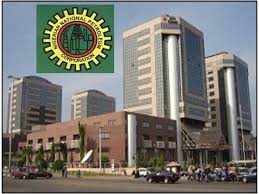
The Nigerian National Petroleum Corporation (NNPC) has said that its strategy to fund capital intensive projects in the upstream sector of the oil and gas industry has begun yielding fruits with the signing of a Memorandum of Understanding (MoU) with some Chinese companies worth $50 billion for infrastructure development.

The corporation said in a statement in Abuja that the deal was part of recent landmark strides by its management to bridge the infrastructure funding gaps in the Nigerian oil and gas sector.

The companies involved in the deal include China North Industries Corporation (NORINCO Group), China Cinda Asset Management Company Limited (CINDA), China National Offshore Oil Corporation (CNOOC), China Petroleum & Chemical Corporation/Addax petroleum (SINOPEC/ADDAX), International Chamber of Commerce/ China’s National Development and Reform Commission (ICC-NDRC), among others.

The corporation said the MoU was coming as a fall out from its on-going road show in China, would provide funding for investments in oil and gas infrastructure, pipelines, refineries, power, facility refurbishments and upstream sector.

MTN Nigeria wins 2.6 GHz broadband license, ready for 4G LTE internet

0

MTN Nigeria has won the frequency spectrum license for the 2.6GHz band as the sole bidder in the auction exercise by the Nigerian Communications Commission (NCC).

MTN said the 10-year license will guarantee superior performance for wireless networks, especially 4G LTE services, including the roll-out of broadband internet services across the country, starting in the major cities of Lagos and Abuja.

Although Nigeria is one of 28 African countries currently offering 4G LTE services, the rate of penetration has been restricted to a few major cities.

But, with the acquisition of the license at about N18.96 billion, MTN said in a statement on Wednesday that its success was “a big boost to its plan to deliver global mobile broadband and LTE 4G services to over 60 million customers in Nigeria”.

The company said it was also planning to deploy FDD networks in addition to its existing WIMAX over TDD networks, to ensure for greater consistency with existing 2G and 3G deployments.

MTN Nigeria CEO, Ferdi Moolman, said with the 2.6 GHz band, the company will roll out immediately to provide the full range of LTE services to Nigerians, empowering Nigeria with the latest mobile broadband technology.

The NCC has described the spectrum as a significant trigger for a broadband revolution that would ensure greater coverage, access, affordability and innovation for the customers.

“We are very pleased with this development (award of the license) at this time, which is a further step in the right direction for Nigeria,” Mr. Moolman said. “Indeed, MTN is fully aligned and supports the NCC’s objective to deliver broadband services to present and future generations of subscribers, in line with the National Broadband Plan of 2013.”

“This license acquisition further demonstrates MTN’s abiding faith in the future of Nigeria and the resilience of the Nigerian economy. MTN continues to believe in Nigeria and we have expressed this belief in the level of our investment, which currently stands at approximately USD 15 billion and counting.”

He said MTN strongly believed there was need for significant levels of investment in broadband infrastructure and services to truly launch Nigeria into the information age.

In addition to aggressive investment, he said MTN has also built the most extensive private fibre optics superhighway in Africa and the Middle East, covering approximately 16,000 kilometres.

“Our subscribers, especially those in clustered areas such as the major cities, can expect distinct improvements in browsing speed, quality and experience, including fast access to high definition video streaming, as well as conferencing and calling, lag-free music streaming, and improved data uploads and downloads,” Mr. Moolman said.

Don’t start your startup in Silicon Valley – Google cofounder Sergey Brin

0

Google co-founder Sergey Brin advises waiting until you’ve gained some traction before setting up in such an expensive area.

“During the boom cycles, the expectations around the costs — real estate, salaries — the expectations people and employees have … it can be hard to make a scrappy initial business that’s self-sustaining,” he said. “Whereas in other parts of the world you might have an easier time for that.”

My plan to transform Africa’s agriculture with Zenvus Smartfarm

3
Zenvus Smartfarm

Few years ago, my mother had visited us in the United States but was not interested in staying. She felt very bored. She wanted to return home to mentor younger women, participate in her local trade group and continued her work in the Methodist Church. After completing a dental procedure, she was off to Nigeria.

But before she left, she asked me for help – she needed a solution to accelerate farm yield and boost farm productivity. As a high school kid many years ago, I developed a technique my grandmother used in her farms and which practically quadrupled her earnings. It was a color coding system that ensured that she used the right fertilizer for the right type of crop. Relying on a table from my Agricultural Science class notebook, I encouraged her to change most of her yam farming practices focusing more on the varieties that delivered higher yields over her fixated passion on the supremacy of the yam varieties. I worked to ensure she adopted a new cassava variety after the cassava mosaic disease which ravaged cassava farmlands in Eastern Nigeria in late 1980s. I kept a notebook on farm output from the farms because I wanted to ensure they could save enough for my university education. They did and my undergraduate education was smooth.

I believed in science and I trusted the data from my high school textbooks. My mother was surprised at a time when I demanded that only improved varieties of guava, coconut, and other fruits would be planted in our new country home. I asked them to pay for them instead of the free local versions.

So, when my mother explained that she needed new solutions to help younger farming families to earn more, I knew it was a time to get back to lab. I promised her I was going to look into it. I traveled to my village in 2012 and visited farms to have a deeper understanding of the challenges. Women were working harder but yields were not accelerating. I came to the conclusion that they may need to make better decisions in the farms. And technology could be catalytic in that process with mobile connectivity readily emerging.

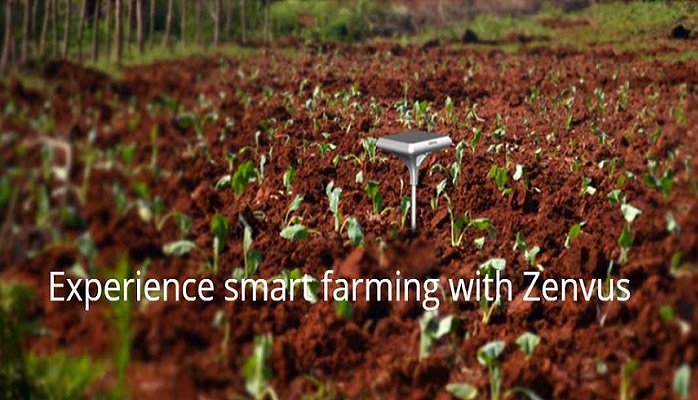
After eighteen months of engineering designs, I have launched the Zenvus Smartfarm. Zenvus Smartfarm is an intelligent solution for farms that uses proprietary electronics systems to collect soil data like moisture, temperature, nutrients, pH etc and wirelessly send them to a cloud server via GSM, satellite or Wifi. (Data can be manually accessed with in-built microSD). Algorithms in the server analyze the data and tell farmers on what, how and when to farm. Also, as the crops grow, the system deploys special cameras to build vegetative health of the farm for drought stress, pest and diseases etc. The cameras can be mounted on long sticks or drones. The goal is to transform farming into a business by making it data-driven over guesswork.  This improves productivity, reduces waste and increases yields.

I built a satellite interface to ensure every farm could be covered as most of the farms are out of GSM/3D coverage range. As I understood during my trip that some of the farmers have become bolder, I felt they could do more to transform farming into real business. So, relying on data collected from the inserted hardware, Zenvus supports different online services:

  • zManager is an electronic farm diary that helps Zenvus farmers record all phases of farming from planting through harvest to sales. It keeps all records – financial, staff, tools, etc in one secured place
  • zPrices empowers rural Zenvus farmers with real-time produce prices across major cities. It provides farmers with data to effectively negotiate prices with merchants who normally pay them little.
  • zCapital helps Zenvus farmers raise capital (loan or equity) by providing independent farm data from our sensors to help banks and investors evaluate overall profitability of farms.
  • zCrowdfund helps Zenvus farmers crowdfund capital from local donors who they can deliver produce after harvest. Our sensors validate these farms providing partners with confidence.
  • zInsure helps Zenvus farmers insure their farms by providing independent farm data from our sensors to insurers. This helps them evaluate the risks based on actual farm data.
  • zMarket provides a platform for Zenvus farmers to sell their produce. It is an avenue to expand their markets by removing geographic limitations. Farmers list their harvest days and buyers connect.

My goal is to make Zenvus the Facebook of Africa’s farm data where we will have data on every farm and transform agriculture. We will help farmers reduce waste, improve yields and accelerate productivity.  We have built 5,000 crop databases and have the capability to tell a farm the best crop for his farm based on many metrics which include weather, profitability, economic data, demographics and policy. It is deep machine learning and application of computational models in agriculture. I feel extremely positive because I visited my village last week and have the opportunity to on-board the devices to help the people that I love. Governments are interested and Zenvus Smartfarm will redesign African farming. Zenvus Web App works on both mobile and desktop devices.

I am looking for distributors who can expand our footprints across Africa. If you are interested, email zenvus@fasmicro.com.

Finally, to the beautiful Americans, thank you. You made this product possible via a generous USAID grant.

Brexit hits Nigeria as stocks fall, and investors losing money

0

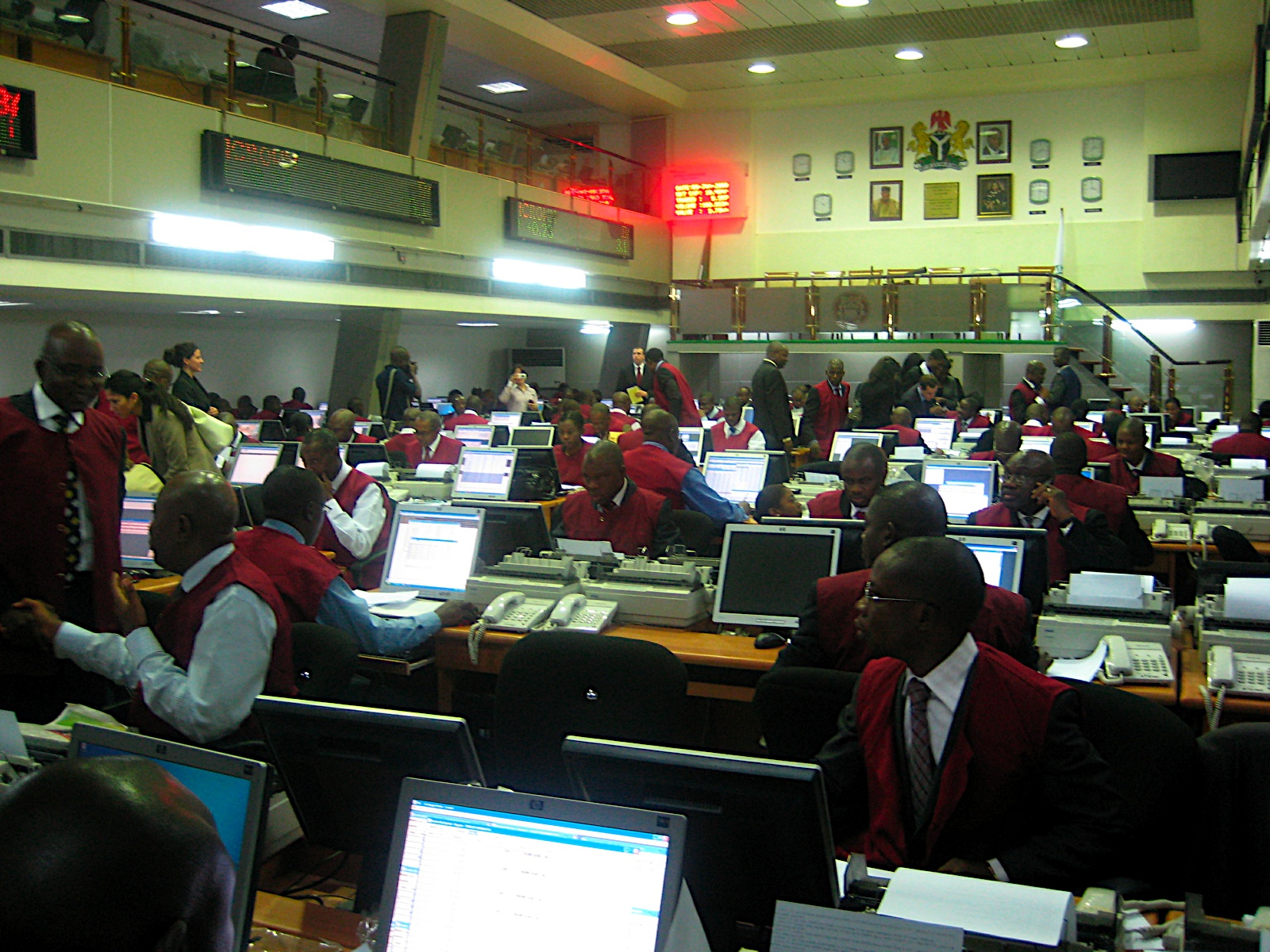
The Nigerian Stock Exchange market capitalisation on Monday dropped to N10.248tn from N10.526tn, while the All-Share Index also declined to 29,840.23 basis points from 30,649.66 basis points recorded on Friday.

A total of 40 stocks recorded losses, while 16 made the gainers’ chart.
The market recorded a turnover of N4.027bn from 375.221 million shares traded in 4,229 deals.

United Capital Plc, Zenith Bank Plc, Stanbic IBTC Holdings Plc, Forte Oil Plc and Seplat Petroleum Development Company Limited were the top five losers on the chart.

United Capital’s share dropped by N0.22 (7.94 per cent) to close at N2.32 from N2.52, while that of Zenith Bank lost N1.04 (6.12 per cent) to close at N15.96 from N17.
Stanbic IBTC also closed at N16.15 from N17, losing N0.85 (five per cent), while Forte Oil posted a decline of N10 (five per cent) to close at N190 from N200.

The share price of Seplat Petroleum fell to N331.60 from N348.97, losing N17.37 (4.98 per cent).

Other losers were Dangote Sugar Refinery Plc, Oando Plc, Ikeja Hotels Plc, Guaranty Trust Bank Plc, Diamond Bank Plc, Fidelity Bank Plc, Flour Mills Nigeria Plc, AG Leventis Nigeria Plc, Sterling Bank Plc and Unity Bank Plc, among others.

On Monday’s trading result, analysts at Vetiva Capital Management Limited said in the firm’s daily report, “Although we note the impact of broader downbeat global market sentiment, we believe today’s losses were largely fuelled by profit-taking across a handful of large cap stocks following the strength of the gains recorded in recent sessions. We think there’s still some room for profit-taking, and thus see a likelihood for another negative close in the session ahead.”