
DD
MM
YYYY

PAGES

DD
MM
YYYY

spot_img

PAGES

Home Blog Page 7550

The State of Crowdfunding Industry In Africa

0

Editor’s Note: This is a guest post by Scott Picken, Founder of Global Wealth Group

“Crowdfunding is coming to Africa, it is just a matter of time and we are so happy to have started the conversation with the authorities to ensure it is done safely and sustainably,” says Scott Picken, Founder and CEO of Wealth Migrate and one of the founding members of the African Crowdfunding Association. “Fundraising in Africa is part of our culture. From Harambee in Kenya and TZ, to  Agacira in Rwanda, Susu in Ghana and Nigeria to Ubuntu in South Africa coming together to help each other is what we do”, Kyai Mullei.

It is a global phenomenon and in 2014, KPMG, Deloitte, Accenture and Ernst & Young named it in the Top 10 Trends for 2015 as ‘key transformational and disruptive new technologies and business models’. One of the top four African banks (didn’t want to be named) recently verified it as their number one threat in 2016, if they do not adapt to the technological advancements.

According to Massolution (2015CF The Crowdfunding Industry Report), the global leader on research in crowdfunding, “Crowdfunding is being embraced by nations around the world to frame economic development programs. In 2014, the worldwide volume reached $16.2 billion, reflecting an annual growth percentage of 167%, which is an acceleration on the 125% growth experienced in 2013 on a funding of $6.1 billion. As the number of platforms increase and the size of campaigns and the diversity of asset classes becomes greater, we expect high growth to continue through 2015.” This has enabled projects and businesses to be started, jobs to be created and most importantly driven economies forward. A company like Kickstarter in the USA has been the catalyst for more companies to be started in 2014 than anything else. There was over $500 million invested, from 3.3 million people, bringing 22 252 projects to life. Just imagine the economic impact!

In 2015, Massolution is forecasting $34.4 billion will be raised via crowdfunding platforms, a 112% increase on 2014. North America will remain the largest market, but with continued explosive growth in Asia, Asia will remain the second largest market.

Different countries have handled it differently. China, has a policy on Internet + where they are actively encouraging economic development through e-commerce and see this as the way to adapt from a manufacturing economy to a knowledge economy. This is why there has been explosive growth in China, with strong government support. Malaysia has gone even further and on the 12th of February 2015 dropped all accreditation for crowdfunding. They are the most progressive country globally in crowdfunding, allowing anyone to invest in anything through accredited platforms. They have been working with Massolution to formalize all their policies and have a focused campaign to create 1 million new jobs through crowdsourcing over the coming years. Hopefully the presidents  and authorities in Africa can take note of how countries are creating real jobs in the 21st century.

Other countries have been slower on the up-take with America having been through a very thorough process over the last 3 years where really crowdfunding has only been available to accredited (wealthy) investors. On the 30th October 2015 they passed a Title III to remove these restrictions and allow unaccredited investors to also participate. Australia has been actively working through it’s legislation as to how to implement crowdfunding and protect their citizens. They have given clear guidelines as to what is legal and what is illegal and also when the legislation will be finalized. Unfortunately in South Africa and Africa at large we have not even started the conversation.

What is fundamental is that in every jurisdiction in the world, the regulators have worked with the industry advocates and stalwarts to ensure that the legislation is implemented safely and sustainability. Scott Picken is passionate about the intersection of technology, property and investment. Born in Durban, he did his honour’s dissertation at UCT in 1998 and Masters in London in 2001, on this topic, and has basically been working for 17 years on how technology could enhance the property and investment industry. He said, “It has been an extremely frustrating process as compliance is essential, but for more than 6 years it is like being a ping pong ball when trying to legally comply and bring this incredible technology to the people of South Africa. With Wealth Migrate, we are a global platform, the 10th biggest in the world according to 2015 Massolution Report, and yet we continue to find stumbling blocks in implementing it legally in South Africa. We decided to ensure we start the conversation in South Africa and Africa.

The Wealth Movement was held on the 8th and 9th of October 2015 and was the first African Crowdfunding event ever! We did get the authorities attention, with the FSB sending out a press release saying “Crowd funding is an activity that falls outside of the regulatory net of the FSB.” The African Crowdfunding Association (ACfA) founding members, Thundafund and Wealth Migrate, have together approached the FSB in order to work together to look at the regulatory frameworks.  “The Crowdfunding formula has proven to be highly successful and will open up new ways of attracting investment on one hand while providing access to funds on the other in Africa. This will generate liquidity, inspire creativity and boost innovation on the continent”, Patrick Chella, Co-founder & CEO, Realty Africa. The ACfA said, “It is our duty to ensure these technological gains come to our continent.”

As a founding member of the ACfA, Scott Picken hopes that they will be able to follow in the footsteps of all the other crowdfunding associations around the world to bring this technology to South Africa and continent as quickly as possible. He says, “It should be easier than anywhere else in the world as South African’s have had Stokvel’s for a very long time. It is estimated that one in every two black adult South Africans is a member of at least one of 89 000 stokvels. Black adult South Africans invest approximately R12 billion in stokvels a year. All crowdfunding is, is a stokvel with technology.”

Stokvel’s or the ancient chinese tradition of Biau-whey have been used culturally for centuries and are based on three fundamentals; trust, transparency and alignment. Crowdfunding is exactly the same and it is just enhanced with technology. However, similar to Uber, it cuts out all the middlemen, reduces the costs dramatically, increases the efficiency and the accessibility. Overall it enhances the overall experience. When you look at property investment, most investors never generate the wealth or returns the top 1% do and this is because they go through investment vehicles with multiple middlemen. In fact the average investment vehicle has 16 middlemen who are vastly diluting the returns with fees. Real Estate Crowdfunding and companies like Wealth Migrate, RealtyAfrica or RealtyWealth, use technology, just like Uber, to vastly enhance the experience and reduce the fees, ultimately allowing investors far better returns in the long term. And as for safety, just like with Uber, AirBnB, TripAdvisor, E-Bay or any other technology platform, social proofing or the crowd gives investors far more insight into the digital track record of the provider, which will provide better safety in the long term.

On top of this, companies like Wealth Migrate use their extensive property experience of facilitating investments of more than $1.34 billion on 5 continents over the last few decades. As Scott Picken says, “It is not only about technology, it is about understanding the fundamentals of property investment. Technology enhances the process but the fundamentals of investment remain the same.”

This is not just for individuals, investors or government’s, this is also for big business!

As Massolution says, “No financial institution can be misinformed about crowdfunding, as it now provides both competitive and promising new opportunities to banks, investment houses, and financial intermediaries.

Large corporations have also got involved like, CocaCola, Nike, ABN Amro, P&G, General Mills, and Crysler, to name a few, have deployed crowdfunding and crowdsourcing strategies to garner closer relationships, leverage their R&D portfolios, and capture intelligence from their users. This is considered ‘co-creation’ or ‘bottom-up economy’ corporations which will enhance crowd engagement as a fundamental strategy.

Scott Picken who has been invited to speak about crowdfunding all over the world, was recently invited by a representitive of the World Bank to speak at the first crowdfunding event in China. He said, “What is truly amazing is that in the first world crowdfunding is a ‘nice to have’ whereas in the emerging world it is a ‘necessity’.” This is why in the 2014 Massolution Crowdfunding report they predicted that the greatest growth globally in crowdfunding would come from the emerging economies. Patrick Schofield, CEO and co-founder of Thundafund said, “We see crowdfunding as the democratisation of financing for entrepreneurs”. “Thus far we have been thrilled to see the outpouring of African and global support for African entrepreneurs that have had the courage to launch new ideas into the world. There are so many inspiring entrepreneurs in Africa who could do so much to change the world with access to capital. Crowdfunding is the next-gen solution to Africa’s development agenda”

Scott Picken and the team at Wealth Migrate are also some of the leaders driving the Wealth Movement, whose mission it is to empower a billion people by 2020. “Most people think we are stark staring mad, but when you consider there are 579 million people on WeChat alone, 1.3 billion in China, a billion in India and a billion in Africa, why can we not provide education and opportunities to these people through their cell phones, greatly enhancing their lives. According to the World Economic Forum, Davos, Switzerland 2014, The Wealth Gap is our greatest challenge. According to Credit Suisse report, October 2015, half of all global wealth now rests in the hands of 1 per cent of the world’s population as inequality between the rich and poor continues to grow. At the Wealth Movement, and with companies like Wealth Migrate and Wealth Create, we plan on solving this global challenge. Please support us and let’s create a better and more sustainable planet for all.”

“I truly believe this is no different from what happened to Henry Ford in the early 1900’s. He was consistently impeded in bringing cars to the common man, rather than only being accessible to the ultra wealthy, but he stuck to his belief that it was their right and a necessity. Not only did he achieve it, empowering an entire middle class, he also changed the face of American history and revolutionized transportation as we know it. Click here to read the full story – Why can we not do the same for property investment, investment at large and wealth?”

In closing, Scott Picken, urges all crowdfunders and the regulators to get engaged in the conversation as it is essential for the citizens of South Africa and Africa. “My belief is that as long as you put the investors interests first, then technology will be able to facilitate a safe and trusted solution, which will be sustainable for the future.  Crowdfunding will change the world as we know it, just like electricity, petrol or cars. We ask you to support us in the African Crowdfunding Association and make this technology a reality on a continent which arguably needs it the most!”
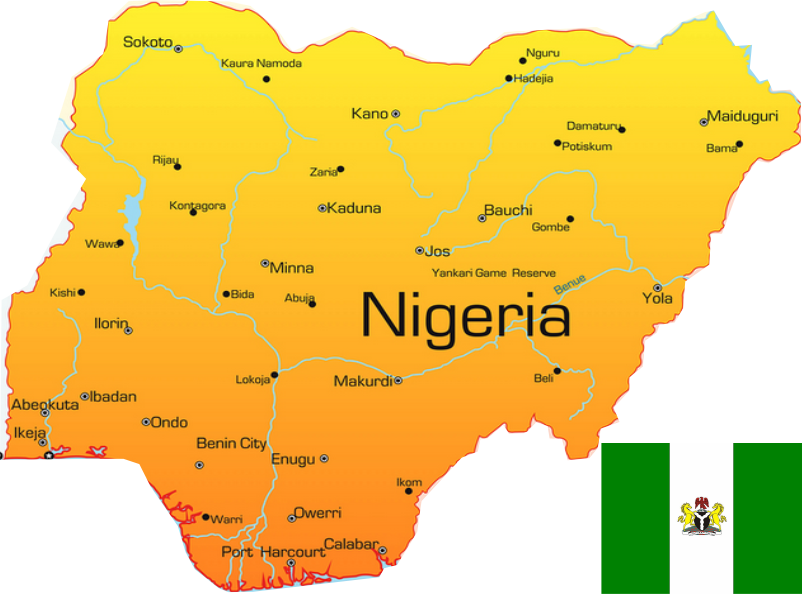
Buhari Ministers, states and their portfolios for Nigeria

0

SN NAME STATE PORTFOLIO
1 Okechukwu Enelamah Abia Minister for Trade and Investment
2 Muhammadu Bello Adamawa Minister of Federal Capital Territory
3 Udoma Udo Udoma Akwa Ibom Minister of Budget and National Planning
4 Chris Ngige Anambra Minister of Labour and Employment
5 Heineken Lokpobiri Bayelsa State Minister for Agriculture
6 Adamu Adamu Bauchi Minister of Education
7 Audu Ogbeh Benue Minister of Agriculture and Rural Planning
8 Mustapha Baba Shehuri Borno State Minister for Power, Works and Housing
9 Usani Uguru Cross River Minister of Niger Delta
10 Ibe Kachikwu Delta State Minister of Petroleum
11 Ogbonaya Onu Ebonyi Minister of Science and Technology
12 Osagie Ehanire Edo State Minister for Health
13 Kayode Fayemi Ekiti Minister of Solid Minerals
14 Geoffrey Onyema Enugu Minister for Foreign Affairs
15 Amina Mohammed Gombe Minister for Environment
16 Anthony Anwuka Imo State Minister for Education
17 Suleiman Adamu Jigawa Minister of Water Resources
18 Zainab Ahmed Kaduna State Minister, Budget and Planning
19 Sen Hadi Sirika Katsina State Minister of Transport (Aviation)
20 Abdulrahman Dambazau Kano Interior Minister
21 Abubakar Malami Kebbi Minister of Justice
22 James Ocholi Kogi  Minister of State for Labour and Employment
23 Lai Mohammed Kwara Minister of Information
24 Babatunde Fashola Lagos Minister of Power, Works and Housing
25 Ibrahim Usman Jibril Nasarawa State Minister for Environment
26 Abubakar Bawa Bwari Niger Minister of State, Solid Minerals.
27 Kemi Adeosun Ogun Minister of Finance
28 Cladius Omoleye Daramola Ondo State Minister for Niger Delta
29 Isaac Adewole Osun Minister of  Health
30 Adebayo Shittu Oyo Minister of Communication
31 Solomon Dalong Plateau Minister of Youth and Sport
32 Rotimi Amaechi Rivers Minister of Transportation
33 Aisha Abubakar Sokoto State Minister, Trade and Investment
34 Aisha Alhassan Taraba Minister of Women Affairs
35 Khadija Bukar Ibrahim Yobe State Minister,  Foreign Affairs
36 Dan Ali Zamfara Minister of Defence

Case Study: Fab – How Did That Happen?

1

Recent reports in the press about the problems Fab is facing got me thinking about the lessons one might learn from its meteoric rise and spectacular crash. Professional investors always give this disclaimer; Past performance does not necessarily guarantee or predict future results. Similarly, Fab’s experience is not necessarily a precedent that will always be proven true. However, it is my responsibility as an investor to try to update my understanding of how what has happened to Fab should influence the investment choices I make in the future, after all that is one aspect of my fiduciary responsibility to the KEC Ventures’ limited partners.1

In this case study will I examine; Fab’s market, Fab’s business model and some risks inherent to that business model, the competitive landscape it faced, Fab’s history as reported in the press, and last I will outline some lessons early stage investors might draw from Fab’s experience.2

Fab was founded as a social network for gay men in 2010 by Jason Goldberg and Bradford Shellhammer. It pivoted in June 2011 and adopted an e-commerce business model focused on selling a wide range of products to individuals on the basis of daily design inspiration. It became immensely popular, and within a month of its launch reports suggested it had more than 350,000 members and that it processed more than 1,000 orders each day. It’s membership was growing at a rate of about 5,000 new members per day.3

The E-commerce Market

Fab entered the e-commerce market selling directly to the individual consumer. E-commerce is an enormous market according to estimates from eMarketer. The chart below provides a sense of the size and scale of the market.

The following table provides an estimate of the distribution of b2c e-commerce sales by region.

Evidently, e-commerce is a large, and quickly growing market. Global growth will be driven by increasing economic prosperity in China, India, Argentina, Brazil, Russia, Italy and other markets in which e-commerce has not yet reached maturity. At the time it launched Fab seemed well positioned to exploit the expectations of future growth in e-commerce sales in North America, and in other parts of the world.

You might guess that e-commerce is a fiercely competitive market. Fab faced direct competition fromFancy, Achica, Hay Needle, Rue La La, Open Sky, Etsy, Beyond The Rack, Gilt Groupe,Rent The Runway,Zulily, Ideeli, Privalia, and Touch of Modern, among others.4

Fab’s Business Model

Fab built a classic e-commerce market-place. It acted as a curator of products characterised by “great design” where what qualified for that categorization was determined by Bradford Shellhammer’s taste and design sensibility. For example, consider this description of the process by which products featured on Fab were selected;5

He’s demonstrating the “Beach Thingy,” a flat, brightly colored plastic back of a chair with two spikes that anchor it in the sand. One of the buyers says it’s just a piece of plastic. Shellhammer disagrees. “It’s perfect because you can lay your towel down and slide up or down. And with a stomach like mine I hate getting in and out of the chair and having to suck it in. It’s perfect. This is why I’m a good salesperson,” he says, laughing.

The buyers take turns pitching Shellhammer stuff they think belongs on Fab.com, which means almost anything: cutlery, T-shirts, dog food bowls, wall planters and wine refrigerators. The common denominator is that it has to be something Shellhammer likes, which usually means brightly colored, whimsical, something you haven’t seen before, from a young designer no one’s heard of. When a buyer strikes his fancy, approval comes punctuated with “Love!,” “Holy sh-t!”, “Very nice!” or all three.

Simply put, on one side of the market Fab created a community of product designers from whom it curated the products that it would present to its members. On the otherside Fab developed a community of users or members who were the consumers of the products produced by the designers. Fab ensconced itself between these two groups and acted as a platform facilitating the interactions between them. In exchange, Fab collected fees for each transaction that it facilitated. Fab took care of logistics, transaction processing, customer relations, and marketing. It could do this by building proprietary systems, or by partnering with providers of modular solutions and other services which it could incorporate within its “platform” for a fee. For example, it might use the payment processing technology developed by another startup, and rely on drop-shipping services from UPS, FedEx, USPS or another shipping service. Fab’s business model combined product curation with flash-sales. Presumably, the trend that made such business models popular between 2010 and 2013 was based on consumers’ desire to acquire social status through the discovery of unique, exciting, scarce, exquisitely designed, and affordable products. The flash-sale mechanism was used to create a sense of urgency in order to drive purchasing behavior. Every day Fab would send an email to its members in which the flash-sale of that day was announced.

In 2012 my colleagues and I were studying an investment in Ideeli. As part of our analyses we debated the merits of the business model I have described. On one occasion, we were discussing Fab with an early stage venture capitalist based in New York City who was paying us a visit at our office in Manasquan, New Jersey. He told us Fab would easily justify its status as a billion dollar company and even exceed that by a mile because of its design-centric approach. In his words; “I actually want to open my email from Fab because I know I will always get great design.” In his defense, Fab’s founders confidently echoed that sentiment in interviews; Forbes reported that Jason Goldberg, the CEO, said;

What hadn’t been done is bringing excitement to ecommerce. Not just commodity items.6

The same article quotes Bradford Shellhammer as saying;

The product assortment is very emotional. That’s why we feel this business is very hard to replicate.

I had severe doubts about that aspect of the business model. The question I asked myself was this; Do people open the daily emails from Ideeli impulsively as a form of transient self-entertainment in the absence of a more interesting alternative, or is there something fundamental about human nature that ensures that people will continue to behave in ways that make that kind of business model viable over the long term? No one could give me a satisfactory answer so I argued against making an investment in Ideeli.7

Fab integrated social networking in its business model. At one point as many as half of its users had come through social networking. People would make a purchase on Fab.com and then share the news about that purchase with their friends on Facebook and Twitter. It incentivized people with a $5.00 credit to use on the website if they allowed their purchases on Fab to be automatically shared to their social networks.8

The results were phenomenal. Fab reported $100 million of sales within a year of going into business, after growing to more than a million members between June and September of 2011.A year later Fab removed the requirement that individuals had to become registered members of Fab.com in order to browse products. This happened even though it had grown its membership to 1M faster than Facebook, Twitter and Groupon and said it had more than 10M members by December 2012.

On the strength of that performance, Fab raised a $1M seed round in July 2011. That was followed by a $7.7M Series A at a $20M valuation and then a $40M Series B at a $200M valuation, in August and December respectively of that year. It raised a $105M Series C tranche in July 2012, and a $15M tranche in November that year, at a $600M valuation. Between June and August 2012 it raised a $165M Series D in three tranches. The valuation for the Series D was reportedly between $1B and $1.2B. Its sales at the time were reportedly around $115M, giving it a price-to-sales multiple between 8.7x and 10.4x. Altogether, it raised $336.3M.9

External signs that Fab’s rocket engines were beginning to sputter and fail started appearing in 2013; in July it laid off 100 employees in Berlin and moved others to New York, in October it cut 20% of its worldwide workforce by eliminating 101 jobs. It also made a pivot from the flash-sales model. Bradford Shellhammer left the company around that time. In May 2014 rumours about further lay-offs began circulating in the press, suggesting that as many as 60 of its 305 employees would be let go. Most recently it is reported that Fab has slimmed down to 25 employees, that it was burning $14M per month at its peak, and that some of its problems began because it only secured half the amount of capital it originally set out to raise in its last round. Yet other reports suggest Fab might be sold for as little $15M.

So what went wrong?

What questions might have suggested to Seed and Series A investors that the realities Fab is facing today had more than 50% probability of becoming the reality within their investment horizon?10

The study of economic moats is useful in trying to avoid making investments that evaporate into thin air before the investor has harvested returns. In this case the investor would be performing a forward-looking assessment. But first, what is an economic moat? An economic moat is a structural feature inherent to a company’s business model which protects it from the deleterious effects of competition. Economic moats help companies preserve and sometimes enhance the advantages they enjoy over their competitors. There are five ways in which a startup can build an economic moat; Branding, Intellectual Property or Intangibles, Efficient Scale or Cost Advantages, Network Effects, and Switching Costs or Buyer Lock-in.

Let’s quickly go through each of these for Fab, remember that we are pretending this is 2010/2011 and that we are studying Fab for a Seed or Series A investment.

  • Brand: High; because consumers have come to associate Fab with great curation, great content, and great design.
  • Intellectual Property or Intangibles: Low, or non-existent; because there’s nothing proprietary about what Fab is doing, contrary to the claims made by Messrs. Goldberg and Shellhammer. Other great designers would be able to replicate what Fab is doing. The notion that Fab could develop a monopoly on emotionally inspiring design is specious at best. Also, Fab failed to fully harness technology to its advantage by operating with a relatively low level of automation.
  • Efficient Scale or Cost Advantages: Low, or non-existent; the use of social channels only confers an advantage for as long as other startups do not incorporate those methods into their marketing and sales processes. Moreover, there is no way to create exclusive relationships with the social networks through which Fab acquires users without incurring high sales and marketing expense.
  • Network Effects: Low, or non-existent; popularity in-and-of itself does not reflect the existence of network effects. Neither does virality point to the existence of network effects. In fact, one might argue that businesses like Fab exhibit a negative network effect – each individual user has a less enjoyable experience as the user base grows if social status is in fact a key driver of Fab’s relationship with its members or users.
  • Switching Costs or Buyer Lock-in: Low, or non-existent; because members suffer little to no pain if they decide to stop using Fab and instead take their consumption to one of its competitors.

The conclusion one draws from the preceding analysis is that although Fab appeared to have found a way to grow remarkably fast, that growth could end in very short order. Of equal concern, Fab’s business could deteriorate just as fast as it had grown, if not faster.

Another way to look at the issue is this; In the absence of its near-irresistibly seductive revenue and user growth would Fab be the kind of business that the Seed or Series A investor would be comfortable owning for 10 years or more?

Conclusion

So perhaps one is asking the wrong question when one asks “What went wrong?” or “How did that happen?” in reference to Fab. A more appropriate question might be; “Why did investors believe a startup with no inherent advantage over its direct and indirect competitors could defy the gravitational forces of competition and changing consumer tastes?”

For that answer, you’d have to speak with one of Fab’s investors.


  1. Any errors in appropriately citing my sources are entirely mine. Let me know what you object to, and how I might fix the problem. Any data in this post is only as reliable as the sources from which I obtained them.
  2. I do not have the benefit of knowing anyone at Fab. This post is based entirely on public information. My employer KEC Ventures is an investor in JustFab. We made that investment in 2014. Fab and JustFab sued one another in 2013.
  3. Tricia Duryee; Flash Sales Site Fab.com Raises $8 Million to Be a Step Up From Etsy. Accessed online on Nov. 27, 2014.
  4. There are too many indirect competitors to count.
  5. Tomio Geron. From Gay To Pay: How Fab.com Became The Hottest Online Retailer. Accessed Nov. 27th, 2014.
  6. Tomio Geron. Fab.com Aims For Amazon-Sized Business. Accessed on Nov. 27th, 2014.
  7. My concerns were amplified once I performed some financial statement analysis. That exercise confirmed my suspicions; among other things, it failed my tests of its earnings quality. Each of my two other colleagues at the time had also reached a “Don’t invest.” conclusion by looking at Ideeli from other angles.
  8. Kristen Nicole. How Fab.com Brainwashed Me Into Broadcasting What I Buy. Accessed on Nov. 27th, 2014.
  9. I obtained this data from CBInsights and Crunchbase.
  10. In performing my assessments of early stage startups KEC Ventures might invest in I assume we will hold a Seed or Series A investment for at least 10 years. Also, I assume we will not be in a position to engineer a favorable exit within that horizon. ?

Agricultural policies in Africa could be harming the poorest

0

Agricultural policies aimed at alleviating poverty in Africa could be making things worse, according to research by the University of East Anglia.

Published this month in the journal World Development, the study finds that so-called ‘green revolution’ policies in Rwanda – claimed by the government, international donors and organisations such as the International Monetary Fund to be successful for the economy and in alleviating poverty – may be having very negative impacts on the poorest.

One of the major strategies to reduce poverty in sub-Saharan Africa is through policies to increase and modernise agricultural production. Up to 90 per cent of people in some African countries are smallholder farmers reliant on agriculture, for whom agricultural innovation, such as using new seed varieties and cultivation techniques, holds potential benefit but also great risk.

In the 1960s and 70s policies supporting new seeds for marketable crops, sold at guaranteed prices, helped many farmers and transformed economies in Asian countries. These became known as “green revolutions”. The new wave of green revolution policies in sub-Saharan Africa is supported by multinational companies and western donors, and is impacting the lives of tens, even hundreds of millions of smallholder farmers, according to the study’s lead author Dr Neil Dawson.

The study reveals that only a relatively wealthy minority have been able to keep to enforced modernisation because the poorest farmers cannot afford the risk of taking out credit for the approved inputs, such as seeds and fertilizers. Their fears of harvesting nothing from new crops and the potential for the government to seize and reallocate their land means many choose to sell up instead.

The findings tie in with recent debates about strategies to feed the world in the face of growing populations, for example the influence of wealthy donors such as the Gates Foundation, initiatives such as the New Alliance for Food Security and Nutrition, and multinational companies such as Monsanto in pushing agricultural modernisation in Africa. There have also been debates about small versus large farms being best to combat hunger in Africa, while struggles to maintain local control over land and food production, for example among the Oromo people in Ethiopia, have been highlighted.

Dr Dawson, a senior research associate in UEA’s School of International Development, said: “Similar results are emerging from other experiments in Africa. Agricultural development certainly has the potential to help these people, but instead these policies appear to be exacerbating landlessness and inequality for poorer rural inhabitants.

“Many of these policies have been hailed as transformative development successes, yet that success is often claimed on the basis of weak evidence through inadequate impact assessments. And conditions facing African countries today are very different from those past successes in Asia some 40 years ago.

“Such policies may increase aggregate production of exportable crops, yet for many of the poorest smallholders they strip them of their main productive resource, land. This study details how these imposed changes disrupt subsistence practices, exacerbate poverty, impair local systems of trade and knowledge, and threaten land ownership. It is startling that the impacts of policies with such far-reaching impacts for such poor people are, in general, so inadequately assessed.”

The research looked in-depth at Rwanda’s agricultural policies and the changes impacting the wellbeing of rural inhabitants in eight villages in the country’s mountainous west. Here chronic poverty is common and people depend on the food they are able to grow on their small plots.

Farmers traditionally cultivated up to 60 different types of crops, planting and harvesting in overlapping cycles to prevent shortages and hunger. However, due to high population density in Rwanda’s hills, agricultural policies have been imposed which force farmers to modernise with new seed varieties and chemical fertilisers, to specialise in single crops and part with “archaic” agricultural practices.

Dr Dawson and his UEA co-authors Dr Adrian Martin and Prof Thomas Sikor recommend that not only should green revolution policies be subject to much broader and more rigorous impact assessments, but that mitigation for poverty-exacerbating impacts should be specifically incorporated into such policies. In Rwanda, that means encouraging land access for the poorest and supporting traditional practices during a gradual and voluntary modernisation.

‘Green Revolution in Sub-Saharan Africa: Implications of Imposed Innovation for the Wellbeing of Rural Smallholders’, Neil Dawson, Adrian Martin and Thomas Sikor, is published in World Development.

Paga Poised To Become Nigeria’s First Unicorn with $1 Billion Valuation

0

Paga, Nigeria’s foremost mobile money transfer firm has raised $13 million in new capital.

The Series B financing was led by Adlevo Capital, a Mauritius-based private equity fund manager, with participation from Omidyar Network, Goodwell West Africa, Acumen Fund, and Capricorn Investment Group. Jeremy Stoppelman, a co-Founder and CEO of Yelp also invested in the new round.

According to Tayo Oviosu, Paga’s founder and CEO, the new funds will be used to improve on its peer-to-peer payment platform.

“Our recent financing will help us continue to build towards our vision and support the strengthening of our agent network,” Oviosu said in a press statement.

Previous investors in Paga include Jim O’Neill, a former Chairman of Goldman Sachs Asset Management and venture capitalist Tim Draper of Draper Fisher Jurvetson.

Paga now has over 3.4 million users and 3,600 SME clients and over 8,850 agents across Nigeria. In September Oviosu announced on Twitter  that Paga has processed over $1billion in transactions value from 17 million transactions, which is a huge milestone.

This company is certainly going to become a unicorn very soon.