
DD
MM
YYYY

PAGES

DD
MM
YYYY

spot_img

PAGES

Home Blog Page 7638

Challenges Facing New African Businesses

0

Editor’s Note: This piece was contributed by Eve Pearce

There has rarely been a better time to start a new business within Africa. With a few exceptions, the economies of Africa’s major nations are on the up. Despite a recent slowdown in the continent’s general economic rise, the future looks rosy. Little wonder that brand new business people are seizing the chance to let their entrepreneurial spirit take the reigns. However, it’s not all smooth sailing. There are still lots of challenges to overcome if your fledgling business is going to make it in the African economy.

Financing

You have to have money in order to make money, as the saying goes. Unfortunately, it’s true. While you can build yourself up from scratch, it helps if at some point during that process you’re able to save up enough money to get yourself to the next level. Hand-to-mouth operations simply don’t progress. Finding the funds to set up or advance a business is a major headache for plenty of African entrepreneurs. Having been in the economic doldrums for some time, many African nations simply don’t have the resources (yet) to offer the kind of monetary grants and fiscal incentives which other nations can throw at new businesses. A lack of funds for new ventures is, therefore, something of a challenge. However, it’s not an insurmountable one. There are funds out there for those who have the time, guts, and tenacity to hunt them down. And, as our economic climb continues, it’s likely that more grants etc will be made available. In the meantime, however, a lack of basic funds throws up all kinds of challenges for new African businesses – particularly when combined with other problems which first-time ventures may encounter. Anything is surmountable with enough money. Unfortunately, enough money is precisely what a lot of new African entrepreneurs do not have.

Risk

Somewhat related to a lack of funds is the presence of great risk for new African ventures. Without a financial cushion or other such provisions to bolster your business, the prospect of financial ruin in the face of trials looms large. Businesses which have the resources to stand firm during the inevitable hard times are at a considerable advantage. Unfortunately, many African start-ups do not have the resources to put funds aside, and may lack the know-how required for effective crisis-management. Added to this is the fact that insurance is either expensive or unavailable for many new African businesses – and that many African entrepreneurs do not trust either banks or insurance companies. While there may be good reason for this, it does leave them high and dry when disaster strikes. Sure, taking the risk and striking out without a strategy or resources set aside for hard times can pay great dividends. But it can also destroy your business. When the stakes are this high, it’s well worth putting a risk-management strategy in place. Apart from anything else, doing so will reassure potential customers  and investors that you and your business are a safe pair of hands with which to trade.

Infrastructure

Companies starting up in the extensively developed Europe and Americas are generally able to plug themselves with ease into a network of well-established infrastructures. The work of providing communications links, transport connections, energy, and other such vital resources is largely already done for them. Not so in many parts of Africa. The untrammelled, unbeaten, undeveloped nature of the African continent is one of its greatest strengths – but it does present challenges for the fledgling business. Unless you’re setting up in a major city (or running the kind of business which doesn’t need a lot of infrastructure to operate) then it’s likely you’ll need to splash the cash on a private generator for power, and go to great lengths to transport products, staff, and resources – all of which puts running costs up considerably. Not to mention the immediate issues with sporadic internet access and negligible communications facilities in an age which is seeing businesses rely heavily upon the internet. Again, the infrastructures of many African nations are developing fast, allowing more and more startups access to the communications and resources that they need. However, in the meantime, those without the funds to provide their own infrastructure frequently find themselves struggling.
The divide in building a digital Nigeria

0

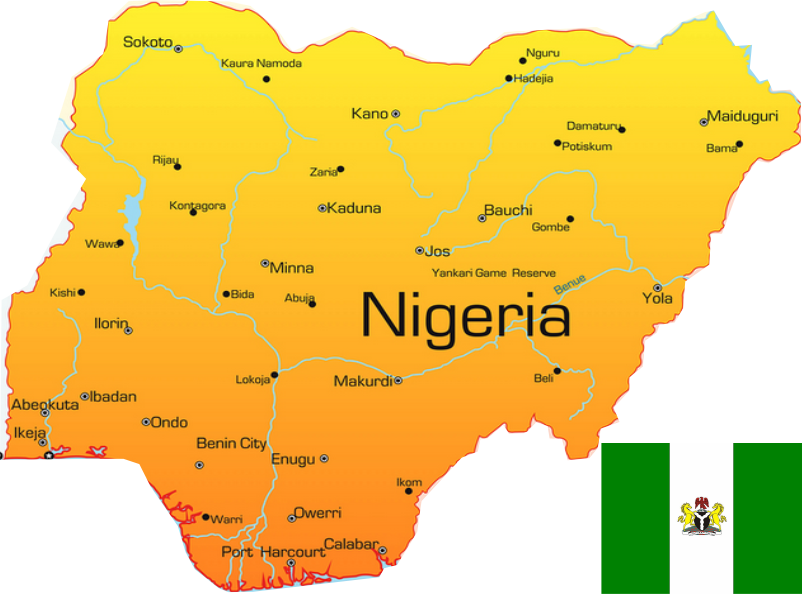
Building a digital Nigeria is an Economist Intelligence Unit report. The findings are based on desk research, interviews and fieldwork in Nigeria conducted by The Economist Intelligence Unit. The research was sponsored by Accenture.

With a GDP of $568 billion, Nigeria is Africa’s biggest economy. Home to more than 180 million people1 , it is also the continent’s most populous nation. Economic liberalisation has drawn investors from across the world, and the non-oil sector is growing at a healthy clip.

Digital technology is helping to drive growth in promising non-oil sectors, from media and entertainment to finance and fast-moving consumer goods. But while access to mobile and internet has increased steadily, it remains unequal. Low-income citizens, and those dwelling in rural and semi-urban regions, struggle to access these increasingly powerful services.

Improved access depends on Nigeria’s underlying ‘digital infrastructure’, which is affected by both sector-specific trends, and broader economic and political headwinds. This report, based on desk research and expert interviews, examines the role of digital in Nigeria’s current growth and the state – and future prospects – of its digital infrastructure.

Key findings: 

– Digital technology is essential for Nigeria’s economic diversification. Access to internet and mobile has improved markedly over the last decade, helping drive non-oil GDP growth. However, the country is still overly reliant on oil for public revenues and export earnings, and poverty rates are stubbornly high, suggesting the economic transformation has further to go.

 Nigeria faces a widening ‘digital divide’. ?While access to mobile and internet is increasing, this is largely among wealthier users with multiple devices and SIM cards, and is clustered in urban regions. Digital infrastructure, and thus access to internet, computing and mobile, lags in rural regions.

– In an era of low oil prices, the ICT sector is an important source of revenue for government: transparency and consistency are essential to balance fiscal needs with sector growth and investment.

The state of global fintech financing

0

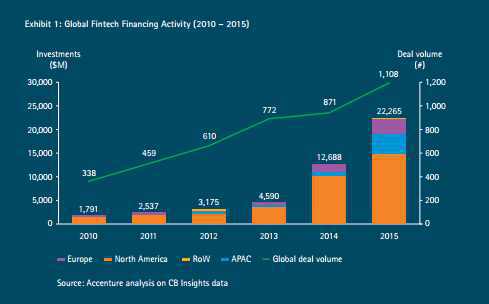
Accenture released its latest report on fintech, noting that “More than $50 billion has been invested in almost 2,500 companies since 2010”

Venture capitalists, private equity firms, corporates and a number of other players have poured an unprecedented amount of money into global financial technology (fintech) start-ups. More than $50 billion has been invested in almost 2,500 companies since 2010 as these innovators redefine the way in which we store, save, borrow, invest, move, spend and protect money.

This report analyses the latest global fintech trends, discusses the challenges and opportunities that fintech companies pose for banks, and looks at how the Google, Apple, Facebook, Amazon and Alibaba (GAFAA) are redefining the landscape and the pervasiveness of technology platforms.

Nigerian Oil And The Naira – Are We Heading For Currency Disaster?

0

Nigeria is one of the powerhouses of Africa, with a strong international profile. Ask any Westerner to name an African nation, and you can be sure that Nigeria will be one of (if not the) first to be mentioned. As a consequence, Nigeria has attracted a lot of welcome foreign investment over the last few years, which has caused something of an economic boom. Nigerian business has benefited greatly from this – despite political problems. However, recent developments may indicate that advance has come rather too fast, and the speed at which the economy has grown has left little time in which to shore up and protect the nation’s economic status. The plummeting prices of oil and a burgeoning instability with local currency the Naira is leading many Nigerian commentators to wonder if our economic boom was a metaphorical house of sand, about to crumble on its unsteady foundations.

The Oil Effect

The oil industry has always been one of boom and bust – but the downturn currently afflicting the industry is the worst for almost thirty years. A combination of factors has led to a slide in prices which is proving catastrophic for many related interests all over the world. With its enormous profits and many controlling interests, the oil industry is one of few which can alter the economic state of the entire world, and Nigeria in particular is currently feeling its effects. Nigerian and Saudi oil, once sold almost exclusively to the United States, is now branching out into other markets – and the action of market forces has thus caused competitors to drop prices in order to seem more appealing. This benefits motorists and those who routinely buy oil, but hits oil producing countries which may rely upon oil to underpin their economies hard. Many believe that oil prices will naturally recover as production slows – but others fear that this recovery will come too late for many Nigerians.

Slide Of The Naira

Understanding the serious impact the declining oil prices could have upon the Nigerian economy, the Central Bank Of Nigeria have issued a series of regulations designed to protect the Naira and reduce the potentially destabilising impact of foreign currency upon Nigeria’s own finances. They have also devalued the Naira to bring it in line with the international and internal economic situation, and to prevent such harmful economic phenomena as hyperinflation. Unfortunately, this has not translated well onto the streets – where the practical value of the Naira is higher than the banked value of it, leading a lot of people to make rather a lot of money in a very short space of time. What the CBN is trying to do may be admirable – to bolster and insure the currency against the vagaries of the market – but in reality a more advanced economic infrastructure is required if the currency is to withstand the storms of international finance. Just like a business without insurance, the currency is very vulnerable to financial shocks and buffets. The Nigerian currency needs to be able to stand on its own two feet – which will take a good deal more controlled and progressive economic development.

Economic Diversification

If the Naira is ever going to become a world-beating currency, able to compete against the dollar, the pound, and the yen, it will need to be able to test itself in the international market. Without foreign interchange of currency, the Naira will be unable to strengthen itself and flex its muscles in the currents of international finance. While CBN intervention has occurred for the best reasons, the economic reality is that the Naira is already vulnerable to the vagaries of the international market (as the disparity between its banked and street value demonstrates). Surely it is better to give the Naira its head and let it fight its own battles rather than to coddle it within the ‘safe’ environs of Nigeria? The CBN is scared that Nigerians will turn to other currencies if the Naira is allowed to fall against the dollar and its compatriots – but this is precisely what will happen should the Naira become a ‘toy’ currency used only by Nigerian dignitaries and nobody else. Oil prices will recover, and when they do so Nigeria must take pains to set up a strong, solid economic infrastructure which will allow the Naira to float freely upon the international economic markets.

This was contributed by Eve Noble for Tekedia.

State of Nigerian Startups: Why our Entrepreneurs Need a Unicorn

0

For all the enthusiasm about the African technology scene, one thing has not happened. Africa does not have a unicorn – private company, largely technology firm, with a valuation of at least a billion dollars. Sure, the prospect of having a unicorn could be correlated with the size of the economy and the absence of it does not mean Africa is not trying hard enough. It is easier for U.S. to have many unicorns because the “economic forest” is so big to accommodate such special animal breeds.

Nevertheless, in this New Year, it is important to discuss the state of the entrepreneurial ecosystem and Africa’s path to owing the special animal. With the connectivity and transborder capabilities that information technology has provided in the world, the creation of innovative companies should not necessarily be discussed within the constructs of geography. As cloud computing redesigns the world of technology, anyone, anywhere, ideally could compete from any location on earth. This means that one does not have to be living in U.S., India, Western Europe, Japan or China to create a unicorn.  So, African entrepreneurs do not have a really valid reason for having not bred the animal in their garages or labs.

Good ideas like success have relations while bad ones are orphans. This means any African entrepreneur with a really transformative idea can see it scale globally and create enormous wealth for its stakeholders. The domicile to generate such ideas is now irrelevant because knowledge is freely shared as Internet has collapsed boundaries and provided means for people to collaborate seamlessly. Also, markets are now more accessible that an entrepreneur can design in one country with its main market in another.

Israel with its history of creating innovative technology companies has always seen U.S. as its primary market. African entrepreneurs can have the same philosophy. The problem though is not the understanding of the markets, rather, on the technical capabilities to engineer products and services with cross-border appeals.

An entrepreneur in Niger Republic with its $7.5 billion economy cannot ideally breed a unicorn if it focuses solely on Niger Republic.  But when it looks outside for its market, it improves its chances. But entrepreneurs in South Africa and Nigeria have the right markets for them to create unicorns as the economies are relatively large. The question then is why we are not close? Let us look at Nigeria; another day, we will consider South Africa and Kenya.

Interswitch, which processes payments for banks and owns a brand of debit cards in Nigeria, is one of the top technology brands in Nigeria. The company is rumored to be planning for IPO in London this year. When Helios invested $96 million in 2010 for 52% stake, the company was many multiples away from being a unicorn.  When you consider that E-Transact, a major competitor, has a market capitalization of N12.8 billion (about $60 million) in the Nigerian Stock Exchange, one will expect Interswitch valuation to have been fully priced when Helios invested.

Besides Interswitch, Konga is another important local technology company. During its last funding round, it was valued at $200 million, way below the unicorn cut-off. Furthermore, the valuation of Konga can be estimated by looking at public numbers from Jumia since both compete head-to-head (Jumia loses more money than it makes via revenue).  The public numbers on Jumia as reported by German Rocket Internet, the owners, shows that Konga is even over valued at $200 million. It is expected that the present currency crises, forex scarcity, etc will impact these companies negatively in the Nigerian market which is their largest.

For Pagatech, despite the parade of high quality investors, the firm cannot have a market valuation of more than $100 million when public-traded E-Transact is at $60 million. Pagatech has pivoted from its initial mobile money business to all kinds of electronic payment gateways. Though it has processed more than $1billion in transactions value from 17 million transactions, as at October 2015, the market has become more competitive with Konga moving into the sector and foreign entrants like WeChat, SimplePay etc all moving into the domain of facilitating and enabling electronic payments in Nigeria. The success of SystemSpecs on Remita which processes payments for federal government and its parastatals in Nigeria indicates that the bulk of the profits are outside the reach of Interswitch, Pagatech and others since the public spending at federal level is a big part of the economy. Losing Nigerian Customs, Securities and Exchange Commission, Corporate Affairs Commission, Industrial Training Fund, etc will mean Pagatech and others will have to focus on the private sector.

Incidentally, there is one technology company in Nigeria the blogosphere does not write a lot, that owner of Remita.  That is the SystemSpecs. SystemSpecs is an old company founded by one of the leading technology pioneers in Nigeria. He has more success than anyone in the technology sector in Nigeria at least within the constructs of creating value in the market. John Obaro, the Managing Director, has penetrated every corner of Nigeria’s economy with his products. He is known in governments and he has internal capital to finance PPPs (public private partnerships) which gives his company an advantage over start-ups. That advantage will be strategic as crude oil price continues to fall cushioning governments to seek partners that can fund projects and share revenue. The Remita business model came from that ideology – one that will drive the future in public sector at federal and state levels. How much does SystemSpecs worth? We put it at around $150 million because of the Remita contract with the Nigerian government.

Why? Because the public-traded technology integrator, Computer Warehouse Group is valued at $34 million. Though CWG does not compete directly with SystemSpecs, there is an indirect component since CWG specializes in representing foreign companies which offer similar services to what SystemSpecs offers. So, the $150 million we have for SystemSpecs is even generous.

For Omatek, Zinox and similar companies like Task Systems, the individual market valuation is below $20 million despite their obvious local popularities. Public-traded Omatek is valued at $7 million. The Nigerian Stock Exchange (NSE) has a reputation of diminishing the value of technology companies. It is either the analysts do not understand their values or that the companies have not produced results good enough to change that trajectory; both are of course interrelated.

Moving to the travel and transportation start-ups, Wakanow and Hotels.ng, the best optimistic valuations for these companies will be maximum of $10 million. Hotels.ng is rumored to have raised its last fund from Omidyar Network and EchoVC at about $4 million valuation. Wakanow, an online travel agent, sees competitions from all angles from Jovago to Trivago.

Kuluya, a game company, is valued at $2 million. Jobberman, the recruitment firm, which was acquired by One Africa Media got out early. Knowing that One Africa Media which owns Jobberman, Cheki, Private Property and other companies has a valuation of $557 million, we deduce the local firms are not even close to being a unicorn. ToLet, Dealdey, NGCareers, Drinks.ng, Oya, and Gloong are promising but none is estimated to be worth up to $3 million yet. Visit Tekedia directory for Nigerian start-ups and ICT firms. In the directory includes Printivo.com, the Nigerian online printing start-up that closed a seed round with EchoVC for the $200 million Nigerian sector. We estimate this company to have a valuation of at most $500,000.

Possibly, you are waiting for us to get to the big one – IrokoTV, the big money-raiser from Tiger Global and others until Konga crashed the records with $25 million.  IrokoTV is currently valued at around $50 million. And AppZone which is very profitable  in which South-Africa’s Business Connexion invested $6 million in 2014 is worth about $15 million.

Nigeria; Now what next? We are on track but still far from seeing a unicorn. We need the entrepreneurial hunters desperately to kill a unicorn because the earlier we can parade one in the Eagle Square Abuja, the easier it will become to have foreign and local investors come to the funding party. Let’s do it!