DD
MM
YYYY

PAGES

DD
MM
YYYY

spot_img

PAGES

Home Blog Page 77

MicroStrategy MSTR’s Performance is Tied to Bitcoin’s Price Swing

0

MicroStrategy (MSTR) stock has been experiencing significant downward pressure in February 2026, despite the company’s ongoing Bitcoin purchases.

MSTR’s value is heavily tied to its Bitcoin holdings, which total around 717,722 BTC acquired at an average cost of approximately $76,020 per coin. With Bitcoin trading in the mid-$60,000s, the company is sitting on billions in unrealized losses—estimated at $7–$8 billion.

When Bitcoin declines, MSTR’s stock often falls even harder due to its leveraged exposure, amplifying losses beyond the crypto’s drop; BTC down ~40% from highs, but MSTR down 60–70%. Recent buys, like the 100th purchase of 592 BTC for $39.7–$40 million, haven’t stemmed the tide because they occur amid BTC’s resumed selloff, further highlighting the underwater position.

The company funds its Bitcoin accumulation primarily through at-the-market equity issuances and convertible debt, rather than operating cash flow. This leads to shareholder dilution, as new shares are sold to raise capital, 297,940 shares sold to fund the latest buy. As MSTR’s multiple to net asset value (mNAV) hovers just above 1 (around 1.09), it can still issue shares, but at lower premiums, making future buys smaller and less impactful.

This creates a feedback loop: falling stock prices limit capital-raising ability, while dilution erodes per-share Bitcoin exposure. High-interest debt adds to concerns about sustainability, especially with $8.2 billion in total debt and maturing obligations. Indicators like the Chaikin Money Flow (CMF) show institutional investors are not accumulating MSTR shares, even after buy announcements—in fact, outflows often accelerate post-purchase.

Major funds have reduced or exited positions via 13F filings, signaling indecision and fear of a “doom loop” where leverage forces Bitcoin sales to meet obligations. This has compressed the stock’s premium to its Bitcoin NAV from peaks like 2.4x, making it less attractive compared to direct Bitcoin ETFs or other crypto treasuries.

Over 100 rivals have copied MSTR’s model, reducing its uniqueness. Short interest stands at 14% of market cap, partly driven by basis trades exploiting price gaps between MSTR and Bitcoin. Combined with broader crypto fear (Bitcoin at one-year lows), this adds selling pressure.

The stock is down ~12% year-to-date, ~17% in February, and on track for an eighth straight monthly decline, with some viewing it as overvalued despite the 62–75% drop from 2025 highs. Analysts note that buys don’t reverse the trend because they’re seen as “adding to a losing position.”

The buys aren’t boosting the stock because they’re overshadowed by Bitcoin’s weakness, dilution risks, and eroding investor confidence. MSTR acts as a magnified Bitcoin play, so without a BTC rebound, the slide persists.

The company’s strategy relies on raising capital through at-the-market equity offerings and issuing preferred shares or convertible debt to fund Bitcoin buys. Recent examples include selling ~297,940 shares to raise $39.7–$39.8 million for the 100th purchase.

This increases shares outstanding, diluting existing holders. When the stock trades near or below its net asset value; mNAV ratio ~1x or lower, lnew issuances become “mechanically dilutive,” reducing Bitcoin exposure per share. This creates a negative feedback loop: falling stock limits efficient capital raises, slowing accumulation and pressuring the stock further.

Long-term holders see reduced upside leverage to Bitcoin rallies; short-term volatility amplifies losses. Unrealized losses range from ~$7–$9 billion; some reports cite up to $9B+, reflecting fair value accounting introduced in 2025. Q4 2025 results showed a ~$17.4 billion unrealized loss on digital assets, contributing to a ~$12.44 billion net loss.

Heightens earnings volatility, erodes investor confidence, and raises questions about sustainability. While not realized (no forced sales yet), prolonged weakness could strain debt servicing or covenants if Bitcoin drops sharply further Michael Saylor has noted risks only materialize below ~$8,000 BTC.

MSTR has become one of the most heavily shorted stocks; short interest ~14% of market cap, topping lists for $25B+ equities. Major funds have reduced and exited positions per 13F filings and reports, with outflows accelerating post-buy announcements.

Basis trades and arbitrage exploit gaps between MSTR and direct Bitcoin exposure via ETFs like IBIT. Adds persistent selling pressure, compresses any premium previously 2x+, and makes rebounds harder without strong Bitcoin momentum. High shorts could fuel squeezes on BTC rallies but currently fuel bearish momentum.

United States and Israel Attacks on Iran Triggering Risk-on/off Sentiments

0

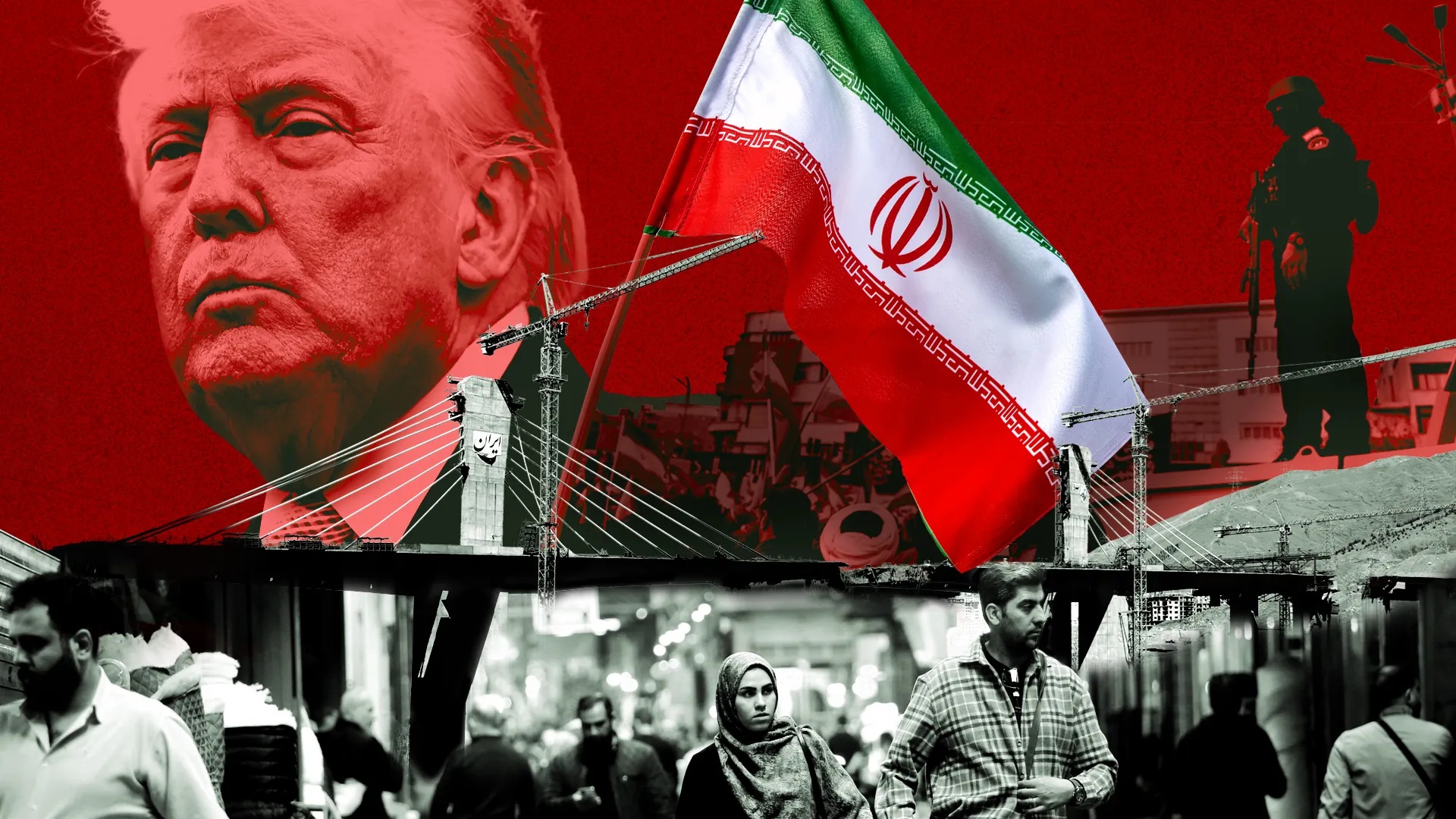
The United States and Israel launched a major joint military operation against Iran. This marks a significant escalation in the region, with strikes targeting Iranian leadership, military sites, nuclear-related facilities, ballistic missile programs, and other strategic locations.

The U.S. refers to it as Operation Epic Fury, while Israel calls it. Israeli strikes reportedly focused on high-level Iranian figures, including attempts on Supreme Leader Ayatollah Ali Khamenei, with some reports claiming he died during the onslaught.

U.S. efforts emphasized Iran’s nuclear and missile infrastructure. President Donald Trump posted a video statement confirming “major combat operations” are underway, framing it as necessary to eliminate threats from Iran’s regime, prevent nuclear weapon development, and create conditions for Iranians to potentially overthrow their government.

He urged Iranians to “take over your government” and seize their “destiny.” Prime Minister Benjamin Netanyahu and Defense Minister Israel Katz described it as a pre-emptive action after months of joint planning to remove existential threats. Strikes began early Saturday hitting cities like Tehran with visible smoke and explosions near leadership compounds, Isfahan, Qom, Karaj, Kermanshah, and others.

This follows failed recent indirect negotiations mediated in places like Oman over Iran’s nuclear program. Iran has launched retaliatory strikes, including missiles and drones targeting: Israel with interceptions reported over areas like Haifa. U.S. military bases and assets across the Middle East, including in Gulf states hosting American forces.

Reports mention hits or attempts on U.S. naval facilities and other sites, with explosions reported in those countries. Casualties have been reported on the Iranian side, including civilian deaths; one strike allegedly hit a girls’ school in southern Iran, killing dozens per state media. The situation remains fluid, with ongoing exchanges and potential for further escalation.

This builds on prior tensions, including a 2025 air conflict between Israel and Iran. Russia condemned it as “unprovoked aggression,” while some Gulf states expressed solidarity with affected neighbors but are on high alert. Rep. Thomas Massie publicly opposed the action, calling it not “America First” and pushing for a congressional vote under constitutional requirements.

This marks a direct escalation from prior shadow conflicts and the 2025 air exchanges, shifting to an explicit campaign targeting Iranian leadership, nuclear and missile infrastructure, and regime stability—with open calls for regime change from both President Trump and Prime Minister Netanyahu.

Iran has already retaliated with missile and drone barrages targeting Israel; impacts reported in Tel Aviv and US bases and assets in Gulf states (Qatar, Bahrain, UAE, Kuwait, Saudi Arabia, Jordan, Syria). Explosions and interceptions have occurred in multiple locations, including Dubai and Bahrain’s US Navy facilities.

Proxies like the Houthis have resumed Red Sea attacks, raising the specter of multi-front warfare involving Hezbollah, Iraqi militias, and others. Thousands of American troops and assets in the region are vulnerable to asymmetric Iranian responses; missiles, drones, proxy strikes. Trump has acknowledged potential US casualties, signaling this could become a prolonged campaign rather than a one-off strike.

Experts note Iran has prepared for this since earlier conflicts, likely responding with full missile arsenal use and asymmetric tactics. A restrained retaliation might limit scope, but broader targeting; risks drawing in more actors and turning this into a regional war.

Strikes aim to degrade Iran’s nuclear and ballistic programs, but prior assessments from 2025 exchanges suggest setbacks may be temporary, potentially accelerating Iran’s push toward weaponization if the regime survives. The explicit goal—creating conditions for Iranians to overthrow their government—echoes historical interventions but faces skepticism.

Analysts describe it as a high-stakes bet; success could reshape the Middle East by weakening Iran’s “axis of resistance,” but failure or a drawn-out conflict might rally hardliners, embolden anti-Western alliances, and fracture global order. Hosts of US bases condemned Iranian strikes as sovereignty violations while balancing self-defense and avoiding full entanglement.

They fear economic fallout from energy disruptions and may accelerate arms purchases or nuclear ambitions
Condemnations from Russia  China, and others; calls for restraint from EU leaders who urge renewed talks. Some Arab states express concern over escalation while aligning defensively with US and Israel interests.
Broader alliances could harden: potential for deeper Russia and China support to Iran, or shifts in global energy dependencies.

Iran controls key chokepoints; Strait of Hormuz carries ~20% of global oil. Disruptions—even limited—could spike prices, fuel inflation, and hit economies worldwide. This undercuts domestic US priorities like low gasoline prices. Shipping halts, airspace closures, and proxy flare-ups threaten global trade, supply chains, and markets.

Long-term conflict risks war fatigue in the US and Israel and domestic political backlash. Widespread sheltering, flight bans, and potential radiological risks if nuclear sites are hit. Strikes may unify the population against external aggression or spark unrest if leadership is weakened—but regime survival appears prioritized over concessions.

In the US, opposition from some Republicans questions constitutionality without congressional approval. Prolonged engagement could divide publics amid casualty risks. This remains a highly fluid, developing crisis with high potential for uncontrolled escalation.

Analysts warn of “wars of choice” often leading to unpredictable, costly outcomes—regional conflagration, economic shocks, and shifts in global power balances are all on the table. Live coverage from major outlets continues to track developments in real time.

The conflict has led to airspace closures, flight halts, shelter-in-place advisories including for U.S. citizens in Iran, and widespread regional fears of a prolonged war. The risk of broader regional involvement including proxies or other states remains high.

Anthropic’s Claude Surges to No. 2 on U.S. App Store After Trump Moves to Block Government Use

0

Anthropic saw its Claude artificial intelligence assistant climb to No. 2 among free U.S. apps on Apple’s App Store late Friday, just hours after President Donald Trump directed federal agencies to stop working with the company and the Pentagon moved to classify it as a supply-chain risk.

The sudden jump in consumer downloads followed a high-profile clash between Anthropic and the administration over the permissible use of AI in defense and surveillance contexts. The matter has thrust the startup into national headlines and appears to have amplified public awareness of its stated guardrails against mass domestic surveillance and fully autonomous weapons.

On Truth Social, Trump accused the company of attempting to “STRONG-ARM the Department of War,” the administration’s renamed Department of Defense, and said he was ordering a six-month phase-out of Anthropic’s technology across federal agencies. He warned that if the company failed to cooperate with the transition, he would use “the Full Power of the Presidency to make them comply, with major civil and criminal consequences to follow.”

Defense Secretary Pete Hegseth said he had requested Anthropic be labeled a national security supply-chain risk, a designation that could prevent U.S. defense contractors from using its AI tools in Pentagon-related work.

Anthropic CEO Dario Amodei responded that the company provides “substantial value” to the armed forces and expressed hope that the Department would reconsider. In a separate statement, the company said it would challenge any risk designation in court, arguing such a move would be legally unsound and set a dangerous precedent for American firms negotiating contract terms with the government.

“No amount of intimidation or punishment from the Department of War will change our position on mass domestic surveillance or fully autonomous weapons,” Anthropic said.

The controversy coincided with a sharp rise in Claude’s consumer visibility. On Saturday, OpenAI’s ChatGPT remained No. 1 on Apple’s U.S. free app rankings, while Google’s Gemini held the No. 3 position.

Claude’s ascent is notable given its historical position behind consumer-facing rivals. As recently as Jan. 30, Claude ranked No. 131 in the U.S., according to Sensor Tower data. It moved into the top 20 and top 50 intermittently through February before reaching No. 2 following Friday’s developments.

The spike suggests a potential “headline effect,” where regulatory scrutiny and political confrontation translate into consumer downloads. Public positioning around AI ethics—particularly opposition to autonomous weapons and domestic surveillance—has resonated with segments of users concerned about the rapid militarization of artificial intelligence.

High-profile social media attention added to the visibility. Pop singer Katy Perry posted a screenshot of Anthropic’s Pro subscription with a heart overlaid shortly after the administration’s announcement.

A widening divide over AI guardrails

The dispute centers on whether private AI companies can impose contractual restrictions on how their models are used by the military. Anthropic has sought explicit guardrails against mass domestic surveillance and fully autonomous weapons systems.

Pentagon officials have argued that U.S. law, not corporate terms of service, governs battlefield deployment. Hegseth said the Defense Department must retain flexibility in how it uses AI in national defense.

The administration’s move establishes a precedent: that federal authorities may sideline AI suppliers whose policy positions are viewed as constraining military autonomy. Legal analysts note that a formal supply-chain risk designation could bar tens of thousands of contractors from incorporating Anthropic’s models into defense-related workflows.

Franklin Turner, an attorney specializing in government contracts, described blacklisting Anthropic as “the contractual equivalent of nuclear war,” given the cascading implications for government and private-sector business.

Anthropic’s AI tools have already been used within the intelligence community and armed services, and the company was among the first to handle classified workloads via cloud provider Amazon.

Along Comes OpenAI’s Deal with the Defense Department

The administration’s action unfolded alongside an announcement from OpenAI that it had reached an agreement with the Defense Department to deploy its models within classified networks. OpenAI CEO Sam Altman said on X that the Pentagon’s principles for human responsibility over weapon systems and a prohibition on mass U.S. surveillance were incorporated into the contract.

It was not immediately clear how those contractual terms compare to Anthropic’s proposed guardrails.

The juxtaposition highlights a broader competitive race among major AI labs for defense contracts. The Pentagon has signed agreements worth up to $200 million each with leading firms, including Anthropic, OpenAI, and Google.

Anthropic, founded in 2021 by former OpenAI researchers, has gained traction over the past year as a provider of coding-focused and enterprise AI models. Meanwhile, OpenAI’s ChatGPT now reports more than 900 million weekly users globally. OpenAI has also expanded enterprise distribution through partnerships with consulting firms such as Accenture and Capgemini.

Anthropic’s financial backers include Google and Amazon, underscoring the interconnected nature of the AI ecosystem even as companies compete for government and commercial dominance.

National security and civil liberties debate

The standoff revives longstanding tensions between Silicon Valley and the Pentagon. In 2018, employees at Google protested the company’s involvement in Project Maven, a Defense Department effort to use AI to analyze drone footage. Since then, relationships have fluctuated between resistance and rapprochement, particularly as geopolitical competition with China elevated AI to a national security priority.

Former defense AI officials have warned that fewer guardrails could heighten concerns about due process, civilian casualties, and collateral damage in increasingly automated conflicts. Wars in Ukraine and Gaza have showcased expanded use of AI-enabled systems, intensifying debate about so-called “killer robots.”

Anthropic has argued that U.S. law has not fully caught up with AI’s capabilities. For example, current statutes do not necessarily prohibit aggregation of benign data to infer sensitive personal information at scale.

The White House’s intervention reframes the debate around sovereign authority: whether elected officials or private companies define the operational boundaries of military AI.

If the supply-chain risk designation proceeds, Anthropic could face immediate revenue losses from federal contracts and indirect impacts across defense-adjacent industries. The designation may also influence procurement decisions in allied countries.

At the same time, the controversy appears to have elevated Anthropic’s consumer profile. The company’s rapid climb in app rankings suggests that public opposition to certain defense uses of AI can translate into brand differentiation in a crowded market.

Nigeria posts 4.07% Q4 2025 growth as oil rebounds and services dominate output

0

Nigeria’s economy expanded by 4.07 percent year-on-year in real terms in the fourth quarter of 2025, according to the latest Gross Domestic Product report released by the National Bureau of Statistics (NBS).

The growth rate marked an improvement from the 3.76 per cent recorded in the corresponding quarter of 2024, pointing to stronger year-end momentum. Full-year real GDP growth stood at 3.87 per cent in 2025, up from 3.38 per cent in 2024.

In nominal terms, GDP rose to N122.81 trillion in Q4 2025, representing a 17.55 percent increase from N104.48 trillion in Q4 2024, reflecting both real expansion and underlying price dynamics.

The data show broad-based expansion across agriculture, industry, and services, with the services sector maintaining its dominant role in output composition.

Agriculture grew by 4.00 per cent year-on-year in Q4 2025, industry expanded by 3.88 per cent, while services rose by 4.15 per cent. Services accounted for 55.92 percent of total GDP in the quarter, reinforcing its position as the primary engine of economic activity.

Average daily crude oil production stood at 1.58 million barrels per day, slightly higher than the 1.54 million barrels per day recorded in Q4 2024 but below the 1.64 million barrels per day posted in Q3 2025.

Oil recovery lifts annual growth, but volatility persists

The oil sector recorded real year-on-year growth of 6.79 per cent in Q4 2025, a sharp improvement from 2.08 per cent in Q4 2024 and 0.95 percentage points higher than Q3 2025. For the full year, oil sector growth reached 8.50 percent, compared to 5.54 percent in 2024.

However, quarter-on-quarter data show that the oil sector contracted by 6.30 per cent in Q4 2025, underscoring continued volatility in output. While production improved on an annual basis, it remained sensitive to operational and structural constraints.

Oil contributed 2.87 percent to total real GDP in Q4 2025, compared to 2.80 percent in Q4 2024 and 3.44 percent in Q3 2025. For the full year, the sector accounted for 3.53 percent of GDP, slightly above 3.38 percent in 2024. These figures confirm that, although oil remains strategically important for fiscal revenues and foreign exchange, its direct contribution to GDP remains relatively small.

The non-oil sector continued to anchor the economy. It grew by 3.99 percent in real terms in Q4 2025, up from 3.80 percent in Q4 2024 and 3.91 percent in Q3 2025. In real terms, the non-oil sector accounted for 97.13 percent of GDP in the quarter and 96.47 percent for the full year.

Growth within the non-oil economy was driven by crop production, telecommunications, real estate, trade, financial institutions, construction, road transport, and food, beverage, and tobacco manufacturing. The breadth of these drivers suggests that domestic demand and services-led activity remain central to Nigeria’s expansion.

Medium-term outlook

The latest data have reinforced cautious optimism among multilateral institutions. The International Monetary Fund projects Nigeria’s economy will grow by 3.9 percent in 2025 and 4.2 percent in 2026. The World Bank has maintained a 4.4 percent growth forecast for 2027 and upgraded its 2026 projection to 4.4 percent from 3.7 percent estimated in June 2025.

The Q4 performance indicates improving macroeconomic traction, particularly with oil sector recovery and sustained non-oil resilience. However, the composition of growth highlights ongoing structural realities: services dominate output, oil remains volatile, and agriculture continues to serve as a stabilizing base.

Sustaining growth above 4 percent will likely depend on maintaining oil production stability, deepening industrial capacity, strengthening export diversification, and managing inflation and currency pressures that influence real purchasing power and investment.

The fourth-quarter figures suggest that Nigeria closed 2025 on firmer footing than the previous year, with incremental gains across sectors supporting a gradual strengthening of economic momentum.

Abia State completes Afro Beverages acquisition from AMCON as industrial revival gathers pace

0

The Abia State Government has finalized the acquisition of Afro Beverages from the Asset Management Corporation of Nigeria (AMCON), marking a significant milestone in Governor Alex Otti’s industrial revitalization programme.

Otti disclosed the development on Friday during the February edition of his monthly media parley at the Government House in Umuahia, stating that the state had concluded the purchase process and was already receiving expressions of interest from prospective investors.

“The State Government has completed the acquisition of Afro Beverages from Asset Management Corporation of Nigeria and begun receiving expressions of interest from prospective investors. Similar investor interest is being recorded for Star Paper Mill in Owerrinta, because we prefer competent private sector operators to manage the firms sustainably,” he said.

Afro Beverages is one of five moribund industries identified for revival under the administration’s policy to restore dormant assets, boost manufacturing output, and generate employment. The others include Star Paper Mill, Textile Mills, International Equitable Associates, and Ogwe Golden Chicken.

The state previously completed the repossession of Star Paper Mill in Aba from AMCON through a N2.5 billion buyback arrangement. An additional N500 million was paid during initial negotiations to facilitate the takeover of Afro Beverages. The strategy to reclaim distressed industrial assets from AMCON, stabilize ownership, and then attract private-sector operators to manage them on a commercial footing is born of management concern.

Nigeria’s history of poorly-managed enterprises has become a bane of industrial development, creating a significant trust deficit in the government’s ability to run a successful business.

The governor stressed that the state does not intend to run the factories directly but will prioritize experienced investors capable of restoring production lines and sustaining operations. The approach aims to mitigate the historical challenges that led to the firms’ collapse, including undercapitalization, weak governance, and infrastructure constraints.

Manufacturing hub ambitions and SME push

The revival effort is central to a broader plan to reposition Aba — long regarded as Abia’s commercial engine — as a manufacturing hub in southeastern Nigeria. At the start of the administration, Otti announced a policy framework focused on reactivating abandoned industries as anchors for supply chains and job creation.

Beyond large industrial assets, the state is moving to deepen support for small and medium-scale enterprises. Otti announced approval for an SME Village and Innovation Hub in Aba, describing it as a center for productivity, innovation, and technology services, including computer and mobile device sales and repairs.

“The State Government has taken a principled stand to support SMEs in the state, and that land has already been acquired for the project,” he said.

The hub is expected to collaborate with the Export Group Lab at Ogbonnaya Onu Polytechnic, linking technical training with market-oriented production. The initiative aligns with legislation enacted in December aimed at positioning Abia as a technology and innovation hub in the region. The combined focus on legacy manufacturing and emerging tech sectors signals an attempt to diversify the state’s industrial base rather than rely solely on traditional factories.

Power reforms, transport, and structural constraints

Industrial recovery in Abia hinges heavily on reliable electricity — historically a binding constraint on manufacturers in Aba and surrounding areas. Otti said efforts are underway to restore power supply in Ohafia, Bende, and Ukwa East local government areas. He added that the state is considering acquiring a majority stake in Enugu Electricity Distribution Company (EEDC) to facilitate electricity wheeling from Geometric Power into Umuahia.

The proposal mirrors a recent transition in the Etche Community in Rivers State, where supply shifted from the Port Harcourt Distribution Company to Geometric Power. If executed, the arrangement could provide Abia with greater control over distribution performance and industrial power reliability, a factor that directly affects factory uptime and operating costs.

The administration is also developing plans to introduce more electric buses as part of a cleaner urban transport strategy. While still at the planning stage, the initiative complements the broader economic modernization agenda by targeting infrastructure bottlenecks and environmental sustainability simultaneously.

Together, the Afro Beverages acquisition, the SME innovation hub, electricity sector engagement, and transport reform indicate a multi-layered strategy: reclaim distressed assets, crowd in private capital, strengthen SME ecosystems, and tackle infrastructure deficits. However, economists note that the durability of the programme will depend on execution — particularly the speed at which investors recommence production and the extent to which power reforms deliver measurable improvements for manufacturers.

Overall, the completion of the Afro Beverages deal represents a tangible step in translating policy intent into asset recovery, with the administration betting that revived factories can once again anchor employment and industrial growth in Abia.