

DD
MM
YYYY

PAGES

DD
MM
YYYY

spot_img

PAGES

Home Blog Page 771

Tariffs Are Here to Stay – U.S. Trade Chief Jamieson Greer Rules Out Rollback

0
USC experts talk about the importance of U.S.-China trade and how it affects the economy. (Illustration/iStock)

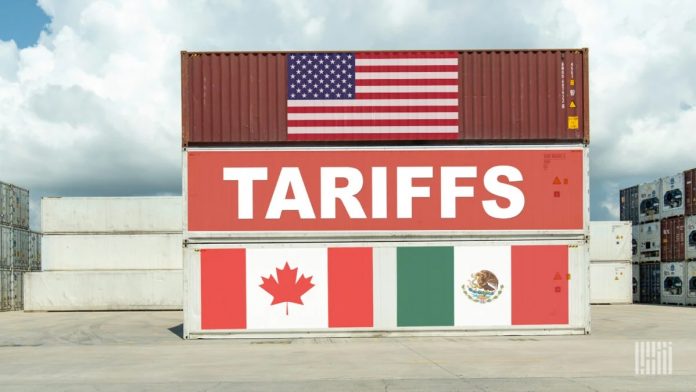
The United States has triggered a new wave of global trade tension following President Donald Trump’s sweeping tariffs on nearly 70 countries, an executive action that dramatically raises duties on a wide range of imports. And this time, Washington says there will be no turning back.

The latest tariff round, which became effective on August 1, imposes steep new levies as high as 50%, marking a significant escalation in Trump’s economic agenda. Canada was hit with a 35% tariff, up from the previous 25%, while Brazil now faces a 50% duty—one of the highest ever imposed by the U.S. India, Taiwan, and Switzerland were also hit, with rates of 25%, 20%, and 39% respectively.

Unlike previous rounds where targeted nations were offered the chance to negotiate tariff reductions, U.S. Trade Representative Jamieson Greer has made it clear that this latest package is here to stay. Speaking to CBS’s Face the Nation on Sunday, Greer said the new rates are “pretty much set,” noting that they are tied to permanent deals and national policy positions, including trade balances and geopolitical alignment.

“A lot of these are set rates pursuant to deals. Some of these deals are announced, some are not, others depend on the level of the trade deficit or surplus we may have with the country,” he said. “These tariff rates are pretty much set.”

This means there’s no room for temporary exemptions or a diplomatic off-ramp. Earlier rounds, such as those involving the European Union, allowed partial relief through side agreements, but not this one.

The sharp shift reflects a hardening of the Trump administration’s stance on global trade. The tariffs, officials say, were calculated based on specific concerns. For Canada, the hike was linked to what the U.S. claims is its failure to rein in fentanyl production and trafficking. In Brazil’s case, Washington cited the country’s worsening democratic backslide. For India, it was framed as a correction for longstanding trade imbalances. Taiwan’s rate was described as temporary, pending the outcome of broader U.S.-Taiwan negotiations.

Markets across the globe recoiled. Indian stocks fell for a second straight week. In Switzerland, government officials held an emergency session to assess the consequences of the 39% U.S. duty on Swiss exports, including luxury goods. The Swiss government is reportedly considering revising its trade package with the U.S. in retaliation.

Canada, also rattled by the unexpected spike, has moved swiftly to initiate negotiations with Washington. Canadian Trade Minister Dominic LeBlanc confirmed that Ottawa is already in direct talks with Greer’s office to seek a pathway to reduce the new 35% tariff. A phone call between President Trump and Canadian envoy Mark Carney is expected in the coming days.

Meanwhile, the U.S. is continuing separate negotiations with China, focused on unlocking trade for critical minerals and rare-earth magnets—essential for advanced electronics, defense, and clean energy sectors. According to Greer, both sides are “about halfway” toward resolving the deadlock, though it remains unclear whether any breakthrough will affect the current tariff framework.

“We’re focused on making sure that the flow of magnets from China to the United States and the- and the adjacent supply chain can flow as freely as it did before … and I’d say we’re about halfway there,” he said.

But for the rest of the targeted countries, the message is that the tariffs are not a bargaining chip—they’re a new reality. Businesses, economists, and global investors now face the implications of a more entrenched, less flexible U.S. trade regime.

In effect, Washington is now institutionalizing tariffs as a core component of its foreign policy playbook. Companies in impacted nations are already rethinking sourcing and export strategies, while foreign governments weigh retaliation or economic concessions to regain access to the U.S. market under better terms.

The world may be entering a new era of fractured trade as the U.S. doubles down on protectionism,  one where negotiation is replaced by pressure, and economic alliances hinge not just on commerce but on compliance with Washington’s broader geopolitical agenda.

Apple Beats Wall Street Expectations, Delivers Its Strongest Quarterly Performance In Nearly Three Years

0
An Apple logo is seen at the entrance of an Apple Store in downtown Brussels, Belgium March 10, 2016. REUTERS/Yves Herman/File Photo

Apple delivered its strongest quarterly performance in nearly three years, surpassing Wall Street expectations for both profit and revenue in its fiscal third quarter ended June 28.

Buoyed by robust iPhone sales and an unexpected rebound in China, the tech giant also reaffirmed its growing commitment to artificial intelligence, signaling plans to embed it deeply across its product lines.

The company posted earnings per share of $1.57, beating the $1.43 analysts had forecast, on revenue of $94.04 billion — its highest growth since December 2021. That represented a 10% increase year over year. Net income rose to $24.43 billion from $21.45 billion a year ago. Apple shares rose in after-hours trading following the announcement.

“This was an exceptional quarter by any measure,” CEO Tim Cook said in an interview with CNBC.

iPhone: Still the Growth Engine

Apple’s iPhone segment — its most crucial business — delivered $44.58 billion in revenue, growing 13% from a year earlier and beating consensus estimates of $40.22 billion. Cook credited the strong showing to the popularity of the iPhone 16, which he said is seeing “strong double-digit” sales growth compared to last year’s iPhone 15 lineup. He added that the growth was fueled in part by existing iPhone users upgrading to newer models.

Cook also revealed that roughly one percentage point of Apple’s overall 10% revenue growth came from consumers advancing their purchases in anticipation of potential tariffs.

Mac Sees Fastest Growth Among Units

While the iPhone led in absolute revenue, Apple’s Mac segment posted the fastest growth rate, climbing nearly 15% to $8.05 billion. The bump followed the company’s release of new MacBook Air laptops — its best-selling model — just ahead of the quarter.

Services, Apple’s second-largest segment, rose 13% to $27.42 billion, bolstered by growth in iCloud subscriptions and double-digit increases in App Store revenue. This area includes content subscriptions, warranty sales, licensing deals with Google, and cloud services. Apple’s gross margin for the quarter came in at 46.5%, higher than the 45.9% estimate.

Weak Spots in iPad and Wearables

Not every category recorded gains. iPad revenue fell 8% to $6.58 billion despite a new budget iPad model launched in March. Meanwhile, the wearables division — which includes Apple Watch, AirPods, and accessories — saw sales decline 8.64% to $7.4 billion.

The “Other Products” category also missed Wall Street’s forecast, signaling weakening demand in Apple’s accessory and wearable lines even as its core businesses gained momentum.

China Bounces Back

In a notable shift, Apple reported a 4% increase in Greater China revenue to $15.37 billion, after two consecutive quarters of year-over-year declines. Cook attributed part of the rebound to government subsidies that applied to some Apple devices.

“The subsidy does apply to some of our products, and it clearly helps,” he said.

That recovery in China is significant given earlier reports of intensifying competition from Chinese smartphone makers and waning local demand.

Tariff Costs and Outlook

Cook disclosed that Apple incurred $800 million in tariff-related expenses during the June quarter, lower than its prior estimate of $900 million. For the September quarter, Apple anticipates costs of about $1.1 billion, assuming no changes in U.S.-China trade policies.

Despite this, Apple expects mid- to high-single-digit increases in overall revenue and services revenue growth similar to this quarter’s 13%. Gross margins are projected to remain strong, between 46% and 47%, even accounting for tariff expenses.

A Pivot to AI

The report also highlighted Apple’s increasing investment in artificial intelligence — a space where it has trailed rivals like Google, Microsoft, and Amazon in public announcements. At June’s Worldwide Developers Conference (WWDC), Apple’s AI announcements received a lukewarm reception from investors, but Cook attempted to reframe that narrative during the earnings call.

“We are significantly growing our investments,” he said. “We’re embedding [AI] across our devices, across our platforms and across the company.”

Cook also disclosed that Apple has acquired “around seven” companies so far in 2025, although none of the deals were major in terms of cost. He emphasized Apple’s openness to mergers and acquisitions that can accelerate its product roadmap.

Asked whether emerging AI devices — such as those being built by OpenAI — might eventually compete with or replace the iPhone, Cook downplayed the threat.

“It’s difficult to see a world where iPhone is not living in it,” he said, suggesting such devices would more likely complement than displace Apple’s flagship product.

With $133 billion in cash reserves and several growth levers still active — from services to Macs to AI — Apple appears to be entering its final fiscal quarter of the year with renewed momentum.

 Nigeria’s Business Confidence Reaches 2025 Peak As Performance Index Climbs for Sixth Consecutive Month

0

Nigeria’s business climate continued to demonstrate signs of resilience, with the Business Performance Index maintaining its upward trajectory for the sixth straight month in 2025, underpinned by renewed confidence across the manufacturing sector and tempered expectations in the non-manufacturing space.

According to the June 2025 edition of the NESG-Stanbic IBTC Business Confidence Monitor (BCM) released in July, the Current Business Performance Index rose to 113.6 points, up from 109.8 in May. The index has remained well above the 100-point threshold that distinguishes expansion from contraction, signaling that Nigerian businesses, despite prevailing macroeconomic headwinds, are adapting and pushing forward.

Confidence Hits Peak Levels in 2025

The Business Confidence Measure, which gauges business expectations for future performance, surged to 134.5 points in June, the highest level recorded so far this year. This leap suggests that companies are increasingly optimistic about future growth prospects, potentially due to signs of macroeconomic stabilization, modest recovery in oil output, and early benefits from structural reforms introduced by the government.

Yet beneath this optimism, structural and systemic challenges remain entrenched. The report identifies limited access to finance as the most acute constraint confronting businesses, followed by inadequate electricity supply, foreign exchange volatility, unclear economic policies, and high rental costs. These factors continue to hinder expansion plans and operational efficiency, especially for small and medium-scale enterprises.

Manufacturing Powers Growth Amid Constraints

The manufacturing sector led all other sectors, posting an impressive index of 123.6 in June, up from 114.4 in May. This increase reflects strong performances in subsectors such as Textile, Apparel & Footwear, Cement, Plastic and Rubber Products, Wood and Wood Products, and Pulp, Paper and Paper Products. Businesses in these categories reported higher production volumes and a more stable supply chain, which collectively contributed to the sector’s strong showing.

But the sector’s momentum also recorded friction. Manufacturers face rising input costs due to shortages of raw materials, volatile electricity supply, escalating diesel prices, and a depreciating naira, which have pushed up the cost of imports and reduced profitability.

Additionally, challenges such as multiple taxation, insecurity, high import tariffs, and poor access to credit remain persistent, threatening to undermine the sector’s medium-term outlook. These issues have prompted fresh calls from stakeholders for policy intervention.

The Manufacturers Association of Nigeria (MAN) recently urged the Central Bank of Nigeria (CBN) to cut the benchmark interest rate, arguing that sustained high rates were suffocating the productive sector. At its 301st Monetary Policy Committee (MPC) meeting held July 21–22, 2025, the CBN retained the Monetary Policy Rate (MPR) at 27.5%, defying growing pressure from the real sector.

“The expectation of MAN is to have a rate cut that is supported by a robust fiscal policy framework capable of facilitating improved access to long-term loans, enhanced productivity, and sustained economic growth,” the association stated.

Non-Manufacturing Sector Sees Slower Momentum

The non-manufacturing sector maintained an index of 120.7 in June, but this marked the second month of slowing growth, falling from 122.2 in May and 123.6 in April. While the sector remains in expansion territory, the decline signals rising caution among service providers, who are contending with high operational expenses, poor infrastructure, and rising energy and transportation costs.

Sub-sectors such as Motor Vehicle and Assembly experienced downturns, even as others maintained moderate gains. Foreign exchange instability was flagged as a key concern, disrupting procurement and long-term planning.

Finance access remains a top challenge across service-oriented industries. Many businesses also lament the absence of stable, pro-business regulations and the high cost of maintaining operations in the current macroeconomic environment.

Recalibrated Framework for BCM Index

The latest edition of the Business Confidence Monitor also clarified changes to its methodology. Index points now follow a revised scale, where:

  • Below 100 indicates contraction in current performance or pessimism in future expectations.
  • Above 100 denotes expansion or optimism, respectively.

This recalibration aims to align Nigeria’s business confidence tracking with global standards, making it easier to benchmark the country’s economic sentiment against that of peer economies.

While the data points to growing optimism and sustained business activity in 2025, Nigeria’s fragile infrastructure, volatile currency, and high borrowing costs continue to pose significant risks. Experts warn that unless monetary and fiscal policy are realigned to address the structural weaknesses identified in the report—particularly around finance and energy—the country’s businesses may find it difficult to convert short-term confidence into long-term, inclusive growth.

The business community is cautiously optimistic, but the underlying message from the BCM is that momentum is not a substitute for stability, and real progress will depend on fixing the fundamentals.

UN Warns Global Plastic Trade Has Hit $1.13tn as Waste Crisis Escalates — Lagos Cracks Down on Single-Use Plastics

0

The global plastics trade surged to an estimated $1.13 trillion in 2023, more than doubling its value over the past two decades, with a growing environmental impact.

While the material is now entrenched across nearly every supply chain in the world, a new United Nations report has raised the alarm over its environmental toll, warning that three-quarters of all plastic ever produced has ended up as waste.

The revelations are contained in a new “Global Trade Update” report released by the United Nations Conference on Trade and Development (UNCTAD), which paints a grim picture of the international plastic economy. In 2023 alone, over 323 million metric tons of plastics were traded globally, with more than 78 percent of all plastic produced crossing international borders.

The UN describes this as clear evidence of how deeply plastics have permeated global commerce, from raw polymer pellets to everyday consumer items.

“The value of plastics trades more than doubled since 2005 to $1.13 trillion,” UNCTAD notes, attributing the spike to plastics’ widespread application across all industries. But that rapid growth, it warns, has come at a steep cost for the environment.

75 Percent of Plastics Become Waste

UNCTAD’s assessment bluntly noted that 75 percent of all plastic ever produced has ended up as waste. And while plastics are consumed globally, the consequences are disproportionately borne by coastal developing countries and Small Island Developing States (SIDS), which often lack the capacity to manage the growing volume of plastic waste washing up on their shores, despite contributing minimally to its production.

The report also explores alternatives, noting the promise of materials such as paper, glass, aluminum, bamboo, seaweed, and natural fibers. These alternatives are biodegradable, compostable, or recyclable, and many have been safely used by both industries and consumers for decades.

Although bio-based and compostable plastics currently account for only 1.5 percent of global plastic production, UNCTAD notes that these materials are rapidly gaining interest, particularly in emerging markets where environmental harm from conventional plastics is most severe.

Global Call for Action

UNCTAD has urged immediate international cooperation, calling the plastics crisis a “borderless” problem that demands coordinated global action. The agency is pushing for the adoption of a legally binding Global Plastic Treaty that would use trade and investment policies—and digital customs tools—to support a just transition away from plastic pollution.

“Plastic pollution is a borderless crisis, and trade must be part of the solution,” UNCTAD emphasized, arguing that without structural change, current trends in plastic consumption and disposal could grow even more catastrophic in the coming years.

Lagos Takes the Lead with Statewide Ban

While global solutions are still being negotiated, some local governments are moving ahead with policy action. In Nigeria, the Lagos State Government began fully enforcing its ban on single-use plastics on July 1, signaling a new era in the fight against urban plastic pollution.

Commissioner for the Environment and Water Resources, Tokunbo Wahab, announced last year, the enforcement during a press briefing, warning that any store, market, or business found storing, selling, or distributing banned items such as Styrofoam packs, plastic straws, nylon bags, or disposable cutlery would be sealed. Offenders will also be punished under state environmental laws.

“Let me also emphasize that any market or store found engaging in sale or distribution of single-use plastics of less than 40 microns will be sealed up,” Wahab stated. “The offenders will be punished according to the environmental laws of Lagos State.”

The Commissioner explained that the state government’s decision to ban Styrofoam and other non-biodegradable plastics was driven by environmental concerns and the safety of Lagos residents. He said the government would not compromise on its responsibility to ensure a healthier and more sustainable future for the city.

With more governments like Lagos taking bold action and mounting evidence of the environmental cost of plastics, the pressure is now on global institutions to match local resolve with coordinated international policy. It is not clear whether a Global Plastic Treaty can materialize, but the call for urgent reform is growing louder.

Tekedia AI Lab: Technical Program Overview, Outline & Instructions

0

Hope you have registered for Tekedia AI Lab: From AI Technical Design to Deployment. I am putting all the pieces together, scripting the AI agents, and before Oct 4 when the action begins, we will be 100% ready. You can count on Tekedia Institute quality on this.

Again, no coding experience requirement and no understanding of the mathematics of AI models required. You will be the chef, and we will prepare all the components, and with our directions, you will make a great soup! That is the plan. You will receive codes, resources and will be guided live on Zoom.

Remember: with free bonus to award winning Tekedia AI in Business masterclass, if you take this program, you will understand the business and the technical aspects of AI. That is a capability for the future. Go here, register and let us co-learn and co-build. (Why not tell your company to pay for you?)

Note: Courtesy of Intel Corp, universities which sign up for Tekedia AI Lab for Colleges will get some programmable microprocessors. Our sister company, Fasmicro, an Intel programmable microprocessor knowledge partner in Africa, will work to bring the fusion of AI in programmable microprocessors and embedded systems in your classroom. This is education for the 21st century!